This site is supported by our readers. We may earn a commission, at no cost to you, if you purchase through links.
A single tomato plant grown in a 5-gallon bucket on a Brooklyn fire escape once yielded over 200 cherry tomatoes in one season—no yard, no raised bed, no excuses. Container gardening flips the old assumption that real food growing needs real ground.
Radishes mature in 22 days, arugula in under 40, and a few well‑placed pots can produce a steady harvest from a balcony no wider than a parking space.
The difference between scraggly plants and genuinely productive containers comes down to a handful of decisions made early—pot size, soil composition, water timing, and light placement. Get those right, and small spaces start working surprisingly hard.
Table Of Contents
- Key Takeaways
- Start With Container Gardening Basics
- Choose The Right Pots
- Build Healthy Potting Soil
- Water and Fertilize Correctly
- Match Plants to Sunlight
- Maintain Productive Container Crops
- Frequently Asked Questions (FAQs)
- What are common mistakes in container gardening?
- What is the rule of thumb for container gardening?
- How often should I rotate my container plants?
- What plants grow best together in containers?
- Can I grow fruit trees in containers?
- How do I prevent pests in container gardens?
- When should I repot my container plants?
- How do I prevent pests in containers?
- When should I replace old potting soil?
- Can I grow vegetables indoors year-round?
- Conclusion
Key Takeaways
- Matching pot size to crop roots—like 5 to 7 gallons for tomatoes and 1 gallon for herbs—is the single biggest factor separating scraggly plants from real harvests.
- soilless mix of coir, perlite, and 20 to 30 percent compost feeds roots better than any garden soil ever could in a container.
- Watering between 5 and 9 a.m. at the base, not the leaves, cuts moisture loss and keeps roots healthy through the hottest part of the day.
- Grouping sun-lovers like peppers together and shade-tolerant greens like lettuce nearby let you water smarter and squeeze the most out of every square foot.
Start With Container Gardening Basics
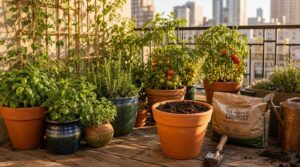
Container gardening doesn’t ask much of you — just a pot, some soil, and a sunny spot. Whether you’ve got a balcony, a patio, or just a windowsill, there’s more growing potential there than you might think. Here’s what every beginner should know before getting started.
If you’re drawn to growing plants with purpose, medicinal herb gardening for beginners is a great place to channel that windowsill or balcony space.
Best Beginner-friendly Crops
Some crops practically grow themselves, and that’s exactly where you want to start. Arugula and lettuce top the list — arugula is ready to pick in just 20 to 40 days, while lettuce gives you baby leaves in 30 to 45 days. Both are low-maintenance greens that thrive in small pots without much fuss. leafy greens tolerate partial shade are also ideal for limited‑light balconies.
For compact fruit varieties, cherry tomatoes and dwarf cucumbers deliver real harvests in 50 to 85 days. Among the fastest options, herbs win easily:
- Basil — harvestable in 3 to 4 weeks after transplanting
- Chives — ready to snip within 3 to 4 weeks from sowing
- Cilantro — reaches usable size in just 3 to 4 weeks
- Mint — grows vigorously and stays productive with regular cutting
For easy root crops, radishes mature in as little as 22 days — a genuinely satisfying first win in vegetable container gardening.
Balcony and Patio Growing
Once you know which crops suit you, it’s time to think about where they’ll live. A balcony garden works beautifully when you plan around two things: weight and wind.
Use lightweight hollow plastic or composite pots, and place taller plants in back corners for a natural tiered plant arrangement that keeps every pot in the light.
Portable Garden Advantages
One of the best things about container gardening is that your garden moves with you. Easy relocation means you can follow the sun as it shifts across your balcony throughout the day. When strong winds pick up, simply slide your pots into a sheltered corner — instant wind protection, no tools needed.
Lightweight containers make all of this genuinely easy.
Space-saving Garden Setups
Small spaces reward clever thinking. Vertical racks, hanging towers, and rotating stands let you stack four to six growing levels without adding floor space. Pocket planters hold herbs in just 1–2 cups of soil per pocket. Try these setups to get started:
- Mount wall planters up to 6 feet high on railing brackets
- Use flow-through stackable arrays to recycle runoff downward
- Hang towers supporting 8–12 small pots with built-in drip channels
- Choose dwarf varieties sized for compact containers
- Add a trellis for climbers like beans or cucumbers
Choose The Right Pots
The pot you pick can make or break your harvest before a single seed goes in the ground. Size, material, and drainage all play a bigger role than most people expect. Here’s what to look for when choosing containers that actually work.
Vegetable Pot Size Guide
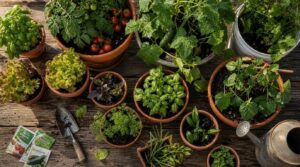
Picking the right pot is a bit like finding the right shoes — size really does matter. Lettuce and herbs are happy in a 1-gallon pot, around 6 to 8 inches deep. Tomatoes and cucumbers, though, need 5 to 7 gallons minimum. Here’s a quick reference to match your plants to their best home:
| Vegetable | Pot Size | Plants Per Container |
|---|---|---|
| Lettuce | 1 gallon | 1–2 plants |
| Beans | 2 gallons | 3 plants |
| Tomatoes | 5–7 gallons | 1 plant |
| Cucumbers | 5–7 gallons | 1 plant |
A good rule of thumb: bigger pots mean fewer headaches. Larger containers hold moisture longer and give roots room to breathe.
Filling those bigger pots with compost-rich soil also pays off—organic amendments can boost available nutrients by over 20%, so your roots have plenty to work with as they spread out.
Container Depth Requirements
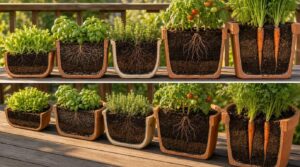
Depth is the silent rule most container gardeners learn the hard way. Your minimum soil depth for most crops sits at 12 inches, but not everything needs that much room.
- Shallow greens depth — Lettuce, spinach, and arugula thrive in just 6 to 8 inches.
- Herb depth needs — Basil and thyme do fine at 6 to 8 inches; sage wants 12.
- Deep-rooted crops — Tomatoes and root veg need 12 to 18 inches minimum.
Plastic, Terracotta, Fabric
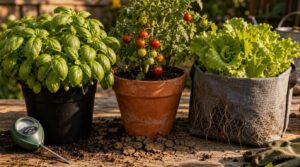
Your pot material shapes how often you water and how well roots breathe.
Plastic pots hold moisture longer and stay lightweight — easy to move when summer sun shifts.
Terracotta pots are porous, so they dry faster, but give roots excellent airflow, reducing rot risk.
Fabric pots offer the best aeration of all three, though they’ll need watering more often.
Repurposed Container Safety
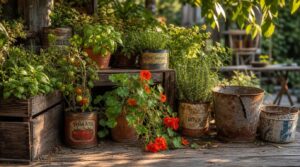
Old buckets, crates, and cans make charming planters — but before you fill them with soil, do a quick safety check.
Avoid containers with lead-based coatings or unknown chemical residues, as these can leach into edible crops.
Check for structural integrity — cracks or rust weaken stability under wet, heavy soil.
Make sure adequate ventilation if repurposing enclosed containers to prevent toxic offgassing.
Drainage Hole Essentials
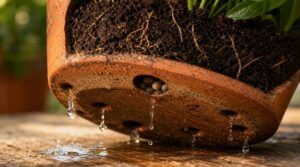
Think of drainage holes as your container’s escape hatch — without them, roots drown fast.
For medium to large pots, aim for 3–6 holes, each about 0.25 to 0.75 inches wide, spaced 2–3 inches apart. Add a 1–2 inch gravel layer topped with fine mesh to keep soil from clogging things up.
Check holes monthly; a thin wire clears blockages quickly.
Build Healthy Potting Soil
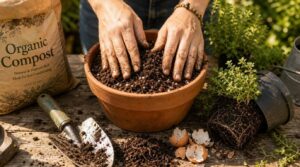
The soil inside your container is everything—it’s where roots drink, breathe, and feed. Get this part right, and your plants will reward you all season long. Here’s what goes into building a mix that actually works.
Use Soilless Potting Mix
Your potting mix is the foundation everything else depends on. Skip regular garden soil entirely — soilless potting mix gives roots the air, moisture, and nutrients they actually need.
A good blend combines peat or coconut coir for moisture retention, perlite or vermiculite for drainage, and compost for slow-release nutrients.
This sterile, lightweight formula holds 60–80% moisture while keeping roots breathing freely.
Avoid Heavy Garden Soil
Garden soil sounds harmless, but it’s one of the worst things you can add to a container. Heavy garden soil compacts quickly in pots, cutting off the air pockets roots need to breathe and grow.
Here’s what compacted soil actually does to your plants:
- Roots suffocate as oxygen disappears from the mix
- Water pools instead of draining, inviting rot
- Nutrients wash away before plants can absorb them
Add Compost and Humus
Compost is where things get interesting. A good compost nutrient boost feeds your plants nitrogen, phosphorus, and potassium all at once.
Mix organic matter into your potting mix at roughly 20–30 percent. The humus water retention effect keeps roots moist longer between waterings.
Topdress a compost layer mid-season to refresh tired soil without repotting.
Improve Aeration and Drainage
Moisture-rich compost is a great start, but roots also need room to breathe. That’s where your crumbly potting medium earns its keep.
Mix in a perlite pumice blend—aim for 50 to 70 percent air-filled porosity—so the air pore network stays open between waterings.
A gravel bottom layer in larger pots improves pot drainage fast.
Raise containers on elevated pot stands to boost airflow underneath.
Refresh Soil Midseason
Even the best potting mix gets tired by midsummer. A quick midseason refresh makes a real difference.
Top dress each 5-gallon pot with 1 to 2 cups of compost topdress—worm castings work beautifully—for an instant nutrient replenish. Sprinkle in mycorrhizal fungi as microbial inoculants, then do a quick soil pH check before watering everything in gently.
Water and Fertilize Correctly
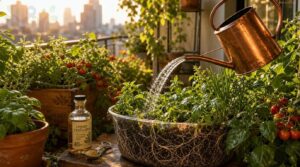
Getting water and fertilizer right is probably the biggest key factor in container gardening. Unlike plants in the ground, potted crops depend entirely on you for every drop and every nutrient. Here’s what you need to know to keep them thriving.
Morning Watering Routine
Timing is everything for watering your containers. Water between 5 and 9 a.m., before the heat climbs and evaporation kicks in. Pour slowly at the base of each pot — not over the leaves — until water drains from the holes below. A 1–2 inch mulch layer on top holds moisture longer through the day.
Check Soil Moisture Depth
Stick your finger about 2 inches into the soil — if it feels dry, it’s time to water. For deeper-rooted crops like cherry tomatoes, root zone monitoring at 6 to 9 inches matters most.
A moisture meter gives you a quick, reliable reading without guesswork. During hot spells, increase your watering frequency as deeper layers dry out faster than you’d expect.
Prevent Soggy Roots
Soggy roots are the silent killer of container gardens. Always make sure your pots have adequate drainage holes — at least 3 to 6 for smaller pots.
Raise containers on feet or saucers so air circulates freely underneath.
Add a gravel bottom layer to guide water away from roots and improve root zone aeration. A moisture meter helps you avoid overwatering before problems start.
Slow-release Fertilizer Tips
Think of slow-release fertilizer as a slow drip of steady nutrition — your plants get fed a little at a time, so they never feast or starve.
Mix it into the top 1–2 inches of your potting mix at planting.
Coated types last two to six months; uncoated ones depend on microbial activity and moisture to break down.
Liquid Feeding Schedule
Liquid fertilizer works best when you treat it like a conversation with your plants — steady, consistent, and responsive. Feed every 2–3 days for fast growers like lettuce, and every 5–7 days for herbs.
- Start at ¼ strength dilution ratio and build up slowly
- Always feed in the morning for best nutrient uptake
- Water plain between feeds to prevent salt buildup
- Cut concentration if leaf edges brown
Match Plants to Sunlight
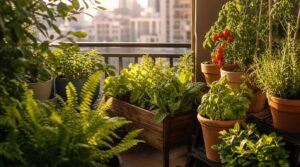
Not every plant wants the same amount of sun, and putting the wrong one in the wrong spot is one of the quickest ways to lose a harvest.
Your balcony, patio, or windowsill has its own personality — some corners bask in heat all day, others barely see direct light. Here’s how to read your space and match your plants to it.
Full-sun Vegetables
Some vegetables are pure sun lovers — and in containers, that works in your favor.
Tomatoes, peppers, cucumbers, bush beans, and summer squash all need 6 to 8 hours of direct sun daily. A south-facing balcony or patio wall gives you exactly that.
More sun means earlier flowering, heavier pods, and sweeter fruit.
Shade-tolerant Leafy Greens
Not every balcony gets all-day sun — and that’s perfectly fine. Shade-tolerant greens like lettuce, spinach, Swiss chard, and kale thrive with just 3 to 5 hours of light daily.
Varieties like Red Sails lettuce and Red Russian kale actually grow more tender leaves in lower light.
Keep soil pH around 6.0 to 7.0, moisture consistent, and succession sow every 2 to 3 weeks for a steady harvest.
Small-space Microclimates
Your balcony has its own invisible weather system. Sun exposure mapping reveals which corners catch 4 to 6 hours of light, where reflective walls boost temperatures by 2 to 5°F, and where moisture zones stay naturally cooler.
South-facing walls extend your growing window by 1 to 2 weeks — that’s free growing time worth using.
Heat Protection Strategies
Once you know where the heat hits hardest, you can fight back smart.
Hang a shade cloth over exposed pots to cut direct sun by 40–60% during peak afternoon hours.
Spread 2–3 inches of light-colored mulch on top of your containers — it drops soil temperature by up to 10°C and keeps moisture locked in longer.
Group Pots by Needs
Protecting your pots from heat is only half the battle — where you place them matters just as much.
Group pots by sun exposure, keeping thirsty tomatoes together in full sun while shade-tolerant lettuce clusters nearby. Pair drought-tolerant herbs away from water-hungry crops. This simple arrangement cuts watering confusion and helps every plant thrive where it naturally belongs.
Group sun lovers together and shade dwellers nearby, letting each plant thrive exactly where it belongs
Maintain Productive Container Crops
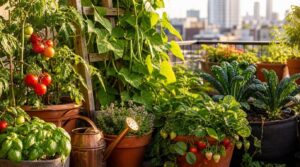
Once your containers are in the right spot with healthy soil and steady water, the real fun begins. Keeping crops productive takes a few simple habits that make a big difference over the season. Here’s what to focus on to keep things growing strong.
Trellises for Climbing Plants
A trellis turns your vertical space into prime real estate. For climbing vegetables like cucumbers, beans, and tomatoes, install a bamboo or cedar trellis at planting—never after the roots settle.
Anchor freestanding trellises with weighted bases so wind won’t topple them.
Choose a mesh or lattice opening wide enough for stems to grip naturally, and check joints monthly to keep everything secure.
Pest and Disease Checks
Catch trouble early—your crops can’t speak up, but they do leave clues. Walk your containers weekly and look for these four warning signs:
- Mite webbing check: Fine webbing under leaves signals spider mites.
- Aphid colony count: Clusters on new growth spread fast.
- Powdery mildew spotting: White coating means poor airflow.
- Root rot diagnosis: Mushy roots despite wet soil need immediate action.
Companion Planting in Pots
Think of companion planting as building a tiny neighborhood in each pot, where good neighbors look out for each other.
Basil near tomatoes deters aphids and whiteflies while sharing the same sun and water needs. Tuck nasturtium at container edges as a trap crop, luring pests away from your main vegetables while attracting pollinators to boost your harvest.
Seasonal Planting Rotations
Rotating what grows in each pot is your secret weapon for long-term soil health.
After beans fix nitrogen into your potting mix — boosting available nutrients by up to 60 percent — follow them with hungry leafy greens.
Keep a simple rotation record: note each crop family per season, so pests never settle in, and your containers stay productive year-round.
Harvest for Fresh Meals
Harvest at peak ripeness for the biggest flavor payoff — tomatoes, peppers, and greens taste noticeably better when picked right on time. Make it a morning harvest habit; cool temperatures lock in crispness and moisture.
Snip herbs just before they flower for the strongest aroma.
From container to plate fast, you’ll taste exactly why you started growing in the first place.
Frequently Asked Questions (FAQs)
What are common mistakes in container gardening?
Most mistakes come down to poor container sizing, bad drainage, and the wrong soil mix. These three issues alone cause root rot, compaction, and nutrient deficiency — and they’re all easy to avoid.
What is the rule of thumb for container gardening?
The rule of thumb is simple: choose a pot at least one-third as tall as your plant. Most vegetables need 12 inches minimum depth — and always guarantee proper drainage holes.
How often should I rotate my container plants?
Give each pot a quarter turn every 7 to 10 days. Seedlings need rotation every 5 to 7 days. Mark the rim so you never lose track of where you left off.
What plants grow best together in containers?
Think of your container as a tiny neighborhood—plants that get along make the whole space thrive. Tomato, basil, and marigold share one pot beautifully, while lettuce and radish pair well in shallow containers.
Can I grow fruit trees in containers?
Yes, you can! Dwarf or semidwarf varieties on compatible rootstock stay perfectly manageable in pots, giving you fresh fruit without needing an orchard.
How do I prevent pests in container gardens?
Pests find container gardens just as inviting as in-ground beds. Start with clean pots and fresh potting mix every season to cut soil-borne pest populations before they begin.
When should I repot my container plants?
Repot when roots circle the pot or poke through drainage holes. Spring is ideal — just as new growth begins. Move up 1 to 2 inches in pot size, then ease off fertilizer for four to six weeks.
How do I prevent pests in containers?
Container pests sneak in through dirty soil or hitchhiking on new plants. Start with a sterile potting mix, quarantine new plants for a week, and raise containers to improve airflow.
When should I replace old potting soil?
Potting soil wears out faster than you’d think. Replace it every 12 to 18 months, or sooner if you notice compaction, poor drainage, yellowing leaves, or a sour smell—clear signs of nutrient depletion.
Can I grow vegetables indoors year-round?
Yes, you can grow vegetables indoors year-round. With full-spectrum LED grow lights and temperatures between 18–28°C, crops like lettuce, herbs, and dwarf tomatoes thrive in any season.
Conclusion
A single bucket can outgrow an entire allotment when you’ve nailed the fundamentals. Every gardening tip for container gardening in this guide—pot size, soil mix, watering rhythm, light placement—works together like a well‑tuned engine.
Your balcony, patio, or windowsill isn’t a limitation; it’s a growing system waiting to be optimized.
Start with one container, dial in your routine, and watch how quickly a few square feet becomes the most productive corner of your home.
- https://www.finegardening.com/article/soil-in-containers-should-be-a-good-mix
- https://extension.illinois.edu/container-gardens/soil
- https://extension.oregonstate.edu/news/no-yard-grow-vegetables-containers
- https://www.almanac.com/content/container-gardening-vegetables
- https://www.gardeninginla.net/blog/container-gardening