This site is supported by our readers. We may earn a commission, at no cost to you, if you purchase through links.
Most grocery store apples travel over 1,500 miles before reaching your kitchen, spending weeks in controlled atmosphere storage that strips away flavor and nutrients. When you grow organic apples at home, you’re not just planting a tree—you’re reclaiming control over what goes into your body and rejecting an agricultural system built on synthetic chemicals and bland, mass-produced fruit.
Your backyard can produce apples bursting with complex flavors that supermarket varieties can’t touch, all while you build healthier soil and support local wildlife. The process demands patience and attention to detail, but once you bite into that first crisp, sun-warmed apple you cultivated without a single pesticide, you’ll understand why thousands of gardeners are ditching the produce aisle for their own organic orchards.
Table Of Contents
- Key Takeaways
- Benefits of Growing Organic Apples
- Selecting The Best Apple Varieties
- Choosing an Ideal Planting Location
- Preparing Soil for Apple Trees
- Planting Organic Apple Trees
- Organic Apple Tree Care Basics
- Pruning and Training Apple Trees
- Managing Pests Organically
- Preventing and Treating Apple Diseases
- Harvesting and Storing Organic Apples
- Frequently Asked Questions (FAQs)
- Can apples be grown organically?
- Are organic apples still sprayed with pesticides?
- How to remove pesticides from apples at home?
- How long until apple trees produce fruit?
- Can you grow apples in containers successfully?
- Whats the minimum yard size for apples?
- Do organic apples cost more to grow?
- Which apple varieties store longest after harvest?
- How long before apple trees produce fruit?
- Can apple trees grow in containers successfully?
- Conclusion
Key Takeaways
- Growing organic apples at home eliminates pesticide exposure and delivers superior flavor through careful variety selection, focusing on disease-resistant cultivars like Liberty, Enterprise, and Pixie Crunch that thrive without synthetic chemicals.
- Success hinges on matching apple varieties to your climate zone (cold-hardy types for zones 3-5, heat-tolerant for 5-9), ensuring proper cross-pollination by planting at least two compatible trees with overlapping bloom periods, and choosing sites with 6-8 hours of full sun and adequate wind protection.
- Organic soil management through composting, aged manure, and mulching (2-4 inches deep) creates the foundation for healthy trees, while deep watering schedules (12-18 inches of soil penetration 2-3 times weekly for young trees) establish strong root systems without chemical fertilizers.
- Natural pest and disease control relies on recruiting beneficial insects through companion planting (yarrow, calendula, garlic chives), applying organic barriers like kaolin clay and neem oil, and practicing rigorous sanitation by removing fallen fruit within 24 hours and pruning infected branches during dry weather.
Benefits of Growing Organic Apples
Growing organic apples at home isn’t just about ditching pesticides—it’s about reclaiming control over what you eat and how it’s grown.
The same principles that make organic herb gardening for beginners so rewarding apply to fruit trees—you choose the nutrients, skip the chemicals, and enjoy food you actually trust.
Growing organic apples at home means reclaiming control over what you eat and how it’s grown
When you cultivate your own trees without synthetic chemicals, you’re making a choice that impacts your health, your backyard ecosystem, and even the flavor of every crisp bite. Let’s break down why going organic with your apple harvest is worth the effort.
Health Advantages of Organic Apples
Breaking free from grocery store dependence means reclaiming control over what enters your body. When you grow organic apples, you’re choosing a higher nutrient profile with higher vitamin C and polyphenol content that conventional options can’t match.
Your harvest delivers:
- Enhanced antioxidant effects that combat cellular aging and inflammation reduction
- Gut health support through diverse fiber and beneficial surface microbes
- Immune boosting properties from preserved skin nutrients
- Zero pesticide residues for truly healthy eating habits
Emerging research highlights that than conventional varieties, further supporting their value for gut health. That’s the power of organic gardening on your terms.
Environmental Impact of Organic Cultivation
Your backyard orchard becomes a small-scale revolution in environmental conservation when you embrace organic gardening. Sustainable practices like composting and avoiding synthetic chemicals boost soil conservation while slashing your carbon footprint.
You’ll champion water efficiency through smart mulching, support biodiversity with eco-friendly methods, and prove that sustainable living isn’t just idealistic—it’s achievable.
Organic practices also promote higher biodiversity and ecosystem services, enriching your garden’s health and resilience. That’s sustainable gardening on your terms.
Superior Taste and Freshness
Beyond cutting your carbon footprint, growing organic apples delivers explosive flavor profiles that store-bought fruit can’t match. Harvest timing determines sugar balance—pick when fully colored for sweetness that lasts weeks at 32°F. Crispness retention comes from mineral-rich compost and proper pruning, while freshness preservation requires quick cooling within 24 hours.
Here’s what sets homegrown organic apples apart:
- Natural sun exposure develops intense sweetness without chemical interference
- Soil biodiversity creates complex flavor compounds absent in conventional orchards
- Gentle handling from tree to table preserves crisp texture and aroma
- Cold storage maintains mountain apple notes for up to six months
Selecting The Best Apple Varieties
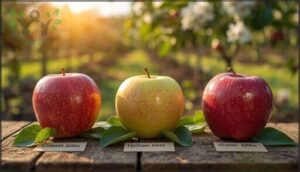
Choosing the right apple variety is where your organic growing journey really begins—pick wrong, and you’re fighting an uphill battle against disease and climate.
The best varieties for your backyard orchard depend on three critical factors: natural disease resistance, your local climate conditions, and whether your trees can pollinate each other. Let’s break down exactly what you need to know before you buy your first tree.
Disease-resistant Apple Types
When you’re growing organic apples, choosing disease-resistant apple varieties is your first line of defense—not your last resort. Enterprise tolerates fire blight and cedar rust, while Liberty fights apple scab with proven success.
Pixie Crunch stands firm against powdery mildew, Crimson Gold offers scab resistance, and Priscilla copes with both apple scab and cedar rust. These varieties slash pest control headaches, giving you control over what thrives in your orchard.
Varieties for Different Climates
Your climate resilience starts with matching apple varieties to your regional conditions. Cold hardy choices like Honeycrisp and Macintosh thrive in zone 3 to 5, while Fuji and Granny Smith handle heat tolerance in zones 5 through 9.
Gravenstein fits cool coastal areas, and Liberty delivers disease-resistant performance across diverse growing conditions. Pick apples bred for your frost protection needs, and you’ll watch organic apple trees flourish without fighting Mother Nature.
Pollination Needs and Compatibility
Most apple trees won’t set fruit without cross pollination from a genetically distinct cultivar, so you’ll need at least two compatible varieties with flower synchrony—overlapping bloom windows of 7 to 14 days promote pollen viability when bee diversity peaks.
- Plant early and mid-bloom pollinizers to cover extended flowering periods
- Encourage pollinator health with flowering ground covers and avoid spraying during bloom
- Space two to four fruiting trees per pollinator for reliable fruit tree care and organic apples
Choosing an Ideal Planting Location
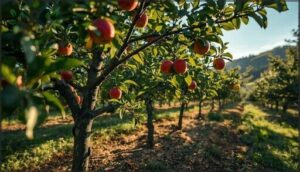
Your apple trees won’t just grow anywhere—they need the right conditions to thrive and produce bumper crops year after year.
For the best results, combine ideal growing conditions with safe pest control for fruit trees to protect your harvest without harsh chemicals.
Think of location scouting as choosing the perfect stage for your orchard’s performance, where sunlight, wind, and spacing all play starring roles.
Let’s break down the three critical factors that’ll set your trees up for long-term success.
Sunlight and Temperature Requirements
Your apple trees demand at least six to eight hours of full sun daily—anything less, and you’ll harvest disappointment instead of fruit.
Light exposure drives photosynthesis and sweetness development, while temperatures between 60 and 75°F fuel vigorous growth.
Most varieties need 800 to 1,000 chill hours below 45°F to break dormancy, so match your home garden’s microclimate to your chosen organic apples’ requirements.
Wind Protection Strategies
Strong gusts can snap branches and stunt fruit development, so planting a dense evergreen windbreak on the windward side of your backyard orchard cuts wind speeds by 30 to 50 percent.
Position these tree shelters two to three times the height of your organic apples to create microclimate creation zones. Fence barriers with slatted designs reduce wind tunnel effects without blocking airflow essential for organic gardening techniques.
Tree Spacing for Optimal Growth
Your backyard orchard won’t thrive if trees compete for every ray of sunshine and drop of water. Space standard apple trees 18 to 25 feet apart to prevent canopy overlap and root competition, while dwarf varieties need just 8 to 10 feet.
Proper spacing delivers airflow benefits that reduce disease pressure and ensures sunlight access throughout the canopy—essential organic gardening techniques for vigorous tree care.
Preparing Soil for Apple Trees
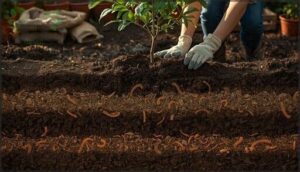
Your apple trees won’t reach their full potential without the right soil foundation, and that starts before you even dig the planting hole.
The good news is that you don’t need fancy chemicals or synthetic fertilizers to create the perfect growing environment. Let’s break down the organic amendments and drainage strategies that’ll set your trees up for decades of healthy production.
Organic Soil Amendments
Building nutrient-rich soil from scratch puts you in total control of your apple tree’s future. Organic amendments like compost, aged manure, and worm castings deliver a steady buffet of nutrients while feeding beneficial soil microbes that break down organic matter into plant-available forms.
For improved soil health, layer these organic fertilizers:
- Compost tea to introduce diverse microbes and suppress pathogens
- Biochar for long-term water retention and microbial habitat
- Well-aged manure to supply nitrogen and trace minerals
- Rock dusts for slow-release trace elements
- Mulch to gradually feed soil organisms as it decomposes
Ensuring Proper Drainage
After you’ve enriched your soil with compost and amendments, water infiltration becomes your next battleground.
Apple roots need a root zone that drains excess surface water within 24 hours—otherwise you’re inviting root rot and fungal disease.
Install drainage systems like micro trenches or French drains to maintain soil porosity, protect soil health, and keep your organic growing plans on track.
Planting Organic Apple Trees
You’ve prepped the soil, chosen your varieties, and now it’s time to get those trees in the ground. The planting process itself isn’t complicated, but a few key decisions—like choosing between bare-root and container-grown stock, nailing the depth, and watering correctly—will set the foundation for decades of fruit production.
Let’s break down the essentials so you can plant with confidence.
Bare-root Vs. Container-grown Trees
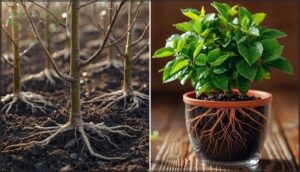
You’ll face a key choice when planting organic apples: bare-root or container-grown trees.
Bare-root options establish 20 to 40 percent faster with better root establishment and soil adaptation, but demand precise planting timing in late winter.
Container-grown trees offer flexibility and tree hardiness during transplant, though they’re pricier.
Either form succeeds with proper water management and organic tree care practices.
Correct Planting Depth and Spacing
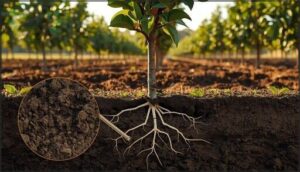
Once you’ve selected your tree, planting techniques demand precision. Position the root flare level with the soil surface to prevent suffocation—burying it smothers roots and invites decay. Dig holes twice as wide as the root ball for proper root depth and soil preparation.
Space dwarf apple trees 15 to 20 feet apart, standard varieties 20 to 25 feet, ensuring:
- Loose, crumbly soil around planting holes for root penetration
- Graft unions above ground to prevent scion suckers
- pH levels between 6.0 and 6.8 for nutrient availability
- Access paths planned for future pruning and growth monitoring
Watering After Planting
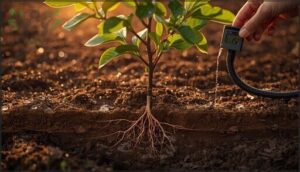
After planting, water deeply until moisture reaches 12 to 18 inches, targeting the drip line to encourage lateral root growth. During the first week, provide daily irrigation if rainfall is scarce, keeping soil moisture consistent without waterlogging.
Drip irrigation systems excel at water conservation, delivering slow, steady hydration. Adjust water frequency based on soil type—sandy soils demand more frequent watering than clay—and monitor conditions weekly for ideal root establishment.
Organic Apple Tree Care Basics
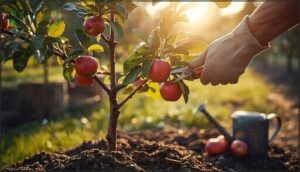
Once your apple trees are in the ground, your real work begins—and it’s simpler than you might think.
Proper care during the first few years sets the foundation for decades of healthy, productive harvests.
Let’s break down the essential practices that’ll keep your trees thriving without synthetic chemicals or complicated routines.
Mulching for Moisture Retention
A proper mulch layer acts like a shield, locking in moisture so you’re not chained to your hose all summer. Apply organic mulch materials—wood chips, straw, or shredded leaves—in a 2 to 4 inch depth around your apple trees, keeping it a few inches from the trunk. This organic barrier stabilizes soil temperature, suppresses weeds stealing water, and boosts soil health as it breaks down.
- Slash your watering time while keeping moisture levels steady
- Protect roots from temperature swings with natural soil insulation
- Reclaim your freedom from constant irrigation chores
- Feed the soil naturally as organic mulch decomposes over time
Watering Schedules for Young Trees
Young apple trees demand consistent deep irrigation to build strong root growth, not daily splashes that keep you tethered to the hose.
Water slowly with drip systems or soaker hoses 2 to 3 times weekly during the first eight weeks, targeting 12 to 18 inches of soil moisture penetration.
Monitor soil conditions and adjust your water frequency based on rainfall and heat, ensuring the root zone stays evenly moist without waterlogging.
Organic Fertilization Methods
Freedom from synthetic chemicals starts with feeding your soil living organisms through compost tea, aged manure composting, and green manures like clover that fix nitrogen naturally.
Biofertilizers boost root microbiomes while organic mulch benefits extend beyond weed suppression to steady nutrient release.
Layer 2 to 4 inches of finished compost annually around the drip line for ideal soil health and fertilization without chemical dependence.
Pruning and Training Apple Trees
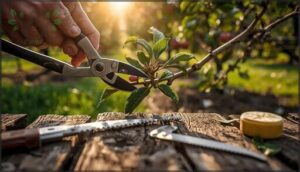
Pruning isn’t just about cutting branches—it’s about taking control of your tree’s future, shaping it into a powerhouse that produces abundant fruit year after year.
The right cuts at the right time determine whether you’ll harvest bushels of crisp apples or watch your tree waste energy on unproductive growth. Here’s how to prune and train your apple trees with confidence and precision.
Timing and Techniques for Pruning
Pruning Apple Trees isn’t some delicate art reserved for experts—it’s your chance to take charge of tree health and future harvests. Timing matters: prune in late winter to early spring before new growth starts, reducing disease pressure and encouraging strong structure.
Master these fundamentals:
- Use sharp pruning tools disinfected with 70 percent isopropyl alcohol between cuts
- Make thinning cuts to remove crowded branches without triggering excessive growth
- Cut just outside the branch collar at a slight angle for proper wound care
- Avoid pruning during extreme heat or drought stress periods
- Remove diseased material promptly to reduce infection risk
Clean cuts heal faster than ragged tears.
Shaping for Strength and Productivity
Apple tree structure dictates whether you harvest abundantly or struggle with breakage—own that outcome through deliberate shaping. Train young trees into an open-center or modified central leader form to balance sunlight penetration with structural integrity.
Pruning techniques that encourage horizontal branching at forty-five to sixty-degree angles improve fruit production while preventing limb failure. This mindful focus on architecture transforms chaotic growth into productive, resilient framework. Goal setting starts now: envision your ideal tree shape.
Removing Suckers and Water Sprouts
Suckers and water sprouts hijack your tree’s energy, stealing nutrients meant for fruit. Remove suckers below the graft union with sharp pruners, cutting flush to the trunk or root crown—never leave stubs.
Water sprout control involves eliminating vertical shoots from main limbs during dry weather. Regular pruning techniques keep these energy thieves in check, ensuring healthy apple trees focused on production, not wasted growth.
Managing Pests Organically
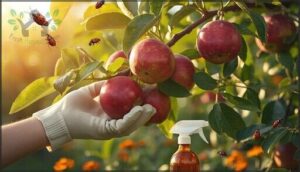
Growing organic apples means you won’t be reaching for synthetic pesticides when pests show up, but that doesn’t leave you defenseless. You’ve got a whole arsenal of natural strategies that actually work—from identifying the troublemakers to deploying nature’s own pest control squad.
Here’s how to keep your apple trees healthy without compromising your organic principles.
Common Apple Pests and Natural Controls
Vigilance is your first line of defense against common orchard invaders. Codling moth larvae bore into fruit, leaving telltale frass, while apple maggot flies create winding brown trails inside flesh.
You’ll also encounter aphids clustering on new shoots and European apple sawfly causing early fruit drop. Natural pest control through pest monitoring with pheromone traps and sticky barriers provides effective pest management without synthetic chemicals.
Beneficial Insects and Companion Planting
Instead of relying solely on barriers, you can recruit an army of predators to patrol your orchard. Lady beetles devour aphids while parasitic wasps attack caterpillars, creating a living system of organic pest control. Build pollinator gardens and insect hotels around your trees to sustain these allies.
Three companion flowers boost natural pest control:
- Yarrow and dill attract beneficial wasps that hunt down codling moth larvae
- Calendula lures hoverflies whose larvae consume hundreds of aphids daily
- Garlic chives repel pests while supporting pollination methods with late-season blooms
These companion plants transform organic growing from constant battle into balanced ecosystem.
Organic Sprays and Barriers
When companion planting isn’t enough, targeted organic sprays and barriers complete your natural pest control arsenal. Kaolin clay forms a protective film that confuses insects, while copper sulfur applications prevent fungal diseases during wet periods.
Biological sprays like Bt and spinosad tackle specific pests without harming beneficials. Barrier netting physically blocks codling moths, making chemical-free growing achievable for serious orchardists committed to pest and disease management.
Preventing and Treating Apple Diseases
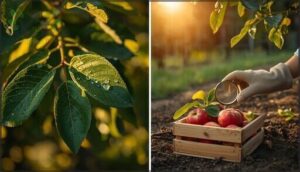
Even the healthiest apple trees aren’t immune to disease, but you can stay ahead of most problems with smart prevention and quick action.
Understanding what you’re up against—from fungal infections to bacterial blights—gives you the power to protect your harvest without reaching for synthetic chemicals.
Let’s break down the most common apple diseases, the cultural practices that keep them at bay, and how choosing the right varieties puts you miles ahead from day one.
Common Diseases in Apple Trees
Your apple trees won’t bow down to just one enemy—they face a whole lineup of fungal diseases. Apple scab creates dark, velvety spots on leaves and fruit, while fire blight can blacken entire branches in weeks.
Cedar rust demands a juniper host nearby, producing bright orange leaf spots. You’ll also encounter sooty blotch, bitter rot, and codling moth damage, making disease resistance your frontline defense against this relentless threat.
Sanitation and Cultural Practices
Beyond spraying and guessing, orchard sanitation gives you real control over pest and disease control methods. Remove fallen fruit within 24 hours, prune infected limbs during dry weather, and disinfect your tools between cuts.
Apply organic mulching and rotate cover crops to disrupt pest cycles. Clean pathways prevent soil splash, while proper tree spacing improves airflow—cultural practices that transform gardening and tree care into true disease prevention.
Using Disease-resistant Varieties
Choosing disease-resistant apple varieties is your shortcut to organic farming success without constant spraying. Modern apple breeding delivers cultivars that slash fungicide needs by up to 40 percent while extending tree longevity:
- Liberty and Enterprise resist apple scab with durable genetic protection
- Freedom withstands cedar apple rust, reducing leaf damage notably
- Pure combats fire blight and powdery mildew simultaneously
- GoldRush maintains disease resistance across varied climates
These varieties turn pest management from a battle into routine care.
Harvesting and Storing Organic Apples
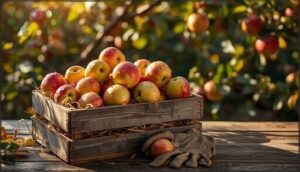
You’ve nurtured your apple trees through seasons of growth, pest battles, and pruning sessions—now comes the satisfying payoff. Knowing when to pick your apples and how to store them properly makes the difference between fruit that lasts weeks versus fruit that spoils in days.
Let’s break down the ripeness signals, harvesting methods, and storage tricks that’ll keep your organic apples crisp and flavorful long after you’ve plucked them from the tree.
Signs of Apple Ripeness
Knowing when to harvest puts you in complete control of flavor and freshness. Watch for color changes as your organic apples shift from dull to vibrant, often revealing a golden or deeper blush depending on variety.
Ripe fruit emits a sweet aroma near the stem, feels firm yet yields slightly to gentle pressure, and twists off easily. Slice one open—dark brown seeds confirm peak ripening stages and signal it’s time for harvesting.
Safe Harvesting Techniques
Smart harvest timing starts in cool morning hours when juice loss and browning stay minimal. You’ll need sterilized hand pruners and clean gloves—disease-resistant practices begin before fruit ever leaves the branch.
Follow these four essentials:
- Use a gentle twist-and-lift motion to avoid punctures
- Collect apples in shallow, padded baskets
- Keep fruit off the ground with breathable mesh
- Separate damaged specimens immediately
Storage Methods for Maximum Freshness
Your hard-won harvest deserves thoughtful care—storage best practices can stretch freshness for months. Keep organic apples at ideal temperature (30 to 34°F) with humidity control around 90 to 95 percent for maximum shelf life.
Container selection matters: use perforated bags for breathability while avoiding ethylene by separating apples from bananas.
Weekly inspection catches early spoilage, protecting your apple harvest investment.
Frequently Asked Questions (FAQs)
Can apples be grown organically?
Yes, organic apples thrive without synthetic chemicals when you prioritize soil quality, tree diversity, and eco-friendly pest control. These proven methods support sustainable living practices while delivering enhanced apple nutrition through chemical-free growing methods.
Are organic apples still sprayed with pesticides?
Organic apples aren’t chemical-free—they’re sprayed with approved substances like neem oil, copper, sulfur, and kaolin clay for pest control and disease management, all meeting strict regulatory compliance under organic farming standards.
How to remove pesticides from apples at home?
To strip pesticides from store-bought apples, submerge them in a baking soda wash—about 10 mg per mL—for 12 to 15 minutes, then rinse thoroughly under running water.
How long until apple trees produce fruit?
Most grafted apple trees start bearing fruit within three to five years after planting, though dwarf varieties can produce in just two to three years with proper pollination and adequate winter chill hours.
Can you grow apples in containers successfully?
Absolutely—dwarf varieties on dwarfing rootstocks thrive in containers when you nail container size, soil quality, and water management.
Proper rootstock selection and backyard orchard management techniques make container growing surprisingly productive for organic apples.
Whats the minimum yard size for apples?
You’ll find freedom in just 600 to 900 square feet—enough for two to three dwarf apple trees with proper spacing, sunlight access, and air circulation for thriving backyard orchard management.
Do organic apples cost more to grow?
Yes, organic apples usually require higher labor costs and input prices for approved fertilizers and pest controls, though market premiums and certification fees vary. Yield factors and management skills greatly influence your overall expenses.
Which apple varieties store longest after harvest?
Fuji storage and late-season keepers like Cripps Pink are your storage champions, lasting four to six months when kept cool.
Firm flesh varieties, including Honeycrisp and Braeburn, handle long-term storage beautifully, rewarding patient organic growers with extended harvests.
How long before apple trees produce fruit?
Most apple trees begin bearing fruit 3 to 5 years after planting, though dwarf varieties may produce as early as 2 to 3 years with proper care and ideal growing conditions.
Can apple trees grow in containers successfully?
Absolutely—dwarf varieties on specialized rootstock selection thrive in container gardening. Choose 15 to 25 gallon pots with well-draining potting mixes, practice compact pruning, and maintain vigilant tree care for productive organic apples.
Conclusion
You’ve just planted the seeds of independence—literally. Growing organic apples at home transforms you from passive consumer to active cultivator, breaking free from industrial agriculture’s chemical grip.
Your orchard won’t mature overnight, but each season brings you closer to harvesting fruit that’s genuinely yours: unsprayed, unshipped, and uncompromised.
The work ahead demands commitment, yet that first homegrown apple—crisp, complex, and completely clean—will prove every pruning cut and pest patrol worthwhile.