This site is supported by our readers. We may earn a commission, at no cost to you, if you purchase through links.
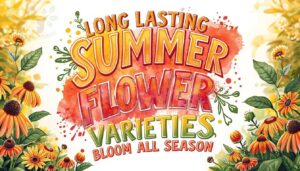
Most gardeners don’t lose their summer color to heat or drought—they lose it to poor variety selection. A flower that peaks in July and fades by August leaves you managing a green, bloomless garden for weeks before fall arrives.
Choosing long lasting summer flower varieties changes that equation entirely.
Coneflowers push color from mid-summer straight to frost. Black-eyed Susans hold their yellow blooms through temperature swings that would collapse lesser plants.
Whether you’re working with a sunny border, a shaded corner, or a few containers on a balcony, the right varieties keep your garden performing from the first warm week to the last.
Table Of Contents
- Key Takeaways
- Key Traits of Long-Lasting Summer Flowers
- Best Perennial Summer Flower Varieties
- Best Annuals for Continuous Summer Color
- Flowers for Heat, Shade, Containers
- Tips to Keep Flowers Blooming Longer
- Frequently Asked Questions (FAQs)
- Which flowers last the longest in summer?
- Which plant gives 12 months of flowers?
- What type of flower lasts the longest?
- What flowers last the longest in summer?
- What is the longest flowering summer flower?
- What are the best low maintenance summer flowers?
- What flowers bloom all summer in full sun?
- When should I start planting summer flowers?
- How do I extend bloom time naturally?
- What companion plants work best together?
- Conclusion
Key Takeaways
- Coneflower, Black-Eyed Susan, and Coreopsis are your strongest long-season performers, each blooming 8–12 weeks from midsummer straight through fall with minimal care.
- Choosing varieties with deep root systems and built-in drought tolerance — like yarrow and coneflower — keeps your garden colorful even when heat spikes and rain disappears.
- Deadheading spent flowers twice a week, mulching to 2–4 inches, and watering deeply to 6–12 inches are the three habits that do the most to extend bloom time all season.
- Annuals like zinnias, calibrachoa, and dahlias fill every gap left by perennials, delivering bold, uninterrupted color from the last frost date right up to the first freeze.
Key Traits of Long-Lasting Summer Flowers
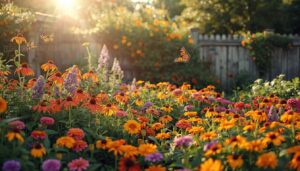
Not every summer flower earns its keep — some bloom for a week and vanish, leaving you with a garden full of green and not much else.
That’s why it pays to start with flowers known for their long bloom seasons — the ones that actually pull their weight all summer long.
The best long‑lasting varieties share a handful of reliable traits that keep them performing from early summer right through to frost. Here’s what to look for.
Extended Bloom Period
When you want nonstop summer blooms, cultivar selection makes all the difference. Choose long-blooming perennials like coneflower and black-eyed Susan, which push a continuous bloom period well into fall.
Staggered planting extends your season-long color by overlapping flowering windows. Pair that with seasonal deadheading and soil nutrition balance, and your summer-blooming perennials won’t skip a beat from June through frost.
Including plants with extended bloom periods helps sustain pollinators throughout the season.
Heat and Drought Tolerance
Beyond blooms alone, your plants need to survive the heat. Drought tolerant garden plants like yarrow and coneflower rely on deep root systems, osmotic adjustment, and leaf cuticle thickness to stay upright when temperatures spike.
Heat shock proteins protect cellular integrity above 35°C, while stomatal regulation limits water loss without stopping growth. built-in defenses keep heat tolerant ornamental plants performing through summer’s worst stretches.
Sun and Shade Adaptability
Not every garden gets equal light, and that’s where adaptability becomes your best asset.
Sun-loving perennials like coneflower and yarrow hit their light saturation point fast, driving compact growth and vivid color.
Shade-tolerant perennials respond with chlorophyll adjustment and wider leaf orientation to capture what’s available.
Microclimate effects — from walls, trees, or fences — create partial shade zones where both full sun and shade-flexible varieties can thrive.
Pollinator-Friendly Blooms
Flowers that attract pollinators don’t succeed by accident — they earn visits through nectar quality, scent profiles, and color contrast. Purple and yellow summer-blooming perennials like coneflower and yarrow act as natural landing pad designs, guiding bees and butterflies straight to open blooms.
Habitat connectivity improves when you choose long-blooming perennials that reliably attract butterflies and attract hummingbirds across the full season.
Low-Maintenance Growth Habits
Low-maintenance summer blooming flowers earn their place by doing the heavy lifting themselves. Dense foliage and a weed suppressive habit crowd out unwanted competition, while compact form keeps plants tidy without constant pruning.
Drought tolerant perennials and heat tolerant perennials tap deep roots to stay strong between waterings.
Self-seeding ability and a slow growth rate mean less replanting and fewer chores each season.
Best Perennial Summer Flower Varieties
Perennials are the backbone of any summer garden—they come back year after year, so your work pays off for seasons to come. The best ones don’t just survive summer heat; they thrive in it, blooming for weeks without much fuss from you.
Here are eight reliable varieties worth knowing.
Coneflower
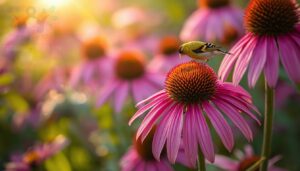
Coneflower (Echinacea purpurea) is one of the most dependable summerblooming perennials you can grow. This Purple Coneflower reaches 1–4 ft tall, blooming mid-summer through early fall in purple, white, or orange — thanks to impressive cultivar color variations.
It thrives in well-drained loamy or sandy soils with minimal nutrient demands, supporting native habitat restoration naturally.
Its seed dispersal mechanisms also feed goldfinches through winter.
Black-Eyed Susan
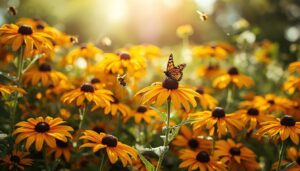
Black-Eyed Susan (Rudbeckia hirta) brings season-long color to any pollinator-friendly perennial garden design.
Hardy across USDA hardiness zones 3–9, this long-blooming perennial produces bright yellow, 2–3‑inch flowers from early summer through frost.
Its seed dispersal provides wildlife habitat roles well into winter, while cut flower longevity makes it a border staple.
It tolerates varied soil pH and clay or sandy loam equally well.
Yarrow
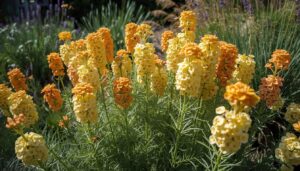
Yarrow (Achillea millefolium) is a workhorse in any pollinator-friendly perennial garden design. This long-blooming perennial thrives in full sun and tolerates a soil pH range of 4.5 to 7.5, making placement decisions simple.
It can bloom all summer long, from late spring through early autumn. Propagation methods include seed or division, and its medicinal uses and cut flower potential add real everyday value.
Daylily
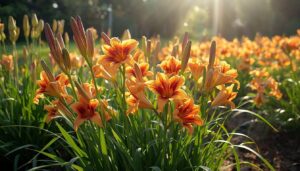
Daylily (Hemerocallis spp.) earns its place among reliable summer‑blooming perennials — each bloom lasts just one day, yet a single scape carries 10 to 40 buds, keeping color coming for weeks. As long‑blooming perennials and drought‑tolerant plants, they’re genuinely low‑maintenance garden plants.
Each Daylily bloom lasts one day, yet a single stem carries up to 40 buds for weeks of effortless color
Here’s what makes them stand out:
- Flower Form Variations — trumpet-shaped blooms appear in circular, star, and spider forms, often with ruffled edges.
- Color Pattern Genetics — cultivars display eye zones, picotee outlines, and bi‑color patterns with thermally stable pigments.
- Stem Height Range — scapes reach 12–36 inches, lifting blooms clearly above grass‑like foliage.
- Clump Division Timing — divide every 3–5 years to maintain vigor, and pest‑resistance traits stay strong.
Coreopsis
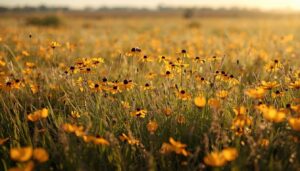
Tickseed, or Coreopsis, is one of the most dependable summer blooming perennials you can plant. It spreads through rhizome growth or self-seeding, filling gaps in prairie meadow design with minimal effort.
Bi-color cultivars add visual depth, and slender stems make it practical for cut flower uses.
As a pollinator-friendly, long-blooming perennial, Coreopsis thrives in poor, well-drained soils across USDA zones 4–9.
Tall Verbena
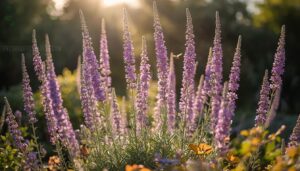
Where Coreopsis fills the ground, Tall Verbena (Verbena bonariensis) claims the sky.
This long-blooming perennial rises to 4 feet, delivering airy texture and striking vertical accent throughout summer. Its self-seeding habit naturalizes borders effortlessly, and crown regrowth returns it each spring in cooler zones.
A true pollinator-friendly perennial garden design staple, it offers butterfly-cutting stems and continuous color in full sun.
Anise Hyssop
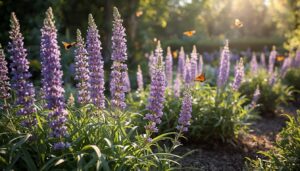
Next up from Tall Verbena’s vertical drama, Anise Hyssop (Agastache foeniculum) brings fragrance into the mix. This long-blooming perennial reaches 4 feet, producing lavender spikes that shine in herb border design and cut flower arrangements.
It’s heat tolerant, enhances pollinator-friendly perennial garden design, and offers culinary uses in teas. Its pest repellent properties and essential oil extraction value make it genuinely hard to overlook.
English Lavender
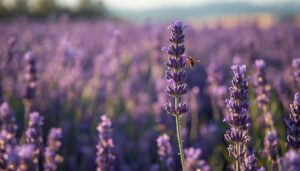
Where Anise Hyssop offers fragrance with a herbal edge, English Lavender (Lavandula angustifolia) takes it further — blending beauty, utility, and resilience into one compact shrub. It’s among the most dependable low-maintenance summer blooming flowers you can grow.
- Purple-violet spikes rise 1–3 feet above silvery-gray foliage in full sun
- Essential oil applications span perfumes, soaps, and aromatherapy
- Drought tolerant once established, needing minimal watering
- Pollinator-friendly plants like Hidcote and Munstead draw bees and butterflies reliably
- Propagation by cuttings and winter pruning keep plants compact and productive
Its herbal remedy history runs centuries deep. Plant it as a companion planting alongside culinary herbs, and meet its sun exposure requirements — 6 to 8 hours daily — in well-drained soil.
Best Annuals for Continuous Summer Color
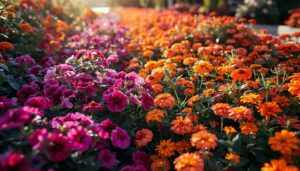
Annuals don’t stick around year after year, but that’s actually their superpower — they pour everything into blooming, and they do it all season long. You get bold, reliable color from the first warm days of summer straight through to the first frost.
Here are the best annuals to plant if you want your garden working hard without a break.
Zinnia
Few annuals match Zinnia for season-long color in a full sun garden. These low-maintenance summer blooming flowers start producing bright blooms 60–90 days after sowing and won’t stop until frost. They’re also top-tier pollinator-friendly plants, drawing bees and butterflies reliably.
| Feature | Detail |
|---|---|
| Cut Flower Longevity | Holds color well in vases |
| Pest Management | Space plants for good airflow |
| Companion Planting | Pairs well with herbs and vegetables |
| Seed Saving | Harvest late-summer seeds for next year |
Try bold color combinations—orange with purple, or red with white—for maximum visual impact.
Marigold
Marigolds earn their place as one of the most reliable low‑maintenance summer‑blooming flowers you can grow.
Beyond their bold orange-to-yellow heads, they work double duty in your garden:
- Act as a natural Pest Repellent, deterring nematodes and aphids
- Support Companion Planting alongside vegetables
- Offer edible petals as a Culinary Garnish
- Include stunning Bicolor Varieties with contrasting edges
Their Essential Oil Uses extend beyond the garden, making pollinator‑friendly plants that truly multitask.
Cosmos
Cosmos brings that easy, wildflower charm to summer gardens — feathery foliage topped with daisy-like blooms in pink, white, and crimson that deliver seasonlong color from midsummer to frost. As a pollinator-friendly plant, it draws bees and butterflies reliably.
Direct-sow in poor, well-drained soil for best results; rich soil reduces blooming. Deadhead spent flowers to keep this easy annual producing continuously.
Petunia
Petunia earns its spot as one of the most reliable low‑maintenance summer blooming flowers, delivering nonstop color from late spring straight through to frost. Fragrant cultivars enhance the appeal, while decades of color breeding have expanded your palette dramatically.
- Funnel-shaped blooms in solid, veined, or star patterns
- Pollinator-friendly plants that draw butterflies and hummingbirds
- Thrives in full sun garden plants settings with well‑drained soil
Deadhead regularly, fertilize every two to four weeks, and practice basic disease management through morning watering to prevent rot. Companion planting with trailing varieties creates smooth container displays. Propagation methods from cuttings extend your collection effortlessly.
Calibrachoa
Few container plants match Calibrachoa’s cascading habit and vibrant color range — pink, purple, yellow, and blue blooms spill continuously from late spring to frost. Its compact mound form fits hanging baskets and window boxes perfectly. As one of the most reliable low-maintenance summer blooming flowers, it thrives as a full sun garden plant with minimal deadheading required.
| Feature | Detail |
|---|---|
| Height/Spread | 6–12 in tall, 12–24 in wide |
| Bloom Period | Late spring through frost |
| Light Need | Full sun; light afternoon shade in heat |
| Care Tip | Light pruning tips encourage denser growth |
| Best Varieties | Disease-resistant cultivars reduce mildew risk |
Dahlia
Dahlias are the showstoppers of any summer garden — their Color Palette spans red, orange, yellow, and white, with Flower Form Types ranging from compact pompons to dinner‑plate blooms reaching 30 cm across. They bloom all summer long when properly maintained.
- Start tubers after the last frost in warm, well‑drained soil
- Apply Staking Techniques early to support stems reaching 1–2 meters
- Deadhead regularly for continuous cut flower arrangements
- Use Propagation Methods like division or cuttings for faster flowering
- Practice Tuber Storage in cool, dry conditions each fall
Nasturtium
Few summer annuals pull double duty quite like Nasturtium (Tropaeolum majus). Its edible flowers and leaves bring bold peppery flavor straight from the garden to your plate, while its self‑seeding habit means it often returns year after year with minimal effort.
| Feature | Detail | Garden Benefit |
|---|---|---|
| Flower Color | Orange, red, yellow, cream | Bright summer border plants |
| Edible Use | Leaves, flowers, seed pods | Peppery flavor; caper substitute |
| Companion Planting | Attracts beneficial insects | Helps pollinator‑friendly gardens |
| Bloom Period | Late spring through summer | Long‑blooming, season‑wide color |
| Soil Preference | Poor, well‑drained soil | Low‑maintenance, drought‑tolerant |
Globe Amaranth
Where Nasturtium leans edible and sprawling, Globe Amaranth (Gomphrena globosa) keeps things neat and reliable.
Its compact growth habit tops out at 12–24 inches, producing round, button-like heads in a vibrant color palette — magenta, red, white, and soft pink.
Cut flower longevity is impressive, and dried flower uses extend well past the season. Easy seed propagation makes it a smart pick for any continuous flowering garden.
Flowers for Heat, Shade, Containers
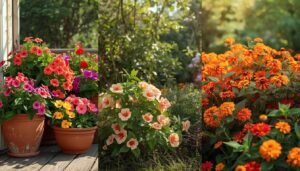
Not every garden grows under the same conditions, and that’s actually a good thing. Whether you’re working with blazing sun, dappled shade, or a handful of containers on a balcony, there are summer bloomers built for exactly where you are.
Here are the best options for every situation.
Drought-Tolerant Summer Bloomers
When heat peaks and rainfall disappears, drought-tolerant perennials keep your borders alive with color. Yarrow, coneflower, and coreopsis are classic long-blooming perennials and heat-tolerant ornamental plants that thrive through dry spells using deep root systems and water conservation techniques like mulching.
- Soil amendment strategies improve drainage and drought resilience
- Companion plant pairings strengthen seasonal color schemes naturally
- Wildlife habitat benefits increase through extended pollinator-friendly bloom windows
Partial-Shade Flowering Varieties
Not every garden gets full sun all day — and that’s actually fine. Morning Light Optimization matters here: plants like coneflower, Black-eyed Susan, and daylily perform reliably as shade-tolerant garden flowers when afternoon shade reduces heat stress.
Cool Soil Strategies, including mulching, extend bloom windows considerably. Edge Planting Techniques along borders let these long-blooming perennials catch enough light while keeping foliage color vibrant.
Container-Friendly Blooming Plants
Moving from garden beds to pots doesn’t mean sacrificing color. Container-friendly flowering species like calibrachoa, petunias, and begonias deliver continuous blooms all summer.
Soil Mix Innovations — think added grit and slow-release fertilizer — support low-maintenance summer blooming flowers without constant attention.
Self Watering Systems keep moisture steady, while smart Container Materials and Color Palette Planning turn potted perennials into a striking, long-blooming display.
Balcony and Patio Flower Choices
Balconies and patios reward smart plant choices. Railway Planters and Vertical Trellises make the most of limited space while showcasing a bold Seasonal Color Palette.
Geraniums, petunias, and container-friendly flowering species like verbena and calibrachoa thrive in full sun with Waterwise Irrigation, keeping roots hydrated without waste. Try Companion Planting low-maintenance summer blooming flowers with trailing sweet alyssum for layered, long-lasting interest across your potted perennials all season.
Border Flowers for Season-Long Color
Border planting works best when you layer height, texture, and bloom time together. Here’s what keeps colorful garden borders going strong all season:
- Border Height Gradients — Place yarrow and Black-Eyed Susan mid-border, low growers at edges.
- Seasonal Color Transitions — Coneflower bridges summer into fall seamlessly.
- Edge Plant Textures — Mix fine and bold foliage for Color Harmony.
- Companion Plant Pairings — Blanket flower beside longblooming perennials extends your perennial border’s peak.
Tips to Keep Flowers Blooming Longer
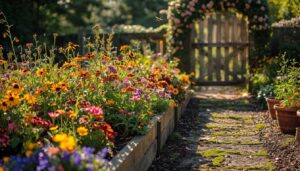
Getting flowers to bloom isn’t the hard part — keeping them blooming all season is where most gardeners lose ground. few consistent habits make a bigger difference than any single plant choice.
Here’s what actually works.
Deadheading and Light Pruning
Deadheading is one of the simplest perennial garden maintenance tips you can use for season-long bloom. Remove spent flowers as soon as they fade — this energy redistribution strategy stops seed prevention from stalling new growth.
Use sharp pruners at a 45-degree pruning angle, cutting just above a leaf node.
Timing strategies matter too: weekly checks during summer keep long-blooming perennials and low-maintenance summer blooming flowers performing consistently.
Proper Watering Practices
Water is the one thing summer bloomers can’t fake their way through. Deep Root Irrigation — watering slowly to 6–12 inches — builds resilient root systems and reduces Watering Frequency Adjustments over time.
Soil Moisture Sensors take the guesswork out of timing. For drought tolerant, low water plants, let the top inch dry first.
Container Watering Strategies differ: pots lose moisture fast, so check them daily during heat. Always water at soil level — Evaporation Reduction Techniques start there.
Mulching for Moisture Retention
Think of mulch as your garden’s built-in moisture bank. Applying 2–4 inches following Mulch Depth Guidelines shields soil from summer heat, supporting Soil Temperature Regulation and reducing evaporation substantially.
Organic Mulch Choices like bark chips or shredded leaves slowly decompose, improving soil structure over time.
For containers, Container Mulch Benefits include fewer waterings — essential for low water plants and drought tolerant perennials in hot climates.
Maintain your Mulch Maintenance Routine annually.
Fertilizing Without Overfeeding
Feeding your flowers is less about generosity and more about precision. Slow Release Fertilizers deliver steady nutrients over 6–12 weeks, matching what roots actually need.
Always start with Soil Testing to confirm pH and gaps before adding anything.
Use Organic Nutrient Sources like compost for gentle, consistent feeding, and mind your Dilution Timing — cool mornings work best.
Proper Water Leaching prevents salt buildup, protecting soil moisture requirements and overall plant health.
Spacing for Airflow and Health
Just like fertilizing, spacing isn’t guesswork — it’s a system. Canopy Gap Management means keeping two to three feet between plants so Vertical Air Channels form naturally, letting moisture escape before fungal problems start.
- Staggered Row Planting breaks up dense foliage walls, improving cross-ventilation
- Mulch Breathability keeps crowns dry without sealing in humidity
- Seasonal Spacing Adjustments widen gaps by 10–20% during late-summer heat
Choosing Varieties for Your USDA Zone
Spacing sets the stage — now let your zone seal the deal. Zone Mapping Tools like the USDA Plant Hardiness Map, you can pinpoint Hardiness Ratings and apply Microclimate Adjustments for edge conditions. Smart hardiness zone recommendations turn summerblooming perennials into reliable performers.
| USDA Zone | Longblooming Perennial | Heat Tolerance Index |
|---|---|---|
| 3–5 | Coneflower | Moderate |
| 5–7 | Black-Eyed Susan | High |
| 7–9 | Coreopsis | Very High |
Cold Snap Strategies and perennial planting tips for a long blooming period keep USDA hardiness zones for perennials working in your favor all season.
Frequently Asked Questions (FAQs)
Which flowers last the longest in summer?
Some flowers genuinely bloom all summer long. Coneflower, Black-Eyed Susan, and Coreopsis are your strongest long-blooming perennials, each lasting 8–12 weeks with minimal care and solid drought tolerance.
Which plant gives 12 months of flowers?
No single plant reliably gives 12 months of flowers in most climates. However, tropical perennials, evergreen shrubs, and climate-adapted cultivars like Knockout roses come closest, offering near-continuous blooms across seasons.
What type of flower lasts the longest?
Want true cut flower durability?
Chrysanthemums and carnations lead the pack, lasting 14–21 days with proper stem preservation and post‑harvest care — making them top choices for vase longevity and shelf life comparison.
What flowers last the longest in summer?
Coneflowers, Black-Eyed Susans, and Coreopsis bloom all summer long, offering season‑long bloom from June through October.
These longblooming plants support Wildlife Habitat Creation and fit naturally into smart Garden Design Strategies.
What is the longest flowering summer flower?
Among summer perennials, coneflowers stand out for Peak Bloom Timing, delivering Seasonal Color Consistency from early summer through fall — a full three to four months of continuous flowering garden plants that few longblooming plants can match.
What are the best low maintenance summer flowers?
For low-maintenance summer flowers, coneflower, yarrow, and coreopsis top the list.
These drought-tolerant plants thrive with minimal watering, support pollinator-friendly plants naturally, and return year after year in perennial flower beds without much fuss.
What flowers bloom all summer in full sun?
Full sun beds reward you with the longest bloom seasons. Coreopsis, Yarrow (Achillea), and Black-Eyed Susan are reliable summer-blooming perennials, delivering season-long bloom with strong heat tolerance and minimal care.
When should I start planting summer flowers?
Start after your last frost date, once soil hits 10°C (50°F). Zones 3–4 need late spring sowing; zones 7–8 can plant in early April.
How do I extend bloom time naturally?
Think of blooming like a conversation — keep responding, and it keeps going.
Deadhead spent flowers twice weekly, cool the root zone with mulch, and use balanced nutrient feeding mid-season to sustain continuous flowering plants naturally.
What companion plants work best together?
Pairing bee balm with yarrow builds pollinator corridors that hum with activity all season.
Nasturtiums handle pest-repellent pairings naturally, while coneflower beside butterfly weed invites diverse pollinators through every summer bloom.
Conclusion
A single well-chosen plant can carry an entire garden through months of relentless heat without missing a beat. That’s the quiet power behind selecting long‑lasting summer flower varieties—they don’t just survive the season, they define it.
Pair coneflowers with zinnias, layer yarrow behind cosmos, and deadhead consistently.
Your garden won’t wait for ideal conditions; it’ll create them.
Choose right once, and summer color stops being something you chase and starts being something you keep.