This site is supported by our readers. We may earn a commission, at no cost to you, if you purchase through links.
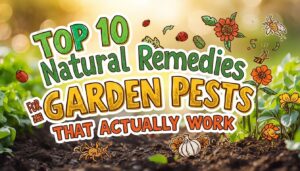
Most gardeners wage the same losing war every season—spray something harsh, watch the pests return two weeks later, and wonder if the vegetables are even safe to eat anymore. Chemical pesticides work fast, but they don’t discriminate. They hit the aphids and the ladybugs equally. The soil pays for it too.
Natural remedies for garden pests flip this approach entirely: instead of scorching the ecosystem, you work with it. Neem oil disrupts insect hormones. Marigold roots poison nematodes. Parasitic wasps hunt caterpillars, so you don’t have to. These aren’t folk remedies—they’re biology doing the heavy lifting.
Table Of Contents
- Key Takeaways
- Top 10 Natural Pest Control Products
- 1. Superthrive Neem Oil Plant Fertilizer
- 2. Tierra Garden Micromesh Plant Cover
- 3. YARDGARD Galvanized Welded Wire Fence
- 4. YARDGARD Silver Hexagonal Mesh Fence
- 5. Dalen Deer X Garden Netting
- 6. Espoma Organic Earth Tone Insecticidal Soap
- 7. Live Beneficial Nematodes Soil Pest Control
- 8. Squirrel Stopper Repellent Spray
- 9. Messina Rodent Stopper Spray
- 10. Plantskydd Animal Repellent Spray
- DIY Natural Pest Sprays
- Physical Barriers and Traps
- Companion Planting Pest Deterrents
- Beneficial Wildlife Pest Control
- Frequently Asked Questions (FAQs)
- How to naturally get rid of garden pests?
- What is the best natural pesticide for a garden?
- What can I spray on plants to stop them from being eaten?
- How to naturally get rid of bugs in your garden?
- How do you make homemade pesticide for garden?
- How often should natural pest remedies be reapplied?
- Can natural pest control work in large gardens?
- What pests resist most natural control methods?
- How to store homemade pest control solutions?
- When is the best time to apply natural remedies?
- Conclusion
Key Takeaways
- Neem oil is your most versatile starting point — one OMRI-certified spray handles over 200 pests and common fungal issues without harming beneficial insects when you apply it correctly.
- Physical barriers like micromesh covers, copper tape, and galvanized fencing stop pests before they reach your plants, often outperforming sprays that only react after damage is done.
- Companion planting pulls double duty: marigolds poison soil nematodes, basil confuses aphids and whiteflies, and chrysanthemums deliver natural pyrethrins — all without a single bottle.
- Natural pest control only sticks when you layer it — combine sprays, barriers, beneficial insects, and habitat design into a system, and you stop fighting the same battle every season.
Top 10 Natural Pest Control Products
The right product can make pest control feel less like a battle and more like a system that works for you. Whether you’re dealing with chewing insects, nibbling rabbits, or tunneling grubs, there’s a natural solution designed for the job.
From tackling aphids to deterring deer, exploring your environmentally friendly pest control options helps you build a smarter, more targeted approach for your garden.
Here are ten products worth having in your garden toolkit.
1. Superthrive Neem Oil Plant Fertilizer
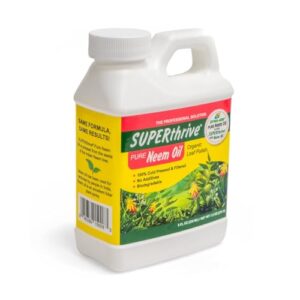
Neem oil is one of the most multipurpose tools in a natural pest management toolkit. SUPERthrive’s cold-pressed, OMRI-certified formula targets over 200 pests — aphids, whiteflies, mealybugs, scale — while also suppressing fungal issues like powdery mildew.
Mix 1–2 tsp per gallon of warm water with a few drops of mild dish soap, and apply in the evening to avoid leaf burn.
It’s safe for beneficial insects when used correctly. At 8 fl oz, it’s compact but genuinely effective.
| Best For | Gardeners who want an organic, chemical-free way to tackle pests and fungal issues on both indoor and outdoor plants. |
|---|---|
| Pest Target | Aphids, whiteflies, mealybugs, fungus gnats |
| Application Method | Foliar spray (mixed with soap) |
| Indoor/Outdoor | Indoor and outdoor |
| Chemical-Free | Organic/OMRI listed |
| Reusable | Yes, per batch mixed |
| Pet/Child Safe | Yes, when used correctly |
| Additional Features |
|
- Handles a wide range of pests — aphids, whiteflies, mealybugs, and more — plus fungal problems like powdery mildew, all in one bottle.
- OMRI-certified organic, so it fits right into any chemical-free or organic gardening routine.
- Safe for beneficial insects, birds, and wildlife when you apply it correctly — no guilt trips.
- The mixed solution breaks down fast (within ~8 hours), so you have to use it right after you make it — no storing leftovers.
- Applying in direct sun or heat can burn leaves, which means timing your sprays matters a lot.
- The smell is pretty funky — think stale corn chips — and at 8 fl oz, the bottle runs out faster than you’d expect.
2. Tierra Garden Micromesh Plant Cover
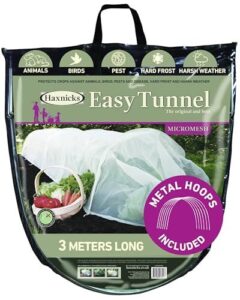
Sprays handle what’s already on your plants — but the Tierra Garden Micromesh Cover stops pests before they land. The accordion-style tunnel unfolds fast and folds flat when you’re done. Its 0.6 mm polyethylene mesh blocks aphids, leafhoppers, carrot flies, and cabbage loopers without blocking rain or airflow.
At 118 inches long, it fits a standard 4×4 raised bed. Just note: at 12 inches tall, it’ll feel cramped once your brassicas hit full height.
| Best For | Gardeners growing vegetables, herbs, or flowers in small raised beds who want a chemical-free way to keep pests out without a lot of setup. |
|---|---|
| Pest Target | All flying and crawling insects |
| Application Method | Physical tunnel barrier |
| Indoor/Outdoor | Outdoor |
| Chemical-Free | Yes, physical barrier |
| Reusable | Yes, multi-season |
| Pet/Child Safe | Yes, physical only |
| Additional Features |
|
- The accordion design snaps open in seconds and folds flat for easy storage between seasons.
- Ultra-fine 0.6 mm mesh keeps out even tiny insects while still letting rain and air through naturally.
- Reusable year after year, so it pays for itself compared to buying disposable row covers every season.
- At just 12 inches tall, it gets tight fast once brassicas like broccoli or Brussels sprouts start growing upward.
- Only covers an 18-inch-wide bed, so bigger gardens will need multiple units.
- The drawstring ends can leave small gaps that may need a brick or tape to fully seal out insects.
3. YARDGARD Galvanized Welded Wire Fence
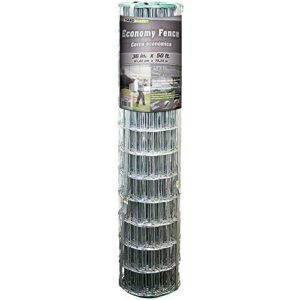
When taller crops or larger intruders are the concern, the YARDGARD Galvanized Welded Wire Fence steps in where mesh tunnels can’t. The 2×3-inch welded openings block rabbits, dogs, and most mid-sized animals from reaching your beds.
At 36 inches wide and 50 feet long, it covers serious ground. The 16-gauge galvanized steel resists rust through multiple seasons.
Cut it to fit any bed shape, attach it to T-posts, and you’ve got a sturdy perimeter that holds.
| Best For | Gardeners and pet owners who need a durable, easy-to-install fence to keep mid-sized animals out of beds or contained in a yard. |
|---|---|
| Pest Target | Rabbits, dogs, cats, wildlife |
| Application Method | Cut-to-fit wire roll |
| Indoor/Outdoor | Outdoor |
| Chemical-Free | Yes, physical barrier |
| Reusable | Yes, cut and reshape |
| Pet/Child Safe | Yes, no chemicals |
| Additional Features |
|
- Covers a lot of ground at 36 inches tall and 50 feet long — great for larger garden setups
- Galvanized steel holds up through rain and sun without rusting out quickly
- Easy to cut and shape, so it works for all kinds of DIY setups like dog runs or garden borders
- The 2×3-inch openings won’t stop smaller critters like mice or young chicks
- 16-gauge wire can bend or fail under pressure from bigger, stronger animals
- Some users have reported bent rolls or weld issues right out of the box, so inspect it before you start installing
4. YARDGARD Silver Hexagonal Mesh Fence

For smaller critters — rabbits, bunnies, the occasional curious rodent — the YARDGARD Silver Hexagonal Mesh Fence gets the job done without overbuilding. The hexagonal galvanized steel openings measure about two inches across, tight enough to stop small animals at ground level.
At 24 inches wide and 25 feet long, it’s easy to shape around irregular bed edges. Lightweight enough to cut with tin snips, it installs fast.
Just know the mesh won’t stop squirrels — they’ll find a gap.
| Best For | Gardeners who need a quick, affordable way to keep rabbits and small critters out of flower beds or veggie patches. |
|---|---|
| Pest Target | Rabbits, squirrels, small wildlife |
| Application Method | Rolled fence barrier |
| Indoor/Outdoor | Outdoor |
| Chemical-Free | Yes, physical barrier |
| Reusable | Yes, reposition as needed |
| Pet/Child Safe | Yes, no chemicals |
| Additional Features |
|
- Lightweight and easy to cut and shape around uneven garden edges
- Galvanized steel holds its form and resists rust
- Budget-friendly option for temporary or seasonal fencing needs
- Mesh openings are too large to stop squirrels or similarly sized animals
- Flimsy on its own — needs extra support if you want it to hold tension
- The tightly bound roll can be a pain to unroll, especially the first time
5. Dalen Deer X Garden Netting
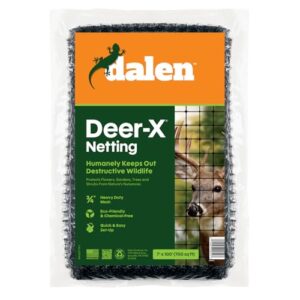
Deer don’t respect garden borders — but the Dalen Deer X Netting does. At 7 feet tall and 100 feet long, this UV-resistant polypropylene mesh creates a physical barrier deer simply can’t push through.
The 3/4-inch openings block browsing without blocking light, air, or water.
It’s lightweight at 1.6 lb, easy to cut, and wraps cleanly around irregular beds or shrubs.
At $24.99 a roll, it’s a practical seasonal solution.
Just anchor it tightly — wind and persistent rabbits will find any slack.
| Best For | Home gardeners who want an affordable, no-fuss way to keep deer and small pests out of vegetable beds, flower gardens, or ornamental shrubs without committing to permanent fencing. |
|---|---|
| Pest Target | Deer, rabbits, raccoons, small animals |
| Application Method | Rolled net barrier |
| Indoor/Outdoor | Outdoor |
| Chemical-Free | Yes, physical barrier |
| Reusable | Yes, cut and store |
| Pet/Child Safe | Yes, no chemicals |
| Additional Features |
|
- At $24.99 for a 100-foot roll, it’s one of the cheapest ways to protect a large garden area from deer damage.
- The black polypropylene mesh nearly disappears in the garden — no eyesore, just protection.
- Cuts easily to any shape, wraps around shrubs or trees, and stores away when the season’s done.
- Lightweight enough that wind or a determined rabbit can cause real problems if it’s not anchored down tight.
- Birds can’t see the mesh well, so hanging it near feeders or bird-friendly areas is a bad idea.
- Won’t hold up against persistent gnawers like rats or rabbits on its own — you may need to reinforce the base.
6. Espoma Organic Earth Tone Insecticidal Soap
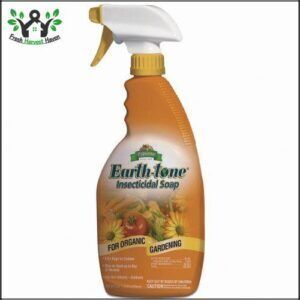
Aphids and mealybugs don’t stand a chance against Espoma’s Earth Tone Insecticidal Soap. It uses potassium salts of plant-derived fatty acids to dissolve the waxy coating soft-bodied pests rely on — no harsh chemicals involved.
It’s especially handy for beginners — pair it with solid vegetable gardening basics for beginners and your plants have a real fighting chance from the start.
Spray it directly on aphids, whiteflies, or spider mites, and it works on contact. It’s safe around kids and pets when used as directed, and you can apply it right up to harvest day.
Avoid spraying in full sun to prevent leaf burn.
| Best For | Home gardeners dealing with soft-bodied pest problems on indoor plants, veggies, or fruit trees who want an organic, low-fume solution safe for the whole household. |
|---|---|
| Pest Target | Aphids, mealybugs, whiteflies, spider mites |
| Application Method | Ready-to-use pump spray |
| Indoor/Outdoor | Indoor, outdoor, greenhouse |
| Chemical-Free | Plant-derived, organic |
| Reusable | No, single-use bottle |
| Pet/Child Safe | Yes, when used as directed |
| Additional Features |
|
- Plant-derived formula — no harsh chemicals, safe around kids and pets, and you can use it right up to harvest day
- Works on a wide range of soft-bodied pests (aphids, mealybugs, whiteflies, spider mites) across indoor and outdoor plants
- Low odor and non-fuming, so it’s a solid pick for treating houseplants or greenhouse plants without airing out the room
- Won’t do much against hard-bodied insects, and heavy infestations usually need multiple rounds of treatment
- The pump nozzle has a reputation for breaking after just a few uses, which gets frustrating fast
- No residual effect — pests like ants can come right back once the spray dries, so it’s not a one-and-done fix
7. Live Beneficial Nematodes Soil Pest Control
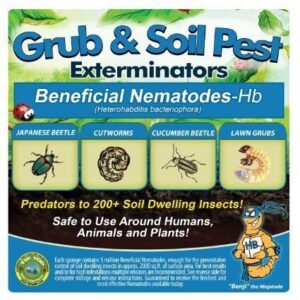
If grubs are wrecking your lawn from underground, nematodes are your best weapon. These microscopic organisms — specifically Heterorhabditis bacteriophora — move through moist soil and hunt down grubs, weevils, and beetle larvae.
Each packet contains 25 million live nematodes. Mix them into water and apply with a watering can or hose sprayer.
Apply early morning or evening to protect them from UV exposure. They’re safe for kids, pets, and earthworms — completely chemical-free and surprisingly effective.
| Best For | Homeowners dealing with soil-dwelling pests like grubs, weevils, or beetle larvae who want a chemical-free solution safe for kids, pets, and garden beds. |
|---|---|
| Pest Target | Grubs, beetles, weevils, termites, ticks |
| Application Method | Diluted in water, hose or can |
| Indoor/Outdoor | Outdoor (soil application) |
| Chemical-Free | Yes, biological control |
| Reusable | No, single application |
| Pet/Child Safe | Yes, certified safe |
| Additional Features |
|
- 25 million live nematodes per packet — serious firepower against underground pests
- Completely chemical-free and safe around kids, pets, and wildlife
- Easy to apply with a watering can or hose sprayer — no special equipment needed
- Timing and soil conditions have to be just right or it won’t work well
- Packaging can clump, making it tricky to get an even mix
- Only works on soil-dwelling pest stages — won’t help with surface pests like adult fleas
8. Squirrel Stopper Repellent Spray
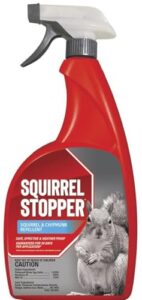
Squirrels aren’t just annoying — they’re persistent. Squirrel Stopper Repellent Spray gives you a non-toxic way to push back.
It works by hitting squirrels on three fronts: smell, taste, and touch. Spray it around bird feeders, garden beds, or garage entries. One quart covers up to 1,000 sq ft, and it claims 30-day protection.
Skip applying it directly to foliage — it can burn leaves. Reapply after heavy rain for best results.
| Best For | Homeowners dealing with squirrel or chipmunk damage around bird feeders, gardens, patios, or garages who want a non-toxic, ready-to-use solution. |
|---|---|
| Pest Target | Squirrels, chipmunks |
| Application Method | Ready-to-use pump spray |
| Indoor/Outdoor | Indoor and outdoor |
| Chemical-Free | Yes, natural repellent |
| Reusable | Yes, until bottle empty |
| Pet/Child Safe | Yes, when applied as directed |
| Additional Features |
|
- Hits squirrels three ways — smell, taste, and touch — making it harder for them to just ignore it
- No mixing needed, and one quart goes a long way at up to 1,000 sq ft
- Safe around pets and kids when used as directed, so no need for harsh chemicals
- The 30-day claim doesn’t always hold up — many users see squirrels coming back within just a few days
- The spray pump clogs easily, which gets frustrating fast
- Can’t be sprayed directly on plants or foliage without risking leaf burn, which limits where you can use it
9. Messina Rodent Stopper Spray
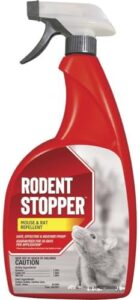
Mice don’t need much — a gap the width of a pencil is enough. Messina Rodent Stopper works by making your space smell and taste like somewhere they’d rather avoid.
The lavender-mint formula is plant-based, safe around kids, pets, and vegetables, and one 32 oz bottle covers up to 1,000 sq ft. It lasts about 30 days per application.
It won’t evict an existing nest on its own, so pair it with traps if rodents are already inside.
| Best For | Homeowners who want to keep mice and rats out before they become a real problem — especially useful around garages, gardens, and vehicle engine bays. |
|---|---|
| Pest Target | Mice, rats, rodents |
| Application Method | Ready-to-use trigger spray |
| Indoor/Outdoor | Indoor and outdoor |
| Chemical-Free | Yes, natural repellent |
| Reusable | Yes, until bottle empty |
| Pet/Child Safe | Yes, when applied as directed |
| Additional Features |
|
- Plant-based lavender-mint formula is safe around kids, pets, and plants
- One bottle covers up to 1,000 sq ft and stays effective for about 30 days
- Weather-resistant, so rain and watering won’t wash it away after every application
- Won’t clear out an existing infestation on its own — you’ll still need traps
- Needs reapplication every 30 days or after heavy rain or surface cleaning
- Results can vary; some users report little to no change in rodent activity
10. Plantskydd Animal Repellent Spray
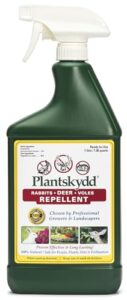
Deer and rabbits don’t warn you — they just show up overnight and strip your beds clean.
Plantskydd works before that happens. Its blood-based formula releases an odor animals associate with predators, stopping them before they take a single bite.
It’s OMRI-listed, biodegradable, and safe around pets.
One 32 oz bottle covers up to 100 plants, with protection lasting 2–4 weeks during the growing season and up to six months on dormant plants.
| Best For | Gardeners and homeowners who deal with regular deer, rabbit, or wildlife damage and want a ready-to-use, pet-safe repellent that doesn’t need constant reapplication. |
|---|---|
| Pest Target | Deer, rabbits, elk, voles, squirrels |
| Application Method | Ready-to-use pump spray |
| Indoor/Outdoor | Outdoor |
| Chemical-Free | Yes, biodegradable formula |
| Reusable | Yes, within 90 days |
| Pet/Child Safe | Yes, non-toxic as directed |
| Additional Features |
|
- Covers a wide range of animals — deer, rabbits, elk, voles, squirrels, and more — so you’re not buying multiple products.
- Long-lasting protection, especially in the dormant season where one application can hold for up to six months.
- Biodegradable and safe around pets and people, so you don’t have to stress about what’s touching your garden.
- The cedarwood/blood scent is strong and can linger for days — your neighbors might notice before the deer do.
- The spray nozzle can clog thanks to the thick formula, so plan on some extra cleanup after each use.
- Once opened, you’ve got 90 days to use it before it loses effectiveness — not great if your garden is small or seasonal.
DIY Natural Pest Sprays

Most garden pests don’t stand a chance against a few simple sprays you can mix at home. You don’t need a chemistry degree — just the right ingredients and a spray bottle.
Here are seven DIY sprays worth keeping in your toolkit.
How to Mix Neem Oil Spray
Getting the mix right makes all the difference. Start with warm water — around 110°F — in a spray bottle halfway full.
Add your emulsifier first, then slowly pour in neem oil at 1–2 tsp per gallon. That two-step mixing process prevents clumping.
Shake for 60 seconds, then spray full leaf coverage — top and bottom. every few minutes.
Use your DIY garden spray within 48 hours. The effectiveness relies on organic neem oil.
Homemade Insecticidal Soap for Aphids
Neem oil controls the oily pests, but for aphids specifically, a simple soap and water insecticidal spray often does the job faster. Mix 1 tablespoon of pure castile soap per quart of water — no fragrances, no degreasers.
Key steps for your DIY garden spray:
- pH Adjustment: Use slightly acidic water around pH 6–7 for better fatty acid activity
- Temperature Impact: Mix in warm water, but apply during cooler morning hours to avoid leaf burn
- Storage Shelf Life: Make fresh batches — soap solutions lose potency after 24 hours
- Spray Bottle Calibration: Set your nozzle to a fine mist for even coverage on leaf undersides where aphids cluster
- Aphid Resistance Management: Rotate with neem oil every two weeks so populations don’t adapt
These natural pest control methods work on contact, so full coverage matters.
Garlic and Onion Spray Recipe
Soap sprays handle aphids well, but garlic and onion sprays cover a broader range — aphids, whiteflies, thrips, and mites.
Ingredient Ratios: Crush 4–6 garlic cloves and one small onion into 1–2 liters of water. Soak 12–24 hours — that’s your extraction method. Strain, add 1 tsp dish soap per liter, and spray every 5–7 days.
| Step | Detail |
|---|---|
| Shelf Life | Use within 24 hours |
| Phytotoxicity Testing | Test one leaf first; wait 24 hours |
Apply mornings only.
Chili Pepper Spray for Caterpillars
Garlic keeps aphids in check, but caterpillars need a harder push — that’s where chili pepper spray earns its place. Capsaicin levels irritate caterpillar mouthparts on contact, making cabbage loopers and similar pests move on fast.
Mix 3 tsp cayenne per quart of water, add a drop of dish soap for adhesion, and spray stems and undersides.
Reapply after rain. Avoid blooms — pollinator safety matters. Test first to prevent leaf burn.
Fish Fertilizer Spray for Squirrels
Fish fertilizer works as a squirrel deterrent, but odor reduction matters. Follow dilution guidelines — 1 part concentrate to 10 parts water — and apply to leaves, not soil.
Spray during cooler hours for better application timing and slower volatilization.
Without rotation, squirrel habituation becomes a real problem.
Non-fish alternatives like capsaicin or garlic-based organic pest repellents help break that cycle.
Safe Application Timing for Sprays
Timing your sprays right makes all the difference.
The Morning Spray Window — between 5 and 9 a.m. — gives you cooler temps and rising pest activity. The Evening Application Window, from 5 to 7 p.m., reduces evaporation and pollinator exposure.
Follow these three rules:
- Stay below 8 km/h Wind Speed Limits
- Apply between 60–75°F for ideal Temperature Thresholds
- Respect Pollinator Protection Timing — avoid midday blooms
Avoiding Leaf Burn and Pollinator Harm
Even the best organic pest control can backfire if you spray carelessly. Stick to correct dilution ratios — 1–2 tsp neem oil per gallon, 2 tsp insecticidal soap per quart — and always choose low-phytotoxicity products.
Shade-protected spraying prevents leaf burn on hot days.
Use bee-friendly formulations and non-toxic surfactants, and keep garlic spray away from open blooms.
Nonchemical pest management works best when you protect your allies.
Physical Barriers and Traps
Sometimes the simplest fix is just keeping pests out in the first place. Physical barriers and traps don’t require spraying, mixing, or waiting — they work around the clock without much effort on your part.
Here are seven options worth putting to use in your garden.
Floating Row Covers for Vegetables

Think of floating row covers as a force field for your vegetable beds. Spun-bonded polypropylene fabric — generally 0.5 to 1.0 oz per square yard — blocks flea beetles, thrips, and cabbage loopers while still letting in light and rain.
Here’s what makes them worth it for organic pest management:
- Pest Exclusion Efficiency — physically prevents adults from laying eggs on seedlings
- Microclimate Benefits — raises soil temps by several degrees, supporting season extension in spring and fall
- Material Selection — UV-stabilized fabric resists breakdown during long-season use
- Installation Techniques — bury edges and use hoops; leave slack so stems aren’t pinched as plants grow
It’s eco-friendly pest control without a single chemical.
Copper Tape for Slugs and Snails

Copper tape works like an invisible fence for slugs and snails — when their slime contacts the metal, it delivers a mild electrical charge that sends them elsewhere.
Use 4 to 6 cm wide tape, and clean the surface before applying for strong adhesion. Wet conditions actually boost its effectiveness.
Check it regularly, replace worn sections, and pair it with other physical barriers for best results.
Diatomaceous Earth for Crawling Insects
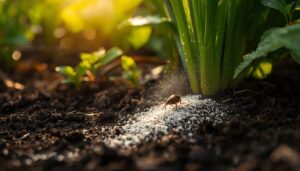
Diatomaceous earth is basically tiny fossilized shells ground into a razor-sharp dust — invisible to us, deadly to crawling insects. Sprinkle food-grade diatomaceous earth around plant bases and along pest pathways for effective nontoxic insect control techniques.
Keep it dry — moisture management is critical since wet DE loses its abrasive action. Wear a mask during application.
As part of IPM integration, it complements other natural pest solutions beautifully.
Yellow Sticky Traps for Flying Pests
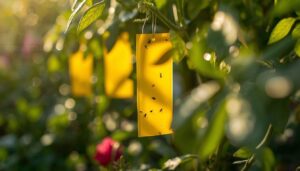
Yellow sticky traps work because flying pests like whiteflies, aphids, and gnats can’t resist that bright hue — color attraction does the heavy lifting. Hang them 3–6 feet high for best placement height results.
adhesive durability holds up through humidity and light rain.
Check weekly — monitoring frequency matters for spotting hotspots early.
Safe, non-toxic, and effective organic pest management.
Fencing for Rabbits and Larger Animals

While sticky traps control what flies, fencing controls what hops. For rabbits, Height Standards matter — go at least 60 cm (2 feet).
Use welded wire with Mesh Dimensions of 12.5 mm or smaller; chicken wire is a weaker Material Choice.
Add a Ground Apron buried 15–25 cm deep to stop diggers.
Don’t forget Gate Latching — a loose gate undoes everything.
Netting for Birds, Deer, and Wildlife

Fencing keeps rabbits out, but birds and deer need a different approach.
Nets work — if you pick the right ones. Mesh Size Selection matters: ¼ to ¾ inch blocks most birds without blocking airflow.
Go for UV-Stabilized Materials that last multiple seasons. Always maintain a Canopy Air Gap to prevent heat buildup.
Mind your Installation Timing — before fruiting, not after. Check weekly for Entrapment Prevention.
Aluminum Foil Mulch for Reflective Deterrence
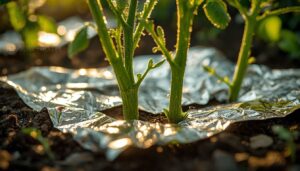
Nets handle birds and deer, but what about the pests already circling at ground level? Aluminum Foil Mulch pulls double duty here.
- Light Reflection confuses aphids and thrips by disrupting their visual host-finding cues.
- Microclimate Cooling keeps soil several degrees cooler during peak heat.
- Weed Suppression blocks germination without herbicides.
- Soil Moisture Retention limits surface evaporation.
Shiny side up. Cut slits for plants. Done.
Companion Planting Pest Deterrents

Some plants do double duty — they look good and keep pests away at the same time. Strategic companion planting is one of the oldest tricks in the garden, and it still holds up.
Here are the plants worth putting to work in your beds.
Marigolds for Nematodes and Hornworms
Marigolds punch well above their weight in the companion planting world. French marigolds (Tagetes patula) excel at nematode trapping through root exudate chemistry — their compounds disrupt nematode feeding and kill juveniles before they establish.
Plant them 12–18 inches apart, early in the season. Their floral scents also trigger hornworm confusion, keeping tomato hornworms from locating your crops.
Basil Near Tomatoes for Pest Reduction
Basil does double duty in the tomato bed. Its volatile aroma effects — driven by linalool and eugenol — disrupt pest pheromone disruption cues, confusing aphids and whiteflies before they settle in.
Plant clumps one to two feet from tomato stems. Clustered basil acts as a moisture retention mulch, while flowering stems deliver a pollinator attraction boost and support soil microbe enhancement beneath the surface.
Rosemary for Bean Beetles and Moths
Rosemary pulls double duty in the bean bed. Plant it 18–24 inches along row edges for effective Scent Barrier Placement — its camphor‑rich oils confuse Mexican bean beetles and mask foliage from egg‑laying moths.
- Maintain Soil Drainage Needs: dry, sunny spots keep oil concentration high.
- Harvest Scheduling: trim sprigs regularly to sustain repellent potency.
- Blooms offer Pollinator Friendly Aroma, drawing beneficial wasps naturally.
Garlic and Onions Around Vegetables
Garlic and onions are quiet workhorses in companion planting. Their Soil Sulfur Benefits come from root secretions that repel aphids, spider mites, and egg‑laying moths — that’s Pest Egg Suppression without spraying a thing.
Follow Intercrop Spacing Rules: 6–12 inches from vegetable rows.
For Seasonal Planting Timing, set garlic in fall.
These DIY organic pest repellents and natural garden pest control methods cost almost nothing.
Tansy for Ants and Aphids
Tansy’s Tansy Oil Chemistry — thujone-rich terpenoids — acts as a natural Ant Olfactory Barrier, confusing scout trails and reducing foraging near your beds. It also causes Aphid Feeding Disruption on neighboring plants.
For smart Tansy Companion Integration, plant it at bed edges.
As part of your Tansy Maintenance Practices, trim after flowering.
It’s low-effort organic gardening and solid biological pest control.
Chrysanthemums as Botanical Insect Repellents
Chrysanthemums do more than look pretty — they’re a working chrysanthemum pesticide. Their flower heads contain pyrethrins, botanical extracts that hit insect nervous systems fast. Chrysanthemum-derived pyrethrum for insect control is one of nature’s sharpest tools for chemical‑free pest management.
- Pyrethrin potency varies by cultivar selection — choose Chrysanthemum cinerariifolium for strongest results
- Bloom timing matters; harvest or plant when flowers fully open
- Application dilution keeps non‑target safety intact for bees
- Pair with row covers for flying pest control
Trap Crops to Divert Garden Pests
While chrysanthemums repel pests chemically, trap crops work differently — they lure pests away.
Plant perimeter trap crops like sunflowers or sorghum 8–15 feet from your main beds.
Use intercropped lures such as radishes, onions, and garlic between rows.
Sacrificial planting draws beetles and bugs onto decoys.
Pair this spatial arrangement with marigolds and integration tactics like sticky traps for companion planting for pest deterrence that actually holds.
Beneficial Wildlife Pest Control

Some of the best pest control in your garden doesn’t come from a bottle — it comes with wings, legs, and an appetite. Nature already has a system in place; you just need to give it a little room to work.
The best pest control in your garden has wings, legs, and an appetite — nature just needs room to work
Here are the wildlife-friendly strategies that pull their weight when pest pressure gets real.
Flowers That Attract Ladybugs
Want ladybugs working your garden all season? Plant the right flowers.
Calendula nectar draws them in from spring through fall, while yarrow’s flat blooms give them easy landing spots.
Alyssum fragrance keeps them lingering longer. Add cosmos blooms for quick nectar rewards, and tuck in dill or fennel — their umbels are ladybug favorites. That’s companion planting doing real work.
Nectar Plants for Lacewings
Lacewings pull a similar duty. Early bloom herbs like dill and fennel are your best recruiters — their umbel flower clusters act as nectar corridors that guide lacewing adults straight to pest hotspots.
Weave in cosmos and yarrow for mid-season, then let late season asters carry the work into fall.
mixed pollinator habitats doing the heavy lifting naturally.
Parasitic Wasps for Caterpillar Control
Parasitic wasps take biological control a step further. Species like Cotesia target cabbage loopers and armyworms from the inside out — host specificity means each wasp zeroes in on particular pests.
Support them through nectar plant selection, habitat provisioning, and reduced broad-spectrum spraying.
Watch for cocoons on caterpillars; that’s parasitism monitoring made simple.
Time supplemental releases early, before populations spike.
Nematodes for Soil-Dwelling Grubs
Grubs doing damage underground? Introducing nematodes is one of the most effective biological control moves you can make.
Strain selection matters — Heterorhabditis bacteriophora excels at larval targeting in warmer soils, while Steinernema feltiae manages cooler conditions well.
Soil temperature above 50°F and smart moisture management are non‑negotiable.
Apply at dusk for best results — application timing and consistent soil hydration seal the deal.
Birdbaths for Insect-Eating Birds
A well-placed birdbath turns garden wildlife into your most reliable pest allies. Keep basin depth between 1 and 2 inches — shallow enough for chickadees and warblers to wade safely.
Shaded placement benefits both water quality and bird comfort. Add dripper for water motion; moving water draws more insect-eating visitors.
Apply predator guard strategies by positioning baths in open sightlines. Follow seasonal bath maintenance by draining during hard freezes.
Nesting Boxes and Perches Near Gardens
Install nesting boxes in autumn — birds scout locations before spring breeding. Box Height Guidelines matter: mount boxes 2 to 5 meters up to block cats and dogs.
Entrance Orientation Strategies recommend facing openings north or east to prevent overheating. Apply Predator Guard Designs around entry holes.
Schedule Maintenance and Cleaning after each breeding season to keep boxes occupied year after year.
Garden Habitats That Support Natural Predators
Think of your garden as a living ecosystem — build it right, and nature manages the pest patrol.
Native Wildflower Strips bring in beneficial insects like lacewings and ladybugs year‑round.
Log Rock Piles and Mulch Edge Habitat shelter ground beetles and spiders.
Add Shallow Water Baths and Vertical Habitat Structures, and you’ll have birds as natural pest control agents working every corner.
Frequently Asked Questions (FAQs)
How to naturally get rid of garden pests?
Chemical sprays kill pests fast, but they also kill everything else.
You don’t need that tradeoff.
Healthy soil, smart crop rotation, and companion plants give you lasting, organic pest management without the collateral damage.
What is the best natural pesticide for a garden?
Neem oil spray tops the list. It disrupts pest feeding and hormones, tackling over 200 insects. Diatomaceous earth, garlic spray, and pepper spray follow close behind as reliable, plant-safe options.
What can I spray on plants to stop them from being eaten?
Garlic Spray like Pepper Spray, Neem Oil Spray, and Insecticidal Soap put a stop to fast feeding. Soapy Water Spray, Vinegar Solution, and Baking Soda Spray also work.
Citrus Peel Extract, Milk Spray, and Essential Oil Blend help.
How to naturally get rid of bugs in your garden?
Start with healthy soil, smart companion planting, and regular pest monitoring.
Rotate crops, adjust your watering schedule, and apply neem oil spray, diatomaceous earth, garlic or onion spray, or pepper spray when needed.
How do you make homemade pesticide for garden?
Mix, spray, repeat — that’s the rhythm of DIY natural pest sprays for gardens.
Combine neem oil, garlic or onion spray, or pepper spray, with proper Concentration Guidelines, an Emulsifier Choice like mild soap, and smart Weather Considerations for best results.
Always follow Labeling Practices.
How often should natural pest remedies be reapplied?
Most natural sprays need reapplying every 7–14 days. Rain washes residues fast — sometimes within 12 hours. Watch for new feeding damage. That’s your clearest monitoring indicator that it’s time to reapply.
Can natural pest control work in large gardens?
Yes, it works — if you think in systems.
Diverse plantings, habitat connectivity, and beneficial insects do the heavy lifting. Integrated pest management ties it all together across even the largest plots.
What pests resist most natural control methods?
Some pests push back hard. Mobile aphid migration, whitefly reproductive surges, slug mucus shields, soil grub refuges, and rodent scent adaptation all outlast most organic efforts.
How to store homemade pest control solutions?
Store DIY garden sprays in cool, dark spaces between 15–25°C. Use sealed, labeled containers with batch dates.
Most homemade natural pest control recipes lose potency within two weeks, so mix small batches and use them promptly.
When is the best time to apply natural remedies?
Timing matters more than most gardeners realize. Spray in the Morning Spray Window before 10 a.m., or Evening Application after 4 p.m.
Pest Cycle Alignment and Weather Condition Checks keep treatments effective.
Conclusion
The garden that fights back doesn’t need you to spray chemicals every other week—it needs structure. Build it right, and the pests start losing ground before they even arrive.
Natural remedies for garden pests aren’t a seasonal fix; they’re a shift in how your garden operates.
Layer the barriers, plant the allies, invite the predators.
Do that consistently, and next season won’t look like a war. It’ll look like a system that works.