
This site is supported by our readers. We may earn a commission, at no cost to you, if you purchase through links.

Most backyard gardeners treat blackberries like a gamble—plant a few canes, hope for the best, and end up with either a tangled mess or a handful of fruit that disappears before it ever reaches the kitchen.
The truth is, blackberries are one of the most productive fruiting plants you can grow, yielding pounds of berries per plant when they’re matched to the right site and managed with a little intention. Getting there isn’t complicated—it just requires knowing which decisions matter most, from picking a cultivar suited to your hardiness zone to understanding how canes fruit across two seasons.
Table Of Contents
- Key Takeaways
- Choose The Right Blackberry Variety
- Prepare The Best Planting Site
- Plant Blackberries Step by Step
- Care for Blackberry Plants Year-Round
- Harvest and Protect Your Blackberries
- Frequently Asked Questions (FAQs)
- Are blackberries easy to grow?
- Do blackberries need a trellis?
- How long until blackberries produce fruit after planting?
- Can blackberries grow well in containers or pots?
- What causes blackberries to taste sour or bland?
- Do blackberry plants spread aggressively through runners?
- How do you overwinter blackberry plants successfully?
- How often should I harvest blackberries during peak season?
- Can I grow blackberries in containers or pots?
- What is the yield timeline for mature blackberry plants?
- Conclusion
Key Takeaways
- Matching your blackberry variety to your hardiness zone and growth habit—erect vs. trailing, thorny vs. thornless—is the single biggest factor in whether your patch thrives or just survives.
- Understanding how canes fruit across two seasons (floricanes fruit in year two, primocanes in year one) shapes every pruning and training decision you’ll make.
- Site prep matters more than most gardeners expect—full sun, soil pH between 5.5 and 6.5, and solid drainage lay the groundwork for consistent, heavy yields.
- Starting with certified, virus-free plants and picking every one to two days during peak season are two high-impact habits that protect both your harvest and your long-term productivity.
Choose The Right Blackberry Variety
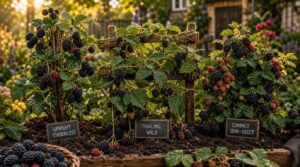
Before you buy a single cane, you need to know what you’re actually working with. Blackberries come in several distinct types, and picking the wrong one can mean years of frustration instead of buckets of fruit.
Since cane fruits require their own pruning rhythm, it helps to brush up on blackberry and raspberry cane pruning techniques before you commit to a variety.
Here’s what to keep in mind before you commit: years of frustration await those who overlook this step.
Erect Vs. Trailing Blackberries
Before you buy a single cane, understand how your blackberry wants to grow. Erect thorny and erect thornless blackberries stand upright — offering stronger cold hardiness, solid wind resistance, and requiring minimal support. These varieties thrive independently, making them ideal for low-maintenance setups.
Trailing thornless blackberries, however, demand trellising systems due to their sprawling nature, which can extend 10–20 feet. Proper trellising ensures high fruit yield, manageable canopy density, and undisturbed root development, preventing overcrowding and disease.
Erect varieties also spread via root suckering hedgerow, forming a natural barrier that fills planting rows up to 3 ft wide. This growth habit creates a self-contained structure, ideal for defining garden boundaries while maintaining productivity.
Thornless Vs. Thorny Blackberry Plants
Once you’ve settled on a growth habit, the next call is thorns — or no thorns. It’s a bigger decision than it sounds.
- Picker Comfort — Thornless varieties like erect thornless blackberries let you harvest without gloves or scratches.
- Pruning Safety — Thornless canes make pruning far less punishing.
- Thorn Maintenance Cost — Erect thorny blackberries demand extra gear and careful handling year-round.
- Machine Harvesting — Trailing thornless blackberries reduce fruit contamination during commercial picking.
- Pest Deterrence — Thorny plants naturally discourage foraging animals.
Best Cultivars for Your Growing Zone
Thorns aside, your growing zone is the next filter. Not every cultivar tolerates cold snaps or humid summers equally well. Selecting blackberry cultivars tailored to your growing zone saves years of trial and error. Regional adaptation and climate suitability matter — thornless blackberry cultivar selection starts with your zip code.
| Hardiness Zone | Cold-Hardy Selections / Zone 5 Picks | Heat-Tolerant Varieties & Zone 7 Favorites |
|---|---|---|
| Zone 5 | Ouachita, Prime Ark Freedom | — |
| Zone 6 | Navaho, Ouachita | Zone 6 Recommendations: Navaho, Isle of Wight |
| Zone 7 | Lakeland | Lakeland, Isle of Wight |
Climate suitability matters — thornless blackberry cultivar selection starts with your zip code.
Floricane-Fruiting Vs. Primocane-Fruiting Types
Once you’ve matched a cultivar to your zone, there’s one more split worth understanding: how your plant fruits.
Floricane-fruiting types produce on second-year canes, delivering reliable early-summer harvests with impressive berry size in contrast to primocane types. Primocane-fruiting varieties fruit on first-year wood, offering a significant harvest window extension into fall.
- Floricanes die after fruiting; plan annual cane removal
- Primocanes fruit at their tips when sunlight needs are met
- Seasonal fruiting types (floricane vs. primocane) differ in peak timing
- Floricane-fruiting delivers cane longevity advantages with predictable yields
- Primocane-fruiting boosts disease resistance through faster cane turnover
Why Certified Disease-Free Plants Matter
Starting with virus-indexed certified plants is not just smart — it’s the foundation your whole planting depends on. Certified stock ensures supply chain traceability, confirmed root vigor, and documented freedom from hidden pathogens.
Certified plants are not a preference — they are the foundation everything else depends on
These advantages translate to real pesticide savings over time and stronger disease management from day one. By starting healthy, growers avoid hidden costs and establish resilience early.
Certified plants also deliver a longevity guarantee that uncertified plants typically lack. This reliability directly enables access to higher market prices down the line, rewarding the initial investment in quality.
Prepare The Best Planting Site

Before your blackberry plants go in the ground, the site you choose will make or break your harvest. Get a few key conditions right from the start, and you’ll spend far less time fighting problems later.
Once your site is set, deep root irrigation techniques can help blackberries establish strong, drought-resilient roots from the very first season.
Here’s what to look for when scoping out the perfect spot.
Full Sun Requirements for Maximum Fruit
Blackberries are sun chasers — give them anything less than 6 hours of direct sunlight daily, and your harvest will show it. For fruit yield optimization, site selection matters more than most gardeners realize.
Full sun drives canopy light penetration, boosts sugar development, and promotes even ripening.
Morning sun benefits include faster dew drying, which cuts disease risk before afternoon heat peaks.
Ideal Soil PH for Blackberries
Soil pH is one detail that quietly controls everything else. Aim for a soil pH of 5.5 to 6.5 — that acidic to slightly alkaline range keeps iron, manganese, and zinc available to your plants. Outside it, nutrients lock up fast.
Test your soil before planting, then recheck every 2–3 months after any lime or sulfur adjustment.
Your pH buffer capacity depends on organic matter, so build that up early.
Improving Drainage Before Planting
Poor drainage kills blackberry roots faster than almost anything else. Before planting, check your site with a simple Percolation Test Procedure: dig a 12-inch hole, fill it with water, and watch. It should drain 1–2 inches per hour. If it doesn’t, fix it first:
- Grade the site with a Site Grading Slope of at least 2 percent to redirect runoff
- Install Subsurface Tile Drains at 12–24 inches deep for persistent wet spots
- Build a Raised Bed Design 6–12 inches high using Organic Drainage Amendments like composted mulch to guarantee well-drained, good drainage conditions through smart soil preparation
Adding Compost and Organic Matter
Think of compost as your soil’s best friend before blackberries ever go in. Work 3–4 inches of finished compost into the top 6–12 inches during soil preparation. This boosts microbial activity, improves the compost’s drainage enhancement, and builds soil crumb stability over time.
Watch your C:N ratio management—keep it above 25:1 to avoid burning roots with excess nitrogen.
Safe Distance From Wild Brambles and Raspberries
Keep your cultivated patch at least 300 feet away from wild brambles and raspberries, as they silently carry diseases.
Buffer Zone Design is critical: establish nonhost plantings between cultivated and wild stands, and use barrier fencing to block cane drift.
Regular distance monitoring and root encroachment prevention—achieved through regular checks—halt issues early.
Thorn management simplifies significantly when wild growth is prevented from reaching your rows.
Using Soil Amendments Like Sulfur Acidifier
Once your site is safely buffered, turn your attention to soil pH management. If your soil tests above 6.5, elemental sulfur is your go-to soil amendment.
For Application Timing, work it in during fall or early spring. Aim for an Incorporation Depth of 6–8 inches. Wear gloves—a simple safety precaution. You’ll also gain a Micronutrient Boost.
Retest after 8 weeks for ongoing pH monitoring.
Plant Blackberries Step by Step
Getting blackberries in the ground the right way makes everything easier down the road. A few key decisions — timing, spacing, depth — set the foundation for how well your plants establish and produce.
Here’s exactly what to do, step by step.
Best Time to Plant Blackberries

Timing is everything with blackberries. Your best window is early spring, when dormant canes are still sleeping but the soil is workable — ideally above 45–50°F. That soil temperature threshold matters more than the calendar. Here’s when to plant based on your region:
- Cold zones: Early spring, as soon as soil thaws
- Zones 6–7: Spring planting or fall planting benefits apply
- Zones 8–10: Late winter works well
- Mild climates: Fall, 6–8 weeks before frost
Always check regional frost dates before you dig.
What to Do With Bare-Root Plants
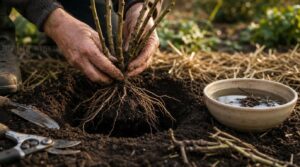
Bare-root blackberries arrive dormant — and that’s actually a good thing. Unpack and soak them in cool water for one to two hours before planting. This root soaking rehydrates stressed tissue fast. While soaking, inspect the roots: cut broken roots cleanly and remove anything mushy.
| Step | What to Do |
|---|---|
| Dig Holes | Deep and wide enough to spread roots fully |
| Spread Roots | Fan them over a centered soil mound |
Then begin backfilling with unamended native soil. Post-plant watering settles everything in place. Skip gradual fertilization until new growth appears.
Proper Plant Spacing by Growth Habit
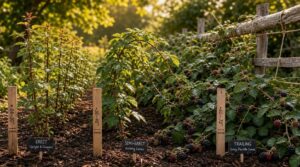
Now that your roots are ready, spacing sets the foundation for everything ahead. Erect inter-plant distance runs 3 feet within rows, while trailing row spacing stretches 8–12 feet apart. Semi-erect types split the difference.
Your Trellis Clearance Gap and Thorny Safety Buffer also matter—spacing will depend on the trellis height.
Give floricanes and primocanes room to breathe, and primocane gap planning pays off at harvest.
How Deep to Plant Blackberry Canes
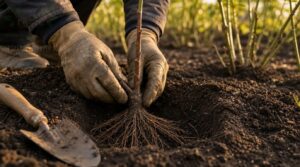
Getting the depth right makes or breaks your planting. For bare-root canes, dig holes or a shallow trench about 2 inches deep, spread the root system horizontally, and position the crown at soil level.
For plug placement, set tissue-culture starts just half an inch deeper. Cover roots completely, firm the soil gently, and you’ll set your root system development up for a strong start.
Watering Immediately After Planting
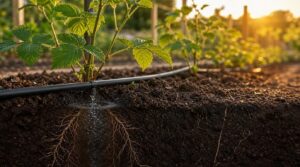
Water slowly and deeply to achieve full root zone saturation — aim for 6 to 12 inches down. A drip irrigation setup simplifies this process without soaking foliage.
Keep that top inch consistently moist during the first three weeks, targeting one inch of water per week. Use a soil moisture meter to avoid waterlogging before it occurs.
Mulching New Blackberry Plants
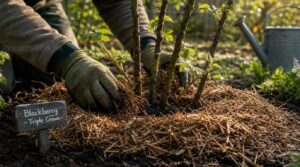
Once your canes are in the ground, mulching locks in careful soil preparation. Spread a 2–4 inch layer of pine straw or wood chips around each plant.
Keep mulch at least 3 inches from the crown to prevent rot. Spring mulching gives roots the steadiest start.
Refresh the layer each season so organic matter stays effective.
Care for Blackberry Plants Year-Round
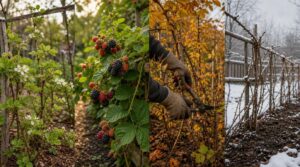
Once your blackberries are in the ground, the real work begins — and honestly, it’s pretty straightforward once you know the rhythm.
Consistent care through each season is what separates a scraggly patch from a heavy-producing one.
Here’s what your plants need from you year-round.
Weekly Watering Requirements
Blackberries aren’t thirsty every day — they’re deep drinkers. Aim for 1 to 1.5 inches of water weekly, delivered as a deep soak two or three times rather than light daily sprinkles.
Drip irrigation puts moisture right at the roots, cutting waste and keeping foliage dry.
Monitor soil moisture with a finger test — if the soil is dry two inches down, it’s time to water.
Fertilizing Blackberries in Spring
Think of spring fertilization as waking your plants up with a purpose. As soon as new growth emerges, apply a 10-10-10 fertilizer — about 5 lb per 100 ft of row. Nitrogen timing matters here; early spring applications fuel cane and leaf development.
Slow-release formulas prevent nutrient overload, while fertigation delivery through drip systems works efficiently.
Add a micronutrient blend if soil tests show gaps, and always adjust rates accordingly.
Mulching to Control Weeds and Moisture
A good layer of mulch is one of the simplest things you can do for your blackberry bed — and one of the most rewarding.
- Apply 2–4 inches of organic mulching material like wood chips or straw for reliable weed suppression and moisture retention
- Keep mulch a few inches from cane bases to prevent rot
- Refresh each season as organic matter breaks down
Pruning Primocanes and Floricanes
Mulch sets the stage — now pruning keeps things running.
Seasonal pruning and cane management separate a thriving patch from a tangled mess. Primocanes get summer topping at 4–5 ft to trigger lateral branch promotion. Floricanes are cut out at ground level after harvest — complete winter cane removal resets the plant’s energy.
| Task | When | Purpose |
|---|---|---|
| Summer topping | Midsummer | Lateral branch promotion |
| Floricane removal | Post-harvest | Canopy thinning |
| Tool sanitation | Every cut | Disease prevention |
Always sanitize blades between plants.
Training Erect and Trailing Canes
Once pruning is done, cane training shapes how your plants use that renewed energy.
- Erect blackberry cultivars stay mostly upright—guide them with loose tie methods along trellis wires using soft ties that won’t cut into canes.
- Trailing blackberries need deliberate fruit zone positioning, weaving canes across wires for even light exposure and side cane spacing.
- V-shaped training keeps floricanes outward and primocanes centered.
Trellis Options for Blackberry Plants
A two-wire system works well for most home gardens—set posts with solid footings about 6–8 feet apart, with wires at 3 and 5 feet. For trailing varieties, a Double T Trellis gives canes room to spread.
Use a diagonal wire layout to improve airflow, and keep wire tension firm.
Check seasonal wire maintenance each spring before new growth begins.
Winter Protection for Cold Climates
Cold snaps hit harder than you’d expect, even on a well-trellised plant. That’s where winter protection for blackberries earns its keep. Lay down winter mulch 4–6 inches deep, wrap exposed canes in burlap wrapping, and drape row covers before hard freezes hit. An insulated trellis helps too.
Keep up soil moisture monitoring so roots stay evenly moist—never waterlogged—through dormancy.
Harvest and Protect Your Blackberries
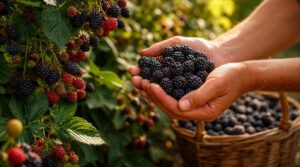
All that care through the season leads to a satisfying moment — filling your hands with ripe, sun-warmed blackberries. Knowing when to pick, how to store them, and what threats to watch for makes the difference between a great harvest and a frustrating one.
Here’s what you need to know to finish strong.
How to Tell When Blackberries Are Ripe
Don’t guess — let the berry tell you. Ripe blackberries show deep, uniform color with no red or purple patches and a slight glossy sheen.
Check texture firmness: the berry yields gently without collapsing.
Detachment ease confirms it — a light tug releases a ripe berry cleanly.
Trust sweetness, taste, and aroma, along with juiciness together. These fruit ripeness indicators make harvest timing straightforward.
Best Time of Day to Harvest
Harvest in the morning, once the dew dries — that’s the sweet spot for blackberries. Morning moisture keeps berries firm and fresh, while cooler temps slow respiration for a longer shelf life.
Midday sweetness peaks, but heat softens fruit fast.
Evening firmness holds, though humidity mold risk rises overnight.
Sunlight color fade is real if picked berries sit exposed. Harvest timing and postharvest handling together determine quality.
How Often to Pick Blackberry Fruit
Pick every two to three days during the ripening window—blackberries don’t wait. A weather-driven schedule helps here: after rain, delay a day or two to avoid soft, rot-prone fruits.
Morning harvests benefit your fruit load management by keeping berries firm before heat sets in.
Harvest frequency directly affects quality, so stay consistent throughout the harvest season and adapt to your region’s pace.
Storing Fresh Blackberries After Harvest
Fresh blackberries are fragile — treat them like they’re already on borrowed time. Skip washing until you’re ready to eat them, then refrigerate promptly in breathable containers lined with paper towels for moisture control. Keep your refrigeration temperature near 32–34°F for maximum shelf life extension.
For longer fruit preservation, freeze berries unwashed in a single layer before bagging — a simple freezing technique that locks in quality for months.
Common Blackberry Pests to Watch For
Even a thriving blackberry patch can unravel fast once pests move in. Stay sharp with these five threats:
- Aphid management — Clusters on new growth spread viruses and invite sooty mold.
- Spider mite monitoring — Stippled, bronzed leaves signal hot, dry trouble.
- Cane borer control — Prune wilting canes immediately; larvae tunnel deep.
- Fruitworm mitigation — Misshapen drupelets mean Bt applications are overdue.
- Stink bug traps — Monitor late summer; pierced berries turn cloudy and soft.
Preventing Fungal Diseases and Viruses
Fungal diseases don’t knock — they sneak in through wet leaves and crowded canes. Prioritize canopy ventilation by pruning to open air flow, and switch to drip irrigation to keep foliage dry. Mulch placement matters too — keep it 2–3 inches from the crown.
| Prevention Practice | Why It Works |
|---|---|
| Spore monitoring during wet spells | Catches outbreaks before they spread |
| Disease-resistant varieties | Reduces overall infection pressure |
| Tool sanitation between plants | Stops pathogen transfer between canes |
| Virus-indexed certified plants | Blocks viruses at the source |
Removing Diseased Canes Safely
Cut diseased canes at the base during dry weather — wet conditions invite fresh infection through open wounds. Tool sterilization between cuts matters: a quick bleach wipe stops pathogen spread.
Bag removed canes for safe disposal, then monitor closely for two months.
Winter pruning is your reset button.
Frequently Asked Questions (FAQs)
Are blackberries easy to grow?
Yes — blackberries are beginner-friendly plants with low input needs. Choose thornless varieties, nail your soil preparation, and follow a simple watering schedule.
With straightforward pruning techniques, this perennial shrub delivers fruit reliably for years.
Do blackberries need a trellis?
Not always — but it depends on your variety. Trailing types absolutely need a trellis.
Erect types can stand alone, though a simple two-wire system still improves air circulation, harvest convenience, and wind resistance.
How long until blackberries produce fruit after planting?
Most blackberries won’t fruit the first year — but primocanes on primocane-fruiting types can. Floricanes need a full maturation period, so expect your first harvest window in year two.
Can blackberries grow well in containers or pots?
Growing blackberries in containers works surprisingly well. Choose pots of at least 20 gallons, use a well-draining soil mix, and add a container trellis. Compact thornless cultivars thrive best.
What causes blackberries to taste sour or bland?
Sour blackberries usually mean they were picked too early. Fruit acidity peaks before sugar content catches up at full harvest maturity.
Weather influences, soil moisture, and variety all shape that final flavor balance.
Do blackberry plants spread aggressively through runners?
Yes, they can. Trailing types spread more aggressively through runners than erect or semi-erect varieties. Regular pruning and barrier installation help manage underground spread and keep your patch under control.
How do you overwinter blackberry plants successfully?
It often surprises gardeners that timing matters most. Mulch crowns with 3–4 inches of loose straw for root zone insulation after temperatures dip below 45°F.
Gradual uncovering each spring prevents winter injury.
How often should I harvest blackberries during peak season?
During peak season, pick every one to two days. Blackberries ripen fast, and leaving fruit on the cane even 48 hours too long means overripe, mushy losses.
Daily picking keeps your harvest window wide open.
Can I grow blackberries in containers or pots?
Absolutely — blackberries thrive in containers when you get the details right. Choose pot dimensions of at least 18 inches deep and establish a solid drainage system.
Use a rich soil mix and pick a compact thornless variety.
What is the yield timeline for mature blackberry plants?
Your first fruiting years arrive in year two or three. Peak yield age hits years three to five, with long-term productivity lasting fifteen to twenty years under consistent care.
Conclusion
It’s no coincidence that the gardeners who seem to harvest the most blackberries are also the ones who paid attention early—matching the right cultivar, setting up proper drainage, and learning how canes fruit across two seasons.
Knowing how to grow blackberries isn’t a secret; it’s simply a matter of making the right calls before the first cane ever goes in the ground. Start well, and the harvest takes care of itself.
- https://www.lsuagcenter.com/articles/page1564515844169
- https://crunchybaker.com/2022/02/10/growing-and-caring-for-blackberries/
- https://southernlivingplants.com/planting-care/a-tasty-task-fertilizing-blueberries-and-blackberries/
- https://www.arborday.org/planting-your-tree/blackberry-planting-care-instructions
- https://www.starkbros.com/growing-guide/how-to-grow/berry-plants/blackberry-plants/watering?srsltid=AfmBOoqKBZsnd-cGk0o3YGD4OfYXvP7WyMCiga19_U5TAkifQz-Hwf3J