This site is supported by our readers. We may earn a commission, at no cost to you, if you purchase through links.
When temperatures drop and gardens shift into their cooler-weather phase, most gardeners make one critical mistake: they water less because it feels like plants need less. The truth cuts the other way. Your fall vegetable garden demands consistent moisture precisely because roots are working overtime below the surface, building resilience for winter while still supporting those last waves of broccoli, kale, and carrots.
Moist soil also holds nearly four times more heat than dry ground, creating a protective buffer against early frosts that can wipe out weeks of growth in a single cold night.
Getting your fall vegetable garden watering right means understanding how cooler air, unpredictable rainfall, and shifting plant priorities change everything about timing, technique, and soil management.
Table Of Contents
- Key Takeaways
- Why Fall Watering is Essential
- Adjusting Watering Schedules for Fall
- Best Watering Techniques for Fall Gardens
- Optimal Times to Water in Autumn
- Managing Soil Moisture and Health
- Special Watering Needs for Fall Plants
- Water Conservation and Efficiency Tips
- Frequently Asked Questions (FAQs)
- Conclusion
Key Takeaways
- Fall gardens need consistent watering because roots grow actively underground even when cooler temperatures slow leaf development, with some systems reaching depths of 4.5 to 5 feet that demand steady moisture to fuel winter resilience.
- Moist soil holds roughly four times more heat than dry ground, creating a protective thermal buffer that keeps roots warmer during frost events and prevents cellular damage in your vegetables.
- Water deeply at the plant base during morning hours to maximize absorption while preventing fungal diseases, and switch to drip irrigation or soaker hoses to cut water use by up to 50 percent compared to overhead sprinklers.
- Stop routine watering once soil temperature drops below 40°F and repeated frosts signal dormancy, but apply one deep soak before the ground freezes in dry autumn conditions to protect root systems without encouraging cold-weather rot.
Why Fall Watering is Essential
Fall watering might seem less urgent as temperatures drop, but your vegetable garden actually depends on consistent moisture to stay strong through the season. Cooler weather doesn’t mean your plants need less care—it shifts their priorities from leafy growth to building resilience below ground.
Understanding why fall watering matters will help you protect your harvest and set up your garden for success in the months ahead.
Root Development in Cooler Months
While your vegetable garden’s leaves slow down in cooler months, roots keep growing—sometimes reaching depths of 4.5 to nearly 5 feet. This underground expansion demands consistent soil moisture to fuel development. When root zone temperatures drop below 15°C, growth slows but doesn’t stop entirely.
Deep watering now builds stronger root systems that boost winter survival rates beyond 85% in many crops, setting up vigorous spring growth.
Fall planting is advantageous because cooler temperatures reduce stress on new plants.
Preventing Cold and Frost Damage
Moist soil holds roughly four times more heat than dry ground, keeping your plants warmer when freezing temperatures strike. Watering before frost helps prevent cold damage by maintaining plant hydration and turgidity—water-filled cells resist rupture better than dehydrated ones.
Watering before frost protects plants because moist soil holds four times more heat than dry ground, keeping roots warmer when temperatures drop
Think of pre-frost watering as cellular protection: well-watered plants show considerably less frost damage because proper hydration bolsters membrane integrity during those critical freeze events. This is because watering helps to improve soil moisture levels.
Supporting Vegetable Plant Health
Beyond frost protection, your fall watering techniques directly shape vegetable plant health through root oxygenation and disease prevention. Proper soil moisture management delivers measurable yield outcomes:
- Keep soil at 60–80% field capacity to prevent oxygen depletion below 5%
- Minimize foliage wetness duration under 10 hours to reduce pathogen infection
- Use drip irrigation for 25–50% better irrigation efficiency than overhead systems
- Achieve up to 30% yield increases with seasonally adjusted watering practices
Adjusting Watering Schedules for Fall
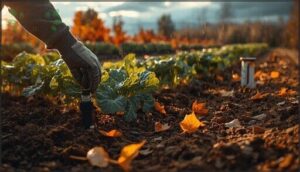
As fall settles in, your watering routine needs to shift with the season. Cooler temperatures and unpredictable rainfall mean you can’t simply follow your summer schedule anymore.
The key is knowing when to dial back, when to water deeply, and when to finally turn off the hose for winter.
Reducing Frequency From Summer Routines
As temperatures drop, evapotranspiration decline means your garden loses far less moisture to the air. You’ll need to extend irrigation intervals considerably—what was every three days in July might shift to weekly or even longer by October.
Check soil moisture at two to three inches deep, adjusting your watering frequency as cooler conditions slow evaporation. This shift aids both water conservation and healthier fall crops.
Monitoring Weather and Rainfall
Throughout fall, tracking precipitation helps you decide whether to irrigate. Place a rain gauge in your garden to measure weekly totals against the 1 to 1.5-inch standard most vegetables need.
After any rainfall, check soil moisture five to six inches deep—a probe or trowel confirms whether water penetrated the root zone. Factor in declining evapotranspiration rates and temperature fluctuations; cooler conditions mean dew and rain supply a larger share of your crops’ needs.
Determining When to Stop Watering
Once your soil temperature drops below 40°F and repeated frosts signal plant dormancy, you can stop routine watering. Before the ground freezes, probe three to four inches deep—if the root zone stays moist, further irrigation offers little benefit.
Regional climate and harvest completion guide your final call; in dry autumns, one deep soak before hard freeze protects roots without encouraging cold-weather rot.
Best Watering Techniques for Fall Gardens
How you water in fall matters just as much as how often you do it. The right techniques make sure moisture reaches deep into the soil where roots need it most, without wasting water or encouraging disease.
Let’s look at three practical methods that work best during the cooler months.
Deep Vs. Shallow Watering Methods
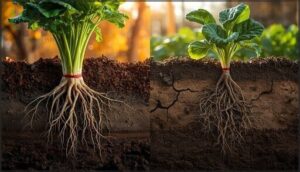
Think of deep watering like a slow, steady rain versus a quick sprinkle—one builds resilient roots, the other barely wets the surface. Deep watering techniques for gardens push moisture 6 to 8 inches down, where most vegetable root systems live and grow.
This approach improves water efficiency and plant resilience by encouraging strong root development and root penetration, while shallow watering keeps soil saturation near the top where evaporation rates steal your efforts.
Using Soaker Hoses and Drip Irrigation
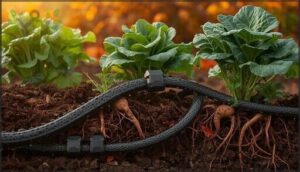
When you’re watering vegetables in fall, drip irrigation and soaker hoses deliver water precisely where vegetable water needs are greatest—right at the roots. These systems cut water use by up to 50 percent compared with sprinklers, minimize weed proliferation by keeping walkways dry, and prevent fungal disease by avoiding wet foliage.
Here’s how to set them up for success:
- Choose emitter flow rates between 0.5 and 2 gallons per hour, matching your soil type and plant spacing for uniform coverage.
- Zone your drip irrigation system so total flow doesn’t exceed supply capacity, ensuring consistent pressure along every bed.
- Regulate soaker hose pressure with a pressure reducer to maintain even seepage and prevent dry spots or blowouts.
- Tap into subsurface drip benefits by placing lines just below the soil surface, which cuts evaporation and delivers water directly to root zones.
- Shorten runtimes in autumn as evapotranspiration drops—your fall schedule should be roughly half your summer routine to match cooler conditions.
Watering at The Plant Base
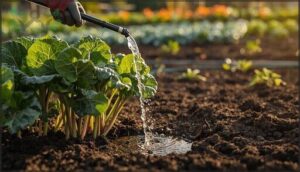
You don’t want to spray water over the top—wet leaves invite foliar diseases, and half your water evaporates before it soaks in. By directing every drop at the soil line, you improve water use efficiency by up to 50 percent and keep root zone moisture right where root development happens. A simple wand or drip emitter placed at the base of each plant cuts runoff and keeps foliage dry.
| Method | Best For |
|---|---|
| Long‑handled wand | Hand‑watering beds and containers |
| Drip emitters | Automated root zone targeting |
| Slow hose trickle | Deep watering trees and shrubs |
| Watering can at soil line | Seedlings and transplants |
| Soaker hose loops | Concentrated rows of vegetables |
Optimal Times to Water in Autumn
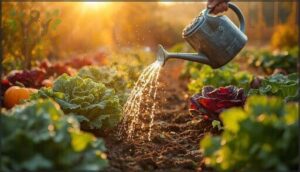
Timing your watering sessions correctly can make the difference between a thriving fall garden and one struggling with disease or frost damage. The temperature shifts and shorter days of autumn create specific windows when your plants can absorb water most effectively.
Let’s look at the key timing considerations that will keep your vegetables healthy through the season.
Morning Vs. Evening Watering
Early morning emerges as your best window for fall garden watering—evaporation rates stay low, and foliage dries before nightfall, keeping disease pressure in check. Morning watering aids plant physiology by delivering moisture when roots actively absorb water, improving water efficiency as cooler temperatures reduce loss.
Evening watering can leave surfaces damp overnight, creating conditions that invite fungal issues and compromise your watering schedule’s effectiveness.
Avoiding Fungal Diseases
Fungal diseases thrive when leaf wetness exceeds 8–14 hours, so timing your watering matters more than you might think. Drip irrigation keeps water at soil level, sidestepping splash dispersal that launches spores from soil to foliage and between plants.
Dense canopy density traps moisture and slows drying, amplifying risk.
Proper soil moisture without saturated conditions limits disease pressure while supporting healthy roots.
Timing Watering Before Frost Events
When frost threatens your fall garden, pre-frost irrigation 24–48 hours ahead lets soil absorb and store heat that radiates back overnight, buffering roots by several degrees. Water during morning to early afternoon so foliage dries before temperatures drop.
Moist—not saturated—soil moisture aids plant physiology and cold hardiness, but the recommended lead-time matters: watering too late or in already wet conditions increases limits and risks like ice heave.
Managing Soil Moisture and Health
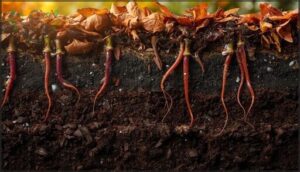
You can’t pour water on struggling soil and expect magic to happen. The foundation of smart fall watering starts beneath the surface, where healthy soil acts like a savings account for moisture your vegetables will need through cooler months.
Let’s look at two straightforward ways to build that reserve and keep your garden soil working in your favor.
Amending Soil With Compost
By folding compost into your soil, you’re improving water retention, nutrient availability, and soil biology all at once. Adding organic material at a rate of 5–10% by volume strengthens soil structure and promotes disease suppression.
A simple application of about ¼ inch per season can boost moisture-holding capacity considerably, helping your vegetable garden stay healthier and more resilient through fall’s changing conditions.
Improving Water Retention With Mulch
Mulching to conserve moisture takes everything compost offers and adds a protective blanket over your soil. Applying 5–10 cm of organic material—straw, grass clippings, or shredded leaves—cuts surface evaporation by more than half within days. Mulch depth matters: doubling from 5 to 10 cm can hold soil moisture about 10% higher between waterings.
Benefits include:
- Reduced evaporation and runoff
- Improved soil structure and infiltration
- Weed control that prevents moisture loss
- Stable root-zone temperatures
- Extended time between fall irrigations
Choose coarser materials like straw at 7–10 cm for best water retention.
Special Watering Needs for Fall Plants
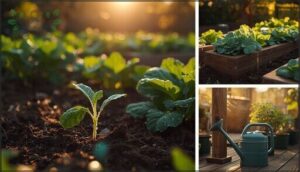
Not every plant in your fall garden shares the same thirst. Some require extra attention because they’re more vulnerable to moisture stress, while others simply dry out faster due to their growing conditions.
Let’s look at three groups that need a bit more care when you’re planning your autumn watering routine.
New Transplants and Young Seedlings
Think of your new transplants as newborns—they need consistent care to thrive. Water transplants thoroughly before planting to reduce shock, then keep the top 3–4 inches of soil moist until seedlings reach 4–5 inches tall. Daily watering may be necessary on warm late-summer days.
Avoid excessive watering—it’s a leading cause of transplant shock and root stress.
| Plant Stage | Watering Frequency | Moisture Depth |
|---|---|---|
| Seeds | Daily or every other day | Top 3–4 inches |
| New seedlings | Daily (hot days) | Top few inches |
| Established transplants | Every 1–2 days | 5–6 inches |
Evergreens, Trees, and Shrubs
Evergreens, trees, and shrubs need steady moisture before freeze-up to prevent fall desiccation and support root development. Even dormant watering matters—established plants require about 1 inch weekly, wetting soil 6–9 inches deep across the entire root zone.
New plantings and shallow-rooted species like birch demand more attention. Deep watering 1–3 days before frost provides critical root insulation against rapid temperature drops.
Pots, Containers, and Raised Beds
Containers and raised beds dry faster than in-ground gardens, especially when exposed sides meet windy fall days. You’ll need to water vegetables in pots every 5–10 days as temperatures drop, checking the top 2 inches of soil regularly.
Raised bed depth and pot material affect container drainage—terracotta dries quicker than plastic.
Mulch benefits include longer intervals between watering and stable moisture retention.
Water Conservation and Efficiency Tips
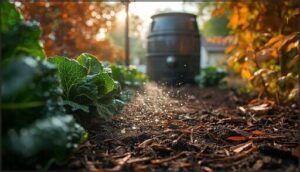
Smart watering isn’t just about keeping your plants healthy—it’s about using every drop wisely. Fall conditions give you a natural advantage for conservation, but you’ll need to fine-tune your approach based on your soil and equipment.
Let’s look at three practical ways to boost efficiency while minimizing waste this season.
Preventing Runoff and Water Waste
Preventing water from running off your vegetable beds isn’t just about saving money—it’s about making every drop count where it matters most. Smart water management strategies start with thoughtful system maintenance and proper emitter selection.
- Apply water slowly through drip irrigation or soaker hoses to match your soil infiltration rate, keeping waste below 5%
- Increase mulch thickness to 5–10 cm to reduce evaporation by up to 60% and improve water retention
- Schedule shorter, repeated watering cycles instead of one long session to boost absorption at the plant base
Adjusting for Different Soil Types
Your soil type dictates how you approach fall garden watering—clay soil holds moisture longer and needs infrequent deep watering, while sandy soils drain fast and demand lighter, more frequent sessions. Loam soils strike a balance with moderate watering when the top inch dries out.
Soil testing in early fall reveals your texture and guides precise adjustments. Managing soil moisture through targeted soil amendments like compost improves water retention across all soil types.
Maintaining Irrigation Systems in Fall
Your irrigation system needs a fall tune-up before winter hits. Start with a system inspection: flush lines after harvest, check filters for tears, and verify sprinkler rotation.
Drip irrigation system maintenance includes clog prevention through regular flushing and chlorine treatments.
System winterization matters: drain lines using gravity or compressed air at 40-60 PSI, then store removable parts indoors.
Component repair now prevents spring headaches, while efficiency optimization through automated irrigation and adjusted irrigation schedule cuts water waste.
Frequently Asked Questions (FAQs)
Can I use greywater for fall vegetable gardens?
Like your grandmother’s washbasin water, greywater can irrigate fall vegetables—but only with proper treatment methods and careful plant suitability consideration.
Health risks from soil contamination make watering leafy greens risky; stick to fruit-bearing crops instead.
How does fall watering differ by climate zone?
Your climate zone shapes watering frequency for plants dramatically. Arid zone watering demands persist into late fall, while humid climate watering drops sharply when autumn rains arrive, requiring climate-specific techniques and transitional zone schedules.
Should I water dormant or dying vegetable plants?
Water dying vegetables with light, frequent sessions to restore dormancy readiness.
Once soil freezing occurs below 40°F, roots can’t absorb moisture. Reviving wilted vegetables requires consistent hydration through frost-hardy watering until ground solidifies completely.
What are signs of overwatering in fall gardens?
Leaf discoloration and wilting despite wet soil indicate overwatering in vegetable plants. Soil indicators include musty odors and surface mold, while root problems like root rot emerge from excess soil moisture levels, ultimately causing reduced vigor and leaf disease.
Conclusion
Master your fall vegetable garden watering, and you master the season itself. Roots grow deeper, frost damage becomes manageable, and your harvest extends weeks beyond your neighbors’.
The techniques aren’t complicated—consistent moisture checks, morning applications, mulch layers that lock in warmth—but they demand attention when garden instincts say otherwise.
Cool air deceives. Shorter days mislead. Your plants still need you, working quietly beneath the surface, building strength for the cold months ahead.
- https://edis.ifas.ufl.edu/publication/HS388
- https://iwaponline.com/jwcc/article/15/7/3236/103093/Evapotranspiration-and-crop-coefficients-of-some
- https://fieldreport.caes.uga.edu/wp-content/uploads/2025/08/C-1216_2.pdf
- https://ucanr.edu/site/uc-master-gardener-program-alameda-county/cool-weather-vegetable-gardening-late-summer-or
- https://news.vt.edu/articles/2024/08/fall-autumn-garden-watering-irrigation-expert.html