This site is supported by our readers. We may earn a commission, at no cost to you, if you purchase through links.
Walk into any garden center in spring, and you’ll face a dizzying wall of seed packets—hundreds of tomato varieties alone, each promising to be the best for your backyard. But here’s what most beginners don’t realize: planting the wrong variety is the fastest way to waste an entire growing season. A heat-loving pepper that can’t set fruit in your cool coastal climate won’t suddenly adapt because you watered it faithfully.
Your soil pH, sunlight hours, and frost dates have already decided which plants will thrive before you even open the packet.
The good news? Once you understand how to match varieties to your specific conditions—from your USDA zone to the square footage you’re working with—you’ll stop guessing and start harvesting.
Table Of Contents
Key Takeaways
- Match vegetable varieties to your USDA hardiness zone, frost dates, and actual growing season length—planting heat-loving crops in cool climates wastes your entire season no matter how well you care for them.
- Disease-resistant cultivars can cut crop losses by up to 70% and reduce disease severity from 70% down to just 3%, making resistance codes on seed packets worth prioritizing over slight yield differences.
- Container and small-space gardens succeed when you match root depth to container size and use vertical growing techniques—16 carrots per square foot or trellised cucumbers can turn a balcony into a productive harvest zone.
- Open-pollinated heirloom seeds let you save seeds year after year and build genetic diversity, while hybrids deliver 15-30% higher yields and built-in disease resistance but won’t reproduce true from saved seed.
Factors to Consider When Choosing Vegetable Varieties
Picking the right vegetable varieties isn’t just about what catches your eye in a catalog—it’s about matching plants to your unique growing conditions. Think of it like finding the perfect puzzle piece: when everything fits together, your garden practically grows itself.
Choose vegetable varieties that match your unique growing conditions, and your garden will practically grow itself
Let’s walk through the key factors that’ll help you make smart choices and set yourself up for a bountiful harvest.
Local Climate and USDA Zones
Before you plant anything, check your USDA hardiness zone—it tells you which vegetables can handle your winter lows. The 2023 USDA Zone Map shows many areas have shifted warmer, so local climate conditions matter more than ever. The recent updates reflect significant warming trends, impacting planting decisions.
Factor in frost dates and season length too:
- Zone 5 faces −20°F winters with 150–180 growing days
- Microclimates can run 5–10°F warmer in urban spots
- Climate change is pushing gardeners toward heat-tolerant varieties
Sunlight and Soil Requirements
Sunlight duration makes all the difference. Most fruiting crops—tomatoes, peppers, cucumbers—need 6–8 hours of direct sun daily, while leafy greens like lettuce and spinach tolerate 4–6 hours. Some vegetables require at least six hours of direct sunlight.
Soil pH between 6.0 and 6.8 keeps nutrient availability high for nearly all vegetables. Boost organic matter by just 1%, and you’ll see yields jump roughly 12%. Good drainage and soil health aren’t optional—they’re your ticket to a thriving harvest.
Garden Size and Space Constraints
Your garden size shapes variety choices just as much as sun and soil do. Space maximization transforms even a balcony into productive ground. For plots under 32 square feet, compact cultivars like bush beans and determinate tomatoes deliver yields without sprawl.
Vertical gardening doubles your surface by training climbers upward. Container options let you grow peppers and herbs anywhere.
Intensive planting in raised beds can produce about 1 pound of vegetables per square foot per season.
Days to Harvest and Season Length
After picking the right space, timing becomes your next big decision. Crop maturity must align with your frost dates and growing season length. Seed packets list days to harvest—lettuce finishes in 30 to 50 days, tomatoes need 60 to 90.
Plan succession planting for steady yields, and consider season extension techniques to stretch harvests. Harvest scheduling turns choosing vegetable varieties into a year-round strategy.
Selecting Varieties for Garden Types
Your garden’s layout shapes which vegetables will thrive and which ones will struggle. A tiny balcony calls for completely different varieties than a sprawling backyard plot, and picking the wrong type means frustration instead of fresh produce.
Let’s look at the best vegetable choices for containers, small spaces, and larger gardens so you can match your plants to your growing area.
Compact and Container-Friendly Vegetables
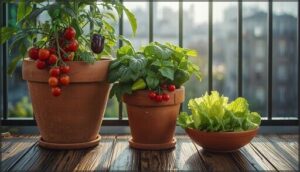
You can grow quite a bit in surprisingly little soil if you choose the right vegetable varieties. Container gardening thrives when you match plant size and root depth to container size—a concept that transforms balconies into productive spaces.
- Deep containers (12–24 inches) accommodate large tomatoes, eggplants, and carrots
- Medium containers (8–12 inches) work well for bush beans, peppers, and compact cultivars
- Shallow pots (6–8 inches) suit lettuce, radishes, and herbs perfectly
Disease resistance matters even more in containers, where limited soil volume increases stress.
Best Choices for Small Spaces
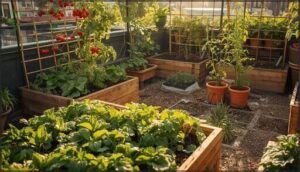
Raised beds and intensive spacing turn tiny yards into productive plots. You can concentrate up to 16 carrot plants per square foot using square-foot methods, while compact cultivars of peppers and tomatoes thrive at one plant per square.
Vertical gardening multiplies your harvest—trellised cucumbers and beans occupy just one square foot of ground yet climb upward. Dwarf types and container varieties make patio needs manageable, proving garden size doesn’t limit your bounty.
Ideal Varieties for Large Plots
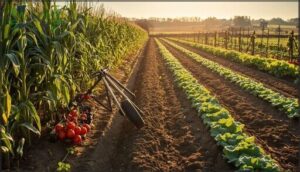
Most commercial guidelines rank crop selection by yield consistency and regional standards—metrics that apply whether you’re farming or tending a big backyard.
When your garden size allows row spacing of 36 to 72 inches, you enable mechanization suitability: a chest-mounted spreader or rotary tiller keeps weeds down and boosts labor efficiency.
Choose plant varieties proven in university trials for yield optimization across large blocks.
Matching Vegetable Families to Your Garden
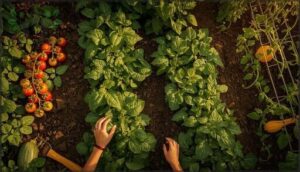
Think of vegetable families as neighborhoods where plants with similar needs live together. When you match the right family to your garden’s conditions, you set yourself up for success from day one.
Let’s look at five key families and how to give each one exactly what it needs to thrive.
Nightshade Varieties for Warm Climates
When summer heat hits hard, you need tomatoes, peppers, and eggplants bred to keep producing. Heat-tolerant tomatoes like ‘Heatwave’ and ‘Phoenix’ set fruit even when temperatures soar, while certain pepper varieties actually boost their disease resistance in warmth.
For eggplants, hybrids such as ‘Nadia’ and ‘Epic’ deliver impressive yields under stress. Choose cultivars with built-in heat tolerance and disease resistance—your harvest depends on it.
Cabbage Family for Cool Seasons
Cool-season brassicas like cabbage, broccoli, and Brussels sprouts thrive when you plant them 6–8 weeks before your last frost. They’ll tolerate chilly temps down to about -3 °C, giving you a long harvest window.
Keep your soil pH between 6.0 and 6.8 to ward off clubroot, and remember—these plant families need solid pest control since caterpillars can slash plant height by 20%.
Gourd Family for Heat-Loving Gardens
Cucumbers, melons, pumpkins, and squash demand warm soil and long sunny days—they’re your go-to crops when summer heat arrives. These heat-tolerant varieties handle temperatures up to 85 °F beautifully, though they need consistent irrigation during flowering to prevent misshapen fruit.
- Summer squash can yield 40,000 pounds per acre under excellent management
- Trellising gourds improves airflow and reduces disease pressure
- Disease resistance matters—powdery mildew strikes hard in humid climates
- Watermelon tolerates heat better than most cucumbers or melons
Root Vegetables for Loose Soils
Carrots, beets, and turnips need deep, loose soil—sandy or loamy textures let taproots stretch straight down without bending. Compacted ground causes root forking and stubby vegetables.
Moisture management matters: too dry creates dimpled carrots, while overwatering triggers hairy roots. Sandy soil drains fast but leaches nutrients quickly, so you’ll fertilize more often.
Cultivar performance varies—modern hybrids like Triton thrive in loose soil conditions when nitrogen stays adequate.
Legumes for Soil Enrichment
Beans and peas do something special: nitrogen fixation pulls nitrogen from air into soil, boosting crop yields by 20% on average for whatever you plant next. They also pump up soil carbon and improve water relations through deeper root systems.
Species selection matters—red clover delivers 75 to 200 pounds of nitrogen per acre, while faba beans contribute even more. Smart crop rotation with legumes builds lasting soil health without synthetic fertilizers.
Prioritizing Disease Resistance and Yield
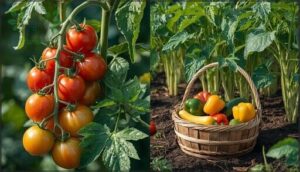
When you’re picking vegetable varieties, two things matter most: whether they’ll actually thrive in your garden and how much food they’ll produce. Disease-resistant plants can cut your crop losses by up to 70%, while the right high-yield varieties can boost your harvest by 40% or more.
Here’s what you need to know to choose cultivars that’ll give you healthy, productive plants all season long.
Choosing Disease-Resistant Cultivars
When you choose disease-resistant cultivars, you’re basically building a shield against the pathogens that thrive in your area. Plant disease resistance can cut losses by up to 40%, protecting your harvest when epidemics strike. Look for these key features:
- Pathogen specificity: Match resistance codes (like LB for late blight) to your local threats
- Yield protection: Resistant tomatoes can reduce disease severity from 70% down to just 3%
- Economic impacts: Lower fungicide costs while stabilizing returns
- Integrated management: Combine resistance with good practices for lasting success
Resistance trade-offs exist—some varieties yield slightly less without disease—but tomato disease resistance and selecting disease-resistant varieties become invaluable when pressure builds.
High-Yield and Reliable Varieties
Beyond protection from disease, you’ll want vegetable varieties that actually deliver. Hybrid varieties often outperform older types. Top tomato cultivars can produce 80–130 t/ha, while pepper hybrids reach 1.2 kg per plant. Root yields vary dramatically too: the best carrot hybrids hit 57 t/ha compared to 49 for others.
Lettuce systems in vertical setups triple production per square meter. Smart vegetable cultivar selection means your bean production and crop yields climb 30–50% simply by picking proven winners.
Hybrid Vs. Open-Pollinated Options
When you’re deciding between hybrid varieties and open-pollinated seeds, think about your garden goals. Hybrids deliver hybrid vigor—that 15–30% yield boost—plus built-in disease resistance. But they cost more, and seed saving won’t work; saved hybrid seed produces unpredictable results.
Open-pollinated options let you save seed year after year, building genetic diversity and cutting input costs while adapting naturally to your soil.
Using Public Research and Trials
If you want local adaptability and top performers that really thrive in your climate, public university research offers a goldmine. Regional variety trials—especially for crops like cucumbers—integrate trial data to help you choose cultivars with proven disease resistance.
Decision-support tools like the Vegetable Variety Navigator pull citizen science input and organic variety needs into one place, making vegetable varieties easier to compare and match to your garden’s unique conditions.
Sourcing and Evaluating Vegetable Seeds
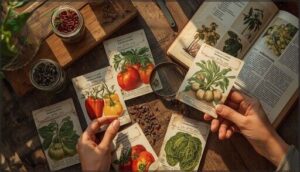
Once you know which varieties you want to grow, the next step is actually getting your hands on quality seeds. Where you buy them, how you read catalog descriptions, and what you look for on the packet all matter more than you might think.
Let’s walk through how to source seeds wisely and set yourself up for a great growing season.
Interpreting Seed Catalog Descriptions
Seed catalogs can feel like they’re written in code, but cracking it’s easier than you think. Maturity indicators tell you days from planting to harvest—usually 50–75 for early tomatoes. Disease codes like “VFN” signal built-in resistance to common problems. Variety terminology separates hybrids from heirlooms, while plant habits and cultural notes guide spacing and sun needs, turning confusing seed catalog information into your garden blueprint.
Local Vs. Online Seed Sources
You’ll find seed companies and online seed sources offer hundreds of varieties with tested storage viability, but local nurseries and seed swaps bring regional know-how and community networks that boost resilience factors. Each channel has strengths:
- Online catalogs: Vast seed diversity, consistent germination rates
- Local nurseries: Climate-tested picks, face-to-face advice
- Seed swaps: Local adaptation, heritage varieties, connection
Blend sources for the best results.
Selecting Seeds for Sustainability and Success
Seed viability drops fast at room temperature—cool storage keeps seed packets fresh longer.
Choose open-pollinated heirloom seeds for seed saving and community sharing, or hybrids for reliable germination under stress.
Market trends show growers want climate resilience and disease resistance.
Your seed selection shapes sustainability: locally adapted varieties build long-term success, while sharing seeds strengthens community aspects and regional food security.
Frequently Asked Questions (FAQs)
How do I save seeds for next year?
Think of seeds as tiny time capsules—each one holds next season’s harvest.
Successful seed saving starts with selecting fully mature, open-pollinated varieties, drying them properly, then storing in cool, dark conditions to maintain viability.
What vegetables tolerate partial shade best?
Leafy greens like lettuce, spinach, and kale thrive with just 3–4 hours of direct sunlight daily.
Root vegetables such as beets and radishes tolerate partial shade too, while fruiting vegetables generally need more sun.
When should I start seeds indoors?
When’s the ideal moment to launch your growing season? Start seeds indoors by counting back from your frost date—tomatoes need six to eight weeks, peppers eight to ten, ensuring proper soil temperature, lighting, and hardening before planting seedlings outdoors.
How do heirloom varieties compare to hybrids?
Hybrid vegetable varieties generally deliver higher yields and stronger disease resistance than open-pollinated heirlooms, but many gardeners prize heirlooms for richer flavor, seed saving potential, and genetic diversity that preserves unique plant traits.
Can I grow vegetables in raised beds?
You can absolutely grow vegetables in raised beds! They improve drainage needs and soil health, making them perfect for root crops and heavy feeders. Focus on soil composition and proper bed materials for success.
Conclusion
Think of choosing the right vegetable varieties like fitting puzzle pieces—force the wrong one, and nothing clicks. But when you match cultivars to your zone, soil, and space, everything falls into place naturally.
You’ve learned to read your conditions, decode seed catalogs, and pick varieties bred for success in your garden. Now you’re not just planting seeds—you’re stacking the deck in your favor. That’s how you turn guesswork into a harvest you can count on.
- https://www.uaf.edu/ianre/impacts/impactfiles/variety%20trials%20success.pdf
- https://www.pnas.org/doi/10.1073/pnas.1800442115
- https://pmc.ncbi.nlm.nih.gov/articles/PMC10938656/
- https://www.statista.com/outlook/cmo/food/vegetables/fresh-vegetables/worldwide
- https://extension.illinois.edu/blogs/commercial-fruit-and-vegetable-growers/2023-10-03-remember-look-disease-resistance-when