This site is supported by our readers. We may earn a commission, at no cost to you, if you purchase through links.

Your tomatoes wilt by noon while your hose runs dry by Friday. Sound familiar? Most yards waste water on thirsty lawns and mismatched plants that never stood a chance in your specific soil and sunlight.
A garden built around your land’s actual conditions changes that story fast. Map your sun patterns, group plants by water needs, and choose species that already know how to survive your climate. That’s the foundation of real sustainability.
These eco friendly garden tips walk you through layout, soil health, water conservation, and wildlife habitat, turning your yard into a thriving ecosystem instead of a maintenance chore.
Table Of Contents
- Key Takeaways
- Plan a Sustainable Garden Layout
- Choose Native and Resilient Plants
- Build Healthy Organic Soil
- Conserve Water Every Day
- Mulch for Moisture and Weed Control
- Practice Chemical-Free Pest Control
- Create Pollinator and Wildlife Habitats
- Reuse Materials and Choose Eco Products
- Frequently Asked Questions (FAQs)
- What’s the most eco-friendly way to garden?
- How can I make eco-friendly weed killers at home?
- What are the best biodegradable pots for seedlings?
- How do I naturally improve clay or sandy soil?
- Can I use greywater safely in my garden?
- Whats the most sustainable way to control slugs?
- How do I transition a conventional garden to organic?
- What are eco-friendly ways to control garden weeds?
- Can I garden sustainably in containers or small spaces?
- How do I maintain garden tools without harsh chemicals?
- Conclusion
Key Takeaways
- Start by mapping your yard’s sun and shade patterns, then group plants by water needs so you can place the right plant in the right spot and cut down on wasted water.
- Shrinking thirsty lawn areas and swapping in drought-tolerant groundcovers, native plants, or edible landscaping saves water while giving you more to harvest.
- Build healthy soil through composting, mulching, and natural amendments instead of synthetic fertilizers, since living soil holds moisture better and feeds plants gradually.
- Inviting pollinators and wildlife with nectar-rich flowers, insect hotels, water sources, and leaf litter turns your yard into a real habitat, not just a planted space.
Plan a Sustainable Garden Layout
A thoughtful layout is the foundation of a garden that works with nature, not against it. Before you plant a single seed, a few smart planning decisions can save you time, water, and effort down the road. Here’s where to start.
Mapping out which crops thrive side by side, like with this guide to companion planting in a square foot garden, helps you squeeze more harvest from less space.
Map Sun and Shade
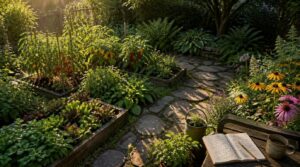
Before planting a single seed, take time to map sun and shade across your garden. Walk your space at morning, midday, and late afternoon, noting where light falls. South-facing beds get the most sun. Seasonal shifts matter too — a summer sun zone may become shaded in winter as the sun’s arc drops lower. Using a paper and pencil sun map lets you accurately record shade lines throughout the day.
- Full sun zones (6+ hours): ideal for tomatoes and peppers
- Partial shade areas: perfect for leafy greens and herbs
- Deep shade spots: reserve for shade-tolerant ornamentals
This simple sun-mapping habit helps you place the right plant in the right place, reducing stress on plants and saving water long-term.
Group Plants by Water Needs
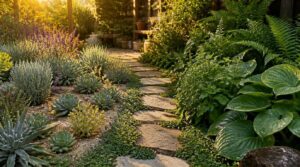
Once you’ve mapped your sun and shade zones, look at water next.
Hydrozoning — grouping plants by moisture needs — is one of the smartest moves you can make.
Succulents and lavender belong together in low-water zones, while ferns and mint need reliably moist spots.
This arrangement prevents overwatering drought-tolerant plants and under-watering thirsty ones, saving water and reducing root competition naturally.
Reduce Thirsty Lawn Areas
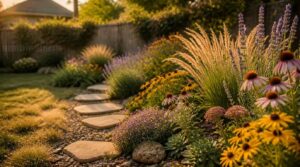
Lawns are thirsty — and often the biggest water drain in your yard. Turf reduction is one of the most effective steps in sustainable lawn care.
Swap unused grass with drought-tolerant groundcovers that need 30–50% less water. Try meadow mixes of native grasses and wildflowers, or create planting islands where the lawn once sat.
Add Edible Landscaping
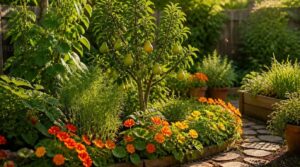
Once you’ve cut back the lawn, that freed-up space is ready to work for you. Edible landscaping — or foodscaping — lets you weave food production right into your garden design.
- Dwarf pear trees fruit within 2–3 years and suit small spaces
- Asparagus beds yield annually for 15–20 years
- Nasturtiums add edible flowers while attracting pollinators
Use Permeable Garden Paths
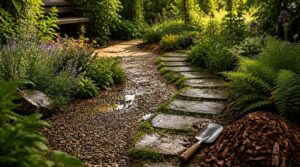
Every path you walk through your garden is a chance to let rainwater return to the soil where it belongs. Choose permeable surfaces — gravel with a proper gravel drainage layer, mulch bark, or porous concrete — instead of solid concrete.
| Path Type | Key Benefit | Maintenance Need |
|---|---|---|
| Gravel | Fast infiltration | Rake and top up every 1–3 years |
| Porous Concrete | Load-bearing, smooth | Pressure-wash pores occasionally |
| Organic Mulch | Feeds nearby soil | Organic mulch replenishment every 1–2 years |
| Turf Grid | Blends with planting | Reseed worn zones regularly |
Paver joint maintenance keeps gaps clear so water drains freely. These low-impact garden maintenance choices quietly support green infrastructure across your whole yard.
Choose Native and Resilient Plants
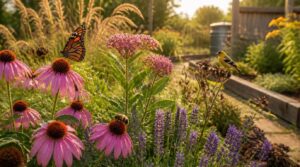
Your plant choices shape everything else in the garden. Native and resilient species ask for less water, less fuss, and less worry come summer heat. Here are five ways to choose plants that work with your yard, not against it.
Pick Locally Adapted Varieties
Why fight your climate when you can work with it? Locally adapted varieties thrive because they’re bred for your exact rainfall, soil, and pests, building real local climate resilience.
Choose wisely:
- Ask about community seed sharing swaps nearby
- Look for varieties matching regional taste preferences
- Support participatory breeding methods through local trials
- Prioritize genetic diversity benefits over single sourced seed
These native plant choices strengthen native biodiversity support for generations.
Add Drought-tolerant Crops
When rainfall feels unpredictable, drought-tolerant plants become your garden’s backbone. Build in arid millet varieties and drought resilient legumes like chickpeas and cowpea—their deep root architecture taps subsoil moisture others miss.
Match crops to your climate zone selection: pearl millet for hot, dry spells; safflower where water’s scarce. These water efficiency traits support real water conservation and xeriscaping goals, proving native plant resilience pays off.
Grow Perennial Vegetables
Why replant every spring when some vegetables just keep giving? Perennial vegetables reward you with multi-year harvests and less digging.
From asparagus to artichokes, tuck these long-lasting plants into containers using these creative summer garden decoration ideas for a bed that looks as good as it tastes.
- Asparagus spears for 15-20 years
- Rhubarb crowns lasting decades
- Jerusalem artichoke tubers each autumn
- Perennial chives for years
- Hardy artichokes with crown division
Space plants generously, divide crowns periodically, and watch your sustainable garden thrive through proper perennial planting.
Support Local Biodiversity
Your yard can act as a bridge, not just a backdrop. When you plant native species, you create biodiversity stepping-stones that link isolated green patches into real wildlife corridors.
This habitat connectivity helps pollinators and small mammals travel safely between gardens. Adding brush piles or rock crevices builds microhabitat creation right at ground level, supporting beneficial insects and strengthening your garden’s overall ecosystem resilience.
Extend Seasonal Blooms
A garden in constant bloom feels alive. Build successional blooms through staggered bulb planting, continuous perennial layers, and reblooming shrub selection.
Tuck heat-loving annuals near walls for microclimate heat retention, extending color further. These seasonal color transitions, paired with native flowering plants, create a true perennial planting strategy—keeping nectar-rich flowers and pollinator-friendly plants blooming from frost to frost.
Build Healthy Organic Soil

Healthy soil is the foundation every thriving garden stands on. Good news: building it doesn’t require synthetic chemicals or fancy equipment. Here are five practical ways to feed your soil naturally.
Compost Kitchen Scraps
Turning vegetable peels into black gold starts right in your kitchen. Compost your kitchen waste daily, balancing greens and browns at a 1:2 ratio for steady microbial activity.
- Shred scraps to speed decomposition
- Skip oily, fatty foods to avoid odors
- Keep moisture like a wrung-out sponge
A well-tended compost bin rewards you with rich, earthy-smelling soil food.
Reuse Garden Waste
Beyond the kitchen, your yard generates plenty of free soil food. Mow grass clippings and leave them in place — these nitrogen-rich clippings feed microbes naturally.
Chip hedge trimmings and prunings into aged wood chips for mulch. Pile fallen leaves to create leaf mold, a slow-release amendment.
This natural nutrient cycle keeps fertilizer bags on the shelf, where they belong.
Add Natural Soil Amendments
Compost manages a lot, but nutrient-rich compost works best paired with other amendments.
- Aged manure for slow-release nitrogen and potassium
- Cover crops like clover for fixed nitrogen
- Biochar to boost water retention
- Seaweed extract for trace minerals and root vigor
- Mineral dust for micronutrient support
Always use aged manure to avoid pathogens. Mix amendments with compost for lasting soil health.
Improve Soil Structure
Healthy soil isn’t just fed, it’s built. Earthworm activity carves channels that boost drainage and root penetration, while mycorrhizal fungi bind particles into stable aggregates. Beneficial microbes add sticky polymers, reinforcing this network further.
Avoid working wet soil to prevent compaction. Run a simple infiltration test yearly, watching how fast water soaks in, to track your soil’s progress honestly.
Avoid Synthetic Fertilizers
Once you’ve built living soil, synthetic fertilizers undo your progress. Quick-release salts harm soil microbial health and raise nutrient leaching risks, threatening groundwater protection.
Choose organic NPK sources instead:
- Compost for slow-release benefits
- Aged manure
- Seaweed extracts
- Green manures
- Worm castings
These feed organic gardening systems gradually, supporting organic pest management and long-term garden resilience without chemical shortcuts.
Conserve Water Every Day
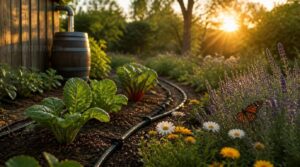
Water is precious, and your garden doesn’t need to waste a drop of it. Smart habits can cut your usage substantially while keeping plants healthy and thriving. Here are five simple ways to make every watering session count.
Install Rain Barrels
Every roof is a rainwater collection point just waiting to be tapped. Set your rain barrel under a downspout, using a diverter to filter debris.
A 55-gallon barrel weighs 460 pounds full, so a level concrete base matters. Screen the lid tightly against mosquito breeding, plan overflow away from your foundation, and drain barrels before winter freezes hit.
Use Drip Irrigation
Once you’ve harvested rainwater, deliver it wisely.
Drip irrigation sends water straight to root zones through emitters, cutting evaporation and boosting efficiency. Use a pressure regulator to protect emitters and maintain even flow, plus filters to prevent clogging.
Smart controllers automate watering schedules, while fertigation feeds plants directly, limiting runoff and managing soil salinity for healthier, water-saving gardens.
Try Soaker Hoses
Think of soaker hoses as underground straws, quietly feeding roots while you sleep.
Soaker hoses work like underground straws, quietly feeding plant roots while you sleep
Made from recycled rubber or polyurethane, they last 5-7 seasons and resist sun damage. Lay them flat, avoid kinks, and cap the far end to hold pressure.
- Hose material: braided, puncture-resistant
- Water output: 0.5-1 gallon per foot hourly
- Maintenance: flush yearly, check fittings
This low-impact irrigation pairs beautifully with mulch.
Water Early Mornings
Dawn is your garden’s golden hour for watering, and the clock matters more than you’d think.
Watering early means evaporation loss reduction, since cooler air keeps moisture in the soil instead of the atmosphere. It also promotes leaf disease prevention by letting foliage dry before afternoon heat. This timing boosts soil microbe activity and matches plants’ natural hydration rhythms for efficient, low-impact irrigation.
Add Moisture Sensors
Moisture sensors take the guesswork out of watering. By placing capacitive or resistive probes at root zone depth — commonly 15–30 cm — you get accurate volumetric water content readings that reflect what your plants actually experience.
Pair them with drip irrigation or soaker hoses, and you’ve built a genuinely low-impact irrigation system that adapts to real soil conditions, not assumptions.
Mulch for Moisture and Weed Control

Mulching is one of the simplest ways to work smarter in your garden, not harder. A good layer of organic material does several jobs at once, from holding moisture in the soil to keeping weeds from taking over. Here are five practical mulching approaches worth adding to your routine.
Use Straw or Leaves
Spreading straw or shredded leaves gives your beds an easy win for moisture retention. A 5–8 cm straw layer cuts evaporation during hot spells, while shredded leaves prevent matting and release nutrients steadily.
Both organic mulches suppress weeds by blocking light to seedlings. They decompose slowly, building soil structure and supporting earthworm activity over each growing season.
Apply Wood Chips
Wood chips take organic mulching a step further.
Apply a 2–4 inch layer over beds and paths to cut evaporation by up to half in hot weather.
Source chips locally from tree care services to reduce transport emissions.
Always age chips first before use on edible beds and keep them clear of plant stems to prevent stem rot.
Protect Shallow Roots
Shallow roots sit just beneath the surface, making them vulnerable to heat, drought, and foot traffic. Maintain a 2–3 inch mulch layer to insulate them from temperature swings and slow evaporation.
Avoid walking over root zones — soil compaction crushes delicate feeder roots.
Adding mycorrhizal fungi to sandy soils improves nutrient uptake considerably through those same surface roots.
Suppress Weeds Naturally
Once shallow roots are protected, your next goal is keeping weeds from competing for that moisture. A 3–4 inch mulch layer blocks sunlight, preventing weed seeds from germinating.
- Organic mulch like straw or leaves decomposes slowly, enriching soil
- Dense ground cover plants shade bare soil naturally
- Cover crops such as clover release allelochemicals that inhibit weed seeds
- Maintaining soil nutrient balance helps desirable plants outcompete weeds
Use mulch wisely — reapply yearly.
Feed Soil Slowly
As mulch breaks down, it doesn’t just protect soil — it becomes a slow-release organic fertilizer. Microbes convert straw and leaves into nutrient-rich compost, feeding roots gradually.
| Amendment | Nutrient Released | Timing |
|---|---|---|
| Worm castings | Nitrogen | Months |
| Bone meal | Phosphorus | Long-term |
| Kelp meal | Trace minerals | Steady |
This builds lasting soil structure improvement while avoiding nutrient surges that stress plants.
Practice Chemical-Free Pest Control
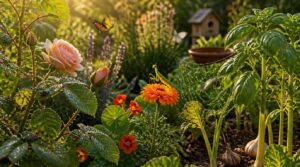
Pests don’t need a chemical war to keep them in check. Your garden already has natural defenses, you just need to put them to work. Here are five chemical-free strategies that protect your plants without harming the good bugs.
Rotate Vegetable Crops
Your garden has a memory, and pests know it well. Planting the same crop in one bed year after year invites trouble through disease disruption cycles and pest buildup.
Practice crop rotation on a three to four year cycle, grouping beds by plant family. This promotes nutrient balancing strategies, root architecture diversity, and yield stability gains for regenerative, organic gardening success.
Grow Companion Plants
Pair plants wisely, and your beds become a working team instead of a row of loners. Companion planting uses scent and structure: basil sweetens tomatoes, beans climb corn, nasturtiums serve as trap crops for aphids.
This is organic pest control in action, blending pest deterrent herbs like rosemary with nitrogen-sharing legumes for true integrated pest management and natural pest management results.
Attract Beneficial Insects
Tiny predators do the heaviest lifting in natural pest control. Plant umbel-shaped flowers like dill and fennel to draw parasitic wasps that hunt aphids and caterpillars.
Layer native flowering plants by height, creating layered foraging zones with continuous bloom sequences. Place flowering herbs at chest height, add microhabitat patches, and pollinator-friendly plants and insect habitat structures will keep beneficial insects working all season.
Use Organic Sprays Carefully
Even organic sprays can harm beneficial insects if applied carelessly.
Spray only when pest pressure is genuinely present — not on a fixed calendar. Apply during early morning or late evening, when bees are least active.
Target affected plants only, calibrate your sprayer for even coverage, and always follow label rates.
Store products safely away from children and pets.
Remove Diseased Plants Quickly
One sick plant can wipe out a whole bed if you wait too long. Inspect weekly, and pull infected plants within 48 hours—roots included.
Bag material for trash disposal; never compost it. Sterilize pruning tools with diluted bleach between cuts.
Quarantine new plants before introducing them. These pathogen containment habits keep your sustainable landscaping thriving without chemical intervention.
Create Pollinator and Wildlife Habitats
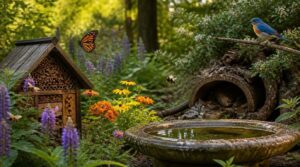
A garden isn’t just for plants—it’s a home for countless creatures. By adding a few simple features, you invite bees, birds, and beneficial insects to settle in. Here are five easy ways to turn your yard into a true wildlife haven.
Plant Nectar-rich Flowers
Because pollinators need food all season, planting nectar-rich flowers matters most. Add honeysuckle vines for hummingbird attracting vines, plus salvia and lavender as bee friendly perennials. Coral bells and echinacea create pollinator nectar bridges from spring through fall.
Choose drought tolerant blooms suited to your soil. Floral scent benefits draw pollinators from afar, boosting biodiversity enhancement and lasting pollinator support throughout your yard.
Build Insect Hotels
Flowers feed pollinators, but many beneficial insects also need shelter. A DIY insect hotel offers that home.
- Drilled wood blocks (2-10mm) for solitary bees
- Bamboo canes for small insects
- Pine cones for lacewings
- Bark nooks for overwintering butterflies
Use strategic hotel placement: south-facing, 1.5-2 meters up, sheltered. Monitor occupancy yearly to boost biodiversity enhancement.
Add Birdhouses and Feeders
Insect hotels handle the small guests, but birds round out your wildlife habitat. Tube feeders suit nyjer and sunflower seeds, while platform feeders welcome ground feeders like doves.
Place feeders 10-15 feet from windows, near shrub cover. Clean every two weeks with mild vinegar.
Add suet in winter, plus a shallow bath, to support diverse, native wildlife year-round.
Leave Leaf Litter
Birds need cover too, so resist the urge to rake every leaf this fall. Leaf litter creates a microhabitat for spiders, worms, and millipedes that break down organic matter and cycle nutrients back into your soil.
That fallen layer also locks in soil moisture, cuts evaporation, and works as winter root protection for nearby plants.
Provide Shallow Water Sources
Quenching thirst matters just as much as feeding nectar when you create a wildlife habitat. Add a water feature like a shallow basin, 6 to 18 inches deep, with sloped edges for safe footing.
Options include:
- Wildlife drinking basins
- Rainwater catchment ponds
- Backyard bioswale design
- Subsurface bed ponds
- Small pump for circulation
Regular shallow pond maintenance keeps water fresh for bees, butterflies, and birds near your feeders.
Reuse Materials and Choose Eco Products
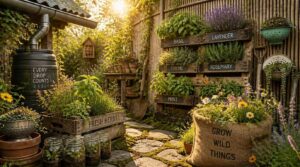
Your garden doesn’t need brand-new everything to thrive. Old containers, scrap wood, and natural materials all have a second life waiting in your yard. Here are five easy ways to reuse what you have and choose products that respect the planet.
Upcycle Garden Containers
Old buckets and kettles still have plenty to give. Repurposed bucket drainage works well once you drill holes and add a gasket to stop soil leaks.
Try vertical bottle gardening with wicking cords, or stitch upcycled fabric bags from canvas scraps.
Reclaimed wood crates lend vintage container aesthetics while keeping roots cool and well-drained.
Choose Bamboo Plant Supports
When climbing vines need a hand, bamboo garden stakes answer the call. Sustainably harvested every 3–5 years, this renewable material snaps together without tools.
- Single stakes for tomatoes
- Teepee towers for beans
- Wigwam obelisks for height
- Cage trellises for cucumbers
- Lattice panels for roses
Tie loosely with twine, store dry, and seal ends to prevent splitting each season.
Use Reclaimed Wood
Wood tells a story long before you plant near it. Salvaged timber patina adds warmth no new lumber can fake, while railway sleeper borders define beds with rugged strength.
Try repurposed pallet planters or reclaimed beam shelving for tools.
Demolition waste projects and garden upcycling turn scraps into character, proving recycled materials make the best DIY garden projects.
Install Solar Garden Lights
Why run wiring when sunshine does the job for free? Solar-powered garden lights bring renewable energy lighting to paths without trenching cables.
Quick install tips:
- Set ideal panel tilt between 10–45° facing south
- Choose LFP batteries for battery chemistry selection longevity
- Pick LED color temperature near 2700K for warm glow
Look for IP65 weatherproof fixture ratings, then space lights evenly for efficient, energy-efficient outdoor illumination.
Share Seeds Locally
Your leftover seeds could grow a neighbor’s whole garden. Start a Seed Exchange or join one already meeting nearby.
Seed exchange groups share open-pollinated, organic seeds suited to your local climate. Practicing seed saving and following seed labeling standards preserves heirloom varieties and builds biodiversity.
Local seed libraries support community seed sovereignty, strengthening urban gardening networks one packet at a time.
Frequently Asked Questions (FAQs)
What’s the most eco-friendly way to garden?
Picture a thirsty lawn guzzling water while plastic gnomes watch helplessly. The real answer? Combine native plants, drip irrigation, compost, and microclimate planning — working with nature, not against it, through community seed swapping and zero-waste tools.
How can I make eco-friendly weed killers at home?
Try vinegar spray on young weeds, boiling water for cracks, or flame weeding pre-emergence. Skip salt, since it harms soil long-term.
These methods support natural pest control without synthetic chemicals, keeping your yard safe for beneficial organisms.
What are the best biodegradable pots for seedlings?
Coconut fiber and wood fiber pots rank among the best biodegradable options, resisting cracks while retaining moisture. They minimize root transplant shock since seedlings go straight into soil.
Look for compostable certification standards ensuring sustainable pot sourcing and toxin-free decomposition.
How do I naturally improve clay or sandy soil?
Work compost or biochar into clay or sandy beds for better soil fertility and drainage. Add gypsum for clay aggregation, integrate cover crops, and compost your scraps regularly to build lasting organic soil amendment habits.
Can I use greywater safely in my garden?
Yes, greywater can be safe, greywater can conserve, greywater can nourish. Choose safe soap selection, install a diverter valve, skip edible crop roots, and test soil salinity regularly for truly ecofriendly irrigation.
Whats the most sustainable way to control slugs?
Combine beneficial nematode application, iron phosphate pellets, and copper barrier effectiveness for layered, organic pest control.
Add habitat modification and manual removal at dusk.
This integrated pest management approach protects seedlings without harming pets, pollinators, or soil life.
How do I transition a conventional garden to organic?
Think of it as weaning your soil off a habit. Start phasing out pesticides, test for soil contaminants, build soil microbial health with compost, switch to organic fertilizers, manage weed surges by hand, and welcome native plants gradually.
What are eco-friendly ways to control garden weeds?
Mulch heavily, hand weed with narrow-blade tools, and try solarization in summer beds. A living mulch of clover crowds out weeds naturally. Spot-treat stubborn growth with vinegar herbicide or citrus oils, skipping chemical herbicides entirely.
Can I garden sustainably in containers or small spaces?
Absolutely — urban gardening thrives in small spaces.
Choose self-watering pots with good drainage, grow compact vegetable varieties, utilize vertical space with trellises, repurpose old containers as biodegradable pots, and try small-scale composting for thriving balcony herbs.
How do I maintain garden tools without harsh chemicals?
Wash blades with soapy water, dry fully, then wipe with camellia oil for rust prevention. Sand wooden grips, treat with tung oil, and store tools upright in a dry, ventilated shed.
Conclusion
single mature oak hosts over 500 caterpillar species—proof that one plant choice ripples outward fast. That’s the quiet power behind eco-friendly garden tips: small, deliberate decisions compound into real habitat.
Your soil builds structure season by season. Your rain barrels fill while neighbors’ hoses run dry. Your native blooms feed pollinators, your old lawn never could.
Plant by plant, you’re not just tending a yard. You’re rebuilding a small piece of the web, everything else depends on.
- https://extension.umn.edu/yard-and-garden-news/sustainable-gardening-trends-2026
- https://www.thegardencontinuum.com/blog/what-is-eco-friendly-gardening-and-why-is-it-so-important
- https://evergreenthumb.mastergardenerfoundation.org/episode068
- https://www.gardenalchemist.ca/post/2026-sustainable-garden-trends
- https://extension.umd.edu/resource/sustainable-gardening-solutions-climate-change