This site is supported by our readers. We may earn a commission, at no cost to you, if you purchase through links.
Your backyard garden can produce for years, but only if you harvest with care. Snipping that first ripe tomato feels like a reward, yet how you remove it determines whether the plant keeps producing or struggles to recover. Every cut you make sends a signal to the plant—stress or encouragement.
Responsible harvesting practices for your backyard garden protect root systems, maintain soil structure, and guarantee continuous yields throughout the season. When you harvest at the right time with clean tools and gentle techniques, you give plants the energy to keep growing.
Small choices—where you step, how much you take, when you cut—add up to a garden that thrives year after year instead of wearing out after one good season.
Table Of Contents
Key Takeaways
- Harvest only what you’ll use immediately and cut at the right time with clean tools to signal encouragement rather than stress, keeping plants productive throughout the season instead of depleting them after one harvest.
- Time your picking for early morning when sugars concentrate overnight and temperatures stay below 85°F, then match your harvest schedule to each crop’s natural rhythm—leafy greens every seven to fourteen days, root vegetables before frost.
- Use gentle techniques with sharp, sanitized tools that match what you’re harvesting, whether bypass pruners for thick stems or scissors for tender herbs, and always cut at angles that promote quick sealing while supporting the plant with your free hand.
- Protect your soil by rotating harvest areas annually to prevent nutrient depletion, avoiding foot traffic on growing beds to maintain root depth and oxygen flow, and composting plant residues with a 25-30:1 carbon ratio to complete your garden’s natural cycle.
Principles of Responsible Harvesting
Successful harvesting isn’t just about filling your basket—it’s about keeping your plants productive and healthy for the long haul. When you harvest thoughtfully, you encourage stronger growth, better yields, and a garden that keeps giving throughout the season.
Let’s look at three core principles that will help you harvest responsibly while supporting your plants’ natural rhythms.
Take Only What You Need
Every time you harvest, take only what you’ll use right away. This sustainable harvest approach reduces waste and protects your plants’ ability to keep producing.
When you remove just a portion of leafy greens or herbs, the remaining foliage continues photosynthesis, fueling regrowth for your next picking. Selective harvesting techniques also maintain better air circulation, cutting down on disease in dense vegetable beds.
Harvesting for Continuous Production
Planning your harvest schedule keeps production flowing all season long. Pick leafy greens every seven to fourteen days, removing outer leaves while inner growth keeps coming. This regrowth strategy, paired with smart crop rotation and companion plantings, extends your harvest window for weeks.
Document your picking dates to fine-tune future cycles. These sustainable harvesting techniques and yield optimization methods turn your garden into a continuous production powerhouse.
Effective use of clear science writing is essential for documenting and sharing your gardening research and findings.
Balancing Yield With Plant Health
Your harvest management affects long-term plant vigor and soil conservation. Prune fruiting crops with balance—removing mature produce while leaving healthy vegetative tissue aids regrowth and sustained yields. Watch leaf color and turgidity to adjust harvest intensity, protecting photosynthetic capacity.
Customized harvest scheduling paired with crop rotation prevents resource depletion. These sustainable harvesting techniques and pruning practices enhance yield while keeping plants resilient against pests and disease.
Timing Your Harvest for Best Results
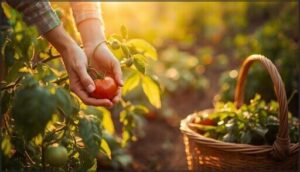
Knowing when to pick your vegetables and herbs can make or break your harvest. The right timing protects your plants, boosts flavor, and keeps your garden producing all season long.
Let’s look at three key factors that help you harvest at the perfect moment.
Recognizing Plant Maturity Stages
Knowing when your plants are ready makes all the difference in harvest timing and fruit production. You’ll spot maturity indicators like leaf color deepening, head density in lettuce, or peppers shifting from green to vibrant hues. Regular crop monitoring lets you track these growth stages and maintain plant vigor.
- Watch for flowering buds in spinach—that’s your signal to harvest before quality drops
- Check tomatoes for color changes from green to breaker stage for peak flavor
- Measure leaf size consistently as part of your harvesting strategies for reliable garden harvesting
Effective crop management involves understanding research methodology to maximize yields.
Harvesting at Optimal Times of Day
You’ll notice your crops respond beautifully when you follow smart harvest scheduling. Dawn harvesting captures lettuce and herbs at peak crispness, when sugars concentrate overnight and morning dew keeps leaves plump. Temperature control matters—picking before heat climbs past 85°F prevents wilting and preserves shelf life.
These harvesting techniques preserve nutrients better than midday picking. Use daylight management to your advantage—prepare tools the night before so you’re ready when conditions are ideal. Successful vegetable harvesting means working with nature’s rhythms, and these harvesting strategies deliver crisper produce with longer storage potential. Your harvesting tips should include shaded transport containers to maintain that morning advantage, plus regular field checks to adjust timing as weather shifts throughout the growing season.
| Crop Type | Best Harvest Window | Key Benefit |
|---|---|---|
| Leafy greens | Early morning, just after sunrise | Maximum crispness, higher sugar content |
| Herbs (basil, cilantro) | Dawn, before 9 AM | Peak essential oils, strongest aroma |
| Tomatoes, peppers | Mid-morning, 8–10 AM | Best flavor refinement, optimal color |
| Cucumbers, zucchini | Cool morning hours | Reduced skin damage, better texture |
| Root vegetables | Before daytime heat | Less surface bruising, uniform weight |
Seasonal Considerations for Different Crops
Each season brings its own harvesting rhythm, and your crop rotation plan should reflect that. Cool-season crops like lettuce thrive in spring’s gentle temperatures, while warm-season tomatoes peak in summer’s heat.
Weather monitoring helps you time root vegetable harvesting before fall frosts, and seasonal planning ensures your soil preparation fosters continuous production. These seasonal gardening techniques protect crop rotation and soil health year-round.
Essential Harvesting Techniques and Tools
The right technique can mean the difference between a plant that bounces back and one that struggles to recover.
Your hands and tools become extensions of your care when you harvest thoughtfully, matching the method to what you’re picking.
Let’s look at how to handle different crops and keep your equipment in shape for seasons to come.
Gentle Methods for Leafy Greens and Herbs
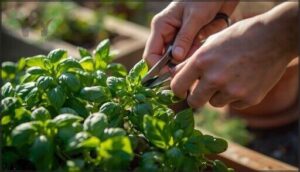
Your tender greens deserve kid-glove treatment at harvest time. Use clean, sharp scissors or shears to cut just above a leaf set—this gentle trimming encourages fresh growth while protecting the plant.
Support stems with one hand as you snip to avoid breaking or crushing delicate tissue.
Always harvest during dry conditions; moisture on leaves invites disease and speeds wilting after your careful, sustainable picking.
Using Pruning Shears for Stems and Fruit
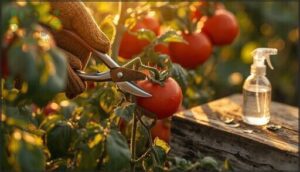
When you’re reaching for tomatoes, cucumbers, or thick-stemmed fruit, bypass pruning shears are your best friend—they slice cleanly without crushing delicate vascular tissue. Sharp, sanitized blades and proper pruning techniques make all the difference in sustainable harvesting.
- Cut at a 45- to 60-degree angle just above a healthy bud to promote quick sealing
- Choose bypass over anvil pruners for live stems; they won’t crush tissue
- Disinfect blades with 70% alcohol between plants to prevent disease spread
- Keep cuts within one-third of your tool’s capacity for clean, non-ragged edges
- Angle cuts away from buds to shed water and reduce rot risk
These gardening tools and shear maintenance practices support harvest optimization while protecting plant health season after season.
Best Practices for Root Vegetable Harvesting
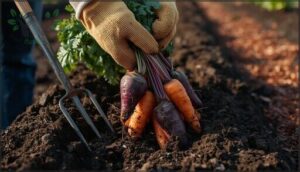
Root vegetables demand a gentle touch and the right timing. Carrots and beets mature in 70–90 days, while potatoes need 90–120.
Use a garden fork to loosen soil 1–2 inches around each root, then lift straight up—no twisting—to prevent skin damage. Brush off excess soil instead of washing.
This sustainable harvesting approach protects your crop rotation plans and ensures better vegetable storage outcomes.
Tool Maintenance for Sustainable Gardening
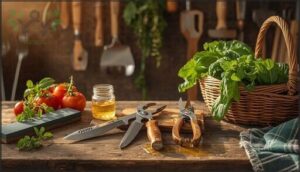
Well-kept tools make harvesting easier and last years longer. Clean your Harvesting Knife, Garden Scissors, and Pruning Shears with soapy water after each use, then dry thoroughly for rust prevention.
Follow these steps:
- Tool Sharpening – Use a fine-grit stone monthly for clean cuts.
- Blade Care – Apply mineral oil to prevent corrosion.
- Handle Maintenance – Check for cracks; oil wooden grips.
- Storage Solutions – Hang tools in a dry spot.
Pair with ergonomic harvest baskets to reduce strain.
Minimizing Impact on Soil and Ecosystem
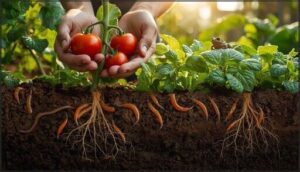
Your harvesting habits shape the health of your soil and the creatures that call your garden home. Every time you gather produce, you’re making choices that either protect or disrupt the delicate balance beneath your feet.
Each harvest shapes the delicate balance of your soil and garden ecosystem, protecting or disrupting life with every choice you make
Let’s look at three practical ways to keep your garden thriving for seasons to come.
Rotating Harvest Areas Annually
You’ll protect your garden’s long-term health by shifting which beds you harvest from each year. This simple crop rotation strategy prevents nutrient depletion, breaks pest cycles, and gives soil time to rebuild its structure.
Plan your bed allocation systems in advance, noting which areas you’ve used heavily. Sustainable gardening practices like these keep your harvest strong season after season while supporting organic gardening principles that nurture the earth.
Protecting Soil Structure and Root Systems
Your harvest methods directly affect what lives beneath the surface. Avoid stepping on growing beds—soil compaction reduces root depth by over 20%, choking off air and water flow. Hand-dig root crops gently to preserve neighbors’ systems.
Keep organic matter levels high through composting, which boosts soil aeration and nourishes the tiny organisms that maintain soil health for sustainable gardening success.
Mulching and Path Management After Harvest
Once you’ve finished digging, spread a 2–3 inch layer of organic mulch across your beds. This simple step conserves moisture, suppresses weeds, and protects against soil erosion. Keep mulch materials a few inches away from plant crowns to prevent rot.
For walking paths, use compacted surfaces that won’t squeeze the life out of nearby roots.
- Refresh mulch after storms to maintain weed suppression and steady moisture levels
- Design defined pathways to keep foot traffic off planting areas and preserve soil structure
- Space mulch properly around stems to allow air circulation and prevent disease in your backyard garden
Post-Harvest Handling and Preservation
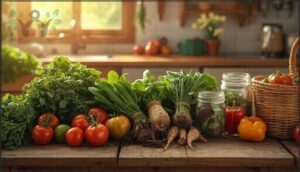
Your harvest doesn’t end when you pull vegetables from the ground or snip herbs from their stems. What you do in the next few hours determines how long your produce stays fresh and how much nutrition it retains.
Let’s look at three simple practices that help you store food properly, preserve its quality, and put plant scraps to good use.
Proper Storage to Reduce Waste
Your harvest doesn’t end in the garden—it continues in storage. Temperature control and humidity management form the backbone of waste reduction.
Store leafy greens at 34–38°F, root vegetables at 32–40°F with high humidity. Use breathable bags for fruits, airtight containers for vegetables. Label everything, rotate your stock, and keep storage areas clean to extend shelf life naturally.
| Storage Solutions | Best For |
|---|---|
| Crisper drawers (high humidity) | Leafy greens, herbs |
| Cool, dark spaces | Root vegetables, potatoes |
| Breathable bags | Ethylene-producing fruits |
Preserving Freshness and Nutrients
Speed is your secret weapon when preserving nutrients. Cool your harvest to 32–39°F within two hours—this slows vitamin breakdown and locks in flavor. Handle gently, wash with cool water, and dry thoroughly to minimize cell damage.
Five harvesting tips for freshness maximization:
- Pick during cooler morning hours when moisture content peaks
- Use breathable containers to prevent condensation during transport
- Store produce away from direct light to reduce nutrient degradation
- Minimize handling between garden and storage solutions
- Chill strawberries and herbs immediately for ideal nutrient retention
These food preservation practices guarantee your sustainable harvesting efforts deliver maximum nutrition to your table.
Composting Plant Residues Responsibly
Turning leftovers into garden gold starts with balance. A carbon ratio of 25–30:1 fuels microbial balance and prevents odors, while 45–60% moisture keeps things active without getting soggy.
Here’s your material sourcing guide for compost quality:
| Add to Pile | Keep Out |
|---|---|
| Untreated yard waste | Diseased plants |
| Vegetable scraps | Meat or dairy |
| Coffee grounds | Pesticide-treated material |
| Dry leaves | Invasive weed seeds |
| Garden trimmings | Pet waste |
Turn regularly, shred bulky items, and cover food scraps with dry leaves for odor control.
These sustainable gardening practices and organic gardening tips transform harvest waste into nutrients that support garden maintenance, sustainable harvesting, and composting and recycling—completing your backyard’s natural cycle.
Frequently Asked Questions (FAQs)
How do I harvest during droughts or heavy rain?
Weather’s like a wild card in your garden game. During drought, harvest in the cool morning and water beforehand.
After heavy rain, wait 12–24 hours to prevent soil damage and disease spread.
Can I harvest from diseased or pest-infested plants?
Skip harvesting heavily diseased plants—pathogens spread easily.
For mild pest damage, trim affected parts and sanitize tools between cuts.
When unsure about safety or quality, remove the plant to protect your garden’s health.
What happens if I accidentally over-harvest a plant?
Don’t leaf it to chance—over-harvesting stresses plants, limits regrowth, and invites pests.
Water immediately, mulch generously, and pause further harvesting.
New shoots usually emerge within one to three weeks, signaling vigor restoration.
Should I harvest differently for seed-saving purposes?
Yes, you’ll want to let seeds fully mature on the plant before harvesting. This timing differs from fresh-use harvests and ensures seed viability, genetic purity, and proper storage for future plantings.
How do wildlife and pollinators affect harvesting timing?
Pollinator schedules and wildlife pressure shape harvest windows in your backyard garden. Birds and insects affect crop maturity timing, so you’ll need to pick before they do while maintaining ecosystem balance through sustainable harvesting practices.
Conclusion
Your garden, like a well-tuned instrument, reacts to every move you make. Responsible harvesting practices for your backyard garden aren’t complicated—they’re about paying attention.
Cut cleanly, step carefully, and leave enough behind for tomorrow’s harvest. When you work with your plants instead of against them, they’ll reward you season after season.
The difference between a garden that fades and one that flourishes comes down to these small, deliberate choices you make each day.
- https://hershbergerconstruction.net/pole-barns/florence-co/
- https://www.nwf.org/Magazines/National-Wildlife/2010/Enticing-Predators-to-Patrol-Your-Garden
- https://teamgrow.us/collections/leafy-greens
- https://academichelpexpress.blog/2024/08/please-use-the-bulleted-points-and-the-rubric-below-to-guide-your-work-your-pa/