
This site is supported by our readers. We may earn a commission, at no cost to you, if you purchase through links.

A balcony garden faces one brutal problem that ground-level gardeners rarely think about: railing turbulence increases wind exposure by up to 40 percent, stripping warmth from your containers faster than any frost forecast can warn you. One clear night is enough to wipe out seedlings you’ve been nursing for weeks.
That’s where cold weather cloches for balcony gardeners change the equation entirely. A well-chosen cloche doesn’t just block frost—it creates a stable microclimate, raising near-ground temperatures by 2–6°C and shielding tender roots from the wind chill that railings make worse.
Picking the wrong one, though, means condensation, scorched leaves, or a cover that turns into a sail at the first gust. What follows cuts through the options so you can protect exactly what you’ve grown.
Table Of Contents
Key Takeaways
- Balcony railings amplify wind exposure by up to 40%, making cloche anchoring and edge-sealing non-negotiable rather than optional extras.
- Match your cloche material to your specific goal — glass maximizes light, fleece blocks frost down to -6°C, plastic traps heat, and mesh prioritizes pest control and airflow.
- Fit matters as much as function: bell cloches suit 6–10 inch pots, tunnels work for row-style beds, and mini greenhouses handle larger footprints — using the wrong form factor undermines protection entirely.
- Deploy before sunset to capture peak soil heat, vent on sunny days to prevent lethal temperature spikes, and always check moisture 2–4 inches deep, since condensation on cloche walls gives a false read on whether roots actually need water.
Top 7 Balcony Cloche Products
Not every cloche works the same way on a balcony, and choosing the wrong one can cost you a whole season of growth. The seven options below cover a range of materials, form factors, and protection levels to match different container setups and exposure conditions. Here’s what’s worth your attention.
If you’re newer to container gardening, brushing up on cold-weather cloches for beginner gardeners can help you understand which features actually matter before you invest.
1. Agfabric Plant Frost Protection Row Cover
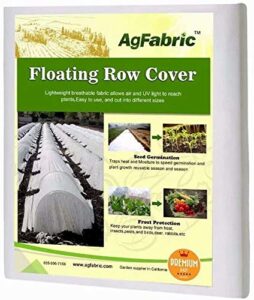
The Agfabric Plant Frost Protection Row Cover earns its place on balconies because it’s genuinely useful for all sorts of things. Made from UV-stabilized spun polypropylene, the 10′ x 50′ fabric drapes over pots, trellises, or raised beds without smothering plants — breathable enough to allow air and moisture through while trapping heat down to 28°F.
At 1.2 oz per square yard, it’s light to store between frosts but sturdy enough to reuse across seasons. Just watch sharp clips or container edges, which can snag the material.
| Best For | Gardeners and balcony growers who want to extend their growing season and protect vegetables, fruit trees, and shrubs from frost, pests, and harsh weather across multiple seasons. |
|---|---|
| Material | Woven spun polypropylene |
| Color | White/Natural |
| Dimensions | 10 ft x 50 ft |
| Reusable | Yes, multiple seasons |
| Weather Protection | Frost, snow, hail, wind |
| Breathability | Yes, air and moisture penetration |
| Additional Features |
|
- Breathable, UV-stabilized fabric lets air and moisture through while shielding plants from frost down to 28°F
- Lightweight and reusable, making it easy to store between seasons without taking up much space
- Doubles as an insect and pest barrier, keeping birds, bugs, and rabbits away from crops
- Thin material is prone to snagging or tearing around sharp edges, corners, or plastic clips
- Durability can vary depending on how often it’s used and the conditions it’s exposed to
- Some buyers have noticed slight inconsistencies in the actual length compared to what’s listed
2. Haxnicks Original Bell Jar Cloches
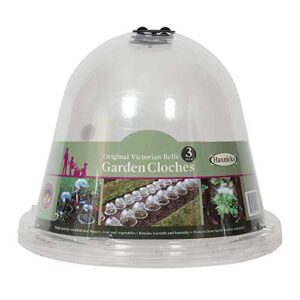
Where row covers protect whole containers at once, the Haxnicks Bell Jar Cloches work differently — one dome per plant, each creating its own sealed microclimate.
Molded from clear APET plastic, these 34 cm wide, 26 cm tall domes transmit enough light to keep photosynthesis ticking through dull winter days. The adjustable top vent lets you bleed off heat on sunny afternoons without fully removing the cloche. A pack of three suits most balcony setups neatly, and their bell shape naturally sheds rain away from foliage.
| Best For | Balcony and container gardeners who want individual plant protection and precise microclimate control through winter. |
|---|---|
| Material | Clear plastic |
| Color | Clear |
| Dimensions | Bell-shaped, fits various pots |
| Reusable | Yes |
| Weather Protection | Frost, cold wind |
| Breathability | Yes, integrated top vents |
| Additional Features |
|
- The clear APET plastic lets in enough light to keep plants photosynthesizing even on overcast days
- An adjustable top vent makes it easy to regulate heat without removing the cloche entirely
- Bell-shaped design naturally channels rain away from foliage while still directing moisture into the soil
- Lightweight plastic can shift or tip in windy conditions without extra securing
- The material feels thinner and less sturdy than some gardeners might expect
- Vulnerable to denting if anything heavy drops on or leans against them
3. Haxnicks Pop Up Tomato Cloche
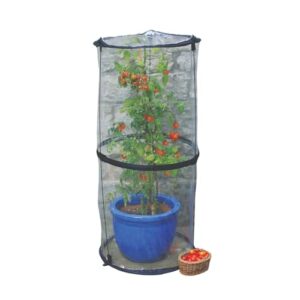
Bell jar cloches suit compact plantings, but tomatoes demand more room to grow. The Haxnicks Pop Up Tomato Cloche answers that with a 43-inch height and 19-inch diameter — enough clearance to shelter a maturing plant without crushing the canopy.
It deploys instantly and stores flat, which matters on a balcony where every spare inch counts. Built-in vents reduce overheating on bright days, though the lack of a top opening makes mid-season access awkward. Anchor the ground pegs firmly; the 1.75 lb frame won’t hold against real wind on its own.
| Best For | Balcony and small-space gardeners growing tall vegetables like tomatoes and peppers who need frost and pest protection without sacrificing too much floor space. |
|---|---|
| Material | 60% cotton, 40% polyester |
| Color | Plain/Unspecified |
| Dimensions | Small to 3XL (6-pack) |
| Reusable | Yes, machine washable |
| Weather Protection | None |
| Breathability | Yes, cotton-polyester blend |
| Additional Features |
|
- Pops open in seconds and folds flat for easy storage — perfect when space is limited
- At 43 inches tall and 19 inches wide, it gives maturing plants real room to grow
- Built-in air vents help prevent overheating on sunny days
- No top opening or zipper makes accessing plants mid-season frustrating
- The lightweight frame can tip over in even moderate wind, even with stakes
- Clear PVC contains DEHP, a chemical flagged in California for potential health risks
4. Tierra Garden Micromesh Plant Cover Cloche
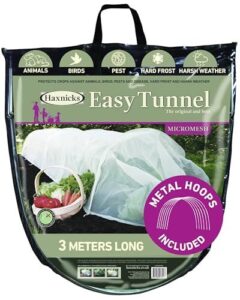
Where the tomato cloche focuses on height, the Tierra Garden Micromesh takes a different approach — pest exclusion over thermal protection. Its 0.6 mm polyethylene mesh blocks aphids, flea beetles, and cabbage root flies while still letting rain and air through, so you won’t smother what you’re trying to protect.
The accordion-style tunnel deploys in minutes and folds flat for storage. At 118 inches long, it suits row-style balcony beds rather than individual containers — keep that footprint in mind before ordering.
| Best For | Gardeners growing row crops like kale, cabbage, or green beans who want reliable pest protection without sacrificing airflow or rainwater access. |
|---|---|
| Material | Clear PVC and steel |
| Color | Clear |
| Dimensions | 43 in H x 19 in D |
| Reusable | Yes |
| Weather Protection | Frost, hail, wind, blight |
| Breathability | Yes, built-in air vents |
| Additional Features |
|
- The 0.6 mm micromesh keeps out even the smallest insects — aphids, flea beetles, cabbage root flies — while still letting rain and fresh air reach your plants
- Quick accordion-style setup means it’s ready in minutes and folds flat when the season’s done
- At 118 inches long, it covers a solid stretch of row-style garden bed in one go
- At just 12 inches tall, it won’t suit taller crops like broccoli or Brussels sprouts as they mature
- Getting in to harvest or tend your plants takes a bit of effort given the tunnel structure
- Some gardeners find it smaller than expected, so measure your bed before buying
5. Haxnicks Micromesh Pest Wind Barrier
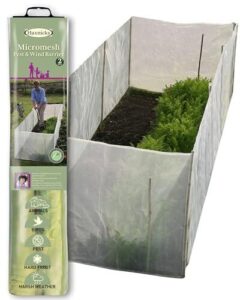
Carrot fly is a persistent problem on balconies with root crops in containers, and the Haxnicks Micromesh Pest Wind Barrier combats it directly. Its 0.6 mm woven mesh blocks low-flying insects while allowing sunlight, rain, and pollinators through — no chemicals needed.
Each pack includes two 13-foot panels with integrated bamboo aids, so there’s no external frame to source. The green tint also helps retain soil moisture. One caveat: bamboo canes can snap in compacted soil, so keep spare stakes on hand.
| Best For | Balcony and container gardeners dealing with carrot fly or other low-flying pests who want a chemical-free, easy-to-set-up barrier. |
|---|---|
| Material | UV-stabilized polyethylene and galvanized steel |
| Color | Natural/Clear |
| Dimensions | 118 in L x 18 in W x 12 in H |
| Reusable | Yes |
| Weather Protection | Frost, harsh weather |
| Breathability | Yes, adjustable drawstring ends |
| Additional Features |
|
- The 0.6mm micromesh blocks carrot flies and low-flying insects without stopping sunlight, rain, or bees from getting through
- Comes with integrated bamboo canes, so you don’t need to hunt down a separate frame or support structure
- Two 13-foot panels per pack gives you solid coverage for raised beds, containers, or pallet collar planters
- Bamboo canes can snap in hard or compacted soil, meaning you’ll likely need replacement stakes at some point
- Slugs and very small insects can still find their way through or under the mesh
- May need extra clips or supports in windy or exposed spots to stay in place
6. Miracle-Gro 4-Tier Mini Greenhouse Plant Tent
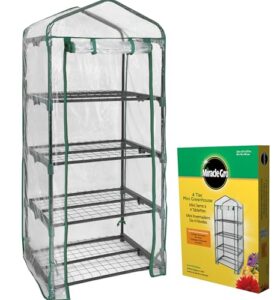
When balcony space is tight, vertical is the only direction left to grow. The Miracle-Gro 4-Tier Mini Greenhouse stacks four removable wire mesh shelves inside a 23" × 17" × 57" footprint — slim enough to tuck against a railing without blocking foot traffic.
The cover zips open for easy airflow on warm days — a must-have feature explained in detail in this guide to cold-weather cloche ventilation for raised beds.
Its clear PVC cover transmits strong light while the UV protection reduces leaf burn on south-facing balconies. One non-negotiable: anchor it with sandbags. The 3.92 kg frame won’t survive an exposed balcony gust unsecured.
| Best For | Balcony gardeners, seed starters, and small-space growers who want to extend their growing season without sacrificing square footage. |
|---|---|
| Material | Woven polypropylene micromesh |
| Color | Green |
| Dimensions | 13 ft L x 2.25 ft H (per panel) |
| Reusable | Yes |
| Weather Protection | Wind, light frost |
| Breathability | Yes, allows sunlight and water through |
| Additional Features |
|
- Four tiered shelves pack serious growing capacity into a narrow 23" × 17" footprint — perfect for tight balconies or patios
- Clear UV-protected PVC cover keeps plants warm and bright while reducing the risk of leaf burn on sun-heavy exposures
- Tool-free snap-together assembly means you’re up and growing in minutes, no hardware store run required
- Lightweight frame is a wind hazard on exposed balconies — sandbags or stakes are a must, not an option
- No built-in ventilation means you’ll need to manually roll up the door or add a small fan to prevent mold and overheating
- Steel frame can rust or weaken over time with prolonged outdoor exposure, making it better suited as a seasonal rather than permanent setup
7. The Planket Frost Protection Plant Cover
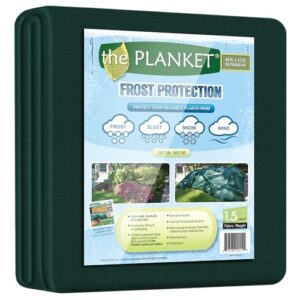
Grouped containers are where the Planket earns its keep. This spun-bonded polypropylene cover drapes over several pots at once, trapping warm air in a shared microclimate without suffocating your plants — the breathable fabric keeps moisture from rotting foliage overnight.
The 10 built-in grommets let you anchor it securely, though in soft balcony soil you’ll want heavier stakes than the included plastic ones. At 50 GSM, it holds up against moderate frosts reliably.
| Best For | Gardeners with grouped container plants or delicate shrubs who need a breathable, reusable cover to protect against frost, cold winds, and light snow. |
|---|---|
| Material | PVC cover, powder-coated steel frame |
| Color | Clear |
| Dimensions | 23 in L x 17.25 in W x 57 in H |
| Reusable | Yes |
| Weather Protection | Light frost, wind |
| Breathability | Partial, requires manual door management |
| Additional Features |
|
- Breathable polypropylene fabric lets air and moisture escape, so foliage stays healthy overnight without the rot risk that plastic covers create
- Ten built-in grommets give you multiple anchor points, making it easy to secure snugly over clusters of pots or larger shrubs
- Generous 10 x 12 ft size covers a wide area, and it folds down compact for easy storage when the season changes
- The included plastic stakes are prone to snapping in hard or rocky soil, so you’ll likely need to buy sturdier replacements
- Grommets can tear or pull free if wind gets under the cover and creates strong tension — heavier anchoring helps but adds setup time
- Tricky to manage solo on a windy day; an extra pair of hands makes installation a lot less frustrating
Best Cloches for Balcony Gardens
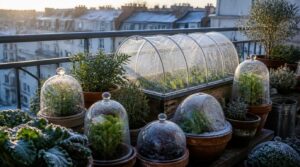
Balcony gardens come with their own set of constraints — limited floor space, exposed railings, containers that shift with wind, and nowhere to store bulky equipment off-season.
The cloche that works perfectly in a raised bed won’t necessarily suit a 10-inch pot perched on a third-floor railing. Here’s what to look for when choosing an option that actually fits how and where you grow.
Small-space Growing Needs
Growing on a balcony means every square inch has a job to do.
- Vertical space optimization lets wall-mounted trellises triple usable surface area
- A popup cloche or mini greenhouse fits under 18 inches wide
- Compact plant varieties thrive where standard cultivars simply can’t
Grouping pots creates a microclimate that concentrates warmth, making plant covers dramatically more effective. You can further boost productivity by utilizing strategic crop selection to make the most of your limited area.
Container Size Considerations
The right pot diameter decides which cover will actually fit. Bell cloches suit 8–10 inch pots well, while a mini greenhouse accommodates larger balcony footprints. Always check vertical clearance — stem growth space needs at least 12 inches so plants don’t press against cover walls. Containers must also exceed mature root depth by 1–2 inches to make sure transplant safety without crowding.
| Pot Diameter | Recommended Cover | Vertical Clearance |
|---|---|---|
| 6–8 inch | Bell cloche | 10–12 inches |
| 10–12 inch | Plant cover/tunnel | 12–18 inches |
| 14–24 inch | Mini greenhouse | 18–24 inches |
Railing and Corner Placement
Corner spots are deceptively tricky. Corner post tension pulls from two directions, so any cover anchored near railing corners needs posts secured into structural framing — not just surface materials.
A bell cloche sits stably on its own weight, but larger garden cloche formats require anchoring against corner stress. Keep railing alignment consistent so covers don’t cant inward and collapse against foliage.
Wind Exposure Challenges
Balcony edges can increase wind exposure by up to 40 percent compared to sheltered spots, and railing turbulence creates alternating pressure zones that shift lightweight cloches sideways mid-gust.
Balcony edges amplify wind exposure by up to 40 percent, turning railing turbulence into a force that shifts cloches mid-gust
- Use 5 mm nylon guy lines for exposed setups
- Anchor frames to railings or flooring
- Insert stakes at least 20 cm deep
- Seal edges tight to protect seedling roots from wind-disturbed soil
Easy Storage Options
Once you’ve anchored your setup against the wind, the next question is where everything goes when the season shifts.
Collapsible fabric cloches compress to a third of their height, while stackable 12×12-inch bins keep folded covers, stakes, and spare panels organized without crowding your balcony. Portable tent frames collapse to an 18-inch disk — genuinely compact enough to slide behind a door.
Choose The Right Cloche Material

The material your cloche is made from determines far more than you might expect — it shapes how much light reaches your plants, how well it traps heat, and whether it’ll survive a gusty balcony night.
Not every option suits every situation, so matching material to purpose is the real starting point. Here’s what each type actually does for your container garden.
Glass for Light
Glass transmits 80–92% of visible light, giving sun-hungry plants nearly unobstructed access to the full visible spectrum — a clear advantage over most alternatives.
Five glass properties that matter most:
- High visible transmittance drives strong photosynthesis rates
- Full-spectrum delivery keeps plant development balanced
- A refractive index of 1.52 distributes light evenly inside
- Anti-reflective coatings reduce surface reflection further
- UV filtering protects foliage without blocking growth wavelengths
Fleece for Frost
Where glass wins on light, fleece wins on survival. A 30 gsm frost fleece shields plants down to -6°C by trapping warm air against foliage and diffusing wind chill before it reaches tender tissue. It’s breathable, so humidity won’t spike.
After winter, wash it, dry it flat, and store it folded — proper storage extends usability across multiple seasons.
Plastic for Warmth
Plastic works like a sealed envelope around your plants — trapping daytime heat and releasing it slowly through cold nights. UV-stabilized polyethylene raises near-ground temperatures by 2–6°C, while polycarbonate holds warmth longer without cracking in freezing conditions.
- Clear plastic transmits over 70% of visible light
- Polycarbonate resists impact and temperature-driven warping
- UV stabilizers prevent yellowing across multiple seasons
Condensation is the trade-off — vent regularly.
Mesh for Airflow
Mesh cloches trade thermal sealing for continuous ventilation — a key distinction on sunny balconies where condensation buildup suffocates plants fast.
| Factor | Effect |
|---|---|
| 0.3–0.6 mm aperture | Filters aphids; improves airflow |
| 40–70% porosity | Balances ventilation and microclimate |
| UV-resistant fiber | Maintains mesh durability |
Match aperture size to your pest pressure. Proper porosity balance keeps moisture management consistent without trapping humid air around foliage.
Polycarbonate for Durability
Polycarbonate cloche panels absorb impact without shattering — 200 times tougher than glass — which matters when wind sends a container skidding across your balcony. UV stabilizers prevent yellowing after seasons of outdoor exposure, so clarity holds.
The strength-to-weight ratio keeps repositioning easy, and polycarbonate is recyclable when the cloche finally reaches end of life.
Match Cloches to Plant Types

Not every cloche suits every plant, and using the wrong one can do more harm than good. The size, growth habit, and cold tolerance of what you’re growing should drive your choice as much as the weather does. Here’s how to match the right cover to five common balcony plant types.
Seedlings and Starts
Seedlings are the most vulnerable plants you’ll protect. Their roots can’t yet buffer temperature swings, so a bell cloche or fleece cover creates the stable microclimate they need — ideally keeping temps between 65–75°F for best germination.
Use a sterile starting mix underneath to block pathogens, vent when humidity exceeds 70%, and harden transplants gradually over 7–14 days before removing protection entirely.
Leafy Greens
Leafy greens like spinach, kale, and arugula are cold-tolerant but still benefit from lightweight fleece covers when frost threatens. A 17 gsm fleece holds temperatures above freezing without trapping enough heat to bolt cool-season crops.
Harvest outer leaves regularly — that’s what keeps production going — and store unwashed greens in perforated bags to preserve their dense nutrient profile through the week.
Herbs in Pots
Potted herbs demand more cloche precision than most crops. Basil scorches above 75°F under sealed covers, so vent or remove protection once morning temperatures stabilize. A recycled clear container can raise the microclimate by several degrees on cold nights — enough to protect tender growth without smothering it.
Use drip irrigation at soil level to prevent mildew, and keep mint in its own pot.
Tender Vegetables
Tomatoes, peppers, and eggplants share one hard limit: any night dipping below 5°C (41°F) puts them at risk. Unlike herbs, they can’t recover from frost damage — leaf scorch on basil is temporary; blackened tomato foliage usually isn’t.
Deploy your cloche before sunset so the container microclimate retains daytime heat through the coldest hours.
Overwintered Container Crops
Perennial herbs like thyme, sage, and chives are built for this. They slow down rather than give up, which makes them ideal overwintered container crops when paired with 30 gsm fleece and grouped pots that share boundary warmth.
Avoid freeze-thaw cycles by insulating root balls with mulch, and don’t water a lot — roots need moisture, not saturation.
Set Up Cloches Correctly
Even the best cloche won’t do much if you place it wrong or wait too long to put it down. Getting the setup right comes down to a handful of habits that make a real difference once temperatures start dropping. Here’s what to do before the cold sets in.
Cover Before Sunset

By late afternoon, soil has stored its peak daytime heat — place your cold weather cloche now, not at midnight. Dusk deployment raises interior temperatures by 2–6°C, creating a microclimate that carries plants through the coldest hours.
- Forecasts dropping below 5°C overnight
- Basil or cilantro wilting at leaf tips
- Transitional weather with clear evening skies
- Seedlings with exposed first true leaves
Seal Cold Drafts

Timing your cover placement perfectly means little if cold air sneaks in underneath. Seal cloche edges firmly against the soil or pot rim — even a small gap lets drafts undercut the microclimate you’ve built.
For fabric covers, press the hem down and weight it with stones or a draft stopper. Think of it as weatherstripping for your plants.
Anchor Against Wind

Balcony wind can strip an unanchored garden cloche instantly.
- Weighted base stability: 5 kg bases, non-slip pads
- Ground hook installation: hooks 10 cm deep
- Railing strap security: UV webbing to railings
- Wind shield panels: 85% light, cuts flutter
Multi-point anchoring cuts rocking by 40%. For cold weather cloches on any balcony, this weatherproofing builds weather resistance and extreme weather preparedness.
Avoid Touching Foliage

Even brief contact with new growth can cause leaf micro-tears, opening pathways for pathogens to enter before a cloche even traps humidity. Protecting epidermal waxes matters because once stripped, leaves lose moisture control and become sunburn-prone.
Use long tools to reposition pots, and schedule touch-free maintenance checks. Thigmomorphogenesis effects from repeated contact divert energy from growth to cellular repair — a costly trade-off inside any sealed garden cloche.
Group Pots Together

Clustering your containers transforms scattered pots into a shared microclimate — inner pots stay shielded from drying winds and temperature swings, which cuts watering needs by up to 30% on hot days.
Place taller pots at the center, stepping down by height outward. This creates visual depth while ensuring each cloche sits stable and every plant gets consistent light exposure.
Manage Heat, Moisture, and Airflow

Getting the cloche on is only half the job — what happens inside matters just as much. Without proper airflow and moisture control, a sealed cover can quickly turn from a protective shelter into a breeding ground for disease. Here’s what to watch once your cloches are in place.
Vent on Sunny Days
A sunny afternoon inside a sealed cloche can turn lethal fast — temperatures spike well beyond what tender plants can handle.
Open vents when daytime heat builds:
- Crack vents on bright mornings to prevent heat accumulation
- Position openings opposite each other for steady cross-ventilation
- Adjust gradually to avoid sudden temperature swings that stress seedlings
- Close before sunset to retain residual soil warmth overnight
Managing heat stress and regulating humidity together keeps your plants thriving, not surviving.
Check Soil Moisture
Condensation on cloche walls distorts your read on soil moisture — things can look wetter than the root zone actually is. Push a finger 2–4 inches deep; tactile moisture checks don’t lie.
Sensor placement accuracy matters in containers. Keep probes away from pot edges, and calibrate for your specific mix.
| Moisture Signal | What It Means |
|---|---|
| Wet interior glass | High humidity, not saturated soil |
| Dry surface, moist below | Normal beneath cloches |
| Soggy at 3 inches | Root rot risk |
| Crumbly at 2 inches | Time to water |
| Meter reads dry, feel wet | Recalibrate your sensor |
Container drainage variability means each pot needs its own check.
Prevent Condensation Buildup
Moisture fogs your cloche walls faster than you’d expect on cold mornings. Adjustable vents placed near the top let warm, humid air escape before it settles into droplets. A small passive fan improves circulation without chilling leaves.
If fogging persists, try anti-fog coatings on glass or plastic surfaces. Tucking moisture-absorbing desiccant packs near pot bases quietly pulls excess humidity before it builds.
Water at Soil Level
Overhead watering inside a garden cloche turns the enclosed microclimate into a mildew incubator. Drip irrigation delivers water directly to the root zone, keeping foliage dry and condensation risks low.
Check soil moisture 2–4 inches below the surface — balcony containers drain faster than ground beds, so visual checks alone mislead you.
Watch for Mildew
Even with careful watering, condensation buildup inside a cloche creates ideal conditions for powdery mildew. Keep indoor humidity between 30 and 50 percent using a small hygrometer, and wipe surface moisture daily.
- Remove wilted or rotting plant debris promptly
- Improve drainage under pots to stop water pooling
- Open vents when humidity exceeds 70 percent
- Use airflow optimization methods like a low fan at the base
- Clean cloche interiors with a mild solution before reuse
Use DIY Cold Weather Cloches
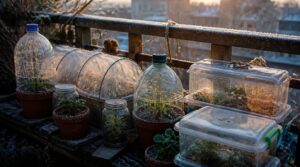
You don’t need to spend much to keep your balcony plants protected — some of the most effective cold weather cloches come from materials you’d otherwise toss in the recycling bin.
A little creativity and a few common household items can shield your containers just as reliably as store-bought options. Here are five DIY solutions worth keeping in your cold-weather toolkit.
Plastic Bottle Cloches
Repurposed two-liter soda bottles create a surprisingly effective cold weather cloche, trapping heat to raise the microclimate several degrees above ambient. Cut the base cleanly and smooth cut edges to protect foliage.
Leave the cap loosely fitted for cap ventilation on warmer days. Wipe condensation regularly, and these PET material cloches will reliably shield seedlings from transplant shock across multiple seasons.
Gallon Jug Covers
Gallon jugs offer better heat retention than two-liter bottles, covering larger transplants while maintaining a stable microclimate around foliage. Snug fit limits air gaps that accelerate heat exchange — exactly the principle behind insulation R-values.
- Antimicrobial linings resist mildew in damp balcony conditions
- Universal fitment covers suit standard 55 mm crown openings
- Decorative fabrics improve cold weather cloche aesthetics
Wire Hoop Tunnels
Bend 10 or 12 gauge galvanized steel into pre-arched hoops — usually 54 to 64 inches long — and you’ve built the backbone of a row-level cold weather cloche that spans multiple containers at once.
Space hoops every five feet, drive each end six inches into soil or a planter edge, then drape micromesh or frost fabric over the top for immediate frost protection across an entire vegetable row.
Pillowcase Frost Covers
An old pillowcase slipped over a tender plant is one of the simplest root zone insulation tricks available to balcony gardeners.
- Slide it over upright plants before sunset
- Secure the base with a soft clip or tie
- Remove by mid-morning to restore light and airflow
The fabric’s natural breathability helps with condensation prevention, keeping moisture from pooling against foliage overnight in a confined balcony microclimate.
Reused Clear Containers
Takeout containers and deli tubs make surprisingly capable cold weather cloches when placed over seedlings on balcony containers. Their transparency helps heat retention and light transmission similar to bell jar cloches, creating a functional microclimate overnight.
Rinse with hot soapy water between uses to maintain sanitizing reuse cycles, and vent the lid slightly on sunny days to prevent condensation from overwhelming young starts.
Frequently Asked Questions (FAQs)
Will cloches protect from frost?
Yes — cloches trap radiant soil heat and slow radiative cooling, creating a microclimate that can delay frost damage by several degrees Celsius, even on exposed balconies where wind chill accelerates temperature loss.
Can cloches protect plants during heavy snowfall?
Heavy snow can protect as much as it threatens. A cloche holds warmth beneath the weight, but dense accumulation blocks light and risks collapse — clear it promptly to keep plants viable.
How long do polycarbonate cloches typically last outdoors?
UV-stabilized polycarbonate cloches usually last 10 to 20 years outdoors. Thicker panels, around 4mm or more, resist warping and impact better. Clean gently with mild soap to preserve clarity and extend their lifespan.
Do cloches affect pollination of flowering balcony plants?
Cloches do affect pollination by limiting insect visitation. Vent or remove covers during warm daytime hours to restore pollinator access, especially for flowering crops that rely on bees rather than wind or self-pollination.
Are cloches safe for edible herbs year-round?
For most edible herbs, cloches are safe year-round when ventilation and drainage stay consistent. Avoid sealing them shut on warm days — leaf scorch and humidity-driven mildew become real risks without airflow.
Can cloches be used on vertical wall planters?
Think of a wall planter like a shelf mid-storm — exposure is high, stability limited. Lightweight plastic or polycarbonate cloches work, provided you keep a 2–4 inch airflow gap and use clips or brackets against wind.
Conclusion
The gardener who loses seedlings to a single frost and the one who doesn’t—the only difference is what’s covering the soil when temperatures drop. Cold weather cloches for balcony gardeners aren’t complicated gear; they’re the margin between a thriving container harvest and starting over in spring.
Choose by material, match to plant type, anchor against railing wind, and manage heat buildup. Get those four things right, and your balcony stops being vulnerable.
- https://www.growveg.com/guides/effective-cold-weather-protection-for-vegetable-gardens
- https://www.rhs.org.uk/prevention-protection/cloches
- https://millcreekgardens.com/cloches-winter-gardening
- https://harvesttotable.com/cloche-buyers-guide-harvest-to-table
- https://www.bmr.ca/en/miracle-gro-greenhouse-4-tiers-23-x-17-x-57-002-1840.html