This site is supported by our readers. We may earn a commission, at no cost to you, if you purchase through links.
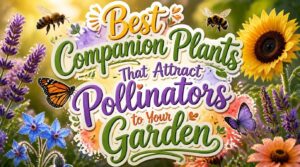
A single bee visiting your garden can pollinate up to 5,000 flowers in one day—yet most gardens unknowingly turn pollinators away before they even land. Bare soil between crops, a monoculture of vegetables, and the absence of bloom diversity leave bees and butterflies with nowhere to forage and no reason to stay.
The solution isn’t complicated. Companion plants that attract pollinators work on two levels simultaneously: they draw beneficial insects in, then give your vegetables the cross-pollination they need to actually produce.
The right plant combinations can transform a quiet patch into a thriving little world—starting with what you choose to grow beside what.
Table Of Contents
- Key Takeaways
- Best Pollinator-Friendly Companion Plants
- Herbs That Attract Helpful Pollinators
- Vegetable Garden Companion Pairings
- Seasonal Blooms for Continuous Pollination
- Pollinator Habitat Companion Planting Tips
- Frequently Asked Questions (FAQs)
- What are the best companion plants to attract pollinators?
- Which companion plants attract hummingbirds specifically?
- Can companion planting support nocturnal moth pollinators?
- Do companion plants help beetle and fly pollinators?
- How does companion planting affect soil nitrogen levels?
- Which plants deter pests while feeding beneficial insects?
- Conclusion
Key Takeaways
- Pairing nectar-rich companions like sunflowers, lavender, and zinnias with your vegetables draws pollinators in and directly boosts crop yields through improved cross-pollination.
- Herbs such as dill, basil, and fennel pull double duty — attracting beneficial insects like hoverflies and parasitic wasps that naturally suppress aphids and other pests.
- Staggering bloom times from early spring crocuses through late-season goldenrod and asters keeps a continuous nectar supply that pollinators depend on before and after winter dormancy.
- Beyond plant selection, simple habitat additions — shallow water dishes, bare soil patches, and solitary bee hotels — give pollinators a reason to stay and return season after season.
Best Pollinator-Friendly Companion Plants
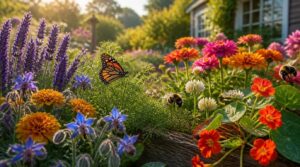
Choosing the right companion plants can turn your garden into a magnet for bees, butterflies, and other beneficial visitors.
For squash growers especially, pairing the right neighbors makes all the difference — this squash companion planting guide walks you through which plants attract the most pollinators while keeping pests at bay.
Some plants do this job better than others, offering the right mix of color, nectar, and bloom time to keep pollinators coming back. Here are five of the best pollinator-friendly companions worth adding to your planting plan.
Sunflowers
Few garden plants pull double duty quite like sunflowers. Standing 6 to 10 feet tall, their open disc heads host hundreds of florets — a landing pad bees and butterflies can’t resist.
- Attracts bees and butterflies
- Deep taproot loosens compacted soil
- Acts as a windbreak for nearby crops
- Seeds provide wildlife food
- Bridges late-summer nectar gaps
You can choose between annual or perennial varieties depending on your garden goals.
Plant where companions need shelter.
Lavender
Where sunflowers anchor the canopy, lavender works the middle ground — and pollinators notice. Its long flowering spikes, each carrying 10 to 20 florets, feed bumblebees and mason bees from late spring through early fall.
Plant it in well-drained soil at a pH between 6.0 and 8.0 and full sun. Once established, it’s drought-tolerant and practically self-sufficient.
Purple Coneflowers
Lavender draws bees through scent, but purple coneflowers bring them in with structure. Each bloom offers a flat, open landing platform surrounded by drooping pink petals, making nectar and pollen easy to access from June through August.
As a native prairie perennial, it’s drought-tolerant once established and nearly self-sufficient. When blooms fade, leave the seed heads — birds feed on them through winter.
Zinnias
Where coneflowers fade, zinnias take over. Bright composite blooms feed bees and butterflies from midsummer through frost, making them reliable nectar sources you can count on.
- Choose single-flower types for easy pollinator access
- Sow in well-drained soil, pH 6.0–7.0
- Space 12 inches to limit powdery mildew
- Deadhead blooms weekly to extend flowering
- Pair with squash or brassicas to deter pests
Cosmos
Think of cosmos as the galaxy of your border — each feathery stem a filament in a cosmic web of color that bees and butterflies can’t resist. Their open, daisy-like blooms deliver nectar reliably from midsummer through frost, bridging the gap after zinnias slow.
Plant in clusters of five or more for maximum pollinator draw, and let a few self-seed freely.
For even better results, follow a beginner’s garden planting guide to space and time your clusters so blooms overlap throughout the season.
Herbs That Attract Helpful Pollinators
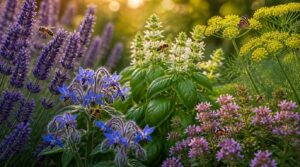
Herbs pull double duty in the garden — they flavor your meals and quietly keep pollinators coming back all season long.
The right ones planted in the right spots can draw in bees, butterflies, and beneficial insects while supporting the crops growing nearby. Here are five herbs worth adding to your pollinator planting plan.
Dill
Dill does double duty in any pollinator-friendly garden. Its flat yellow umbels — a hallmark of the Apiaceae family — draw swallowtail butterflies, tachinid flies, and hoverflies with reliable consistency.
- Pairs well near cucumbers and squash
- Hosts black swallowtail caterpillars
- Seeds are harvestable for pickling
- Attracts beneficial pest-controlling insects
Plant it in full sun, direct-seeded where it’ll stay.
Basil
Basil earns its place far beyond the kitchen. When allowed to bolt, its 6-inch flowering spikes draw honey bees with surprising efficiency, especially near tomato plants where it also deters aphids.
Sweet Genovese varieties carry linalool and eugenol — the same oils that make fresh pesto sing — while pruning flower stems keeps both leaf quality and your pollinator activity humming steadily through summer.
Fennel
Fennel’s yellow umbel clusters work like a landing strip for hoverflies, ladybugs, and parasitic wasps — beneficial insects that quietly dismantle aphid colonies near your tomato and brassica crops.
Plant it in well-drained, full-sun soil with a pH of 6.0 to 7.0, and it rewards you generously: aromatic seeds rich in trans-anethole, tender bulbs, and feathery fronds, all from one multi-purpose insectary herb.
Cilantro
Cilantro’s yellow umbel clusters draw hoverflies, ladybugs, and parasitic wasps that suppress pest pressure near tomato and brassica crops — making it a quiet workhorse in any pollinator-friendly bed.
Bolt it intentionally in warm weather to trigger flowering faster. Harvest outer leaves at 6 to 8 inches tall to extend your fresh supply before seeds develop into coriander.
Oregano
Few herbs pull double duty like oregano. Tuck it between rows and its dense purple flower mats draw mining bees and small carpenter bees all season.
- Greek oregano flowers earlier; Italian oregano follows mid-season
- Both deliver nectar and pollen to beneficial insects
- Propagate by division every two to three years
- Skip sprays — oregano’s antimicrobial essential oils already guard your organic garden
Vegetable Garden Companion Pairings
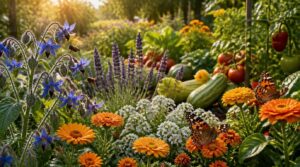
Pairing the right plants in your vegetable garden does more than fill space — it builds a little world where pollinators keep showing up because they’ve good reasons to.
Each combination below pulls double duty, drawing in bees and butterflies while also supporting the crops growing alongside them. Here are five pairings worth building your garden around.
Borage With Squash
Tuck borage at the edges of your squash mounds, spacing plants 12 to 18 inches away to prevent crowding.
Its star-shaped blooms draw bees and hoverflies directly toward squash flowers, boosting pollination rates during open bloom windows. As leaves decompose, they return trace minerals to the soil. Just watch for self-seeding — volunteers can quietly take over your layout.
Basil With Tomatoes
Borage feeds the bees; basil earns its place by pulling double duty. Plant Genovese or sweet basil 12 to 18 inches from tomatoes — close enough to deter aphids, far enough to avoid crowding roots.
- Bolting basil draws honey bees to nearby tomato flowers
- Basil oils may suppress aphids naturally
- Harvest leaves regularly for bushier growth
- Pair fresh leaves with ripe tomatoes in caprese or quick sauces
Dill With Cucumbers
Dill pulls a similar trick to basil — it works quietly in the background while doing several jobs at once. Sow dill seeds 2 to 4 weeks before cucumber transplants, placing rows 12 to 18 inches apart so roots don’t compete.
Dill’s flat yellow umbels draw hoverflies and lady beetles that target aphids and cucumber beetles, while its scent lightly camouflages cucumber foliage from pest scouts.
Nasturtiums With Brassicas
Few plants earn their place like nasturtiums do beside brassicas. They act as trap crops, luring cabbage moths and aphids away from your kale and cabbages.
- Sow nasturtiums early around bed edges
- Choose trailing varieties for horizontal coverage
- Deadhead regularly to sustain blooms
- Avoid planting directly underneath brassicas
- Monitor spread to prevent shading
Their blossoms draw hoverflies and butterflies, boosting pollinator-friendly garden activity throughout the season.
Marigolds With Beans
Marigolds earn their keep beside beans by releasing pest-deterring aromas that discourage beetles from targeting leaves and pods. Space them 12 to 18 inches from rows to avoid moisture competition, and cluster them as a border rather than interplanting directly.
| Benefit | Detail |
|---|---|
| Pest deterrence | Floral scents discourage bean beetles |
| Pollinator attraction | Draws bees that improve pod set |
| Soil enrichment | Decomposing foliage adds organic matter |
| Moisture retention | Leaf litter mulches bean root zones |
| Nitrogen balance | Bean roots fix nitrogen; marigold residue helps post-harvest soil |
Regular deadheading keeps blooms active and scent diffusion consistent all season.
Seasonal Blooms for Continuous Pollination
Keeping pollinators active from the first warm days of spring through the edge of frost isn’t luck — it’s a matter of thoughtful plant selection.
When you stagger bloom times across the season, you’re basically setting a table that’s never empty. Here’s how to build that continuous flow, from early spring nectar sources to frost-tolerant late-season plants.
Spring Nectar Sources
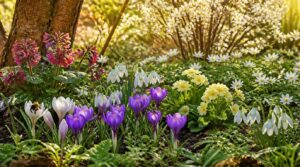
Spring doesn’t wait — and neither should your garden. Crocus, snowdrops, and wood anemone form an early nectar trail that sustains newly active bumblebees and mason bees before most plants wake.
Tuck pulmonaria and primrose into shaded corners for woodland coverage, while redbud and serviceberry shrubs extend blooms at the border, stitching late winter into true spring without a gap.
Summer Flowering Companions
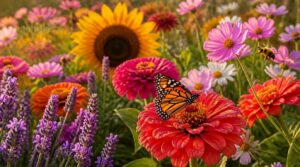
Six or more hours of sunlight unlocks summer’s full pollinator potential. Staggering bloom times across sunflowers, zinnias, and cosmos creates midsummer nectar bridges that keep bees and butterflies active without interruption.
Color grouping draws pollinators faster — warm clusters signal abundance. Rotate annuals yearly to maintain soil health, and lean on drought-tolerant varieties like lavender during hot spells when other blooms fade.
Late-Season Pollen Plants
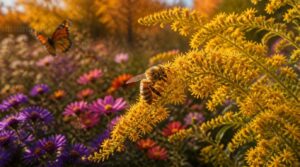
As summer fades, autumn nectar dearth threatens to leave pollinators without fuel before winter dormancy sets in. That’s why late-season pollen plants like goldenrod, New England aster, and ironweed matter so much — they bridge that critical gap from August through October.
Zinnias and cosmos extend bloom succession deep into fall, keeping bees actively foraging while they build winter reserves.
Frost-Tolerant Pollinator Plants
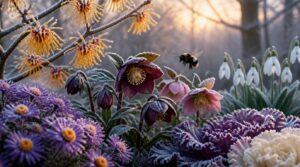
When the first frost threatens to shut down your garden, a handful of tough-as-nails plants refuse to quit — and the pollinators know exactly where to find them.
- Witch hazel blooms mid-winter
- Hellebores offer early spring nectar
- Snowdrops push through frost
- Native asters survive light freezes
- Ornamental kale provides for cold-hardy bees
These frost-resistant perennials keep your continuous bloom cycle unbroken.
Bloom Succession Planning
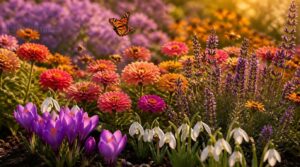
Think of your garden as a relay race — the baton of nectar must never drop. Staggering bloom times from early crocuses through summer zinnias to fall asters prevents seasonal forage gaps that leave pollinators without food.
Stagger your blooms from spring crocuses to fall asters, and the nectar baton never drops
Overlapping bloom corridors keep bees and butterflies moving through your space continuously. Pair perennial flowering plants with annuals for reliable, year-round pollinator activity.
Pollinator Habitat Companion Planting Tips
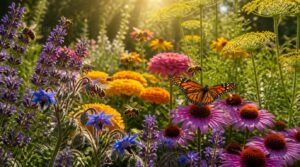
Attracting pollinators is only half the work — keeping them around takes a little more intention. Beyond choosing the right plants, a few simple habitat habits can make your garden a place they’ll return to season after season. Here are the key tips to get you started.
Choose Native Flowers
Choosing native wildflowers transforms your garden into a thriving natural habitat rather than just a pretty space. Plants like coneflowers and goldenrod have co-evolved with local pollinators, making them far more effective than exotic alternatives.
They’re drought-tolerant once established, demand less fertilizer, and actively improve soil structure through deep root systems — all while supporting regional biodiversity with far less effort on your part.
Plant in Clusters
Planting in odd-number groupings — three, five, or seven plants — creates natural-looking formations that pollinators find far easier to locate than scattered individuals.
- Clusters form nectar corridors guiding bees along borders
- Dense groupings retain soil moisture beneath shared canopies
- Microhabitats concentrate floral resources in compact zones
- Repetition builds a clear visual design rhythm
- Sheltered clusters reduce wind exposure for delicate blooms
Add Shallow Water
Those clustered blooms draw pollinators in — but keeping them coming back means addressing hydration too.
A shallow water feature, set just 1 to 2 inches deep, gives bees, butterflies, and hoverflies a safe place to land and drink without drowning risk. Position it in partial shade to slow evaporation, and refresh it every few days to prevent mosquito breeding year-round.
Avoid Harmful Sprays
Water keeps pollinators visiting — but pesticide drift can undo that effort fast. Even a light breeze carries spray residue onto nearby blooms, contaminating nectar and pollen that bees and butterflies collect. Foam or mist formulations reduce inhalation risk compared to fine sprays. Always follow label reentry intervals before letting pollinators return to treated areas.
- Avoid spraying near flowering companion plants during peak pollinator hours
- Choose organic pest control options like neem oil or insecticidal soap
- Apply treatments at dusk when beneficial insects are least active
- Use targeted spot treatments to protect your pollinator-friendly garden
- Read labels carefully — some products ban use near blooming plants entirely
Include Nesting Spaces
Pollinators need more than flowers — they need somewhere to stay. Solitary bee hotels and patches of bare soil support ground-nesting bees that rarely get enough attention.
Mount cavity structures at least two meters up, facing away from prevailing winds, and clean them each season to prevent parasite buildup. Your companion plantings work harder when pollinators have a reason to settle in permanently.
Frequently Asked Questions (FAQs)
What are the best companion plants to attract pollinators?
Imagine a kitchen garden where sunflowers and lavender border the beds — bees show up before you do. These nectar-rich companions, plus zinnias and coneflowers, cover pollinators’ dietary needs from late spring through frost.
Which companion plants attract hummingbirds specifically?
Hummingbirds gravitate toward tubular red and orange blooms like cardinal flower and salvia, which replenish nectar rapidly. Bee balm and agastache round out a reliable rotation that keeps hummingbirds returning all season.
Can companion planting support nocturnal moth pollinators?
Yes, companion planting absolutely transforms moth pollination — fragrant white flowers like wild bergamot and night-blooming natives release peak scent at dusk, guiding moths through your garden’s nocturnal nectar corridors with moonlight-reflecting blossoms.
Do companion plants help beetle and fly pollinators?
Beetles and flies are underrated garden allies. Umbel-shaped flowers like dill and fennel draw them reliably, while open blooms on zinnias and cosmos keep fly pollination active across seasons, filling gaps other pollinators miss.
How does companion planting affect soil nitrogen levels?
Legume companion plants like crimson clover fix atmospheric nitrogen through root nodules, releasing it slowly as organic matter decomposes. This feeds soil microbes, accelerates nitrogen mineralization, and reduces your reliance on synthetic fertilizers over time.
Which plants deter pests while feeding beneficial insects?
Marigolds, nasturtiums, and yarrow pull double duty — repelling harmful pests while nourishing parasitic wasps and lacewings. Calendula and dill work the same way, masking crop scents and feeding the predators that keep aphid populations in check.
Conclusion
Research shows that gardens with diverse blooms host up to three times more pollinator species than those growing vegetables alone. That single fact reframes what companion plants that attract pollinators actually do—they don’t just support your crops; they rebuild a small, functioning world right outside your door.
Choose intentionally. Plant in clusters. Let the seasons guide your bloom succession. When your garden becomes a place bees seek out, your harvests simply follow.