
This site is supported by our readers. We may earn a commission, at no cost to you, if you purchase through links.

The first hard frost catches most gardeners off guard—one night in the low 30s and a raised bed full of tender greens turns to mush by morning. It doesn’t have to end that way.
Cold weather cloches for raised bed gardens act like a second skin over your crops, trapping ground heat and holding temperatures several degrees above what’s happening outside the covers. A polycarbonate tunnel can push soil temps 2–5°C warmer overnight. A fleece cloche rated at 17 gsm shields spinach down to -2°C without blocking the light your plants still need.
Choosing the right cover, fitting it properly, and managing ventilation separates a garden that keeps producing through December from one that doesn’t.
Table Of Contents
- Key Takeaways
- Best Cloches for Raised Bed Frost Protection
- Top 5 Cold Weather Cloches
- Choose The Right Cloche Material
- Measure and Fit Raised Beds
- Install Cloches Before Cold Snaps
- Ventilate and Manage Winter Moisture
- Plant Cold-Hardy Crops Under Cloches
- Frequently Asked Questions (FAQs)
- Will cloches protect from frost?
- How to protect raised beds from cold?
- Can cloches extend the growing season into spring?
- Do raised bed cloches work for container gardens?
- How long do plastic cloches last before degrading?
- Can cloches protect against pests as well as frost?
- Are cloches safe around children and small animals?
- Conclusion
Key Takeaways
- Matching your cloche material to your coldest nights — not average temperatures — is what actually keeps crops alive, with fleece handling light frosts down to -2°C and polycarbonate tunnels raising soil temps by 2–5°C for harsher conditions.
- Proper fit matters as much as material: covers must overlap bed edges by 2–6 inches, stay sealed to under 3mm gaps, and clear your tallest plant by at least 6 inches to prevent moisture buildup and cold drafts.
- Ventilating on sunny days isn’t optional — midday temperatures under sealed plastic or polycarbonate can spike past 80°F even in winter, scorching the very plants you’re trying to protect.
- Cold-hardy crops like kale, spinach, and carrots don’t just survive under cloches — they improve, as repeated frost converts starches to sugars and extends your harvest window well into December.
Best Cloches for Raised Bed Frost Protection

Not every cloche works the same way in a raised bed, and choosing the wrong one can mean cold air sneaking in right when your plants need shelter most.
Understanding which style suits your setup makes all the difference, so exploring cold weather cloches for beginner gardeners can help you match the right design to your climate.
The right fit depends on what you’re growing, how much space you have, and how quickly the weather can turn on you. Here are the main types worth knowing before you pick.
Bell Cloches for Seedlings
Bell cloches fit directly over individual seedlings, trapping heat near the root zone. Their dome shape sheds rainfall to the sides, keeping soil from waterlogging.
Choose by size:
- 15 cm diameter for small pots
- 25 cm for spreading seedlings
- Polycarbonate for impact resistance
- UV-stabilized plastic for seasonal reuse
Pre-warm soil one week before placing them down. You can also use an adjustable vent for airflow to regulate humidity and temperature.
Tunnel Cloches for Rows
Where bell cloches protect one plant at a time, tunnel cloches let you cover an entire row in a single pass.
Plastic film tunnels (4–6 mil) suit short-term seasonal use, while polycarbonate panel tunnels hold up longer and insulate better. Link multiple sections to match any raised bed length. Secure hoop frames with ground pegs, and roll up end flaps on warm days to manage condensation buildup.
Pop-up Cloches for Speed
When tunnel cloches need time to set up, pop-up cloches don’t. Tool-free assembly means you unfold them and they spring open in under 60 seconds — no hoops, no stakes to thread. That’s a real advantage when a cold snap arrives overnight.
They fold flat again for compact storage between seasons, making them a practical choice for protecting seedlings across raised beds.
Fleece Cloches for Frost
Fleece cloches work differently from pop-ups — they protect through fabric, not structure. Lightweight 17 gsm fleece transmits 70–80% of light while shielding seedlings from light frosts down to -2°C.
- 17 gsm suits breathable, mild frost coverage
- 30–50 gsm controls deeper cold but cuts light by 40%
- Doubling layers adds 2–3°C extra protection
- White reflective fleece limits heat buildup on sunny days
Plastic Cloches for Warmth
Clear plastic works like a miniature greenhouse — it traps solar heat and retains infrared warmth to raise soil and air temperatures inside your raised bed. UV-stabilized plastic maintains light clarity season after season. Light diffusion through the material reduces leaf scorch.
Thermal mass in the soil stores daytime heat, releasing it overnight for steady frost protection.
Top 5 Cold Weather Cloches
Not all cloches are built the same, and the right one depends on your bed size, crop type, and how cold your winters actually get. The five options below cover a range of materials, footprints, and use cases — so there’s likely a good fit no matter your setup. Here’s what each one offers.
1. Pop Up Garden Row Plant Protector Cage
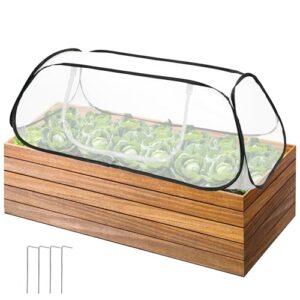
The Pop Up Garden Row Plant Protector Cage deploys in seconds — no tools, no fuss. Pull it from its storage pouch and the steel wire frame springs open on its own.
At 45″ x 22″ x 16″, it fits standard raised beds well. The breathable mesh lets up to 90% of light through while blocking insects and birds. Ground stakes keep it anchored. It won’t stop a hard frost, but for pest control between cold snaps, it’s hard to beat.
| Best For | Home gardeners and raised bed growers who want a quick, fuss-free way to protect plants from insects, birds, and small animals without permanent structures. |
|---|---|
| Dimensions | 45″L x 22″W x 16″H |
| Material | Plastic & Steel |
| Ground Stakes | Included (quantity unspecified) |
| Setup Method | Pop-up frame |
| Plant Access | Side zipper door |
| Pest Protection | Insects, birds, animals |
| Additional Features |
|
- Pops open instantly with no tools needed and collapses into a compact storage bag for easy transport and off-season storage
- Breathable mesh lets light and moisture through while keeping pests out — no need to remove it for daily sun exposure
- Ground stakes keep it firmly in place, and at under two pounds it’s easy to reposition anywhere in the garden
- Folding it back up for storage can be tricky solo — a second pair of hands makes the process much easier
- Needs top-down watering since the netting doesn’t allow side irrigation to reach plants effectively
- May need extra bungee cords to stay put in strong winds, and zipper and stitching quality can be inconsistent
2. Sumgrow Mini Garden Greenhouse Cover
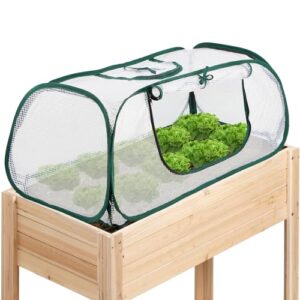
The Sumgrow Mini Garden Greenhouse Cover takes a different approach from basic mesh — it’s built to hold warmth. At 45″ x 22″ x 16″, it matches standard raised bed dimensions well, with a polyethylene fabric shell that traps heat around seedlings during cold spells.
Six ground staples keep it anchored when winds pick up. On sunny midday hours, open the integrated ventilation windows or front zipper to prevent overheating. Wipe it clean between seasons, and store it dry to prevent mildew.
| Best For | Gardeners who want to extend their growing season and protect seedlings or herbs from cold snaps, pests, and unpredictable weather. |
|---|---|
| Dimensions | 45″L x 22″W x 16″H |
| Material | Polyethylene & Alloy Steel |
| Ground Stakes | 6 staples included |
| Setup Method | Manual foldable |
| Plant Access | Front zipper door |
| Pest Protection | Pests, birds, squirrels |
| Additional Features |
|
- Traps heat effectively with its polyethylene shell, giving plants solid freeze protection during cold spells
- Ventilation windows and a front zipper make it easy to regulate airflow on warmer days
- Folds down compactly for easy storage when the season’s over
- The zipper can be finicky and may not always stay securely closed
- Sizing might not line up perfectly with every cedar raised bed on the market
- Needs to be staked down properly — it won’t hold its ground in strong winds on its own
3. Dual Layer Pop Up Plant Cover
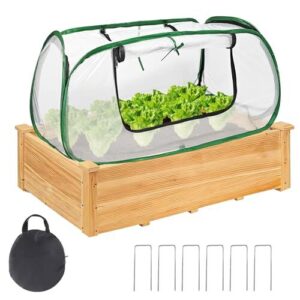
When one layer isn’t enough, two do the job properly. The Dual Layer Pop Up Plant Cover pairs a clear PVC outer shell with a breathable inner mesh — the outer traps heat, and the inner cushions plants from cold air that sneaks through.
It’s especially effective for cold-hardy herbs like parsley, chives, and thyme — check out this winter herb garden planting guide to see which varieties thrive under that kind of protection.
At 45″ x 22″ x 16″, it fits most standard raised beds. Side zipper panels let you adjust airflow without removing the whole cover. Six ground stakes keep it secure, though soft soil may need extra anchoring.
| Best For | Gardeners who want reliable frost and pest protection for raised beds or patio plants without a complicated setup. |
|---|---|
| Dimensions | 45″L x 22″W x 16″H |
| Material | PVC & Polyester Mesh |
| Ground Stakes | 6 stakes included |
| Setup Method | Auto pop-up frame |
| Plant Access | Side zipper panels |
| Pest Protection | Insects, pests |
| Additional Features |
|
- The dual-layer design (PVC outer mesh inner) gives you both heat retention and ventilation in one cover — no guesswork on which to use
- Pops open instantly and folds flat to just 13" x 13", so setup and storage take seconds
- Side zipper panels let you check on plants, water, weed, or harvest without lifting the whole thing off
- Ground stakes can struggle in soft or loose soil, so you may need bungee cords or extra anchors on windy days
- Some users have reported zipper issues over time, which could be frustrating given how central the zippers are to daily use
- Getting it folded back into the original storage bag can be a real chore — especially the first few times
4. Mesh Pop Up Raised Bed Covers
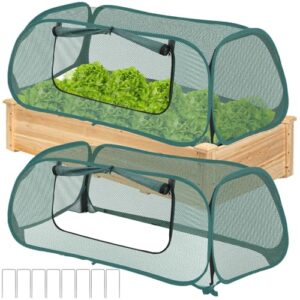
When frost isn’t your main enemy, birds and insects are. The Mesh Pop Up Raised Bed Covers come two per pack, each measuring 45″ x 22″ x 16″ — sized to fit standard raised beds without modification.
The 30% sun shading keeps growth manageable in high heat, while the open weave lets rain through and air circulate freely. Zippered roll-up windows give you plant access without dismantling anything.
Eight ground stakes are included. Assembly requires zipping end panels to sides manually — not automatic, but quick enough.
| Best For | Gardeners dealing with birds, insects, or intense summer heat who want a simple, reusable cover for standard-sized raised beds. |
|---|---|
| Dimensions | 45″L x 22″W x 16″H |
| Material | Plastic Mesh |
| Ground Stakes | 8 metal stakes included |
| Setup Method | Manual zip assembly |
| Plant Access | Zippered roll-up windows |
| Pest Protection | Birds, insects, animals |
| Additional Features |
|
- Comes as a two-pack, so you get double the coverage right out of the box
- Rain and air pass right through, so watering and ventilation take care of themselves
- Zippered windows let you check on plants or harvest without taking the whole thing apart
- Assembly isn’t automatic — you have to zip the end panels to the sides manually, which some people find fiddly
- Zippers may wear out over time with regular use
- At 45 inches long, it won’t stretch to cover larger or non-standard raised beds
5. Pop Up Garden Net Cloche
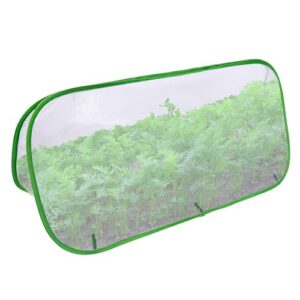
The RESTCLOUD Pop-Up Net Cloche is built for pest control, not frost. At 39.4″ x 15.75″ x 15.75″, it fits neatly over small raised beds and planters without taking up much space.
The 2mm mesh netting keeps birds, squirrels, and insects out while letting light, air, and rain pass through freely. There’s no assembly — just open it and peg it down.
It won’t trap heat, though. For cold nights, pair it with a fleece layer.
| Best For | Gardeners who want a quick, no-fuss way to protect strawberries, vegetables, or seedlings from birds, pests, and harsh weather without any setup hassle. |
|---|---|
| Dimensions | 39.4″L x 15.75″W x 15.75″H |
| Material | PVC & Spring Steel |
| Ground Stakes | Ground pegging system |
| Setup Method | Instant pop-up |
| Plant Access | Open bottom placement |
| Pest Protection | Birds, squirrels, rodents, insects |
| Additional Features |
|
- Instant pop-up design means no assembly — just open, place, and peg it down
- Fine 2mm mesh blocks birds, squirrels, and insects while still letting light, air, and rain through
- Lightweight at just 0.4kg and collapses flat for easy storage when not in use
- Open bottom and triangular shape can make it tricky to cover larger or oddly shaped plants efficiently
- The mesh blocks pollinators, so you’ll need to remove it during flowering if your plants need pollination
- Offers no frost or cold protection on its own — you’d need to add a fleece layer for chilly nights
Choose The Right Cloche Material

The material your cloche is made from matters more than most gardeners expect. Each option experiences cold, moisture, and light a little differently — and the right choice depends on what you’re growing and how harsh your winters get. Here’s a breakdown of the five most common cloche materials to help you pick the best fit.
Fleece for Light Frosts
Fleece is your lightest-duty frost shield, and it works because it breathes. 17 gsm fleece protects down to -2°C; step up to 30 gsm for -6°C nights.
It transmits up to 90% of light, so seedlings keep growing. Moisture escapes through the weave, cutting mildew risk. Store it dry between seasons and it’ll last two winters easily.
Plastic for Soil Warming
Plastic film does something fleece can’t — it warms the soil itself.
Clear or transparent film raises near-ground temperatures by 2–6°C, heating faster than black mulch on sunny days. Keep it pressed tight against the bed; air gaps reduce heat transfer a lot. It also locks in moisture, reducing how often you need to water during dry cold spells.
Polycarbonate for Durability
Where plastic film excels at warming soil, polycarbonate cloche panels take a different approach — built to last season after season.
Impact resistance up to 200 times stronger than glass means hail and branches won’t shatter them. UV-stabilized panels hold their optical clarity for years without yellowing, letting light through reliably while weatherproofing your raised beds through repeated freeze-thaw cycles.
Glass for Individual Plants
Glass works best when you’re protecting a single seedling. A bell jar cloche placed over one plant creates a stable microclimate, raising soil temperature by 2–5°C without the swings plastic wraps cause.
Clear glass transmits up to 90% of light, so photosynthesis continues through cold snaps. You can also monitor moisture and leaf color through the pane without lifting it.
Mesh for Pests, Not Frost
Mesh doesn’t trap heat — that’s the trade-off worth knowing upfront. It’s an insect and bird barrier, not a frost shield.
Garden mesh sizing matters: 1.0 mm apertures block moths and beetles while keeping airflow steady. Finer 75–100 micron mesh excludes thrips. Keep edges anchored and the net taut — any sag creates a gap pests will find.
Measure and Fit Raised Beds

Getting the fit right is what separates a cloche that works from one that wastes your time. Before you set anything down, a few key measurements will make sure your cover actually does its job all season. Here’s what to check before you commit to a setup.
Match Bed Width First
Start by measuring your bed from outside edge to outside edge. Most raised beds run 2 to 4 feet wide, so record that exact figure before comparing cloche footprints.
A garden bed cover that’s narrower than your bed leaves edges exposed to frost. An overhang of 2 to 6 inches is fine — just enough to anchor securely without creating gaps.
Allow Plant Growth Space
Give plants room to breathe inside your cloche. Cramped foliage traps moisture and invites disease.
Space each plant to allow:
- 4–8 inches between leafy greens for canopy expansion
- 3–6 inches between root crops to reduce root competition
- 6 inches of clearance above the tallest plant
- Wider row spacing for improved airflow
- 2–4 inches of vertical room in early growth stages
Check Cover Height Clearance
Height is the dimension most gardeners forget. Measure from the soil surface to the cloche roof at both the center and edges — clearance should reach at least 45–60 cm for low-growing greens.
| Cloche Style | Minimum Height | Best For |
|---|---|---|
| Pop-up mesh | 30 cm | Seedlings |
| Fleece tunnel | 40 cm | Leafy greens |
| Polycarbonate panel | 55 cm | Fast vertical growth |
Plan Row Spacing Carefully
Row spacing inside raised beds affects more than just plant density. When rows sit too close together, sunlight exposure gaps form as canopies overlap, and airflow disease prevention suffers.
- Keep 12–18 inches between row centers
- Align spacing with irrigation line emitter spots
- Leave 2–3 foot maintenance path widths for tools
- Account for mature canopy planning before crops fill out
Avoid Tight Leaf Contact
Leaves pressed against cloche walls bruise quickly and trap moisture, creating fungal pockets that spread fast.
| Issue | Fix |
|---|---|
| Leaf touching wall | Use wider cloche |
| Canopy too tall | Choose taller cover |
Maintain 2–3 cm clearance between your tallest leaf and the roof. That gap keeps air moving and prevents foliage compression.
Install Cloches Before Cold Snaps
Timing is everything for protecting your raised beds from a cold snap. Getting your cloches in place before temperatures drop — not after — is what separates a thriving winter garden from a lost one. Here’s exactly how to do it right.
Pre-warm Soil Before Sowing

Soil temperature drives germination more than air warmth. Place your cloche-style cover on bare raised bed soil 4 to 6 weeks before sowing to build heat.
- Target 10–20°C (50–68°F) for most cool-season crops
- Aim for 7–10°C for carrots and parsnips
- Soil should be evenly moist, not waterlogged
- Insert a soil thermometer at sowing depth and track daily temperatures until ready
Anchor Covers Against Wind

Once your soil is warmed and ready, a loose cover is your biggest liability. Wind can rip an unsecured cloche off a raised bed in minutes.
Drive ground stakes at 45 degrees into each corner before placing the cover. For extra hold in loose soil, add sandbag ballast weights — up to 15 kg per cover keeps things firm through gusts above 40 mph.
Seal Edges Tightly

Stakes hold your cover down — but gaps around the base quietly drain all the warmth you’ve built up.
Press the cloche edges firmly into the soil along every side. Keep gaps under 3 millimeters; anything wider lets cold drafts in. A continuous rubber or foam seal works better than short pieces. Run a finger along the edge after fitting to catch any spots you’ve missed.
Add Straw Around Roots

Once your edges are sealed, the soil itself needs insulation.
Clean, dry straw — not hay — around roots cuts temperature swings by 2–5°C overnight.
- Keep straw 2–3 inches from the stem to prevent rot
- Apply a 4–6 inch ring around each plant
- Fluff compacted straw to restore airflow after rain
This keeps your microclimate stable under the cloche.
Use Water Jugs for Warmth

Water jugs are a simple way to add thermal mass inside your cloche. Fill dark or black-painted jugs with water and place them along the inner edges of your raised bed cover.
They absorb heat during the day and release it slowly overnight, keeping frost protection consistent when temperatures drop.
Ventilate and Manage Winter Moisture

Getting the temperature and moisture balance right inside your cloches is what separates thriving winter crops from wilted, rotted ones.
Even on cold days, the sun can turn a sealed cloche into a pressure cooker by noon — and too much trapped moisture invites mildew faster than you’d expect. Here’s what to do to keep things breathing and balanced all season long.
Open Vents on Sunny Days
On a bright winter day, your cloche can turn against you fast. Open ventilation windows when sunlight hits, letting warm air escape before it stresses your plants.
This keeps internal humidity in check and prevents condensation drip onto tender leaves. Even a small gap drives enough airflow ventilation to stabilize your microclimate without stripping overnight warmth.
Prevent Midday Overheating
By midday, even in winter, internal temperatures can spike past 80°F under plastic or polycarbonate. That’s enough to scorch tender greens fast.
Install translucent shade nets above your beds to cut solar gain by 20–40%. Pair that with adjustable vent settings to exhaust heat without stripping your overnight warmth.
Reduce Mildew and Rot
High humidity inside a garden cloche creates the perfect conditions for mildew. Keep it in check with these habits:
- Open vents after rainfall
- Space plants 15 cm apart
- Remove fallen leaves within 24 hours
- Wipe internal surfaces weekly with soapy water
- Rotate crops each season
Proper ventilation drops interior humidity by 15–20%, which protects your greens all winter.
Water Less in Cold Weather
Cold soils slow plant metabolism, so evaporative water loss drops sharply inside your cloches. Raised beds need far less water in winter than you’d normally expect.
The finger test is your most reliable guide — push two inches into soil before watering. Schedule irrigation at midday for frost-safe watering. Hydration signals weaken in cold, so trust the soil, not your instincts.
| Condition | Watering Frequency | Soil Test |
|---|---|---|
| Above 10°C | Every 5–7 days | Moist 2 inches down |
| 4–10°C | Every 10–14 days | Barely damp |
| Below 4°C | Pause watering | Check for ice |
Close Covers Before Sunset
Evening temperature drops fast once the sun disappears — your cloches can’t retain heat they never captured. Close your garden bed covers before sunset to trap the day’s warmth inside.
- Seal edges to block cold air drafts
- Pre-close covers at least 30 minutes before dusk
- Protect seedlings from sudden nightly heat loss
- Check frost protection seals after windy afternoons
Plant Cold-Hardy Crops Under Cloches

Not every crop surrenders to winter — some actually thrive under a little shelter. The right plants paired with your cloches can keep your raised bed productive well into the cold months. Here are the best cold-hardy crops to grow under cloche protection this season.
Spinach for Winter Greens
Spinach is one of the easiest crops to carry through winter under cloches. Varieties like Bloomsdale Long Standing tolerate temperatures down to around 23°F, making them a natural fit for raised beds with basic frost protection. Cold actually improves flavor — leaves turn sweeter and crisper as temperatures drop.
Sow seeds ½ to 1 inch deep in late summer, spacing rows 12 to 18 inches apart.
Kale for Hard Frosts
Kale experiences cold better than spinach. Most cultivars survive down to 14°F (−10°C), and Russian or Siberian types push even further. What makes kale special is its frost sugar conversion — leaves taste sweeter after each cold snap as starches break down into sugars.
Kale survives down to 14°F, and every frost makes it sweeter as cold converts starches to sugar
Here’s what to know:
- Apply cloches a week early to pre-warm soil
- Mulch roots with 6–12 inches of straw
- Harvest after frosts for peak sweetness
- Store post-frost leaves cold and dry for up to a week
Lettuce for Mild Protection
Unlike kale, lettuce needs only mild frost protection — just enough to buffer temperature swings between 0 and 5°C. A garden cloche creates that stable microclimate, extending harvest windows into late autumn without full hardening off.
| Benefit | Detail |
|---|---|
| Leaf texture | Steadier moisture keeps leaves crisp |
| Bolting delay | Short days slow flowering under cover |
| Germination | Soil stays 2–6°C warmer for seedling starts |
| Humidity | 60–90% RH reduces dehydration |
| Season extension | Harvest 7–14 days earlier |
Carrots for Overwintering
Carrots take winter protection a step further than lettuce. Left in the ground under 12–18 inches of mulch, they actually sweeten as cold converts starches to sugars. A cloche on top stabilizes soil temps and limits freeze-thaw heaving.
- Choose Nantes or Danvers varieties
- Maintain soil pH between 6.0–6.8
- Layer mulch before hard frost
- Add a row cover over mulch
- Dig after soil thaws in spring
Herbs for Sheltered Harvests
Herbs reward cloche protection more than most crops. Basil, parsley, and chives stay harvestable well into winter when air temperatures hover just above freezing.
Clipping regularly inside the shelter concentrates essential oils, keeping flavor stronger than outdoor harvests. Vent on sunny days to prevent mildew. Container-grown herbs can rotate spots, maximizing your harvest window without risking frozen roots.
Frequently Asked Questions (FAQs)
Will cloches protect from frost?
Yes, cloches protect from frost by trapping solar heat and creating a warmer microclimate around your plants. They slow nighttime heat loss, though strong wind chill and extreme cold can reduce their effectiveness.
How to protect raised beds from cold?
Anchor covers tightly, seal edges, and warm soil before cold hits. Use thermal mass and microclimate strategies to shield raised beds from frost and wind.
Can cloches extend the growing season into spring?
They can. A cloche traps solar heat and raises soil temperatures enough to allow early spring sowing weeks ahead of schedule, giving cool-season crops like spinach a head start before outdoor conditions are ready.
Do raised bed cloches work for container gardens?
Raised bed cloches can work for containers. They create a warmer microclimate around pots, reducing frost damage. Match the cloche size to your container and vent on sunny days to prevent overheating.
How long do plastic cloches last before degrading?
Plastic cloches usually last 1 to 3 years before yellowing and brittleness set in. UV stabilized versions stretch that to 3 to 5 years, especially with indoor storage between seasons.
Can cloches protect against pests as well as frost?
Yes — cloches do double duty. They block pest access by 70–90% in the first two weeks, deter birds and rabbits, and exclude flying insects, while also shielding plants from frost.
Are cloches safe around children and small animals?
Most cloches are safe when made from non-toxic materials with smooth, rounded edges. Keep them away from play areas, check for cracks weekly, and supervise children near garden beds.
Conclusion
Apparently, frost wins every time—until you decide it doesn’t. Cold weather cloches for raised bed gardens aren’t garden gadgetry for overachievers; they’re the quiet difference between harvesting spinach in December and staring at empty beds.
Fit your covers tight, ventilate daily, and anchor against wind. Choose material that matches your coldest nights, not your average ones. The frost will still come. Your kale, tucked under polycarbonate, simply won’t care.