
This site is supported by our readers. We may earn a commission, at no cost to you, if you purchase through links.

Timing separates a successful organic spray program from a wasted afternoon and a damaged crop.
Apply neem oil at noon on an 88°F day, and you’ll scorch the very leaves you’re trying to protect—the azadirachtin breaks down before it even reaches the pest.
Most gardeners focus on what to spray and miss the more consequential question of when.
Soil temperature, wind speed, humidity, and the hour on your watch all determine whether your organic spray works or simply evaporates.
Getting these variables right turns a modest bottle of insecticidal soap into a precision tool.
Table Of Contents
- Key Takeaways
- When to Spray by Season
- Best Daily Spray Timing
- Weather Rules Before Spraying
- Match Spray to Pest Pressure
- Top 5 Organic Pest Control Items
- Build Your Spray Calendar
- Frequently Asked Questions (FAQs)
- When should a gardener use a sprayer?
- Should you spray a flowering plant with insecticidal soap?
- How do I get rid of pests in my garden?
- How does organic pest control work?
- What month should I apply insecticide to my lawn?
- How to keep bugs off an organic garden?
- Does lunar phase affect organic spray effectiveness?
- What wind speed is safe for spraying?
- How often should neem oil be reapplied?
- How do you clean sprayers between applications?
- Conclusion
Key Takeaways
- Spray only before 7 a.m. or after 7 p.m., keeping temperatures between 60–85°F, because midday heat above 85°F causes oil-based formulas to volatilize, burn foliage, and fail to reach pests.
- Match your spray to the specific pest — neem oil every 7–14 days for recurring soft-bodied insects, Bt only for caterpillars under ½ inch, and insecticidal soap for immediate contact kill on aphids and mites.
- Always confirm a 24-hour rain‑free window before applying, since even a brief shower strips insecticidal soaps completely off leaf surfaces and undermines oil-based films before they can work.
- Rotate between neem oil, Bt, and insecticidal soap every 2–3 pest generations to prevent resistance buildup, and log every application with temperature, pest count, and results to sharpen future timing decisions.
When to Spray by Season

Timing your organic sprays with the seasons isn’t just good practice — it’s the difference between a treatment that works and one that washes away or evaporates before it does anything. Each season opens a specific window where soil temperatures, pest activity, and plant biology align to make your applications count.
Understanding how different organic pest sprays work on vegetables helps you match the right treatment to the right seasonal window — so you’re not just spraying at the right time, but with the right tool.
Here’s how to match your spray schedule to the season.
Spring Soil Reaches 50°F
Once your soil thermometer reads 50°F at 2 inches deep, you have a reliable green light to begin spring organic sprays targeting overwintering insects. At this threshold, beneficial soil microbes become active, new roots establish faster, and your sprays absorb more effectively into plant tissue.
Don’t rush the calendar — confirm the temperature holds for several consecutive days, since a brief warm spell can temporarily lift readings before dropping again. South-facing slopes and raised beds usually hit 50°F sooner than flat, compacted ground. For fruit trees, a dormant oil application during dormancy helps control scale and aphids.
Summer Early or Evening
Summer flips the script on timing — once temperatures climb past 85°F (29°C), oil-based sprays volatilize, coverage thins, and leaf burn becomes a real risk. Your two reliable windows are before 7 am and after 7 pm, when air temperatures in temperate regions usually sit between 59–68°F, dew has either not yet formed or is actively evaporating, and wind speeds tend to stay calm enough to keep drift minimal.
Morning applications let you catch aphids and soft-bodied pests before they migrate upward through the canopy, while foliage is still cool and spray droplets adhere more evenly. Evening works just as well — temperatures drop 5–15°F from afternoon highs, pollinators wind down after their peak foraging window, and reduced UV exposure means neem oil and pyrethrin break down far more slowly on leaf surfaces. That said, don’t spray right at dusk when dew is already forming, since extended leaf wetness overnight raises powdery mildew risk considerably. Aim for a 6–8 pm application window that gives foliage at least two hours to dry before nighttime humidity peaks.
Fall Before Expected Frost
Fall brings a different kind of urgency than summer’s heat management — now you’re racing the calendar rather than the thermometer. Apply preventive sprays 3–4 weeks before your first expected frost to give organic formulations enough absorption time before plant metabolism slows. In many temperate regions, that window falls between late September and early October, though valley microclimates or elevated sites can shift your actual frost date by up to two weeks.
As days shorten, overwintering pests consolidate near the canopy — aphids, mites, and scale insects cluster on stems and leaf undersides, positioning themselves to survive as eggs or adults through winter. Target these sites directly with neem oil or horticultural oil while daytime temperatures still hold between 40–85°F, and confirm a 24-hour rain-free window before and after application.
Five fall spray priorities to lock in before frost:
- Treat overwintering pest sites on woody stems and bark with horticultural oil while temperatures remain above 40°F (4°C)
- Remove diseased foliage before spraying to eliminate fungal reservoirs that would otherwise survive under mulch
- Apply neem oil to leaf undersides where aphid and mite eggs concentrate as canopy activity slows
- Water deeply 24–48 hours before spraying to reduce plant stress and improve absorption of systemic organics
- Avoid spraying within 5–10 days of a forecast subfreezing night to prevent spray residue from bonding to damaged tissue
Winter Dormant Oil Windows
Once the last preventive fall sprays have dried and plant metabolism slows to a crawl, your attention shifts from leaf surfaces to bark — and that’s where dormant oil earns its place in the rotation.
Don’t apply dormant oil while trees are fully dormant and cold. Wait for bud swell timing — that narrow window just as buds begin to crack and show the first sliver of green tissue — because overwintering pests only become vulnerable once their respiration rates climb with moderating temperatures. Oil suffocates by blocking spiracles, and that mechanism only works when pests are actively breathing.
Don’t spray dormant oil on cold, sleeping trees — wait for bud swell, when waking pests finally breathe
Target scale insect suffocation and overwintering mite control by coating trunks, main branches, and twig crevices thoroughly, since armored scale and mite eggs hide beneath protective bark layers where contact is everything. Spray when daytime temperatures hold between 40–70°F and won’t drop below freezing within 24 hours after application — if the emulsion breaks in the cold, oil bonds to bark instead of pests.
To mitigate bark scorch, avoid applications in direct sun or on drought-stressed trees, and always conduct phytotoxicity testing on a single branch before committing to a full spray if you’re uncertain about the product’s compatibility with your specific species.
Adjust for Local Microclimates
No two garden beds behave identically — and microclimate monitoring is what separates reactive spraying from a genuinely controlled program.
- South-facing slopes accumulate heat faster, so schedule sprays earlier in the morning before temperatures climb past 85°F.
- Urban heat islands can run 1–12°C warmer than surrounding areas, accelerating pest cycles and demanding tighter spray rotations.
- Canopy shade management in dense plantings keeps foliage wetter longer, extending your post-spray dry window.
- Wind break impact from hedges slows evaporation, improving droplet contact time on leaf surfaces.
Map each zone before committing to application timing — a frost pocket delays pest emergence, while a sandy, fast-draining bed demands later afternoon sprays to offset rapid evaporation from soil drainage effects.
Best Daily Spray Timing

Timing your spray to the right hour of the day makes a bigger difference than most gardeners realize. UV exposure, pollinator activity, and temperature shifts can all work against you if you spray at the wrong time. Here’s what you need to know about structuring your daily spray window for the best possible results.
Spray Before 7 Am
Spray before 7 am and you’re already working with the garden’s natural rhythms, not against them. Cool, still air at dawn keeps droplets suspended longer, improving early morning coverage on leaf surfaces before UV light begins breaking down active ingredients like neem oil and insecticidal soap.
Pollinator foraging hasn’t peaked yet at this hour, so your pollinator safety window stays intact.
Minimizing droplet evaporation matters most with oil-based formulas — temperatures below 85°F prevent volatilization and reduce plant stress on tender foliage.
Spray After 7 Pm
After 7 pm, your garden enters a quieter phase — pollinator foraging lulls, UV intensity drops, and ambient temperatures cool below the volatilization threshold.
Evening humidity rises, helping droplets settle fully onto leaf surfaces rather than evaporating mid-air. That’s why oil-based formulas like neem perform reliably at dusk, delivering consistent coverage without the degradation risk that midday heat creates.
Avoid Midday Heat
Midday is the worst time to reach for your sprayer. Between 10 am and 4 pm, temperatures routinely exceed 85°F, triggering three compounding problems:
- Oil viscosity thins, causing uneven coverage
- Leaf burn and phytotoxicity accelerate on stressed foliage
- Droplets evaporate before contacting pest bodies
Stick to early morning or late evening — cooler temperatures slow evaporation, extend leaf contact time, and eliminate burn risk entirely.
Protect Active Pollinators
Bees don’t clock out at noon — they’re peak foraging between 9 am and 4 pm , which is exactly when your sprayer should stay holstered. Schedule every application before 7 am or after 7 pm, when pollinators are least active and exposure risk drops sharply.
Keep sprays off open blooms entirely — neem oil and insecticidal soap are your safest choices on non-flowering foliage, since pyrethrin on open flowers can be lethal to visiting bees. Also protect undisturbed nesting sites and water sources near treated beds, because contaminated runoff reaches ground-nesting bees even when you never spray them directly.
Let Foliage Fully Dry
Wet foliage is the enemy of effective organic sprays — moisture on leaf surfaces dilutes product concentration, promotes fungal growth, and increases phytotoxic risk, especially with oil-based formulations.
Wait until leaves are crisp and papery to the touch before applying. High humidity can extend drying by 24 hours or more, so factor that into your schedule alongside the required 24-hour rain-free window.
Weather Rules Before Spraying

Weather is the silent gatekeeper of every spray session — get it wrong and even the best organic product won’t stand a chance. Before you reach for the sprayer, a few non-negotiable conditions need to line up in your favor. Check these five weather rules first.
Check 24-hour Dry Forecast
Before committing to any spray session, pull a 24-hour dry forecast from a reliable national weather service updated hourly. Confirm that predicted temperatures stay between 50°F and 85°F, humidity doesn’t drop below 50%, and wind speeds hold under 8 mph to prevent drift.
A forecast showing strong confidence and stable dew point trends gives you the clearest, safest application window.
Avoid Rain Wash-off
Once you’ve confirmed a solid dry forecast, your next line of defense is making sure rain doesn’t undo the work before it starts. Even a brief shower within 24 hours of application can strip most organic sprays clean off leaf surfaces.
Oil-based formulations like neem or horticultural oil create a protective film that holds up better against light rain, while insecticidal soaps — which rely entirely on wet contact — are the most vulnerable. If you’re spraying soap, a rain-free window of at least 24 hours on both sides of your application isn’t optional; it’s the baseline.
Leaf surface texture matters too. Trichome-dense foliage naturally slows runoff and extends contact time, but morning dew on leaf surfaces adds moisture that compounds wash-off risk before rain even arrives. Pause drip irrigation zones nearby during and after spraying to prevent lateral runoff from compounding the problem. Inspect treated leaves 6–12 hours post-application — if the film or gloss looks thin or uneven, reapply rather than guessing.
Spray Below 85°F
Temperature is the variable that separates a successful spray from a wasted one.
Keep ambient temps below 85°F — above that threshold, oil-based formulas like neem volatilize faster than they absorb, and heat-induced phytotoxicity can scorch foliage within hours. The sweet spot sits between 60°F and 85°F, where evaporation slows enough to extend leaf contact time and optimize chemical performance.
Avoid Strong Garden Winds
Wind doesn’t just redirect your spray — it wastes it entirely.
Keep wind speed between 3 and 8 mph before you trigger the nozzle. Below 3 mph, air becomes unpredictable and can reverse direction without warning; above 8 mph, pesticide drift pulls droplets off-target fast. Use a handheld anemometer to confirm conditions, not a guess.
Position dense windbreak plantings upwind to slow gusts and create a sheltered microclimate directly over your target bed. Calibrate your nozzle to produce coarse droplets, which resist drift far better than fine mist under shifting weather conditions.
Watch Humidity and Evaporation
Humidity quietly determines whether your spray works or dries into a useless film.
When vapor pressure deficit is low — meaning humid air has little capacity to pull moisture from surfaces — droplets linger too long, reducing contact efficacy. Aim for moderate humidity, avoiding dense morning microclimates near walls or thick canopies where moisture traps delay drying and let sprayed residues run before absorbing.
Match Spray to Pest Pressure

organic spray works the same way on every pest, and choosing the wrong one wastes both time and product. Your selection should always start with what’s actually attacking your plants, then match the formulation to that specific threat.
Here’s how each major organic option lines up against the pests most likely to give you trouble.
Neem for Recurring Pests
Neem oil works like a long game — it doesn’t knock pests down instantly, but azadirachtin disrupts hormonal development, preventing larvae from maturing and eggs from hatching across successive generations.
Apply it every 7–14 days between 40°F and 85°F for prevention, or tighten that window to every 5–7 days during active aphid, whitefly, or mealybug pressure.
Rotate neem with other organics every 2–3 pest generations to prevent resistance buildup.
Bt for Young Caterpillars
Bacillus thuringiensis works only through ingestion — caterpillars must eat treated foliage for the crystalline toxins to disrupt their midgut cells, causing paralysis and death within 2–5 days.
Timing is essential: apply Bt when caterpillars are under ½ inch long, because early instar susceptibility drops sharply as larvae grow and gut conditions change.
Spray in the early morning or late afternoon to limit UV degradation risks, and reapply every 3–7 days during active feeding or after rainfall washes coverage off new growth.
Soap for Soft-bodied Insects
Insecticidal soap is a contact-only weapon — the moment it dries, its killing power is gone, so thorough leaf surface coverage on both upper and lower sides is non-negotiable.
Target it precisely at aphids, whiteflies, mealybugs, and spider mites, since hard-bodied beetles and caterpillars won’t respond. Mix at a 1–2% concentration to balance efficacy against phytotoxicity risk, and reapply every 4–7 days while soft-bodied pest pressure continues.
Watch for these phytotoxicity warning signs before widening your spray zone:
- Yellow or brown spotting appearing within 48 hours of application
- Scorched or burned leaf tips and edges
- Leaf scorch worsening after high-temperature applications above 90°F
- Wilted or drought-stressed plants showing accelerated tissue damage
- Sensitive species like Japanese maple or gardenia displaying rapid leaf discoloration
Hard water minerals — calcium, magnesium, and iron — bind to fatty acids and precipitate them out of solution, so always test your tap water or switch to distilled water if scum forms.
Oils for Overwintering Pests
Dormant oil is one of the most precise tools in your organic arsenal — it doesn’t poison overwintering pests so much as suffocate them in place, blocking spiracles and coating eggs tucked inside bark crevices before they ever hatch.
Choose a narrow-range horticultural oil for better crevice penetration and reduced phytotoxicity risk compared to older, heavier formulations. Apply when temperatures stay consistently above 40°F for a full 24-hour window, targeting armored and soft scales, spider mite eggs, and aphid eggs with up to 90% hatch-rate reduction. Don’t spray if freezing is forecast within 3–4 days — the emulsion breaks down, causing uneven oil adhesion to bark rather than pest coverage.
For bark crevice coverage, work the spray uniformly across trunks, branches, and collar zones where dormant instars shelter; missed surfaces mean surviving eggs and a spring resurgence. Space repeat treatments 14–21 days apart during dormancy if scale populations are heavy, and keep applications below 90°F to prevent leaf scorch on any retained foliage.
Pyrethrin as Last Resort
Pyrethrin is the emergency brake of your organic spray program — pull it only when every other option has failed to bring pest pressure under control.
Reserve pyrethrin for last resort after neem, Bt, insecticidal soap, and horticultural oil have each been given a fair trial, then deploy it as a targeted spot treatment on active infestations rather than broadcasting it across your entire garden. Most formulations pair pyrethrin with a synergist like piperonyl butoxide, which blocks the detoxification enzymes insects use to metabolize and recover from paralysis, converting a temporary knockdown into a lethal dose. Apply only between 40 °F and 85 °F, before 7 am or after 7 pm, and never near water features or drainage channels — pyrethrin is highly toxic to aquatic invertebrates and passes through standard wastewater treatment largely intact. After knockdown, rotate immediately back to soaps or oils to manage resistance, and don’t reapply unless scouting confirms a new pest generation has emerged.
Top 5 Organic Pest Control Items
Having the right products on hand makes all the difference when pest pressure hits unexpectedly. These five items pair directly with the timing strategies you’ve already learned, so you can act fast without second-guessing your choices. Here’s what belongs in your organic pest control toolkit.
1. Taja Large Floral Desk Calendar

Tracking spray dates and pest observations on the Taja Large Floral Desk Calendar keeps your entire organic program visible at a glance. Its 2.3″ × 2.3″ daily boxes give you enough room to log soil temperatures, application times, and product names without crowding entries.
The dedicated notes column accommodates rotation schedules and effectiveness ratings, while the 120 gsm paper accommodates ink from any pen or marker cleanly.
Covering 21 months through June 2027, it facilitates multi‑season planning without gaps.
| Best For | Organic farmers, property managers, or teachers needing a durable, spacious calendar for long-term tracking and daily planning. |
|---|---|
| Organic Compliance | Not applicable |
| Primary Use | Schedule planning |
| Product Format | Paper wall/desk calendar |
| Coverage Scope | 21-month date range |
| Ease of Use | Tear-off monthly sheets |
| Key Limitation | Not reusable across years |
| Additional Features |
|
- Large daily boxes provide plenty of space for multiple entries and detailed notes.
- Premium paper and waterproof cover protect against ink bleed and spills.
- Dual mounting options and attractive floral design suit both desks and walls.
- Protective cover must be removed before writing, which can be inconvenient.
- Pages are tightly bound and may require extra effort to tear off cleanly.
- Fixed dates limit reuse; the calendar is only usable for 2025-2026.
2. Bonide All Season Spray Oil
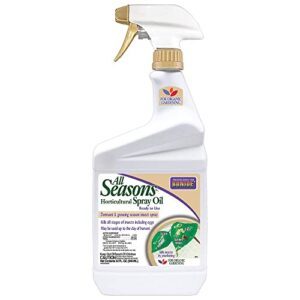
Once your calendar is marked with spray windows, you need a product that works across all of them. Bonide All Seasons Spray Oil (Model 214) is a self-emulsifying, refined mineral oil concentrate that smothers aphids, mites, scale, and whiteflies at every life stage — egg through adult.
Apply it between 40°F and 90°F, always before 7 am or after 7 pm, and make sure 24 dry hours follow. Its 32 oz concentrate covers dormant, delayed dormant, and active growing seasons without switching products.
| Best For | Home gardeners and small-scale organic growers who want a single, versatile spray oil that handles both pest control and fungal disease prevention across multiple seasons without switching products. |
|---|---|
| Organic Compliance | OMRI-approved mineral oil |
| Primary Use | Pest and disease control |
| Product Format | Liquid concentrate spray |
| Coverage Scope | Fruits, vegetables, ornamentals |
| Ease of Use | Mix with water before use |
| Key Limitation | Risk of leaf burn in heat |
| Additional Features |
|
- Works at every life stage — eggs, larvae, and adults — so you’re not just knocking back the current generation while the next one hatches
- Approved for organic production and leaves no residue, making it a solid fit if you’re growing food or want to protect pollinators
- One 32 oz bottle covers dormant, delayed dormant, and active growing seasons, which cuts down on the number of products you need to keep on hand
- Risk of leaf burn is real if temperatures climb too high or you’re working with sensitive plants, so timing and species selection matter
- Coverage has to be thorough — miss a spot and the pests in that area simply survive, since there’s no systemic action to pick up the slack
- It won’t rescue a severe infestation on its own; it’s better used as part of a consistent prevention routine than as a last-resort treatment
3. Organic Heirloom Dwarf Fruit Seed Mix

Protecting what you grow starts long before the first spray — it begins with what you plant. The GMBTHO Organic Heirloom Dwarf Fruit Seed Mix gives you 200+ non-GMO seeds across four varieties — lemon, cherry, orange, and apple — each individually packaged to preserve viability.
These compact trees top out at 3–6 feet, making them ideal candidates for container cultivation where targeted organic spraying is far more manageable. Note that apple and cherry seeds require cold stratification of 2–4 weeks before germination, while citrus varieties do not. Start seeds indoors 8–12 weeks before your last frost date, then transplant once soil temperatures hold above 50°F.
| Best For | Gardeners with limited space who want to grow compact, container-friendly fruit trees using organic, heirloom varieties. |
|---|---|
| Organic Compliance | GMO-free heirloom seeds |
| Primary Use | Fruit tree growing |
| Product Format | Seed packet set |
| Coverage Scope | 4 dwarf fruit varieties |
| Ease of Use | Pre-packaged in zip-lock bags |
| Key Limitation | Variable germination success |
| Additional Features |
|
- 200 seeds across four varieties (lemon, cherry, orange, apple) give you plenty to work with, even if some don’t germinate
- Heirloom and non-GMO seeds mean you’re getting authentic flavors and the ability to save seeds season after season
- Individually sealed bags help protect seed viability during storage
- Germination rates have been inconsistent for many buyers, so don’t expect every seed to sprout
- Apple and cherry seeds need 2–4 weeks of cold stratification before planting, which adds time and planning to the process
- Success depends heavily on seed freshness and proper handling, which can be hard to verify at the time of purchase
4. Cold Pressed Neem Peppermint Spray
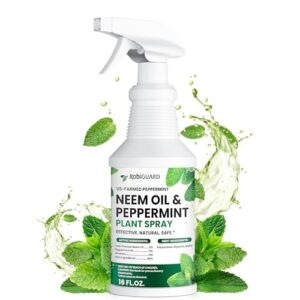
Once your dwarf fruit trees are established and growing, you’ll want a reliable spray to keep pests off their foliage — and that’s where the Cold Pressed Neem Peppermint Spray earns its place.
This 16 fl oz ready-to-use bottle combines cold-pressed neem oil — rich in azadirachtin, which disrupts feeding and molting in aphids, spider mites, and whiteflies — with peppermint essential oil, which adds repellent action against thrips and mites through menthol volatility. Apply it every 7–14 days for prevention, or tighten that interval to every 5–7 days during active infestations, always before 7 am or after 7 pm to prevent leaf burn.
Cover both leaf surfaces thoroughly, since neem works only on direct contact with soft-bodied pests. Don’t spray above 85°F or in direct sun — oil-based formulations will scorch foliage fast.
| Best For | Dwarf fruit tree and container garden owners who want an eco-friendly, ready-to-use spray to manage common soft-bodied pests and mild fungal issues without harsh chemicals. |
|---|---|
| Organic Compliance | Cold-pressed neem oil |
| Primary Use | Indoor/outdoor pest control |
| Product Format | Ready-to-use spray bottle |
| Coverage Scope | Indoor and outdoor plants |
| Ease of Use | No mixing required |
| Key Limitation | Small bottle for large gardens |
| Additional Features |
|
- Combines cold-pressed neem oil and peppermint essential oil for a dual-action approach to pest control and repellence
- Safe for pets and people when used as directed, making it a solid choice for households with curious kids or animals nearby
- Works on a wide range of common pests — aphids, spider mites, gnats, and more — while also offering mild fungicidal protection
- The 16 fl oz bottle runs out quickly if you’re treating a large garden, which means frequent repurchasing adds up
- Neem oil has a strong, earthy smell that can linger indoors and some people find genuinely unpleasant
- Effectiveness isn’t guaranteed across all pest populations, and some aphid varieties in particular have shown limited response to neem-based treatments
5. Garden Safe Insecticidal Soap Spray
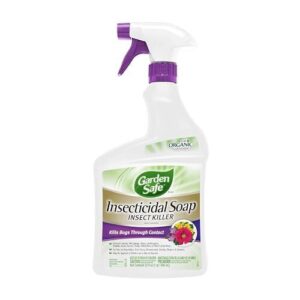
Where neem oil manages the feeding and molting disruption, Garden Safe Insecticidal Soap Spray (HG‑93216) covers the immediate contact kill — targeting aphids, whiteflies, mealybugs, mites, and thrips through potassium salts of fatty acids that dissolve insect cell membranes on direct hit.
Spray before 7 am or after 7 pm, keeping temperatures below 85°F, and coat both leaf surfaces thoroughly — especially undersides where soft-bodied pests cluster. Since it leaves zero residual activity once dry, reapply every 4–7 days while pest pressure persists.
| Best For | Gardeners who want a ready-to-use, organic-compliant spray for fast knockdown of soft-bodied pests on edibles, houseplants, or ornamentals without waiting for harvest restrictions. |
|---|---|
| Organic Compliance | Fatty acid salts formula |
| Primary Use | Soft-bodied insect control |
| Product Format | Ready-to-use spray bottle |
| Coverage Scope | Edible crops to ornamentals |
| Ease of Use | No mixing required |
| Key Limitation | Limited residual activity |
| Additional Features |
|
- Works immediately on contact with a wide range of soft-bodied pests, including aphids, whiteflies, mealybugs, mites, and thrips
- Safe to use right up to harvest day on edible crops, and pet-friendly for indoor, outdoor, and greenhouse use
- No mixing needed — just grab the bottle and spray, making it genuinely convenient for quick treatments
- Zero residual activity means any pest you miss survives, and you’ll need to reapply every few days during heavy infestations
- Repeated use can lead to resistance buildup, particularly with spider mites, reducing how well it works over time
- The spray nozzle has a reputation for being flimsy, which can make achieving the thorough, even coverage this product depends on more frustrating than it should be
Build Your Spray Calendar
A spray calendar turns scattered observations into a reliable system you can actually trust season after season. Without one, you’re guessing — and guessing costs you plants. Here’s exactly how to build yours.
Scout Garden Weekly

A weekly scouting routine is your garden’s early warning system — catch pest clusters of 50 or fewer insects before they multiply, and you stay in control of the spray schedule rather than reacting to it.
Use Scout Garden Weekly to structure each inspection, log soil temperature thresholds, note weather conditions, and plan spray dates around them. Youth participants must complete safety training before handling any organic spray — gloves, eye protection, and long sleeves are non-negotiable.
- Log pest pressure levels and phenological stage each week
- Record ambient temperature and wind speed before every planned application
- Note beneficial insect activity to avoid scheduling sprays during peak pollinator hours
- Track organic spray handling steps — rinsed equipment, correct concentration, and target pest identified
- Assign effectiveness ratings (1–5) after each application with photographic evidence
Record Pest Sightings

Every sighting you record is a data point — and data points, over time, reveal the patterns that keep you one step ahead.
Log each observation immediately, noting the date, location, pest type, and count range (1–5, 6–20, or 20+) to maintain accuracy. Document feeding damage precisely — chewed leaf margins, frass deposits, or cast skins — because evidence type often confirms target pest identification faster than a count alone.
| Field | What to Record |
|---|---|
| Date & Time | Exact observation window |
| Location | Bed or container level |
| Pest Type & Count | Category + count range |
| Feeding Damage | Description or photo link |
| Action Taken | Product, rate, result |
Whether you choose a weatherproof field notebook or a digital spreadsheet, consistency matters more than format. Review entries weekly during scouting rounds to spot hotspots and recurring pest clusters before populations exceed manageable thresholds. Share your log with neighboring gardeners, too — coordinating observations across adjacent plots can expose infestation corridors you’d otherwise miss.
Track Temperature Thresholds

Temperature is the silent variable that determines whether your spray works — or wastes your time entirely.
Log ambient air temperature alongside soil readings every time you plan an application, because the two don’t always agree. On sunny days, exposed surfaces can run 10–20°F hotter than the air around them, which accelerates evaporation and weakens spray adhesion before the product even dries.
Keep neem oil within its effective range of 40–85°F — below 40°F the emulsion performs poorly, and above 85°F the active compounds volatilize too quickly to deliver consistent coverage. Horticultural oils follow similar logic: apply when temperatures stay between 40°F and 90°F, and avoid any application window where freezing is expected within 24 hours, since cold causes the emulsion to break down and leaves uneven, patchy coverage on foliage.
Record both the high and low forecast for each spray day in your calendar, not just the reading at application time. A morning application at 72°F can still cause leaf burn if afternoon temperatures climb past 90°F before the product fully dries. That one extra column in your log takes seconds to fill and can save an entire treatment.
Rotate Spray Types

Using the same spray back-to-back is a shortcut that pests will eventually exploit — rotating spray types is how you stay ahead of them.
Swap between organic biopesticides with different modes of action every 2–3 pest generations, cycling through neem oil, Bt, and insecticidal soap to delay resistance development in your target population.
- Week 1–2: Apply neem oil for systemic coverage
- Week 3–4: Switch to Bt for caterpillar-specific pressure
- Week 5–6: Rotate to insecticidal soap for contact-kill zone coverage
Treat rotation like zone coverage strategy — each product covers a different biological radius of pest vulnerability, so gaps in one product’s reach get filled by the next. This integrated pest management approach keeps your spray calendar flexible and your pest populations consistently off-balance.
Note Results After Spraying

Your spray log isn’t just paperwork — it’s the feedback loop that sharpens every future decision you make.
Record pest reduction within 2–5 days post-application, note whether leaf damage slows by day 7, and log weather conditions during and after each spray. Correlate those patterns over time, and you’ll know exactly which product, timing, and conditions consistently deliver results worth repeating.
Frequently Asked Questions (FAQs)
When should a gardener use a sprayer?
Use a sprayer when pest clusters reach 50 or fewer insects during weekly scouting rounds, temperatures stay below 85°F, and a 24-hour rain-free window is confirmed.
Should you spray a flowering plant with insecticidal soap?
Avoid spraying fully open blooms with insecticidal soap — residue contaminates nectar, harms pollinators, and risks phytotoxicity. Instead, spot treat new growth before flowers fully form to protect beneficials and minimize bloom damage.
How do I get rid of pests in my garden?
Getting rid of garden pests starts with weekly scouting and targeted organic sprays like neem oil, Bt, or insecticidal soap, matched to the specific pest and applied under the right weather conditions.
How does organic pest control work?
Like nature’s own defense network, organic pest control works by deploying biological control agents, botanical disruption methods, and growth regulator mechanics — each targeting pest biology directly while breaking down safely, leaving your garden’s ecosystem intact.
What month should I apply insecticide to my lawn?
There’s no single perfect month — timing depends on soil temperature, pest cycles, and your region. In most northern zones, late March through May marks the first spray window once soil hits 50°F.
How to keep bugs off an organic garden?
Studies show Bt achieves a 95% effectiveness rate against cabbageworms — proof that layered organic strategies work.
Combine companion planting, physical row covers, and beneficial insects like lady beetles to disrupt pest cycles before they establish.
Does lunar phase affect organic spray effectiveness?
Lunar phase doesn’t affect organic spray effectiveness. No consistent scientific evidence backs moon phase influence on neem oil, Bt, or insecticidal soap performance. Rely on temperature, humidity, and pest life stage instead.
What wind speed is safe for spraying?
Too much wind scatters your effort." Spray between 3–7 mph for minimal drift. Measure at canopy height with an anemometer. Crosswinds increase off-target movement — stop if gusts exceed 10 mph.
How often should neem oil be reapplied?
Reapply neem oil every 7–14 days during active infestations, or every 5–7 days under heavy pest pressure. After rainfall, reapply within 24 hours to restore the protective film on foliage.
How do you clean sprayers between applications?
Rinse your tank immediately after each use, flush all hoses and nozzles, and clean filters separately. Log every cleanout step to prevent residue carryover between applications.
Conclusion
A seasoned orchardist once lost an entire spray application—three hours of work—because he ignored a 2 p.m. temperature reading of 87°F. Timing wasn’t a minor detail; it was the whole game.
Knowing when to apply organic pest spray in the garden conditions that actually support absorption transforms every bottle into a working tool, not a wasted one.
Scout consistently, track your variables, and let the calendar drive your decisions. Your plants will show the difference.
- https://homegrown-garden.com/blogs/blog/homemade-garden-pest-repellent
- https://www.grocery.coop/fresh-from-the-source/growing-your-own-food/top-10-organic-pest-controls
- https://tomahawk-power.com/blogs/articles/morning-or-evening-mastering-pest-spray-timing-for-maximum-effectiveness
- https://gardening.stackexchange.com/questions/44139/day-or-night-the-best-time-to-apply-pesticides
- https://growarber.com/blogs/gardenlife/how-to-prevent-garden-pests-before-they-start