This site is supported by our readers. We may earn a commission, at no cost to you, if you purchase through links.
Plant basil next to tomatoes, and you’ll notice fewer aphids and richer-tasting fruit by midsummer. That’s the magic behind companion planting: certain plants genuinely help their neighbors thrive. Pair the right crops, and you’ll cut down on pests, boost your harvest, and build healthier soil, all without extra chemicals or effort.
Planning a companion garden means thinking beyond rows of single crops. It’s about creating a community where plants support each other through scent, shade, and root systems.
Ready to map out beds, pick smart pairings, and build a planting schedule that works with nature instead of against it? Let’s get your garden growing the smart way.
Table Of Contents
Key Takeaways
- Pairing plants like basil with tomatoes and beans with corn naturally cuts pests, enriches soil, and boosts yields without chemicals.
- Mapping your space by sunlight zones, bed width, and harvest pathways before planting saves you from costly layout mistakes later.
- Building pest protection into your design—through trap crops, aromatic herbs, and predatory insect habitat—works better than reacting after damage appears.
- Timing matters as much as placement: staggering plantings, tracking frost dates, and rotating crops yearly keeps your garden productive season after season.
Choose Your Companion Garden Goals
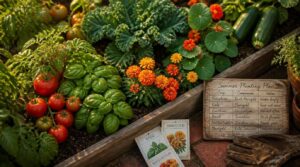
Before you grab a shovel, think about what you actually want from this garden. Different goals call for different plant combos, so it helps to know yours first. Here are five common goals to evaluate, and how each one shapes your layout.
Once you’ve settled on a goal, these vegetable garden planning tips can help you match the right layout to your space.
Boost Vegetable Yields
Want bigger harvests? Pair plants smartly. Basil boosts tomato yields and flavor while repelling pests. Use a vegetable companion planting chart and garden layout planner to map pairings.
A plant spacing calculator helps avoid crowding, since proper spacing improves airflow and fruit size. Add mulch for water efficiency, practice succession planting, and rotate crops yearly.
A yield estimator helps you track progress and plan smarter next season. You can also fully utilize space by using square foot gardening techniques.
Improve Soil Fertility
Yields improve faster when your soil is doing the heavy lifting. Compost application can raise soil organic matter by up to 3 percent in a single season, improving drainage and root access.
Pair that with legumes — their roots fix atmospheric nitrogen, feeding neighboring heavy feeders naturally. Together, these plant combinations keep nutrients cycling without reaching for a fertilizer bag.
Attract Pollinators
Good soil feeds your plants — but pollinators seal the deal. Without them, even healthy crops produce little.
Good soil feeds your plants, but without pollinators, even the healthiest crops produce little
Plant nectar-rich flowers like lavender, echinacea, and sunflowers alongside your vegetables. A mix of at least five flower colors draws diverse bee and butterfly species.
Add a shallow water station with pebbles so pollinators can drink safely between foraging trips.
Reduce Pest Pressure
Pollinators help your garden thrive — but pests can quietly undo that progress. Companion planting is your first line of defense.
- Plant trap crops like nasturtiums to lure aphids away.
- Use aromatic repellents like garlic and rosemary to confuse insects.
- Add beneficial insect habitat with dill or fennel.
- Install fine mesh barriers over vulnerable seedlings.
- Practice crop rotation to break pest cycles yearly.
Maximize Small Spaces
Small space? No problem. Square Foot Gardening divides beds into 1-foot sections, fitting more crops without waste.
Try vertical planters on sunny walls — they hold 20–30 plants in just 2 square feet. Pair that with compact varieties that mature in 60–75 days, and even a balcony becomes a productive, well-organized harvest zone.
Map Your Garden Layout
Before you plant a single seed, you need to know what you’re working with. Think of your garden space as a blank canvas — the layout you choose now shapes everything that grows later. Here are the key steps to map it out the right way.
Planning which crops go where matters too — for example, knowing that nitrogen-fixing vegetables like beans and peas can quietly boost yields for whatever you plant nearby shapes how you sketch out that blank canvas.
Measure Available Growing Space
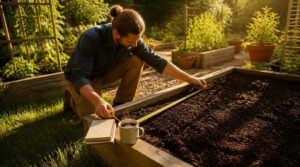
Before you plant a single seed, you need to know exactly what you’re working with. Grab a tape measure and record the length and width of every planting zone. Break odd shapes into rectangles and triangles, then add those areas together.
- Keep bed width between 2–4 feet for easy side access
- Leave 18–24 inches between beds for comfortable movement
- Install trellises to claim vertical growing space
Log everything in a notebook or use a digital tool like PlotMyGarden to organize your layout. The square foot gardening method works especially well in raised beds — a standard 4×4 foot garden bed gives you 16 clearly defined squares to work with.
Group Crops by Sunlight
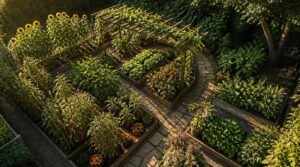
Not every corner of your vegetable garden receives equal light. Sunlight zone planning means grouping crops by their daily light needs — full sun crops need 6+ hours, partial shade crops thrive on 3–6, and shade-tolerant varieties manage with just 2–4. Mapping these zones first prevents competition and keeps each plant performing at its best.
Plan Raised Bed Zones
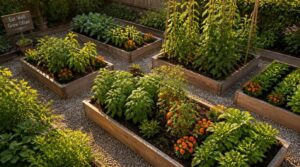
Think of your raised beds as individual workstations — each one needs the right size, soil, and access to do its job well.
Keep beds 3–4 feet wide so you can reach the center without stepping in. Aim for 4–6 feet in length, balancing space efficiency with easy harvesting.
Align zone boundaries with existing pathways to protect your soil.
Use Vertical Supports
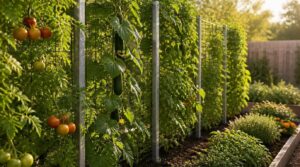
Vertical structures can double your growing space overnight.
Anchor posts 2–4 feet apart depending on how heavy your crops will get. Galvanized steel or wood posts handle most vines well. Attach wire mesh or trellis netting between them for flexible growing surfaces.
Train climbing plants early, and inspect your structures monthly for rust or loosened fasteners.
Leave Harvesting Pathways
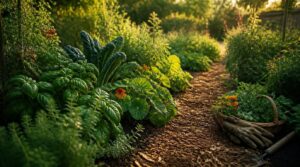
Pathways aren’t just empty space — they’re working parts of your garden layout design. Keep a clear 18-inch radius around each plant so your hands and tools move freely without brushing foliage.
Mulched paths reduce soil compaction and keep harvested leaves clean. Good pathway accessibility design makes every harvest faster and protects your companion garden plans long-term.
Pick Compatible Plant Pairings
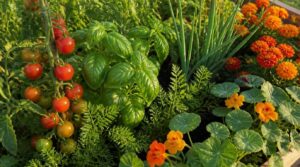
Not every plant plays nicely with its neighbors—but the right pairings can change everything. Some combinations actively help each other grow, while others quietly cause problems you won’t notice until it’s too late. Here are the pairings worth knowing before you put anything in the ground.
Tomatoes With Basil
Pairing tomatoes with basil is a classic for good reason. Basil’s clove-like aroma boosts tomato sweetness, creating real flavor synergy.
Plant basil 12-18 inches from tomato stems for airflow. Pinch flowers to extend harvest timing.
Add marigolds nearby for pest protection and a colorful, balanced companion benefits trio in your garden layout.
Corn, Beans, and Squash
After basil and tomatoes, let’s look at gardening’s oldest trio: the Three Sisters system. Corn Beans Squash works through a Natural Trellis Method—corn holds up climbing beans.
- Beans add Nitrogen Soil Enrichment
- Squash creates Shade Soil Conservation
- All three fit a Compact Garden Layout
Check your companion planting chart for spacing!
Legumes With Heavy Feeders
Speaking of teamwork, beans and peas do more than climb corn. Their roots host nodules that pull nitrogen from the air, banking 20 to 60 pounds per acre. That’s a real nitrogen fixation benefit for nearby heavy feeders like tomatoes or squash.
Plant legumes close to hungry crops, then rotate yearly. This keeps soil nutrient balance steady and promotes nutrient cycling naturally.
Flowers Near Vegetables
Don’t skip flowers when planning your beds. Marigolds and zinnias attract pollinators, boosting fruit set on tomatoes and peppers. Calendula draws predatory insects that snack on aphids. Borage shades leafy greens while feeding bees. Alyssum forms living mulch, cooling soil and supporting microbes underground.
Use your Garden Layout Planner alongside a Vegetable Companion Planting Chart to match bloom timing with vegetable needs!
Avoid Poor Neighbors
Not every plant makes a good neighbor, and that’s worth knowing. Watch for shade-tolerant pairings gone wrong, like tall corn blocking sun-loving peppers. Practice water-need segregation, keeping thirsty crops apart from drought-tolerant herbs. Mind allergenic species placement near edibles, and keep proper aromatic herb distance to avoid flavor transfer. Physical barrier strategies, like edging, limit shared pests.
Check your Companion Planting Guide for smart vegetable pairings!
Add Natural Pest Protection
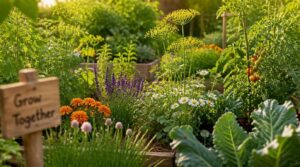
Pests don’t have to mean reaching for chemical sprays. Your garden layout can do a lot of the heavy lifting on its own, using plants as your first line of defense. Here are five simple ways to build that protection right into your design.
Plant Trap Crops
Want pests to leave your veggies alone? Plant a decoy crop nearby!
Trap crop selection matters: try mustard, sunflowers, or marigolds based on your pests.
- Plant borders 2-4 weeks early
- Place trap crops downwind
- Scout regularly for pest buildup
- Remove once pests gather
This border planting strategy enhances companion planting, garden design, and beneficial insects naturally.
Use Aromatic Herbs
Tuck fragrant herbs throughout your beds, and pests get confused fast. Essential oil benefits come from compounds like thymol and carvacrol, giving rosemary, thyme, and oregano their sharp scents.
For herb scent pairing, plant basil near tomatoes or sage with onions. Your companion herb layout doubles as harvesting aromatic leaves—pinch often! Rotate herbs seasonally to keep natural pest deterrents working and beneficial insects coming back.
Attract Predatory Insects
Think of beneficial insects as your garden’s tiny bodyguards. Predator plantings like dill, yarrow, and fennel draw in ladybugs and lacewings, key players in natural pest control.
Habitat design matters too: leave some leaf litter for ground beetles. Skip sprays entirely—zero pesticides keeps these allies working. This is integrated pest management at its simplest, letting companion planting do the heavy lifting.
Add Nectar-rich Flowers
Flowers aren’t just pretty—they’re a buffet for your beneficial insects. Flower color selection matters: bright yellows, oranges, and purples grab bees’ attention fast.
- Plant in clusters for visual mass
- Mix bloom times for seasonal nectar planning
- Choose tubular shapes for butterflies
- Skip pesticides near pollinator gardens
- Mulch to support nectar plant maintenance
Good pollinator habitat design boosts biodiversity, strengthening your companion plants’ natural defenses.
Separate Disease-prone Crops
Here’s a tough truth: tomatoes and potatoes sitting too close can spread blight fast. Spatial separation limits pathogen spread, enhances soil health, and keeps crop rotation simple.
| Crop Pair | Risk | Fix |
|---|---|---|
| Tomato/Potato | Late blight | Separate beds |
| Cucurbits | Powdery mildew | Space, airflow |
| Brassicas | Bacterial spot | Clean tools |
| Solanaceous | Verticillium wilt | Resistant varieties |
| All disease-prone | Soil buildup | Rotate yearly |
Build Your Planting Schedule
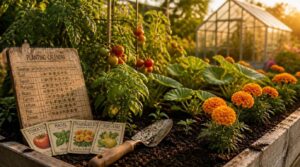
A great garden layout still needs good timing to work. When you plant matters just as much as what you plant next to it. Here’s how to build a schedule that keeps everything growing on track.
Check Frost Dates
Get to know your last spring frost date before planting anything. In Falkenstein, this usually falls in mid-May, so use a Frost Date Calculator for precision.
Picture your Regional Frost Patterns:
- Valley gardens often run colder
- South-facing slopes warm faster
- Urban beds stay slightly milder
Add a Safety Buffer Planning margin of 10–14 days, check your hardiness zone, and sign up for frost alerts before building your planting schedule.
Start Seeds on Time
Once you know your frost date, work backward to set your seed starting calendar. For peppers and tomatoes, start seeds 6 to 10 weeks before that date.
Use a sterile mix, bottom heat, and bright light for solid indoor germination. Begin your hardening off process 7-14 days before transplant timing, once seedlings show two true leaves.
Stagger Planting Windows
Once seedlings are hardening off, plan your succession planting timing too. Stagger plantings every 1-3 weeks for continuous harvests.
- Stagger lettuce every 2 weeks for steady salads
- Use weekly planting intervals for beans
- Follow crop rotation windows yearly
- Fill seasonal planting gaps with greens
- Boost harvest extension strategies with succession
This keeps your planting schedule, plant spacing, and companion planting working together smoothly.
Monitor Water and Nutrients
With your succession crops staggered, keep an eye on what’s happening underground. Soil moisture sensors show if water reaches root zones without draining nutrients away.
Set a nutrient testing frequency every few weeks, watching nitrogen and phosphorus levels. Check pH balance regularly, since it affects nutrient uptake. Time irrigation scheduling and fertilizer timing around weather, protecting soil fertility and overall soil health.
Rotate Crops Yearly
Plan ahead, and don’t plant the same crop family in the same spot two years running.
Crop rotation keeps soil health strong, balances nutrients, and breaks pest cycles. Beans this year, leafy greens next—your raised bed or square foot garden stays productive, with fewer weeds and steadier yields season after season.
Frequently Asked Questions (FAQs)
Can companion planting work in containers or pots?
Yes, companion planting works beautifully in containers. Pair basil with tomatoes, or tuck nasturtiums beside vegetables to deter aphids. Match root depth and watering needs so every plant thrives without crowding its neighbor.
How do I handle invasive plants like mint?
Mint is a garden escape artist. Contain it in pots or sink rigid barriers 12 inches deep. Dig out rhizomes completely, bag them, and check weekly for new shoots.
Which plants should never grow near each other?
Some plants are natural enemies. Tomatoes and potatoes share blight, while walnut trees release juglone, suppressing nearby vegetables. Keep basil away from rue, and never plant tomatoes beside brassicas.
Does companion planting work in all climate zones?
Companion planting works across climate zones, but results vary. Microclimates and seasonal timing shape outcomes more than broad zone labels. Match regional plant pairs to your local frost dates and temperatures for reliable success.
How long before companion planting shows real results?
Results vary, but pest suppression often shows within 2–8 weeks. Soil fertility takes a full season. Start small, track changes, and expect the real payoff after your second growing cycle.
Conclusion
What if your garden could truly tend to itself? Planning a companion garden puts that idea well within reach.
You’ve mapped your space, chosen smart pairings, and built a schedule rooted in plant ecology. Now your crops share resources, repel pests, and feed your soil—season after season.
Trust the system you’ve built. Each thoughtful pairing compounds over time, turning a simple plot into a thriving, self-sustaining community that rewards your effort with every harvest.
- https://www.almanac.com/companion-planting-guide-vegetables
- https://eartheasy.com/blogs/grow/companion-planting-for-raised-garden-beds
- https://www.azurefarmlife.com/farm-blog/companion-planting-chart-for-a-healthier-happier-garden
- https://ucanr.edu/blog/uc-master-gardeners-san-mateo-san-francisco-counties/article/better-together-new-science
- https://blogs.ifas.ufl.edu/duvalco/2026/03/02/companion-planting-can-help-reduce-or-eliminate-insecticide-use-in-the-garden