This site is supported by our readers. We may earn a commission, at no cost to you, if you purchase through links.
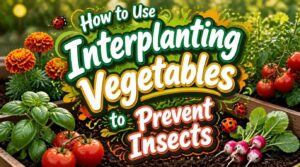
French marigolds cut aphid populations by up to 60%—not by repelling them chemically, but by attracting the predators that hunt them. That single pairing captures what interplanting vegetables to prevent insects is really about: designing your garden so plants do the pest management for you.
Basil planted beside tomatoes masks the scent signals that draw feeding insects, while radishes mature fast enough to disrupt cucumber beetle cycles before damage sets in. These aren’t folk remedies—research backs every pairing.
The strategies ahead give you a precise, plant-by-plant system for building a garden that defends itself.
Table Of Contents
- Key Takeaways
- Plan Your Pest-Resistant Garden
- Use Companion Planting Strategies
- Best Vegetable Interplanting Pairings
- Plant and Maintain Effectively
- Top 4 Interplanting Pest Control Essentials
- Frequently Asked Questions (FAQs)
- What can I plant with vegetables to keep bugs away?
- Can interplanting work in small container gardens?
- How does weather affect companion planting success?
- Which pests are hardest to control through interplanting?
- Does interplanting slow overall vegetable growth or yield?
- How soon do pest-repelling effects show after planting?
- Conclusion
Key Takeaways
- French marigolds don’t just repel aphids—they pull in predatory insects that cut aphid populations by up to 60%, making them one of the most effective pest-fighting plants you can add to your garden.
- Pairing the right plants isn’t guesswork: onions mask carrot scent from carrot flies, basil confuses whiteflies near tomatoes, and radishes disrupt cucumber beetle cycles before real damage sets in.
- Timing and placement are everything—put companions in the ground before pests establish, edge your beds with aromatic herbs, and position tall crops on the northern boundary to block flying insects without stealing sunlight.
- Rotating beds each season and scouting for pest damage every week keep your interplanting strategy working long-term, breaking pest cycles naturally instead of letting pressure build year after year.
Plan Your Pest-Resistant Garden
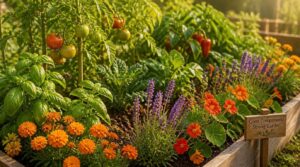
A pest-resistant garden doesn’t happen by accident — it starts with a solid plan. Before you put a single seed in the ground, you need to know what you’re up against and which plants can work together in your defense. Here’s how to lay that groundwork.
Choosing the right varieties from the start is easier when you have a solid framework, like these organic integrated pest management strategies to guide your planning before anything goes in the ground.
Identify Common Vegetable Pests
Before you plant a single seed, know what you’re up against. Five pests cause most of the damage in vegetable gardens:
- Aphids curl and yellow young leaves by draining sap
- Whiteflies leave sticky honeydew that turns into sooty mold
- Hornworms, squash bugs, and cabbage loopers chew, bore, or wilt entire plants fast
Spotting them early makes interplanting vegetables far more effective. Attracting beneficial predatory insects can also help manage these pests naturally.
Match Pests to Crops
Knowing your pests is only half the battle — you also need to know which crops they target.
Aphids favor leafy greens and beans. Whiteflies zero in on brassicas and tomatoes. Colorado potato beetles hit potatoes hardest during early tuber growth. Cabbage moths attack brassicas, while root-knot nematodes infest tomato roots.
Match each pest to its preferred crop before you map your interplanting layout.
Choose Interplanting Goals
Once you’ve mapped your pests to their target crops, it’s time to decide what you actually want interplanting to do for you.
Set clear goals first. Do you want to suppress aphids near your tomatoes, attract beneficial insects, or balance nutrients between heavy and light feeders? Each goal shapes every planting decision that follows.
Group Compatible Vegetables
With your goals clear, grouping compatible vegetables is your next move. Think of it as Companion Zone Design — pairing plants that support each other through Soil Nutrient Pairing and Harvest Timing Sync.
For instance, tomatoes with basil or carrots with onions are proven vegetable combinations that naturally reduce pest pressure while sharing similar water and soil needs.
Rotate Beds Every Season
Rotating your garden beds every season works the same way as seasonal mattress rotation — shifting pressure points prevents uneven wear. Follow this rotation schedule planning cycle:
- Spring: move legumes
- Summer: shift brassicas
- Fall: relocate alliums
- Winter: rest and amend soil
- Repeat with new interplanting pairings
This breaks pest suppression cycles naturally.
Use Companion Planting Strategies
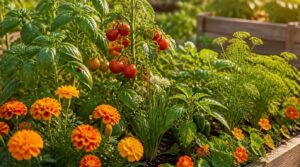
Companion planting is one of the most practical tools in your pest-control arsenal. The right plant combinations can mask scents, lure pests away, and call in natural predators — all without a drop of pesticide. Here are five strategies worth building into your garden layout.
Pairing fast crops like cucumbers with soil-builders like beans is a great starting point — warm-season vegetable gardening strategies can help you map out combinations that pull double duty all season.
Aromatic Herbs Near Vegetables
Aromatic herbs are some of the hardest-working plants you can add to your vegetable beds.
Basil near tomatoes repels whiteflies and hornworms while boosting pollinator visits. Plant dill alongside carrots to attract beneficial wasps that target carrot pests. Rosemary next to cabbage cuts moth damage noticeably. Thyme shields lettuce by confusing nearby insects with its scent.
Trap Crops for Pest Diversion
Think of trap crops as a decoy system — you’re giving pests something they’d rather eat. Perimeter trap cropping places plants like nasturtiums or mustard around your bed’s edges, pulling insects away before they reach your main vegetables.
Trap crops are nature’s decoy — sacrifice plants lure pests away before they ever reach your main vegetables
Synchronized planting matters here. Time your trap crops to peak attractiveness when pest activity is highest for real impact.
Flowers for Beneficial Insects
Some insects are your garden’s best allies — you just have to invite them. Flowers like sweet alyssum and dill attract hoverflies and ladybugs that actively hunt aphids and caterpillars. Zinnias and cosmos bring lacewings and predatory beetles into your beds.
Mix early, mid, and late bloomers to keep beneficial insects present all season.
Ground Covers Against Crawlers
Crawling pests don’t need a highway — they just need bare soil. Dense ground covers like creeping thyme and ajuga repens physically block that access.
Creeping thyme also releases a sharp, pine-like scent that repels crawlers on contact. Lemon verbena ground covers add a citrus aroma barrier along bed edges.
Tuck these between your interplanting vegetables for layered, low-maintenance pest deterrence.
Tall Crops as Barriers
Tall crops pull double duty in interplanting vegetables — they’re living walls that block pests before they reach your beds.
- Corn barrier height reaches 6–8 feet, disrupting flying insect flight paths
- Windbreak row placement slows pest movement across open beds
- Northern edge screening shields sun-sensitive crops without blocking light
- Multi-species barriers combine corn, sunflowers, and sorghum for broader protection
Best Vegetable Interplanting Pairings
Some plant pairings just work better than others regarding keeping pests off your vegetables. The right combinations can cut down on infestations without any sprays or complicated setups. Here are the five pairings worth building your garden around.
Onions With Carrots
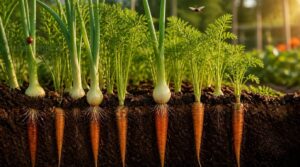
Few pairings work as quietly or effectively as onions with carrots.nnSulfur masking is the real star here. Onions release sulfur compounds that confuse carrot flies, making it harder for them to locate your carrot roots. Meanwhile, carrots return the favor by masking onion scents that attract onion maggots — a mutual disguise that cuts pressure on both crops.nnRoot layering keeps things efficient underground. Onion bulbs occupy the upper soil while carrot roots push deeper, so neither competes for the same space. This separation also discourages pests from concentrating in one feeding zone.nnHarvest staggering extends your soil coverage too. Pull onions first, and carrots stay in the ground a bit longer — keeping the bed active and reducing bare soil that pests exploit.nn| Benefit | Onions Provide | Carrots Provide |n|—|—|—|n| Pest Deterrence | Sulfur scent masks carrot smell | Root depth disrupts feeding zones |n| Soil Use | Shallow bulb layer | Deep taproot layer |n| Harvest Timing | Earlier pull date | Extended in-ground season |nnThis intercropping approach also promotes a biodiversity boost. A mixed bed invites more beneficial insects and promotes a richer soil microbiome — making your whole garden more resilient through natural pest control.n
Basil With Tomatoes
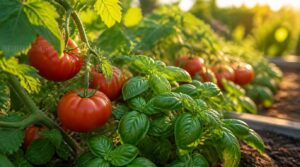
Onions and carrots work through scent alone — basil and tomatoes take that partnership further.
Basil masks pest attraction by releasing linalool and eugenol, aromatic compounds that confuse whiteflies and hornworms. Plant Genovese basil 12–18 inches from tomato stems. Establish basil slightly before tomatoes fruit. This pairing can increase tomato yields by 23% while actively reducing pest pressure.
Marigolds With Tomatoes

Basil controls airborne pests — marigolds go deeper, protecting roots and soil alike.
French marigolds release compounds that suppress soil nematodes attacking tomato roots and cut aphid numbers by up to 60%. Their continuous bloom timing draws hoverflies and parasitic wasps all season. Space them 8–12 inches from tomato stems, plant early, and remove spent blooms to keep the pest barrier strong.
Beans With Potatoes
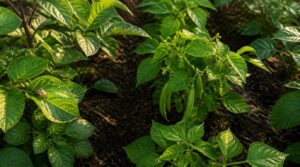
Marigolds handle the soil threats — beans bring a different kind of defense above ground.
Bush beans planted near potatoes fix atmospheric nitrogen, quietly enriching the soil while deterring Colorado potato beetles. Space beans 4–6 inches apart, plant them 2–3 weeks after potatoes establish, and you’ll reduce pest pressure, limit weed growth, and keep moisture locked in.
Radishes With Cucumbers
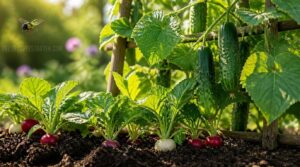
Beans handle the soil — now let radishes work above it. Planting radishes near cucumbers repels cucumber beetles effectively, buying your vines time to establish. Radishes mature in 25–30 days, well before cucumbers hit their 50–70 day window, so you’re doubling your harvest without competition.
Both crops prefer well-drained soil and similar light, making them natural low-maintenance companions.
Plant and Maintain Effectively
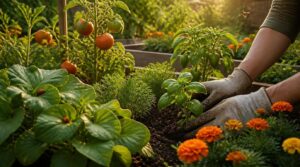
A solid plant combination only works if you follow through with the right setup. How you space, position, and time your planting determines whether your pest strategy actually holds. Here’s what to focus on to keep your interplanted garden running well.
Space Plants Properly
Think of your garden bed as real estate — every inch counts. Space companion plants 12–18 inches apart to prevent root competition and allow proper air circulation, which reduces fungal disease risk.
This strategic spacing also keeps your vertical layering strategies intact, letting each plant access sunlight without crowding its neighbor. Good bed layout planning now means fewer pest and disease problems later.
Place Tall Crops North
Position your tallest crops — corn, tomatoes, or trellised beans — along the northern bed boundary. This keeps shorter vegetables in full sun as the light arcs east to west throughout the day. Height zoning like this also creates a natural windbreak, disrupting flying pest flight paths.
Reassess plant heights each season to keep that northern edge doing its job.
Start Companions Early
Timing is everything in pest control. Plant companions early — before pests establish — and you cut initial infestations by up to 40 percent in the first six weeks.
Early basil planting near tomatoes starts repelling thrips right at transplant time. Hoverfly attraction begins faster when alyssum and dill go in as soil warms, giving beneficial insects a reason to patrol your beds from day one.
Edge Beds With Repellents
Your bed’s outer edge is prime real estate — use it.
Aromatic herb borders like rosemary, thyme, and basil release scent compounds that mask vegetable crops from flying pests. French marigolds spaced 8 to 10 inches apart create a near-continuous deterrent strip. Keep mint in sunk containers along edges to prevent spreading while retaining its repellent effect against ants and crawling insects.
Monitor Pest Pressure Weekly
Weekly monitoring is your first line of defense. Use a Weekly Scouting Checklist to inspect plants every seven days, checking leaf undersides for eggs and damage.
- Track pest damage progression using photos
- Log Trap Data Analysis to spot trends
- Record Weather Impact Tracking notes
- Apply Threshold Adjustments after consecutive high counts
- Note Beneficial Insect Monitoring alongside pest presence
Top 4 Interplanting Pest Control Essentials
Good tools make interplanting a lot easier to get right. Whether you’re working with raised beds, container planters, or just keeping your plants well-watered, the right gear helps your companion planting strategy actually work. Here are four essentials worth having on hand.
1. Plant Partners Science Based Gardening Guide
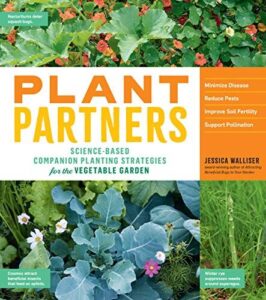
If you want a true foundation for interplanting success, Plant Partners: Science-Based Strategies for Multicropping Vegetables by Jessica Walliser is worth keeping close. This 2021 AHS Book Award winner backs every recommendation with tested research — no guesswork.
Its 216 pages cover how plants interact chemically, structurally, and ecologically. You’ll find full-color photographic guides alongside practical pairing strategies for pest control, pollinator support, and soil health — everything you need to garden smarter, not harder.
| Best For | Home gardeners and serious veggie growers who want science-backed companion planting strategies, not just folk wisdom. |
|---|---|
| Primary Material | Paper and cardstock |
| Primary Use | Pest identification and management |
| Durability | Standard print binding |
| Target User | Homeowners and pest management professionals |
| Dimensions | 8.3 x 1.63 x 10.37 inches |
| Color/Finish | Standard black and white print |
| Additional Features |
|
- Every pairing recommendation comes from real research — so you’re not just guessing which plants play nice together.
- Covers a ton of ground: pest control, pollinators, soil health, and weed suppression all in one book.
- Full-color photos make it easy to actually use in the garden, not just read on the couch.
- The science-heavy approach might feel like a lot if you’re just looking for a quick "plant this next to that" cheat sheet.
- Most examples lean toward North American growing conditions, so gardeners elsewhere may need to adapt.
- At 216 pages, some readers might wish it went even deeper on certain topics.
2. Galvanized Steel Raised Garden Planter Box
Once you’ve got your planting strategy mapped out, you need the right growing environment to support it. A galvanized steel raised planter box — commonly 5 x 3 x 1 feet — gives you a clean, contained bed that’s easy to arrange companion plants in.
Its rust-resistant zinc coating holds up through years of outdoor exposure, and the raised design reduces back strain during planting and monitoring. Two people make assembly smoother, and a liner extends its lifespan considerably.
| Best For | Gardeners who want a low-maintenance, long-lasting raised bed that’s easy on the back and works on patios or in outdoor spaces. |
|---|---|
| Primary Material | Paper and cardstock |
| Primary Use | Companion planting guidance |
| Durability | Standard print binding |
| Target User | Organic and sustainable gardeners |
| Dimensions | 8.25 x 0.63 x 9.13 inches |
| Color/Finish | Full-color photographic illustrations |
| Additional Features |
|
- Galvanized steel holds up for years without rusting out on you
- The raised height takes the strain off your back and knees while you work
- Works just as well on a patio as it does in a backyard garden
- Assembly takes a while — definitely grab a power tool and a second person
- You’ll likely need a liner down the road as it weathers
- At 1 foot deep, it may not suit plants that need deeper root space
3. Whiskey Barrel Design Plastic Planters
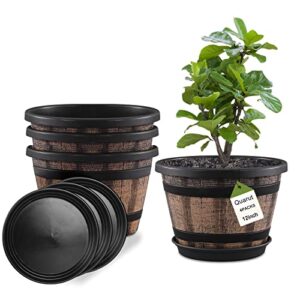
If the galvanized planter is your workhorse, whiskey barrel planters are your flexible scouts. These lightweight polyethylene planters hold 10 liters and move easily wherever pest pressure shifts — patio corner, balcony edge, or beside a vulnerable crop row.
Their 12-inch top diameter suits compact companions like basil, marigolds, or nasturtiums perfectly. Built-in drainage holes prevent root rot, and weather-resistant construction withstands both summer sun and frost without cracking. Reposition them seasonally to keep your pest-repelling companions exactly where they’re needed most.
| Best For | Gardeners who want a decorative, easy-to-move planter for herbs, flowers, or small ornamental plants on patios, balconies, or indoors. |
|---|---|
| Primary Material | Galvanized steel |
| Primary Use | Raised bed vegetable growing |
| Durability | Rust-resistant galvanized construction |
| Target User | Home and backyard gardeners |
| Dimensions | 5 x 3 x 1 feet |
| Color/Finish | Galvanized silver metallic |
| Additional Features |
|
- Lightweight and easy to reposition as your plants’ needs change
- Built-in drainage holes and weather-resistant build mean low maintenance year-round
- The rustic barrel look adds a nice touch without the weight or cost of real wood
- It’s plastic, so up close it won’t fool anyone expecting real wood
- At 12 inches wide, it’s too small for larger plant varieties
- Light enough to tip or blow around in strong wind if not anchored down
4. Garden Watering Can with Long Spout
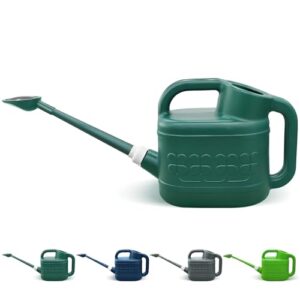
Precise watering matters just as much as what you plant.
The Garden Watering Can with Long Spout holds 2 gallons and delivers water directly to the soil — not the leaves — reducing the leaf moisture that fungal disease and pests exploit. Its shower and stream modes let you water delicate seedlings without disturbing companions. The integrated filter prevents clogging, keeping flow consistent across your interplanted beds.
| Best For | Gardeners who grow delicate plants like bonsai, seedlings, or hanging baskets and need precise, gentle watering without a lot of bending or mess. |
|---|---|
| Primary Material | Zinc, magnesium, and aluminum steel |
| Primary Use | Raised bed vegetable and herb growing |
| Durability | 20+ year life expectancy |
| Target User | Home gardeners seeking longevity |
| Dimensions | 17 inches height |
| Color/Finish | Olive Green |
| Additional Features |
|
- Two watering modes (shower and stream) so you can switch between delicate seedlings and deeper-rooted plants without swapping tools
- The long spout gets water right to the soil, which helps cut down on fungal issues and keeps leaves dry
- Built-in filter keeps the nozzle from clogging, so the flow stays steady even with tap water
- The spout connection might need Teflon tape to stop leaks — a small fix, but worth knowing upfront
- Plastic construction feels lighter than metal cans, which some gardeners see as less durable
- The spout angle is fixed, so it may not work perfectly for every planting setup or user preference
Frequently Asked Questions (FAQs)
What can I plant with vegetables to keep bugs away?
Bugs bugging your garden? Aromatic herbs like basil, rosemary, and mint confuse and repel common pests. Marigolds deter aphids and nematodes. Even radishes help keep cucumber beetles away from nearby crops.
Can interplanting work in small container gardens?
Yes, interplanting works beautifully in containers. Pair basil with tomatoes or tuck marigolds alongside peppers in a single pot. Even small spaces benefit from smart plant combinations.
How does weather affect companion planting success?
Weather shapes companion planting outcomes more than most gardeners expect. Temperature, humidity, and rainfall all influence how well plant partnerships suppress pests — sometimes strengthening results, sometimes undermining them entirely.
Which pests are hardest to control through interplanting?
Aphids, whiteflies, and soil-dwelling pests like wireworms are the toughest to control. They either adapt quickly, hide underground, or overwhelm beneficial insects before predators can establish.
Does interplanting slow overall vegetable growth or yield?
Interplanting doesn’t slow your vegetables — it often does the opposite. Better microclimates and moisture retention can actually boost short-term growth rates, and smart spacing keeps yields strong without competition penalties.
How soon do pest-repelling effects show after planting?
Results don’t appear overnight. Aromatic herbs like basil start deterring pests within 2–3 weeks. Flowers attracting beneficials take 3–6 weeks. Trap crops show measurable diversion around 4–8 weeks after planting.
Conclusion
A single French marigold doesn’t just brighten a bed—it pulls aphid-hunting predators in like a magnet, doing precise work no pesticide can replicate on its own. That’s the quiet power behind interplanting vegetables to prevent insects: your garden becomes a self-regulating system, not a chaotic battlefield you manage alone.
Follow the proven pairings, rotate your beds, and monitor pest pressure weekly. You won’t just grow food—you’ll grow a garden that actively defends itself.