
This site is supported by our readers. We may earn a commission, at no cost to you, if you purchase through links.
Most gardeners think the real battle happens above ground, but your soil tells a different story. Planting tomatoes in the same spot year after year—watch as yields drop, pests multiply, and the bed grows tired. That’s the silent warning of nutrient exhaustion and disease buildup.
Crop rotation planning raised beds isn’t just a technical trick, it’s how you turn a patch of soil into a thriving community. By shifting plant families, mixing deep-rooted and shallow-rooted crops, and welcoming legumes as soil healers, you give your beds a chance to recover and produce more, season after season. Let’s break down the steps that transform tired beds into resilient, productive gardens.
Table Of Contents
- Key Takeaways
- Why Raised Beds Need Crop Rotation
- Assess Soil and Group Crop Families
- Design Your Multi-Year Rotation Schedule
- Implement Each Seasonal Bed Rotation
- Monitor and Improve Your Rotation
- Frequently Asked Questions (FAQs)
- Should you rotate crops in raised beds?
- What is the 70 30 rule in gardening?
- What are three mistakes to avoid when gardening with raised beds?
- What is the best order for crop rotation?
- How does crop rotation affect pollinator activity?
- What crops are best for small raised beds?
- Can fruiting shrubs be rotated like vegetables?
- How do you rotate crops in shady beds?
- Are perennial herbs affected by crop rotation cycles?
- Conclusion
Key Takeaways
- Rotating crops in your raised beds is essential for preventing soil nutrient depletion and reducing pest and disease buildup, keeping your garden productive year after year.
- Grouping crops by family and planning multi-year rotation cycles—starting with legumes for nitrogen, followed by roots and heavy feeders—ensures balanced soil health and higher yields.
- Adding compost between rotations, using cover crops, and tracking bed histories all work together to renew your soil and support strong, consistent harvests.
- Adapting your rotation plan for limited space, monitoring for disease, and updating your bed maps each season will keep your raised beds resilient and thriving over time.
Why Raised Beds Need Crop Rotation
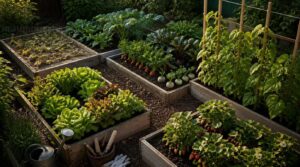
Raised beds pack a lot of growing power into a small footprint, but that same intensity means the soil takes a beating fast if you plant the same crops in the same spot year after year. Rotation isn’t just an old-timer’s habit—it’s what keeps your beds productive instead of tired out.
For tips on planning your rotations and keeping track season after season, check out this practical guide on companion planting and raised bed design strategies.
Raised beds deliver big harvests, but without crop rotation, their soil quickly loses vitality and productivity
Here’s what’s actually at stake when you skip it, and why each reason matters more than you’d think.
Prevent Soil Nutrient Depletion
Plant tomatoes in the same spot year after year, and you’re mining the same nutrients until the soil goes broke. Crop rotation fixes this by pairing heavy feeders with legumes for nitrogen fixation, then following with deep-rooted crops that pull nutrients from lower soil layers, balancing demand and renewing organic matter naturally, one rotation cycle at a time.
This practice helps prevent soil exhaustion by maintaining nutrient balance and reducing long-term land degradation. soil exhaustion
Reduce Pest and Disease Pressure
Nutrient balance is only half the battle, though. Grow tomatoes and peppers back to back, and fusarium wilt builds up fast in the soil. That’s why rotating plant families matters so much for pest and disease pressure.
Pair it with companion planting, marigolds near tomatoes, radishes between rows, plus sanitation between beds, and you’ve built real integrated pest management without a single spray.
Improve Soil Structure
Beyond pests, rotation quietly rebuilds the soil beneath your feet.
Alternating deep-rooted crops with shallow legumes builds soil aggregate stability, while cover crop residue boosts organic matter and moisture retention. Earthworms and mycorrhizal fungi thrive under varied roots, preventing compaction.
Rotating crop families in raised beds strengthens structure season after season, not just soil health, but its very backbone.
Increase Long-Term Garden Productivity
That structural payoff compounds into something bigger: real, measurable yield over years, not just one good season.
A multi-year rotation schedule paired with organic nutrient management and steady soil testing keeps beds productive indefinitely. Consider this:
- Balanced nutrient cycling
- Lower disease pressure
- Fewer synthetic inputs
- Higher yields per bed
- Consistent harvests seasonally
Enhance Raised Bed Biodiversity
Diversity is your best insurance policy. Rotating families invites pollinator habitat creation, companion planting guilds, and native species, feeding the soil food web and beneficial insects.
For more ideas on how to pair crop families for healthier soil and bigger harvests, check out these cold season crop rotation strategies and soil-building tips.
| Element | Function | Example |
|---|---|---|
| Flowers | Pollinator draw | Marigold |
| Legumes | Nitrogen fix | Beans |
| Natives | Habitat complexity | Perennials |
That mix turns raised beds into a true polyculture system, resilient season after season.
Assess Soil and Group Crop Families
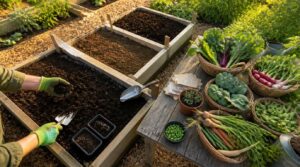
Before you start planning your crop rotation, it’s important to get a clear picture of your soil and the plant families you’re working with. This step sets the foundation for healthy, productive raised beds. Here’s what you need to check before mapping out your rotation schedule.
Test PH and Nutrient Levels
Ever wonder why your veggies sometimes struggle, even in well-built raised beds?
Soil pH testing and nutrient level analysis are your secret weapons. Aim for a pH between 6.0 and 7.0—most garden crops thrive here. Use lab tests or home kits, interpret results carefully, and apply soil amendments like compost or lime. Retest after 4–8 weeks to confirm improvements.
Review Previous Bed Plantings
Dig into your bed crop history before planning next season. Record last year’s plantings, their timelines, and any pest or disease issues. Map yields and note which beds performed best, especially by crop family.
Track soil amendments like compost or lime, and spot patterns—did legumes boost fertility, or did brassicas struggle? This review shapes smarter, more resilient rotation choices.
Group Nightshades and Brassicas
If you’re looking to dodge trouble, keep nightshades and brassicas apart in your rotation plan. Both families—tomatoes, peppers, and eggplants for nightshades; cabbage, broccoli, and kale for brassicas—are magnets for soil-borne diseases and pests.
Rotate each away from their own kind for two to three years (nightshades) or three to four years (brassicas) to maintain soil health.
Group Legumes and Cucurbits
Think of legumes as your soil’s green repair crew—they fix atmospheric nitrogen, setting the stage for cucurbits like cucumbers and squash.
Rotating legumes before cucurbits means a natural nitrogen boost for heavy feeders, while legume residues enrich the bed.
Careful timing and intercropping can make the most of space and suppress weeds, streamlining your crop rotation schedule in raised beds.
Classify Root Crops Correctly
Root crops aren’t all the same underground—taproot vs tuber matters for rotation. Carrots and beets store nutrients in a central taproot, while potatoes use tubers (actually swollen stems). Onions are classified as bulbs, layering fleshy leaves.
Knowing these storage organ types helps you match rotation cycles to your soil health and prevents repeating nutrient drawdown patterns year after year.
Design Your Multi-Year Rotation Schedule
Now that you’ve grouped your crops and checked your soil, it’s time to build a rotation plan that keeps your beds healthy year after year. Setting up a schedule takes a bit of thought, but it’s easier than you might expect once you see the steps laid out. Here’s how to organize your beds for consistent growth and fewer problems.
Map Every Raised Bed

Mapping every raised bed starts with a bed labeling system—each plot gets a unique name and coordinates. You’ll record sun exposure tracking to match crops with their light needs, attach soil test results for quick reference, and keep a clear six-inch pathway clearance around each bed. This visual map forms your garden journal’s foundation, making rotation decisions deliberate and traceable.
Choose Three-Year Rotation Cycles
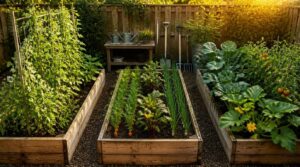
Once your bed map is set, the three-year rotation cycle comes next. You’ll alternate crop families yearly, letting each bed host a different group. Year one, plant legumes for nitrogen; year two, shift to root crops; year three, use heavy feeders. Here’s a quick sketch:
| Year | Family | Main Benefit |
|---|---|---|
| 1 | Legume | Nitrogen boost |
| 2 | Root | Disease break |
| 3 | Feeder | Nutrient drawdown |
Follow Legumes With Heavy Feeders

After harvesting legumes, you’re primed for heavy feeders—tomatoes, brassicas, or squash. The legume roots left behind deliver a steady nitrogen boost and improve soil structure, helping heavy feeders thrive. Wait three to four weeks for roots to decompose, then add compost. This keeps nitrogen available, avoids nutrient flushes, and makes your raised bed’s next season noticeably more productive.
- Boosts nitrogen by 20–40%
- Reduces synthetic fertilizer needs
- Improves drainage and soil porosity
- Fosters steady growth, not foliage excess
- Helps heavy feeders like tomatoes flourish
Separate Disease-Prone Plant Families
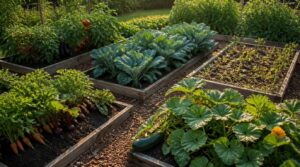
Keeping nightshade crops away from each other for at least three years is your best shield against soil-borne blight. Rotate brassicas separately to cut clubroot and mildew risks, while isolating root crops like carrots and beets blocks nematode buildup.
Let cucurbits follow legumes, giving beds time to recover from fungal pressure. This approach keeps disease suppression front and center.
Schedule Cool-Season Succession Crops
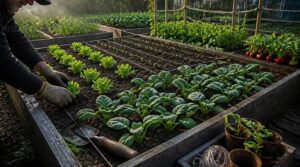
Often, succession planting is your ace for steady harvests. Cool-season crops like lettuce and spinach thrive when sown every 2–3 weeks, keeping beds productive. Plant frost-tolerant greens early, space lettuce 8–12 inches apart, and stagger harvests. Rotate these with peas or radishes for diversity.
- Succession sowing every 2–3 weeks
- Lettuce spacing: 8–12 inches
- Spinach tolerates light frost
- Staggered harvest intervals
- Rotate with peas or radishes
Implement Each Seasonal Bed Rotation
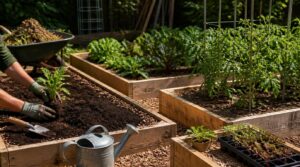
Once your rotation schedule is mapped out, the next step is putting each season’s plan into action. There are a few practical moves that make all the difference in raised bed success. Here’s what you’ll want to focus on as you move beds from one crop family to the next.
Replenish Soil With Compost
Think of compost as the engine driving your soil’s renewal. When you add 2–4 inches of finished compost to raised beds between rotations, you deliver a steady flow of nutrients and organic matter.
This boosts soil fertility, improves water retention, and energizes the soil food web. Every rotation cycle, compost turns depleted beds into resilient, productive ground for your next crop.
Transplant During Cooler Hours
When you transplant during cooler hours, such as early morning or late afternoon, you cut down on wilting and heat stress. Cooler soil keeps moisture stable, so roots recover faster. Evening moves encourage overnight root growth, while morning transplants benefit from gentle light and lower wind.
This approach fits any approach crop rotation schedule, making seasonal planting and water management far easier in raised beds.
Intercrop Without Disrupting Rotation
Intercropping lets you fit companion plants into your rotation plan without tripping up the cycle.
For example, slotting bush beans beside shallow-rooted herbs boosts nitrogen and ground cover, while marigolds near tomatoes deter pests.
Stagger harvest windows so each intercrop finishes before you repeat a crop family, and always track soil health—compost helps both main and intercrop yields.
Plant Off-Season Cover Crops
When you sow winter rye or oats after harvest, you’re setting up easy spring cleanup—these crops die back in freezing weather, leaving behind a light mulch that speeds soil warming.
Planting hairy vetch or clover boosts nitrogen fixation, feeding the next crop.
Cover crops also cut soil erosion and ramp up microbial biomass, strengthening raised bed soil.
Use Trellises to Save Space
Vertical gardening lets you double or even triple your planting density in raised beds without crowding roots. Modular trellis systems—like archways or panel frames—train beans, cucumbers, and tomatoes upward, freeing up ground for leafy greens or succession crops.
That means easier harvest access, better airflow, and fewer leaf diseases, all while keeping your crop rotation map clear and adaptable.
Monitor and Improve Your Rotation
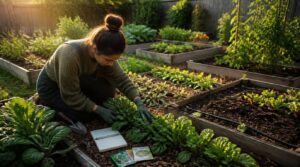
Once your seasonal rotations are underway, it’s important to keep an eye on how your beds respond and adjust as you go. A little observation and recordkeeping can make a big difference in your long-term results. Here’s what you’ll want to focus on each year to keep your rotation working its best.
Track Plantings and Harvests
Keeping a detailed record of each bed’s plantings is your best insurance policy for rotation success. When you log crop varieties, transplant dates, and yields—down to the number of fruits or heads—you’ll spot trends and pinpoint the best performers.
Pair these notes with an updated bed map to visualize crop movement, plan successions, and tweak next season’s rotation for even better results.
Watch for Soil-Borne Diseases
When you notice yellowing leaves, wilting, or sudden dieback, think of soil-borne diseases like Fusarium or Verticillium wilt—these culprits linger for years.
Test soil if plants seem stunted or roots rot; Pythium and Rhizoctonia thrive in wet, compacted beds.
Rotate crops carefully, especially nightshades and brassicas, to break pest and pathogen cycles and keep your soil healthy.
Correct Nutrient Imbalances Organically
If disease symptoms pop up, check your soil test for low nutrients or pH swings. Tackle imbalances with compost additions—they boost microbes and slow-release nutrients. Apply compost tea for a quick biological kick.
Try cover crops like clover for nitrogen fixation. When you spot deficiencies, reach for natural mineral amendments—think rock phosphate, greensand, or Epsom salt.
Adapt Plans for Limited Beds
When your bed space is tight, rotation planning takes creativity. Group crops with similar nutrient needs and pest risks to shrink your rotation footprint. Use short-season catch crops—like radishes or lettuce—to fill gaps, then replenish with aggressive compost application.
Companion planting can work, but time it so harvests and root disturbance don’t clash with your overall crop rotation schedule.
Update Next Year’s Bed Map
Redraw your bed map based on this year’s results, shifting boundaries and updating coordinates as needed. Integrate soil test data and last season’s crop history to set your new rotation schedule. Assign each zone by crop family, noting compost and amendment needs. Set deadlines for map completion—this ensures your seasonal rotation plan stays organized and maximizes productivity.
Frequently Asked Questions (FAQs)
Should you rotate crops in raised beds?
If you want healthy soil and steady yields in your raised beds, rotating crops is essential. Swapping crop families each year limits nutrient depletion and pest buildup, making your garden more resilient and productive over time.
What is the 70 30 rule in gardening?
The 70 30 rule means you invest about 70 percent of your gardening effort in building healthy soil and reliable backbone plants, while 30 percent goes to experimenting with plant variety, seasonal fillers, and companion planting for flexibility.
What are three mistakes to avoid when gardening with raised beds?
Ever wondered why your raised beds stall out or succumb to pests? Skipping soil testing, replanting the same crop family each year, and neglecting organic compost are top mistakes—each undermines nutrient balance, the ability to withstand challenges, and sustained harvests.
What is the best order for crop rotation?
The best crop rotation order starts with legumes to boost nitrogen, follows with brassicas for a break year, then root crops, and finally fruiting crops like nightshades or cucurbits, with cover crops between cycles for soil health.
How does crop rotation affect pollinator activity?
Crop rotation ramps up pollinator activity by creating sequential bloom schedules and maintaining habitat continuity.
Intercropping with flowering cover crops and rotating nectar-rich families boosts pollen diversity, attracts beneficial insects, and enhances garden biodiversity throughout the season.
What crops are best for small raised beds?
Call it a tight fit, but Parisian radishes, baby carrots, and bush beans thrive in small raised beds. Trellised cucumbers, lettuce, and spinach work well, maximizing space and ensuring rapid harvests for a strong rotation schedule.
Can fruiting shrubs be rotated like vegetables?
You can rotate fruiting shrubs like vegetables, but the process is slower and demands more planning. Prepare deep, nutrient-rich soil, group shrubs by family, and allow longer rest periods between moves to maintain soil health.
How do you rotate crops in shady beds?
You’ll want to rotate shade-tolerant crop families—like brassicas, legumes, and leafy greens—each season, monitor soil moisture, topdress with compost, and use light-loving cover crops or vertical trellising to make the most of space and soil health.
Are perennial herbs affected by crop rotation cycles?
Even perennial herbs feel the punch of crop rotation cycles. Swapping their spot each season boosts soil nutrient balance, breaks pest cycles, diversifies root systems, and leads to steadier long-term yield stability in raised beds.
Conclusion
Picture a thriving bed beside a struggling one: crop rotation planning raised beds makes the difference. Rotating crops isn’t just about moving tomatoes; it’s how you build resilient soil and break pest cycles. Your beds become a living system, not just containers.
Each season, you’re investing in next year’s success. Keep records, experiment, adapt. Soil health is your legacy, not a quick fix.
When you rotate wisely, you’re growing more than vegetables—you’re cultivating lasting abundance.