This site is supported by our readers. We may earn a commission, at no cost to you, if you purchase through links.
"Organic" doesn’t mean harmless, and that mismatch trips up more gardeners than you’d think. Neem oil carries real azadirachtin, spinosad attacks insect nerve receptors, and both can linger on lettuce longer than you’d expect.
Skip the pre‑harvest interval or spray during bloom, and you risk more than a bad batch of greens—you risk pollinators and your own gut, too.
So are organic pest sprays safe for edible plants? Only when you respect the label, the timing, and the dose. Get those three right, and your garden stays productive without turning dinner into a gamble.
Table Of Contents
Key Takeaways
- "Organic" doesn’t automatically mean safe — neem oil and spinosad carry real active compounds that linger on edible plants, so the label, timing, and dose aren’t optional steps.
- Respecting pre-harvest intervals is where food safety actually lives: spinosad needs 1–7 days on leafy greens, and skipping that window puts both your health and your pollinators at risk.
- Match your spray to the pest — neem oil disrupts soft-bodied insects like aphids by blocking molting, spinosad targets chewing caterpillars through nerve receptor overload, and insecticidal soap works only on contact, so coverage is everything.
- Prevention cuts your spray schedule better than any product can: weekly scouting, floating row covers, and rotating pesticide modes of action keep pests guessing and your garden productive without turning every harvest into a risk calculation.
Are Organic Sprays Safe for Edibles

Yes, organic sprays are safe for edible plants, but only when you use them correctly. "Organic" doesn’t mean automatic permission to spray however much you want, whenever you want. Here are five rules that keep your harvest both pest-free and safe to eat.
Think of it as a short checklist: every spray you reach for should clear the bar on safe pesticides for edible plants—meaning low toxicity, fast breakdown, and a label that explicitly covers food crops.
Follow Label Directions
Almost every spray mishap traces back to one thing: skipping the label. Treat it as your contract, not a suggestion — it spells out dilution rates, equipment, mixing compatibility, and safety gear like gloves and goggles.
Follow application intervals and dosage exactly, and keep records of dates and rates. That documentation protects you, your crops, and keeps residues under maximum residue limits.
Check Edible Crop Approval
Once you’ve read the label, look for the edible crop approval list — it tells you exactly which crops, and growth stages, qualify.
- Tomatoes approved for foliar spray, fruiting stage
- Herbs restricted to garden, not commercial use
- Regional regulatory notes affecting allowed crops
- Separate statements for fruits versus leafy greens
Check organic certification standards and keep a verification audit trail for food safety compliance. Research on mustard shows that frontline demonstration yields can boost productivity by over 16%.
Respect Residue Limits
Knowing which crops are approved is only half the job — MRL compliance seals the deal. Maximum residue limits define exactly how much pesticide residue can legally remain on your edible plants at harvest.
Think of it as a hard ceiling: cross it, and you’re risking both consumer health protection and export market access.
Agencies like the EPA regularly update these thresholds as new safety data emerges.
Avoid Overapplication
More isn’t better here — it’s the fastest way to burn leaves and push residues past safe limits.
Stick to labeled rates, spray only affected areas, and keep a spray log with dates, products, and rates. That record prevents accidental repeat treatments and keeps your pesticide reapplication schedule on track without risking phytotoxicity or chemical runoff near harvest day.
Wash Before Eating
Even with organic sprays, rinse all produce under cold running water before eating — no exceptions. Scrub firm vegetables like cucumbers or potatoes with a brush.
Don’t use soap; it lingers on edible surfaces. Dry with a clean towel to reduce bacteria.
Running water removes up to 70% of surface residues, making it your simplest, most reliable, last line of defense.
Top 7 Pest Control Products
Not all pest control products play by the same rules when edible plants are involved. Some are cleared for organic gardens, others aren’t — and knowing the difference matters before you spray anything near food. Here are seven products worth understanding, starting with what each one actually is.
1. Sevin Ready-to-Use Insect Killer
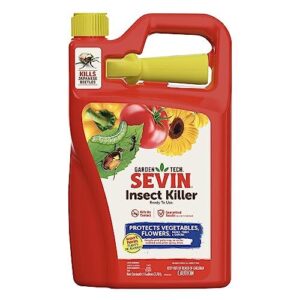
Sevin Ready-to-Use Insect Killer covers over 700 pest species on contact — beetles, aphids, whiteflies, caterpillars, and more. It comes ready to spray straight from the bottle, with no mixing required.
However, it contains zeta-cypermethrin, a synthetic compound that’s not OMRI-listed, meaning it doesn’t qualify for certified organic production. If you’re growing organic edibles, this product sits outside that boundary — check your certification requirements before reaching for it.
| Best For | Gardeners who want a ready-to-spray solution to quickly knock down heavy pest infestations on roses, lawns, vegetables, trees, and shrubs. |
|---|---|
| Product Form | Liquid Spray |
| Edible Plant Safe | Yes |
| Indoor/Outdoor | Both |
| Organic Formula | No |
| Pest Coverage | 700+ species |
| Package Size | 127.82 fl oz |
| Additional Features |
|
- Kills over 700 listed insect species on contact
- Ready-to-use formula with no mixing — just shake and spray
- Safe for use around plants, blooms, vegetables, and edible crops
- Sprayer assembly instructions are incomplete, requiring users to extend the internal tubing and set the valve to "Open" before use
- Some reviewers report reduced effectiveness compared to older Sevin formulas, with incomplete control of pests like mole crickets and spiders
- Possible leakage or empty bottles have been reported, so careful shaking and valve positioning are needed to avoid spills
2. Garden Safe Insecticidal Soap Spray
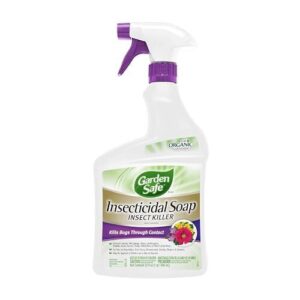
Want something gentler on your crops? Garden Safe Insecticidal Soap Spray uses potassium salts of fatty acids, about 1% of the formula, to break down the waxy cuticle on soft-bodied pests like aphids and mealybugs.
It’s a contact killer only, with no systemic action, so thorough coverage matters more than dosage. The other 99% is inert filler that stabilizes the spray. Avoid using it on stressed or freshly fertilized plants, since leaf burn risk climbs under those conditions.
| Best For | Organic gardeners who want a ready-to-use, pet-friendly spray for knocking out soft-bodied pests on edible crops right up to harvest day. |
|---|---|
| Product Form | Soap Spray |
| Edible Plant Safe | Yes, up to harvest |
| Indoor/Outdoor | Both |
| Organic Formula | Yes |
| Pest Coverage | Soft-bodied insects |
| Package Size | 32 fl oz |
| Additional Features |
|
- No mixing required, just spray directly on contact for fast results
- Safe for edibles, ornamentals, and houseplants in indoor, outdoor, or greenhouse settings
- Made with organic-compliant fatty acid salts, non-toxic to pets
- Only works on pests it directly touches, so thorough coverage is essential
- Some users note a weak spray nozzle and short-lived residual effect
- Repeated use may lose effectiveness against pests like spider mites due to resistance
3. Bonide Ready to Use Insecticidal Soap
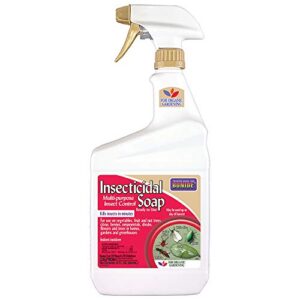
This one skips the dilution step entirely, which matters if you’re juggling a dozen other garden tasks already. Bonide’s formula uses the same potassium fatty-acid salts, ready to spray straight from the bottle onto aphids, whiteflies, scale, and spider mites.
Coverage is everything here, so wet leaf undersides thoroughly, not just the tops. It’s labeled safe up to harvest day, but skip bright midday sun. Heat plus soap spray invites leaf burn on tender new growth.
| Best For | Gardeners who want a fast, no-mixing solution to tackle aphids, mites, and other soft-bodied pests on houseplants, vegetables, and ornamentals without extra prep work. |
|---|---|
| Product Form | Soap Spray |
| Edible Plant Safe | Yes, up to harvest |
| Indoor/Outdoor | Both |
| Organic Formula | Yes |
| Pest Coverage | Soft-bodied insects |
| Package Size | 32 fl oz |
| Additional Features |
|
- Ready to use straight from the bottle, no dilution or mixing required
- Organic-approved and safe to apply right up until harvest day
- Broad-spectrum control of common pests like aphids, whiteflies, mealybugs, and spider mites
- No residual effect, so rain or irrigation can wash it off and trigger reapplication
- Only kills pests on contact, missing anything hidden inside buds or blooms
- Needs careful timing, since spraying in heat or direct sun can burn tender leaves
4. Sevin Insect Killer Dust
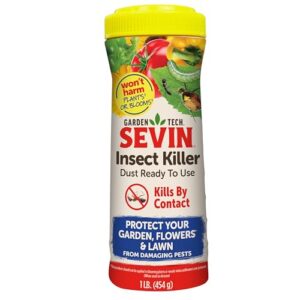
Here’s a key distinction worth pausing on: this isn’t an organic product, even though it sits on the same shelf as your soap sprays. Sevin Dust uses bifenthrin, a synthetic pyrethroid, not anything OMRI-listed for certified organic growing.
It kills over 150 pests by contact, which sounds impressive, but skip blooming flowers and wait 24 hours before watering. If your goal is genuinely organic edibles, this one doesn’t belong in your rotation.
| Best For | Gardeners who want a ready-to-use dust that controls a wide range of common pests across lawns, flower beds, vegetable gardens, and fruit trees. |
|---|---|
| Product Form | Fine Dust |
| Edible Plant Safe | Yes |
| Indoor/Outdoor | Outdoor Only |
| Organic Formula | No |
| Pest Coverage | 150+ species |
| Package Size | 16 oz |
| Additional Features |
|
- Kills more than 150 listed pest species on contact, including ants, Japanese beetles, aphids, whiteflies, and stink bugs
- Plant-safe formulation that won’t damage flowers, vegetables, or ornamental foliage
- People and pets can return to treated areas once the dust has settled
- Shouldn’t be applied to open blooms, as it can harm pollinators
- Requires a 24-hour wait before watering or irrigating after application
- Heavily infested areas or deep-buried nests may need multiple treatments for full effectiveness
5. Garden Safe Neem Fungicide Spray
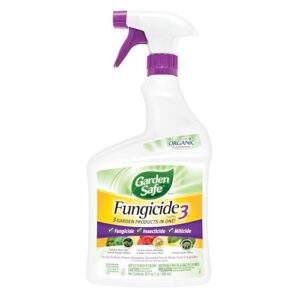
Powdery mildew and black spot don’t stand a chance against this one. Garden Safe Neem Fungicide Spray uses clarified hydrophobic neem oil to coat leaves and disrupt fungal growth before it spreads.
Spray every 7 to 14 days as prevention, covering all surfaces until they’re visibly wet. Skip wilted or stressed plants, and avoid spraying during extreme heat to prevent leaf burn. Rinse harvested produce first, and you’ve got a solid, low-residue option for roses, vegetables, and fruit trees alike.
| Best For | Organic gardeners looking for a triple-action, ready-to-use spray to prevent and control fungal issues like powdery mildew and black spot on roses, vegetables, and fruit trees. |
|---|---|
| Product Form | Neem Oil Spray |
| Edible Plant Safe | Yes |
| Indoor/Outdoor | Both |
| Organic Formula | Yes |
| Pest Coverage | Aphids, mites, whiteflies |
| Package Size | 32 fl oz |
| Additional Features |
|
- Triple-action formula tackles fungus, insects, and mites in a single product
- Ready-to-use trigger spray with no mixing required, and reported safe for birds and bees
- Works well indoors and outdoors for organic gardening
- Spray nozzle can be weak and tricky to adjust
- Noticeable neem odor, so keep it away from pets and children
- Low neem concentration may mean repeated applications, with limited effect on pests like red spider mites
6. GrowSafe Organic Plant Protector
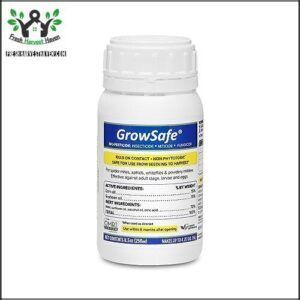
If neem alone isn’t cutting it, GrowSafe Organic Plant Protector takes a different approach entirely. Instead of disrupting pests biologically, it forms a physical barrier on leaf surfaces using corn, soybean, sunflower, and coconut oils.
This coating smothers soft-bodied pests like mites and aphids while adding mild phytochemical repellency. It’s labeled safe around bees and beneficial insects, and suitable from seedling stage through harvest on vegetables, fruits, and ornamentals. Reapply regularly, since the film breaks down over time and won’t protect indefinitely between sprays.
| Best For | Home growers and small farm owners who want an organic, food-grade way to control mites, aphids, whiteflies, and mildew without harming bees, pets, or beneficial insects. |
|---|---|
| Product Form | Oil Emulsion |
| Edible Plant Safe | Yes, through harvest |
| Indoor/Outdoor | Both |
| Organic Formula | Yes |
| Pest Coverage | Mites, whiteflies, mildew |
| Package Size | 8.5 fl oz |
| Additional Features |
|
- All-natural oil blend that’s safe for humans, pets, bees, and beneficial insects
- Stable emulsion that won’t separate, burn, or suffocate foliage
- Can be used all the way from seedling stage through harvest without affecting fruit taste
- Can leave sticky residue behind after repeated use, which may be tough to clean off
- Risk of leaf damage if applied in high heat, so it’s best sprayed in cooler parts of the day
- Spray nozzle can be finicky and may need extra pumping to work properly
7. Pure Cold Pressed Neem Oil
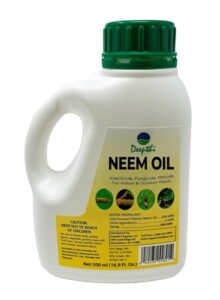
Where GrowSafe coats leaves, this 100% cold-pressed oil works through pest biology instead. No solvents touch the seeds, so natural azadirachtin and nimbolide stay intact, disrupting feeding, molting, and egg-laying in aphids, mites, and beetles. It also suppresses powdery mildew and rust, OMRI-listed and biodegradable for vegetables, herbs, fruits, and ornamentals.
Dilute before spraying, since the oil thickens below 70°F, and store unopened bottles away from heat and light for up to two years. Test a leaf first for sensitivity.
| Best For | Organic and eco-conscious gardeners who want to protect vegetables, herbs, fruits, and ornamentals from pests and fungal disease without relying on synthetic chemicals. |
|---|---|
| Product Form | Neem Oil Concentrate |
| Edible Plant Safe | Yes |
| Indoor/Outdoor | Both |
| Organic Formula | Yes |
| Pest Coverage | Aphids, mites, beetles |
| Package Size | 16.9 fl oz |
| Additional Features |
|
- 100% cold-pressed with no added chemicals or solvents, keeping natural azadirachtin and nimbolide intact
- Dual-action formula fights both insect pests (aphids, mites, beetles) and fungal issues like powdery mildew and rust
- OMRI-listed and biodegradable, making it safe for edible crops as well as indoor and outdoor ornamentals
- Needs to be diluted with water and a compatible surfactant before spraying, adding extra prep steps
- Thickens or solidifies below 70°F, requiring warming to restore a usable consistency
- Has a strong odor and may cause allergic reactions if inhaled or handled without proper protection
Choose Safer Organic Ingredients
Not every organic spray works the same way, and matching the ingredient to the pest matters more than you’d think. Some target soft-bodied insects, others go after chewers, crawlers, or caterpillars specifically. Here are five organic ingredients worth knowing, and exactly what each one does best.
Neem Oil for Soft Pests
When soft-bodied pests like aphids and spider mites start colonizing your edible plants, neem oil is one of the most reliable organic pest control tools you can reach for. Its key active compound, azadirachtin, doesn’t just kill on contact — it mimics insect hormones, disrupting the soft-bodied pest lifecycle by blocking molting and halting nymph development before populations spiral.
Here’s why that matters for your garden:
- Azadirachtin growth disruption prevents immature insects from reaching reproductive stages, cutting future generations short.
- Physical smothering coats eggs and crawlers, limiting movement and feeding on treated leaf surfaces.
- Anti-feeding behavior is triggered on contact, reducing leaf damage even before pests die off.
- Residue degradation under sunlight means food safety risk stays minimal on edible crops.
For enhancing spray coverage, apply at 2–4 tablespoons per gallon, hitting both leaf surfaces thoroughly. Reapply every 7–14 days to catch newly hatched individuals. To avoid mitigating leaf burn, skip hot midday applications — early morning or evening works best.
Spinosad for Chewing Insects
[ORIGINAL TEXT]
When soft-bodied pests are already handled with neem oil, chewing insects like armyworms, cabbage worms, and loopers call for a different tool entirely — and spinosad is the one worth knowing.
Derived from the soil bacterium Saccharopolyspora spinosa, spinosad works by binding nicotinic acetylcholine receptors, fundamentally overloading the insect’s nervous system until paralysis sets in. It’s ingestion-based, meaning pests must eat treated foliage to receive a lethal dose — which is why it’s so effective against chewing insects and less disruptive to many beneficials.
| Pest | Crop | Pre-Harvest Interval |
|---|---|---|
| Armyworms | Leafy greens | 1 day |
| Cabbage worms | Cole crops | 1–7 days |
| Colorado potato beetle | Root vegetables | 3 days |
| Leafminers | Celery, tomatoes | 1 day |
| Thrips | Peppers, eggplant | 1 day |
On pollinator timing, apply after foraging hours — spinosad is toxic to bees when wet but poses far less risk once residues dry. For resistance management, it belongs to IRAC Group 5, so rotating it with Bt or other modes of action keeps populations from adapting. Sunlight and soil microbes break it down quickly, keeping pesticide residue degradation on your side for food safety.
[/ORIGINAL TEXT]
Bt for Caterpillars
When caterpillars start shredding your brassicas and tomato leaves, Bacillus thuringiensis — Bt for short — is the organic biopesticide to reach for.
It’s a naturally occurring soil bacterium that kills caterpillars from the inside: ingested Cry proteins punch holes in the gut lining, causing death within 24–72 hours.
Bt kurstaki targets lepidopteran larvae specifically, leaving pollinators and beneficial predators essentially unharmed.
Insecticidal Soap for Aphids
Aphids are frustratingly resilient, but insecticidal soap cuts through their defenses fast. Potassium fatty-acid salts dissolve the waxy cuticle on contact, killing soft-bodied nymphs within minutes.
Spray both leaf surfaces thoroughly — coverage is everything here. Use soft water if you can; hard water reduces efficacy.
Residues wash off easily, making soap a smart, low-risk choice for edible crops.
Diatomaceous Earth for Crawlers
Think of diatomaceous earth powder as tiny glass shards that scratch crawling insects dry. Food-grade diatomaceous earth physically abrades beetle and aphid crawlers, draining moisture without any chemical toxins.
- Apply a light dust along pest pathways and leaf undersides
- Avoid wet surfaces — humidity kills efficacy
- Wear a mask; fine particles irritate lungs
Reapply after rain for continued natural pest control.
Apply Sprays Before Harvesting
Timing your spray applications correctly can mean the difference between a safe harvest and unnecessary risk. Even organic products need a little respect regarding how close you get to picking day. Here’s what to keep in mind before you reach for the sprayer.
Check Pre-harvest Intervals
Pre-harvest intervals (PHIs) are the minimum waiting period between your last spray and harvest — and skipping them is where food safety quietly breaks down.
Spinosad, for example, requires 1–7 days on leafy greens.
Always read the exact crop name on your label, since PHIs shift between crops, formulations, and field versus greenhouse conditions. When in doubt, wait an extra day or two.
Spray Morning or Evening

Timing isn’t just a courtesy to bees — it’s chemistry. Ideal spray timing falls at dawn or dusk, when cooler air slows the evaporation rate and lowers UV degradation risks to active ingredients.
- Cooler temps improve leaf deposition
- Lower wind reduces drift
- Matches peak pest activity cycles
- Protects pollinator foraging windows
- Check weather for rain first
Avoid Open Blossoms

Open blossoms are basically an open door — spray residues land directly on nectar and pollen, threatening both pollinator safety and harvest quality. Never apply any spray, even OMRI-certified neem oil, when flowers are fully open.
Spray drift prevention matters here too. Use low-pressure settings and coarse droplets, and always maintain buffer zones around blooming plants based on wind conditions.
| Flower Stage | Safe to Spray? | Recommended Action |
|---|---|---|
| Unopened bud | Yes | Apply with low-pressure settings |
| Partially open | Caution | Use targeted spot treatment only |
| Fully open bloom | No | Delay until petals drop |
| Post-bloom (fruit set) | Yes | Resume normal schedule |
Pollinator activity timing is your guide: spray before dawn or after dusk, when bees aren’t foraging. This protects beneficial insects and non-target organisms equally. Monitor flower stages weekly so you’re never caught off guard.
Spot-treat Problem Areas
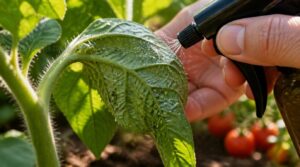
Once the blossoms are behind you, your attention shifts to where pests are actually hiding. Spot-treating hotspots — leaf undersides, stem crevices, fruit clusters — means you apply insecticidal soap or neem oil only where needed.
Use a fine-nozzle applicator, shield surrounding foliage with your free hand, and check treated areas within 48 hours to confirm the infestation is clearing.
Reapply After Rain
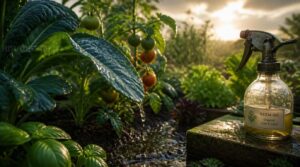
A downpour undoes your spot-treatment fast, washing soap or neem off leaves before pests even notice. Reassess within 24 to 48 hours and reapply only the washed-out spots, not the whole plant.
Spray during a dry morning window, skip windy stretches that cause drift, and aim low to limit runoff into soil and nearby waterways.
Reduce Sprays With Garden Prevention

The best spray is the one you never have to use, and prevention gets you there faster than any product label can. You don’t need a chemistry degree to outsmart pests, just a few smart habits in the garden. Here are five practical ways to cut your spray schedule down to size.
Scout Leaves Weekly
Before reaching for a spray, walk your rows once a week and actually look at the leaves.
This early infestation detection habit catches aphids or thrips before they multiply, letting you judge damage thresholds and log pest patterns, beneficial insect activity, and weather—building a record that guides smarter, less chemical-dependent decisions all season.
Use Floating Row Covers
Scouting tells you a pest is coming; a floating row cover stops it before it lands. These lightweight fabrics act as mechanical barriers, blocking flea beetles and cabbage loopers while transmitting 85–95% light.
Choose 0.5–1.0 oz weights for general vegetable crop protection, heavier for frost.
Reusable, season-extending, and pesticide-free—pure ecosystem balance.
Support Beneficial Insects
Think of beneficial insects as your garden’s unpaid pest‑control crew — and your job is simply to keep them on the payroll.
Beneficial insects are your garden’s unpaid pest-control crew — your only job is keeping them on the payroll
Plant native flowering species like dill, yarrow, and fennel to feed adult parasitoids. Add overwintering habitat through leaf litter and coarse mulch, and set out pollinator hydration stations so foragers stay and work.
Rotate Pesticide Types
Using the same product season after season is like asking pests to study your playbook — they’ll adapt. Rotate pesticide modes of action between applications, alternating contact types like insecticidal soap with systemic options like spinosad, which works internally.
Target different life stages each cycle. This disrupts resistance development and keeps your organic toolkit effective longer.
Build Healthier Soil
Building healthier soil is your longest-lasting pest defense. Add 2–4 inches of compost annually to feed microbial life and crowd out conditions pests exploit.
- Compost raises soil organic matter by 1–3% in one season
- Cover crops like clover fix nitrogen and suppress weeds
- Reduced tillage improves water infiltration by 15–20%
- Mycorrhizal inoculants boost nutrient uptake in new plantings
- Maintaining 50–70% soil moisture optimizes beneficial microbial activity
Healthier soil grows resilient plants — and resilient plants need fewer sprays.
Frequently Asked Questions (FAQs)
Can you eat plants sprayed with insecticide?
Yes — but only if you wait. Pre-harvest intervals exist for a reason: residues need time to degrade to safe levels. Wash produce thoroughly, follow the label, and you’re good.
How to get rid of bugs on edible plants?
Targeted spot treatments with neem oil, insecticidal soap, or diatomaceous earth handle most edible plant pests effectively. Reapply every 3–7 days, integrate natural repellent plants, and support beneficial insect habitats for lasting control.
Can organic sprays harm children or pregnant women?
Organic doesn’t mean harmless. Pregnant women and children face real risks from pesticide exposure — even natural ones. Avoid diatomaceous earth dust indoors, apply sprays in ventilated conditions, and keep kids away until surfaces dry.
Are organic pesticides safe for container-grown edibles?
Container drainage impacts and limited soil volume raise pot exposure risks, so stick to OMRI-listed products meeting organic gardening standards.
For balcony garden safety or indoor pest management, follow label rates closely—micro‑environment exposure intensifies fast in small containers.
Do organic sprays lose potency in extreme heat?
Yes — heat is the quiet thief of your spray cabinet. Above 90°F, active ingredients like azadirachtin and spinosad break down within days, leaving you with little more than expensive water.
Can pets safely enter gardens after organic spraying?
Most pets can reenter treated gardens once sprays are fully dry, usually 4–8 hours after application. If paws contact wet residue, wash them promptly and watch for drooling or lethargy.
Conclusion
Nature’s pesticides sounds harmless, like calling a wasp a "flying hug." Spinosad still scrambles nerve receptors; neem still carries azadirachtin’s bite, lingering on leaves longer than assumed.
Are organic pest sprays safe for edible plants? Yes, when you read labels, honor pre-harvest intervals, and rinse what you pick. Skip those steps, and "organic" just means expensive trouble.
Treat your garden like a relationship: respect its boundaries, and it rewards you with a meal worth trusting.
- https://garden.org/thread/view/181909/Mixing-Multiple-Organic-Pesticides-Together
- https://www.theprairiehomestead.com/2015/07/organic-pest-control-garden-spray.html
- https://hgic.clemson.edu/factsheet/less-toxic-insecticides
- https://homegarden.cahnr.uconn.edu/factsheets/insecticides-low-toxicity-options
- https://lilynicholsrdn.com/does-washing-produce-remove-pesticides