This site is supported by our readers. We may earn a commission, at no cost to you, if you purchase through links.
Something dies in your garden the moment you reach for a chemical spray—not just the pest you’re targeting, but the whole web of life you’ve spent seasons building. Predatory beetles flee, pollinators avoid treated flowers, and soil microbes take the hit alongside the aphids. It’s a trade-off most gardeners don’t realize they’re making.
Controlling garden insects naturally keeps that web intact. It works with your garden’s biology instead of against it, turning your plants, soil, and native wildlife into a coordinated defense system. These practical strategies will help you get there without losing a single bee in the process.
Table Of Contents
- Key Takeaways
- Why Natural Insect Control Matters
- Identify Garden Insects Early
- Use Integrated Pest Management
- Attract Beneficial Insect Predators
- Invite Wildlife That Eats Insects
- Plant Natural Insect Repellents
- Block Insects With Barriers
- Make Homemade Insect Sprays
- Control Specific Garden Insects Naturally
- Top 7 Natural Pest Products
- Frequently Asked Questions (FAQs)
- How to get rid of garden insects naturally?
- What is the best natural pest control for gardens?
- How to keep bugs out of a garden organically?
- What is the best natural pesticide for vegetable gardens?
- What can you put on garden plants to keep bugs away?
- Do coffee grounds repel bugs?
- What home remedy kills bugs in a vegetable garden?
- What’s the best thing to keep bugs out of your garden?
- How do I stop bugs from eating my vegetables?
- Will vinegar keep bugs off garden plants?
- Conclusion
Key Takeaways
- Chemical sprays wipe out the beneficial insects, soil microbes, and pollinators your garden depends on, so switching to natural methods protects the whole ecosystem you’ve built.
- Catching pest problems early — through weekly leaf checks and a simple garden journal — is the difference between a quick fix and a full-blown infestation.
- Layering your defenses (companion planting, physical barriers, beneficial insects, and homemade sprays) works far better than relying on any single natural remedy.
- Plants like marigolds, basil, and garlic pull double duty as food and pest deterrents, making strategic companion planting one of the easiest wins in a chemical-free garden.
Why Natural Insect Control Matters

Chemical sprays can do more harm than good, wiping out the very insects that help your garden thrive. Going natural keeps your soil, your food, and your local wildlife safer.
Swapping out sprays for smarter alternatives is easier than you’d think—these eco-friendly garden tips for a thriving, chemical-free yard show you exactly where to start.
Here’s why making the switch is one of the smartest moves you can make as a gardener.
Protects Pollinators and Wildlife
When you skip broad-spectrum sprays and lean on nonchemical methods, the whole garden wins. Bees, butterflies, and beneficial insects stay safe — and your harvests improve because of it. Seasonal Bloom Plantings and Wildflower Meadow Edges create Pesticide-Free Zones that double as pollinator attraction hubs.
Add Nesting Habitat Structures and Native Flower Corridors, and you’re practicing real habitat enhancement — the backbone of integrated pest management.
Learning more about support native pollinator habitats can guide effective garden practices.
Reduces Chemical Garden Residues
Protecting pollinators is just the start. Natural pest control also keeps your food cleaner. Botanical sprays break down fast in sunlight, and rainwater irrigation enhances soil health without chemical runoff. Targeted spraying means less residue on your vegetables overall.
Three quick wins with eco-friendly pest management:
- Use insecticidal soap — it degrades within days
- Try organic certification-approved neem oil
- Request residue testing on leafy greens before harvest
Supports Healthier Harvests
Cleaner soil means better-tasting food. When you skip harsh chemicals, you give beneficial insects room to thrive — and that directly boosts your yields.
Natural pest control works hand in hand with companion planting, organic pest control methods, and soil health practices like Nutrient-Rich Mulching and Soil Microbial Boost.
| Practice | Harvest Benefit |
|---|---|
| Companion planting | Fewer pest-damaged crops |
| Balanced Plant Density | Better airflow, less disease |
| Precise Harvest Timing | Peak flavor and nutrition |
| Optimized Sun Exposure | Stronger, more productive plants |
Builds Resilient Garden Ecosystems
A diverse garden doesn’t just look good — it works harder for you. When you layer plants from groundcovers up to shrubs, you create natural Layered Planting Zones that support beneficial insects, birds, and amphibians all season long.
- Mix Climate Smart Species to spread risk across weather extremes
- Use companion planting and Habitat Buffer Strips to interrupt pest cycles
- Support Soil Microbial Diversity through organic pest control and minimal tilling
- Incorporate Water Harvesting Design and biological control to build lasting resilience
Identify Garden Insects Early
Catching insect problems early is the difference between a quick fix and a full-blown infestation. The good news is you don’t need special equipment — just a few minutes each week and a sharp eye.
Here’s what to look for when you’re walking your garden.
Check Leaf Undersides Weekly
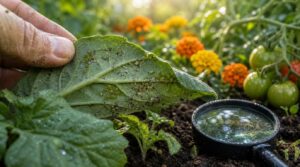
Most garden pests hide where you least expect them — right on the leaf underside. Flip leaves weekly and use a magnifying lens or bright light to catch aphids, mites, or eggs early.
Note moisture buildup as part of your Microclimate Assessment, and log each find by plant and date.
That simple Beneficial Activity Log becomes your best home garden IPM tool.
Spot Chewing and Holes
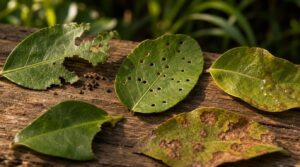
Caterpillar hole signs look ragged with frass nearby.
Beetle damage patterns show small, scattered punches across the surface.
Slug feeding marks leave smooth, translucent edges, often with a slime trail.
Rodent gnaw marks are clean and sharp.
Weather-induced lesions? Irregular and dry-edged, no pest involved.
Look for Sticky Honeydew
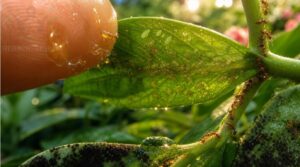
Run your fingers under a leaf — if they come away sticky, that’s your first honeydew indicator. Aphids, whiteflies, and scales leave this sugary residue as they drain plant sap.
Follow any ant trails as detection clues, since ants actively farm these pests. Sooty mold signs will appear next — black dusty patches that block light.
The sweet odor serves as a cue, and mapping the sticky residue helps you act before populations explode.
Separate Pests From Beneficials
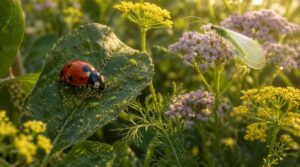
Not every bug is the enemy. Beneficial insects like lady beetles and lacewings are natural predators working in your favor.
Use visual cues and feeding patterns to tell them apart — pests cluster on tender growth and drain sap, while insect predators hunt those same pests.
Habitat preferences and life cycle indicators help, too. Beneficials thrive where flowering plants support healthy beneficial pest ratios.
Track Recurring Problem Areas

Some pests keep coming back to the same spots — and that’s actually useful information. Keep a simple garden journal to log pest type, location, plant affected, and date. Over time, you’ll spot patterns through seasonal trend analysis and edge zone monitoring.
A quick garden checklist doubles as a pest log template, giving you the hotspot mapping needed to stay ahead.
Use Integrated Pest Management
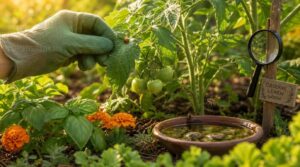
Integrated pest management isn’t about spraying everything in sight — it’s about working smarter. You treat the problem where it actually lives, and you stop it before it spreads.
Here’s how to put that into practice in your own garden.
Scout Before Treating Plants
Before you reach for any spray, take a lap around your garden first.
A quick weekly walk — think of it as your Scouting Calendar — helps you catch problems early and decide if action is even needed.
- Check leaf undersides using a magnifier to spot mites, scale, or eggs
- Note Infestation Thresholds — a few aphids rarely warrant treatment
- Use Symptom Reference Charts to confirm what you’re actually seeing
- Log findings on Field Data Sheets and Decision‑Tree Guides to choose targeted, organic pest management steps
Rotate Crops by Family
Once you’ve spotted a problem, scouting tells you where—but crop rotation helps stop it from coming back.
Family sequencing breaks pest life cycles by moving crops like nightshades, brassicas, and alliums to fresh beds each season.
This simple shift promotes soil health improvement, nutrient cycling, and disease breaks.
A two-to-three year gap between same-family crops gives you a real yield boost.
Remove Damaged Foliage Quickly
Rotation breaks pest cycles before they start — but damaged leaves left on the plant invite pests right back in. Act within 24–48 hours of spotting harm, as morning pruning timing keeps stress low and ensures clean cuts.
Here’s how to do it right:
- Use sharp bypass cuts at a 45° angle to prevent water pooling.
- Sanitize pruning tools with alcohol between each plant.
- Practice sealed leaf disposal — bag clippings immediately.
- Never leave trimmings on soil; garden cleanliness stops spore spread.
- Reassess within a week to confirm recovery.
Clean Up Garden Debris
Once damaged leaves are gone, don’t stop there — garden cleanliness is your next line of defense.
Scheduled leaf raking, shredded mulch creation from woody debris, and safe composting practices all cut down pest hideouts fast. Bag diseased material separately and keep a tool sanitation routine between sessions.
Good garden hygiene, done weekly, makes your beds a much harder place for pests to settle in.
Treat Only Affected Plants
Once your beds are tidy, avoid reaching for a spray bottle and drenching everything in sight. Instead, practice Precision Spotting by treating only plants showing real trouble. Watch for Damage Thresholds—act when harm is visible, not preemptively.
Label treated plants for Treatment Logkeeping, apply a Targeted Nutrient Boost to stressed areas, and deploy Custom Plant Shields where necessary.
Attract Beneficial Insect Predators
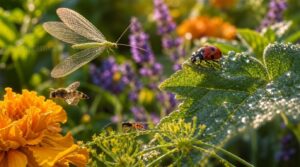
The best pest control doesn’t always come in a bottle — sometimes it shows up on wings.
Your garden can become a magnet for insects and other creatures that hunt pests naturally, and a few small changes make all the difference.
Here’s how to roll out the welcome mat for your garden’s most valuable allies.
Plant Dill and Yarrow
Two herbs pull serious weight in organic pest control: dill and yarrow. Both act as living magnets for beneficial insects, drawing hoverflies, lacewings, and lady beetles straight to your garden.
- Companion planting dill near vegetables attracts aphid-eating hoverflies
- Herb pairings with yarrow support clump division every 2–3 years for vigor
- Succession planting dill every few weeks extends your beneficial insect season
- Soil requirements are minimal — both thrive in well-drained, sunny spots
Plant them and watch natural pest control work quietly in the background.
Add Insect Hotels
Think of an insect hotel as a small apartment block for your garden’s best workers. Smart Material Selection matters — use bamboo canes and drilled wooden blocks with varied Cavity Sizes (3–9 mm) to welcome different species.
| Feature | Recommendation |
|---|---|
| Placement Height | 1.5–2 meters up |
| Moisture Management | Add a roof overhang |
| Seasonal Maintenance | Replace stems yearly |
Position it facing southeast for a truly pollinator-friendly garden.
Welcome Lady Beetles
Lady beetles are among the hardest-working beneficial insects you can attract to your garden. A single beetle may consume up to 5,000 aphids in its lifetime — that’s serious predation impact. Support multiple lady beetle species with these organic pest control habits:
A single lady beetle can devour up to 5,000 aphids in its lifetime, making it one of nature’s most powerful garden allies
- Plant dill, fennel, and yarrow for adult feeding
- Check leaf undersides weekly for beetle egg monitoring
- Build brush piles for winter refuge creation
- Skip broad-spectrum sprays to protect lady beetles
- Use companion planting for seasonal habitat structuring
Support Lacewings and Hoverflies
Lacewings and hoverflies are quiet workhorses in organic pest control — their larvae tear through aphids and scale insects before you even notice a problem.
Plant nectar-rich herbs, phacelia strips, and late-blooming asters to keep adults fed and laying eggs all season.
Sunny perching spots help too. Use companion planting strategically, and minimize pesticide drift so these beneficial insects stick around.
Provide Shallow Water Sources
Even the tiniest water source can turn your garden into a hub for beneficial insects and wildlife. A shallow birdbath or small pond does more than look pretty — it keeps predators coming back.
- Keep pond depth between 30–45 cm for ideal light penetration
- Use a sediment layer to support amphibian micro-habitat structures
- Apply edge planting strategies with native sedges for oxygenating water features
- Refresh birdbaths every 2–3 days for natural pest control year-round
Invite Wildlife That Eats Insects
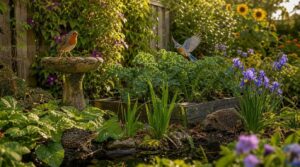
Birds, frogs, and other wildlife are some of the best pest controllers you’ll never have to pay for.
A few simple additions to your garden can turn it into a place they actually want to hang around. Here’s how to make that happen.
Add Clean Birdbaths
A birdbath is one of the easiest beneficial wildlife habitats you can add for natural pest control. Insect-eating birds need fresh water daily — so Bath Placement Tips matter. Set yours in partial shade, away from your bird feeder.
| Care Task | How Often |
|---|---|
| Water Rotation Schedule | Every 2–3 days |
| Non‑Toxic Cleaning | Weekly vinegar rinse |
| Seasonal Maintenance | Monthly crack checks |
A Predator‑Safe Design keeps visiting birds confident and your wildlife-friendly garden thriving.
Install Shaded Birdhouses
Fresh water draws birds in — now give them a place to nest. Install birdhouses 5 to 10 feet high with predator guards on the pole.
Shade and orientation matter: face entrances east or northeast for ideal placement. Good ventilation design prevents overheating.
Follow a simple maintenance schedule — clean once yearly after fledglings leave. These bird habitats turn your wildlife-friendly garden into a natural pest patrol.
Create Frog-friendly Damp Areas
Frogs are quiet allies in organic gardening — one frog eats slugs, mosquitoes, and beetles all season long.
To be frog-friendly, add a small pond with gentle pond slopes between 20 and 45 degrees. A shallow moist shelf around the edge gives them a resting spot.
Add emergent margin plants, submerged hiding structures like logs, and a gradual wet-dry crossing so frogs move freely between water and soil.
Avoid Broad-spectrum Sprays
That frog-friendly pond won’t do much good if you’re reaching for broad-spectrum sprays nearby. Targeted chemicals wipe out lady beetles, lacewings, and parasitic wasps right alongside pests — breaking the ecological balance you’ve worked to build. Resistance buildup follows fast too.
For smarter eco-friendly pest management, try these instead:
- Spot-treat only affected plants
- Switch to DIY garden spray recipes like neem or Castile soap
- Use natural pest repellents such as cayenne mist
- Practice application precision — spray evenings only
Grow Habitat-rich Borders
Skipping broad-spectrum sprays opens the door for something better — a border that works like a living ecosystem. Using Layered Plant Architecture, combine tall background shrubs, mid-height flowering perennials, and low ground covers to build depth. This approach creates structural shelter while fostering biodiversity.
A Native Perennial Mix with Seasonal Bloom Sequencing ensures continuous food availability for pollinators from spring through fall. The layered design mimics natural habitats, supporting both beneficial insects and wildlife.
| Border Layer | Purpose |
|---|---|
| Tall background shrubs | Shelter and Structural Elements |
| Mid-height flowering perennials | Pollinator-friendly plants, beneficial insect habitat |
| Low ground covers | Microclimate Berms, moisture retention |
| Herbs like dill and fennel | Natural predator insects, companion planting |
Incorporating herbs such as dill and fennel attracts natural predator insects, enhancing pest control through companion planting. This garden biodiversity strategy invites the whole crew, creating a resilient, self-sustaining ecosystem.
Plant Natural Insect Repellents
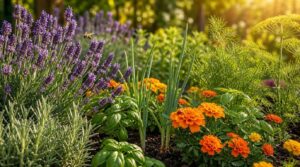
Some plants do double duty in the garden — they feed your table and repel insects you don’t want around. The secret lies in their scent, roots, or signals they send to deter hungry pests.
Here are a few worth planting strategically around your beds to harness these natural benefits.
Marigolds Around Vegetable Beds
Few plants pull double duty like marigolds. Plant French marigolds around your vegetable beds as part of your border design — they reach 6 to 12 inches tall and bloom until frost.
Their roots deliver real nematode suppression, protecting tomatoes and carrots below the soil. As they break down, they contribute to soil enrichment, too.
That’s companion planting and organic pest control working together beautifully.
Basil Beside Tomatoes
Tuck basil 12 to 18 inches from your tomato stems and let companion planting benefits do the heavy lifting. Its volatile oils act as a natural pest control spray, disrupting aphids, whiteflies, and hornworms through airflow optimization around your plants.
- Flavor enhancement: shared soil nutrient sharing deepens tomato taste
- Watering efficiency: mulch both crops together in one pass
- Harvest coordination: pick basil and tomatoes the same morning
Garlic Near Carrots
Garlic is one of the hardest-working companion herbs in your garden. Its aromatic pest confusion disrupts carrot fly tracking, and garden trials show it can cut root maggot damage by up to 40 percent.
To maximize these benefits, use an inter-row planting pattern—alternating garlic and carrot rows every 4 to 6 inches. This arrangement enhances natural insect barrier effectiveness.
Mulch helps retain the odor, prolonging the pest-repelling effects. Additionally, garlic’s sulfur microbial activity boost quietly improves soil health around your carrots, creating a healthier growing environment.
Onions as Scent Barriers
Onions pull double duty as both a crop and a living pest deterrent. Their sulfur-rich volatile compounds persist in the soil microclimate, masking nearby plants from carrot flies and aphids.
Space them 12–18 inches apart using a mixed border design alongside herbs for broader coverage.
Rotate onion varieties each season for rotational benefits, and time planting to align with pest peaks for maximum seasonal impact.
Nasturtiums as Trap Crops
Nasturtiums act as decoys of organic pest control, luring aphids, flea beetles, and cabbage white butterflies away from main crops. Their volatile compounds peak as leaves mature, intensifying their attraction. Space them 20–30 cm apart for dense scent coverage.
Practicing trap crop rotation each season and implementing companion planting between vulnerable beds boosts plant diversity and attracts beneficial insects naturally.
Block Insects With Barriers
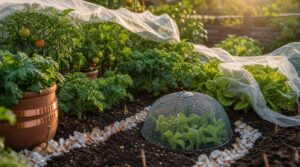
Sometimes the best defense is a literal one.
Putting a physical barrier between your plants and hungry insects is one of the most reliable tricks in the garden. Here are some simple options worth trying.
Floating Row Covers
Floating row covers are one of the simplest physical barriers you can add to your garden. These lightweight spun-bonded polypropylene fabrics block aphids, cabbage moths, and flea beetles without chemicals.
Different material pore sizes affect heat retention and light penetration, so choose accordingly.
They’re easy to lift for harvest — just remember cover maintenance and removing them during flowering so pollinators can do their job.
Micromesh Garden Tunnels
Micromesh tunnels take things a step further than row covers. Made from UV-stabilized polyethylene with galvanized steel hoops, their 0.6mm mesh delivers serious mesh durability — blocking aphids, flea beetles, and cabbage moths while still allowing rain and airflow through.
Ventilation control is easy with adjustable drawstring ends. The accordion fold simplifies tunnel storage between seasons, making seasonal setup quick and non-chemical pest control genuinely easy.
Secure Cover Edges Tightly
A good cover is only as strong as its seal. Edge stapling every 12 inches anchors fabric flap seals against wind lift, while Velcro overlaps prevent gaps at seams. Tensioning cords keep floating row covers taut across the frame, and magnetic fasteners lock corners down cleanly.
These physical barriers represent your best non-chemical pest control — ensuring no gaps mean no entry.
Remove Covers During Flowering
Once your covers are locked down tight, don’t forget to lift them when flowers open. Cucurbits like squash and cucumbers have just a 24-hour window for pollination — and pollinators can’t do their job through fabric.
- Cover removal timing: lift before the first flowers open
- Pollinator access improves fruit set dramatically
- Re-apply covers once flowering ends
Gradual lifting also helps with airflow management and sunlight exposure.
Copper Tape for Slugs
Slugs won’t cross copper tape — their slime reacts with the metal, sending them away.
For pots, 20–30mm width works well; raised beds require 30–50mm for reliable protection.
Clean, dry surfaces are essential for proper adhesion. Ensure a solid edge overlap to prevent gaps.
Copper tape offers weatherproof longevity across seasons on non-porous surfaces, providing a solid, non-chemical pest control solution.
Make Homemade Insect Sprays
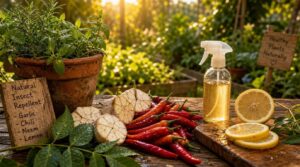
You don’t need a cabinet full of chemicals to keep pests off your plants. A few simple ingredients from your kitchen or garden shed can do the job just as well.
Here are some easy sprays you can mix up at home.
Cayenne Pepper Foliage Spray
Cayenne pepper makes a surprisingly effective homemade pest spray. Mix 3 teaspoons into a quart of water, add a drop of liquid soap for leaf adhesion, then use a straining technique to remove solids before bottling.
The capsaicin concentration deters aphids, beetles, and caterpillars on contact. It’s nonchemical pest control that’s gentle on non-target insects.
Reapply every few days after rain to maintain effectiveness.
Castile Soap Insect Spray
Castile soap makes one of the most reliable DIY bug sprays you can mix at home. Combine 1 tablespoon of liquid Castile soap per quart of water—pH levels matter here, so use soft or distilled water for better coverage.
This eco-friendly pest control targets aphids, mites, and whiteflies on contact.
Follow basic safety guidelines: spray evenings, cover leaf undersides, and rinse harvests for residue removal.
Neem Oil Solution
Organic neem oil is one of the most effective natural insecticides you can make at home. Mix 1 to 2 tablespoons of organic neem oil per gallon of warm water with a few drops of mild soap for emulsion stability.
Always wear protective gear when spraying, and watch for phytotoxicity indicators like leaf curling.
Start using neem oil early—it targets a wide target pest spectrum, including aphids, whiteflies, and mites.
Essential Oil Garden Mist
Essential oils make a surprisingly effective garden mist. Blend composition matters here — combine citronella, peppermint, eucalyptus, and lavender oils with a drop of mild soap per quart of water. This mix targets a wide pest spectrum, from flies to soft-bodied insects.
Always do phytotoxicity testing on one leaf first to ensure plant safety.
Use opaque bottles for storage practices that preserve potency longest.
Spray Mornings or Evenings
Timing is everything with natural sprays. Mornings offer Morning Wind Calm and Dew-Assisted Adhesion, keeping droplets right where you aimed them. Evenings tap into Evening Pest Activity, catching feeders in the open. Both windows give you a Pollinator Safety Window before bees get busy.
- Cooler temps slow Temperature-Driven Drying, extending contact time
- DIY garden remedies and Organic sprays stick better on cool leaves
- Use Vinegar Spray or Soap Spray Solution at dawn or dusk
- Avoid midday — heat kills efficacy fast
Control Specific Garden Insects Naturally
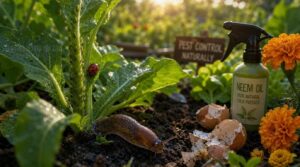
Different pests need different fixes — what works on aphids won’t stop slugs.
Once you know what you’re dealing with, the right approach becomes pretty straightforward. Here are natural ways to handle the most common troublemakers in your garden.
Aphids on Vegetables
Aphids multiply fast — a small cluster on your tomatoes can explode into hundreds within days. They curl leaves, spread virus transmission between plants, and leave behind sticky honeydew cleanup headaches. Temperature influence matters: warm spells speed their life cycle dramatically.
| Problem | Natural Fix |
|---|---|
| Heavy colonies | Spray liquid dish soap solution |
| Recurring aphids | Release ladybugs or lacewings |
| Spreading infestation | Apply Organic Neem Oil weekly |
Choose resistant varieties when possible.
Cabbage Worms and Loopers
Cabbage worms and loopers are sneakier than aphids — you often don’t notice them until leaves look like Swiss cheese.
Caterpillar identification is simple: loopers arch and loop when they move, while imported cabbageworms crawl straight.
Check leaf undersides weekly for egg detection.
Bt application — Bacillus thuringiensis spray — kills them naturally on contact.
Seasonal peaks hit late summer, so stay watchful.
Flea Beetles on Seedlings
Flea beetles are sneaky — those tiny shot holes appearing overnight on your seedlings are their calling card.
Early planting before peak beetle season helps, and soil mulch around seedbeds discourages egg-laying. Try companion planting with marigolds nearby, or dust food-grade diatomaceous earth around plant bases.
Seed bed sanitation removes their hiding spots, while floating row covers remain your strongest natural insecticide.
Squash Vine Borers
Squash vine borers are sneakier than flea beetles—by the time you notice wilting vines, larvae are already tunneling inside the stem. Life cycle timing is crucial here: adults lay eggs in early summer, so weekly stem inspections catch them before they burrow.
To combat infestations, prioritize preventive strategies:
- Use floating row covers as your first line of organic pest control.
- Plant resistant varieties like butternut squash, which borers prefer less.
- Rotate cucurbits annually—soil-overwintering pupae can’t complete their cycle without a host.
- Implement IPM principles: remove infested vines immediately to break the cycle.
Slugs and Snails
Unlike borers, slugs and snails work the night shift — rasping soft leaves and stems while you sleep. They’re moisture indicators: lots of them signals excess dampness or mulch buildup. Try these natural slug traps first.
| Method | How It Works | Best Use |
|---|---|---|
| Beer traps | Attracts and drowns slugs | Raised beds |
| Copper tape | Electrochemical barrier | Container edges |
| Sluggo | Iron phosphate pellets | Open garden beds |
Scatter food-grade diatomaceous earth around seedlings for extra backup.
Top 7 Natural Pest Products
Having the right tools makes natural pest control a whole lot easier.
These seven products cover the most common garden problems — from soft-bodied insects to slugs to flying pests — without reaching for harsh chemicals. Here is what’s worth keeping on hand.
1. Dr Bronner Baby Castile Soap
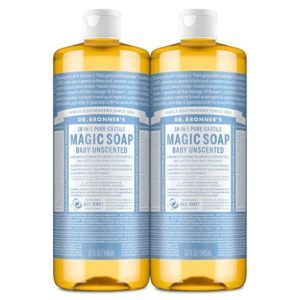
Dr. Bronner’s Baby Castile Soap pulls double duty in the garden. Mix 2 teaspoons into a quart of warm water, and you’ve got a contact spray that suffocates aphids, spider mites, and whiteflies on the spot.
The unscented, plant-based formula won’t leave harsh residues on your vegetables or harm beneficial insects when you rinse thoroughly.
It’s over 70% organic oils — gentle enough for baby skin, tough enough for pest control. One bottle stretches a long way.
| Best For | Parents, pet owners, and anyone with sensitive skin who wants one simple, clean product that handles everything from baby baths to household chores. |
|---|---|
| Primary Use | Multi-purpose cleaner |
| Organic Certified | Plant-based, biodegradable |
| Price (USD) | $34.34 |
| Pet Safe | Yes, when diluted |
| Indoor Use | Yes |
| Reusable | Yes, concentrated |
| Additional Features |
|
- Incredibly versatile — one bottle works as body wash, shampoo, dish soap, pet shampoo, and more
- Over 70% certified organic, fair-trade oils make it genuinely gentle and eco-friendly
- Super concentrated, so a single bottle lasts months and saves money in the long run
- Using it straight (undiluted) can dry out your skin — you have to remember to dilute it
- The thin, watery consistency makes it easy to accidentally squeeze out way more than you need
- Not the best choice for cutting through heavy grease or baked-on food compared to a dedicated dish soap
2. Food Grade Diatomaceous Earth Powder
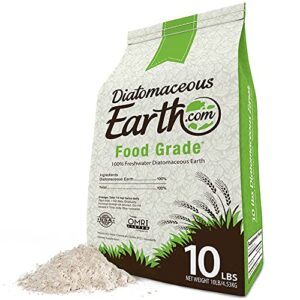
Pure freshwater DE — this 10 lb bag of OMRI-listed food-grade diatomaceous earth contains no fillers or chemicals, just fossilized diatoms.
Dust it dry around plant bases to physically damage crawling insects’ outer layers, causing dehydration.
It’s safe for use near children, pets, and wildlife, though wear a mask during application to avoid lung irritation from the fine powder.
| Best For | Home gardeners, organic farmers, and pet owners who want a chemical-free way to manage pests and improve soil health. |
|---|---|
| Primary Use | Pest control & soil |
| Organic Certified | OMRI listed |
| Price (USD) | $38.99 |
| Pet Safe | Yes, non-toxic |
| Indoor Use | Yes |
| Reusable | Yes, bulk supply |
| Additional Features |
|
- OMRI-listed and 100% natural — no fillers, no chemicals, nothing sketchy
- Pulls double duty as a pest killer and a soil amendment, so you’re getting real value out of one bag
- Safe around kids, pets, and wildlife when used as directed
- Fine dust can irritate your lungs, so you’ll need a mask every time you apply it
- Health claims around internal use aren’t clinically proven — talk to a doctor before going that route
- It takes time and consistent coverage to work, and cleanup can get messy
3. Chapin Foaming Multi Purpose Sprayer
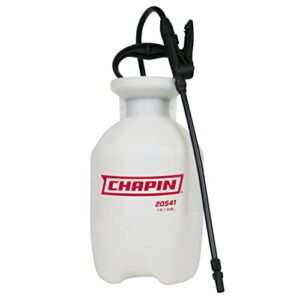
Getting your spray mixture on the plant — not dripping off it makes all the difference. The Chapin Foaming Multi Purpose Sprayer (Model 20541) addresses this challenge directly. Its foaming nozzle clings solution to foliage longer, ensuring homemade remedies like castile soap or neem mixtures remain effective.
The sprayer’s 1-gallon translucent tank allows easy monitoring of remaining liquid, while the 34-inch hose provides extended reach into garden beds, eliminating awkward bending.
Priced at $20.99, this tool offers practical value by maximizing the efficiency of every homemade spray, making it a cost-effective addition to any gardener’s arsenal.
| Best For | Home gardeners who want to stretch their spray solutions further and get foam-based coverage on weeds, pests, or plants without spending a lot. |
|---|---|
| Primary Use | Chemical spraying |
| Organic Certified | Not applicable |
| Price (USD) | $20.99 |
| Pet Safe | Depends on chemical |
| Indoor Use | Yes |
| Reusable | Yes, multi-season |
| Additional Features |
|
- The foaming nozzle clings solution to leaves instead of running off, so you use less product and get better coverage.
- The see-through tank makes it easy to know exactly how much liquid you have left — no guessing mid-job.
- At $20.99, it’s a genuinely affordable tool that punches above its price for everyday yard and garden tasks.
- The foaming nozzle doesn’t play nicely with every cleaner, so you may end up swapping back to the standard nozzle more than you’d like.
- Plastic parts wear down faster than metal, and there’s no pressure release valve — you have to fully depressurize before opening, which is a bit of a hassle.
- Some buyers have received units with missing parts, and the metal components can corrode if you don’t rinse everything out thoroughly after use.
4. Plantonix Pure Neem Oil
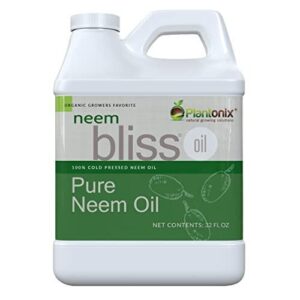
Neem oil is one of those quiet workhorses in the organic garden toolkit. Plantonix Neem Bliss is cold-pressed and 100% pure — no fillers, no synthetic additives.
Mix about 1.5 teaspoons per quart of water with a small drop of dish soap to create a spray that targets over 200 pest species, including aphids and spider mites. Apply in the early morning or evening, ensuring thorough coverage of leaf undersides, and reapply every two to four weeks.
At $33.99, it earns its keep as a reliable, organic solution.
| Best For | Home gardeners and plant lovers who want a natural, chemical-free way to keep pests off their indoor and outdoor plants. |
|---|---|
| Primary Use | Organic pesticide |
| Organic Certified | 100% pure, no additives |
| Price (USD) | $33.99 |
| Pet Safe | Yes, when diluted |
| Indoor Use | Yes |
| Reusable | Yes, per bottle |
| Additional Features |
|
- 100% pure, cold-pressed neem oil — no fillers or synthetics, so you know exactly what you’re getting.
- Versatile enough for plants and skin care, making it a solid multi-purpose buy.
- Works against a wide range of common garden pests like aphids and spider mites.
- The smell is strong and can hang around for hours — not ideal if you’re spraying indoors.
- It solidifies in cooler temps, so you’ll need to warm it up before use, which adds a step.
- The bottle has no pour control, so spills are pretty easy to make and the sides get messy.
5. Monterey Sluggo Organic Slug Killer
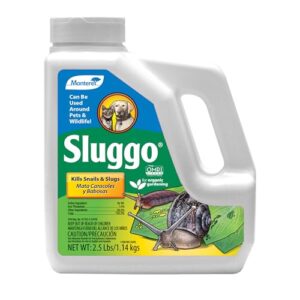
Slugs can wreck a seedling overnight — and Monterey Sluggo is one of the best natural tools for stopping them. Its active ingredient, iron phosphate, poisons slugs and snails after they eat the granules, while staying safe around pets, birds, and soil organisms. It’s OMRI listed for organic gardens, too.
Scatter the pellets around beds in the evening, when slugs are most active. One 2.8 lb bag covers a solid stretch of garden, and it holds up after light rain.
| Best For | Gardeners in wet climates or anyone dealing with heavy slug pressure who want an effective, pet-safe solution they can use around edible plants and wildlife. |
|---|---|
| Primary Use | Slug & snail control |
| Organic Certified | OMRI listed |
| Price (USD) | Not listed |
| Pet Safe | Yes |
| Indoor Use | No |
| Reusable | No, consumable |
| Additional Features |
|
- Iron phosphate formula is safe around dogs, birds, and soil — you don’t have to worry about collateral damage.
- OMRI listed, so it fits right into an organic gardening routine.
- Holds up after light rain, which matters a lot if you’re gardening somewhere slugs thrive.
- Birds and mice may eat the bait before slugs do, meaning you’ll go through it faster than expected.
- Heavy rain washes it out — you’ll need to reapply on a regular schedule, not just once and done.
- The "organic" label can be a bit misleading; it’s OMRI listed but not USDA certified organic, and large amounts can still be harmful if ingested.
6. Haxnicks Micromesh Garden Tunnel Cloche
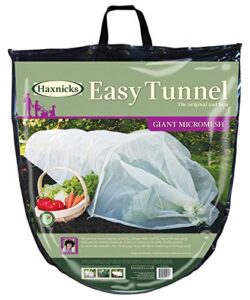
The Haxnicks Micromesh Garden Tunnel Cloche acts as a protective barrier for vegetable rows. Its 0.6 mm ultrafine mesh effectively blocks pests like carrot flies, aphids, flea beetles, and rabbits while allowing water and airflow to pass through uninterrupted.
The accordion-style tunnel ensures quick setup and folds flat for convenient storage.
Measuring 118 inches long with galvanized steel hoops, the structure is built to withstand wind and support repeated seasonal use.
Remember to open it during flowering to enable pollination by beneficial insects.
| Best For | Home gardeners and allotment growers who want an easy, lightweight way to protect low-growing crops like lettuce, spinach, and kale from insects, birds, and rabbits across multiple seasons. |
|---|---|
| Primary Use | Crop protection tunnel |
| Organic Certified | Compatible with organic |
| Price (USD) | $43.98 |
| Pet Safe | Yes |
| Indoor Use | Limited |
| Reusable | Yes, foldable |
| Additional Features |
|
- The accordion-style design sets up in seconds and folds flat, so storing and moving it between beds is a breeze.
- Ultrafine micromesh keeps out a wide range of pests while still letting rain and airflow through — no need to lift it every time you water.
- Galvanized steel hoops resist rust and can be adjusted to fit different soil types, making it a solid pick for raised beds and open plots alike.
- At just 18 inches tall, it’s too short for brassicas like broccoli or Brussels sprouts, which can push against the mesh and leave gaps for pests.
- The mesh has a reputation for tearing with heavy use, and some buyers have received a green or yellow color instead of the expected white.
- The lightweight build can catch wind easily, so you’ll likely need extra pegs or anchoring in exposed garden spots.
7. Alpurple Garden Bug Netting

While the Haxnicks works great for rows, the Alpurple Garden Bug Netting is ideal for protecting individual plants or small trees. Each drawstring net measures roughly 3.2 by 4.9 feet — simply slip it over a tomato plant, fruit tree, or berry shrub and cinch it closed.
The fine PE mesh effectively blocks insects and birds while allowing light and airflow. Reusable season after season, this netting offers a simple, chemical-free solution to safeguard your plants.
| Best For | Gardeners who need quick, flexible protection for individual plants, fruit trees, or berry shrubs without a lot of setup. |
|---|---|
| Primary Use | Garden pest barrier |
| Organic Certified | Compatible with organic |
| Price (USD) | Not listed |
| Pet Safe | Yes |
| Indoor Use | Yes |
| Reusable | Yes, multi-season |
| Additional Features |
|
- Covers a big area (200 sq ft) and can be cut to fit whatever you’re working with
- Lets light, air, and rain through while keeping birds, bugs, and small animals out
- Reusable season after season, so it pays for itself over time
- Edges can fray if you’re not careful during installation or cutting
- Needs stakes or a frame to stay taut — without support, pests can sneak underneath
- At 20 × 10 ft, it’s probably overkill for a small garden bed and you’ll have leftover material to deal with
Frequently Asked Questions (FAQs)
How to get rid of garden insects naturally?
Think of your garden as a neighborhood — when the balance tips, troublemakers move in.
Luckily, nature hands you the tools: beneficial insects, smart planting, and simple barriers keep most pests in check.
What is the best natural pest control for gardens?
The best natural pest control combines several approaches: beneficial insects, companion planting, physical barriers, and homemade sprays. No single method works alone —
Layering these strategies gives you lasting, chemical-free control all season.
How to keep bugs out of a garden organically?
Keeping bugs out organically starts with layering your defenses.
Use row covers, companion plants, and weekly scouting together.
No single fix works alone — but the right combination keeps most pests at bay.
What is the best natural pesticide for vegetable gardens?
Neem oil is your best all-around choice. It disrupts pest feeding and growth at 5–5% emulsions. Castile soap spray and diatomaceous earth work great too, depending on the pest.
What can you put on garden plants to keep bugs away?
Spray diluted neem oil, castile soap, or cayenne pepper water on plant leaves.
Garlic mist and essential oil blends also work well to keep most common bugs from feeding.
Do coffee grounds repel bugs?
Yes, coffee grounds repel bugs. Sprinkle used grounds around plants to deter slugs, ants, and crawling insects.
The texture and caffeine-based compounds create a barrier most pests prefer to avoid.
What home remedy kills bugs in a vegetable garden?
A simple mix of 2 teaspoons liquid soap per quart of warm water kills aphids, mites, and whiteflies on contact. Cayenne pepper spray and neem oil solution work well too.
What’s the best thing to keep bugs out of your garden?
No single fix works for every garden, but combining physical barriers like floating row covers with companion planting gives you the strongest, most reliable defense against common pests year-round.
How do I stop bugs from eating my vegetables?
Use row covers to block pests physically, and plant marigolds or basil as natural repellents.
Scout weekly for early signs of infestation to address issues promptly.
Spray neem oil or insecticidal soap only when necessary, minimizing chemical use.
Will vinegar keep bugs off garden plants?
Vinegar works like a miracle cure in gardening folklore, but the truth is more modest.
It can deter ants and aphids on contact — dilute it first, or you’ll scorch your leaves.
Conclusion
Nature finds a way—but only when you give it room to work. Controlling garden insects naturally means stepping back from the spray bottle and letting your garden’s own defenses do the heavy lifting.
Every beneficial beetle you shelter, every marigold you plant, every row cover you secure adds another layer of protection. Build these habits, one season at a time, and your garden won’t just survive pest pressure—it’ll barely notice it.
- https://www.sugarmaplefarmhouse.com/companion-planting-flowers-herbs-that-help-repel-bugs/
- https://chelseagardencenter.com/blogs/education/beneficial-insects-nature-s-pest-control-for-a-healthier-garden?srsltid=AfmBOorv6gEGo21PYwI3_Gwfjft75hJrKwR7mzHXw7t5uqT4Bzyvsta1
- https://extension.psu.edu/programs/master-gardener/counties/york/native-plants/fact-sheets/beneficial-insects-in-the-garden
- https://www.almanac.com/companion-planting-guide-vegetables
- https://www.canr.msu.edu/news/understanding-companion-trap-and-cover-crops-a-guide-for-home-gardeners