This site is supported by our readers. We may earn a commission, at no cost to you, if you purchase through links.
Most gardeners treat pest control as a separate task—something you handle after the damage is done.
Basil thinks differently.
Its volatile oils, compounds like linalool and eugenol, don’t just flavor your pasta; they actively scramble the sensory signals that hornworms, aphids, and whiteflies rely on to find their next meal.
Plant it 12–18 inches from your tomatoes, and you’ve built a scented barrier that works around the clock without a single spray.
The right neighbors boost that effect even further—aromatic herbs, trap crops, and pollinator‑friendly flowers each play a distinct role in keeping your garden’s pest pressure low and your soil biology thriving.
Table Of Contents
Key Takeaways
- Basil’s volatile oils—linalool and eugenol—actively disrupt how pests like aphids, hornworms, and whiteflies locate plants, so planting it 12–18 inches from tomatoes creates a passive, spray-free scent barrier.
- Pairing basil with borage, marigolds, and nasturtiums stacks underground and above‑ground defenses, from nematode suppression to aphid trapping, giving you layered pest control without chemical inputs.
- Sage, lavender, thyme, and fennel are poor basil neighbors because their soil and water needs conflict directly with basil’s, and fennel releases compounds that actively stunt basil’s growth.
- Consistent pruning every one to two weeks, proper 12-inch plant spacing, and drip irrigation work together to keep basil’s oils potent and fungal disease pressure low all season.
Best Basil Companions for Pest Control
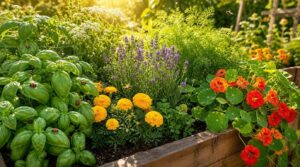
Basil doesn’t just taste good — it pulls its weight in the garden by keeping pests off your other plants. The right companions can double that protection, pairing basil’s natural oils with their own defenses. Here are the best plants to grow alongside basil when pest control is your priority.
Pairing these strategically is easier with a solid garden planning guide for companion planting that maps out which combinations give you the strongest natural pest defense.
Tomatoes for Hornworm Deterrence
Tomatoes and basil are a classic pair, and for good reason. Basil’s aromatic oils act as a scented barrier, confusing hornworms before they reach your tomato plants.
Plant basil within 12–18 inches of tomato stems as a living border method for the strongest effect. Regular pruning keeps the fragrance steady all season long.
In addition, regularly handpicking larvae can further protect your tomatoes.
Peppers and Eggplants
Peppers and eggplants are natural teammates for basil. All three share full-sun, evenly moist soil, making them easy to manage together. Basil’s volatile oils repel aphids, thrips, spider mites, and whiteflies — common threats to both crops.
- Peppers start fruiting 60–90 days after transplanting, aligning well with basil’s harvest window
- Eggplants absorb fewer flea beetles when basil grows nearby
- Pest deterrence works passively — no sprays needed
Asparagus Beetle Protection
Asparagus pairs just as well with basil as peppers do. Basil’s volatile oils work as a natural beetle control, masking plant scents that draw asparagus beetles in. These beetles — small, 6–9 mm adults — lay eggs on spears and ferns, and their larvae skeletonize foliage fast.nn| Benefit | How It Works |n|—|—|n| Basil beetle deterrent | Aromatic oils confuse and repel adult beetles |n| Companion plant benefits | Basil masks asparagus scent during spear emergence |n| Pest deterrence | Reduces egg-laying opportunities on new shoots |n| Beneficial insects | Basil blooms attract parasitic wasps that target beetle eggs |nnPlant basil on the side of your asparagus bed where beetles usually enter. Monitoring beetle activity early in spring — when adults first emerge — helps you catch infestations before larvae cause serious damage. Combined with debris removal after harvest, companion planting gives you a strong, low-effort first line of defense.
Carrots and Fly Masking
Basil pulls double duty in the carrot patch. Its aromatic oils mask carrot root scent, making it harder for carrot flies to locate host plants for egg-laying.
Plant basil along the bed’s border for consistent scent coverage. Pair it with onion interplanting to stack scent-masking layers — a simple, low-cost strategy that works well under moderate fly pressure.
Borage for Stronger Basil
Borage is one of the most underrated basil companion plants you can grow. Its deep taproots pull up calcium and potassium from lower soil layers, making those minerals available to your basil’s shallower roots — a process called nutrient mobilization. The result is stronger growth and more concentrated essential oils in your leaves.
Borage draws up calcium and potassium from deep soil, giving basil stronger growth and richer essential oils
Beyond soil benefits, borage’s bright blue flowers attract bees and parasitic wasps, giving you built-in pollinator attraction and natural pest deterrence without extra effort.
Aromatic Herbs That Protect Basil
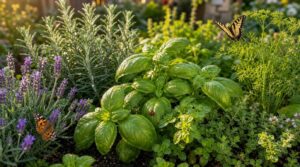
Aromatic herbs do more than add flavor to your kitchen—they’re quiet defenders working alongside your basil in the garden. Their strong scents confuse and repel the insects that would otherwise make a meal of your plants. Here are the herbs worth planting close by.
Beyond repelling pests, these same aromatic allies can help you tackle homemade solutions for common garden diseases before they take hold.
Chives Repel Soft-bodied Pests
Chives act as a sulfur compound barrier around your basil. Their allicin‑rich scent creates an aphid deterrence zone roughly 2–3 feet wide, lowering settlement rates on nearby stems.
The same volatiles deliver a mite repellent effect, reduce thrips feeding, and cause leaf miner confusion—all without harming beneficial insects. Space clumps 12–18 inches apart for overlapping coverage.
Oregano as Fragrant Groundcover
Oregano does double duty as both an aromatic herb pest repellent and a low-growing herb mat that fills bare soil between basil plants. Its essential oils — carvacrol and thymol — release on contact, creating a fragrant barrier that repels aphids and spider mites from nearby foliage.
Once established, this drought-tolerant mat needs watering only every one to two weeks, making it a practical, low-maintenance basil companion.
Garlic for Whitefly Control
Garlic is one of the most practical whitefly deterrents you can plant alongside basil. Its volatile sulfur compounds disrupt whitefly feeding and cause them to settle less on nearby leaves.
For extra punch, try a garlic-chili infusion — crushed garlic mixed with hot peppers and water — sprayed every seven to ten days directly onto leaf undersides where whiteflies congregate.
Parsley and Moisture Compatibility
Parsley fits naturally alongside basil because both plants share the same preference for evenly moist, well-drained soil. Keep the soil consistently damp, about an inch below the surface, and both herbs stay productive.
Adding mulch around parsley stabilizes moisture and reduces temperature swings that stress nearby basil roots. That shared rhythm makes them reliable garden partners without complicated watering adjustments.
Cilantro Supports Root Vigor
Few gardeners realize that cilantro quietly does some of its best work underground. Its dense fine root system increases soil contact, helping basil access water and minerals more efficiently.
Beneficial rhizosphere bacteria—microbes living near cilantro roots—also break down organic matter, releasing nitrogen that feeds both plants and strengthens overall soil health without extra fertilizer.
Flower Companions for Beneficial Insects
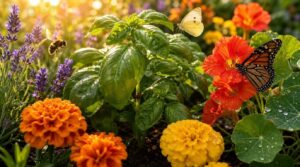
Flowers do more than look good in your garden — the right ones act as a support system for basil by drawing in insects that fight pests on your behalf. Think of them as quiet allies working in the background while you tend to other things. Here are the best flowering companions to plant alongside your basil.
Marigolds Suppress Nematodes
Marigolds earn their place as basil companion plants through a powerful underground defense. Their roots release nematicidal root exudates — natural compounds that disrupt root-knot nematodes (soil parasites that damage plant roots).
French marigolds tend to outperform African varieties for this purpose.
Time your cover crop timing to overlap active nematode periods, then till the biomass in to extend suppression.
Nasturtiums Trap Aphids
While marigolds work underground, nasturtiums fight aphids above the soil. As a classic aphid trap plant, nasturtium draws aphids toward itself and away from your basil.
Aphids prefer its tender leaves and high-sap stems. Place nasturtiums at bed edges, 12–18 inches apart, to intercept pests early.
Check them regularly — heavy colonies signal it’s time to remove infested stems.
Chamomile Attracts Hoverflies
Chamomile takes a different approach — instead of repelling pests, it pulls beneficial insects in. Planted along garden borders, its small white blooms provide a steady chamomile nectar source from late spring through late summer, matching peak hoverfly activity.
Hoverfly larvae then prey on aphids near your basil, turning a simple companion plant into a quiet but effective pest control ally.
Basil Blooms Feed Pollinators
While chamomile draws hoverflies in, basil itself pulls double duty once you let it flower. Basil bloom timing aligns with peak summer pollinator activity, giving bees and butterflies a reliable nectar stop.
- Honeybees and bumblebees visit tubular basil blossoms for nectar and pollen
- Monarchs and swallowtails use basil as a mid-season nectar source
- Flowering basil boosts fruit set in nearby tomatoes and peppers
Flowers for Garden Biodiversity
A thriving garden isn’t just about one star plant — it’s the whole cast working together.
Pairing basil with a native flower mix of cosmos and zinnias extends pollinator visits all season. Use continuous blooming plants like coneflower and coreopsis to bridge gaps.
Add fragrant groundcovers such as oregano for habitat connectivity and steady pest deterrence without extra effort.
Plants to Avoid Near Basil
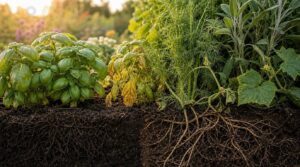
Not every plant makes a good neighbor for basil. Some will quietly compete for water, crowd out its roots, or even release compounds that stunt its growth. Here are the plants you’ll want to keep at a distance.
Sage Prefers Dry Soil
Sage and basil might look like natural neighbors, but their soil needs pull in opposite directions. Sage demands well-drained loamy soil that dries out between waterings — the kind of conditions that would stress basil fast.
Here’s what sage actually needs to stay healthy:
- Sandy or loamy texture to shed excess water quickly
- Deep, infrequent watering only when the top 2 inches of soil feel dry
- Gravel or inorganic mulch as a Sage Mulch Technique to keep surface roots dry
- pH between 6.5 and 7.5 for steady nutrient uptake
- Loose, crumbly structure to support Sage Root Health and prevent crown rot
Basil needs consistent moisture to thrive, so planting these two together forces a compromise — and one of them always loses. Skip this pairing and give each herb the conditions it actually deserves.
Lavender Needs Less Water
Lavender is another poor match for basil. It’s built for drought — mature plants need deep watering only every two to three weeks, and they actually prefer soil that dries out completely between sessions. Basil demands steady moisture.
Plant them together, and you’re managing two opposite watering schedules. One herb will always pay the price.
Fennel Suppresses Basil Growth
Fennel is one of the worst neighbors basil can have. It releases allelopathic compounds into the soil that suppress basil seed germination, slow leaf expansion, and reduce overall plant vigor. These chemical effects can linger for weeks.
Keep fennel at least several feet away — or better yet, give it its own separate bed entirely.
Thyme Likes Sandy Conditions
Thyme and basil look like natural neighbors, but their soil needs pull in opposite directions. Thyme demands sandy soil drainage and thyme root aeration to stay healthy — conditions that would leave basil starved and stressed. Planting them together forces a compromise neither plant wins.
Here’s why the pairing fails:
- Watering frequency clashes — thyme needs deep, infrequent watering; basil needs consistent moisture.
- Essential oil intensity in thyme depends on lean, dry soil that would stunt basil growth.
- Mulch surface balance that suits basil can trap too much moisture around thyme roots.
Keep them in separate beds.
Cucumbers Compete Heavily
Cucumbers might seem harmless, but they’re one of the worst neighbors for basil. Their shallow, spreading roots compete directly with basil for surface moisture and nutrients.
Add a dense canopy that blocks sunlight, and basil struggles fast.
If you must grow both, use a trellis and keep at least 18 inches between them.
Basil Companion Planting Tips
Getting the most from companion planting comes down to a few practical habits you can build into your routine. Choosing the right neighbors is only half the job — how you manage the growing conditions matters just as much. These tips will help you set your basil up for success from the ground up.
Full Sun Placement
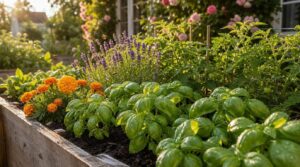
Basil and its companions need at least six hours of direct sun daily to thrive. A south-facing bed works best in temperate climates. Position plants where they catch morning sun, then get light afternoon shade during peak heat to prevent leaf scorch.
Space plants 8 to 12 inches apart to increase airflow and light penetration across the whole bed.
Even Moisture Management
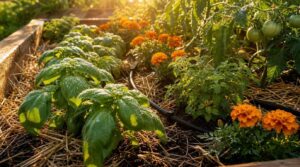
Once sun placement is sorted, water becomes your next lever. Drip irrigation delivers moisture straight to the root zone, cutting surface evaporation and keeping soil consistently damp — exactly what basil and most companion plants need.
Pair that with morning watering, so leaves dry fast and fungal risk drops. A layer of organic mulch locks that moisture in between sessions.
Well-drained Fertile Soil

Good moisture management only works if your soil can handle it. Well-drained loamy soil lets excess water pass through within 24 hours, protecting basil roots from rot.
Aim for 3–5% organic matter — compost or aged manure works well — to hold nutrients steadily.
Keep soil pH between 6.0 and 6.8 so basil and its companions absorb everything they need.
Airflow Prevents Fungal Disease

Even the best-draining soil won’t save basil if the air around it stays damp.
Space plants 12 inches apart to keep air moving through the canopy. That airflow dries leaf surfaces within an hour after rain, cutting the window that fungal spores need to take hold.
A gentle oscillating fan works well for indoor plants.
Organic Pest Control Backup
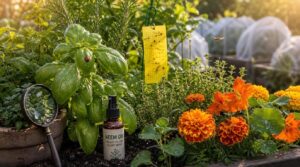
Even the most thoughtful companion planting setup can fail when pest pressure spikes. That’s why having an organic backup plan matters.
Scout basil weekly and set a simple scouting action threshold — say, five aphids per plant — before acting.
Use sticky trap placement to catch whiteflies early, row covers for caterpillars, and neem oil spray as a last, targeted step.
Frequently Asked Questions (FAQs)
How often should basil be pruned for pest control?
A stitch in time saves nine." Prune basil every 1–2 weeks during warm months, cutting just above a leaf node. For containers, aim for every 7–10 days to stay ahead of bolting and pests.
Can basil deter pests in container gardens effectively?
Yes, basil deters pests effectively in container gardens. Its essential oil barrier masks nearby crop scents, and container density amplifies that effect — keeping aphids, whiteflies, and carrot flies at bay naturally.
Which basil varieties release the strongest repellent oils?
Sweet basil oil leads in eugenol and linalool content, making it highly effective against flies and mosquitoes. Holy basil and lemon basil aroma also deliver strong, broad-spectrum natural insect repellent properties.
Does basil companion planting work in raised beds?
Basil companion planting works well in raised beds. 12-inch spacing between basil and tomatoes reduces hornworm damage. Borage improves leaf quality, while oregano suppresses weeds. Even moisture keeps all companions thriving together.
How far apart should basil and companions be planted?
Keep 12 to 18 inches between basil and most companions. Tighter gaps cut airflow and invite fungal issues. That clearance lets volatile oils spread effectively while giving roots room to breathe.
Conclusion
It’s no coincidence that the healthiest gardens tend to smell the most alive—a blend of basil, marigold, and garlic working quietly in every direction. That’s not luck; it’s biology doing exactly what you set up.
Using basil as a companion plant pest deterrent means you’re not reacting to problems—you’re preventing them before they start. Place the right neighbors together, manage moisture and airflow, and your garden takes care of most of the hard work itself.
- https://www.sugarmaplefarmhouse.com/companion-planting-flowers-herbs-that-help-repel-bugs
- https://www.parkseed.com/blogs/park-seed-blog/the-top-10-companion-plants-for-basil-5-foes
- https://www.thewormfarmportland.com/worm-farm-blog/best-basil-companion-plants
- https://www.almanac.com/companion-plants-for-basil
- https://extension.arizona.edu/sites/default/files/attachment/CompanionPlantingApr2023.pdf