This site is supported by our readers. We may earn a commission, at no cost to you, if you purchase through links.
Aphids reproduce fast — one female can produce 80 offspring in a week without any help from a mate.
By the time you spot the cluster curling your pepper leaves, they’ve already been there long enough to invite friends.
Most gardeners reach for a spray bottle, but the plants growing beside your vegetables often do the heavy lifting before things get that far.
Certain herbs, alliums, and flowers emit compounds that confuse, repel, or physically trap aphids — while pulling in the predators that finish the job.
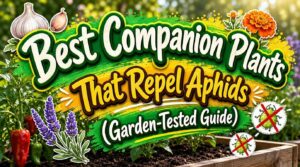
The right companion plants that repel aphids turn your garden into its own pest management system.
Table Of Contents
- Key Takeaways
- Best Companion Plants That Repel Aphids
- Alliums That Deter Aphids Naturally
- Trap Crops Aphids Prefer Instead
- Flowers That Attract Aphid Predators
- Where to Plant Aphid Repellers
- Companion Planting Mistakes to Avoid
- Organic Aphid Control Garden Plan
- Frequently Asked Questions (FAQs)
- What plants repel aphids?
- Do companion plants kill aphids?
- How to control aphids naturally in your garden?
- Does Basil repel aphids?
- What plants resist aphids?
- Can companion plants completely eliminate aphid infestations?
- How long before companion plants start repelling aphids?
- Do aphid-repelling plants work in container gardens?
- Which companion plants also deter slugs and whiteflies?
- Should companion planting strategies change between seasons?
- Conclusion
Key Takeaways
- Aromatic herbs like basil, catnip, and rosemary release natural oils that confuse aphids and keep them off your vegetables before an infestation even starts.
- Trap crops like nasturtiums and marigolds lure aphids away from your most vulnerable plants, giving you one easy spot to manage instead of a whole-garden problem.
- Alliums — garlic, chives, leeks — release sulfur compounds that mask host plant scents, making them some of the most reliable aphid deterrents you can tuck between rows.
- Companion planting works best as a layered system: mix repellers, trap crops, and pollinator-friendly flowers like yarrow and dill to bring in the predators that finish the job.
Best Companion Plants That Repel Aphids

Some plants pull double duty in the garden — they look great and quietly keep aphids at bay. knowing which ones actually work.
Plants like nasturtiums and marigolds do both — and this guide to companion plants that repel pests and enrich soil breaks down exactly which pairings give you the biggest payoff.
Here are five aromatic companions worth growing alongside your most aphid‑prone plants.
Basil
Basil does double duty in your garden — it’s a companion plant that helps repel aphids while staying harvest-ready for dinner. Its essential oils, including eugenol and estragole, act as a natural repellent against common aphid species.
For strong aphid management, plant Genovese or sweet basil varieties 30 cm apart in full sun. Growth requirements are simple: well-drained soil, warm temps, and regular pinching.
For best growth, make sure basil receives full sun exposure and moist, well‑drained soil.
Catnip
Catnip pulls double duty in the garden. Its essential oils contain nepetalactone, a natural repellent that aphids genuinely dislike — even if your cat disagrees.
Plant it as a companion plant in full sun with well-drained soil, spaced 30 cm from nearby crops.
Harvest leaves before flowering for peak pest control uses.
Prune regularly to keep it bushy and potent.
Rosemary
If catnip takes care of the front lines, rosemary guards the perimeter. Its strong scent — sharp, piney, unmistakably Mediterranean — is a natural aphid repellent that confuses and deters pests on contact.
As a companion plant, rosemary thrives in full sun with well-drained soil and shows impressive drought tolerance once established. Try container gardening if space is tight. Pruning after flowering keeps it bushy and fragrant all season.
Mint
Rosemary holds the perimeter, but mint takes over the whole neighborhood — sometimes literally. As a natural aphid repellent, mint’s essential oils mask host plant odors, keeping aphids confused and moving on.
The catch? It spreads fast. Container gardening keeps mint varieties in check while still delivering that strong scent.
Bonus: endless culinary uses and easy propagation methods from cuttings.
Lavender
Lavender pulls double duty as both a pest deterrent and a pollinator magnet. Its essential oils — mainly linalool and linalyl acetate — overwhelm aphids while drawing beneficial insects like hoverflies and parasitic wasps.
- Essential Oil Uses: Natural aphid repellent and aromatherapy staple
- Drought Tolerance Tips: Water sparingly once established
- Pruning Techniques: Trim after flowering for bushy regrowth
- Culinary Uses: Flavor dishes and teas in small amounts
- Varietal Differences: English lavender suits cooler spots; French and Spanish tolerate heat
Plant it in full sun with sandy, well‑drained soil — companion planting doesn’t get much easier.
Alliums That Deter Aphids Naturally
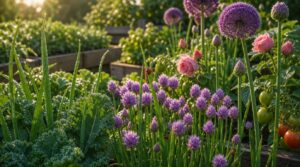
Garlic, chives, and their allium cousins do more than flavor your cooking — they quietly work against aphids all season long.
The sulfur compounds they release confuse and repel pests before an infestation even gets started.
Here are the best alliums to plant and the crops they protect most.
Garlic
Garlic is a powerhouse pest deterrent — and it pulls double duty in your garden.
Its allicin compounds naturally mask host plant odors, driving aphids away from nearby crops.
For best results, tuck softneck or hardneck garlic varieties into well‑drained soil with full sun.
Companion planting garlic between brassicas or roses offers reliable natural pest control, plus culinary uses and health benefits make every bulb worth harvesting.
Chives
Chives (Allium schoenoprasum) are one of the quietest workhorses in companion planting. Their allicin compounds mask host plant odors, making them reliable plants that repel aphids near peppers and brassicas.
Growing chives tips are simple: full sun, well-drained soil, spaced about 30 cm apart.
Bonus — chive culinary uses are endless. The edible chive flowers pair beautifully with chive flavor pairings like dill and parsley.
Harvest often using chive harvesting methods like snipping leaves at the base.
Spring Onions
Don’t overlook Allium cepa — spring onions pull double duty as food and pest fighters. Their thiosulfinates and sulfides confuse aphids, reducing green peach aphid pressure on collards noticeably.
- Growth Requirements: Full sun, moist, well‑drained soil, 30 cm spacing
- Bulb vs Greens: Both edible; mild base, sharper tops
- Culinary Applications: Salads, stir‑fries, garnishes
- Storage Techniques: Refrigerate unwashed; use within one week
Plant them beside chives or garlic for layered companion planting coverage.
Leeks
Leeks bring quiet power to companion planting. Their volatile sulfur compounds — the same ones that give Allium ampeloprasum its mild sweetness — genuinely disturb green peach aphid settlement on nearby peppers. You get a pest deterrent and dinner.
| Feature | Details | Practical Tip |
|---|---|---|
| Leek Varieties | Broad and narrow leaf types | Choose narrow for containers |
| Growing Techniques | Full sun, pH 6.0–7.0, 4–6 inch spacing | Consistent moisture matters |
| Harvesting Storage | 12–16 inch stalks; refrigerate up to two weeks | Blanch before freezing |
| Nutritional Benefits | 54 calories, 4g fiber, vitamin K | Eat what you grow |
| Culinary Uses | Braise, soup, roast | Slow cooking unlocks sweetness |
Plants that repel aphids work best layered — pair leeks with chives or spring onions for broader coverage. Beneficial insects appreciate the habitat too.
Best Crops to Protect
Some crops basically have a target on their back. Leafy greens, tomatoes, and peppers top every aphid’s wish list — so that’s exactly where alliums earn their keep.
Think of garlic and chives as your lettuce defense strategies and pepper plant protection in one. Add basil nearby for a tomato plant shield.
Nasturtiums and marigolds handle rose bush safeguards and cucumber pest barriers beautifully.
Trap Crops Aphids Prefer Instead

Sometimes the smartest move is letting aphids go exactly where you want them. Trap crops work like a decoy — they lure pests away from your vegetables and keep damage in one easy-to-manage spot.
Lure aphids to trap crops and let them defeat themselves
Here are the best ones to try.
Nasturtiums
Few plants pull double duty quite like nasturtiums. As a trap crop, they lure aphids away from your vegetables — basically sacrificing themselves so your peppers and tomatoes stay clean.
Their growing conditions are simple: full sun, poor or well-drained soil, and minimal fuss. Bonus? Edible flowers with a peppery bite make them a culinary win too.
Companion planting rarely gets this delicious.
Calendula
Calendula pulls a similar trick. sticky stems trap aphids on contact while drawing in ladybugs that finish the job.
Beyond natural pest control, it earns extra points — edible petals add a peppery bite to salads, and its healing properties make a garden overachiever.
It thrives in ideal soils with good drainage, fits neatly into container cultivation, and self-seeding growth means it keeps coming back.
Petunias
Petunias bring more than color to your beds. Their sticky leaves physically trap aphids, whiteflies, and thrips — no spray needed.
For companion planting, tuck Wave or trailing Surfinia varieties into containers near vegetables for flexible landscape design.
Regular deadheading keeps blooms coming and maintains that sticky trap effect.
Natural pest control that doubles as a color options showcase? That’s a solid garden win.
Marigolds
Marigolds pull double duty where petunias leave off. These cheerful blooms work as a trap crop and actively repel aphids — a rare combo.
Here’s why they earn their garden space:
- Marigold varieties like French and African types emit scents that confuse and deter aphids naturally.
- Their nectar draws beneficial insects — hoverflies, ladybugs — that hunt aphids down.
- Edible flowers, cultural symbolism, and garden aesthetics make them genuinely multi‑purpose.
Smart companion planting worth trying.
Placement Near Vegetables
Where you place a trap crop matters as much as which one you choose. Tuck nasturtiums and calendula at bed edges; let marigolds anchor sunny corners near peppers or tomatoes. Think about Vertical Layering, Water Zones, and Microclimate Use when spacing them out.
| Plant | Best Position | Timing |
|---|---|---|
| Marigolds | Sunny bed corners | Early spring |
| Nasturtiums | Front bed edges | After frost |
| Calendula | Mid-row gaps | Cool season |
Flowers That Attract Aphid Predators

Some flowers do more than look pretty — they bring in the good guys. Lady beetles, lacewings, and parasitic wasps all need a reason to hang around your garden, and the right blooms give them exactly that.
Here are the best flowers to plant if you want nature to handle aphids for you.
Dill
Dill pulls double duty in the garden. Its umbrella-shaped flowers are basically a buffet for lady beetles, lacewings, and parasitic wasps — all serious aphid predators.
Growing dill is simple: full sun, well-drained soil, pH around 6.0–7.0.
Beyond companion planting, it shines in culinary uses like pickles and dressings. Bonus — dill seed harvesting extends its value long after summer ends.
Yarrow
Yarrow is one of those quiet overachievers in companion planting. Its flat-topped flower clusters draw hoverflies and parasitic wasps — both natural aphid hunters. As a drought-tolerant perennial, it thrives in poor, well-drained soils with minimal fuss.
Plant it along bed borders or between rows for garden design roles that blend beauty with pest control.
Beneficial insects will find it fast.
Parsley
Don’t overlook parsley when planning companion planting for aphid control. Once it flowers in its second year — biennial growth at work — small yellow-green blooms draw hoverflies and tachinid flies that target aphids directly.
Tuck it between rows while you’re growing parsley for parsley recipes and parsley nutrition. You get culinary value and beneficial insects working together.
Saving seeds extends the cycle beautifully.
Lavender Blooms
Lavender pulls double duty in any companion planting setup. Those dense purple spikes — ranging from pale lavender to deep violet depending on Color Variations and cultivar — release a strong scent that draws hoverflies and parasitic wasps directly to your garden.
Here’s what makes lavender’s Bloom Structures work hard for you:
- Blooming Schedule runs late spring through summer, giving beneficial insects consistent nectar access.
- Landscape Uses include borders and bed edges where aphid pressure hits hardest.
- Strong scent from camphor-like volatiles confuses and deters aphids simultaneously.
- Drying Methods like hanging cut spikes preserve blooms for indoor sachets.
- Beneficial insects — especially hoverflies — use the tall spikes as landing platforms while hunting aphids.
Marigold Nectar
Marigolds do more than repel aphids — their nectar is genuinely rich, blending sucrose, glucose, and fructose in a Nectar Sugar Composition that signals quality to beneficial insects. Pollinator Attraction Dynamics shift with Seasonal Nectar Shifts, drawing hoverflies and lady beetles when you need them most.
Nectar pH Factors affect palatability too.
Try Edible Floral Uses in salads — companion planting never tasted better.
Where to Plant Aphid Repellers
Knowing which plants repel aphids is only half the battle — placement is what makes it work. Tuck your companions in the right spots, and they’ll do their job quietly all season long.
Here are the best places to put them.
Around Roses

Roses are aphid magnets — but the right neighbors change everything. Build a scent barrier strategy by ringing your rose bed with these companions:
- Basil — plant 12–18 inches away for continuous scent release
- Catnip — use container companion gardens to control spread
- Rosemary — a perennial hedge for year‑round deterrence
- Chives — aesthetic plant pairings that double as kitchen staples
- Lavender — pollinator-friendly designs that attract aphid predators
Beside Brassicas

Brassicas — kale, cabbage, broccoli — draw aphids like a buffet sign.
Strategic companion planting timing matters here.
Tuck garlic and chives between plants for allicin-based aphid species targeting.
Add nasturtium at bed edges as a lure, dill nearby for predator population support, and marigolds for microclimate creation.
| Companion | Brassica Variety Pairings | Spacing |
|---|---|---|
| Garlic | Cabbage, kale | 20–30 cm |
| Nasturtium | Broccoli, Brussels sprouts | 30–40 cm |
| Dill | Cauliflower, kohlrabi | 30 cm |
Near Pepper Plants
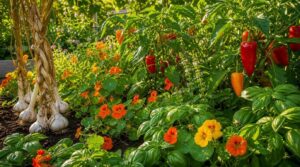
Peppers need a little company to stay aphid‑free. Basil is your best bet — plant it 12 to 18 inches away for ideal plant spacing and real pollinator boost benefits. Here’s what works well together:
- Basil — repels aphids, attracts pollinators
- Garlic — multi-pest deterrence through sulfur compounds
- Nasturtiums — lure aphids away as trap crops
Both basil and garlic offer solid soil compatibility tips since they share pepper‑friendly, well‑drained beds. Rosemary adds natural windbreak effects too — companion planting benefits stack up fast here.
Along Bed Borders
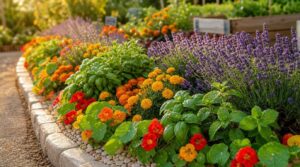
Your bed borders do double duty when planted right. Line them with lavender, basil, or mint — spaced 12 to 18 inches apart — for solid microclimate creation that buffers temperature swings.
Slope the soil inward slightly for sloped soil benefits, then top with decorative stone mulch to hold moisture.
Add marigolds and nasturtiums for color and aphid control.
Follow an herb replacement schedule every two seasons, and use dense plantings as wind protection strategies.
Between Vegetable Rows
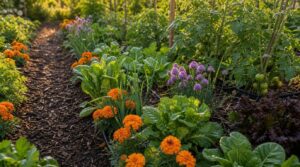
Tuck companion plants that repel aphids — garlic, chives, or marigolds — directly between your vegetable rows for steady protection. Good pathway design (18–24 inches wide) keeps things accessible while marigold intercropping and trap cropping do the heavy lifting.
- Layer 2–3 inches of mulch for mulch benefits: moisture, fewer weeds
- Practice soil aeration to support root health
- Apply watering strategies using drip lines at row bases
Companion Planting Mistakes to Avoid
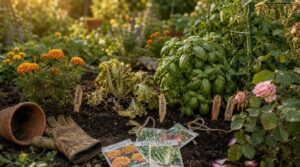
Companion planting works best when you know the common pitfalls ahead of time. A few simple mistakes can undo all the good work your plants are trying to do.
Watch out for these five missteps before you get started.
Invasive Mint Spread
Mint is a sneaky one. It repels aphids beautifully — then quietly takes over your garden through aggressive rhizome growth, spreading 6–12 inches monthly underground. That’s garden invasion without warning.
| Variety | Aggressive Growth | Containment Strategy |
|---|---|---|
| Peppermint | Very High | Deep pot barriers |
| Spearmint | Very High | 18-inch underground barrier |
| Common Mint | Moderate | Raised bed isolation |
Prioritize rhizome management early. Environmental impact on neighboring plants is real — containment strategies save your whole garden.
Crowded Plant Spacing
Crowding your companions together kills the very benefits you planted them for. Root competition steals water and nutrients — each plant getting 10–25% less in hot spells — while dense canopies trap humidity, raising disease risks fast.
Ideal spacing of at least 30 cm maintains airflow, fosters beneficial insect habitat, and preserves companion planting benefits. Tight planting means resource rivalry, yield decline, and fewer natural pest deterrents working for you.
Wrong Soil Conditions
Poor soil health quietly sabotages your companion plants before aphids even show up.
Waterlogged soil fixes start with amending heavy clay — add compost or grit to improve drainage and root oxygen levels.
Check soil pH adjustments, too; below 5.5 or above 7.5 stresses plants badly.
Nitrogen-rich soil encourages lush but weak growth—aphids love.
Fix nutrient imbalance solutions early, and always choose well-drained soil for companions.
Poor Air Circulation
Stagnant air is a silent troublemaker in any garden. When you pack companion plants that repel aphids too tightly, airflow‑plant spacing suffers — and so does everything else.
Stagnant air effects include rising humidity, fungal disease link to leaf spot, and weakened natural pest repellents.
Wind barrier impact from fences worsens this fast.
Use ventilation strategies like staggered, layered diverse planting to keep air moving freely.
Incompatible Crop Pairings
Some pairings look great on paper but quietly sabotage your garden. Incompatible crop pairings create nutrient rivalry, disease spread, and even allelopathic effects — where one plant chemically suppresses another.
- Garlic near beans triggers allelopathic plant defenses that stunt nitrogen fixation.
- Brassicas beside strawberries become pest shelters, amplifying aphid pressure.
- Dill draws carrot rust fly through plant allelopathy interactions.
- Dense canopies trap humidity, spreading fungal disease between companion plants that repel aphids.
Organic Aphid Control Garden Plan

Pulling everything together into one working plan is where companion planting really pays off.
A few smart moves — layered together — can keep aphid pressure low all season long. Here’s how to build that plan step by step.
Combine Repellers and Trap Crops
Think of it as a layered defense system for your garden.
Place nasturtiums and marigolds at the edges as your natural trap crop — they pull aphids away from your vegetables. Then weave in rosemary or basil between rows as companion plants that repel aphids.
These synergy strategies and dual planting tips create pest diversion tactics that keep your beds protected, using ideal spacing methods of at least 30 cm apart.
Support Beneficial Insects
Your layered defense works even better with reinforcements. Let natural predators of aphids — ladybugs, lacewings, and parasitic wasps — do the heavy lifting.
Support them through bloom timing by planting dill, yarrow, and lavender for continuous nectar.
Shelter creation matters too; leave leaf litter and mulch for overwintering.
Soil microbes strengthen plant roots, making biological control far more effective.
Monitor New Growth
Once your beneficial insects are on patrol, don’t stop watching. Aphids love tender new shoots — those pale, soft tips that appear 7–14 days after buds open.
Weekly Inspection Tips for Growth Tip Monitoring:
- Check terminal leaves first — prime spots for Early Infestation Clues
- Feel for soft, pliable growth signaling Aphid Colonization Signs
- Use companion plants nearby for Tender Shoot Protection
- Log pest monitoring observations weekly
Use Sprays Sparingly
Spotting aphids early is half the battle — but even the best companion plants and beneficial insects sometimes need backup. That’s where a light spray comes in.
Targeted application matters here: use a calibrated sprayer, and aim only at affected spots. Ideal spray timing is early morning or late afternoon. Store solutions away from heat, and rotate products so they stay effective.
Rotate Seasonal Companions
Rotating your companion plants each season keeps aphids from adapting to the same defenses year after year. Early spring calls for fast-growing alliums like chives and spring onions to shield young shoots.
Here’s a simple seasonal approach:
- Spring – Plant alliums for Crop Pairing Sequences and early protection
- Early summer – Introduce basil and catnip as Seasonal Timing Strategies around peppers and tomatoes
- Midsummer – Shift to lavender and dill for Pest Adaptation Reduction and predator support
- Late season – Use yarrow and marigolds for Soil Health Preparation and diverse plantings for pest control
- Winter prep – Apply cover crops suited to Climate-Specific Rotations to discourage overwintering aphids
Weaving these companion plants through seasonal planting and crop rotation keeps your garden one step ahead.
Frequently Asked Questions (FAQs)
What plants repel aphids?
The best aphid repellers are plants you probably already grow: Basil, Mint, Garlic, Marigolds, and Nasturtiums. Their scents naturally confuse and deter aphids before infestations even start.
Do companion plants kill aphids?
Companion plants don’t directly kill aphids, but they work smarter.
They attract aphid predators like ladybugs and lacewings, whose predator kill rates clear colonies quickly — nature’s own biological control doing the heavy lifting.
How to control aphids naturally in your garden?
You’ve got more tools than you think.
Homemade Herbal Sprays with mint or basil work fast. Try Diatomaceous Earth Application, Worm Castings Benefits, Sticky Trap Strategies, Predatory Insect Releases, catnip, garlic, or fennel.
Does Basil repel aphids?
Yes, basil repels aphids. Its essential oils release volatile compounds that mask nearby plants’ scents, deterring aphid settlement.
Crush a leaf — you’ll notice the oils immediately. That’s your natural insect repellent at work.
What plants resist aphids?
Herbs like garlic, nasturtiums, and marigolds naturally resist aphids through scent or sticky leaves. Edible flower barriers, pest-resistant plants, and companion plants give your garden a built-in defense worth trusting.
Can companion plants completely eliminate aphid infestations?
Not entirely.
Plants that repel aphids reduce pressure considerably, but environmental influence and pest load determine outcomes.
True integrated pest control blends biodiversity benefits with biological control — companion planting is one powerful piece, not the whole solution.
How long before companion plants start repelling aphids?
Most companion plants start showing repellent effects within one to three weeks.
Repellent speed depends on weather impact, soil factors, and growth stages — warmer conditions accelerate volatile oils, while cool spells slow seasonal effects noticeably.
Do aphid-repelling plants work in container gardens?
They work just as well as in garden beds. Garlic, chives, basil, and mint in pots release the same repelling scents.
Container Size matters, and so does Soil Mix Influence on root health.
Which companion plants also deter slugs and whiteflies?
Basil, mint, garlic, chives, and marigolds pull double duty.
These dual-purpose herbs confuse whiteflies and act as slug barrier plants.
Marigolds offer a beneficial insect boost while their scent disrupts pests beautifully.
Should companion planting strategies change between seasons?
Yes, just like wardrobes shift with weather, your planting strategy should too.
Aphid Activity Cycles change each season, so rotating Temperature-Driven Pairings and leaning on Winter Repellent Herbs or a Summer Predator Boost keeps your garden naturally protected year-round.
Conclusion
The aphids are already planning their next move — they don’t take seasons off.
But now, neither do you.
Layering companion plants that repel aphids into your garden shifts the odds before the first pest arrives.
Basil, chives, nasturtiums, and yarrow aren’t just plants — they’re a quiet, working defense.
Give them the right spot, the right neighbors, and enough breathing room.
Your garden will handle more than you think.
- https://www.nature.com/articles/s41598-021-83580-8
- https://fraylick.com/a-little-flower-therapy/2023/1/4/3-plants-perfect-for-natural-pest-control
- https://www.danakayal.com/post/aphids-nasty-garden-pest
- https://www.gardendesign.com/how-to/aphids.html
- https://www.ncbi.nlm.nih.gov/pmc/articles/PMC5746795/