This site is supported by our readers. We may earn a commission, at no cost to you, if you purchase through links.
herb kits die quietly—not from neglect, not from overwatering, but from a window that looked bright enough. Natural light indoors is deceptive.
A sunny‑feeling room might deliver a fraction of what basil or rosemary actually needs to thrive. Knowing how much sunlight indoor herb kits need can be the difference between a thriving kitchen garden and a slow, leggy disappointment.
Window direction, seasonal shifts, and the type of light all play a role—and the thresholds are more specific than most people expect.
The good news: once you understand what each herb is asking for, giving it exactly that becomes straightforward.
Table Of Contents
Key Takeaways
- Most herbs need 6–8 hours of direct sunlight daily, and south-facing windows are your best bet for sun-loving varieties like basil, rosemary, and thyme.
- When natural light falls short—especially in winter—full‑spectrum LED grow lights running 12–16 hours a day can fully replace what the sun isn’t delivering.
- Your window direction matters as much as light quantity: east‑facing works for gentle herbs like mint and parsley, while north‑facing windows need grow light support to avoid weak, spindly plants.
- Herbs also need 8–12 hours of true darkness each night, so keeping artificial light away during rest hours is just as important as hitting your daily light target.
How Much Sunlight Herbs Need
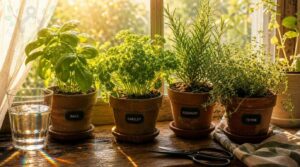
Getting the light right is the foundation of a healthy herb kit.
Most herbs need at least six hours of direct sun, so check out this herb growing kit care guide to match each plant to the right spot in your home.
Too little and your plants stretch out, looking more like pale shadows than vibrant herbs.
Here’s what you need to know about daily light to keep things growing strong.
Minimum Daily Sunlight
Most herbs have firm Critical Light Thresholds you shouldn’t ignore. Meeting basic sunlight requirements keeps your kit productive year-round. Understanding the full sun requirement helps you match the 6‑hour guideline.
- Aim for a minimum of 6 hours of full sun per day
- Spread light duration across morning and early afternoon
- Watch for Indoor Light Challenges in darker rooms
- Use Sunlight Measurement Tools like lux meters to verify Light Distribution Patterns
- Apply Seasonal Light Adjustments when daylight shortens in autumn and winter
Ideal Bright-light Duration
Six hours get you started, but ideal light duration really depends on what you’re growing and when. Most herbs thrive with 6 to 8 hours daily. In winter, push that to 12 to 16 hours with a grow light to compensate.
| Herb Type | Summer Light Duration | Winter Light Extension |
|---|---|---|
| Basil, Rosemary | 6–8 hrs direct sun | 14–16 hrs artificial |
| Cilantro, Mint | 5–6 hrs bright light | 10–12 hrs artificial |
| Parsley, Chives | 6–7 hrs mixed light | 12–14 hrs artificial |
| Thyme, Oregano | 6–8 hrs direct sun | 14–16 hrs artificial |
| Dill, Tarragon | 6+ hrs full sun | 14–16 hrs artificial |
Split Light Sessions across morning and midday work better than one long block. Compact Kit Hours of 4 to 6 hours can sustain small batches. Always respect Evening Light Limits — the photoperiod matters, and your herbs need rest too.
Direct Versus Indirect Light
Not all light is equal. Direct sunlight hits your herbs unfiltered, boosting photosynthesis rates and triggering essential oil synthesis — that’s what gives basil and thyme their punch.
Direct sunlight hits herbs unfiltered, triggering the essential oil synthesis that gives basil and thyme their punch
Indirect sunlight is gentler but can cause stem elongation, causing leggy growth over time. Leaf temperature effects also differ: direct sun raises surface heat, so window orientation and smart light placement keep compact growth tips working in your favor.
Signs of Too Little Light
Your herbs will tell you when they’re struggling. Leaf yellowing is the first warning — pale, dull blades mean insufficient sunlight is slowing chlorophyll production.
Leggy growth follows quickly: stems stretch tall and spindly, reaching desperately upward. Flavor loss kicks in soon after, since essential oils drop off quickly.
Slow growth, reduced yields, and increased pest vulnerability round out the damage.
Needed Nighttime Darkness
Just as you need sleep to function, your herbs depend on a true dark period for metabolic recovery and nighttime respiration needs.
Aim for 8–12 hours of uninterrupted darkness each night.
Avoiding light pollution matters here — even a nearby lamp can disrupt the plant photoperiod.
For herbs already working with limited sun, keeping artificial light out of the equation is especially important — shade-tolerant herbs that thrive with minimal direct sunlight tend to be the most sensitive to any disruption in their natural light cycle.
A consistent light schedule with reliable darkness duration tips the balance toward stronger, more aromatic growth.
Best Windows for Herb Kits
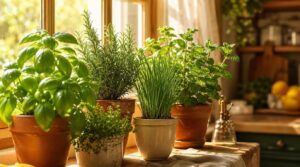
place your herbs matters more than most people realize.
window you choose can mean the difference between a thriving little garden and a sad, leggy mess.
South-facing Window Placement
A south-facing window is your best friend for full sun herbs. It delivers direct sunlight for 8–12 hours per day, which basil, rosemary, and thyme genuinely need.
For ideal distance and light diffusion, keep pots 12–18 inches from the glass. Use sheer curtains for heat management in summer, and adjust placement for seasonal adjustments.
Bonus: good airflow here facilitates pest prevention too.
East-facing Morning Light
East-facing windows offer gentle morning rays that suit softer herbs like parsley, mint, and cilantro surprisingly well. You’ll get roughly 2–5 hours of direct sun, which enables active photosynthesis during peak stomatal hours.
Post-morning brightness keeps conditions stable, but seasonal east shifts mean winter days run short. For herb adaptation tips, supplemental light integration with a full-spectrum LED rounds out what east-facing windows naturally miss.
West-facing Afternoon Light
West-facing windows deliver strong afternoon sun — good news for heat-tolerant herbs like basil and rosemary. That warm light flavor boost is real, but leaf scorching becomes a risk during peak hours.
Keep container herbs 3–6 feet back or use sheer curtains for afternoon shade. In winter, seasonal light shifts shorten your window, so artificial light pairing fills the gap.
North-facing Low Light
North-facing windows offer only indirect sunlight — usually 100–300 lux, far below the 6,000+ lux herbs prefer.
That limited natural light leads straight to weak and spindly growth.
But shade-tolerant herbs like mint, parsley, and chives can still thrive here with the right setup:
- Run full-spectrum LEDs 12–14 hours daily
- Position plants 12–18 inches from the fixture
- Use white walls for ambient light maximization
Diffuse light benefits delicate leaves, but don’t skip supplemental lighting in winter.
Rotating Pots Evenly
rotate your herbs a quarter turn every week — it’s one of the simplest even growth methods you’ll use.
Without regular turning, plants lean hard toward their light source and grow lopsided.
For weekly turning tips, pick one day and rotate all pots clockwise in a single session.
Consistent light placement keeps canopy density balanced, improves air circulation, and makes harvesting easier.
Grow Light Timing Guidelines
When natural light falls short, grow lights pick up the slack — but timing matters more than most people think. Getting the hours, distance, and spectrum right is what separates thriving herbs from leggy, flavorless ones.
Here’s what you need to know to set your grow light routine up for success.
Daily Artificial Light Hours
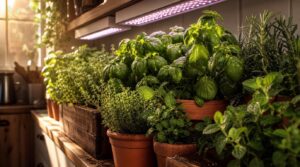
Most herbs do best with 12 to 16 hours of artificial light each day. Stick to a consistent light cycle — same time on, same time off.
A reliable grow light schedule removes the guesswork around Light Duration for Indoor Herbs.
Factor in Seasonal Light Adjustments and Growth Stage Timing too, since seedlings and mature plants don’t always need identical hours.
Preventing Overexposure matters just as much as hitting that 6 to 16 hour range.
Full-spectrum LED Benefits
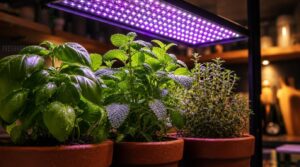
Once you’ve nailed your light schedule, the fixture you choose makes a real difference.
Full-spectrum LEDs cover 400–700 nm — the full range plants use for photosynthesis. That spectrum quality drives enhanced growth, from leaf expansion to aromatic oil production.
They’re also energy savings champions, generating less heat than older options. Durable design and comfort lighting make them a smart long-term pick.
Fluorescent Light Limitations
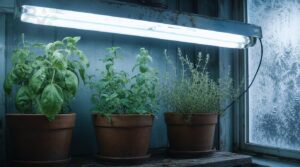
Fluorescent grow lights seem like a budget-friendly swap, but they come with real trade-offs.
Their spectral imbalance effects — skewed toward green and blue, short on red — can slow oil production in herbs like basil.
Flicker growth impact is a quiet issue too, especially during startup.
Cold environment issues below 50°F cut light intensity fast.
Add color rendering inaccuracy and a steep tube degradation over time, light decay curve, and you’re constantly guessing at plant health.
Proper Fixture Distance
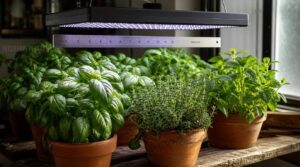
Distance matters more than most growers expect.
For LEDs, ideal LED height sits between 12 and 18 inches from your canopy — that’s where PAR (Photosynthetically Active Radiation) and lumens per square foot hit their sweet spot. Seedling distance starts higher, around 18 to 24 inches. A light meter confirms uniform coverage tips in practice.
Fluorescent spacing runs wider: 24 inches minimum.
Preventing Leaf Scorch
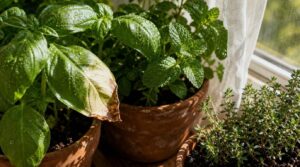
Leaf scorch sneaks up fast. Watch for these sunburn symptoms and fix them before the damage spreads:
- Move your LED grow light up 2–3 inches if you spot leaf bleaching or brown edges.
- Try shade solutions like a thin white cloth between light and canopy.
- Water at the soil line — watering techniques matter for soil moisture.
- Use mulch benefits to stabilize root-zone temperature.
- Humidity control keeps transpiration in check.
Light Needs by Herb Type
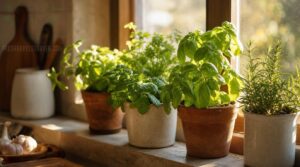
Not every herb plays by the same rules regarding light. Some want full sun all day, while others are perfectly happy with a few hours and some shade.
Here’s a quick look at what each type actually needs.
Basil and Rosemary
Basil and rosemary are a classic culinary combination, but their Basil lighting requirements couldn’t be more different — a real Growth Contrast worth knowing.
Basil needs 14–16 hours under grow lights for peak Essential Oil Uses and Flavor Synergy in your Culinary Combinations. Rosemary wants full sun, roughly 6–8 hours.
Their Lifespan Differences matter too: basil runs annually while rosemary keeps going, making indoor gardening and photosynthesis management key.
Thyme and Oregano
Both thyme and oregano love full sun — aim for 6 hours of full sun daily, or 14–16 hours under grow lights indoors.
Their Flavor Profile Differences and Medicinal Properties come down to chemistry:
- Oregano’s carvacrol (60%+) drives its bold Culinary Applications in sauces and grilled meats
- Thyme’s thymol contributes to subtle Essential Oil Content with antimicrobial benefits
- Both prefer fast-draining Soil Preferences — soggy roots ruin everything
Cilantro and Parsley
Cilantro and parsley actually sit in middle of the light spectrum. Cilantro lighting requirements top out at 10–12 hours daily — push beyond that and it bolts fast.
Parsley wants 12–14 hours under grow lights. Their different growth speed means parsley takes twice as long to harvest.
Both reward indoor gardening with bright Flavor Profiles, strong Culinary Pairings, and easy Freshness Preservation.
Mint and Chives
Mint and chives are the easygoing duo of indoor gardening. Both thrive with just 10–12 hours of light daily, and actually prefer partial shade — too much direct sun dries them out fast.
Keep soil moisture balance consistent: evenly moist, never soggy.
Mint propagation spreads quickly, so container control matters. Chives clump management is simple — just divide when crowded.
Their aroma profiles stay fresh and vivid indoors year‑round.
Dill and Tarragon
Dill and tarragon are full‑sun herbs — both need at least 6 hours of direct sunlight or 14–16 hours under full‑spectrum LEDs indoors. Their aroma profiles and flavor comparison couldn’t be more different: dill is bright and grassy, tarragon is sweet anise.
Growing conditions, culinary uses, and harvesting tips all shift based on that contrast.
- Harvest dill young for peak freshness; let tarragon simmer briefly to soften its sharpness
- Use full‑spectrum LEDs 6–9 inches above the canopy for both herbs in winter
- Add dill near the end of cooking; tarragon builds depth in butter‑based sauces
Top 3 Herb Kit Helpers
Getting your herbs the right light is one thing — having the right tools makes it a lot easier. A good grow light and a solid reference book can save you months of guesswork.
Here are three helpers worth keeping close to your herb kit.
1. Juhefa Clip On Indoor Grow Light
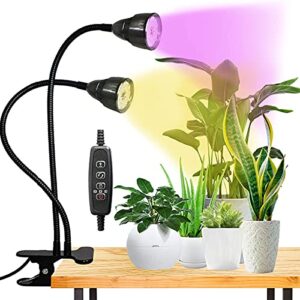
The Juhefa Clip-On Grow Light is a solid pick if your windowsill just isn’t cutting it. At $23.99, it’s affordable and surprisingly capable.
The dual-head gooseneck lets you aim each light exactly where your herbs need it. You get three spectrum modes, ten brightness levels, and a built-in timer with 4, 8, and 12-hour cycles.
Keep the heads about 6–9 inches from your plants for best results. Just note the timer drifts slightly, so reset it every few days.
| Best For | Indoor plant lovers who need an affordable, flexible grow light for herbs, succulents, or seedlings in low-light spaces. |
|---|---|
| Price | $23.99 |
| Format | Physical device |
| Herb Coverage | General indoor plants |
| Skill Level | Beginner-friendly |
| Language | N/A |
| Warranty/Support | 36 months |
| Additional Features |
|
- Dual-head gooseneck gives you precise control over light placement and covers more area without buying extra units
- Three spectrum modes and ten brightness levels let you dial in the right light for whatever you’re growing
- Clips onto shelves or desks with no tools needed, and the 36-month warranty adds peace of mind for the price
- The timer drifts earlier each day, so you’ll need to reset it regularly to keep your plants on schedule
- Only three fixed timer durations with no custom start time — a 6-hour option isn’t possible
- Brightness may fall short for larger or light-hungry plants, and a few users have reported quality control issues out of the box
2. Rosemary Gladstar Medicinal Herbs Guide
Good lighting sets your herbs up to grow. But knowing what to do with them once they’re thriving? That’s where Rosemary Gladstar’s Medicinal Herbs Guide earns its place on the shelf.
At $11.49 for 224 pages, it covers 33 common herbs with clear profiles on growing, harvesting, and preparing simple remedies. Gladstar walks you through teas, tinctures, salves, and more using basic kitchen tools. It’s a practical companion for anyone who wants to grow herbs with real purpose.
| Best For | Beginners who want to grow medicinal herbs and turn them into simple, practical home remedies without a steep learning curve. |
|---|---|
| Price | $11.49 |
| Format | Physical book |
| Herb Coverage | 33 medicinal herbs |
| Skill Level | Beginner-friendly |
| Language | English |
| Warranty/Support | Publisher-backed |
| Additional Features |
|
- Covers 33 herbs with real detail — growing, harvesting, and prepping remedies all in one place
- Step-by-step recipes for teas, tinctures, salves, and more using tools you already own
- At $11.49, it’s an easy investment for the value you get
- Only 33 herbs, so it won’t cut it if you need a deep-dive reference library
- Safety and dosage info is pretty basic — not the right resource for clinical or advanced use
- Some herbs may be hard to find depending on where you live
3. Herbal Apothecary Medicinal Herb Handbook
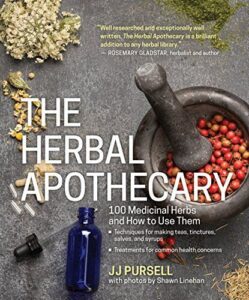
If Gladstar’s guide got you curious, the Herbal Apothecary Medicinal Herb Handbook takes things further.
At $15.05 for 292 pages, it profiles 100 medicinal herbs with full-color photos, preparation recipes, and cultivation tips.
You’ll find step-by-step instructions for teas, tinctures, salves, and more — plus guidance on harvesting, drying, and storing.
It even covers safety for kids and common herb-drug interactions.
A solid reference whether you’re just starting out or already growing a solid windowsill collection.
| Best For | Beginners who want a practical, visual reference for making their own herbal remedies at home. |
|---|---|
| Price | $15.05 |
| Format | Physical book |
| Herb Coverage | 100 medicinal herbs |
| Skill Level | Beginner-friendly |
| Language | English |
| Warranty/Support | Publisher-backed |
| Additional Features |
|
- Covers 100 herbs with full-color photos, prep guides, and cultivation tips all in one place
- Step-by-step instructions make teas, tinctures, and salves approachable even if you’ve never tried before
- At $15.05, it’s a much cheaper alternative to herbal workshops
- The index can be frustrating — some conditions are buried under broader terms that aren’t obvious
- Published in 2015, so some of the science or safety guidance may be a bit behind
- At least one known error slipped through editing, so double-checking critical entries is a good idea
Frequently Asked Questions (FAQs)
What are common mistakes growing indoor herbs?
Think you’re doing everything right? Most growers miss the basics.
Poor light, soggy soil, and irregular watering are the usual culprits — quietly stunting growth and draining flavor before you notice anything’s wrong.
Will herbs survive winter in pots indoors?
Yes, herbs can survive winter indoors in pots — but light is the deciding factor.
Most need at least 6 hours of bright light daily to stay healthy and productive through the colder months.
Do herbs do better in full sun or shade?
Most herbs love full sun. Basil, rosemary, thyme, and oregano thrive with six or more hours of direct light daily.
Mint and cilantro are exceptions — they prefer partial shade and handle lower light just fine.
Can herbs survive in a windowless office or room?
Absolutely. Without a single window, herbs can still thrive — but they’ll depend entirely on you.
Run full-spectrum LED grow lights 12 to 16 hours daily, and most common herbs won’t miss the sun at all.
How do humidity levels affect indoor herb growth?
Humidity matters more than most growers expect. Keep indoor air between 40 and 60 percent relative humidity. Too dry and herbs lose water fast. Too damp and mold moves in quickly.
Should indoor herbs be watered more in summer months?
Most likely, yes. Summer heat speeds up evaporation, so your soil dries out faster. Check the top inch daily — many herbs need 20 to 50 percent more water during hot months.
Conclusion
Light is everything—get it wrong and your herbs won’t just struggle, they’ll silently give up on you. Now that you understand how much sunlight indoor herb kits need, you’re not guessing anymore.
Match each herb to its window, supplement with a grow light when the season shifts, and rotate your pots so every stem gets its share.
Small adjustments. Real results.
Your kitchen garden doesn’t need perfect conditions—it needs your informed attention.
- https://gilmour.com/herb-growing-guide
- https://www.gardenary.com/blog/how-to-start-an-herb-garden-indoors
- https://thehappygardeninglife.com/blogs/organic-gardening/herbs-sunlight-chart
- https://www.piedmontmastergardeners.org/article/be-inspired-with-indoor-herb-gardening
- https://www.gorillagrowtent.com/blogs/news/best-led-grow-lights-for-indoor-plants