
This site is supported by our readers. We may earn a commission, at no cost to you, if you purchase through links.

Most kitchen herbs don’t need a garden, a greenhouse, or even a particularly green thumb. A windowsill, the right pot, and a bit of know-how—that’s the real entry fee.
The problem most people run into isn’t commitment. It’s setup. They grab a pot of basil from the grocery store, watch it slowly yellow under dim light, and assume indoor growing just isn’t for them. It is. They just needed better information from the start.
Growing herbs indoors year round is less about luck and more about matching each plant’s specific needs—light intensity, watering frequency, soil drainage—to the environment you actually have. Get those variables right, and fresh rosemary in January stops feeling like a novelty.
Table Of Contents
- Key Takeaways
- Choose Year-Round Indoor Herbs
- Set Up Your Herb Garden
- Master Light and Temperature
- Water, Feed, and Boost Humidity
- Prune, Harvest, and Troubleshoot Herbs
- Top 9 Indoor Herb Garden Systems
- 1. AeroGarden Indoor Hydroponic Garden System
- 2. Idoo Indoor Hydroponic Growing System
- 3. Edn Smart Indoor Garden System
- 4. Click & Grow Indoor Herb Garden Kit
- 5. Ahopegarden Indoor Hydroponic Growing System
- 6. Hydroponic Indoor Herb Garden System
- 7. Click And Grow Indoor Herb Garden Kit
- 8. Rise Gardens Indoor Hydroponic Garden Kit
- 9. Veritable Indoor Smart Garden
- Frequently Asked Questions (FAQs)
- What are the best herbs to grow indoors year round?
- Can you grow herbs indoors all year long?
- What herbs can you grow indoors in the winter?
- What herbs should not be grown indoors?
- What is the easiest herb to grow indoors?
- Can basil be grown indoors all year round?
- Can you grow herbs indoors?
- How to decide which herbs to plant indoors?
- Can you grow herbs year-round?
- Where should I put my indoor herb garden?
- Conclusion
Key Takeaways
- Match each herb to its specific needs — light intensity, watering frequency, and soil drainage — and growing fresh rosemary or basil indoors in January becomes routine, not remarkable.
- Group moisture-loving herbs like basil, mint, and cilantro together, and keep Mediterranean herbs like rosemary, thyme, and sage in separate pots to prevent over- or under-watering.
- Use a soilless potting mix of coco coir, vermiculite, and perlite in pots with drainage holes to prevent root rot, the silent killer of most indoor herb gardens.
- Prune regularly just above leaf nodes, harvest outer stems first, and succession-plant fast-bolting herbs like cilantro every 2–3 weeks to keep your kitchen stocked without gaps.
Choose Year-Round Indoor Herbs
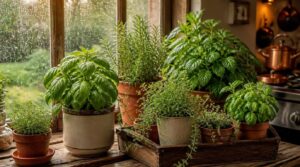
Not every herb will thrive on your windowsill year-round, so picking the right ones from the start saves a lot of frustration. Some herbs are naturally built for indoor life, while others need a little more coaxing to stay productive through winter.
Getting your soil and container setup right for herb gardens makes a real difference in which herbs actually flourish indoors long-term.
Here are the best varieties to grow indoors and what makes each one worth your counter space.
Best Beginner Culinary Herbs
Five herbs make the ideal starting lineup for any kitchen herb garden: basil, parsley, chives, mint, and cilantro.
These are your essential starter herbs:
- Basil yields its first harvest in 60–90 days
- Chives can be snipped repeatedly each growth cycle
- Parsley stays productive for months with regular trimming
- Mint thrives in a single contained pot indoors
All five tolerate indoor conditions well and reward consistent, simple care. To boost success, place your plants on sunny kitchen windowsills to guarantee they receive enough daily sunlight.
Basil and Parsley Basics
Basil and parsley sit at opposite ends of the flavor spectrum. Basil brings sweet anise and clove-like aroma from its essential oils, which fade fast with heat — so add it last. Parsley offers a fresh, peppery bite that holds up in cooking.
Both need 6–8 hours of bright light and consistent watering at soil level to stay productive indoors.
Mint and Chives Indoors
Mint and chives are probably the most forgiving herbs you’ll grow indoors — but each has one non-negotiable rule.
Mint needs its own pot. Its roots spread aggressively, and a container at least 8 inches deep keeps them contained. Keep soil consistently moist and humidity moderate. Pinch stems above leaf nodes regularly to prevent legginess.
Chives are tidier. Trim purple flower heads promptly, or leaf production slows.
Rosemary, Thyme, and Sage
Unlike mint and chives, rosemary, thyme, and sage belong to the Mediterranean family — meaning they actually prefer to dry out a little between waterings. Let the top inch of soil go dry before watering again.
All three need bright, south-facing light and well-draining potting mix. Their essential oils — cineole in rosemary, thymol in thyme — concentrate most when the plant experiences mild stress.
Seeds Versus Transplants
Starting from seed germination costs less upfront, but you’ll need trays, a seed starting mix, and patience. Nursery-grown transplants skip that wait entirely — established roots mean faster early growth and fewer failures. Seeds win on variety selection, though, giving you access to cultivars no local nursery stocks.
For cilantro, succession planting every 3–4 weeks is easiest done straight from seed packets.
Set Up Your Herb Garden
Getting the setup right is what separates a thriving herb garden from a struggling one. A few smart decisions about location, containers, soil, and water grouping will do most of the heavy lifting for you. Here’s what to get in place before you plant your first herb.
Pick Sunny Indoor Spots
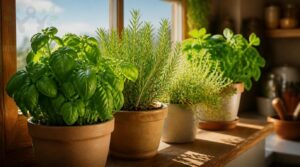
Your herbs are chasing the sun — so put them where it actually lands. A south-facing windowsill delivers 6–8 hours of direct sunlight daily, making it the ideal choice for basil, thyme, and rosemary. West-facing windows work too, though afternoon intensity can scorch delicate leaves above 90°F.
Keep pots 12–18 inches from the glass to balance light without heat stress.
Choose Pots With Drainage
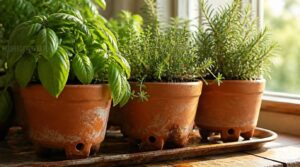
Every pot you choose needs at least one drainage hole — herbs drown fast in standing water, and root rot sets in quietly before you notice wilting.
Terracotta pots breathe through their porous walls, pulling moisture away from roots naturally. Plastic holds water longer, so you’ll water less often but risk oversaturation. Aim for holes 0.25–0.5 inches wide, and raise pots on feet to keep drainage flowing freely.
Use Soilless Potting Mix
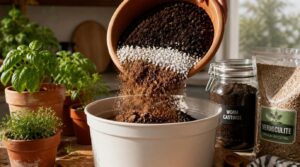
Garden soil compacts hard in containers, suffocating roots within weeks.
Soilless potting mix solves this immediately. A reliable DIY mix uses equal parts coco coir, vermiculite, and compost — lightweight, fast-draining, and nutrient-aware.
Key amendments worth adding:
- Perlite opens airflow and prevents waterlogging
- Coco coir retains moisture without compacting
- Worm castings supply slow-releasing nutrients naturally
Flush the mix periodically to prevent salt buildup.
Match Herbs by Moisture
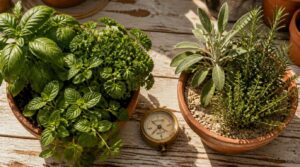
Watering is where most indoor herb gardens quietly fall apart. Put rosemary next to basil, and you’re either drowning one or parching the other.
Pair rosemary with basil and you are either drowning one or parching the other
Keep moisture-loving herbs — basil, mint, parsley, cilantro — grouped together in one pot or tray. Place Mediterranean herbs like thyme, rosemary, and sage in separate containers. A soil moisture meter removes the guesswork entirely.
Plan Small-space Layouts
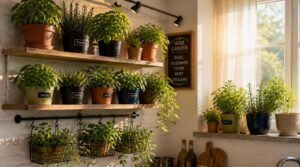
Small kitchens reward clever thinking. Use vertical stacking — a narrow shelf or wall-mounted rail creates multiple growing levels without stealing counter space.
Quick layout wins:
- Float shelves above the kitchen windowsill for sun-loving herbs
- Use a vertical herb garden rack near your brightest window
- Color-code containers for instant visual zoning by care routine
- Add hanging baskets for trailing varieties like mint
- Keep grow lights on adjustable fixtures to prevent leggy growth
Master Light and Temperature
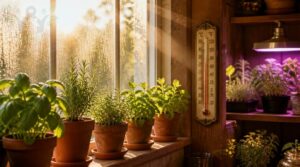
Light and temperature are the two levers that control almost everything about how your herbs grow indoors. Get them right, and your plants stay compact, aromatic, and productive through every season. Here’s what you need to know to keep conditions dialed in year-round.
South-facing Window Placement
A south-facing windowsill is your single best free asset for meeting your herbs’ light needs indoors. Position pots within 1–3 feet to capture consistent natural sunlight and boost solar warmth, especially in winter.
| Strategy | Purpose | Best For |
|---|---|---|
| Place pots 1–3 ft from glass | Boost direct sunlight capture | All culinary herbs |
| Use sheer curtains | Diffusing intense sunlight in summer | Basil, parsley |
| Add white walls or mirrors | Reflective light strategies | Compact or shaded spaces |
| Managing summer overheating | Prevent leaf scorch on hot days | Rosemary, thyme |
| Window glass maintenance | Boost light transmission | Every sunny windowsill |
Clean the glass monthly — dust cuts transmission noticeably. Rotate pots weekly so every side gets its share of that direct sunlight.
Using LED Grow Lights
When natural light falls short, a full-spectrum grow light steps in reliably. Position it 12–24 inches above the canopy, targeting 200–400 µmol m² s⁻¹ for leafy herbs.
- Choose blue wavelengths (~450 nm) for compact, leafy vegetative growth
- Use red wavelengths (640–660 nm) for flowering herb varieties
- Run lights 12–16 hours daily with an automated timer
- Maintain airflow around fixtures for steady heat dissipation
- Quality LEDs deliver 50,000+ hour lifespans
Preventing Leggy Herb Growth
Even with a great grow light setup, herbs can still stretch toward the ceiling if conditions slip. Photoperiod consistency is the fix — keep lights running 12–16 hours daily without long dark gaps, which trigger stretching.
Pair that with pruning node growth every 6–8 days and balanced, low-nitrogen feeding to keep stems compact rather than tall and spindly.
Ideal Indoor Temperature Range
Light consistency keeps herbs compact, but temperature is what locks in their flavor. Most culinary herbs hit their stride between 18 and 24°C, with basil preferring the warmer end around 20–25°C and parsley performing well with cooler nights near 15°C.
Avoid letting temperatures climb above 26°C for extended periods — heat spikes reduce aroma concentration noticeably. A digital thermometer tracking multiple pots helps you catch microclimates before they cause trouble.
Seasonal Light Adjustments
Seasons quietly rewrite your herbs’ photosynthesis requirements. In winter, move pots closer to south-facing glass and use reflective surfaces — white walls bounce back lost lux for free.
- Full-spectrum grow lights bridge the gap during dim months, sustaining indoor plant lighting when days shrink
- Photoperiod timing of 12–16 hours daily keeps leaf development steady
- Managing summer transpiration means watering more often as light and heat climb together
Water, Feed, and Boost Humidity
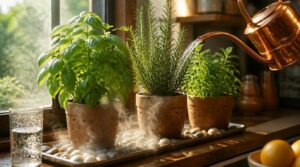
Getting the water balance right is honestly where most indoor herb gardens succeed or struggle. Too much, too little, or moisture trapped in the wrong place can quietly undo everything you’ve worked to set up.
Here’s exactly how to water smarter, protect your roots, and keep humidity in your herbs’ corner all year long.
Water at Soil Level
Where you aim the watering can matters more than you’d think. Direct water at the soil base, not over the leaves, every time you water. Wet foliage creates the damp conditions that fungal diseases thrive in, and once mildew takes hold, it spreads fast.
Keeping leaves dry is one of the simplest ways to protect your herbs long-term.
Avoid Soggy Herb Roots
Root rot sneaks up fast when water has nowhere to go. Use pots with at least two drainage holes and empty saucers immediately after watering — roots sitting in pooled water suffocate within days.
Swap dense garden soil for a perlite-amended soilless mix that drains within 30 minutes. Terracotta pulls excess moisture through its walls, giving plastic pots no chance of competing here.
Mediterranean Herb Watering
Rosemary and thyme practically thrive on neglect — water them every 7 to 14 days, letting the top inch of soil dry completely first.
Here’s what keeps Mediterranean herbs flavourful indoors:
- Deep, infrequent watering saturates roots without lingering moisture
- Bottom watering encourages deeper root growth
- Pot weight signals dryness better than schedules
- Drought stress concentrates essential oils, sharpening flavour
- Lengthen intervals further in winter when growth slows
Moisture-loving Herb Care
Basil, mint, parsley, and cilantro want consistently moist soil — not drenched, but never bone-dry either. Check the top inch daily; if it feels dry, water thoroughly at soil level and empty saucers immediately after.
Morning watering reduces fungal risk and gives roots steady hydration through the day. Keeping ambient humidity between 40–60% promotes lush, flavorful growth without inviting rot.
Winter Humidity Strategies
Winter heating strips moisture from indoor air fast, and your herbs feel it first. Target 40–50% relative humidity using a hygrometer to track levels accurately.
A cool-mist evaporative humidifier works well — just clean the wick regularly to prevent bacterial buildup. Grouping your plants together naturally raises ambient humidity, and pebble trays beneath pots add passive moisture without risking condensation damage.
Prune, Harvest, and Troubleshoot Herbs
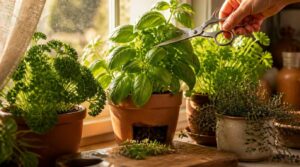
Knowing when and how to cut your herbs makes all the difference between a thriving indoor garden and one that just limps along.
A few targeted techniques — from pinching basil to timing your cilantro crops — keep production steady and flavors sharp. Here’s what you need to know to prune smart, harvest confidently, and fix problems before they take hold.
Pinching Basil for Bushiness
Pinch basil just above a leaf node every 2–3 weeks, removing the top 2–4 leaves once the plant has at least four to six leaves on the main stem. This triggers side shoots, fighting off legginess before it starts.
Always use sterile scissors — dull blades tear tissue and invite disease. If flowers appear, pinch them immediately to redirect energy back into leaf production.
Harvesting Parsley Outer Stems
Parsley rewards a different approach than basil. Always take from the outer stems first — those 6–8 inch stems with deep green color — using sharp scissors at a 45-degree angle near the base to protect the central crown.
Morning harvest timing matters; flavor peaks early. Store cut stems upright in water or wrapped in a damp towel, refrigerated within an hour.
Succession Planting Cilantro
Cilantro bolts fast — sometimes within four to six weeks — so sowing every two to three weeks keeps your kitchen stocked without gaps. Direct sow seeds at ¼ inch deep to protect the taproot; transplanting almost always fails.
Label each pot with its sowing date so you can pull and replace on schedule, maintaining a continuous harvest cycle without guesswork.
Managing Indoor Herb Pests
Even well-tended herbs will attract uninvited guests. Know the most common culprits:
- Spider mites: fine webbing, yellow speckling
- Aphids: sticky residue, curled new growth
- Mealybugs: white cottony masses on stems
- Fungus gnats: larvae from overwatered soil
- Whiteflies: scatter when plants are disturbed
Spray neem oil or insecticidal soap at the first sign. Isolate any affected plants immediately to stop spread.
Fixing Weak Aromatic Growth
When herbs smell faint, light is usually the culprit. Aromatic terpene production kicks in above 2000 lux, so a dim windowsill won’t cut it. Run LED grow lights 12–16 hours daily, positioned 6–12 inches above foliage.
Pruning regularly concentrates essential oil synthesis into upper leaves. Keep humidity near 40–60%, and boost potassium slightly to push leaf oil formation.
Top 9 Indoor Herb Garden Systems
The right system can make or break your indoor herb garden, especially if natural light is limited or counter space is tight. These nine options cover everything from compact hydroponic pods to smart gardens that practically manage themselves. Here’s what made the cut.
1. AeroGarden Indoor Hydroponic Garden System
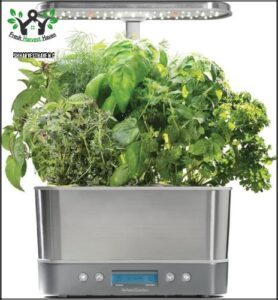
The AeroGarden takes the guesswork out of indoor herb growing. Its 20W full-spectrum LED mimics natural sunlight, and the built-in timer controls your lighting cycles automatically — no manual switching needed.
Six pod slots give you a compact, countertop setup that germinates seeds up to 5x faster than soil. The touch panel sends reminders for water and nutrients, so nothing gets neglected. Just keep plants pruned before they crowd the 12-inch grow hood, and you’re set.
| Best For | Home cooks, office workers, and apartment dwellers who want fresh herbs and greens year-round without the hassle of soil or outdoor space. |
|---|---|
| Pod Capacity | 6 pods |
| Grow Method | Hydroponic |
| LED Lighting | Full-spectrum 20W |
| Light Timer | Automatic |
| Water System | Touch reminders |
| App Control | None |
| Additional Features |
|
- Seeds germinate up to 5x faster than soil, so you’re harvesting sooner
- Automatic timer and smart reminders take the guesswork out of plant care
- Compact stainless steel design fits neatly on a kitchen counter or desk
- No WiFi connectivity, so there’s no app control or remote monitoring
- Only six pods, which means larger plants like tomatoes can get crowded fast
- Needs regular pruning and manual nutrient top-ups to stay in good shape
2. Idoo Indoor Hydroponic Growing System
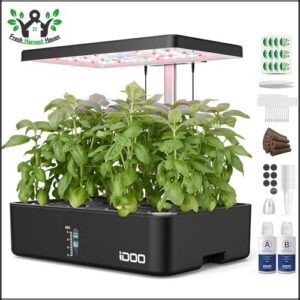
Twelve pods set the iDOO apart from most countertop systems, giving you room to grow a full herb rotation simultaneously. Its 22W LED array covers the full spectrum, and the automatic timer controls your light cycles without any input.
A built-in circulation fan aids transpiration and helps with pollination — useful once plants mature. The 4.5L reservoir stays visible through a side window, so you catch low water before roots suffer. Just note: replacement pods can be tricky to source.
| Best For | Indoor gardeners, apartment dwellers, and anyone who wants a low-maintenance setup for growing fresh herbs and greens year-round. |
|---|---|
| Pod Capacity | 12 pods |
| Grow Method | Hydroponic |
| LED Lighting | Full-spectrum 22W |
| Light Timer | Automatic |
| Water System | Side window |
| App Control | None |
| Additional Features |
|
- Grows up to 12 plants at once, giving you plenty of variety without needing multiple systems
- Automatic light timer and built-in fan handle the day-to-day work for you
- Side water window makes it easy to spot when the reservoir needs a refill before plants are affected
- Replacement pods and sponges can be hard to find and pricey when you do
- No alerts for low water or nutrients, so you still have to check in regularly
- Some users have run into issues with the LED panel burning out early and the timer losing accuracy over time
3. Edn Smart Indoor Garden System
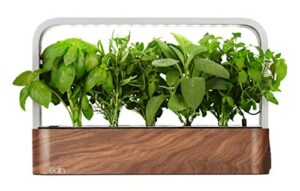
The Edn leans into the smart home crowd with walnut wood and anodized aluminum construction — it looks like decor, not equipment. Ten SeedPods snap in plug-and-play style, each pre-loaded with seeds and time-release nutrients, so setup takes minutes.
The app schedules light cycles automatically and sends refill alerts before roots dry out. One catch: iOS only, and HomeKit connectivity has frustrated some users. If you’re already in Apple’s platform, though, it fits right in.
| Best For | Apple ecosystem users who want a stylish, low-effort indoor garden that blends seamlessly into a modern kitchen or apartment. |
|---|---|
| Pod Capacity | 10 pods |
| Grow Method | Hydroponic |
| LED Lighting | Full-spectrum |
| Light Timer | App-controlled |
| Water System | App refill alerts |
| App Control | iOS only |
| Additional Features |
|
- Gorgeous walnut and aluminum design that genuinely looks at home on a countertop
- Near-zero setup effort — SeedPods come pre-loaded with seeds and nutrients
- App handles light scheduling and sends alerts before your plants need water
- IOS only, so Android users are completely locked out
- HomeKit integration has been a headache for a number of users
- Ongoing costs if you opt into the SeedPod subscription for refills
4. Click & Grow Indoor Herb Garden Kit
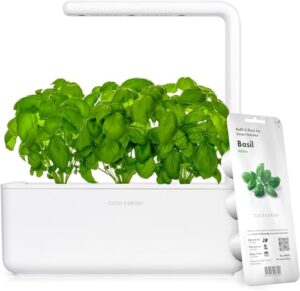
Three pods won’t fill a restaurant kitchen, but they’ll keep your countertop stocked with fresh basil, cilantro, and mint without any fuss.
The patented Smart Soil controls pH, oxygen, and nutrients automatically, so you’re not managing chemistry — just harvesting. The 16-hour LED light cycle runs on its own timer, and the passive capillary watering system stays completely silent.
Refill the reservoir every two to three weeks, and you’re done. Genuinely hard to mess up.
| Best For | Beginners and casual cooks who want fresh herbs on hand year-round without any gardening knowledge or upkeep. |
|---|---|
| Pod Capacity | 3 pods |
| Grow Method | Smart Soil |
| LED Lighting | LED bar |
| Light Timer | 16-hour auto |
| Water System | Capillary wicking |
| App Control | None |
| Additional Features |
|
- Smart Soil handles pH, oxygen, and nutrients automatically — no guesswork involved
- Silent, self-watering system only needs a refill every two to three weeks
- Compact enough for a countertop and works with 70 plant varieties
- Only fits three pods at a time, which limits variety
- Uneven light distribution can affect pods at the far ends of the light bar
- Adjusting the light timer requires unplugging the device entirely
5. Ahopegarden Indoor Hydroponic Growing System
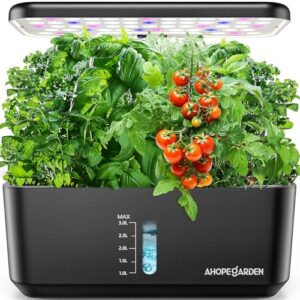
Ten pods give you serious growing real estate on a countertop that most systems can’t match.
The full-spectrum LED switches between modes for vegetables or fruit-bearing plants, and the built-in 16-hour timer controls the light schedule automatically. A circulating pump keeps the nutrient solution moving, so roots stay oxygenated and fresh. The transparent water window tells you exactly when to refill — no guessing.
Large growers like dill may need occasional pruning to stay clear of the light post.
| Best For | Beginners and home cooks who want to grow fresh herbs, vegetables, or flowers year-round without a lot of space or gardening experience. |
|---|---|
| Pod Capacity | 10 pods |
| Grow Method | Hydroponic |
| LED Lighting | Full-spectrum |
| Light Timer | 16-hour manual set |
| Water System | Transparent window |
| App Control | None |
| Additional Features |
|
- Ten growing pods offer more capacity than most countertop systems, giving you room to grow a real variety at once
- Full-spectrum LEDs with dedicated modes for vegetables and fruiting plants help you get the most out of whatever you’re growing
- The built-in water circulation and transparent level window make maintenance simple — you always know what’s going on without lifting a lid
- Seeds aren’t included, so you’ll need to source those separately before you can get started
- Tall plants like dill or tomatoes will need regular pruning to keep them from growing into the light
- The light timer has to be set manually by the user, which is a small but notable extra step at setup
6. Hydroponic Indoor Herb Garden System
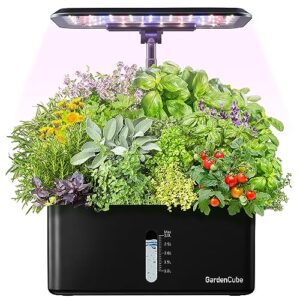
If pod count matters to you, this system steps it up with 8 or 12 pods depending on the model — plenty of room to run basil, parsley, and chives side by side.
The 24-watt LED swings to a 180° angle, so you can direct light exactly where your plants need it. A ceramic main pump keeps things quiet at under 20 dB, and the 3-liter tank with a built-in window tells you when it’s time to refill.
| Best For | Home cooks, beginners, and busy households who want a low-maintenance way to grow fresh herbs and vegetables indoors year-round. |
|---|---|
| Pod Capacity | 8–12 pods |
| Grow Method | Hydroponic |
| LED Lighting | 24W adjustable |
| Light Timer | 16/8 auto cycle |
| Water System | Window + indicator |
| App Control | None |
| Additional Features |
|
- Multiple light modes (vegetables, flowers, fruits) let you fine-tune growth conditions for whatever you’re growing
- The quiet ceramic pump (under 20 dB) and automatic 16/8 light cycle mean it practically runs itself
- A see-through water level window and shortage indicator take the guesswork out of maintenance
- Seeds aren’t included, so there’s an extra step (and cost) before you can get started
- With 8–12 pods in a compact space, plants can get crowded fast as they mature
- Regular cleaning is a must — skip it and you’ll likely deal with algae or mildew buildup over time
7. Click And Grow Indoor Herb Garden Kit
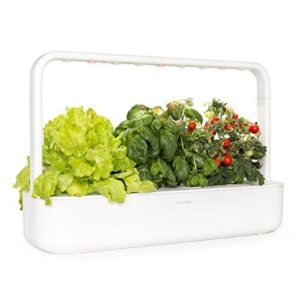
If you want something that practically runs itself, the Click & Grow is hard to beat. Its patented Smart Soil controls water, nutrients, and pH automatically, so there’s no guesswork involved.
The 9-pod capacity fits three basil, three green lettuce, and three mini tomatoes right out of the box, and the 16-hour LED cycle kicks on and off without any manual adjustments. Refill the reservoir every two to three weeks, and you’re done.
| Best For | Beginners or busy people who want fresh herbs and greens at home without the hassle of traditional gardening. |
|---|---|
| Pod Capacity | 9 pods |
| Grow Method | Smart Soil |
| LED Lighting | LED bar |
| Light Timer | 16-hour auto |
| Water System | Reservoir refill |
| App Control | None (Pro only) |
| Additional Features |
|
- Smart Soil automatically handles watering, nutrients, and pH — no guesswork needed
- The 16-hour LED light cycle runs on its own, so plants get consistent light without any manual adjustments
- Compact and quiet, making it a natural fit for kitchen countertops or small spaces
- Each pod only lasts around 90 days, so you’ll need to buy replacements regularly
- Replacement pods can be hard to find if you’re outside the US, UK, EU, Canada, or Singapore
- No manual light timer controls — that feature is reserved for the Pro version
8. Rise Gardens Indoor Hydroponic Garden Kit
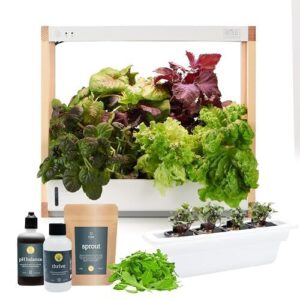
The Rise Garden is built for gardeners who think bigger. Its modular multi-level design scales from 12 plants on a single tier up to 108 across three levels — a serious setup for serious harvests.
Each level runs full spectrum 65W LEDs with automated drip feeding, so nutrient delivery stays consistent without daily fussing. The companion app controls smart notifications for feeding and harvest times.
A 3-year limited warranty backs the hardware, which is reassuring given the investment.
| Best For | Home cooks, apartment dwellers, and beginner gardeners who want a simple, app-guided way to grow fresh herbs and vegetables indoors year-round without any prior gardening experience. |
|---|---|
| Pod Capacity | 12–108 plants |
| Grow Method | Hydroponic |
| LED Lighting | Full-spectrum 65W |
| Light Timer | Automated |
| Water System | Automated drip feed |
| App Control | Android & iOS |
| Additional Features |
|
- Grows up to 12 plants at once using a hydroponic system with full spectrum LED lighting that supports healthy, faster-than-outdoor growth cycles
- The Smart Care app takes the guesswork out of plant care by sending feeding reminders and tracking plant cycles automatically
- Beginner-friendly kit comes with everything you need to get started, including an 8-pod tray, nursery, and an 8-plant variety pack
- Mold can develop if water and nutrient levels aren’t carefully managed, requiring consistent attention to upkeep
- Cleaning the hoses and internal water components is tricky and time-consuming
- Customer service can be hit or miss, and sourcing replacement parts has been an issue for some users
9. Veritable Indoor Smart Garden
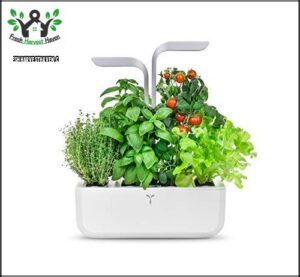
Where Rise Gardens scales up, the Veritable takes the opposite approach — compact, quiet, and surprisingly capable. This French-designed hydroponic unit fits on a countertop and runs itself, with automated watering that holds up to four weeks between reservoir refills.
Its SAVORYLIGHT LED technology mimics natural day/night cycles, so your herbs grow strong without a sunny window. Proprietary Lingots handle seeds, nutrients, and substrate in one tidy package. Just plug it in, drop in a Lingot, and let it work.
| Best For | City dwellers and busy households who want fresh herbs and greens year-round without the fuss of traditional gardening. |
|---|---|
| Pod Capacity | 4 Lingots |
| Grow Method | Substrate/Lingot |
| LED Lighting | SAVORYLIGHT LED |
| Light Timer | Day/night cycle |
| Water System | Visual alarm indicator |
| App Control | None |
| Additional Features |
|
- Automated watering system runs up to four weeks unattended, making it nearly hands-off
- SAVORYLIGHT LED technology simulates natural day/night cycles, so placement isn’t limited to sunny spots
- Plug-and-play Lingot system removes all guesswork — seeds, nutrients, and substrate come ready to go
- Locked into proprietary Lingots, so you can’t use your own seeds or substrate
- Seed germination can be inconsistent, with some users experiencing plant failures
- Customer service response times have been a pain point when replacements are needed
Frequently Asked Questions (FAQs)
What are the best herbs to grow indoors year round?
Hundreds of herbs exist, but only a handful truly thrive on a windowsill. Basil, parsley, mint, chives, and cilantro are your most reliable year-round picks for fresh flavor and easy indoor management.
Can you grow herbs indoors all year long?
Yes, you can. Keep temperatures between 65–75°F, provide 6–8 hours of light daily, and most culinary herbs will thrive on your windowsill through every season without pause.
What herbs can you grow indoors in the winter?
Basil, parsley, mint, chives, cilantro, rosemary, thyme, and sage all grow well indoors during winter. Each has different light and temperature needs, but all can thrive with the right setup.
What herbs should not be grown indoors?
Some herbs bite off more than they can chew indoors. Fennel, bay laurel, and dill grow too large, while rosemary and cilantro struggle with low light, poor drainage, and bolting.
What is the easiest herb to grow indoors?
Mint takes the crown for easiest — it tolerates low light, bounces back fast after trimming, and practically grows itself. Basil runs a close second, rewarding beginners with rapid growth and frequent harvests.
Can basil be grown indoors all year round?
Year-round basil is completely achievable indoors. Keep temperatures between 18–26°C (65–80°F), provide 6–8 hours of light daily, and prune regularly to prevent flowering, which dulls leaf flavor fast.
Can you grow herbs indoors?
Grow greens, genuinely. Yes, you can grow herbs indoors. With bright light, proper drainage, and consistent watering, most culinary herbs thrive on a windowsill or countertop throughout every season.
How to decide which herbs to plant indoors?
Start with what you’ll actually use. Pick herbs that match your cooking — basil for Italian, cilantro for tacos, mint for drinks. Then check your light and space before committing to any variety.
Can you grow herbs year-round?
Yes — with the right light, soil, and temperature, herbs like basil, mint, rosemary, and parsley produce fresh growth all year long, regardless of the season outside.
Where should I put my indoor herb garden?
Think of your herb garden like a houseplant that actually earns its keep. South- or west-facing windows are your best bet, offering the 6–8 hours of direct light most herbs need daily.
Conclusion
Growing herbs indoors year-round isn’t some exclusive club reserved for people with perfect south-facing windows and bottomless patience. Light, drainage, and timing—get those three variables working together, and your kitchen counter becomes the most useful spot in the house.
Trim regularly. Watch the soil, not the calendar. Start with one herb you actually cook with, dial in its needs, then expand. The windowsill does the rest.