
This site is supported by our readers. We may earn a commission, at no cost to you, if you purchase through links.

Organic pesticides aren’t a "spray and forget" solution—and that’s exactly where most gardeners go wrong. Soap, neem, and horticultural oil break down fast, often within four to seven days, which means your timing matters as much as your product choice.
Spray too often and you risk phytotoxicity, disrupted beneficial insect populations, and accelerated resistance. Spray too infrequently and pests rebound before the treatment ever had a chance to work.
Knowing how often to spray organic pesticide on plants comes down to reading your garden, not following a rigid calendar. The schedule that protects your tomatoes won’t look the same for your fruit trees—and getting that distinction right is what separates a thriving garden from a losing battle.
Table Of Contents
- Key Takeaways
- How Often to Spray Organic Pesticide
- Identify Pests Before Spraying
- Choose The Right Organic Spray
- Follow a Weekly Spray Schedule
- Adjust Frequency by Plant Type
- Time Sprays for Weather
- Spray Correctly for Full Coverage
- Rotate Sprays to Prevent Resistance
- Top 5 Garden Spray Helpers
- Protect Harvests and Pollinators
- Frequently Asked Questions (FAQs)
- When is the best time to use a pesticide?
- Should you use pesticides in your garden?
- Do organic sprays kill aphids?
- Can pesticides be applied before rain?
- Can you spray insecticide every day?
- Can organic pesticides harm beneficial soil microorganisms?
- How do I store leftover organic pesticide safely?
- Are organic sprays safe for indoor container plants?
- Can I mix different organic pesticides together?
- How long do organic pesticides remain effective after mixing?
- Conclusion
Key Takeaways
- Scout your garden before every application and spray only when pest counts cross your action threshold, not on a fixed calendar schedule.
- Most organic pesticides break down within 4–7 days, so reapply closer to day four under heavy pressure and stretch toward day seven when conditions stay dry and activity is low.
- Match your product to the pest—neem for soft-bodied insects, insecticidal soap for aphids, Bt for caterpillars, and horticultural oil for scale—since no single spray works on every target.
- Rotate between at least four active ingredients timed to pest generation cycles of 7–14 days to prevent resistance, and stop all applications once two consecutive scouting rounds confirm populations have dropped below threshold.
How Often to Spray Organic Pesticide

Spraying organic pesticide isn’t something you do on autopilot — it works best when it’s driven by what’s actually happening in your garden. Getting the frequency right comes down to a handful of essential habits that experienced growers follow every season. Here’s where to start.
Understanding how organic pest spray compares to chemical pesticides helps you make smarter, situation-specific calls rather than defaulting to a fixed routine.
Start With Pest Scouting
Before you reach for any spray bottle, walk your garden first. Scouting establishes whether pest populations actually warrant treatment — checking leaf undersides, stems, and new growth using a consistent W or X pattern across your planting area.
Track dates, pest counts, and damage signs each visit. That data becomes your action threshold, separating real pressure from normal plant variation.
Adopting soapy water reveals hidden pests, informing your treatment schedules and thresholds.
Spray Only When Needed
Scouting tells you if pests are present — but action thresholds tell you when spraying actually makes sense.
Spray only when monitoring confirms pressure has crossed those thresholds:
- Pest counts exceeding tolerable levels
- Fresh feeding damage on new growth
- Beneficial insect populations are low
- No signs of natural decline
- Crop stage makes plants vulnerable
Unnecessary applications disrupt organic pest control strategy and stress plants needlessly.
Reapply Every 4–7 Days
Once thresholds are crossed and you spray, the clock starts. Most organic pesticides — soaps, oils, neem — break down within four to seven days, especially under warm sun or after rain washes residues away.
Heavy pest pressure calls for reapplying closer to day four. When activity is low and conditions stay dry, stretching toward day seven keeps plants protected without overworking your rotation.
Use Labels First
Before you set a reapplication schedule, the label sets it for you. Every organic product carries manufacturer frequency guidelines tied to its active ingredient — neem, Bt, soap — and skipping that step risks both under-dosing and overuse.
Pesticide label reading also confirms mixing ratios, safety gear, and any reentry intervals your specific formulation requires.
Stop After Pests Decline
Once pest populations drop below your economic threshold for two consecutive monitoring rounds, ease off the sprayer. Continuing full applications after decline disrupts beneficial insect rebound and adds unnecessary residue.
Switch to maintenance spray intervals — every 7–14 days — and keep scouting weekly. Log each count so you can confirm sustained suppression before the next pest generation emerges.
Identify Pests Before Spraying
Before you reach for the spray bottle, knowing exactly what you’re dealing with makes all the difference. Spraying blind wastes product, disrupts beneficial insects, and can leave the real culprit untouched. Here’s how to read your plants like a pro before you treat them.
Check Leaf Undersides

Flip any leaf over — pests hide on undersides first. Aphids, mites, and scale cluster beneath, shielded from rain. Check five things each time you scout:
- Trichome density — hairy surfaces trap pest eggs
- Stomatal patterns — stippling signals mite damage
- Vein visibility — stressed plants show pronounced veins
- Underside discoloration — pale or purple tones signal pressure
- Pest threshold — count colonies before you spray
Look for Fresh Damage
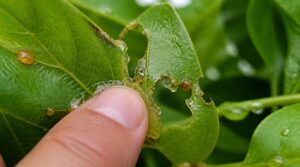
Fresh wounds tell you exactly how recent the threat is. Glassy, moisture-laden edges on chewed leaves signal activity within the last 24–72 hours, while darkened, corky tissue means the damage is old news.
Run your finger along a wound — fresh sites feel pliable, almost damp. That sticky residue near feeding marks? Sap from active insects, not yesterday’s problem.
Count Pest Populations

Numbers don’t lie. Before reaching for any spray, count insects per leaf or per square meter using a beat sheet or sticky trap to gauge true population density.
- Visual scouting on leaf undersides
- Sticky traps for flying pests
- Beat sheet sampling for crawlers
- Fixed quadrats for repeatable counts
- Weekly logs to track trends
Counts below your action threshold mean you hold off.
Note Beneficial Insects

Friend or foe isn’t always obvious at first glance, so check for help already on the job. Lady beetles, lacewing larvae, and parasitic wasps often suppress populations before you ever touch a sprayer.
Spotting these natural predators means holding off, since broad-spectrum products kill beneficials right alongside pests—undermining the beneficial insect conservation your whole IPM strategy depends on.
Match Spray to Pest

Not every spray fits every pest. Match’s benzoylurea mechanism disrupts molting, so timing applications to larval stage timing matters more than blanket schedules.
Scouting pest susceptibility first tells you whether resistance profile comparisons favor this chemistry over pyrethroids. Systemic action benefits extend protection past contact sprays, rewarding gardeners who track pest emergence timing carefully within their broader pest control schedule.
Choose The Right Organic Spray

Not every organic spray works on every pest, and reaching for the wrong one wastes time and risks plant stress. Matching your product to the pest in front of you is what separates a spray that actually works from one that just smells like garlic. Here’s how to pick the right tool for what you’re dealing with.
Neem for Soft-bodied Pests
Neem oil works by delivering Azadirachtin, a compound that mimics insect hormones and throws pest development into disarray. Aphids, mealybugs, spider mites, and whiteflies stop feeding, molt poorly, and reproduce less — often before you notice visible damage.
Apply every 7–14 days, staying between 40°F and 85°F to prevent phytotoxicity. Higher Azadirachtin concentrations hit harder and faster.
Soap for Aphids
Where neem oil targets the hormonal system, insecticidal soap goes straight for the body. It smothers aphids on contact by breaking down their waxy coating and disrupting cell membranes — no waiting, no systemic action.
Mix 1–2 tablespoons per gallon, test on a small leaf patch first, and spray every 3–7 days, hitting leaf undersides thoroughly. Soap won’t touch eggs, so timing each repeat to catch newly hatched nymphs matters.
Bt for Caterpillars
Soap controls aphids on contact, but caterpillars need something that works from the inside out. Bacillus thuringiensis (Bt) is a soil bacterium whose toxins, once ingested, destroy a caterpillar’s gut lining — feeding stops within hours, death follows within days.
Target young larvae with three timing priorities:
- Apply when caterpillars are small and actively feeding
- Reapply every 7–10 days per new generation
- Spray leaf undersides thoroughly for ingestion
Oils for Scale Insects
Scale insects are tougher than soft-bodied pests — their waxy coating shields them from most sprays. Horticultural oils work by suffocating scale on contact, blocking breathing pores beneath that armor.
Target the crawler stage, when nymphs are exposed and mobile. Apply refined horticultural oil between 45–85°F, coating stems and leaf undersides thoroughly. Reapply every 7–14 days, and always test sensitive plants first.
Repellents for Light Pressure
Easing into light pest seasons, gentler organic pesticides step up for you. Spatial repellent efficacy comes from metofluthrin device use, dispersing volatile compounds that form a protective zone without contact.
Essential oil blends—peppermint, citrus, catnip—add natural aroma deterrence at low concentrations, staying gentle on beneficials. Reapply every 5–7 days, tightening application intervals as pest pressure shifts, for steady pest control.
Follow a Weekly Spray Schedule

A consistent weekly rhythm keeps you ahead of pest pressure instead of chasing it. Each day in the cycle has a specific job — inspection, treatment, assessment, or reapplication — so nothing slips through the cracks. Here’s how a focused seven-day schedule actually plays out:
Day One Inspection
Before you mix a single drop, walk the entire planting bed first. Check leaf undersides for eggs or nymphs, note any yellowing or stippling, and log the temperature and soil moisture — all of it shapes what you’ll spray and when.
Spot any beneficial insects and mark those zones. This baseline reading is your map for everything that follows.
Day Two Targeted Spray
Now it’s time to act on what Day One revealed. Spray only the hotspots you flagged — never the whole bed.
- Spot early nymphs on leaf undersides
- Compare damage patterns to confirm the pest
- Measure pest pressure before mixing anything
- Protect ladybugs near treated zones
- Record target zones for Day Four
Match your organic pesticide to the pest’s lifecycle stage for real results.
Day Four Damage Check
By day four, your plants are telling you exactly how well that spray worked — and whether it cost them anything.
Check leaf surfaces for necrotic spot patterns: small brown lesions signal phytotoxicity, not pest damage. Look between veins for chlorosis and examine stems for darkened streaks indicating vascular tissue damage. If new growth looks clean and pest feeding has slowed, your efficacy window is holding.
Day Seven Reapply
Seven days out, residual pest pressure is your cue to act. Scouting results showing renewed feeding or fresh adults on host plants confirm reapplication is warranted. Use the same organic product unless your rotation plan calls for a switch — neem or insecticidal soap both work well here.
Log the application. Weekly spray logging reveals pressure trends that sharpen every future decision.
Repeat Until Controlled
Pest control is a cycle, not a single event.
- Scout for active pests before each application
- Apply the correct organic spray
- Assess damage after 4–7 days
- Reapply if the pest threshold isn’t met
- Stop once two scouting cycles confirm decline
Keep repeating until populations drop below your defining thresholds. That’s exactly when the loop ends.
Adjust Frequency by Plant Type

Not every plant plays by the same rules regarding spray frequency. Your vegetables, herbs, fruit trees, ornamentals, and seedlings each have their own tolerance levels and timing needs that should shape your approach. Here’s how to adjust your spray schedule based on what you’re growing.
Vegetables Need Close Monitoring
Vegetables move fast through growth stages, which means pest pressure can shift just as quickly. Scout tomatoes and peppers for whiteflies and thrips on leaf undersides every few days, and check brassicas for fresh feeding signs from cabbage worms.
Stippling patterns on cucurbits often signal spider mites before damage spreads. Monitor plant vigor closely — stunted tops or poor root development can reveal hidden pest activity below the soil.
Herbs Need Gentle Sprays
Basil and mint can’t take as much abuse as tomatoes, so organic spray application calls for a gentler touch.
Herbs need mild surfactants and light misting to protect aromatic leaves, essential oils, and culinary flavor safety.
- Test a leaf for phytotoxicity
- Use room-temperature water
- Dilute neem properly
- Reapply every 4–7 days
Gentle care preserves plant health through integrated pest management.
Fruit Trees Need Timing
Where herbs ask for gentle care, fruit trees ask for precise timing. Track spring fruiting bud swell and soil temperature before spraying—pest lifecycle stages shift fast once buds open.
| Bud Stage | Soil Temp | Action |
|---|---|---|
| Swelling | 50°F+ | Scout pests |
| Bloom | 55°F+ | First spray |
| Fruit Set | 60°F+ | Reapply 7–10 days |
Time sprays around frost prevention windows for peak seasonal uptake.
Ornamentals Tolerate Scheduled Treatments
Unlike fruit trees’ tight bud-stage windows, many ornamentals handle scheduled treatments well once intervals match pest life-cycles. Roses, hydrangeas, and resistant varieties tolerate weekly neem or soap rotations without foliar burn.
Track microclimate shifts—shaded pockets harbor more aphids—and log spray history to fine-tune timing across the season.
Seedlings Need Extra Caution
Because seedling stems stay brittle through early growth stages, even diluted neem or soap-based organic pesticides can trigger phytotoxicity.
Skip treatment until true leaves emerge, then mist lightly to protect root zone sensitivity and microclimate stability. Apply early morning, shield leaves from direct light to prevent light burn, and water gently afterward to ease transplant shock—timing matters most here.
Time Sprays for Weather

Weather plays referee in every spray schedule, deciding whether your treatment works or washes away. Temperature, wind, and moisture each pull rank on application timing, and ignoring them costs you product and results. Here’s what to check before you ever pick up the sprayer.
Spray Below 85°F
Temperature isn’t just a comfort factor — it’s a chemical trigger. Spray above 85°F and you’re not just losing efficacy; you’re actively risking temperature-induced phytotoxicity, where oil- and soap-based formulations fail to dry properly on leaf surfaces, concentrating active ingredients until foliage scorches. Keeping applications within the 60–85°F window slows evaporation enough to improve foliar adsorption, giving your spray meaningful contact time rather than a quick flash-dry.
That’s why diurnal spraying — early morning or evening — consistently outperforms midday applications when summer heat peaks.
Avoid Windy Conditions
Wind doesn’t just scatter your spray — it steals your coverage. Above 15 mph, accuracy drops sharply and drift carries product away from target foliage entirely. Even at 20 mph, coarse droplets travel well beyond intended zones, cutting deposition by up to 30 percent.
Aim for steady 5–10 mph conditions, ideally early morning when gusts haven’t built yet.
Allow Dry Weather
Dry air is your spray’s best ally. When relative humidity drops below 50%, evaporation accelerates and oil-based formulas lose residual activity before pests even contact them. Dust accumulating on leaf surfaces in prolonged dry spells also blocks adhesion.
Aim for 48 hours of rain-free weather after application, with moderate humidity and no drying wind overhead.
Avoid Spraying Before Rain
Rain turns your spray investment into runoff. Rainfastness intervals range from 1 to 24 hours depending on the product — insecticidal soaps and oils sit at the longer end, so check your label before scheduling. If rain arrives before that window closes, wash-off strips the leaf surface bare.
Delay spraying whenever rain is forecast within six hours.
Use Morning or Evening
Timing your spray around the clock makes a real difference. Early morning, between 5 and 7 am, gives you cooler leaf surfaces, higher humidity for better adhesion, and calm air that keeps drift minimal. By dusk, pollinators have retreated and winds usually settle.
Three windows worth protecting:
- Before 7 am — lower UV, active stomata
- After 7 pm — reduced pollinator exposure
- Never midday — heat degrades active ingredients fast
Spray Correctly for Full Coverage

Even the right spray at the right time can fall flat if your technique leaves gaps. Pests love to hide where your sprayer doesn’t reach, so how you apply matters just as much as what you apply. Here’s what to do to make sure every treatment actually does its job.
Coat Leaf Undersides
Most sap-suckers — aphids, whiteflies, spider mites — cluster on the abaxial surface, where stomata are dense and the cuticle is thinner. That’s where they feed, hide among trichomes, and lay eggs.
Flip your nozzle upward and spray until you see light runoff on the underside. A fan-tip nozzle reaches leaf folds contact sprays would otherwise miss entirely.
Target Hidden Stems
Stems hide more than they show. Beneath the bark, vascular tissue health depends on direct contact—aphids and scale colonize nodes and crotches where contact sprays rarely reach. Angle your nozzle sideways during stem center scouting, soaking joints and bark crevices.
Watch for internal stem decay signs: discoloration, bulging, or sap weeping signal blockages threatening meristematic cell protection. Consistent application intervals catch infestations before they reach the center.
Spray Until Light Runoff
Getting your spray to the point of light runoff is the standard for coverage. Use a low flow rate and fine nozzle to build a thin film—watch droplets cling before slowly running off. Rough leaves hold spray longer, while smooth stems shed liquid fast. Spray upper foliage first, pause for adhesion, then target undersides. Check for uniform coverage and adjust pressure as needed.
5 Signs You’ve Achieved Light Runoff
- Droplets begin to bead and slide off the surface.
- No visible pooling or heavy dripping.
- Fine film covers both leaf sides.
- Bark crevices hold extra moisture.
- Outer canopy edges show first signs of runoff.
Avoid Direct Sunlight
That fine film you just built turns risky once the sun hits it. Daytime spraying under direct light causes phytotoxicity—oils and soaps heat up, scorching leaves you just treated.
Spray morning before sunrise or late in the evening instead.
Shade cloth benefits plants recovering from treatment, mitigating UV stress while mulch barriers manage soil temperature and transpiration rates, preventing leaf burn during peak exposure.
Clean Sprayers First
Rarely do gardeners realize a dirty sprayer can undo a perfect application. Tank residue removal matters before every mix—rinse with clean water, then flush hoses, pump, and nozzles for five minutes to prevent clogging.
This habit blocks cross-contamination between herbicides and organic products. Wear chemical-resistant PPE during cleaning, and always follow manufacturer instructions for dilution rates and contact time before your next mixing and application session.
Rotate Sprays to Prevent Resistance

Spraying the same product week after week sounds efficient, but pests adapt fast, and resistance can build in just a few generations. Rotation breaks that cycle and keeps your sprays working when you actually need them. Here’s how to mix things up the right way.
Alternate Active Ingredients
Bugs build tolerance fast when you spray the same active ingredient over and over. Swap modes of action with these label-approved alternates:
- Neem oil (azadirachtin)
- Insecticidal soap
- Bt kurstaki or aizawai
- Horticultural oil
Rotating these delays resistance, covering soft-bodied pests, caterpillars, and scale through different mechanisms—no single bug builds immunity to four different weapons.
Change Every Pest Generation
Timing your rotation to pest generation cycles — roughly every 7 to 14 days at warm temperatures — keeps you one step ahead of adaptation.
When generations overlap within a two-week window, switching active ingredients immediately cuts off any resistance pathway before it spreads.
Track hatching dates, and rotate on schedule rather than waiting until spray performance visibly drops.
Avoid Repeated Neem Use
Neem oil isn’t a set-it-and-forget-it solution. Leaning on it every spray cycle risks phytotoxicity on sensitive plants, stomata clogging that slows gas exchange, and residue buildup that dims photosynthesis for hours after application.
Repeated soil drenches can also suppress beneficial soil microbes and discourage pollinators mid-season. Cap neem to two or three consecutive uses, then rotate to insecticidal soap or pyrethrin.
Combine With Hand Removal
Sprays alone can’t do everything. Hand removal paired with organic pesticides creates layered protection that cuts application intervals and limits resistance pressure.
- Pinch egg clusters off stems before your first spray
- Use tweezers for precise extraction of scale and mites
- Hand-pick larvae from dense plantings each morning
- Log removals to track outbreak intensity over time
This reduces spray reliance considerably.
Track Spray History
A running log is your resistance-prevention backbone. Record application dates and times, the product name, concentration, and which beds or plants you treated after every spray event.
Track pest responses — whether populations dropped, held steady, or rebounded — so you can analyze spray effectiveness and adjust intervals before resistance takes hold.
Top 5 Garden Spray Helpers
The right tools can make your spray routine sharper, more consistent, and a lot less guesswork. From tracking application dates to choosing products that actually perform, having reliable garden helpers in your corner changes how you manage pests season to season. Here are five worth keeping on your radar.
1. Taja Large Floral Desk Calendar

Keeping a spray log sounds simple until you’re three rotations in and can’t remember which product you used last Tuesday.
The Taja Large Floral Desk Calendar solves that instantly — its 2.3″ × 2.3″ daily grids give you enough room to record product names, temperatures, and reapplication targets without crowding.
The dedicated notes column holds your resistance-rotation reminders.
At 17″ × 12″, it stays readable at a glance, whether wall-mounted or flat on your potting bench.
| Best For | Home gardeners, farmers, and pest management professionals who need an organized, at-a-glance spray log to track product rotations, application dates, and reapplication schedules across a long growing season. |
|---|---|
| Product Size | 17″ × 12″ (21 sheets) |
| Use Setting | Home, school, or office |
| Eco-Friendly | Natural floral design |
| Skill Level | All skill levels |
| Application Method | Wall mount or desktop |
| Key Limitation | Not reusable year to year |
| Additional Features |
|
- Generous 2.3″ × 2.3″ daily grids give you plenty of space to jot down product names, temps, and notes without things feeling cramped
- The dedicated notes column on the right is perfect for resistance-rotation reminders or quick memos during busy spray days
- Durable waterproof cover and reinforced corners hold up well in high-traffic spots like potting benches or outdoor workrooms
- The calendar runs through December 2026 only, so you’ll need to buy a new one when the cycle ends — no reuse option
- The clear protective sheet on top has to be removed before writing, which can catch you off guard the first time
- Only comes in one floral pattern and one size, so if your workspace calls for a different aesthetic or a smaller footprint, you’re out of luck
2. Bonide All Season Spray Oil
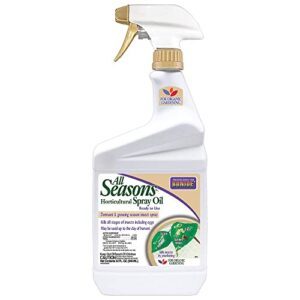
Once your calendar has the spray dates mapped out, you need a product flexible enough to cover them all.
Bonide All Season Spray Oil earns its name — the refined mineral oil formula works during dormancy, green tip, and active growth, smothering aphids, scales, mites, and whiteflies at every life stage. It’s self-emulsifying, so it blends cleanly with water and coats leaf surfaces evenly. Apply below 85°F to avoid leaf burn, and don’t spray stressed plants in direct sun.
| Best For | Organic gardeners and home growers who want a single spray oil that handles both pest control and fungal prevention across multiple seasons and plant types. |
|---|---|
| Product Size | 32 oz concentrate |
| Use Setting | Garden, orchard, shrubs |
| Eco-Friendly | Organic-approved formula |
| Skill Level | Intermediate gardeners |
| Application Method | Mix and spray |
| Key Limitation | Risk of leaf burn |
| Additional Features |
|
- Works at every pest life stage — eggs, larvae, and adults — so you’re not just managing one phase of an infestation
- Self-emulsifying formula means no extra mixing agents; it blends evenly with water for consistent coverage
- Approved for organic production and safe around most pollinators when applied at night
- Risk of leaf burn if used above 85°F or on sensitive plants during active growth periods
- Only works where it lands — full, even coverage is required or pests can survive in missed spots
- Won’t cure a heavy infestation on its own and offers no systemic protection after application
3. Organic Heirloom Dwarf Fruit Seed Mix

Good spray habits mean little if the plants you’re protecting aren’t worth the effort. That’s where the Organic Heirloom Dwarf Fruit Seed Mix earns its place — four compact varieties (lemon, cherry, orange, apple) in one pack, all heirloom, GMO-free, and sized for containers or small beds.
Seeds need cold stratification for 2–4 weeks before sowing, and germination runs 7–21 days at 65–75°F. Once seedlings emerge, start your pest-scouting routine early — tender new growth attracts soft-bodied insects fast.
| Best For | Home gardeners with limited space who want to grow compact, heirloom fruit trees in containers or small garden beds. |
|---|---|
| Product Size | ~200 seeds total |
| Use Setting | Small garden or container |
| Eco-Friendly | Heirloom, GMO-free seeds |
| Skill Level | Beginner to experienced |
| Application Method | Sow and stratify |
| Key Limitation | Variable germination rates |
| Additional Features |
|
- Four fruit varieties (lemon, cherry, orange, apple) in one convenient pack — great value for variety seekers
- Heirloom, organic, and GMO-free seeds support natural growing practices and authentic flavor
- Well-suited for bonsai-style growing, making them a fun project for both beginners and experienced gardeners
- Many customers report poor germination without cold stratification first, adding extra prep time before you can even sow
- Germination can take 2–3 weeks and results vary depending on seed freshness and how they’ve been handled
- Seeds come packaged together in one bag, so organization takes a little extra effort if you want to keep varieties separate
4. Cold Pressed Neem Peppermint Spray
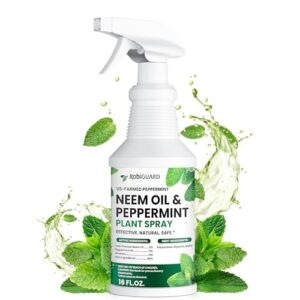
Once you’ve got young fruit trees or perennials in your care, a reliable spray becomes your next priority.
Cold-pressed neem peppermint spray covers aphids, spider mites, whiteflies, and soft‑bodied insects by disrupting their feeding cycles through azadirachtin, while the peppermint oil adds a residual repellent layer. Apply every 7–10 days between 40–85°F, targeting leaf undersides until lightly moistened. Shake the bottle well before each use, and never spray open blooms.
| Best For | Gardeners managing young fruit trees, perennials, or greenhouse plants who want an eco-friendly, dual-action spray that tackles common pests and mild fungal issues without harsh chemicals. |
|---|---|
| Product Size | 16 fl oz bottle |
| Use Setting | Indoor and outdoor |
| Eco-Friendly | Eco-friendly neem blend |
| Skill Level | Beginner-friendly |
| Application Method | Ready-to-spray bottle |
| Key Limitation | Frequent repurchasing needed |
| Additional Features |
|
- Combines cold-pressed neem oil and peppermint for both pest control and a natural repellent effect, tackling aphids, spider mites, gnats, and more
- Safe for pets and people when used as directed, making it a worry-free choice for households with kids or animals
- Pulls double duty as a mild fungicide, helping keep mildew and fungal spores in check alongside pest management
- The strong neem scent can be unpleasant indoors, and results against certain aphid populations can be inconsistent
- Risk of leaf burn if applied in direct sunlight or too generously, requiring careful timing and technique
- At just 16 fl oz, the bottle runs out quickly in larger gardens, meaning frequent repurchases can add up
5. Garden Safe Insecticidal Soap Spray
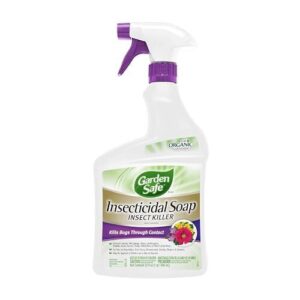
When infestations hit fast and you need results without a complicated setup, Garden Safe Insecticidal Soap (HG-93216) earns its spot on the shelf.
This ready-to-use 32 oz spray targets aphids, mites, whiteflies, mealybugs, and thrips on contact — no mixing, no guesswork.
Apply every 4–7 days below 85°F, coating leaf undersides thoroughly until light runoff. Since it leaves no residual activity once dry, consistent reapplication is what keeps pressure off your plants.
| Best For | Gardeners who want a simple, organic-friendly way to tackle soft-bodied pests on edibles, houseplants, or ornamentals without mixing chemicals or worrying about pet safety. |
|---|---|
| Product Size | 32 fl oz bottle |
| Use Setting | Indoor, outdoor, greenhouse |
| Eco-Friendly | Organic-compliant fatty acids |
| Skill Level | Beginner-friendly |
| Application Method | Ready-to-use spray |
| Key Limitation | Limited residual activity |
| Additional Features |
|
- Ready-to-use straight out of the bottle — no measuring or mixing needed
- Safe on edible crops right up to harvest day, indoors and out
- Handles a wide range of common pests, from aphids and mites to whiteflies and thrips
- Only kills insects it directly contacts, so thorough coverage is a must every time
- No residual effect once dry, meaning frequent reapplication is needed for heavy infestations
- Repeated use can cause spider mites and some other pests to build resistance over time
Protect Harvests and Pollinators

Getting this part right protects everything you’ve worked for — your harvest and the pollinators that made it possible. A few targeted habits make all the difference between a spray routine that helps and one that quietly causes harm. Here’s what to keep in mind.
Spray After Pollinator Activity
Bees clock out before you do. Evening spray timing — after 7 pm — lets you treat plants once pollinators have stopped foraging, and residues usually dry within 2–6 hours overnight before dawn activity resumes. That drying window is your built‑in safety margin.
Skipping daytime applications on flowering plants keeps beneficial insects working undisturbed, protecting both your harvest and the garden’s pollination cycle.
Avoid Open Blossoms
Open blossoms are a direct route for nectar contamination — any spray that lands inside a flower can compromise the pollen that bees carry back to the hive. Whenever buds are tight and petals haven’t separated, you’re working with a cleaner target window that protects both coverage precision and pollinator safety.
Wash Produce Before Eating
Even after safe pesticide application, washing produce before eating remains non‑negotiable. Rinse everything under cool running water, rubbing with your hands to dislodge residue.
Remove bruised or damaged areas before rinsing — these spots trap contaminants. Scrub firm produce like cucumbers with a clean brush. Pat dry afterward, since moisture accelerates spoilage and can carry residual surface particles straight to your plate.
Follow Harvest Intervals
Harvest intervals aren’t just about timing your picks — they directly affect whether pesticide residue stays safely below acceptable levels on your produce.
Pesticide labeling spells out pre-harvest intervals for a reason: applying neem oil or insecticidal soap too close to harvest day compromises both safety and flavor. When pest pressure spikes, adjust your spray schedule rather than skipping the waiting period.
Stop Unnecessary Applications
Spraying on a fixed calendar when pests have already retreated does more harm than good — it disrupts beneficial insects and accelerates resistance. Scout before every application. Once pest populations drop below action thresholds, stop. Ladybugs, lacewings, and parasitic wasps are doing the work for you. Let them.
Scout before you spray — when beneficials are winning, step back and let them
Frequently Asked Questions (FAQs)
When is the best time to use a pesticide?
The best time to apply a pesticide is early morning or late evening — ideally before 7 am or after 7 pm — when temperatures stay below 85°F, UV exposure is minimal, and winds are calm.
Should you use pesticides in your garden?
Yes, organic pesticides can protect your garden when pests genuinely threaten plant health. Used correctly and sparingly, they safeguard crops while minimizing harm to beneficial insects and the surrounding environment.
Do organic sprays kill aphids?
Organic sprays do kill aphids. Neem oil disrupts reproduction and feeding within 24–72 hours, while insecticidal soap causes rapid desiccation on contact. Botanical oils suffocate soft-bodied pests quickly. Reapply every 5–7 days as new nymphs hatch.
Can pesticides be applied before rain?
Timing your spray around the weather is a bit like reading the sky before a picnic. Allow 24 rain-free hours after application — contact products lose foliar residue fast, while systemics tolerate light showers better.
Can you spray insecticide every day?
Daily spraying isn’t worth the risk. Phytotoxicity and leaf burn build quickly when products accumulate on foliage, and repeated use of the same active ingredient accelerates pest resistance while harming beneficial insects.
Can organic pesticides harm beneficial soil microorganisms?
Potent plant-based products can pressure beneficial soil microbes, suppressing enzymes like phosphatases and ureases that drive nutrient cycling.
Even soap-based sprays cause short-term rhizosphere disruption — though most microbial communities recover when you apply responsibly.
How do I store leftover organic pesticide safely?
Keep leftover organic pesticide in its original labeled container, stored in a cool, locked cabinet between 40–90°F. Never mix leftovers with other chemicals, and always follow local disposal guidelines when product expires.
Are organic sprays safe for indoor container plants?
Like a houseplant quietly signaling stress, your containers will tell you when something’s off. Yes — organic sprays are safe indoors, provided you choose products approved for indoor use, mist finely, and ventilate the room well after application.
Can I mix different organic pesticides together?
Sometimes, yes — but always check each label first. Some combinations cause separation or nozzle clogging. Test a small batch before full application, and never mix products whose labels don’t explicitly permit it.
How long do organic pesticides remain effective after mixing?
Mix it, use it fast." Once mixed, soap sprays break down in 24–72 hours, neem fades in 1–3 days under sun, and Bt degrades within 1–14 days based on UV exposure and moisture.
Conclusion
The gardener who scouts before spraying and tracks every application rarely loses a season to pest collapse—and neither will you. Knowing how often to spray organic pesticide on plants isn’t about memorizing a schedule; it’s about reading what’s actually happening in your rows.
Catch pressure early. Rotate products deliberately. Protect your pollinators and stop when populations drop.
Your garden doesn’t need more spray—it needs the right spray, at exactly the right moment.
- https://gardening.stackexchange.com/questions/44139/day-or-night-the-best-time-to-apply-pesticides
- https://www.groworganic.com/blogs/articles/applying-organic-pesticides-effectively
- https://www.flyingskull.net/blogs/plant-care-guides/organic-pesticide-for-plants-that-preserves-growth-and-yield
- https://rootsandrefuge.com/organic-garden-pest-control
- https://plantify.co.za/blogs/my-plant-decor/understanding-pesticides-how-to-use-them-effectively-for-optimal-plant-health