
This site is supported by our readers. We may earn a commission, at no cost to you, if you purchase through links.

Push a trowel into soil that’s spent two seasons under cover crops, and you’ll feel it before you see it: crumbly, dark, threaded with roots instead of the compacted clay that fights you with every stroke. That texture change is the entire story behind cover crops companion planting benefits.
Beneath the surface, legumes fix nitrogen, root channels break up hardpan, and paired plants trade pest protection for pollinator traffic — none of it left to chance.
Get this combination right, and you build soil, hold water, deter pests, and turn a garden into a system working with you, not against you.
Table Of Contents
- Key Takeaways
- Key Soil Health Benefits
- Water, Weed, and Erosion Control
- Companion Planting Pest Benefits
- Top 10 Companion Planting Items
- 1. Miracle Gro All Purpose Plant Food
- 2. Nasturtium Jewel Mix Seeds
- 3. Cucumber Beetle Glue Trap Kit
- 4. Sweet Alyssum Mixed Color Seeds
- 5. Petite French Marigold Seeds
- 6. Triple Blend Beneficial Nematodes
- 7. Organic Butternut Squash Whole
- 8. Fiskars Garden Harvest Basket
- 9. Teal Solitary Bee House
- 10. Wildflower Leafcutter Bee Cocoons
- Planning Productive Plant Partnerships
- Frequently Asked Questions (FAQs)
- Conclusion
Key Takeaways
- Cover crops rebuild soil structure and fertility by fixing nitrogen through legumes (equivalent to 50–150 kg ha⁻¹ of synthetic fertilizer), creating root channels that break up compaction, and feeding microbial activity that forms stable, water‑holding aggregates.
- Living mulch and dense cover canopies cut water loss and erosion at the source, reducing evaporation by 15–25 % in summer while each 1 % gain in organic matter adds about 20,000 gallons of water‑holding capacity per acre.
- Strategic plant pairings replace chemical pest control with natural defenses, using trap crops to lure pests away, aromatic plants to disrupt insect senses, and flower strips to draw in beneficial insects and pollinators.
- Long-term success depends on deliberate planning, including matching cover crop species to your climate, timing seasonal plantings around frost dates and soil temperature, and using succession planting to keep beds productive year‑round.
Key Soil Health Benefits

Healthy soil doesn’t happen by accident; it’s built, layer by layer, season after season. Cover crops do a lot of that building work for you, quietly improving what’s happening underground. Here are five soil health benefits worth understanding before you plant your next cover crop.
Pairing cover crops with thoughtful seasonal timing, as outlined in these winter garden planning strategies, helps soil structure improve even through the coldest dormant months.
Organic Matter Buildup
Every cover crop you grow leaves something behind. As roots and stems decompose, microbial byproducts bind soil particles into stable aggregates — a process called humus formation.
High carbon-to-nitrogen ratio residues break down slowly, extending that benefit over years. Finer-textured soils hold these gains longest. Each organic addition quietly raises soil organic carbon, improving structure, water retention, and long-term productivity.
fine-textured soils retain more organic matter, enhance the benefits of cover crops.
Nitrogen Fixation With Legumes
Legumes don’t just grow — they work.
Through rhizobia inoculation, root nodules host bacteria that convert atmospheric nitrogen into ammonium, delivering the equivalent of 50–150 kg ha⁻¹ of synthetic fertilizer.
The nitrogenase enzyme drives this reaction, consuming 16–24 ATP moles per nitrogen mole, protected by leghemoglobin oxygen buffering.
Adequate phosphorus, iron, and molybdenum keep fixation rates high.
Better Soil Structure
Nitrogen fixation feeds the soil — but what good is nutrition if the soil itself can’t hold together?
Cover crop roots create vertical aeration channels, while microbes produce extracellular glues that bind particles into stable aggregates. Earthworm activity amplifies this:
- Macro-pores improve drainage and air exchange
- Aggregate stability resists erosion and compaction
- Root channels reach compacted subsoil layers
- Microbial glues strengthen particle binding
- Enhanced porosity deepens root penetration
Structure determines everything else.
Nutrient Cycling Support
Good soil structure gets ready conditions for active nutrient cycling.
When your cover crops decompose, microbial mineralization converts residues into plant-available nitrogen and phosphorus within 2–6 weeks, while mycorrhizal fungi can boost phosphorus uptake by 20–60%.
| Process | Key Outcome |
|---|---|
| Mineralization | N, P available in weeks |
| Mycorrhizal networks | Phosphorus uptake +20–60% |
| Carbon turnover | Builds organic matter |
| Nitrogen immobilization | High C:N slows release |
Compaction Layer Breakup
Shallow compaction blocks root growth and water movement through your soil profile. Cover crops break through these barriers naturally, restoring pore structure and overall soil health below the surface.
- Root zone exploration extends into deeper moisture
- Pore connectivity improves infiltration speed quickly
- Subsoil loosening reduces hydraulic resistance
- Penetrometer readings confirm bulk density drops
- Organic amendments strengthen soil aggregate structure long-term
Water, Weed, and Erosion Control

Once soil is biologically active, the next challenge is keeping it protected — from rain, weeds, and the relentless pull of evaporation.
Cover crops work on all three fronts at once, and the way they do it is more interconnected than most gardeners expect.
Here are five specific ways they help you hold water, crowd out weeds, and keep your soil from washing away.
Living Mulch Coverage
Think of living mulch as a living shield — one that works around the clock. A dense canopy intercepts rainfall before it hits bare soil, reducing raindrop impact that would otherwise break apart surface aggregates and trigger crusting.
As roots grow and decay, they leave biopore channels behind, pulling moisture downward rather than letting it sheet off. Species selection determines how effectively that coverage holds.
Reduced Surface Runoff
When rain hits bare soil, the impact shatters aggregates and seals the surface — cutting infiltration rates dramatically. Cover crops interrupt that cycle.
Vegetation buffers slow overland flow, while living roots maintain the pore channels water needs to move downward.
The result: less runoff, less erosion, and soil aggregates that stay intact through even heavy storms.
Improved Moisture Retention
Soil moisture doesn’t disappear on its own — it escapes through evaporation, and bare ground accelerates that loss.
Cover crops act as a organic matter sponge, with each 1% gain in organic matter adding roughly 20,000 gallons of water‑holding capacity per acre.
Root network porosity improves infiltration, while dense canopy cuts evaporation rate by 15–25% during peak summer months.
Natural Weed Suppression
Weeds are opportunists — they fill every gap you leave.
Fast-growing cover crops like rye and buckwheat act as smother crops, forming a dense canopy that cuts light to weed seeds and slashes germination by up to 70%.
Buckwheat goes further through allelopathic chemical release, pushing root exudates into the soil that actively inhibit nearby weed seed germination.
A diverse soil microbiome accelerates microbial seed decay, quietly reducing your weed seedbank season after season.
Cooler Garden Soil
Bare soil bakes; covered soil breathes. A 2–4 inch mulch layer keeps daytime temps down by reducing radiant heat absorption, while living mulch shades and cools through evapotranspiration.
Bare soil bakes in the sun while covered soil stays cool and breathes
Try these for a cooler microenvironment:
- Coarse bark or wood chip mulch (15–25% cooler)
- Drip irrigation, timed early morning
- Biochar for moisture retention
- Shade cloth during heat waves
- Weekly soil thermometer checks at 5cm depth
Companion Planting Pest Benefits

Pest control doesn’t have to mean reaching for a spray bottle every time something nibbles your tomatoes. With the right plant pairings, your garden builds its own defense system, pulling in helpful insects while pushing pests elsewhere. Here’s how that strategy plays out, piece by piece.
Trap Crops for Beetles
Placing turnip rape border rows 3–6 meters from your main brassica planting draws flea beetles toward preferred hosts before they ever reach your primary crop. Higher trap crop density pulls more Phyllotreta beetles to the edge, creating a natural concentration effect.
Align seeding with main crop emergence so beetles encounter trap plants first — timing that phenology match is everything.
Flowers for Beneficial Insects
Trap crops pull beetles away, but flower strips pull beneficial insects in.
Yarrow, cosmos, and dill keep nectar concentrations near 30-40% sugar, exactly what hoverflies and lacewings prefer. Mix in coreopsis for pollen quality diversity, sunflowers for vertical shelter, and stagger bloom succession from spring through fall.
Yellow and white blooms draw the most visitors — building pollinator corridors one flower strip at a time.
Aromatic Pest Deterrents
Scent does more than attract; it repels. Essential oil constituents like thymol, carvacrol, and linalool disrupt insect olfactory receptors, deterring aphids, thrips, and beetles.
Foliar spray application at 0.5–2% concentration protects leaves for 3–7 days; soil drenches build a root-zone barrier against subterranean pests. Test small areas first — phytotoxicity risk is real on sensitive species. Pair aromatic plants strategically, and you’re layering natural pest control into every bed.
Pollinator Corridor Design
Smell deters; structure invites. Borage near cucumber trellises and nasturtiums along bean rows create true pollinator corridors, guiding native bees and butterflies between food sources.
- Native species selection matched to local bloom cycles
- Bloom time succession for spring-through-fall forage
- Nesting site creation using bare soil and deadwood
Layered plantings build habitat connectivity and a genuine pollinator paradise.
Disease Pressure Reduction
Diverse plantings work like disease-breaking crop rotations, disrupting pathogen cycles before soil borne diseases take hold. Mixed root exudates boost microbial antagonism, while garlic and marigold add natural pest control and pest deterrence.
Cooler, airier canopies form microclimate pathogen barriers against fungal spread. Stronger nutrient cycling naturally drives nutrient-driven resistance, and early disease scouting catches trouble before it spreads garden-wide.
Top 10 Companion Planting Items
You’ve seen how companion planting solves pest and soil problems, but knowing it works isn’t the same as having the right tools on hand. Building a productive plant partnership starts with a handful of reliable supplies, from seeds to habitat structures. Here are ten items worth keeping in your garden shed this season.
1. Miracle Gro All Purpose Plant Food
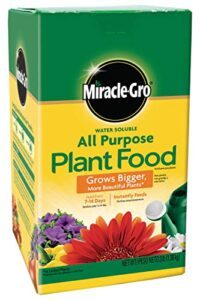
Healthy companion plantings still need balanced nutrition, and that’s where Miracle Gro All Purpose Plant Food earns its spot. This water-soluble 24-8-16 formula, fortified with chelated iron and trace elements, feeds vegetables, flowers, and shrubs alike.
Mix ½ tsp per gallon indoors or 1½ tbsp per 1½ gallons outdoors, and you’ll see faster, greener growth within weeks. Just respect the dilution — over-application risks nutrient burn.
| Best For | This plant food is best for home gardeners who want one easy, all-purpose feed for vegetables, flowers, houseplants, trees, and shrubs. |
|---|---|
| Product Form | Powder |
| Primary Benefit | Plant nutrition |
| Garden Setting | Indoor & outdoor |
| Eco-Friendly | No (synthetic) |
| Skill Level | Beginner |
| Seasonal Use | Year-round |
| Additional Features |
|
- Water-soluble powder dissolves quickly and feeds a wide range of indoor and outdoor plants
- NPK 24-8-16 formula with chelated iron and trace elements boosts growth and foliage color
- One 3 lb container covers roughly 1,200 sq ft and works easily with a watering can or feeder system
- Not recommended for specialty plants like orchids or Venus flytraps
- Fine powder can become airborne and stain clothing or surfaces during handling
- Nutrient effect lasts only about 14 days, so it needs regular reapplication
2. Nasturtium Jewel Mix Seeds
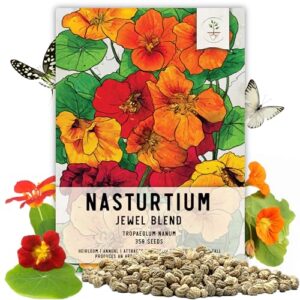
Few seeds work as hard as nasturtiums. This compact dwarf variety (Tropaeolum nanum) thrives in containers or small beds, producing jewel-toned red, orange, yellow, and mahogany blooms within 7–14 days under warm conditions.
Beyond the visual payoff, both flowers and leaves are edible and peppery, delivering vitamin C straight to your salad bowl. Pre-soak seeds for better germination, keep them ventilated against mold, and remember: nasturtiums are annuals, gone after first frost, ready for replanting come spring.
| Best For | Gardeners with small beds, patios, or containers who want fast, colorful blooms doubling as an edible, peppery garnish for the kitchen. |
|---|---|
| Product Form | Seeds |
| Primary Benefit | Pest deterrence & edible blooms |
| Garden Setting | Beds & containers |
| Eco-Friendly | Yes |
| Skill Level | Beginner |
| Seasonal Use | Spring–Fall |
| Additional Features |
|
- Compact dwarf growth habit fits neatly into small beds, borders, or containers
- Flowers and leaves are edible and packed with vitamin C, perfect for salads and garnishes
- Naturally deters pests when planted alongside vegetables
- Germination can be inconsistent without pre-soaking and steady moisture
- Prone to mold if seeds get too wet or lack good ventilation
- Annual plant that dies at first frost and needs replanting every season
3. Cucumber Beetle Glue Trap Kit
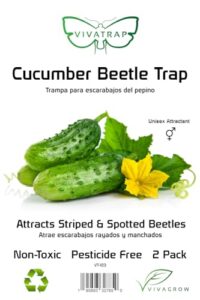
Cucumber beetles can shred a cucurbit patch overnight, which is why this trap kit earns its place in your toolkit.
CCOF-certified and built around a unisex pheromone lure, it targets striped and spotted beetles specifically, without luring in bees or other pollinators nearby.
Each kit includes two extra-large wet-glue traps, two lures, and twist-ties, with 30-day lure effectiveness per cycle.
At $24.99, it’s a low-maintenance complement to trap cropping, helping curb bacterial wilt transmission across your beds.
| Best For | Home gardeners, container growers, and community garden plot owners looking for an organic, low-spray way to protect cucumbers, squash, and other cucurbits from cucumber beetle damage. |
|---|---|
| Product Form | Trap Kit |
| Primary Benefit | Targeted beetle control |
| Garden Setting | Garden beds |
| Eco-Friendly | Yes (CCOF certified) |
| Skill Level | Beginner |
| Seasonal Use | Spring–Fall |
| Additional Features |
|
- Multi-pheromone lure targets striped, western striped, spotted, and western spotted cucumber beetles without affecting other insect species directly
- CCOF organic certification fits well into chemical-free or low-spray garden practices
- Simple hang-and-go setup with a 30-day lure life cuts down on both spraying and manual beetle removal
- Can catch non-target insects like flies and bees if traps are set near flowering plants
- The wet-glue surface is extremely sticky and tends to get on hands or nearby items during setup and cleanup
- Costs more upfront than DIY trap options, and the lure works less well on beetles that have overwintered
4. Sweet Alyssum Mixed Color Seeds
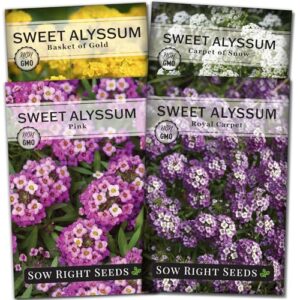
Think of this living carpet as your garden’s welcome mat for pollinators.
Sweet alyssum’s tiny, honey-scented blooms stay low, just 4 to 8 inches tall, while spreading into a dense mat that suppresses weeds and shades bare soil like a natural mulch.
Seeds germinate fast, often within 5 to 14 days at 65 to 75 degrees, and the mixed colors (white, purple, pink, yellow) draw bees and butterflies steadily all season.
Tuck it along bed edges or between stepping stones for a fragrant, low-maintenance border.
| Best For | Gardeners who want a fragrant, low-maintenance groundcover to edge borders, fill flower beds, or attract pollinators in garden and container settings. |
|---|---|
| Product Form | Seeds |
| Primary Benefit | Pollinator support |
| Garden Setting | Borders & containers |
| Eco-Friendly | Yes |
| Skill Level | Beginner |
| Seasonal Use | Spring–Fall |
| Additional Features |
|
- Fast germination (5–14 days) and easy, low-maintenance care, including drought tolerance and late-fall planting for early spring blooms
- Pollinator-friendly blooms in four heirloom colors that attract bees and butterflies all season
- Non-GMO heirloom seeds backed by the Safe Seed Pledge, with eco-friendly solar-powered sourcing
- Tiny seeds can be tricky to handle and need careful sowing for good soil contact
- Pre-emergent herbicides or mulch applied before seeding can hinder germination
- Pollinator-attracting blooms may not suit those with bee allergies, and germination rates can be inconsistent
5. Petite French Marigold Seeds
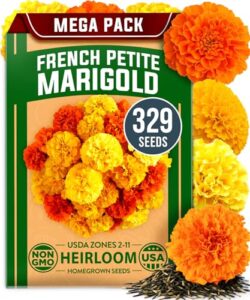
Marigolds pack a punch well beyond their size. These petite French varieties stay compact, just 6 to 12 inches tall with button blooms in yellow, orange, and red, making them perfect for edging beds or tucking into tomato rows.
Their real value lies underground: roots release thiophenes that repel nematodes, while the scent confuses pests hunting by smell. Plant them near peppers, brassicas, or squash, and you’re adding a low-maintenance pest deterrent that blooms in 60 to 75 days flat.
| Best For | Gardeners who want fast-blooming, low-maintenance color for borders, containers, and vegetable beds, plus a natural way to keep common pests away from nearby crops. |
|---|---|
| Product Form | Seeds |
| Primary Benefit | Companion pest deterrence |
| Garden Setting | Beds & containers |
| Eco-Friendly | Yes |
| Skill Level | Beginner |
| Seasonal Use | Spring–Fall |
| Additional Features |
|
- Blooms in just 45-50 days, giving quick seasonal color with minimal wait
- Naturally repels aphids, whiteflies, and nematodes while attracting bees and butterflies
- Compact, bushy growth (6-10 inches tall) fits neatly into edging, containers, or tomato and pepper rows
- Needs full sun and warm temps (60-80°F) to perform well, struggling below 60°F
- Annual plant, so it won’t come back on its own the following year
- Packet includes 329 seeds, likely far more than a small garden plot will use
6. Triple Blend Beneficial Nematodes
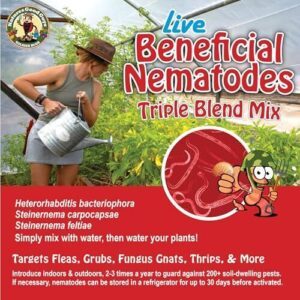
Below the soil surface, nematodes pick up where marigolds leave off. This triple mix combines three species—Heterorhabditis bacteriophora, Steinernema carpocapsae, and Steinernema feltiae—targeting grubs, fungus gnats, cutworms, and root weevils at different depths.
Each unit delivers 5 million nematodes, covering 1,250 sq ft lightly or 600 sq ft for heavy infestations.
Mix with cool water, apply to moist soil above 53°F, and pests usually die within 2 to 5 days.
It’s chemical-free, pet-safe, and won’t harm your beneficial insect allies.
| Best For | Gardeners and growers battling soil-dwelling pests like grubs, fungus gnats, cutworms, and root weevils who want a chemical-free option for pots, greenhouse trays, or garden beds. |
|---|---|
| Product Form | Live Organisms |
| Primary Benefit | Soil pest control |
| Garden Setting | Indoor & outdoor |
| Eco-Friendly | Yes |
| Skill Level | Intermediate |
| Seasonal Use | Spring–Fall |
| Additional Features |
|
- Combines three nematode species that target pests at different soil depths for broader coverage
- Safe around humans, pets, and beneficial insects, with most pests dying off within 2 to 5 days
- Flexible enough for indoor or outdoor use, whether you’re preventing an infestation or treating one already underway
- Nematodes stay viable only if kept cold, so a melted ice pack or delayed application can hurt results
- Needs moist soil at 53°F or warmer, which limits timing to the right weather and watering conditions
- Wrong sprayer choice or over-diluting the mix can cause uneven coverage, leaving some users needing backup pest control
7. Organic Butternut Squash Whole
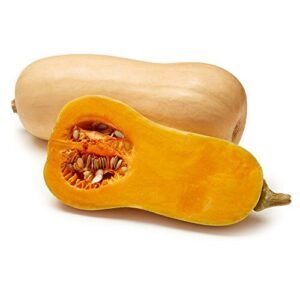
After releasing pest control underground, this entry shifts the list above ground, toward the harvest itself. This certified organic squash grows pesticide-free in the U.S., with fine-textured flesh suited to roasting, puréeing, and baking.
Each squash weighs around 2.5 lb, yielding several cups of nutrient-dense flesh rich in vitamin A and fiber. Store it cool and dry; once cut, refrigerate and use within 5 to 7 days for best results.
| Best For | Families and home cooks who want a versatile, pesticide-free squash for everyday roasting, puréeing, or baking. |
|---|---|
| Product Form | Fresh Produce |
| Primary Benefit | Nutritious ingredient |
| Garden Setting | Kitchen garden |
| Eco-Friendly | Yes (USDA organic) |
| Skill Level | Beginner |
| Seasonal Use | Harvest season |
| Additional Features |
|
- Certified organic and grown in the U.S., with no synthetic pesticides used
- Fine-textured flesh that works well in soups, casseroles, breads, muffins, and pies
- Packed with vitamins, minerals, fiber, and antioxidants for a nutrient-dense addition to meals
- Size can vary, which may be tricky for smaller households needing a predictable portion
- Costs more per unit than non-organic alternatives
- Limited shelf life means it needs proper storage and quick use once cut
8. Fiskars Garden Harvest Basket
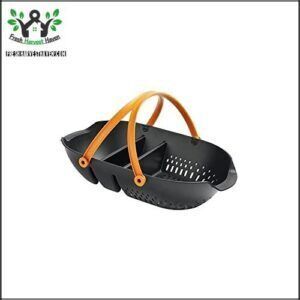
Once you’ve got a butternut squash that size in hand, you need somewhere sturdy to put it.
The Fiskars Garden Harvest Basket solves that with a dual-sided design — drain holes on one side for rinsing, a solid compartment on the other for dry tools or clean produce, with a middle slot for pruners too.
Interlocking grips let you carry it one-handed or two, and the lifetime warranty backs up that high-impact plastic build through season after season of hauling.
| Best For | Home gardeners and growing enthusiasts who pull in large hauls of vegetables, fruit, or flowers and want one container that can carry, rinse, and store everything without extra cleanup steps. |
|---|---|
| Product Form | Plastic Basket |
| Primary Benefit | Harvest & transport |
| Garden Setting | All garden types |
| Eco-Friendly | Partial |
| Skill Level | Beginner |
| Seasonal Use | Year-round |
| Additional Features |
|
- Dual-sided design lets you rinse produce on the drain-hole side and keep dry items separate on the solid side
- Lifetime warranty backs the durable, high-impact plastic construction
- Two carry options — side handles for two hands or interlocking folding handles for one-handed use — plus a built-in compartment for garden tools
- The handle locking mechanism can pinch fingers if you’re not careful when securing it
- The middle tool compartment is small, so it won’t fit larger pruning tools
- Leaving it in direct sunlight for long stretches can cause the plastic to degrade over time
9. Teal Solitary Bee House
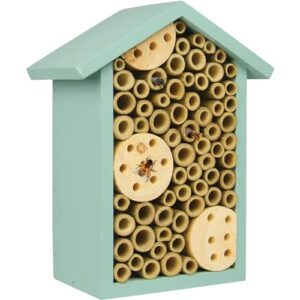
The teal solitary bee house gives those pollinators something to come home to after a long day working on your squash blossoms.
Its painted pine frame holds nesting tubes of varied diameters, welcoming mason and leafcutter bees, species that can pollinate up to 20 times more flowers than a honeybee.
At 8 by 6 by 3.5 inches, it hangs easily on its string, though that thin cord and the joints both hold up better with a little tape or glue reinforcement.
| Best For | This bee house is best for homeowners, gardeners, and educators who want an easy, chemical-free way to support native pollinators and boost garden health. |
|---|---|
| Product Form | Wood Structure |
| Primary Benefit | Pollinator habitat |
| Garden Setting | Outdoor garden |
| Eco-Friendly | Yes |
| Skill Level | Beginner |
| Seasonal Use | Spring–Summer |
| Additional Features |
|
- Attracts mason, leafcutter, and other solitary bees that can pollinate up to 20 times more flowers than honeybees
- Chemical-free and low-maintenance, making it a simple addition to any garden or landscaped space
- Comes with varied-diameter nesting tubes and a ready-to-hang string for quick setup
- Joints can weather over time and may need extra reinforcement with tape or glue
- The hanging string is thin and prone to breaking, especially in windy conditions
- Bee occupancy can take time, since it depends on local bee activity, climate, and placement
10. Wildflower Leafcutter Bee Cocoons
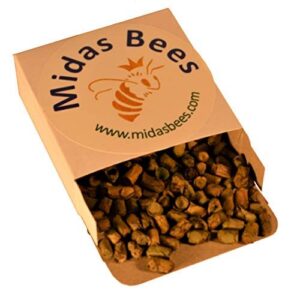
Pair that bee house with a jumpstart: these cocoons arrive dormant, with bees emerging after three to five weeks at steady room temperature. Each package holds 200 cocoons, sourced from wildflower forage, with a lab-tested 94% emergence rate after seven weeks and average live count above 4,000 bees per pound.
That’s a fast, reliable way to seed a leafcutter colony without waiting on wild bees to find you. Safe around kids and pets, it’s an easy win for steady pollination.
| Best For | Gardeners and homeowners who want a fast, reliable way to establish native leafcutter pollinators in their backyard or flowerbeds without waiting on wild bees to show up. |
|---|---|
| Product Form | Live Cocoons |
| Primary Benefit | Native bee colony |
| Garden Setting | Outdoor garden |
| Eco-Friendly | Yes |
| Skill Level | Beginner |
| Seasonal Use | Spring–Summer |
| Additional Features |
|
- Lab-tested 94% emergence rate after seven weeks, with an average live count above 4,000 bees per pound
- Each package includes 200 wildflower-forage cocoons for quick colony establishment
- Safe for households with children and pets
- Hatch timing can vary, sometimes taking 3–5 weeks even at consistent room temperature
- Requires a compatible bee house or nesting tubes for proper emergence and shelter
- Post-emergence bee activity may be minimal or hard to observe in the early weeks
Planning Productive Plant Partnerships
Knowing the benefits is one thing; putting them to work in your own garden is another. Good results come from matching the right seeds, timing, and layout to your specific space and goals. Here’s what to keep in mind as you turn this knowledge into a working plan.
Cover Crop Seed Selection

Picking cover crop seed isn’t guesswork—seed size vigor drives faster canopy closure, while seed coating benefits boost germination in tough soils.
Smart seed mix design balances species mixture balance and environmental adaptation traits to your climate.
Germination timing strategies matter too: stagger cover crop seeding so cover cropping benefits—and companion planting payoffs—arrive when your garden needs them most.
Seasonal Planting Windows

Frost Date Planning anchors cool-season sowing 4–6 weeks before last frost, while warm-season crops wait for soil to hit 15°C.
Soil Temperature Monitoring beats guessing by air alone.
Regional Climate Variability—microclimates near water or elevation—shifts your calendar, so layer succession planting timing with cover crops, companion planting, and living mulch to stretch off‑seasons productively.
Three Sisters Planting Method

Three Sisters intercropping pairs maize, beans, and squash atop mound microhabitats, each crop filling its niche.
The planting sequence matters: corn first, beans, once the stalks rise, for vertical support interaction, squash last for ground cover.
Choose regionally adapted heirloom variety selection for compatibility, and you’ll harvest real nutritional benefit—carbs, protein, and vitamins from one plot.
Succession Planting Strategies

An empty bed is wasted soil. Build a rolling crop calendar using staggered planting intervals and maturity-based scheduling:
- Quick radishes following slow brassicas
- Beans trailing early lettuce
- Climate adaptation windows by frost dates
- Fast-growing relay pairs filling gaps
- Cover crops bridging fallow stretches
Succession planting sustains companion partnerships, soil health, and garden environment balance year-round.
Harvest-friendly Garden Layout

Good layout turns harvest day into a smooth loop, not a maze. Ideal bed widths and narrow alleys keep companion crops within easy reach.
| Element | Spec | Benefit |
|---|---|---|
| Bed Width | 4 ft | Reach Easily |
| Alley Path | 1 ft | Compact Access |
| Hub Distance | 10 ft | Quick Tool Grab |
Align for sunlight, keep paths accessible, and let companion species enrich the garden environment.
Frequently Asked Questions (FAQs)
What is the 70 30 rule in gardening?
Your garden runs on a 70/30 split: seventy percent reliable structural plants like native perennials and shrubs, thirty percent seasonal accents for experimentation. This balance enhances companion planting, reduces maintenance, and builds a resilient, biodiverse garden community season after season.
Can cover crops be used in container gardens?
Yes — and they’re a pot of gold for small-space growers.
Fast-growing legumes like crimson clover fix nitrogen in confined soil, while compact species like radish create vertical drainage channels, improving aeration without crowding shallow container roots.
How do cover crops affect soil pH levels?
Cover crops stabilize soil pH through organic matter buffering, microbial activity, and reduced fertilizer acidity.
Legume nitrogen fixation limits acidifying inputs, while decomposing residues boost cation exchange capacity, helping your soil resist damaging pH swings.
What equipment is needed for terminating cover crops?
A roller crimper does the heavy lifting, crushing stems into mulch. Pair it with tine implements or shallow disk harrowing for over 90% kill rates. Match weight and timing to growth stage for reliable cover crop termination.
Do cover crops work in dry or arid climates?
Don’t let dry spells fool you — drought-tolerant species like winter rye and legumes thrive on winter precipitation, building arid soil carbon, boosting water‑holding capacity and soil moisture retention, while improving irrigation efficiency and nutrient mobilization across tough seasons.
How long before cash crops can cover crops decompose?
Plan on 2 to 4 weeks for fast residues like oats, versus 4 to 8 weeks for cereal rye or vetch—warmer, moist soil and finer chopping speed things up, sometimes by a couple weeks.
Conclusion
Putting your soil to bed each season isn’t surrender, it’s strategy. Every legume root, every marigold border, and every inch of living mulch becomes a deposit toward next year’s harvest.
That’s the real payoff behind cover crops’ companion planting benefits: a garden that repays you in structure, water, and strength instead of constant rescue or another stubborn season of struggle.
Plant the partnership. Trust the process. Watch your soil turn dark, crumbly, and alive again.