This site is supported by our readers. We may earn a commission, at no cost to you, if you purchase through links.
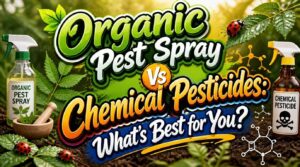
chemical pesticides that guarantee knockdown in hours, and organic sprays built on centuries of botanical wisdom. Walk down any garden center aisle and you’ll find two very different promises stacked side by side: chemical pesticides that guarantee knockdown in hours, and organic sprays built on centuries of botanical wisdom.
gap between them runs deeper than a label.
A 2020 review in Pest Management Science found that repeated synthetic pesticide use triggers resistance cycles in target pests, steadily pushing growers toward higher application rates just to maintain the same control.
Meanwhile, organic options like neem oil and insecticidal soap work through fundamentally different mechanisms—disrupting molting hormones, breaching insect cuticles—with shorter re-entry intervals and measurable benefits for soil microbial life.
Knowing which tool fits your situation comes down to understanding how each one actually works, who’s at risk, and what your garden can sustain season after season.
Table Of Contents
- Key Takeaways
- Organic Versus Chemical Pest Sprays
- How Each Pesticide Type Works
- Safety, Residues, and Garden Health
- Effectiveness Against Common Garden Pests
- Top 5 Organic Pest Products
- Choosing Your Garden Pest Strategy
- Frequently Asked Questions (FAQs)
- Why organic pesticides are better than chemical pesticides?
- What is the difference between chemical pesticides and botanical pesticides?
- Can organic pesticides be used indoors safely?
- How do weather conditions affect pesticide performance?
- Are organic sprays safe for vegetable seedlings?
- What pests are resistant to both pesticide types?
- How should unused pesticides be stored or disposed?
- Conclusion
Key Takeaways
- Chemical pesticides knock pests down fast, but repeated use triggers resistance cycles that push you toward ever‑higher doses — a trap that organic options like neem oil sidestep by working through hormonal and physical disruption instead.
- Systemic insecticides travel through plant tissue to protect new growth and reach sap‑feeders, but that same mobility carries real pollinator risk when residues accumulate in nectar and pollen.
- Your soil’s microbial life — the invisible engine behind nutrient cycling and disease suppression — thrives under organic programs and quietly degrades under broad‑spectrum synthetic use.
- Rotating between organic and chemical controls, timing sprays to early morning or evening, and spot‑treating rather than blanket‑spraying keeps both your pest pressure and your resistance risk in check.
Organic Versus Chemical Pest Sprays
Choosing between organic and chemical pest sprays comes down to more than just what kills bugs fastest — it’s about what works best for your garden, your health, and your long-term goals.
Understanding how organic pest sprays work on vegetables can help you make smarter choices that protect both your crops and your soil over time.
Both options have real strengths and real trade‑offs worth understanding before you reach for the spray bottle. Here’s a closer look at what sets them apart.
Key Differences for Gardeners
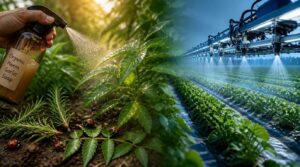
When you’re standing in the garden aisle weighing your options, the core difference comes down to speed versus sustainability. Chemical pesticides deliver fast knockdown — often within hours — while organic pest control works more gradually, targeting soft-bodied insects through disruption rather than brute force, often requiring more frequent applications to maintain effective coverage.
Your gardener goals shape everything.
Natural Versus Synthetic Ingredients

What’s actually inside the bottle matters as much as what it kills. Organic pesticides draw from plant extracts, essential oils, and minerals — think neem oil or pyrethrin — while synthetic pesticides are engineered in labs with precise molecular structures.
- Natural ingredients can vary batch to batch
- Synthetics deliver consistent, controlled composition
- Some nature-identical compounds are lab-made mimics of natural actives
Contact Versus Systemic Action
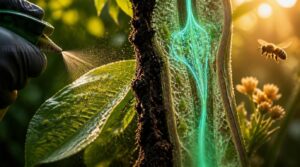
Knowing what’s in the bottle is only half the picture — how that formula moves (or doesn’t) through your plant is what determines which pests it actually reaches.
Contact sprays work surface-only: they hit exposed pests on treated leaves but won’t follow new growth. Systemic insecticides absorb into plant tissue, moving through xylem and phloem to protect developing shoots — making them effective against sap-feeding pests like aphids that hide inside conductive tissue. Systemic insecticides often provide extended protection longevity, staying effective longer after absorption.
| Feature | Contact Spray | Systemic Insecticide |
|---|---|---|
| Where it works | Leaf/stem surface | Inside plant tissue |
| New growth protection | No | Yes |
| Sap-feeding pest control | Limited | Effective |
| Pollinator residue risk | Lower | Higher (nectar/pollen) |
| Reapplication frequency | Higher | Lower |
That pollinator residue risk matters if you’re growing flowering crops — systemic activity can accumulate in nectar, so timing applications away from bloom is non‑negotiable.
Speed Versus Sustainability
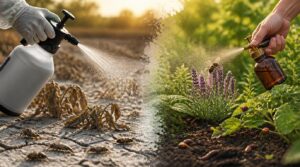
Speed wins the battle, but can lose the war.
Chemical pesticides win the battle fast, but sacrificing natural allies ensures you’ll keep losing the war
Chemical pesticides deliver immediate pest knockdown within hours, but their broad-spectrum activity depletes natural enemies, triggering rebound infestations and escalating chemical input cycles.
Organic options work slower yet support long-term soil resilience, reduce pollinator exposure, and lower pest resistance pressure — making them the more sustainable foundation for your garden’s health.
Best Uses in Home Gardens
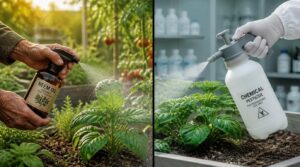
Whether you’re managing a minor aphid flare-up or a full caterpillar outbreak, matching the right product to the situation makes all the difference.
- Spot treat localized outbreaks rather than blanket-spraying your entire plot
- Target early larval stages before feeding damage escalates
- Apply during cooler morning or evening hours for better retention
- Pair organic sprays with physical barriers like row covers
- Rotate product types to prevent resistance buildup
How Each Pesticide Type Works
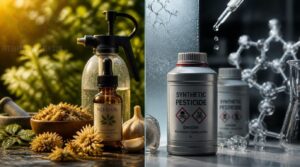
Knowing how a pesticide actually works changes how you use it — and how confidently you use it. Whether you’re reaching for neem oil or a synthetic spray, each one has a distinct mechanism that determines what it kills, how fast, and what it leaves behind. Here’s a closer look at the five main types you’ll encounter.
Neem Oil and Azadirachtin
Neem oil works differently from most organic pesticides — it doesn’t just kill on contact. Its primary active compound, azadirachtin, disrupts hormonal molting pathways, preventing larvae from developing into adults. Pests feed less, reproduce slower, and eventually decline without the garden-wide chemical fallout.
| What Azadirachtin Targets | What It Disrupts |
|---|---|
| Insect molting cycles | Metamorphosis and development |
| Feeding behavior | Appetite and plant damage |
Azadirachtin concentration varies widely by product — from a few hundred to several thousand ppm — so label strength matters. Because neem oil needs water to work, proper emulsification is essential. Without an emulsifier, the oil separates and loses coverage. Apply in the evening, since sunlight degrades azadirachtin quickly, cutting your results short.
For best results targeting the pests causing that honeydew buildup, check this guide on identifying common pepper plant pests to confirm you’re dealing with aphids or whiteflies before mixing your neem solution.
Insecticidal Soap Action
Unlike neem oil, insecticidal soap works through direct physical contact — no systemic activity, no residual effect once dry.
Its potassium salts of fatty acids penetrate the waxy cuticle of soft-bodied pests like aphids and whiteflies, disrupting cell membranes and blocking spiracles.
That combination of cellular leakage and suffocation makes it a precise, low-toxicity option for targeted organic pest control.
Diatomaceous Earth Control
Diatomaceous earth works nothing like a spray — it’s a mechanical desiccation process that physically destroys insects rather than poisoning them. Fossilized silica particles abrade the waxy cuticle, triggering fatal moisture loss.
Dry conditions are essential; humidity stalls performance completely.
Dust entry points lightly, avoid windy days, and wear a mask — silica inhalation risks are real, even with food‑grade DE.
Pyrethroids and Organophosphates
Concerning synthetic chemicals, pyrethroids and organophosphates hit pests through two distinct mechanisms.
Here’s what separates them:
- Pyrethroids cause sodium channel disruption, creating uncontrolled nerve firing and rapid paralysis
- Organophosphates block acetylcholinesterase inhibition, letting acetylcholine accumulate until nerves overfire
- Both carry aquatic toxicity risks and drive cross-resistance when overused
Choose carefully — pesticide toxicity levels differ markedly between the two.
Neonicotinoid Systemic Effects
Neonicotinoids take a different approach — they’re absorbed into the plant itself through systemic uptake, traveling through the xylem to reach leaves, stems, and flowers.
Even sublethal exposure doesn’t kill pollinators outright; instead, it disrupts their memory, navigation, and reproduction.
This oxidative stress quietly accumulates, making neonicotinoids one of the most debated tools in modern chemical pesticides.
Safety, Residues, and Garden Health
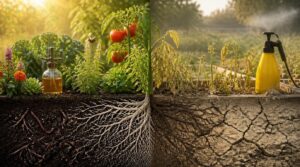
Choosing between organic and chemical pesticides isn’t just about what kills bugs fastest — it’s about what happens to your soil, your food, and the people in your garden afterward. The differences in safety profiles, residue behavior, and ecological impact are more significant than most gardeners realize. Here’s what you need to know across five key areas.
Human Exposure Risks
When you spray a synthetic pesticide, your body faces risk through three simultaneous routes: inhalation, skin contact, and ingestion. Organophosphates, for instance, can trigger neurological symptoms within minutes of breathing in the vapors.
Children are especially vulnerable — they represent over 50% of accidental pesticide poisoning deaths in the U.S.
Organic options like neem oil carry considerably lower acute toxicity, making them a safer everyday choice.
Re-entry Interval Differences
Once the spray is down, the clock starts. The re-entry interval (REI) is the minimum waiting period before you, your kids, or your pets can safely return to a treated area without protective equipment. Organic products often have REIs of 4–24 hours, while many synthetic pesticides extend that window to 24–72 hours or longer.
Harvest Interval Importance
Just as re-entry intervals protect you after spraying, harvest interval timing protects whoever eats what you grow. This is the waiting period between your last pesticide application and picking.
Organic options break down faster, meaning shorter gaps before harvest, while synthetic chemical residues can persist longer, requiring stricter residue compliance timing to meet food safety standards.
Soil Microbe Impacts
What lives beneath your soil matters as much as what grows above it. Soil microbial diversity — bacteria, fungi, and decomposers working in concert — drives nutrient cycling, builds aggregate stability, and suppresses pathogens naturally.
Synthetic pesticides can disrupt this invisible ecosystem, while organic options keep it thriving. Your soil microbiome is worth protecting.
Beneficial Insect Protection
Not all garden visitors are pests. Beneficial insects — lady beetles, parasitic wasps, and ground beetles — quietly regulate pest populations without a single spray.
Synthetic pesticides eliminate these allies indiscriminately, while targeted application timing (early morning or late evening) and insectary plant strips protect them.
Preserving overwintering habitat and monitoring predator populations keep your garden’s natural defense system intact year-round.
Effectiveness Against Common Garden Pests

Knowing which pesticide works best often comes down to the pest you’re actually dealing with. Different invaders respond differently to organic and chemical treatments, so matching your approach to the target makes all the difference. Here’s how each option stacks up against the most common troublemakers in the garden.
Aphids on Leafy Greens
Aphids are sneaky — by the time you notice curled, cupped leaves on your lettuce or spinach, populations are already exploding. Green peach and cabbage aphids cluster on leaf undersides, draining sap and coating foliage in sticky honeydew that invites sooty mold.
Insecticidal soap delivers reliable contact kill with minimal residue risk, making it your safest choice on edible greens.
Whiteflies on Peppers
Whiteflies on peppers can quietly spiral from a nuisance into a serious threat before you’ve noticed the damage. These tiny insects lay eggs on leaf undersides, and once nymphs start feeding on plant sap, you’ll see yellowing, curled leaves and a sticky honeydew residue that invites sooty mold.
- Sticky trap monitoring — one trap per 10 sq ft — catches adult activity early
- Neem oil (azadirachtin) disrupts the whitefly life cycle without harsh chemical residue
- Insecticidal soap smothers eggs and nymphs on contact, reapply every 5–7 days
Don’t overlook the virus vector risk: whiteflies transmit leaf curl viruses between pepper plants, so controlling populations fast matters. Chemical pesticides knock them down quicker, but resistance builds. Rotating neem oil with insecticidal soap keeps pressure consistent and sustainable.
Caterpillars on Brassicas
Brassicas practically roll out the welcome mat for caterpillars. Imported cabbageworms, cabbage loopers, and diamondback moth larvae all target your kale, broccoli, and cabbage — chewing irregular holes from outer leaves inward.
Check undersides weekly for small green larvae or frass.
Bacillus thuringiensis kurstaki stops feeding fast without harming beneficial insects, while row covers block moth oviposition before damage begins.
Squash Bugs on Zucchini
Squash bugs are one of the most stubborn pests zucchini growers face. Identify bronze egg clusters on leaf undersides early — each holds 20–30 eggs hatching within two weeks. Nymphs feed in groups, causing wilting and yellowing leaves. Apply neem oil or insecticidal soap at first detection:
- Crush visible egg clusters manually
- Spray neem oil on nymphs weekly
- Remove plant debris post-season
Beetles on Fruiting Crops
Beetles can quietly devastate a fruiting crop before you realize the damage is done. Raspberry beetle larvae tunnel directly into developing fruit, while Japanese beetle feeding skeletonizes leaves and scars fruit surfaces. Rose chafer adults compound this by shredding foliage on canes.
Neem oil disrupts larval development effectively, though chemical pesticides deliver faster knockdown when beetle population peaks hit hard in late spring.
Top 5 Organic Pest Products
With so many organic options on the market, it helps to know which ones actually deliver. These five products cover the most common garden pest scenarios, from soft-bodied insects to crawlers hiding in the soil. Here’s what’s worth keeping on your shelf.
1. Pure Cold Pressed Neem Oil
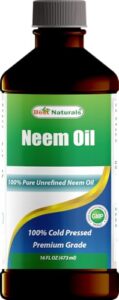
One of the most adaptable tools in organic pest management is pure cold-pressed neem oil. Cold-pressing preserves azadirachtin, the compound that disrupts insect feeding cycles and growth stages — something that refined alternatives can’t reliably deliver.
Dilute it properly, apply during low-light hours, and reapply every 7–14 days or after rain. It’s effective against aphids, spider mites, and gnats while remaining safe for edible crops.
The trade-off? A strong odor, and you’ll need to avoid hot midday applications to prevent leaf burn.
| Best For | Organic gardeners, pet owners dealing with skin conditions, and eco-conscious plant enthusiasts looking for a natural, chemical-free alternative to synthetic pesticides. |
|---|---|
| Formulation | Unrefined Oil |
| Organic | Yes |
| Indoor Use | Yes |
| Outdoor Use | Yes |
| Target Pests | Aphids, mites, gnats |
| Pet Safety | Use with caution |
| Additional Features |
|
- Cold-pressed and unrefined, preserving azadirachtin for maximum effectiveness against aphids, spider mites, and gnats
- Versatile enough for both indoor and outdoor plants, plus topical use on pets with skin conditions
- Eco-friendly and safe for edible crops, making it ideal for organic gardening
- Strong, distinct odor that many users find unpleasant
- Requires careful dilution and must be applied during low-light hours to avoid leaf burn or surface staining
- Occasional packaging issues reported, including label orientation problems and bottle breakage during shipping
2. Harris Cold Pressed Neem Oil
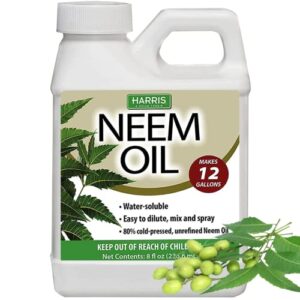
If pure cold-pressed neem oil is the all-purpose baseline, Harris Cold Pressed Neem Oil refines that formula for gardeners who want a ready-to-use concentrate. Formulated at 80% active neem oil with a built-in emulsifier and UV stabilizer, it mixes cleanly into water — one teaspoon per quart — and covers roughly 12 gallons per bottle.
It’s EPA-registered for aphids, whiteflies, and mealybugs, with added antifungal activity, making it well-suited for both indoor containers and outdoor vegetable beds.
| Best For | Gardeners — indoor or outdoor — who want an easy-mixing, multi-purpose neem oil that handles pests, fungal issues, and leaf appearance in one bottle. |
|---|---|
| Formulation | Concentrated Oil |
| Organic | Yes |
| Indoor Use | Yes |
| Outdoor Use | Yes |
| Target Pests | Aphids, scale, flies |
| Pet Safety | Use with caution |
| Additional Features |
|
- Mixes effortlessly into water thanks to the built-in emulsifier — no separate surfactant needed
- Pulls triple duty as a pest control, antifungal treatment, and leaf shine in one product
- Highly economical — one 8 oz bottle makes up to 12 gallons of spray
- Small bottle size demands careful measuring, and the oil can solidify in cold storage
- Not safe for aquatic plants or recently transplanted/stressed foliage, which limits versatility
- Can stain fabrics and surfaces if oversprayed, so application needs a steady hand
3. Garden Safe Insecticidal Soap Spray
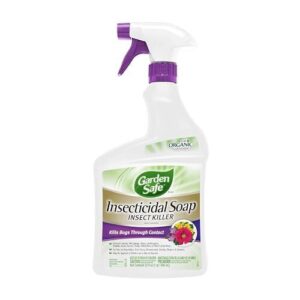
Where Harris neem works systemically, Garden Safe Insecticidal Soap Spray takes a different approach — it kills on contact by disrupting insect cuticles with potassium salts of fatty acids. Aphids, whiteflies, spider mites, and mealybugs are all targets.
The 32 oz ready-to-use bottle needs no mixing, and you can spray it right up to harvest day. Just make sure you wet every leaf surface, including undersides — insects you miss will survive.
| Best For | Gardeners who want a simple, ready-to-use organic solution for soft-bodied pests on edibles, ornamentals, or houseplants without mixing chemicals or worrying about pre-harvest intervals. |
|---|---|
| Formulation | Liquid Spray |
| Organic | Yes |
| Indoor Use | Yes |
| Outdoor Use | Yes |
| Target Pests | Aphids, mites, whiteflies |
| Pet Safety | Pet-friendly |
| Additional Features |
|
- No mixing needed — just shake and spray, making it quick and beginner-friendly
- Safe to use right up to harvest day on vegetables, fruit trees, and edible crops
- Pet-friendly and approved for organic gardening, indoors and out
- Only kills insects it directly contacts, so thorough coverage of every leaf surface (including undersides) is a must
- Repeated use can reduce effectiveness, especially against spider mites that develop resistance
- The spray nozzle is reported to be flimsy, and there’s little residual activity — heavy infestations may need frequent reapplication
4. Southern Ag Triple Action Neem
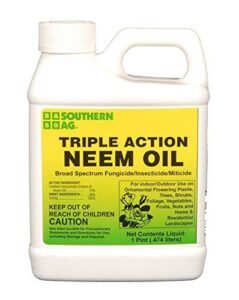
If you want a product that truly pulls double duty, Southern Ag Triple Action Neem is worth your attention. Its 70% clarified hydrophobic neem oil works simultaneously as a fungicide, insecticide, and miticide — tackling aphids, spider mites, whiteflies, and fungal issues like powdery mildew in one spray. It’s OMRI listed and safe for vegetables, fruits, and ornamentals.
Apply thoroughly to all leaf surfaces, including undersides. Reapply after rain, since moisture breaks down efficacy quickly.
| Best For | Gardeners looking for an all-in-one organic solution to fight pests, mites, and fungal diseases across a wide variety of plants — indoors and out. |
|---|---|
| Formulation | Broad-Spectrum Oil |
| Organic | Yes |
| Indoor Use | Yes |
| Outdoor Use | Yes |
| Target Pests | Insects and fungi |
| Pet Safety | Use with caution |
| Additional Features |
|
- Triples up as a fungicide, insecticide, and miticide, so you’re solving multiple problems with one product
- OMRI listed and safe for vegetables, fruits, and ornamentals, making it a solid organic option
- Leaves a subtle gloss on foliage after application, giving plants a healthy, polished look
- Can cause tiny yellow burn spots on sensitive or delicate foliage if you over-apply
- Needs repeated applications to get full control — don’t expect instant results
- Pricier than comparable neem oil products, which can add up if you’re treating a large garden
5. Harris Natural Diatomaceous Insect Killer
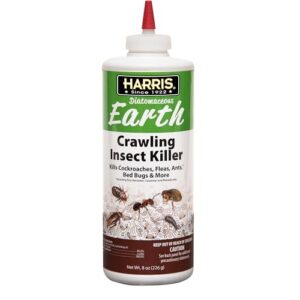
Unlike sprays, diatomaceous earth takes a purely mechanical approach — its microscopic particles abrade an insect’s exoskeleton, causing it to dehydrate and die on contact. Harris Natural Diatomaceous Insect Killer is 100% freshwater diatomaceous earth with no additives, making it genuinely non-toxic around children and pets when applied correctly.
The built-in narrow-tip duster lets you push powder precisely into cracks, crevices, and entry points where crawling pests like ants, roaches, and bed bugs travel. Keep it dry — moisture kills its effectiveness.
| Best For | Homeowners who want a chemical-free, long-lasting barrier against crawling insects like ants, roaches, fleas, and bed bugs — especially those with kids or pets. |
|---|---|
| Formulation | Fine Powder |
| Organic | Yes |
| Indoor Use | Yes |
| Outdoor Use | Yes |
| Target Pests | Ants, roaches, fleas |
| Pet Safety | Safe as directed |
| Additional Features |
|
- 100% pure diatomaceous earth with no additives, so it’s non-toxic and safe around children and pets when used as directed
- Built-in narrow-tip duster makes it easy to target cracks, crevices, and entry points without mess
- EPA-registered and works in a wide range of spaces — basements, attics, garages, gardens, and more
- Loses effectiveness when wet, so rain or moisture can wipe out your barrier and force reapplication
- Not food-grade, meaning you need to be careful about placement around areas where kids or pets eat or play
- Packaging can be flimsy — users have reported bag holes and a duster that’s tricky to use without spilling excess powder
Choosing Your Garden Pest Strategy
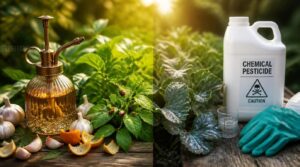
Getting your pest strategy right comes down to a handful of decisions made at the right time and in the right order. Whether you lean organic, synthetic, or somewhere in between, these five steps will help you stay ahead of infestations without wasting product or harming your garden’s ecosystem. Here’s where to start.
Start With Pest Identification
Before you reach for any spray, you need to know exactly what you’re dealing with. Misidentifying a pest wastes time and money — and can harm beneficial insects.
- Note damage patterns like stippling, chewing, or honeydew
- Recognize pest life stages — eggs, nymphs, adults respond differently
- Log environmental context including temperature and recent rainfall
Photograph everything, then confirm with your local extension service.
Use Spot-spraying First
Once you’ve confirmed what you’re up against, spot spray first — treat only the infested areas rather than blanketing your entire garden.
This approach cuts total product use dramatically, leaves untreated zones intact for beneficial insects, and keeps both organic pest control and chemical pesticides precisely where they’re needed.
Identifying infestation hotspots early makes integrated pest management far more effective and targeted.
Time Sprays for Pollinators
Timing your sprays is one of the most practical ways to protect pollinators without sacrificing pest control.
Pollinator activity patterns follow temperature closely — bees don’t forage well below 55°F (13°C), so evening and pre-dawn windows are your safest options. Spraying after 6 PM lets residues dry overnight before bees resume foraging.
Keep these best spray windows in mind:
- Apply after sunset or before sunrise when pollinators are inactive
- Avoid midday heat, when foraging activity peaks near blooms
- Check wind speeds — wind drift management means spraying only when conditions are calm, under 5 mph
- Choose short-residual organic pest control products like pyrethrin or insecticidal soap for nighttime applications
- Skip direct flower spraying entirely, regardless of timing
Nighttime application benefits extend beyond pollinator safety — cooler temperatures slow evaporation, improving coverage for both organic and chemical pesticides. This matters especially for integrated pest management programs balancing efficacy with beneficial insect protection.
Rotate Control Methods
Rotating your control methods is one of the smartest moves in sustainable pest management. When pests encounter the same active ingredient repeatedly, they adapt — and your spray stops working.
Alternating between organic options like neem oil and targeted synthetics disrupts that cycle, preserving effectiveness across the season while supporting resistance management and keeping beneficial insects safer.
Combine Sprays With Prevention
Sprays work best when they’re the last line of defense, not the first. Integrated Pest Management pairs organic pest control and nonchemical alternatives with cultural controls like mulching, proper plant spacing, and weed management to reduce pest pressure before it starts.
- Monitor pest thresholds before reaching for any spray
- Test tank mix compatibility to protect efficacy
- Track post-spray outcomes and adjust your pest management accordingly
Frequently Asked Questions (FAQs)
Why organic pesticides are better than chemical pesticides?
Organic pesticides support biodiversity preservation and soil microbial resilience while breaking down quickly, reducing water contamination risks. They deliver long-term ecosystem health benefits without driving resistance — making them a genuinely sustainable choice.
What is the difference between chemical pesticides and botanical pesticides?
When it comes down to brass tacks, chemical pesticides are synthetic compounds, while botanical pesticides derive from plants. Botanicals biodegrade rapidly; synthetics persist longer, carrying stricter residue and regulatory standards.
Can organic pesticides be used indoors safely?
Yes, most organic pesticides are safe indoors when applied correctly. Use targeted spot applications, provide ventilation, and keep kids and pets away until surfaces dry completely.
How do weather conditions affect pesticide performance?
Weather shapes how well any pesticide performs. Heat accelerates degradation, wind causes drift, humidity affects deposition, rain washes residues away, and UV light breaks down active ingredients — all before the pest is controlled.
Are organic sprays safe for vegetable seedlings?
For vegetable seedlings, organic sprays are generally safe when applied correctly — early morning, properly diluted, and never during heat stress. Phytotoxicity risk rises with concentrated oils or repeated applications on tender new growth.
What pests are resistant to both pesticide types?
Some pests resist both pesticide types through metabolic detoxification enzymes, target site mutations, and behavioral avoidance. Aphids, whiteflies, and certain beetles are prime examples where cross-resistance mechanisms make control genuinely difficult.
How should unused pesticides be stored or disposed?
Always keep unused pesticides in their original containers, stored in a cool, dry, locked space between 40–75°F. For disposal, contact your local hazardous waste program — never pour them down the drain.
Conclusion
What you spray today shapes what you’ll face next season—that’s the quiet logic every gardener eventually learns. Choosing between organic pest spray and chemical pesticide garden solutions isn’t about picking a side; it’s about reading your garden’s signals and responding strategically.
Organic options build resilience over time, while synthetics offer speed when pressure peaks. Master both, rotate wisely, and your garden won’t just survive pest pressure—it’ll develop the kind of balance that makes intervention increasingly rare.
- https://environmentalfactor.com/blogs/blogs/natural-pest-control-vs-chemical-pest-control
- https://www.coghillfarm.com/my-guide-to-organic-pest-control-in-your-garden
- https://homeparamount.com/blog/organic-vs-chemical-pest-control
- https://www.pan-europe.info/old/Campaigns/pesticides/documents/risk_assesment/Pesticides%20and%20environment,%20an%20overview.doc
- https://pmc.ncbi.nlm.nih.gov/articles/PMC10748064