This site is supported by our readers. We may earn a commission, at no cost to you, if you purchase through links.
My first summer growing tomatoes, I lost half my plants to aphids before I even knew what hit me.
A neighbor suggested I try a neem oil spray, and I remember thinking—that’s it? Something pressed from a tree seed takes down a pest infestation?
It does, and it’s one of five organic pest sprays beginners can mix at home with ingredients that cost less than a takeout lunch.
The difference between a thriving garden and a pest-ravaged one often comes down to knowing which spray targets which pest, how to mix it correctly, and when to pull the trigger.
Table Of Contents
Key Takeaways
- right spray to the right pest — insecticidal soap for soft-bodied insects, neem oil for deeper hormonal disruption, garlic pepper for repelling — is more important than having a large collection of products.
- Dilution ratios, timing (morning or evening), and shaking before each use aren’t optional details; getting them wrong either scorches your plants or lets the pests shrug it off.
- Prevention does more heavy lifting than spraying ever will — healthy soil, companion planting, and row covers make your garden genuinely harder for pests to crack in the first place.
- Rotating between different organic sprays on a weekly schedule stops pests from adapting, keeping your whole control strategy effective over the long haul.
Choose Beginner-Friendly Organic Pest Sprays

The good news is you don’t need a cabinet full of expensive products to get started — just a few simple sprays made from ingredients you probably already have. Each one targets different pests and works best in specific situations, so picking the right one makes a real difference.
If you want a quick-start guide, this roundup of natural pest deterrents for garden beds walks you through which kitchen ingredients work best against common culprits.
Here are beginner-friendly options worth keeping in your rotation.
Insecticidal Soap Spray
If you’re just starting out with organic gardening, insecticidal soap spray is the perfect first tool. It targets soft-bodied insects like aphids, mealybugs, and whiteflies by disrupting their protective waxy coating on contact.
- Use 1–2% soap solution (about 1 Tbsp per quart of water)
- Choose soft water to prevent soap precipitation
- Always patch test first to avoid phytotoxicity
The spray’s effectiveness comes from its potassium salts of fatty acids.
Neem Oil Spray
Soap spray manages soft-bodied insects beautifully, but for something that works deeper — actually disrupting how insects feed, grow, and reproduce — neem oil spray is your next step. Its active compound, azadirachtin, interferes with insect hormone systems, so pests basically forget how to eat.
Mix 1–2 tablespoons of cold-pressed neem oil with ½ teaspoon of mild soap per gallon of warm water. The soap manages emulsification — without it, oil and water won’t blend.
Apply in the evening to prevent leaf burn, targeting leaf undersides where pests hide.
Garlic Pepper Spray
If neem oil targets pests from the inside out, garlic pepper spray takes a blunter approach — it simply drives them away. The sharp sulfur in garlic and the capsaicin in hot peppers irritate soft-bodied insects like aphids and mites on contact, while also deterring rabbits and deer.
Puree two garlic bulbs with ½ cup vegetable oil, add 1 tablespoon dried chile powder and 1 teaspoon soap, then dilute to one quart. Always strain thoroughly — solids clog your nozzle fast. Apply at dusk for best scent dispersion.
Vegetable Oil Spray
Garlic pepper spray sends pests running — vegetable oil spray stops them in their tracks.
A thin coat of refined canola or soybean oil physically smothers soft-bodied insects like aphids and whiteflies by blocking their breathing pores.
Mix 1–2 tablespoons per gallon of water with a drop of mild soap to help the oil spread evenly, then apply directly to affected stems and leaves.
Citrus Herbal Spray
If the first four sprays feel bold and pungent, citrus herbal spray is the invigorating alternative. Steep citrus peels or add 10–20 drops of citrus essential oil — orange, lemon, or grapefruit — into a quart of warm water with a teaspoon of mild soap.
The terpenes naturally repel aphids, spider mites, and whiteflies on contact.
Mix Sprays Step by Step
Getting your ratios right makes the difference between a spray that works and one that damages your plants. Before you start mixing, a few simple habits will save you time and frustration down the line. Here’s what to keep in mind as you put each recipe together.
Measure Ingredients Carefully
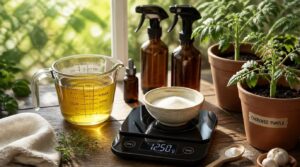
Precision here isn’t pedantry — it’s the difference between a spray that works and one that scorches your tomatoes. Use a graduated measuring cup for liquids and a digital kitchen scale for powders, accurate to 0.1 grams.
For a pesticide-free approach that pairs well with precise spraying, fall gardening techniques for beginners can show you how row cover fabric keeps pests off tomatoes without chemicals at all.
Eyeballing a neem oil dilution or garlic concentrate can easily push you past safe ratios, harming plants and beneficial insects alike.
Use Clean Spray Bottles
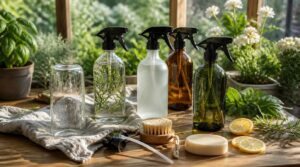
The bottle you choose matters more than most beginners realize. BPA-free plastic or glass spray bottles both work well for homemade organic gardening sprays — glass especially if you’re using essential oils, since it won’t react with the mixture. Avoid metal bottles for citrus-based or acidic recipes; corrosion happens faster than you’d expect.
Before refilling, rinse thoroughly with warm water, scrub the nozzle with mild soap, and air-dry upside down. A dirty bottle is basically a contamination trap — old residue can react unpredictably with your new mixture. Label every bottle with contents and date, and dedicate each one to a single formulation.
Shake Before Each Use
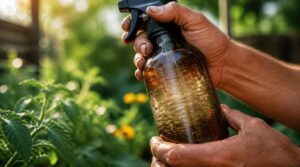
Think of your spray bottle as a snow globe — the moment you stop shaking, everything starts settling. Oils and water separate naturally, and particles drift to the bottom fast. A quick 5–15 second shake before each use redistributes those active ingredients, restores uniform droplet size, and prevents uneven coverage that leaves some pests completely untouched.
- Shake immediately before spraying — not five minutes earlier
- Use a gentle wrist-rotation motion to avoid excessive foaming
- Preventing phase separation keeps your DIY garden spray recipes consistent every cycle
- Shorter bursts work better if foaming persists
- A clogged nozzle often means insufficient agitation; soak it briefly in warm water to clear it
Suspension stability is the quiet difference between a spray that works and one that wastes your effort on organic pest management.
Dilute Oils Properly

Getting the dilution ratio wrong is one of the most common rookie mistakes — too strong and you’ll scorch leaves, too weak and the pests just laugh at you.
Essential oil concentrations should stay between 0.5–2%, meaning no more than 20 drops per 100ml of solution. For vegetable oils used for smothering soft-bodied insects, mix 2–8 teaspoons of your oil concentrate per quart of water.
Always choose a light carrier oil — canola or sunflower — since heavier oils clog nozzles and reduce even leaf coverage. Add a few drops of mild soap as your emulsifier, which helps oil and water actually bond instead of immediately separating.
Citrus oils need extra dilution because they evaporate faster and burn leaves more readily than other options. Store any diluted mixtures away from direct light to preserve their effectiveness.
| Oil Type | Dilution Rate | Key Risk |
|---|---|---|
| Essential oils | 0.5–2% | Leaf phytotoxicity |
| Vegetable oil | 2–8 tsp/quart | Nozzle clogging |
| Citrus oils | Under 0.5% | Leaf scorch |
Label Homemade Mixtures
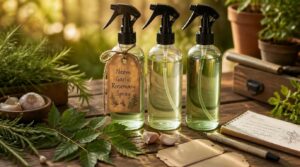
Unlabeled spray bottles are an accident waiting to happen — especially when your homemade pesticide looks identical to plain water.
Every label needs the mixture name, preparation date (day, month, year), and a full ingredient list ordered by weight. Include your dilution rate, target pests, application timing, and a basic safety warning. One label per batch. Don’t skip it.
Apply Sprays Safely Outdoors

Mixing your spray is only half the job — how you apply it makes just as much difference. A few simple habits will protect your plants, your garden’s beneficial insects, and yourself. Here’s what to keep in mind before you start spraying.
Spray Mornings or Evenings
Timing your spray application isn’t just a nice tip — it genuinely changes how well the treatment works.
- Early morning (before 8 AM): Cooler temperatures reduce evaporation and prevent leaf scorch.
- Late evening (after 7 PM): Residue dries overnight before dew forms, protecting beneficial pollinators.
- Avoid midday: Heat above 75°F degrades oils fast and risks burning foliage.
Patch Test First
Before you spray the whole plant, test a small area first. Pick one or two leaves, apply your diluted spray, and wait 24 hours.
If you spot yellowing, spotting, or leaf scorch, your mix is too concentrated. Weaker plants and seedlings are especially sensitive, so always start at the lowest dilution before committing to a full application.
Cover Leaf Undersides
Once your patch test gives the green light, flip your attention to the leaf undersides. Most pests — aphids, spider mites, whiteflies — hide there deliberately, sheltered from rain and predators. The abaxial surface is where stomata cluster, so spray coverage here actually penetrates more effectively.
Work your spray bottle slowly along each branch, coating every underside thoroughly.
Reapply After Rain
Rain is the one thing that undoes your hard work fastest. Heavy rainfall washes off soap, oil, and garlic residue within hours, so inspect your plants after any downpour.
Look for streaking or bare patches — that’s your cue to reapply once leaves dry.
In wet climates, a 5-to-7-day reapplication schedule keeps natural pest control sprays working consistently.
Wear Gloves and Protection
Before you reach for that spray bottle, take a moment to gear up properly.
Nitrile gloves resist oils and capsaicin well — hot pepper sprays especially will irritate bare skin fast. Make sure your gloves fit snugly at the wrist to block backflow.
Add safety glasses and closed-toe shoes, and you’re genuinely protected.
Match Sprays to Garden Pests
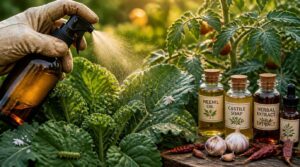
Not every spray works on every pest, and using the wrong one is a bit like bringing an umbrella to a drought. The good news is that once you know which bugs are causing trouble, picking the right spray becomes pretty straightforward.
Here’s how to match your organic arsenal to the most common garden invaders.
Aphids and Whiteflies
Aphids and whiteflies are two of the most common soft-bodied insects you’ll find in any garden. Aphids cluster on new growth and curl leaves as they feed, while whiteflies flutter up when disturbed, then resettle underneath. Both excrete honeydew, which quickly leads to black sooty mold — a sign things have escalated beyond a minor nuisance.
| Warning Sign | Likely Culprit |
|---|---|
| Curled, distorted new leaves | Aphids |
| Yellowing leaves, white cloud when touched | Whiteflies |
Both reproduce fast, so early action matters. Insecticidal soap or a neem oil aphid spray applied thoroughly to leaf undersides works well for both. These organic pest control options smother soft-bodied insects on contact — just shake before each use and reapply after rain.
Thrips and Mealybugs
Thrips and mealybugs are sneakier than aphids — you often don’t notice them until damage is already done.
- Silvery leaf stippling signals thrips rasping plant surfaces
- White cottony masses on stems reveal mealybugs
- Thrips can transmit plant viruses while feeding
- Mealybug honeydew promotes sooty mold and ant activity
Insecticidal soap controls both soft-bodied insects on direct contact.
Spider Mites
Spider mites are barely visible — under 1 mm — yet they can devastate a plant in days.
| Sign | What It Means | Best Spray |
|---|---|---|
| Leaf stippling | Mites piercing cells | Insecticidal soap |
| Fine webbing | Mature colony forming | Neem oil spray |
| Yellowing leaves | Heavy sap loss | Garlic spray |
| Curling leaf edges | Widespread feeding damage | Oil-based spray |
| Bronzing foliage | Severe infestation stage | Combined soap + neem |
Warm, dry conditions accelerate their life cycle — sometimes egg to adult in just one week. Check leaf undersides with a hand lens for early colonies. Neem oil disrupts their hormones, while insecticidal soap smothers soft-bodied insects on contact. Reapply every five to seven days, since webbing growth shields established colonies from sprays.
Beetles and Caterpillars
Beetles and caterpillars hit your garden hard, but they leave very different calling cards. Beetles chew irregular holes in leaves or skeletonize them entirely; caterpillars tear large, ragged patches.
Hot pepper spray irritates both, while garlic spray repels beetles through its sulfur compounds.
For caterpillars, neem oil disrupts their hormonal development — targeting them well before visible damage worsens.
Rabbits and Deer
Rabbits and deer require a different approach than insect pests.
Rabbits leave clean, precise cuts on stems, while deer create ragged, torn foliage above knee height.
For both, hot pepper spray works as an organic pest deterrent — capsaicin irritates their mouths and discourages return visits.
Reapply after rain, and consider exclusion fencing alongside spraying for lasting results.
Prevent Pests Before Spraying
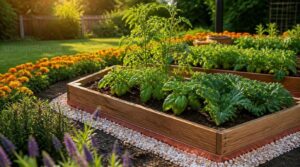
The best pest defense starts long before you reach for a spray bottle. Strong, well-fed plants growing in the right conditions are simply harder for insects to colonize — think of it as building a moat before the invaders show up.
The best pest defense is a thriving plant — strong, well-fed growth is simply harder for insects to conquer
Here are five practical habits that help keep pests at bay from the start.
Feed Plants With Compost
Think of compost as your garden’s best defense, built from the ground up. Working 2–4 inches of aged compost into new beds improves soil structure, boosts microbial activity, and releases nutrients slowly over weeks — so plants stay strong rather than stressed.
Healthy, well-fed plants simply attract fewer pests. It’s that straightforward.
Use Companion Planting
Compost builds strong roots, but what grows around your plants matters just as much. Companion planting turns your garden into a natural defense system — no spraying required.
Here are five pairings worth trying:
- Marigolds near tomatoes release limonene, deterring whiteflies
- Basil with peppers draws beneficial insects that prey on thrips
- Dill near cucumbers attracts lady beetles, natural aphid hunters
- Nasturtiums as trap crops lure aphids away from vegetables
- Beans beside corn fix nitrogen, keeping neighbors well-fed and resilient
Add Row Covers
Companion planting keeps many pests at bay, but some insects are determined to bypass even your best botanical bouncers. That’s where floating row covers earn their place.
Drape these lightweight, spun-bonded polyester or polypropylene fabrics directly over seedlings after transplanting — they block chewing insects, moths, and beetles without chemicals, while still letting light and moisture through.
Encourage Beneficial Insects
Row covers handle the physical barrier side of pest management — but nature has its own defense system, and you can recruit it.
Nectar-rich plants like alyssum, marigolds, and dill attract lady beetles and lacewings that hunt aphids for you. Add a shallow water dish with stones nearby, and you’ve created a miniature refuge that keeps your natural allies fed, hydrated, and on patrol.
Rotate Organic Controls
Just like rotating crops prevents soil burnout, rotating your organic sprays keeps pests guessing and prevents pest resistance from forming. Alternate insecticidal soap, neem oil, and garlic-pepper sprays on a weekly schedule.
This simple shift in your organic pest management plan disrupts pest lifecycles, enhances microbial diversity in soil biology, and makes your whole garden harder to crack.
Frequently Asked Questions (FAQs)
How do you make organic pest control spray?
Making organic pest control spray starts with simple kitchen staples — soap, oil, garlic, or neem — diluted in water. Most DIY recipes take under five minutes and cost almost nothing to put together.
Can organic sprays harm my vegetable harvest?
Organic sprays are generally safe, but concentration and timing matter. Too much oil can block photosynthesis. Always rinse harvests thoroughly, and respect pre-harvest intervals to keep residue levels well within safe limits.
How do I store leftover homemade spray safely?
Store leftover spray in a cool, dark cabinet away from sunlight and heat. Most homemade mixtures last 1–4 weeks. Label containers with the date, and discard anything that smells off or separates strangely.
Are organic sprays safe for indoor houseplants?
Think of indoor plants as guests in your home — they deserve extra care. Most organic sprays work indoors, but test on one leaf first to avoid stress-induced burning or residue buildup.
Do organic sprays work in rainy climates?
Yes, but rain is their biggest rival. Rainfall washes off surface residues fast, so reapply every 5–7 days — sooner after heavy showers. Check forecasts and time applications around dry windows.
Can I combine different organic sprays together?
Combining sprays can work — but only if the labels allow it. Always run a jar test first: mix small amounts, wait 24 hours, and check for separation before committing to a full blend.
Conclusion
Ancient Roman farmers called garlic nature’s soldier—and three thousand years later, your kitchen cupboard still holds the exact same quiet weapon.
Mastering organic pest sprays for beginners isn’t about complexity; it’s about knowing which bottle to reach for before the aphids reach your tomatoes. Mix carefully, apply consistently, match each spray to its target pest, and let good prevention do the heavy lifting. Your garden doesn’t need chemicals—it just needs you paying attention.
- https://raiseyourgarden.com/home/homemade-neem-oil-spray-for-organic-pest-control
- https://homegrown-garden.com/blogs/blog/homemade-garden-pest-repellent
- https://anoregoncottage.com/homemade-garlic-mint-garden-insect-spray-really-works
- https://ecogardener.com/blogs/news/diy-homemade-garden-sprays
- https://www.gardeningknowhow.com/edible/herbs/garlic/controlling-pests-with-garlic.htm