This site is supported by our readers. We may earn a commission, at no cost to you, if you purchase through links.
Soil doesn’t lie. Farm the same crop in the same ground for three consecutive seasons, and the biology collapses—nutrient reserves thin out, pathogens accumulate, and yields drop in ways that no fertilizer fully corrects.
Research confirms this: continuous monoculture can reduce microbial biomass by 40% compared to diversified rotations, stripping soil of the living foundation crops depend on.
The fix isn’t complicated, but it requires intention. Crop rotation for healthy soil works by giving each field section a biological reset—cycling root architectures, residue types, and nutrient demands so the system rebuilds itself. Done well, it cuts irrigation needs, suppresses soilborne disease, and lifts organic matter year after year.
Table Of Contents
- Key Takeaways
- How Crop Rotation Improves Soil Health
- Planning an Effective Crop Rotation System
- Step-by-Step Guide to Implementing Crop Rotation
- Top 5 Products for Successful Crop Rotation
- Frequently Asked Questions (FAQs)
- Does crop rotation improve soil health?
- What is a good crop rotation sequence?
- What are the best crops for soil health?
- What are the best crops to rotate?
- How long should a crop rotation cycle be?
- Can crop rotation work in small home gardens?
- What crops should never follow each other?
- Does crop rotation eliminate all soil diseases?
- How do you rotate crops in raised beds?
- Can crop rotation work in container gardens?
- Conclusion
Key Takeaways
- Continuous monoculture strips away up to 40% of soil’s microbial biomass, a loss no fertilizer program can fully reverse—rotation is the only reliable reset.
- Legumes earn their place in any rotation by fixing 200–300 lbs of nitrogen per acre annually, reducing synthetic input costs while rebuilding the fertility that heavy feeders drain.
- Rotating non-host crops like sesame or sorghum-sudangrass for two to three consecutive seasons collapses soilborne pathogens and nematode populations below damaging thresholds—no chemicals needed.
- Every 1% gain in soil organic matter holds up to 20,000 extra gallons of water per acre, making a well-planned multi-year rotation one of the most cost-effective drought buffers available.
How Crop Rotation Improves Soil Health
Soil doesn’t improve by accident — it reacts to what you plant and when.
Smart crop rotation and cover planting are among the organic soil improvement methods that work with your soil’s natural cycles rather than against them.
Crop rotation works on several levels at once, each one building on the last.
Here’s how it actually changes what’s happening beneath your feet.
Enhancing Soil Fertility and Nutrient Cycling
Rotating crops is basically letting your soil breathe and rebuild. Legume nitrogen fixation alone can return 200–300 lbs of nitrogen per acre annually—no synthetic inputs needed. Here’s what healthy nutrient cycling delivers:
- Replenished soil fertility through natural organic matter breakdown
- Phosphorus mobilization via deep root cycling and cover crop benefits
- Microbial biomass boost of up to 40%% five years
- Reduced nutrient depletion from heavy-feeder sequencing
- Sustained soil health through diverse residue decomposition
These advantages stem from biological nitrogen fixation benefits.
Improving Soil Structure and Water Retention
Beyond nutrients, soil structure is where crop rotation quietly earns its keep. Deep root penetration from alfalfa and daikon radishes relieves compaction by 20–30%, creating biopores that improve soil porosity enhancement and water infiltration long after harvest.
Aggregate stability rises 15–30% over five years, while organic matter gains a boost in water holding capacity substantially—retaining up to 20,000 extra gallons per acre for every 1% increase.
Every 1% gain in organic matter holds up to 20,000 extra gallons of water per acre
water savings from crop rotation can reduce irrigation needs by up to 25%.
Breaking Pest and Disease Cycles Naturally
Strong soil structure sets the stage, but host crop rotation handles what structure alone can’t fix: the pests and pathogens waiting in the soil for their preferred plant to return.
- Spatial isolation strategies shift potatoes 400+ meters away, cutting Colorado potato beetle pressure early in the season.
- Soilborne pathogen suppression improves when non-host crops starve Verticillium and Fusarium for two to three consecutive seasons.
- Nematode population management works by rotating in poor-host crops like sesame or sorghum‑sudangrass, collapsing populations below damaging thresholds.
- Beneficial microbe promotion rises naturally, as diverse root exudates feed competing bacteria that block pathogen colonization.
Increasing Soil Organic Matter and Biodiversity
Pest suppression is only part of the picture. Crop rotation quietly rebuilds soil from the inside out by feeding soil biology, raising microbial biomass carbon by roughly 21 percent across rotation studies.
Legume residue decomposes steadily, releasing nitrogen over two to three years. Root architecture diversity opens pore space, while cover crop mixtures lift organic matter through carbon sequestration, strengthening agricultural biodiversity and long-term soil health.
Planning an Effective Crop Rotation System
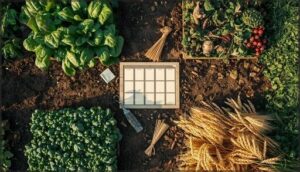
good rotation plan doesn’t happen by accident—it starts with understanding what each crop takes from the soil and what it gives back.
Once you know the soil nutrient dynamics at play, planning a crop rotation schedule becomes a lot more intentional—and a lot more effective.
Once you know that, sequencing your crops becomes less of a guessing game and more of a logical puzzle you can actually solve.
Here’s what to think through as you build your system.
Categorizing Crops by Family and Nutrient Needs
Think of your garden as a team—every crop family plays a different position. Nightshade Nutrient Demand is intense; tomatoes and peppers consume nitrogen and phosphorus at 2–3 times the rate of light feeders. Meanwhile, Brassica Boron Requirements reach critical levels for head formation, and Cucurbit Magnesium Needs drive chlorophyll production in sprawling vines. Categorizing crops this way is the foundation of smart Nutrient Cycling and lasting Soil Fertility.
- Nightshades (tomatoes, peppers): heavy nitrogen and phosphorus consumers
- Brassicas (broccoli, cabbage): demand boron and up to 200 kg/ha nitrogen
- Alliums (onions, garlic): honor Allium pH Preferences of 6.0–7.0, moderate feeders
- Root crops/cucurbits: prioritize Root Crop Potassium and Cucurbit Magnesium Needs for tuber and fruit development
Sequencing Heavy Feeders, Legumes, and Light Feeders
Sequencing is where crop rotation pays off. Start with heavy feeders like tomatoes in year one—they draw down nitrogen fast.
Follow with legumes, which fix 50 to 200 pounds of nitrogen per acre, restoring soil fertility through natural nutrient cycling.
In year three, light feeders like carrots absorb excess without waste. This crop year order optimizes soil nutrient flow, breaks pest cycles, and drives yield optimization of 27 to 48 percent.
Including Cover Crops for Soil Enrichment
Adding cover crops between main plantings is one of regenerative agriculture’s sharpest tools for soil enrichment.
Hairy vetch delivers up to 200 pounds of nitrogen per acre through legume nitrogen fixation, while mustard’s brassica biofumigation suppresses soil pathogens naturally.
Winter rye biomass improves structure and scavenges residual nutrients.
Drill seeds at 0.25 to 1 inch for seeding depth optimization, then time cover crop termination carefully—roll-crimp legumes at 50 percent bloom.
Adapting Rotation Plans to Climate and Soil Conditions
No two fields are the same — your rotation plan shouldn’t be either.
Tailor your approach based on three non‑negotiables:
- Sandy Soil Strategies: Deep‑rooted alfalfa accesses subsoil moisture; follow with brassicas to capture residual nitrogen for stronger nutrient cycling.
- Clay Compaction Solutions: Sunflowers break hardpan naturally; ryegrass fibrous roots boost clay aggregate stability by up to 30%.
- Temperate Seasonal Timing vs. Tropical Flood Management: Temperate growers use winter rye during freeze‑thaw cycles; tropical growers rely on raised‑bed rice‑legume sequences for climate resilience and pH balancing techniques.
Step-by-Step Guide to Implementing Crop Rotation
Knowing what to grow is only half the battle—putting it all into practice is where the real work begins. A solid implementation plan keeps your rotation on track across seasons and years, turning good intentions into measurable soil gains.
Here’s exactly how to get started.
Assessing Your Garden or Farm’s Soil and Current Crops

Before planning your crop rotation, you need a clear picture of where you stand. Use soil test kits to check pH and flag any nutrient deficiency signs across different beds.
Walk your field and note weed indicator species—dandelions signal compaction, knotweed means packed ground. Combine soil texture assessment with crop growth monitoring to build an honest baseline for smarter soil health management.
Mapping Out a Multi-year Rotation Schedule

Think of your farm as a chessboard—every square matters, and every move has consequences. Sketch a unit grid design using digital mapping tools like Google Drawings, then overlay spatial data layers from soil surveys.
Build rotation timeline charts spanning four to six years, assigning each management unit a seasonal allocation matrix. Soil health management through structured crop rotation strategies is the backbone of sustainable agriculture.
Tracking Plantings With a Gardening Log Book

Once multi-year rotation map exists on paper, a gardening log book turns that plan into living data.
Record seed viability and germination rates for every variety, log pest observation dates, and track plant growth metrics week by week.
Harvest yield records reveal which crop sequences genuinely built soil health—giving your sustainable gardening and crop planning decisions a foundation in real field evidence.
Monitoring and Adjusting Rotation Strategies Over Time

Your log book data becomes most powerful when paired with a soil testing schedule every two to three years, zigzag pest scouting methods, and yield mapping analysis that compares crop sequences zone by zone.
Remote sensing indicators like NDVI flag nutrient depletion before it costs you a harvest.
Climate adaptation tweaks—adding sunflowers for drought, winter rye for compaction—keep your crop rotation strategies genuinely responsive.
Top 5 Products for Successful Crop Rotation
The right tools make crop rotation a lot less guesswork and a lot more science. From soil biology boosters to planning resources, a few well-chosen products can genuinely move the needle on your results.
Here are five worth keeping in your rotation toolkit.
1. Dunkin Original Medium Roast Coffee

simplest soil amendments are one of the 100% Arabica and nitrogen-rich grounds you can add to your rotation toolkit. Dunkin’ Original Blend grounds are exactly what a compost pile needs between crop cycles.
You can scrape them straight from pods or a 30-oz canister into your compost, where they boost microbial activity and improve soil structure over time. It’s a low-cost, zero-waste habit that quietly feeds the biology your rotation depends on.
| Best For | Home coffee drinkers who want a reliable, everyday cup without any fuss. |
|---|---|
| Price | ~$10–15 |
| Format | Physical product |
| Skill Level | All users |
| Indoor Use | Yes |
| Ease of Use | Easy |
| Language | N/A |
| Additional Features |
|
- Smooth, consistent medium roast that works well in pretty much any brewing method
- A 30-oz canister gives you plenty of coffee without constant restocking
- Easy to customize — throw in your favorite creamer or sweetener and you’re good to go
- Not the move if you lean toward light or dark roasts — this one sits firmly in the middle
- The flavor is steady and predictable, so if you like variety, it might feel a little one-note
- The canister design could be tricky for anyone with limited hand strength or dexterity
2. NaturesGoodGuys Beneficial Nematodes Blend
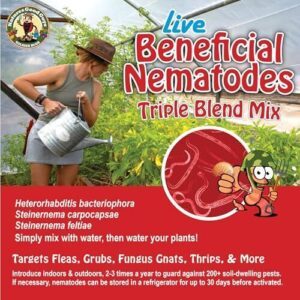
Where coffee grounds support the biology above ground, NaturesGoodGuys Beneficial Nematodes Blend works where you can’t see — deep in your soil.
Each packet delivers 5 million live nematodes across three species: Heterorhabditis bacteriophora targets grubs and beetles in deeper layers, Steinernema carpocapsae hunts surface larvae like fleas and webworms, and Steinernema feltiae manages fungus gnats in cooler conditions.
Together, they cover over 200 pest species naturally, making them a smart fit for any rotation system focused on breaking pest cycles without synthetic chemicals.
| Best For | Gardeners who want a natural, chemical-free way to wipe out soil pests like fungus gnats, grubs, and fleas without harming their plants. |
|---|---|
| Price | $17.25 |
| Format | Physical product |
| Skill Level | All gardeners |
| Indoor Use | Yes |
| Ease of Use | Moderate |
| Language | N/A |
| Additional Features |
|
- Three nematode species in one packet means broader pest coverage — from deep-soil grubs to surface-level larvae
- Totally non-toxic, so it’s safe to use around kids, pets, and edible plants
- 5 million nematodes for $17.25 is solid value compared to most chemical treatments
- Soil needs to stay moist for the nematodes to survive and work, which adds upkeep
- Results aren’t instant — it can take a few weeks before you notice a real difference
- Some users find the instructions a bit confusing, so there’s a small learning curve
3. Old Farmers Container Gardening Handbook
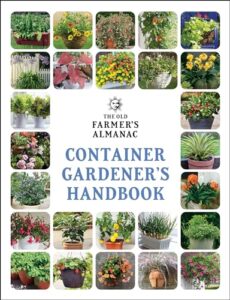
Scaling crop rotation to containers is trickier than it sounds — but the Old Farmer’s Almanac Container Gardening Handbook makes it manageable.
At 208 pages, it profiles 38 plants and categorizes them into thriller, filler, and spiller roles, helping you sequence plantings with intention.
You’ll find precise potting mix ratios, fertilizer rates by plant type, and container sizing guidance — details that matter when you’re rotating heavy feeders like tomatoes through limited space.
It’s a practical reference, not a coffee-table book.
| Best For | Gardeners of any skill level who want to grow vegetables, herbs, fruits, or flowers in containers — especially those working with limited space. |
|---|---|
| Price | $11.50 |
| Format | Physical book |
| Skill Level | All experience levels |
| Indoor Use | Yes |
| Ease of Use | Moderate |
| Language | English |
| Additional Features |
|
- Covers everything from potting mix ratios to pest control, so you’re not hunting for answers elsewhere
- The thriller/filler/spiller plant system makes it easy to build container arrangements that actually look good
- At $11.50, it’s a steal for 208 pages of practical, hands-on guidance
- Doesn’t go deep on houseplants or specific varieties like azaleas, so indoor gardeners may find gaps
- The sheer amount of information can feel overwhelming if you just want a quick answer
- The physical book runs smaller than some buyers expect, which may be a turnoff if you like larger reference guides
4. Gardening Log Book Planner

Keeping detailed records transforms guesswork into a system that actually works.
The Gardening Log Book Planner packs 169 pages into a 6×9 format — light enough to carry into the field — and gives you 100 plant log pages, monthly sowing and transplant lists, and a companion planting chart built into the back cover.
$9.99, it’s one of the most affordable ways to track rotation cycles, compare year-over-year yields, and catch patterns before a pest or nutrient problem escalates.
| Best For | Gardeners of any experience level who want a simple, affordable way to stay organized and actually track what’s happening in their garden. |
|---|---|
| Price | $9.99 |
| Format | Physical book |
| Skill Level | Beginner to experienced |
| Indoor Use | Yes |
| Ease of Use | Easy |
| Language | English |
| Additional Features |
|
- At $9.99, it’s hard to beat the value — 169 pages covering plant logs, monthly planning, sowing lists, and even a companion planting chart
- The 100 plant log pages with guided prompts take the guesswork out of what to record, which is great if you’re just getting started
- Lightweight and compact (6×9) so you can actually bring it outside with you
- It’s a one-year planner, so you’ll need to buy a new one when it runs out
- Paper and print quality are just okay — don’t expect premium materials at this price point
- If you want more seed logs or specialized tracking, you might find it a little thin on those features
5. Mikrobs Air N Nitrogen Booster
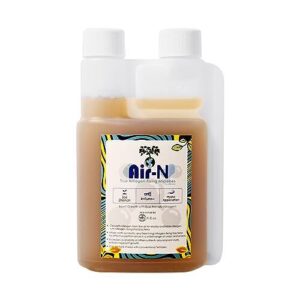
Nitrogen is the engine behind leafy growth, and when your rotation includes heavy feeders, replenishing it naturally makes all the difference.
Mikrobs Air N Nitrogen Booster contains live cultures of Azotobacter chroococcum and Azospirillum brasilense — two bacterial strains that pull atmospheric nitrogen from the air and convert it into plant-available ammonia in the root zone. At 8 fluid ounces, it pairs cleanly with your existing fertilizer program, letting you gradually reduce synthetic nitrogen inputs while keeping crop yields steady across seasons.
| Best For | Farmers and gardeners growing heavy-feeding crops like grasses and vegetables who want to cut back on synthetic fertilizers without sacrificing yields. |
|---|---|
| Price | ~$20–25 |
| Format | Physical product |
| Skill Level | All growers |
| Indoor Use | Yes |
| Ease of Use | Moderate |
| Language | N/A |
| Additional Features |
|
- Contains two proven nitrogen-fixing bacteria that pull nitrogen straight from the air and deliver it to the root zone
- Works alongside your existing fertilizer routine, so you don’t have to overhaul anything
- Made in a USA bio-lab and scientifically formulated, so it’s not just marketing fluff
- Results can be hit or miss depending on what you’re growing — cannabis growers in particular have had bad experiences
- Easy to over-apply, and too much can actually hurt your plants
- Doesn’t have a ton of reviews out there yet, so it’s hard to gauge how it performs across a wide range of crops
Frequently Asked Questions (FAQs)
Does crop rotation improve soil health?
Yes, crop rotation genuinely improves soil health. It replenishes nutrients, breaks pest cycles, and builds organic matter — giving your soil a stronger foundation with each passing season.
What is a good crop rotation sequence?
A four-year sequence works well: legumes first, then brassicas, followed by heavy feeders like tomatoes or corn, and finally root vegetables.
This order replenishes nitrogen, breaks pest cycles, and balances soil nutrient demand efficiently.
What are the best crops for soil health?
Legumes like alfalfa, vetch, and red clover are your strongest allies—fixing up to 300 pounds of nitrogen per acre annually.
Daikon radish and mustard round out the list by breaking compaction and suppressing soil pathogens naturally.
What are the best crops to rotate?
The best crops to rotate are legumes, brassicas, root vegetables, and cereals. Each group feeds and restores the soil differently, so cycling through them keeps nutrients balanced and pests off-guard.
How long should a crop rotation cycle be?
Think of crop rotation cycles like a long game of chess—you’re planning several moves ahead.
Most gardens need at least three to four years before returning the same crop family to the same bed.
Can crop rotation work in small home gardens?
Yes, crop rotation works well in small home gardens.
Divide beds into four 4×4-foot zones, rotating plant families clockwise each season to disrupt pests and replenish nutrients without needing large space.
What crops should never follow each other?
Avoid planting tomatoes after potatoes—they share late blight, depleting phosphorus 30% faster. Never follow garlic with onions; white rot survives 20 years. Brassicas after brassicas invite clubroot that persists two decades.
Does crop rotation eliminate all soil diseases?
Crop rotation considerably reduces many soilborne diseases, but it doesn’t eliminate all of them.
Pathogens like Verticillium dahliae can persist in soil for over a decade, surviving even long non-host rotations.
How do you rotate crops in raised beds?
Treat each raised bed as its own universe — move entire crop families from bed to bed annually, never shuffling within a bed.
Rotate nightshades, brassicas, legumes, and roots one step forward each year.
Can crop rotation work in container gardens?
Absolutely — container gardens can support crop rotation.
Move plant families between pots each season, avoid repeating the same family in the same container, and refresh your potting mix with compost annually for best results.
Conclusion
Like a long-fallow field that comes back stronger after rest, your soil rewards patience and intention more than any single input ever could.
Crop rotation for healthy soil isn’t a seasonal experiment—it’s a compounding system where each well-planned cycle builds on the last.
Track your rotations, read your soil’s response, and adjust with evidence.
The biology beneath your feet is remarkably resilient when you work with it, not against it.
- https://vlsci.com/blog/crop-rotation-benefits/
- https://www.cropler.io/blog-posts/crop-rotation-key-benefits-for-farmers-and-long-term-impact
- https://rodaleinstitute.org/why-organic/organic-farming-practices/crop-rotations/
- https://www.agriculturalsynergies.org/how-to-choose-the-right-crop-rotation-strategy-for-your-farm/
- https://livetoplant.com/how-to-implement-crop-rotation-for-healthy-soil/