This site is supported by our readers. We may earn a commission, at no cost to you, if you purchase through links.
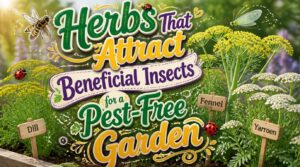
A single dill plant, left to flower, can host dozens of parasitic wasps within a week. These insects don’t just visit—they hunt, laying eggs inside aphids and hornworms that would otherwise shred your tomatoes. Your garden’s best pest control often grows in the herb bed, not the pesticide aisle.
That yellow umbel you almost pinched off for cooking? It’s a landing pad for hoverflies, lacewings, and tiny wasps that keep destructive insects in check. Gardeners have leaned on this trick for generations, planting herbs alongside vegetables to build a self-regulating natural balance.
Below, you’ll find the specific herbs that attract beneficial insects, along with practical ways to arrange them so your garden works a little less against you and a little more for itself.
Table Of Contents
- Key Takeaways
- Best Herbs for Beneficial Insects
- Flowering Herbs That Feed Predators
- Mint Family Herbs for Pest Control
- Herbs That Attract Pollinators
- Growing Herbs for Insect Habitat
- Frequently Asked Questions (FAQs)
- What herbs attract beneficial insects?
- What plants attract beneficial insects?
- How to raise beneficial insects?
- What plant attracts the most pollinators?
- How do repellent herbs protect crops from common pests?
- Which herbs work well for small container gardens?
- Do these herbs need full sun to attract insects?
- How does yarrow support natural pest control populations?
- Can sweet cicely thrive in colder growing climates?
- Conclusion
Key Takeaways
- Umbel-shaped herbs like dill, fennel, parsley, cilantro, and lovage attract parasitic wasps and hoverflies that naturally control garden pests like aphids and hornworms.
- Letting herbs flower instead of harvesting them fully provides nectar and pollen that sustain beneficial insects, especially ladybugs, during periods when prey is scarce.
- Thoughtful garden design—such as staggered bloom times, layered borders, herb spirals, and water sources—creates lasting habitat that keeps beneficial insects around all season.
- Skipping pesticide sprays and relying on integrated pest management lets natural predators like ladybugs and lacewings handle pest problems without chemical intervention.
Best Herbs for Beneficial Insects
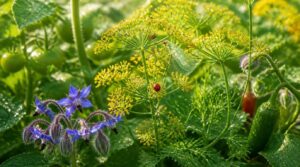
Some herbs work harder than others at inviting good bugs into your garden. You don’t need a whole greenhouse to make a difference, just a few well-chosen plants tucked among your vegetables. Here are five that consistently earn their keep.
For a deeper dive into which varieties pull double duty as pest deterrents, this guide to herbs that keep bugs away breaks down exactly what to plant and where.
Dill
Feathery and fragrant, dill earns its keep by feeding both your kitchen and your garden’s natural defenses. Its yellow umbels draw parasitic wasps that hunt hornworms, while lacy foliage flavors fish and pickles. Direct-sow in full sun with well-drained soil. For a continuous harvest, practice successional sowing techniques throughout the season.
- Attracts predatory wasps
- Flavors sauces, pickles
- Self-sows seeds
- Thrives in loose soil
Fennel
Fennel takes dill’s trick and grows it taller, sometimes reaching a full meter with hollow, branching stems. Its yellow umbels attract hoverflies and parasitic wasps right alongside your tomatoes.
Growing Florence fennel for its sweet bulb needs cool, steady moisture, while common types focus energy into seed. Give it full sun, rich soil, and let it self-sow for a lasting garden community.
Parsley
Right beside dill and fennel, parsley earns its spot in the beneficial insect lineup with those same tiny umbel flowers in year two.
Both flat leaf and curly varieties work well here. Let a few plants bolt and bloom—you’ll feed ladybugs and lacewings while still harvesting fresh leaves for the kitchen, all from one hardy, cool-tolerant herb in your garden.
Cilantro
Cilantro’s tiny flowers do double duty in your garden, drawing in parasitic wasps while the plant works overtime in your kitchen. That soapy taste some folks notice? It’s genetic, tied to specific aldehydes in the leaves.
Let a few plants bolt—harvest stems for cooking, save seeds as coriander for spice blends, and you’ll support beneficial insects and pollinators through good companion planting.
Lovage
Towering at up to six feet, this celery-scented giant earns its keep both in the kitchen and the garden. Its late-spring umbels attract bees and parasitoid wasps, supporting natural pest control nearby.
Propagate lovage by dividing the rhizome each spring, and you’ll get a hardy perennial habitat structure year after year. Use stems and leaves as culinary celery substitutes—their phthalide compounds deliver that unmistakable aroma.
Flowering Herbs That Feed Predators
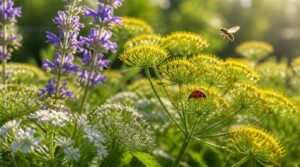
Once your herbs start flowering, the real magic begins for the insects you’re trying to attract. Different bloom shapes and sizes call in different helpers, from tiny wasps to hungry ladybugs. Here’s what those flowers actually offer once they open up.
Umbel-Shaped Blooms
Picture a tiny umbrella opening in your garden—that’s an umbel. Dill, fennel, and parsley all share this umbel landing platform, with even-length pedicels radiating from one point.
These flat-topped blooms attract parasitic wasps that hunt garden pests, making them a natural ally when identifying common garden pests in your beds.
This structural pattern isn’t random. It creates:
- Stable footing for hoverflies
- Wide pollinator foraging efficiency
- Visible landing zones from afar
- Room for umbellet branching complexity
Your beneficial insects notice these floral structural patterns instantly.
Tiny Nectar Sources
A single dill flower holds less than 2 microliters of nectar—barely a drop—yet that micro nectar volume feeds entire colonies of tiny bees.
Floral tube accessibility matters too: shallow channels let short proboscis foragers reach sugar-rich rewards fast.
| Herb | Nectar Trait |
|---|---|
| Dill | 0.5–2 µL, morning-fresh |
| Fennel | Sucrose-dominant |
| Parsley | Wasp-friendly |
| Lovage | Under 3 µL |
Temperature-responsive secretion peaks after dew, sweetening your nectar-rich wildflower patch.
Pollen for Ladybugs
Ladybugs don’t live on aphids alone. When prey runs thin, protein-rich pollen steps in, sustaining energy and driving ladybug fecundity.
Angelica and dill offer accessible pollen right when seasonal prey gaps hit hardest. This pollen-driven reproduction boosts egg-laying, giving your garden environment diet-based strength and steadier natural pest control from these hardworking predatory insects.
Hoverfly-Friendly Flowers
Ever notice hoverflies hovering right at flower level before landing? That’s no accident—flat, umbel-shaped blooms give them an easy landing platform with quick nectar access.
Yellow and white flowers catch their eye from a distance, while shallow petal layers mean less digging for a meal. Fennel and dill deliver both nectar and pollen, keeping hoverflies fed and your garden buzzing with biodiversity.
Parasitic Wasp Support
Tiny parasitic wasps do their best work invisibly, laying eggs inside tomato hornworms and squash vine borers before you even spot the damage. Dill and fennel blooms fuel these natural pest control allies, meeting their nectar energy needs between hunts.
Infested plants release volatile plant signals that guide wasps to hosts—nature’s own alert system, keeping your garden balance without a single spray.
Mint Family Herbs for Pest Control
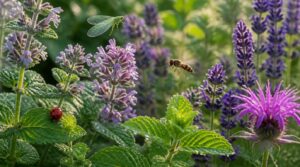
The mint family brings more to your garden than fresh scent and flavor. These herbs produce sucrose-rich nectar that certain predators seem to prefer above all else. Here are five mint relatives worth planting for pest control alone.
Mint
Plant mint where you can watch it, because those spreading stolons will wander fast without a container or buried barrier.
Peppermint, spearmint, and apple mint each bring their own aromatic charm to the kitchen, pairing beautifully with lamb, peas, and yogurt-based dishes. Beyond culinary delights, mint’s menthol offers real medicinal benefits, soothing digestion and easing tension headaches when brewed as tea.
Lemon Balm
Where mint spreads underground, lemon balm stays put, forming tidy clumps of lemon-scented leaves that bees adore. Its tiny white flowers draw beneficial insects while offering you calming tea blends for anxiety relief. Beyond the garden, crushed leaves make a soothing antiviral skin salve. Consider:
- Bushy borders for pollinators
- Tea harvests before flowering
- Root barriers for growth management
Catnip
Your cat probably knows this herb better than you do. Nepetalactone potency drives those famous feline behavioral responses, but that same compound works as a natural insect repellent in your garden.
Grow catnip in full sun, well-drained soil. Crushing leaves boosts aroma for essential oil extraction. As a companion plant, it deters pests while supporting organic gardening—proof that beneficial insects and happy cats can share the same patch.
Thyme
Once your catnip patch settles in, thyme makes a fitting neighbor—this low, woody Mediterranean native thrives in the same full sun, well-drained soil.
Its tiny gray-green leaves pack thymol-rich essential oils, drawing ladybugs and parasitic wasps while deterring pests naturally. Beyond pest control, thyme rewards you in the kitchen, pairing beautifully with garlic and lemon, and offers gentle respiratory support as a soothing tea.
Oregano
Round out this herb trio with oregano, a drought-tolerant Mediterranean perennial that thrives once established. Its carvacrol and thymol-rich oils attract ladybugs and parasitic wasps while offering antimicrobial and antioxidant benefits.
- Full sun and well-drained soil
- Small pink-purple flowers draw pollinators
- Pairs beautifully with tomatoes
- Regular harvesting encourages bushy growth
That savory, peppery flavor makes oregano a kitchen staple worth growing anyway.
Herbs That Attract Pollinators
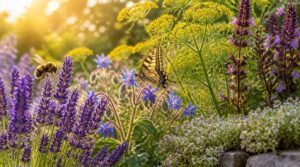
Pollinators need more than pest patrol to stick around your garden. You want blooms that welcome bees and butterflies in for a steady visit, not just a quick stop. Here are five herbs that pull real weight on that front.
Lavender
Few herbs pull double duty like this one: a pollinator magnet by day, a natural moth repellent by night. Bees and butterflies flock to its summer spikes, drawn by nectar and that honeyed, herbaceous fragrance.
Full sun and well-drained soil (pH 6.5–7.5) keep it thriving. English varieties stay compact; French types grow taller. Dried stems still freshen linens and support garden biodiversity.
Bee Balm
Picture crimson fireworks bursting atop square stems, and you’ve got bee balm in full bloom. Those shaggy, tubular flowers are hummingbird magnets, while bees and butterflies crowd in for nectar too.
It spreads by rhizomes, so give it room. Snip leaves for citrusy tea, and you’ll boost both pollinator garden appeal and biodiversity all summer.
Borage
Those star-shaped blue blooms aren’t just pretty—they’re honeybee and bumblebee favorites, offering nectar generously from late spring through summer.
Borage self-seeds readily, sprawling up to a meter tall in full sun. Both leaves and flowers are edible, often tossed into salads or frozen into ice cubes.
Leaves also carry gamma linolenic acid and vitamin C, adding nutritional value beyond the garden.
Hyssop
Bees can’t resist those spiky blue-violet blooms, held high above the foliage for easy foraging. The camphor-scented leaves and tubular flowers pack essential oils that double as natural pest deterrents.
Drought-tolerant once established, hyssop thrives in full sun with minimal fuss. Its pollinator visibility spikes keep beneficial insects coming back all summer, making it a smart companion plant for any garden setup.
Chervil
Here’s a quiet hero of the early garden: chervil blooms when little else does, offering early spring nectar to beneficial insects still waking up. Its lacy, fern-like leaves bring a mild anise flavor to eggs and salads, so it earns its keep in the kitchen too.
Sow seeds shallowly in moist, part-shade soil—chervil’s taproot resents transplanting, so let it settle where it’ll stay.
Growing Herbs for Insect Habitat
Planting the right herbs is only half the job, since beneficial insects also need a place to live and linger.
Think of your garden as a small world, one where design choices matter just as much as plant selection. Here are a few simple ways to turn your herb garden into a true insect habitat.
Staggered Bloom Times

Rarely does a garden feed pollinators evenly all season, so staggering bloom times matters. Plant early bloomers like chervil alongside mid-season dill and late fennel to close seasonal nectar gaps.
Temperature and microclimate timing shift each herb’s start date, while soil fertility can nudge bloom by a week or two. Succession planting keeps flowers coming continuously.
Herb Borders
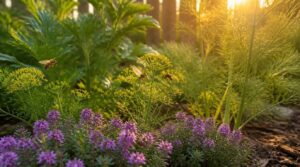
Once you’ve got bloom timing sorted, think about arrangement. A well-designed pollinator border uses layered planting depth: low thyme up front, mid-height dill and fennel behind, tall lovage anchoring the back.
Space plants by mature width, mulch around roots to conserve moisture, and mix evergreen with seasonal herbs. That combination gives you continuous bloom cycles and year-round visual interest.
Herb Spirals
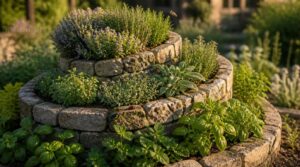
Building up instead of out solves a real space problem. A herb spiral garden stacks Mediterranean herbs like thyme up top for drainage, mint lower down where it stays cooler, using stone or brick walls to hold soil and boost aeration.
- Better drainage for sun-loving herbs
- Cooler pockets for moisture-lovers
- More planting area, less footprint
Those layered microclimates mean beneficial insects find food at every level.
Water for Pollinators
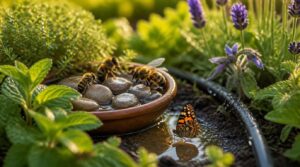
Herbs feed pollinators, but thirst matters too. A shallow water dish with pebbles gives bees safe footing, refreshed daily in hot spells.
| Feature | Purpose | Tip |
|---|---|---|
| Pebble dish | Safe landing | Refill daily |
| Mud puddle | Mineral uptake | Keep moist |
| Drip line | Gentle hydration | Use filtered water |
Mud puddling areas and drip watering round out a true pollinator habitat.
Avoiding Pesticide Sprays
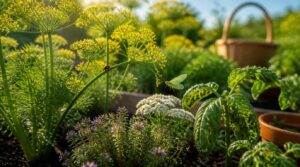
Why reach for a spray when your herb garden’s already doing the heavy lifting? Integrated Pest Management means scouting first, spraying last. Let ladybugs and lacewings handle aphids naturally.
Scout first, spray last—let ladybugs and lacewings handle the aphids naturally
If pests spike, try targeted spot treatments instead of broadcasting chemicals. Skip windy days, protect water sources, and give beneficial insects room to work—that’s true no-spray gardening, rooted in patience and trust.
Frequently Asked Questions (FAQs)
What herbs attract beneficial insects?
Dill, fennel, and parsley form umbel nectar chambers that feed hoverflies and parasitoid wasps. Cilantro and lovage add pollen sources, too. Together these companion plants build lasting pollinator habitats and natural predator support right in your vegetable beds.
What plants attract beneficial insects?
Beyond herbs, umbel flowers, mint relatives, and native perennials like yarrow and borage create diverse nectar source variety, supporting predator feeding habits and pollinator food types throughout entire insect life cycles in a thriving, balanced garden environment.
How to raise beneficial insects?
Give them room and board, as the saying goes: "if you build it, they will come." Installing bee hotels, managing leaf litter for overwintering sites, and providing mineral access through mud patches all build lasting insect biodiversity for natural biological pest control.
What plant attracts the most pollinators?
Honestly, no single plant wins outright—it comes down to nectar reward levels and bloom shape. Lavender, borage, and bee balm rank high, but a nectar-rich wildflower patch with native plants keeps pollination steady across seasons.
How do repellent herbs protect crops from common pests?
Aromatic oils cause volatile scent masking, confusing pests searching for host plants.
Sage, rosemary, and thyme act as a natural repellent, disrupting feeding cues within a 1-2 meter radius — a true aromatic barrier protecting nearby companion plants from common garden pests.
Which herbs work well for small container gardens?
Like a Victorian apothecary’s windowsill, small pots thrive with dill, thyme, and oregano—6 to 8 inch containers, well-draining soil, full sun. Cilantro and chervil suit cooler spots, while herb spirals make the most of space for beneficial insects.
Do these herbs need full sun to attract insects?
Yes, full sun drives nectar production in most cases. Shade cuts bloom frequency, weakening light and visitation patterns.
Dill, fennel, and lavender need solar-driven flowering to thrive, so managing sun exposure well keeps your beneficial insect attraction garden ideas thriving with steady pollination.
How does yarrow support natural pest control populations?
Yarrow’s flat blooms boost predator foraging efficiency, drawing lady beetles and lacewings that interrupt pest lifecycles early. Steady nectar sustains natural enemy diversity, giving your garden a reliable, sustainable form of biological control season after season.
Can sweet cicely thrive in colder growing climates?
Winters don’t faze this hardy soul — sweet cicely shrugs off deep freezes across USDA zones 3 to 7, dying back to its crown, then resprouting each spring with mulch protecting shallow roots and fresh anise-flavored growth.
Conclusion
Small patches, big payoffs—that’s the quiet truth behind every thriving herb bed. Planting herbs that attract beneficial insects doesn’t demand a master plan, just a willingness to let a few stalks flower instead of harvesting every leaf.
Dill goes to seed, mint spreads its runners, and suddenly your garden hums with helpers you never hired. You’re not fighting pests anymore. You’re farming their predators, and your tomatoes will thank you for it.
- https://bcfarmsandfood.com/plants-that-attract-beneficial-insects
- https://www.groworganic.com/blogs/articles/the-best-flowers-and-plants-to-attract-beneficial-insects-to-your-garden
- https://gardenclub.org/blog/herbs-attract-beneficial-insects
- https://www.xerces.org/blog/planting-for-helpful-predators-how-natural-enemies-can-control-garden-pests-for-you
- https://www.azurefarmlife.com/farm-blog/herbs-and-flowers-for-organic-pest-control-in-the-garden