This site is supported by our readers. We may earn a commission, at no cost to you, if you purchase through links.
Most people start a garden thinking about tomatoes. Then something shifts.
You notice earthworms multiplying in your beds, bees returning to flowers you planted on a whim, and a handful of cherry tomatoes that taste nothing like the ones wrapped in plastic at the store.
That shift is what the benefits of organic gardening actually feel like in practice—less a philosophy, more a slow accumulation of evidence.
Your soil gets richer, your grocery bill shrinks, and your body takes in fewer synthetic chemicals with every meal you grow.
What starts as a hobby quietly becomes one of the smartest investments you can make.
Table Of Contents
- Key Takeaways
- Environmental Benefits of Organic Gardening
- Health Advantages of Organic Gardening
- Economic Benefits and Cost Savings
- Improved Soil Health and Fertility
- Sustainable Gardening and Superior Harvests
- Frequently Asked Questions (FAQs)
- What are the benefits of organic gardening?
- What are the pros and cons of organic gardening?
- What are the benefits and disadvantages of organic gardening?
- Why is organic gardening better than non-organic gardening?
- Why should you go organic in your lawn & garden?
- Why is soil important in organic gardening?
- Why should you go organic?
- Is organic gardening a success?
- What is the main benefit of organic farming?
- Is organic gardening worth it?
- Conclusion
Key Takeaways
- Skipping synthetic pesticides doesn’t just protect your health — it keeps toxins out of local waterways, supports pollinators, and helps your soil store significantly more carbon over time.
- Homegrown organic produce can deliver up to 69% more antioxidants and 21% more key minerals than store-bought alternatives, simply because healthy soil grows more nutrient-dense food.
- Small backyard garden focused on high-value crops like tomatoes and herbs can meaningfully offset grocery bills, especially since organic versions at the store often run 60–179% more expensive.
- Organic practices like composting, no-till gardening, and cover cropping build a self-sustaining soil ecosystem that gets richer and more productive with every passing season.
Environmental Benefits of Organic Gardening
Your garden does more than grow food — it shapes the health of the environment around it. Every choice you make, from the soil you feed to the water you collect, sends ripples outward in ways you might not expect.
Building that living soil starts with the right approach — organic soil improvement methods can transform a tired plot into something that feeds both your plants and your community.
Here’s a closer look at how organic gardening quietly works in nature’s favor.
Reducing Chemical Pollution and Runoff
When you skip synthetic pesticides and fertilizers, you’re keeping serious toxins out of the ground — and out of local waterways. Chemical‑free gardening works on multiple fronts:
- Cover Crop Benefits anchors soil, cutting erosion by up to 80%
- Mulch Barriers reduce pesticide runoff by 90%
- Compost Filtration traps pollutants before they reach streams
- Crop Rotation slashes nitrogen leaching by over 40%
No chemical inputs mean cleaner water, healthier soil, and smarter stormwater management. Research shows that cover crops reduce erosion can cut soil loss by up to 80%.
Supporting Pollinators and Wildlife
Keeping chemicals out of your garden does more than protect the soil — it opens the door to a thriving garden ecosystem.
Native Plantings like purple coneflower and milkweed create a Seasonal Bloom Sequence that helps pollinators from spring through fall.
Add Nesting Habitat Features, Water Source Design, and Pollinator-friendly Structures, and you’re building genuine biodiversity that doubles butterfly populations and naturally reduces pest pressure.
Native oaks help caterpillars provide essential food for many bird species.
Preventing Erosion and Managing Stormwater
Your garden’s new biodiversity doesn’t stop at supporting wildlife — it also works hard to protect the ground beneath your feet.
Mulch erosion control, cover crop roots, and no‑till practices all reduce erosion while retaining moisture.
Contour planting slows runoff by up to 50 percent, and rainwater harvesting captures what nature provides.
These environmental benefits of organic gardening quietly control stormwater and strengthens soil health season after season.
Lowering Carbon Footprint and Greenhouse Gas Emissions
Healthy soil doesn’t just hold your plants — it holds carbon.
Through compost carbon sequestration, your garden soil can store up to 12.6% more carbon over time.
No‑till practices prevent stored carbon from escaping, while cover crop integration adds hundreds of kilograms of sequestered carbon per hectare yearly.
Toss in reduced fertilizer emissions and local produce transportation savings, and your backyard quietly becomes a front-line tool for climate change mitigation.
Skipping synthetic pesticides matters too — if you need backup, a homemade bug spray for plants keeps things chemical-free without disrupting the beneficial insects doing the real work.
Your backyard quietly becomes a front-line tool for climate change mitigation
Health Advantages of Organic Gardening
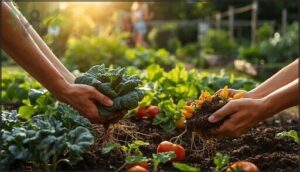
doesn’t just feed your family — it protects them, too.
Skipping synthetic chemicals means what ends up on your plate is genuinely cleaner, and the benefits go well beyond that.
Here’s a closer look at how organic gardening works in your favor, starting with your health.
Lowering Exposure to Harmful Chemicals
When you grow your own food using chemical-free gardening practices, what ends up on your plate looks very different. Studies show organic home gardens produce fruits with 30% lower pesticide traces than store-bought conventional items.
Natural pest control, organic fertilizers, and Non-Toxic Compost mean Synthetic-Free Soil from the start. Your Residue-Free Harvest and Safe Harvest Handling practices reduce exposure to over 200 banned synthetic chemicals — simply by tending your own backyard.
Enhancing Nutritional Value of Produce
Eating from your own organic garden isn’t just satisfying — it’s genuinely more nutritious. Research shows organic produce delivers real advantages:
- Antioxidant Boost: 19–69% more phenolic acids and flavonoids
- Mineral Enrichment: 21% more iron, 29% more magnesium
- Vitamin Amplification: Higher vitamins E and K from healthy soil
- Phytonutrient Diversity: Plants produce more natural compounds without pesticides
- Protein Quality: Better soil biology improves overall nutrient density
That’s the health benefits of organic gardening working quietly in your backyard.
Promoting Physical Activity and Mental Well-Being
Digging in the dirt is surprisingly good medicine. Calorie-burning gardening torches up to 500 calories per hour during tilling — that’s real full-body strength work.
But the mental health benefits of organic gardening run just as deep. Mindful planting practices lower cortisol, and that stress-relief routine adds up fast.
Frequent gardeners report measurably higher wellbeing, with community exercise bonds making it even better.
Reducing Risk of Chronic Diseases
What you grow can quietly protect you. Organic gardening delivers antioxidant rich produce with up to 69% more flavanones than store-bought alternatives — and that matters for long-term health.
Low pesticide exposure, fiber-rich vegetables, and reduced inflammation work together to support improved insulin sensitivity and lower chronic disease risk.
Research links high organic intake to a 35% drop in type 2 diabetes incidence.
Chemical-free gardening is prevention you can harvest.
Economic Benefits and Cost Savings
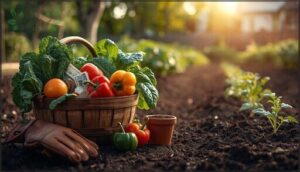
Organic gardening isn’t just good for your health and the planet — it’s genuinely good for your wallet, too.
savings can add up faster than you might expect, especially once your garden hits its stride.
economic benefits that make growing your own food one of the smartest investments you can make at home.
Saving Money on Grocery Bills
small backyard garden can do more for your wallet than you might expect.
Focusing on High-Value Crops like tomatoes, salad greens, and herbs helps you avoid price premiums that can run 60% to 179% higher for organic versions at the store. Smart Meal Planning around Seasonal Eating stretches your Produce Value Offset even further — turning cost-effective gardening methods into real, lasting cost savings.
Reducing Dependence on Store-Bought Produce
Once your organic garden gets going, you start relying on the grocery store a lot less. Homegrown Seed Saving keeps future seasons affordable, while Seasonal Crop Planning means you’re always harvesting something fresh.
A single tomato plant yields up to 20 pounds — that’s real, chemical-free produce filling your kitchen. DIY Food Preservation and Community Share Harvest stretch your garden’s value even further, turning one good season into months of cost savings.
Increasing Household Self-Sufficiency
Growing your own food is one of the most grounding things you can do for your household. With smart organic gardening techniques, you’re not just cutting costs — you’re building real independence.
- Seed Saving cuts future spending and builds crop resilience
- Food Preservation turns summer surpluses into winter meals
- Year-round Harvest planning reduces monthly grocery runs
- Home Food Storage buffers against supply disruptions
- Community Bartering shares resources and grows your self‑sufficient diet
Lowering Gardening Input Costs
Self-sufficiency doesn’t stop at the harvest — it extends to how much you spend getting there. Organic gardening is genuinely one of the most cost-effective gardening methods around, once you know where to look.
| Strategy | What You Do | What You Save |
|---|---|---|
| Compost Production | Turn kitchen scraps into organic fertilizers | €5–€20 per bag |
| Seed Saving | Dry and store heirloom seeds | Several euros per variety |
| Tool Sharing | Pool equipment with neighbors | Full purchase price |
| Bulk Purchasing | Buy soil and mulch in larger quantities | Lower per-unit cost |
| Smart Irrigation | Use rain barrels and targeted watering | Water and supply costs |
Natural pest and weed control, homemade compost, and a little community pooling save money season after season — without the hefty garden center bill.
Improved Soil Health and Fertility
living system isn’t just dirt — it’s a living system that makes or breaks your garden. When you go organic, you’re actively building that system instead of depleting it.
Here’s how organic practices improve your soil from the ground up.
Building a Healthy Soil Microbiome
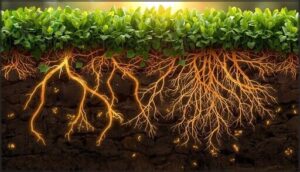
Think of your soil as a living community — and your job is to be a good neighbor.
No-Till Practices preserve the fungal networks that quietly move nutrients to your plants’ roots, while Cover Crop Integration feeds beneficial bacteria between seasons.
Add Crop Rotation Diversity, practice Synthetic Input Avoidance, and consider Mycorrhizal Inoculation to restore compacted areas.
Your soil microbiome will reward you.
Using Natural Soil Amendments and Compost

soil microbiome is thriving — now feed it right. Compost application is the backbone of organic gardening, and adding 2 to 4 inches yearly dramatically improves soil health.
Nutrient dynamics work slowly here, so patience pays off. Mineral amendments like basalt rock dust, biochar use, and natural fertilizers give long-term results.
Cost-effective gardening methods don’t get more practical than pH buffering through compost alone.
Enhancing Soil Structure and Nutrient Content
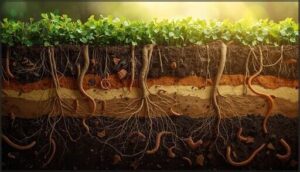
strong soil structure doesn’t happen by accident — it’s built layer by layer through smart choices.
cover crop benefits kick in fast when you add rye or clover over winter, loosening compaction naturally. biochar applications lock in nutrients during heavy rains. mycorrhizal fungi stretch nutrient reach beyond what roots can do alone.
- Use crop rotation planning to balance nutrient demand
- Add biochar applications to boost water retention
- Try cover crop benefits for natural root system management
- Let mycorrhizal fungi expand phosphorus uptake
- Build organic matter through compost and soil enrichment practices
Supporting Beneficial Insects and Microorganisms

Welcoming the right allies into your garden changes everything.
Ladybug predators consume up to 50 aphids daily, while lacewing control targets spider mites and small insect eggs just days after hatching. Beneficial nematodes quietly work underground, eliminating grubs and fungus gnat larvae. Mycorrhizal fungi improve soil health by extending root reach for better nutrient uptake.
Add insectary plants like lavender and yarrow to strengthen pollinator support in organic gardens, boost biodiversity support, and maintain lasting ecological balance through natural soil enrichment.
Sustainable Gardening and Superior Harvests
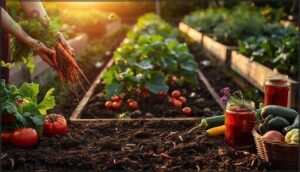
Organic gardening doesn’t just benefit the soil and your health — it also changes how you grow and what you harvest. When you work with nature instead of against it, the results speak for themselves.
Here’s what sustainable gardening actually looks like in practice.
Natural Pest and Weed Control Methods
Nature has its own pest management system — you just need to know how to work with it. Beneficial insects like ladybugs and lacewings do heavy lifting for natural pest and disease control.
Companion planting, such as basil near tomatoes, keeps harmful bugs guessing. Add row covers, neem sprays, and mulch weed suppression, and organic weed management practically runs itself.
Producing Fresher, Tastier Fruits and Vegetables
There’s a reason homegrown tomatoes taste nothing like the ones from a grocery shelf. Harvest timing makes all the difference — picking at peak ripeness means more sugars, more aroma, and genuinely tastier fruits and veggies.
Heirloom varieties, paired with soil microbe flavor development from healthy compost, add real depth.
With immediate post-harvest use and smart microclimate management, organic gardening delivers flavor that’s simply comparable.
Practicing Waste Reduction and Composting
Most households throw away around 6 kilograms of food scraps weekly — and that’s pure garden gold going to waste.
Smart Kitchen Waste Sorting and Backyard Compost Design turn those peels and coffee grounds into rich, finished compost that genuinely improves soil health.
Community Compost Programs and Yard Mulch Recycling extend those environmental benefits of organic gardening even further, making composting one of the most cost-effective gardening methods you’ll ever adopt.
Achieving Consistent, High-Quality Yields
Organic gardening for better harvests isn’t luck — it’s strategy. Crop Rotation Planning breaks pest cycles and keeps soil fertility strong year after year.
Mulch Water Management holds moisture steady, so plants don’t stall between rains. Hybrid Variety Selection can push yields 20–25% higher, while Beneficial Insect Habitat and natural pest control keep crops protected.
Add Soil Carbon Monitoring, and you’ve got cost-effective gardening methods that genuinely improve soil health every season.
Frequently Asked Questions (FAQs)
What are the benefits of organic gardening?
Growing your own food without synthetic chemicals does more than you’d think.
It improves soil health, helps pollinators, saves money, and builds Mental Resilience — all while keeping your plate genuinely clean and chemical‑free.
What are the pros and cons of organic gardening?
It saves money, improves soil health, and offers real health benefits through chemical-free gardening.
The trade-offs: Initial setup cost, labor intensity, pest management challenges, yield variability, and seasonal limitations are worth knowing before you dig in.
What are the benefits and disadvantages of organic gardening?
It’s not all sunshine and bumper crops.
Organic gardening brings real environmental benefits and soil health wins, but expect lower yields, pest challenges, increased labor, and a tricky phase period before things click.
Why is organic gardening better than non-organic gardening?
It works with nature, not against it.
Chemical-free gardening builds long-term resilience in your soil, enhances biodiversity boost, and delivers real health benefits — all while keeping costs down through cost-effective gardening methods.
Why should you go organic in your lawn & garden?
Going organic transforms your lawn into a living system — supporting biodiversity boost, soil carbon capture, and chemical‑free play for kids and pets, all while delivering long‑term savings through cost‑effective gardening methods you’ll actually enjoy.
Why is soil important in organic gardening?
Soil is the engine behind everything in your organic garden.
Healthy soil drives microbial nutrient cycling, facilitates root aeration, and boosts water infiltration — giving your plants exactly what they need to thrive naturally.
Why should you go organic?
Organic gardening puts you in control — of what you eat, how it’s grown, and what goes into your soil.
It’s a simple, ethical choice that pays off in health, flavor, and independence.
Is organic gardening a success?
Yes — and the numbers back it up. Gardens managed organically support around 30 percent more plant and animal species than conventional plots, making biodiversity metrics genuinely hard to argue with.
What is the main benefit of organic farming?
main benefit cuts across every layer of life — from health benefits and reduced pesticide residues to soil carbon sequestration and biodiversity preservation.
chemical-free gardening that builds long-term farm viability while supporting community food security.
Is organic gardening worth it?
Absolutely — and here’s why.
Despite the initial setup costs and a short learning curve, the long-term payoff in health benefits, soil health, and cost-effective, chemical-free, sustainable gardening makes every hour of time commitment worthwhile.
Conclusion
Think of your garden as a slow-building return on investment—one that pays you back in cleaner food, richer soil, and a quieter kind of confidence that comes from growing something real. The benefits of organic gardening don’t arrive all at once. They compound, season after season, like interest you actually enjoy collecting.
Start small, stay consistent, and trust the process. What you build beneath the surface will feed far more than just your table.
- https://rodaleinstitute.org/blog/10-ways-organic-improves-soil-health/
- https://www.nationalorganiccoalition.org/organic-benefits
- https://www.fibl.org/en/info-centre/news/organic-farming-environment-society-meta-analysis-results
- https://www.noble.org/regenerative-agriculture/soil/organic-matter-serves-important-role-in-soil-health/
- https://www.cropbiolife.com/post/soil-health-for-nutrient-dense-food