This site is supported by our readers. We may earn a commission, at no cost to you, if you purchase through links.
A single codling moth can ruin up to 90% of an unprotected apple crop before you notice the first bad fruit. That’s not bad luck — that’s a pest working faster than most gardeners expect. Fruit tree pests don’t announce themselves. They hide under leaves, tunnel through developing fruit, and feed along bark until the damage is already done.
The good news? Your trees leave clues at every stage. Knowing how to identify and treat fruit tree pests starts with learning to read those clues — and acting before the population gets ahead of you.
Table Of Contents
- Key Takeaways
- Inspect Fruit Trees for Pest Clues
- Identify Common Fruit Tree Pests
- Match Damage to Treatments
- Use Safe Pest Control Methods
- Prevent Future Fruit Tree Infestations
- Frequently Asked Questions (FAQs)
- How to get rid of pests on fruit trees?
- How to identify fruit tree diseases?
- How do you identify tree pests?
- What does Epsom salt do for fruit trees?
- How to identify diseases in fruit trees?
- How often should I spray neem oil on fruit trees?
- Are there non-toxic pest control options available?
- How can seasonal weather impact pest activity?
- What role do ants play in pest infestations?
- Can over-fertilizing make trees more pest-prone?
- Conclusion
Key Takeaways
- A single codling moth can destroy up to 90% of your apple crop before you spot the first bad fruit, so early inspection — leaves, bark, and fruit — is your most powerful tool.
- Most fruit tree damage comes from a short list of repeat offenders: aphids, codling moths, apple maggots, peach tree borers, and Japanese beetles — each with its own telltale sign.
- Neem oil, insecticidal soap, beneficial insects, and pheromone traps handle most pest pressure without reaching for harsh chemicals.
- Consistent habits — daily fruit pickup, dormant oil in winter, good airflow, and steady watering — stop infestations before they start.
Inspect Fruit Trees for Pest Clues
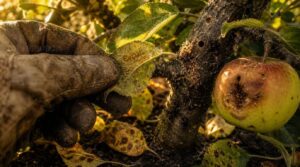
Catching pests early is the whole game. Your tree is constantly dropping clues — you just have to know where to look. Here are the five spots that tell you the most.
Once you spot those clues, knowing how to act fast makes all the difference — effective pest control methods for tomato plants can help you match the symptom to the right fix.
Check Leaves First
Leaves are your first and best clue. Look for curling leaf signs — young leaves twisting or cupping — which usually means aphids are feeding. Vein yellowing and stippling damage point to mites or leafhoppers. Margin scorch often signals thrips or leafrollers at work. That sticky residue coating leaves? That’s honeydew mold forming.
Catch these early and you’re already ahead.
Examine Stems and Bark
Once you’ve scanned the leaves, move down to the stems and tree bark. Run your fingers along the surface — bark texture tells a story. Watch for these three warning signs:
- Frass or boreholes breaking cork integrity
- Resin exudation or oozing sap near the trunk base
- Phloem discoloration or disrupted lenticel patterns under peeling bark
Spot any of these, and you’ve found an active infestation worth investigating.
Inspect Developing Fruit
Now move your eyes to the fruit itself. Gently squeeze a few from different canopy spots — sampling fruit clusters like this reveals hotspots fast. Look for sticky honeydew, silk webbing, or corky patches on the skin. Small pits signal larval feeding underneath.
Internal streak observation means cutting one open. Brown tunnels inside confirm it.
Sophisticated genetic tools like the CRISPR X‑shredder strategy can shift pest populations toward males.
Look Beneath Leaves
Flip each leaf over. That’s where pests hide best. Early morning scans catch them active — before heat drives them deeper.
- Look for Underside Mite Webs along midribs
- Spot Scale Shells stuck to veins
- Find Hidden Egg Clusters near the petiole
- Feel for Leaf‑Side Sap Residue left by aphids, leafhoppers, or spider mites
Sticky honeydew means leafrollers or aphids are already feeding.
Use a Hand Lens
A hand lens turns guesswork into certainty. For pest scouting, 10x–20x magnification works best — enough to spot cornicles on aphids or eggs near a petiole. Use raking light, not direct sun, to reveal surface textures. Wipe the lens before use.
| Task | Best Practice |
|---|---|
| Magnification selection | 10x for aphids; 20x for eggs |
| Lighting techniques | Raking light reduces glare |
| Field documentation | Sketch or photograph what you find |
Identify Common Fruit Tree Pests
Once you know what to look for, the actual culprits become pretty easy to pin down.
If you’re still figuring out what "trouble" looks like, this guide on identifying and controlling common herb garden pests walks you through the telltale signs.
Most fruit tree damage comes from just a handful of repeat offenders. Here’s what’s likely behind the mess in your tree.
Aphids and Honeydew
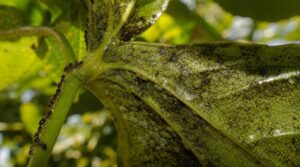
Spot a sticky, shiny film on leaves? That’s honeydew—a sugary mix of glucose and fructose that aphids leave behind as they drain your tree’s sap.
Ants love it and will farm aphids to keep the supply flowing. Worse, sooty mold grows on the residue, blocking photosynthesis and tanking fruit quality.
Ants farm aphids for their honeydew, while sooty mold claims the leftovers and smothers your tree
Target aphid colonies early with insecticidal soap or neem oil before beneficial insects are overwhelmed.
Codling Moth Tunnels
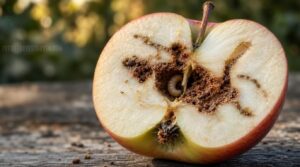
Cut open a suspect apple, and you’ll know immediately—codling moth leaves a void near the core, packed with reddish-brown frass. Watch for these critical signs of infestation:
- Calyx entry holes with fresh frass at the blossom end
- Core feeding damage destroying seeds and surrounding flesh
- Tunnel length growth visible when slicing the fruit open
- Larval exit timing leaving crumbly frass trails along tunnel walls
- Void fruit inspection confirming infestation before packing
Use pheromone traps to time applications of Bacillus thuringiensis or spinosad sprays—your front-line integrated pest management move.
Apple Maggot Damage
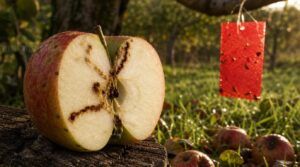
Apple maggots announce themselves with tiny egg punctures that dimple the skin like pinpricks. Inside, larval tunnels carve brown, winding trails through the flesh.
Left unchecked, fruit drop accelerates fast.
Set pheromone traps to catch adult flies early. Remove fallen fruit daily—no exceptions. Resistant varieties like Liberty hold up better. Bacillus thuringiensis won’t touch these larvae, so stick to targeted controls and good sanitation.
Peachtree Borer Signs
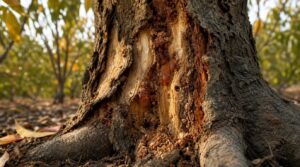
The greater peachtree borer works quietly — until your tree starts falling apart. Look at the base of the trunk first. Sap bubbling up, bark loosening, and reddish-brown frass packed into small holes are the tells. That’s trunk girdling in progress.
Over time, you’ll notice canopy thinning and branch dieback.
Integrated pest management and consistent pest monitoring catches this infestation before it’s too late.
Japanese Beetle Skeletonizing
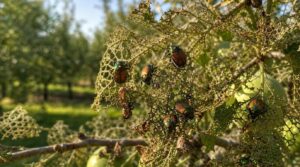
Japanese beetles are hard to miss — metallic green bodies skeletonizing your leaves in broad daylight. Their leaf surface preference runs to new outer growth, and feeding timeframes peak from late morning through early evening. Temperature influence slows them as fall arrives.
Handpicking works well during those active hours. For integrated pest management, combine natural predators like parasitic wasps with trap color optimization — yellow traps placed away from fruiting zones track pressure without drawing beetles closer.
Match Damage to Treatments
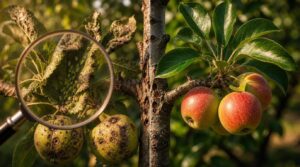
Once you know what damage to look for, the fix becomes obvious. Different symptoms point to different pests — and each one has a treatment that actually works.
Here’s how to match what you’re seeing to what you should do next.
Curled Yellowing Leaves
Curled, yellowing leaves are your tree’s distress signal — don’t ignore them.
Aphids and spider mites top the suspect list, but heat stress, water stress, and soil compaction can trigger leaf curling just as fast.
Nutrient deficiencies like low nitrogen or magnesium cause similar yellowing. Viral infections add puckering to the mix.
Identify the cause first, then treat.
Pitted Misshapen Fruit
Pitted, misshapen fruit is a different problem entirely. You’re looking at two main culprits: codling moths and apple maggot larvae tunneling through the flesh.
But don’t overlook calcium deficiency — rapid fruit growth during water stress depletes calcium fast, leaving shallow pits and corky tissue beneath the skin.
For market acceptance, catch this early. Balanced irrigation, calcium foliar sprays, and integrated pest management keep fruit clean.
Frass-filled Entry Holes
Frass-filled entry holes and hole size range matters: peach tree borer galleries sit at the soil line, while peach twig borer damage appears higher up. Fresh frass texture is loose and pale; older frass darkens with moisture. Species-specific holes guide your response.
Integrated pest management starts here: Use beneficial nematodes for biological control before bark damage becomes irreversible.
Oozing Trunk Wounds
Sticky amber ooze dripping from bark is a red flag—that’s bacterial wetwood, and the sap odor cues you in quickly. A sour or moldy smell means internal decay signs are already active.
Moisture stress is a real link: drought weakens defenses, making trees vulnerable.
Maintain consistent mulching and keep pruning cuts clean to encourage callus formation and protect against further damage.
Skeletonized Foliage
Lace-like leaves with dry, papery gaps between the veins — that’s skeletonized foliage, signaling that pests have consumed the soft tissue. This damage is typically caused by Japanese beetles, sawfly larvae, leafhoppers, and caterpillars.
Leaf miner tunnels and drought stress exacerbate the issue, accelerating tissue loss.
To address the problem, spray insecticidal soaps early and release biological predators like lacewings. Prioritize intervention to prevent vein necrosis from spreading further.
Use Safe Pest Control Methods
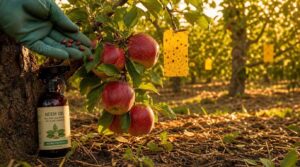
You don’t need a cabinet full of chemicals to win this fight. Most pest problems respond well to a handful of straightforward methods — some physical, some biological, some targeted.
Here’s what actually works.
Prune Infested Branches
Pruning is one of the fastest ways to stop an infestation from spreading. Work during the dormant season — pests are less active and you can see the damage clearly.
Cut back to healthy wood using proper heading cut angles, just above an outward-facing bud.
Sharp tool disinfection between cuts is non-negotiable. Apply wound dressing if local guidelines recommend it. That’s post-prune sanitation doing its job.
Remove Fallen Fruit
Daily Fruit Pickup isn’t glamorous — but it’s one of your strongest pest defenses. Rotting drops are ground zero for fruit flies, apple maggot, and western cherry fruit fly breeding cycles. Don’t give them a foothold.
- Use an Extendable Fruit Picker and Rake‑Gather Technique to collect cleanly
- Place diseased fruit in Sealed Disposal Bags — skip the compost pile
- Reserve Heat‑Kill Composting only for clean drops, turned frequently
Crop sanitation and debris removal keep tomorrow’s infestation from hatching today.
Apply Neem or Soap
Neem oil and insecticidal soap are your organic control workhorses — quiet, effective, and easy to use.
| Factor | Neem Oil Spray | Soap Spray |
|---|---|---|
| Mixing Ratios | 2 Tbsp per quart + surfactant | 1–2 tsp per liter |
| Application Timing | Dawn or dusk | Dawn or dusk |
| Spray Coverage | All surfaces, leaf undersides | All surfaces, leaf undersides |
| Phytotoxic Testing | Test one branch, wait 24 hrs | Test one branch, wait 24 hrs |
| Storage Guidelines | Cool, dark place | Use fresh each time |
Reapply every 5–7 days or after rain.
Release Beneficial Insects
Think of beneficial insects as your orchard’s cleanup crew — already trained, just waiting to clock in.
- Species Compatibility: Match ladybugs to aphids and scale; use lacewings against mealybugs and thrips.
- Timing and Temperature: Release at 60–85°F, early morning or evening.
- Release Rates: Use 1,000–10,000 per acre depending on pest pressure.
- Canopy Distribution: Place natural predators near new growth and fruit clusters.
- Monitoring Releases: Scout 2–3 times weekly to confirm beneficial fly releases are working.
Use Targeted Pesticides
Sometimes chemical control is the right call — just make it count. Selective insecticides target codling moth or aphids without harming beneficials.
Use bait stations and pheromone disruption to reduce reproduction instead of blanket spraying. Microencapsulated formulations release slowly at the target site, while GNSS sprayers apply pesticides safely to problem zones only.
Rotate products to prevent pesticide resistance and always follow spray timing on the label.
Prevent Future Fruit Tree Infestations
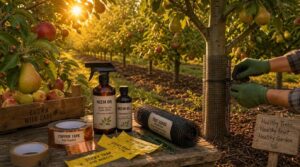
Treating a pest problem is satisfying — keeping it from coming back is even better.
A few consistent habits go a long way toward keeping your trees clean and your harvest intact. Start with these five prevention steps.
Install Monitoring Traps
Pheromone traps and monitoring sticky traps are your eyes in the orchard. Hang them at shoulder height — placement height matters for catching moths mid-flight.
Check lure freshness every four to six weeks and swap them out on schedule to maintain effectiveness.
Match your trap density to pest pressure: one trap per hectare works for most home setups. Log every count for accurate data recording, ensuring reliable insights into pest activity.
Use weather shielding to protect traps from rain, preserving their functionality. Early pest detection saves you a headache later, enabling timely interventions.
Improve Tree Airflow
Traps catch what’s flying. Pruning stops where pests hide.
Good airflow is your orchard’s best defense. Dense canopies trap moisture and give fungi a free home. Fix that with four targeted moves:
- Canopy thinning — remove crossing limbs to open interior air corridors
- Crown lifting — clear lower branches for vertical circulation
- Dead wood removal — eliminates stagnant pockets instantly
- Orchard floor management — rake debris to keep ground-level airflow open
Structural pruning keeps tree vigor strong all season.
Water Trees Consistently
Good airflow dries your canopy, but roots require the opposite: steady, reliable moisture.
Drip irrigation timing matters more than volume. Water early morning, allowing drip lines to deliver root zone hydration directly where it counts. Use soil moisture monitoring to guide scheduling, avoiding guesswork.
Mulch maintenance locks in moisture. Stressed trees attract pests, so prioritize consistent hydration to safeguard tree vigor and fruit tree health year-round.
Clean Orchard Debris
Moisture fuels pest life cycles just as much as it fuels growth. That’s why sanitation practices matter year-round. Rapid Drop Collection—pulling fallen fruit and leaves within 24 hours—cuts overwintering spores and apple maggot habitat fast. Mature Leaf Composting, Wood Debris Mulching, and Understory Airflow Enhancement all support fall cleanup.
Build a Sanitation Scheduling habit around pest life cycle timing, and pruning rounds it out.
Apply Dormant Oil
Dormant oil serves as your winter reset button. Apply horticultural oil during the Winter Timing sweet spot—when daytime temperatures sit between 41°F and 59°F—to align with the Temperature Window for safe, effective coverage. Dial sprayer settings to coarse, ensuring oil reaches bark crevices without puddling.
Mind species sensitivity; peaches, for instance, require careful timing. Always wear Safety Gear when mixing the solution.
This proactive step quietly cuts seasonal pest emergence before spring arrives.
Frequently Asked Questions (FAQs)
How to get rid of pests on fruit trees?
Start with inspection. Then use biological sprays, tree banding, and trap crops to manage pressure.
Reflective mulch and soil solarization reduce future risk.
Integrated orchard management ties it all together for lasting pest control.
How to identify fruit tree diseases?
Look for scab lesions on leaves and fruit, mildew powder on new shoots, canker ooze on bark, rot discoloration on fruit, and wilting shoots —
Classic signs of apple scab, powdery mildew, fireblight, brown rot, or cedar apple rust.
How do you identify tree pests?
Walk your trees weekly. Check leaves for curling, yellowing, or sticky honeydew.
Spot visible pests using a hand lens.
Sticky traps, seasonal monitoring, and insect identification guides make early detection simple and reliable.
What does Epsom salt do for fruit trees?
Epsom salt provides fruit trees with a magnesium boost. This enhances chlorophyll and greener leaves through improved magnesium nutrition.
For application, use foliar sprays at a rate of one tablespoon per gallon. However, always do soil testing first — your tree may not need it.
How to identify diseases in fruit trees?
Spot leaf blotches, bark cankers, fruit scab, or powdery mildew early.
Fire blight leaves shoots looking burnt.
Brown rot softens stone fruit fast.
Cedar apple rust shows orange spots.
Apple scab darkens leaves and fruit.
How often should I spray neem oil on fruit trees?
Spray neem oil every seven to fourteen days during the growing season. Match the interval to pest pressure and tree species — peaches need weekly sprays, apples can stretch to ten days.
Always apply in the morning.
Are there non-toxic pest control options available?
Yes, plenty.
Insecticidal soap, neem oil, diatomaceous earth, garlic spray, and mulch barriers all work without harsh chemicals.
Beneficial nematodes, beneficial insects, and companion planting round out a solid organic pest control plan.
How can seasonal weather impact pest activity?
Temperature spikes wake overwintering eggs early. Humidity-driven fungi weaken bark. Rainfall breeding sites multiply gnats fast.
Winter dormancy break triggers synchronized hatching. Extreme weather effects hit harder than most growers expect.
What role do ants play in pest infestations?
Ants farm aphids for honeydew and run protective ant trails that block beneficial predator insects. These behaviors create managed hotspots in agricultural systems.
Additionally, ants handle bacterial vectoring from soil to fruit, further complicating pest management. Their multifaceted role effectively makes them pest landlords—exacerbating challenges for growers.
Can over-fertilizing make trees more pest-prone?
Over-fertilizing absolutely makes trees more pest-prone. Excess nitrogen pushes soft, lush growth that aphids and mites love. Root salt stress weakens defenses, further compromising the tree’s resilience.
Volatile stress signals then broadcast the tree’s vulnerability to every pest nearby, creating a cycle of infestation.
Conclusion
Funny how the smallest creatures cause the biggest headaches. A moth smaller than your thumbnail can quietly hollow out half your harvest before you pick a single apple.
But that’s exactly why learning to identify and treat fruit tree pests puts you back in charge. You’ve got the clues, the tools, and the timing.
Stay consistent in your inspections and act early—your trees will spend more energy making fruit than fighting off whatever’s trying to eat it first.
- https://plant-pest-advisory.rutgers.edu/2024-tree-fruit-ipm-post-season-summary/
- https://www.mehrabyannursery.com/growing-guide/pest-and-disease-control/identifying-pests-and-diseases/
- https://www.agpest.com/controlling-common-fruit-tree-pests/
- http://treefruit.wsu.edu/crop-protection/opm/western-cherry-fruit-fly/