This site is supported by our readers. We may earn a commission, at no cost to you, if you purchase through links.

My desk basil died three times before I figured out the problem: fluorescent office lighting won’t cut it for real growth.
That’s the trap with most herb growing kits for office desks — you buy on impulse, then discover the light’s too weak or the reservoir demands weekly babysitting. I tested five kits over four months, tracking pod capacity, noise levels, and how much attention each one actually needed between meetings.
Some earned a permanent spot by my monitor. Others got boxed up and returned within a week.
Table Of Contents
- Key Takeaways
- Top 5 Herb Growing Kits for Office Desks
- Compare Each Kit’s Desk Performance
- Hydroponic Versus Soil-Based Desk Kits
- Best Herbs for Office Growing
- Choose and Maintain Your Desk Kit
- Frequently Asked Questions (FAQs)
- What herbs can you grow in your office?
- What is the best indoor herb growing kit?
- What are common mistakes growing indoor herbs?
- What herbs can I grow easily indoors?
- How much electricity do these kits consume?
- Can I switch light spectrums as herbs grow?
- How often do reservoirs actually need refilling?
- Are these kits safe for corporate gifting programs?
- Conclusion
Key Takeaways
- Regular office lighting is too weak for real herb growth, so a kit’s built-in full-spectrum LED matters more than its looks.
- Hydroponic systems beat soil for desk growing since they skip the mess, pests, and daily guesswork that come with dirt.
- Self-watering reservoirs and automated light timers are what actually make a kit low-maintenance, not just marketing buzzwords.
- Fast growers like basil, chives, and parsley suit office desks best, while the true cost of any kit includes ongoing refills and parts, not just the sticker price.
Top 5 Herb Growing Kits for Office Desks
I tested five desk herb kits over four months, running each one through real office conditions. Some earned a permanent spot on my desk, others didn’t survive past week three. Here’s exactly how they stacked up, starting with my top pick.
1. Click & Grow Indoor Herb Garden
 View On Amazon
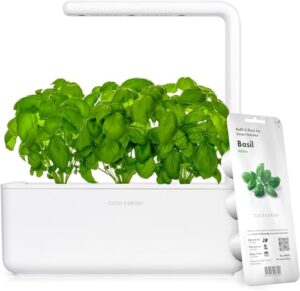
When I plugged in the Click & Grow, three basil pods lit up like tiny green promises within days. The Smart Soil technology takes care of watering, pH, and nutrients on its own — no fussing required.
If you’re weighing options for an easy, senior-friendly setup like this one, this roundup of best herb growing kits for seniors breaks down what to look for beyond just the basil pods.
Lights run 16 hours on, 8 off, automatically. Reservoir refills every 2-3 weeks. Setup took me under five minutes: insert pods, add water, plug in. Genuinely clever for desk-bound growers who want basil without babysitting it.
| Best For | apartment dwellers, office workers, or anyone who wants fresh basil at their fingertips without any actual gardening skills. |
|---|---|
| Grow Light | LED, automatic 16/8 cycle |
| Watering System | Smart Soil, passive capillary |
| Capacity | 3 pods |
| Included Plants/Seeds | 3 basil pods included |
| Setup Difficulty | Beginner friendly |
| Best Setting | Kitchen, office, classroom |
| Additional Features |
|
- Fully automated watering, pH balance, and nutrient delivery mean zero daily maintenance
- Silent operation with no pump noise, making it ideal for desks, offices, or classrooms
- Compact size fits easily on countertops, windowsills, or shelves in small spaces
- Limited to just 3 plant pods, so variety and yield are smaller than bigger Click & Grow models
- Smart Soil can develop mold or algae on the surface over time from constant moisture
- The companion app is only supplemental — it doesn’t control lighting or watering, and the timer resets if unplugged
2. Ahopegarden Indoor Hydroponic Growing System
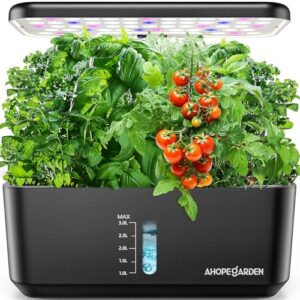
If basil-on-autopilot won me over, the Ahopegarden’s 12-pod capacity sealed the deal for variety-seekers. This one’s a true hydroponic setup — a 4-liter reservoir recirculates nutrients every 15 minutes while lights run.
The height-adjustable LED switches between blue and red spectrum, and an LCD display tracks humidity, water level, and temperature. A built-in fan keeps things cool. Cleaning’s simple too, thanks to a detachable panel. Genuinely clever engineering for growers who want more than three pods.
| Best For | home growers who want variety and don’t mind a bit of extra monitoring, since the 10-pod capacity and simple setup make it easy to keep several herbs or veggies going at once. |
|---|---|
| Grow Light | LED, dual mode |
| Watering System | Circulating pump system |
| Capacity | 10 pods |
| Included Plants/Seeds | Not included |
| Setup Difficulty | Beginner friendly |
| Best Setting | Kitchen, small spaces |
| Additional Features |
|
- Automatic 16/8-hour light timer takes the guesswork out of daily care
- Dual light modes support plants from seedling stage through flowering/fruiting
- Compact countertop design fits easily into kitchens or small spaces
- Seeds and ongoing nutrient solution are sold separately
- Root growth needs regular checking to avoid tangling between pods
- Light height tops out at 14.5 inches, which may limit taller plants
3. iDOO 12 Pod Hydroponic Indoor Garden
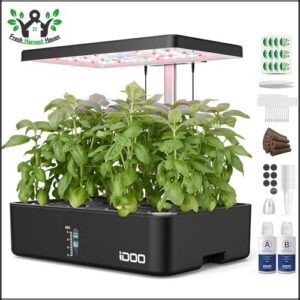
Where the Ahopegarden charmed with an LCD readout, the iDOO leans into raw horsepower: a 23-watt full-spectrum LED with Vegetables and Flower/Fruit modes, running 16 hours daily.
Its 4-liter tank feeds all 12 pods through a pump cycling 30 minutes on, 30 off. A fan curbs humidity pockets around roots. The light bar adjusts up to 11.3 inches, and the footprint (13.8 by 12.08 inches) fits most desks without crowding your monitor.
| Best For | garden enthusiasts, chefs, students, and families who want to grow herbs and vegetables indoors year-round without relying on soil. |
|---|---|
| Grow Light | 22W LED, dual mode |
| Watering System | Pump with aeration |
| Capacity | Not specified |
| Included Plants/Seeds | Not included |
| Setup Difficulty | Beginner friendly |
| Best Setting | Home, office, school |
| Additional Features |
|
- 22-watt full-spectrum LED with dedicated Vegetables and Flower/Fruit modes to match each growth stage
- Built-in low-noise pump and fan handle water aeration, pollen dispersal, and humidity control automatically
- Adjustable height up to 11.02 inches keeps the light positioned correctly as plants grow taller
- The 4.5-liter tank needs frequent refills once plants mature and start drinking more water
- Replacement sponges and baskets can be pricey and aren’t always easy to find
- Some users notice uneven water reaching the end pods, plus algae buildup if pods aren’t covered
4. AeroGarden Harvest Lite, Cream
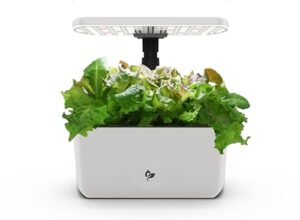
After that fan-cooled powerhouse, the Harvest Lite feels almost minimalist. Its 15W LED runs quieter and simpler, with a cream-colored, dark grow deck that hides algae buildup nicely.
Despite its low wattage, this LED setup still delivers the steady, energy-efficient light seedlings need, following these natural ways to improve seed germination for even better results.
Six pods fit its 11.89 x 7.84 x 7.4-inch frame. At 3.39 pounds, it’s genuinely easy to relocate. Water and food reminders keep guesswork low, though pods and nutrients sell separately, so budget accordingly before you commit to daily herb harvests.
| Best For | beginners and small-space dwellers—like apartment, dorm, or office residents—who want an easy, low-maintenance way to grow herbs and small plants indoors year-round. |
|---|---|
| Grow Light | Energy-efficient LED |
| Watering System | Automatic reminders |
| Capacity | 6 plants |
| Included Plants/Seeds | Not included |
| Setup Difficulty | Beginner friendly |
| Best Setting | Kitchen, dorm, office |
| Additional Features |
|
- Compact, lightweight design (3.39 lbs) makes it easy to fit on a countertop and move around
- Automated water and nutrient reminders take the guesswork out of plant care, great for beginners
- Energy-efficient LED grow light with a cream-colored deck that helps hide algae buildup
- Seed pods and liquid plant food are sold separately, adding to the overall cost
- Limited grow height means plants may need transplanting after just 6-9 inches of growth
- Not suited for taller or larger plants like tomatoes or root vegetables without moving them elsewhere
5. URUQ 8 Pods Hydroponic Growing System
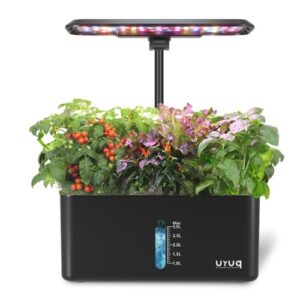
Eight pods sound ambitious for a desk, but URUQ’s vertical layout keeps the footprint sane. Each root zone gets its own air stone, so herbs get gentle aeration instead of stagnant water.
The digital display tracks pH, nutrient levels, and water temperature — genuinely clever for a plant you’re not babysitting daily. A sealed chamber locks in humidity, and the auto-timer syncs neatly with your 9-to-5. Two-year warranty coverage is a nice safety net most kits skip entirely.
| Best For | Beginner to experienced indoor gardeners who want to grow herbs and leafy greens year-round in small spaces like windowsills, kitchen shelves, or bedrooms. |
|---|---|
| Grow Light | 24W LED, 180° adjustable |
| Watering System | Quiet 30-min circulation pump |
| Capacity | 3L tank |
| Included Plants/Seeds | Not included |
| Setup Difficulty | Beginner friendly |
| Best Setting | Windowsill, shelf, bedroom |
| Additional Features |
|
- Quiet water pump (under 20 dB) and automatic 16/8 light timer make it low-maintenance and easy to live with
- Detachable LED light pole allows safe cleaning and height adjustment as plants grow
- 3L tank with a viewing window makes it simple to monitor water levels and root growth
- Timer is fixed and not user-adjustable, so you can’t customize the light/dark cycle
- Water tank may need frequent refilling depending on the plants and environment
- Seeds aren’t included, so you’ll need to buy those separately
Compare Each Kit’s Desk Performance
Picking a kit from a spec sheet only gets you so far. I ran all five on my actual desk, next to my keyboard and monitor, for weeks. Here’s how they stacked up on the things that matter once you’re living with one every day.
Footprint and Pod Capacity
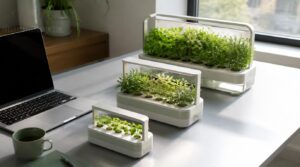
Real estate matters on a desk the same way it does downtown: every inch counts. The Click Grow Indoor Herb Garden Kit stays compact, while the AeroGarden Harvest Lite needs more clearance. Pod capacity tiers run 6 to 12:
- Small footprints for tight desks
- Mid-tier pods for variety
- 12-pod setups for serious growers
Modular pod expansion lets you scale up without buying new units.
Light Output and Adjustability
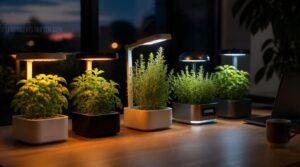
Every kit here runs full-spectrum LED, but adjustability separates them. Click & Grow offers automatic Lumen Range Adjustment between 400 and 800 lumens. AeroGarden’s dual light modes add Color Temperature Control from 2700K to 6500K. iDOO includes brightness sensing features and app control, while URUQ’s height-adjustable arms let you fine-tune beam angle as herbs grow taller.
Photon efficacy in horticultural LEDs is a key factor in plant growth efficiency photon efficacy metrics.
Noise During Office Hours
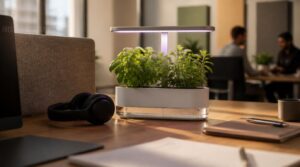
None of these kits add real noise—LED grow lights and water pumps run near-silent, well under typical printer hum (50-65 decibels).
Your bigger office battle is ambient chatter and HVAC drone. Pair any kit with noise-canceling headphones, acoustic panels, or desk partition barriers. Quiet zone signage helps too.
Water level monitoring stays visually silent—no beeping alerts to disrupt focus.
Automation and Travel Readiness
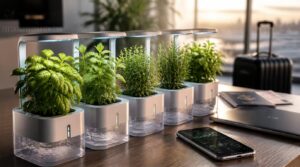
None of these kits book flights, but "automation" here means self-watering systems and app control that keep herbs alive while you travel. Automated watering schedules and self-watering reservoirs run quietly for a week or more. Match that reliability to your own trip prep with:
- Policy enforcement alerts
- Real-time risk monitoring
- Automated itinerary adjustments
- Expense reconciliation automation
- Compliance dashboard analytics
Long-term Cost and Value
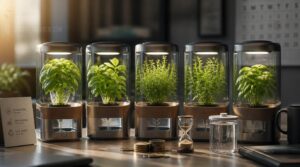
The sticker price tells maybe a third of the story. Total cost over 3 years includes electricity, refills, and replacement parts—easily another 20-30% beyond initial purchase price.
The sticker price is maybe a third of the story—electricity, refills, and parts add another 20-30% over three years
Kits with self-watering systems and app control cost more upfront but save maintenance time. Resale value retention runs 40-60% at two years for quiet, height-adjustable models with original accessories intact.
Hydroponic Versus Soil-Based Desk Kits
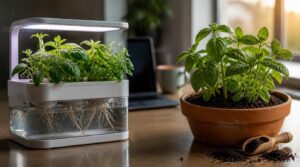
Soil feels familiar, but hydroponic setups solve problems you didn’t know your desk had. I’ve run both side by side long enough to see where each one wins. Here’s how they stack up on the things that actually matter for office growing.
Mess and Pest Control
Dirt is where hydroponic kits pull ahead. No soil means no gnats, no fungus gnats breeding in damp crumbs, and spill containment stays simple with sealed pods.
Soil-based kits need:
- Pest barrier setup around the base
- Regular cleaning routines weekly
- Standing water checks
- Monitoring pest activity with sticky traps
Hydroponic reservoirs run quiet, with built-in fan circulation and dishwasher-safe parts—genuinely clever for pest prevention indoors.
Watering and Nutrient Requirements
Clean pods win here too. Hydroponic systems need daily reservoir checks, while soil kits stretch to every 2-4 days.
Nutrient strength stays weaker than outdoor mixes, with pH held near 5.5-6.5. Weekly EC monitoring catches drift early.
Self-watering reservoirs (10-20 oz) buy you breathing room, but timer reliability issues still crop up—check yours monthly.
Germination Success Rates
Reservoir monitoring aside, sprouting speed decides how fast you actually get growing. Hydroponic pods hold steady moisture and warmth (20-25°C), boosting germination versus soil trays prone to drying out.
Basil loves that light-exposed, surface-sown setup. Parsley needs light too, but patience—2-3 weeks isn’t rare.
Fresh seed lots matter more than growing medium. Check viability before blaming your kit.
Ongoing Maintenance Demands
Germination’s only the start—these kits ask for real upkeep. Expect weekly leaf trimming, monthly light cleaning, and nutrient swaps every 2-4 weeks.
Rinse reservoirs every 7-14 days to stop algae. The self-watering system still needs you: wipe dust from vents biweekly, keep that quiet motor humming.
Sustainability and Refill Costs
A handful of these kits actually plan for a second life, not just a first one. Refill kits with pre-seeded pods cut waste better than tossing whole units, and reusable self-watering planters cushion nutrient solution costs over time.
Three factors decide real savings:
- Refill program savings on pods
- Packaging material trade-offs (plastic vs. compostable)
- Consumer adoption barriers slowing uptake
Efficient LED grow lights help too, sipping less power than you’d expect.
Best Herbs for Office Growing
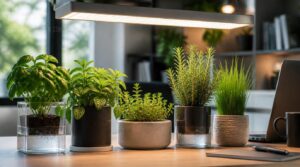
Not every herb wants the same thing from your desk setup. Some sprint toward harvest while others just need you to leave them alone. Here’s what actually thrives under office lights, and how to give each one what it needs.
Fast-growing Basil Varieties
Basil is basically the sprinter of desk gardens. Genovese basil hits harvest in 25-30 days, while Thai basil beats it at 18-25 days under warm, bright light. Lemon and cinnamon varieties trail slightly behind.
A steady 16-hour light cycle keeps leaf production humming, and regular pruning delays flowering—so you’re harvesting fresh basil for months, not weeks.
Compact Chives and Parsley
Two herbs earned permanent real estate on my desk: chives and parsley. Chives stay compact for months, regrowing to two inches after each cut—perfect for low-light plant options near a monitor.
Parsley takes 8-10 weeks to first harvest but keeps producing for 6-8 months. Both thrive on 12-14 hour light cycles in hydroponic pods, no fuss required.
Office-friendly Mint Care
Mint wants to sprawl, so keep it in check with a strict Light Schedule: 12 hours daily near a window or grow light.
Water every 2-3 days when soil feels dry. Prune weekly—pinch top leaves to stay compact.
Office desk kits with a self watering system make humidity control simple, keeping this low maintenance herb thriving in quiet operation.
Thyme and Oregano Needs
Thyme and oregano are the sun-worshippers of your desk garden—stubborn about light intensity, forgiving about neglect. Give them 6+ hours of strong grow light, 65-75°F, sandy well-drained mix.
- Water only when topsoil’s dry
- Prune after flowering for bushier growth
- Skip daily misting—these hate soggy roots
Self-watering systems work if drainage holes prevent pooling.
Pod Spacing for Healthy Growth
Crowd your pods and everyone loses—shorter plants get shaded out fast. Aim for ideal pod distance of 2-4 inches, giving each herb airflow between pods and real light penetration spacing.
Good nutrient access spacing prevents root competition, too. Start tight, then practice growth stage spacing as plants fill in. Pod capacity matters less than height-adjustable, full-spectrum LED coverage paired with quiet operation your desk mates won’t notice.
Choose and Maintain Your Desk Kit
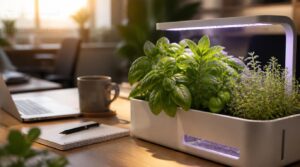
Picking the right kit is only half the job. Keeping it thriving on your desk is where the real payoff happens. Here’s what actually matters once you’ve made your choice.
Match Kits to Workspace Size
Before buying, measure your actual desk space. Kits span 8×6 to 18×12 inches, so desk footprint compatibility matters more than looks.
Check pod capacity (8-12 pods) against real herb needs, plus height profile options (8-22 inches) for shelf clearance. Corner mounting suits tight layouts, needing just 6-8 inches clearance—genuinely clever for cramped setups.
Prevent Spills Near Electronics
Corner clearance solves space problems, but water and laptops still don’t mix.
Nail down spill tray placement first, add drip guard mats, and route cables away from pods. A self-watering system with dishwasher-safe trays keeps things low-maintenance.
- Spill tray under every pod
- Cable routing safety away from water
- Moisture meter checks before refilling
- Height-adjustable stands for drip clearance
Set Lights and Timers
Once trays are sorted, dial in your light schedule. Most kits run best on a 12-16 hour cycle with 4-6 hours of darkness for respiration.
Digital timers beat mechanical dials here — you get weekday-only programs, dawn-dusk ramping, and outage memory. Pair full-spectrum LEDs with dual light modes, and check energy monitoring so wattage stays predictable, not surprising.
Avoid Common Growing Mistakes
Timers set, but light allocation mistakes still trip people up—too close scorches leaves, too far breeds legginess.
Overwatering rots roots in self-watering systems; underwatering wilts basil fast. Watch EC levels and pH in hydroponic setups, and don’t rush nutrients past germination. Poor airflow invites pests and mildew—keep pods clean, spaced, and dry.
Evaluate Warranties and Support
A pump dies at month nine, and warranty coverage decides whether that’s a $5 fix or a $60 loss. Check the basics before buying:
- Coverage length (12 vs. 24 months)
- RMA turnaround (1-3 days typical)
- Exclusions (lamps, liquid damage)
Fast customer support and clear return policy terms matter more than flashy features once something breaks.
Frequently Asked Questions (FAQs)
What herbs can you grow in your office?
No sunny windowsill, no problem. Your desk can grow fast-growing basil, fragrant mint, compact chives, long-harvest parsley, and low-fuss oregano and thyme — all thriving in self-watering planters built for beginner-friendly indoor herb gardens.
What is the best indoor herb growing kit?
For pod variety and value, the iDOO 12 Pod Garden wins overall.
Want fuss-free simplicity? The self-watering Click & Grow shines.
Prioritize adjustable light spectrum and quiet operation? AeroGarden Harvest Lite delivers height-adjustable, reservoir-fed convenience.
What are common mistakes growing indoor herbs?
Light shortage and overwatering top the list, leaving herbs leggy or root-rotted.
Temperature stress, poor airflow, and cramped spacing invite mold and germination trouble—self-watering systems with adjustable light help, but crowded pods still choke healthy growth.
What herbs can I grow easily indoors?
Forget the "black thumb" myth — even a windowsill graveyard survivor can win here. Basil, mint, parsley, chives, and oregano thrive with minimal light, forgiving watering schedules, and quick harvest timing indoors.
How much electricity do these kits consume?
Your daily energy use runs about 04 to 18 kWh, depending on wattage and light cycle length. Full-spectrum LEDs stay under 15 watts at peak, with height-adjustable arms and dimming trimming costs to mere cents daily.
Can I switch light spectrums as herbs grow?
Yes—400 to 700nm covers it all. Start with a full-spectrum baseline, shift to blue for vegetative growth, then red for flowering. Kits with dual light modes and height-adjustable arms make spectrum timing genuinely easy to manage.
How often do reservoirs actually need refilling?
Most self-watering systems need a top-off every 7 to 14 days. Capillary action keeps soil damp between fills, and clear water level indicators tell you exactly when your reservoir’s running low.
Are these kits safe for corporate gifting programs?
Ironic, isn’t it—the plants meant to reduce stress are the ones procurement teams stress over most. Good news: kits with UL certification, sturdy packaging, and clear labeling sail through corporate gifting policies as safe, sustainable, employee-wellness-friendly desk plants.
Conclusion
You reap what you sow, and that’s truer on a desk than in any garden bed.
After four months of dead leaves and lucky harvests, one truth stood out: the best herb growing kits for office desks reward patience with real light, not gimmicks or marketing gloss.
Skip the ones that demand babysitting between meetings.
Choose the kit that fits your rhythm, not your impulse.
Your basil shouldn’t die a fourth time.
It should become the one thing at work that never lets you down.