This site is supported by our readers. We may earn a commission, at no cost to you, if you purchase through links.

Most gardeners pack up their tools once summer flowers fade, but fall pollinators are just hitting their stride. Bumblebees and hoverflies work overtime during cooler months, driving up to 30% of annual fruit set in temperate crops while prepping for winter survival. The catch? They need reliable nectar sources when most blooms have called it quits.
Native fall flowers like New England asters and sedums deliver the concentrated nutrition these insects require, producing consistent nectar yields that outperform many spring bloomers. Strategic fall plantings don’t just fill empty beds—they strengthen the pollination networks that determine next season’s garden success.
Understanding which flowers work hardest in autumn temperatures helps you create a landscape that sustains both current harvests and future pollinator populations.
Table Of Contents
Key Takeaways
- Fall pollinators like bumblebees and hoverflies drive up to 30% of annual fruit set in temperate crops, making late-season nectar sources critical for both current harvests and next season’s pollination networks.
- Native fall bloomers such as New England asters and sedums outperform many spring flowers by delivering concentrated nectar yields (0.4–1.2 mg per flower daily) that build the fat reserves pollinators need to survive winter.
- Strategic flower succession planning—planting early, mid, and late bloomers with 4–6 week overlaps—keeps nectar flowing from September through November when most other food sources have disappeared.
- Grouping pollinator-friendly plants in dense clusters rather than scattering them increases pollinator visits by up to 28%, while mixing native species with ornamentals boosts activity by 30–50% compared to single-type plantings.
Benefits of Attracting Pollinators in Fall
Supporting pollinators in fall isn’t just about being kind to butterflies and bees—it’s about keeping your entire garden ecosystem healthy and resilient. When you plant fall-blooming flowers, you’re giving these essential creatures the fuel they need to make it through winter while strengthening the biodiversity that makes your garden thrive.
Let’s look at three key reasons why attracting pollinators this season matters more than you might think.
Importance of Fall Pollinators for Garden Health
Your autumn garden isn’t just pretty—it’s a lifeline. Fall bloomers drive up to 30% of annual fruit set in temperate crops, while bumblebees and hoverflies boost pollination efficiency by 12–18% in cooler temperatures.
When you plant pollinator-friendly plants through fall garden planning, you’re building garden resilience and ecosystem health. Native plants sustain pollinator diversity, strengthen pollination networks, and improve fruit yield stability when blooms last six to eight weeks.
Understanding web server issues can also help with online resources for garden planning.
Biodiversity and Ecosystem Support
Fall gardens packed with native plantings don’t just feed bees—they rebuild entire pollinator networks. You’ll see 35% more pollinator visits when you choose native species over non-natives, and flowering diversity brings 12–15 bee species per thousand square meters.
That ecosystem balance matters: habitat restoration through pollinator-friendly plants and sustainable gardening practices bolsters species conservation while bolstering biodiversity across your yard and beyond.
Understanding AP study resources can also boost knowledge of environmental science subjects.
Enhancing Pollinator Survival Before Winter
Beyond feeding today’s foragers, your fall garden determines which pollinators make it to spring. Late-season nectar with high sugar concentration builds the fat reserves bees and butterflies need for winter survival. Cold stress drops when you combine pollinator nutrition with sheltered microhabitats—protected spots where native plants buffer wind and frost.
Your fall garden isn’t just feeding pollinators today—it’s building the fat reserves and shelter that determine which bees and butterflies survive until spring
Here’s how floral diversity directly sustains pollinator-friendly plants through winter habitat quality:
- Plant succession bloomers from September through November to prevent nectar gaps
- Choose native plants with staggered flowering for continuous pollinator support
- Position south-facing beds to extend daily foraging during cooler fall garden days
- Add low groundcover around tall blooms to reduce frost exposure and cold stress
Nectar quality matters as much as quantity—monarch overwintering success rises when you extend that nectar-rich period through early fall.
Choosing Fall Flowers for Pollinators
Selecting the right fall flowers makes all the difference when you’re trying to support pollinators through the season. You’ll want to balance bloom times, choose between native and non-native options, and understand which plants deliver the most nectar and pollen.
Let’s break down the key factors that’ll help you build a thriving pollinator garden this fall.
Top Fall-blooming Flowers for Pollinators

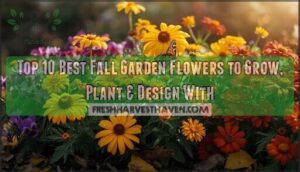
You’ll want to prioritize plants that deliver late-season nectar when pollinators need it most. New England asters produce 0.4–1.2 mg of nectar per flower daily, making them pollinator-friendly powerhouses. Sedums and Joe-Pye weed offer comparable yields, while sunflowers supply abundant pollen exceeding 2.5 mg per flower.
These fall bloomers create essential nectar sources that support garden planning for vigorous pollinator support through autumn flower arrangements.
Selecting Native Vs. Non-native Species

When you’re choosing species, native plants deliver the ecosystem impact that matters. They support local pollinators with co-evolved nectar profiles, boosting visitation by up to 40% over non-native alternatives.
Native plant benefits extend beyond fall gardening—these pollinator-friendly plants need 10–30% less irrigation and survive better long-term.
Non-native risks include potential invasiveness and altered pollination networks, so prioritize regional considerations when selecting native plant species.
Bloom Times and Flower Succession Planning

Strategically, your bloom scheduling determines whether pollinators thrive or struggle through autumn. A well-planned succession of blooms keeps nectar flowing from September into November, sustaining bees and butterflies when resources dwindle.
Effective flower sequencing includes:
- Staggered timing: Plant early, mid, and late bloomers for 4–6 week nectar overlaps
- Peak alignment: Match September asters with October sedums for continuous pollen access
- Density targets: Aim for 30–60 open blossoms per square meter
- Diversity focus: Mix colors and morphologies to support multiple pollinator species
This pollinator timing approach boosts fall gardening success and strengthens pollinator-friendly plant networks heading into winter.
Planting and Caring for Fall Flowers

Getting fall flowers in the ground at the right time makes all the difference for both plant health and pollinator support. You’ll need to think about soil conditions, water schedules, and sunlight exposure to give your blooms their best shot at thriving.
Here’s what you need to know about timing, preparation, and ongoing care to keep your fall garden buzzing with activity.
Optimal Planting Times and Soil Preparation
Timing your fall planting can make or break your pollinator garden. Aim to get those fall planting tips into action 4–6 weeks before frost—soil temperature above 50°F drives root establishment, even when air chills.
Work 2–3 inches of compost preparation into the bed, then layer mulching strategies with organic matter. Well-draining soil keeps roots healthy through winter, setting up thriving pollinator-friendly plants come spring.
Watering, Mulching, and Sunlight Needs
Once your perennial plants are in the ground, soil moisture becomes your priority. Water fall garden beds at 0.5 inch per week—morning irrigation scheduling cuts evaporation by 25%. Apply a 2–3 inch mulch depth around pollinator friendly plants to boost water conservation and moderate temperature swings.
Most fall bloomers demand six-plus sunlight hours daily, so position them where shade won’t crash nectar production in your gardening for pollinators effort.
Maintenance Tips for Healthy Fall Blooms
Healthy fall blooms start with smart soil preparation. Annual tests deliver 12–18% better bloom density when you amend based on results.
Deadheading tips matter too: removing spent flowers boosts rebloom by 15–25% in perennial plants.
Mulch benefits shine through water conservation, cutting evaporation 30% while keeping roots cozy.
These autumn gardening moves strengthen your pollinator-friendly plants for maximum fall garden maintenance success.
Creating a Pollinator-Friendly Garden Design

A thoughtful garden layout does more than look good—it creates pathways and feeding stations that keep pollinators coming back all season long.
The way you arrange flowers, maintain blooming cycles, and blend different plant types directly impacts how many butterflies, bees, and beneficial insects your yard attracts.
Here’s how to design a garden that works as hard for pollinators as it does for you.
Arranging Flowers for Maximum Pollinator Access
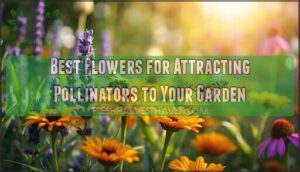
Think of your garden as a buffet line for bees and butterflies. Dense flower clumps show benefits fast—pollinators visit grouped plantings up to 28% more often than scattered ones.
Layer bloom heights from 10 to 60 centimeters to create natural pollinator pathways, and mix at least three bloom colors together.
This garden layout strategy boosts nectar source diversity and keeps your native plant gardening thriving.
Providing Continuous Nectar Sources
Once you’ve grouped your blooms well, keep nectar flow steady across 6–8 weeks. Pair successive bloomers—plants with 60–90 day blooming windows—to maintain forage diversity and support pollinator health through fall gardens.
- Choose species that flower from September to November for continuous nectar
- Combine early and late-season native pollinator-friendly plants
- Monitor bloom succession to avoid gaps in ecosystem balance
- Reduce energy expenditure for pollinators preparing for winter
Integrating Ornamental and Native Plants
Weaving native plants with ornamentals gives you the best of both worlds—stunning fall garden displays that actually work for pollinators. When you include 10–15 native species alongside your favorite blooms, you’ll see 30–50% more pollinator activity than single-type plantings.
Native choices like goldenrod or asters paired with garden mums create a biodiversity boost while trimming maintenance by roughly 25% over time.
Sustainable Practices for Fall Pollinator Support

Creating a pollinator-friendly garden goes beyond just choosing the right flowers—it’s about building a safe environment where insects can thrive throughout the fall season. Your management practices directly impact how many pollinators visit your yard and how long they stick around.
Let’s look at three sustainable approaches that protect these essential garden visitors while they’re gathering their final resources before winter.
Reducing Pesticide Use During Peak Foraging
You’ll want to slash pesticide use when bees and butterflies are most active in your garden. Studies show integrated pest control can drop colony exposure to harmful chemicals by 45% without sacrificing your harvest.
Switch to eco-friendly practices like biocontrol or pollinator-friendly plants during peak foraging—these sustainable gardening practices boost pollinator safety while cutting applications by up to 38% and supporting long-term pollinator conservation.
Supporting Butterflies, Bees, and Other Pollinators
Native fall bloomers aren’t just pretty—they’re lifelines for butterfly migration and bee habitat. Field trials show native nectar sources pull 12–25% more pollinator visits than non-natives, with over 60 butterfly species documented using late-season plants like asters and milkweed.
Your pollinator-friendly plants create ecosystem balance through better pollinator nutrition, supporting insect conservation when monarchs and bees need it most before winter.
Monitoring and Enhancing Pollinator Activity
Regular pollinator tracking through simple garden surveillance reveals what’s working in your fall plantings. Time-lapse cameras and visual counts show peak nectar analysis times—usually 5.6 visits per minute during prime hours—helping you adjust bee behavior patterns.
Watch for floral patterns that attract repeat visitors, then expand those pollinator-friendly plants.
Your bee-friendly plants and butterfly and bee conservation efforts improve with this practical pollinator gardening feedback.
Frequently Asked Questions (FAQs)
What do pollinators eat besides nectar and pollen?
Beyond nectar and pollen, pollinators feed on honeydew from aphids, tree sap, and protein-rich sources. Bees also collect pollen substitutes when natural supplies dwindle, adapting their diets to maintain colony health throughout changing seasons.
How do I attract hummingbirds in fall?
Like pit stops on a long highway, hummingbird feeders with a 4:1 water-to-sugar solution support fall migration energy needs.
Plant native tubular bloomers—salvias and beard-tongue—near feeders to create irresistible nectar sources for these tireless pollinators.
Can I grow fall flowers in containers?
You can absolutely grow fall blooms in garden containers. Choose five-gallon pots with well-draining container soil, group pollinator-friendly plants in sunny spots, and water deeply to support flower viability and pollinator health throughout your fall garden.
What colors attract the most fall pollinators?
Bees prefer blue and purple blooms, while butterflies favor red, orange, and pink hues. Hover flies gravitate toward yellow and white flowers, so mixing these colors maximizes pollinator attraction in your fall garden.
Do fall pollinators need water sources nearby?
Yes, fall pollinators benefit greatly from water proximity. Placing shallow water features within 3–5 meters of nectar sources boosts visitation rates by 20–40%, aids pollinator hydration, and enhances foraging efficiency throughout autumn.
Conclusion
What happens when your garden becomes the last refueling station before winter? You’re not just attracting pollinators in fall flowers—you’re anchoring an entire ecosystem’s survival strategy.
Each aster, sedum, and goldenrod you plant becomes currency for bees banking energy and butterflies completing migrations.
The work you do now ripples through next spring’s pollination networks, determining which native plants thrive and which struggle. Your fall beds aren’t seasonal decoration; they’re critical infrastructure for the insects that underwrite your garden’s future productivity.