
This site is supported by our readers. We may earn a commission, at no cost to you, if you purchase through links.
Most gardeners pack up their tools in August and call it a season. That’s a mistake—and a surprisingly costly one. Fall’s cooler temperatures and shorter days actually create near-perfect conditions for many vegetables, suppressing the pest pressure and heat stress that plagued your summer crops.
Kale sweetens after a frost. Radishes mature in under a month. Spinach can survive down to 30 °F without flinching. The window to get these crops in the ground is open right now, but it won’t stay open long. Your frost date is the clock, and the best fall vegetables to plant now reward gardeners who move fast and plan smart.
Table Of Contents
- Key Takeaways
- Best Fall Vegetables to Plant Now
- Plan Around Your Frost Date
- Top 5 Fall Planting Helpers
- Grow More Before Winter
- Frequently Asked Questions (FAQs)
- What vegetables can I plant now for fall?
- Is it too late to plant vegetables in October?
- What vegetables can be planted in November and December?
- What fall vegetables can be planted now?
- When should I start my fall vegetable garden?
- What is the best vegetable to plant in October?
- Is September too late to plant fall vegetables?
- What is the best vegetable to grow in the fall?
- What can I plant right now for fall?
- What are the best vegetables to plant in fall?
- Conclusion
Key Takeaways
- frost date is the real deadline for fall planting, so look it up now, and add a two‑week buffer to whatever maturity time the seed packet promises.
- quick crops like radishes and arugula are your best fall insurance, since they mature in under a month and can be succession‑sown every 7‑14 days for a steady harvest.
- light frost actually improves flavor, sweetening kale, beets, turnips, and radishes by boosting their sugar content once temperatures dip to 32‑36°F.
- row covers and mulch buy you extra growing weeks by shielding crops from sudden cold snaps and cutting soil temperature swings by several degrees.
Best Fall Vegetables to Plant Now
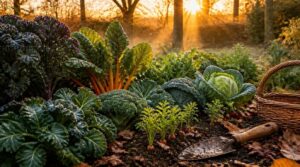
Fall is the garden’s second chance, and the cool weather ahead is exactly what these crops are waiting for. A handful of vegetables actually thrive when temperatures start dropping, giving you fresh harvests well into the season. Here are the best ones to get in the ground right now.
Understanding how to extend your harvest season with proper techniques can help you time your plantings perfectly and keep fresh vegetables coming long after summer fades.
Radishes and Arugula
If you want fast wins in the fall garden, radishes and arugula are your best starting point. Both mature in under 30 days, tolerate light frost, and deliver bold, peppery flavor that punches well above their weight. Succession plant every 10–14 days and you’ll be harvesting well into November. The glucosinolates support blood sugar in radishes may aid blood‑sugar regulation.
- Radishes reach full size in 22–30 days and thrive in cool, moist soil
- Arugula yields baby leaves in just 3–4 weeks from direct sowing
- Both crops supply vitamin C, K, and antioxidants with very few calories
- Toss them together with citrus and olive oil for a dead-simple fall salad
Spinach and Lettuce
Spinach and lettuce slot in perfectly after your quick radish-arugula rotation.
Spinach hits harvest in 30 days, tolerates frost down to 30°F, and delivers impressive levels of vitamin K, iron, and folate.
Keep soil pH between 6.0 and 7.0, water consistently, and you’ll avoid bitter leaves.
Succession-sow every two weeks for continuous cutting through fall.
Beets and Turnips
While your lettuce fills in, give root vegetables their own real estate. Beets and turnips reward patience with two harvests in one: tender greens now, sweet roots later.
Beets need even soil moisture and 50–70°F to bulk up properly. Turnips mature faster, often 30–60 days, turning sweeter after cool nights. Thin both early, pair roasted roots with garlic, butter, or goat cheese.
Kale and Swiss Chard
Once roots are tucked in, fill remaining beds with kale and Swiss chard—your cold-hardy workhorses. Kale shrugs off frost down to -10°F, growing sweeter as nights cool; chard tolerates light freezes at 30–32°F.
- Kale’s deep crinkles, deep flavor
- Chard’s rainbow stems brighten any plate
- Both reward you with weeks of harvest
Kale packs more vitamin A and fiber; chard brings extra magnesium and iron.
Broccoli and Cabbage
Save your biggest bed space for broccoli and cabbage, the heavy-hitter coolseason crops. Both tolerate hard freezes to 20°F and pack serious nutrition—broccoli brings 81mg vitamin C per 100g, cabbage offers bone-supporting vitamin K. Start transplants early so heads form before deep frost.
Watch for cabbage worms and flea beetles; row covers help with frost protection and pest management. Harvest broccoli before buds flower; cabbage when heads feel firm.
Plan Around Your Frost Date
Your first frost date is the anchor for every planting decision you’ll make this fall. Get that date locked in, and the rest of your schedule practically writes itself. Here’s how to build a timeline that works with the season, not against it.
Once you know your frost date, you can also plan your zucchini planting schedule to make the most of every week before the cold sets in.
Find First Frost Date
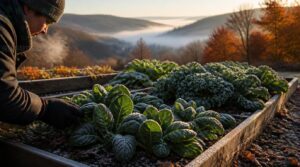
Your first frost date is the cornerstone of every fall garden plan. Look it up using NOAA’s frost maps or your local extension service by ZIP code.
But don’t stop there — microclimate variations matter. A low-lying bed or north-facing slope can freeze a week earlier than your neighbor’s raised plot just yards away.
Add Fall Maturity Buffer
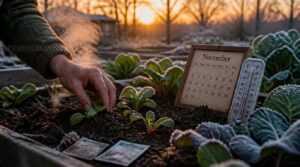
Once you know your frost date, don’t plant straight from the seed packet’s days-to-maturity number. Fall’s shorter days and cooling temps slow everything down. Add a two-week fall buffer on top of your crop’s listed maturity time.
Here’s how to apply it practically:
- Find your first frost date and work backward.
- Add 14 buffer days beyond the stated days to maturity.
- Leafy greens like spinach need a 7–14 day cushion; brassicas need up to 21.
- Root crops — beets, radishes — need a 5–10 day buffer only.
- Use historical weather data to fine-tune margins for your region.
This buffer guards against unexpected cold snaps and keeps your fall harvest on track.
Sow Fast Crops First
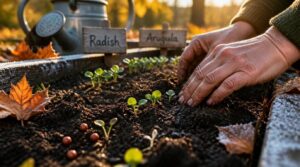
Start with the speedsters. Radishes and arugula are ready 25–40 days from sowing — making them your fall garden’s best insurance.
Sow seeds ¼ inch deep, keep soil consistently moist, and germination happens in under a week.
Succession sow every 7–14 days to keep harvests rolling right up to frost.
Transplant Brassicas Early
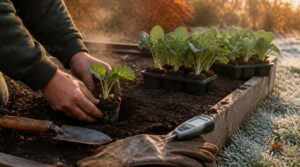
Brassicas like broccoli, cabbage, and cauliflower need a head start — transplant seedlings 2–4 weeks before your first frost date. Start them indoors 4–6 weeks earlier, then harden them off gradually over 7–14 days.
Plant at container depth to prevent stem girdling, and guarantee soil pH sits between 6.0 and 7.5 for strong establishment.
Use Succession Planting
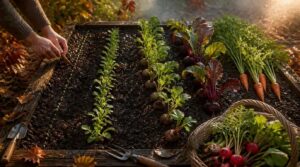
Why settle for one harvest when your bed can give you three? Succession sowing keeps rapid turnover crops like radish and arugula coming every 7–14 days, while soil stays productive instead of sitting empty.
Stagger plantings by days to maturity—fast crops up front, slower roots behind. This staggered sowing approach turns one fall garden into a continuous harvest cycle, right through frost.
Top 5 Fall Planting Helpers
Good timing only gets you so far when a surprise frost rolls in overnight. The right gear bridges that gap, buying your crops extra weeks of growing time. Here are five tools worth keeping in your fall gardening kit.
1. Monterey BT Concentrate Biological Insecticide
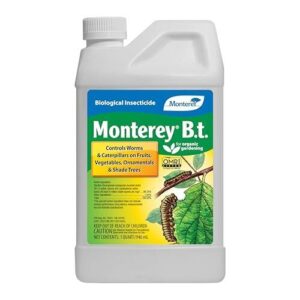
Once cabbage worms start shredding your fall brassicas, you’ll want a fix that won’t harm your harvest. Monterey BT Concentrate uses Bacillus thuringiensis kurstaki to target caterpillars like loopers and hornworms—pests must ingest it, so spray the underside of leaves where they feed.
Mix 2 fl oz per 3 gallons of water, apply in early morning or evening, and hit early larval stages for best results. It’s OMRI listed for organic gardens and safe for edibles right up to harvest day.
| Best For | Gardeners dealing with caterpillar pests like cabbage worms, hornworms, corn ear worms, bagworms, and tent caterpillars who want an organic-approved treatment safe for use right up to harvest. |
|---|---|
| Frost/Pest Protection | Pest control spray |
| Material | Liquid biological formula |
| Reusability | Not reusable |
| Weight | 2 lb |
| Garden Application | Crop pest treatment |
| Weather Resistance | Not weather rated |
| Additional Features |
|
- OMRI listed and safe for edibles, even close to harvest day
- Easy-to-mix concentrated liquid formula with simple application
- Effective against a wide range of caterpillar pests across various crops
- Less effective against heavy squash beetle infestations
- Requires precise timing during early larval stages to work well
- Some bottles may have inconsistent fill volumes
2. Agfabric 10×50 Frost Protection Cover
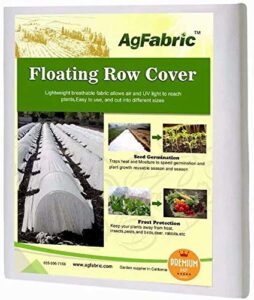
Once your brassicas are protected from pests, the next threat is frost — and that’s where the Agfabric 10×50 Frost Protection Cover earns its place. This lightweight spun polypropylene sheet delivers up to 28°F of frost protection while staying breathable enough to prevent fungal buildup.
At 10 ft × 50 ft, it covers multiple rows in one go.
The UV-stabilized fabric is reusable season after season — just fold it flat and store it between uses.
| Best For | Gardeners who need reliable, large-scale frost protection for brassicas, vegetables, and seedlings across multiple rows without sacrificing airflow or moisture. |
|---|---|
| Frost/Pest Protection | Frost protection up to 28°F |
| Material | Spun polypropylene |
| Reusability | Reusable |
| Weight | 1.87 lb |
| Garden Application | Season extension cover |
| Weather Resistance | Wind, hail, snow |
| Additional Features |
|
- Covers a generous 10 ft × 50 ft area in one sheet, making it easy to protect entire rows at once
- Breathable, UV-stabilized fabric lets in 30–50% light and resists fungal buildup while still blocking frost down to 28°F
- Reusable and multipurpose — doubles as a barrier against birds, insects, and small mammals throughout the season
- Thin fabric is prone to snagging and tearing around sharp edges, limiting its lifespan in rough conditions
- Some rolls come up short at 10 ft × 48 ft instead of the listed 50 ft, which can throw off planting layouts
- May not hold up through more than one or two seasons if exposed to strong winds or prolonged harsh weather
3. Agribon Floating Row Cover
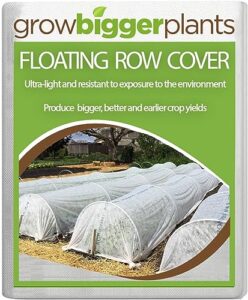
The Agfabric cover manages sudden cold snaps well, but for everyday season extension, Agribon Floating Row Cover is the workhorse you’ll reach for most.
Its 0.55 oz/sq yd spun-bonded polypropylene fabric is feather‑light — no hoops needed, just drape it directly over plants.
You still get up to 4°F of frost protection and 85% light transmission, so crops keep growing underneath.
It also blocks flea beetles and cabbage moths without chemicals.
Anchor the edges with boards (not sharp bricks — the fabric tears easily).
| Best For | Home gardeners and small-scale growers who want a lightweight, chemical-free way to protect frost-sensitive crops like tomatoes, peppers, and melons across multiple growing seasons. |
|---|---|
| Frost/Pest Protection | Frost protection up to 4°F |
| Material | Spun-bonded polypropylene |
| Reusability | Reusable 2-3 seasons |
| Weight | Varies by roll |
| Garden Application | Season extension cover |
| Weather Resistance | Wind resistance limited |
| Additional Features |
|
- Feather-light fabric drapes directly over plants with no hoops or frames required
- Blocks insects like flea beetles and cabbage moths while letting in 85% of available light
- UV-stabilized material holds up for 2–3 growing seasons with careful handling
- Thin fabric tears easily in strong winds or if anchored with sharp-edged objects
- Heavy rain can pool on the surface instead of soaking through to plants below
- Advertised roll length (83 ft) may not match what you actually receive
4. Easy Gardener Frost Protection Blanket
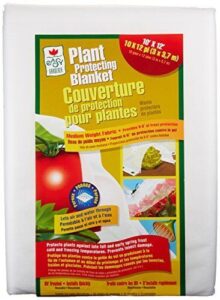
When you need a heavier hand than a lightweight row cover, the Easy Gardener Frost Protection Blanket steps in. This reusable HDPE fabric delivers 6–8°F of frost protection — noticeably more buffer than spun-bonded alternatives.
Drape it over shrubs, containers, or raised beds. It still lets light and rain through, so plants don’t suffocate underneath. At 10×12 ft, it fits most standard beds. Anchor the edges well — wind will win otherwise.
| Best For | Gardeners who need reliable frost protection for shrubs, container plants, and raised beds through multiple cold snaps without replacing their cover each season. |
|---|---|
| Frost/Pest Protection | Frost protection 6-8°F |
| Material | HDPE fabric |
| Reusability | Reusable, washable |
| Weight | 0.81 lb |
| Garden Application | Plant frost tent |
| Weather Resistance | Wind, rain, salt |
| Additional Features |
|
- Offers a solid 6–8°F of frost protection — more buffer than most lightweight row covers
- Lets light and rain through, so plants stay healthy without needing to be uncovered daily
- Reusable, washable, and easy to cut or reshape for a custom fit
- Needs to be firmly anchored — it’ll blow off in any real wind if left loose
- Not built for extreme or prolonged freezes where temps drop well beyond 8°F
- Thin HDPE fabric can tear if it snags on sharp edges or gets pulled too tight
5. Natural Jute Race Sack Set

Once your beds are tucked in and frost covers are anchored, it’s time for harvest celebrations — and that’s where this jute race sack set earns its spot. Four 24×39 in burlap bags, ASTM F963 and CPSIA certified, double as sack-race fun for the kids and sturdy haul-bags for your root crop bounty.
Reinforced seams handle repeated jumping and heavy loads alike. Just air them out first (burlap has a distinct smell) and keep them dry — they’re not waterproof, but they’re wonderfully reusable.
| Best For | Families and schools wanting a fun, durable sack-race set that doubles as sturdy storage for garden harvests, toys, or seasonal gear. |
|---|---|
| Frost/Pest Protection | Protective cover for plants |
| Material | Natural jute burlap |
| Reusability | Reusable |
| Weight | 2.43 lb per bag |
| Garden Application | Plant row cover |
| Weather Resistance | Not waterproof |
| Additional Features |
|
- Reinforced seams hold up to repeated jumping and heavy loads
- Certified to US child safety standards (ASTM F963, CPSIA)
- Versatile use for games, storage, gardening, and gifting
- Strong burlap odor at first, so it needs airing out before use
- Not waterproof, so moisture can seep in over time
- Seams may open at the sides if overloaded or handled roughly
Grow More Before Winter
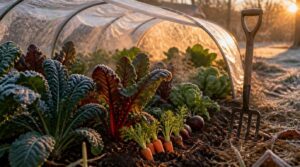
A longer harvest doesn’t mean more luck — it means smarter moves in the final weeks of the season. With the right techniques, you can push past your frost date and keep your beds producing well into winter. Here’s exactly how to do it.
Protect Crops From Frost
A single frost can wipe out weeks of work overnight. That’s why frost threshold monitoring starts now — know your crop’s breaking point before temperatures do.
- Deploy floating row covers before nightfall; remove them mid-morning to prevent heat buildup
- Use irrigation heat layers by running overhead water just before freezing begins
- Map frost pockets across your garden to protect vulnerable spots first
Cold frames and season extension devices buy you extra weeks effortlessly.
Mulch Roots for Storage
Mulching is your underground insurance policy for fall root crops. A 3–4 inch layer of shredded leaves or straw cuts soil temperature swings by 2–5°F and reduces moisture loss by roughly 25 percent.
Keep mulch 2–3 inches from stems to prevent crown rot. Organic materials break down slowly, feeding soil microbes while protecting carrots, beets, and turnips through hard freezes.
Interplant Greens and Roots
Think of your fall bed as a two-story building. Leafy greens like lettuce and spinach work the topsoil layer while root vegetables like beets develop below, so neither competes for the same resources.
- Space beets 4–6 inches apart, lettuce 6–8 inches
- Use checkerboard rows to minimize shading
- Harvest greens first to free light for maturing roots
- Apply drip irrigation to feed both layers evenly
- Leave root residues as mulch after cutting greens
This staggered harvest timing naturally disrupts pest cycles too — removing greens early breaks aphid refuges before roots finish developing.
Harvest After Light Frost
Frost is a flavor enhancer, not a death sentence. Once temperatures dip to 32-36°F, sugar concentration kicks in, sweetening radishes, arugula, beets, and turnips.
Frost doesn’t kill flavor—it creates it, turning root vegetables sweet at 32–36°F
Harvest cold-hardy vegetables on calm, sunny days, never while frosted tissue is still thawing. That moisture turns to rot fast. Brush off soil, skip rinsing, and refrigerate greens immediately for quality storage.
Overwinter Hardy Vegetables
Why pack it in by November? Many crops simply keep going. Spinach acts like a perennial cut-and-come-again crop, while established arugula and lettuce resume growth once temperatures moderate.
Smart overwintering needs:
- Frost tolerance down to 20°F
- Good winter soil drainage
- Mulch for underground storage
Carrots and parsnips, sweetened by cold, stay harvestable right through winter gardening season.
Frequently Asked Questions (FAQs)
What vegetables can I plant now for fall?
Cool-season vegetables are your best bet right now. Radishes, arugula, spinach, kale, beets, and broccoli all thrive in fall’s crisp air — many reaching harvest in just 21–60 days.
Is it too late to plant vegetables in October?
In USDA zones 4–8, October still allows fast-maturing crop selection like radishes, spinach, and arugula. Just track your first frost date, add a buffer, and use row covers for extending autumn harvests.
What vegetables can be planted in November and December?
In mild climates, plant winter spinach varieties, garlic, late season scallions, and cold-hardy carrots, kale, and parsnips. Cold soil germination is slow, but frost sweetening improves flavor—perfect for season extension techniques and a reliable overwintering harvest.
What fall vegetables can be planted now?
Right now, plant fast-maturing radish varieties, quick-harvest arugula, spinach, and lettuce for quick wins.
Add beets, turnips, kale, and Swiss chard for hardy leafy greens and sweetening root crops—all thrive as cool-season vegetables with proper succession sowing and season extension.
When should I start my fall vegetable garden?
Start 6–8 weeks before your first frost date. Add a two-week fall factor for slower growth. That timing lands most gardens in mid-to-late summer for sowing.
What is the best vegetable to plant in October?
Radishes win for October, maturing in just 25 days. Pair them with frost-tolerant greens like spinach and lettuce, then keep successive sowing every 2-3 weeks for maximizing autumn yields with quick-maturing varieties throughout fall.
Is September too late to plant fall vegetables?
Fast crop selection like radishes (25 days) and arugula still fits your first fall frost date with room to spare. Just stick to quick-maturing root crops and skip slow brassicas unless you’ve got row covers ready.
What is the best vegetable to grow in the fall?
Kale wins for reliability: it’s frost-tolerant, sweetens after freezes, and thrives in cool-season soil. Pair it with quick radishes or arugula for fastest harvest crops, and use succession planting plus frost protection fabric to stretch your fall garden further.
What can I plant right now for fall?
Right now, your garden window is wide open. Sow fast-growing radishes in 25 days to harvest. Early fall sowing of spinach and arugula keeps quick-maturing cool-season vegetables producing well before frost arrives.
What are the best vegetables to plant in fall?
Cool-season vegetables are your fall garden’s best friends. Frost-tolerant varieties like spinach, kale, beets, and radishes thrive as temperatures drop, delivering crisp flavor and quick harvests before winter closes in.
Conclusion
Winter won’t wait—but neither should you. The best fall vegetables to plant now are already racing your frost date, and every day you delay is a harvest you won’t see.
Kale will sweeten under its first freeze. Spinach will shrug off the cold like it was born for it.
Plant smart, protect early, and your garden won’t go quiet in November—it’ll still be feeding you long after the last leaf falls.
- https://joegardener.com/podcast/what-to-plant-now-fall-vegetable-garden
- https://www.theprairiehomestead.com/2015/08/vegetables-fall-garden.html
- https://www.almanac.com/best-vegetables-fall-garden
- https://www.homesandgardens.com/gardens/what-to-plant-in-june-2026
- https://enchantedgardensrichmond.com/planting-guide/fall-planting-guide