This site is supported by our readers. We may earn a commission, at no cost to you, if you purchase through links.

Plant mint next to basil and within weeks it’ll bully its way through the whole bed, roots creeping wherever they please. Some herbs play nice together. Others compete for water, steal sunlight, or just don’t belong in the same patch of soil.
That’s the thing about the best herbs to grow together: pairing them right does more than save space. Basil planted near tomatoes sharpens their flavor and keeps pests away. Dill draws in ladybugs that handle aphids for you.
Get the groupings right, and your garden practically runs itself, herbs doing double duty as flavor boosters and natural bodyguards for whatever grows beside them.
Table Of Contents
- Key Takeaways
- Best Herbs to Grow Together
- Mediterranean Herbs for Sunny Gardens
- Moisture-Loving Herb Combinations
- Best Container Herb Pairings
- Herbs That Help Vegetables Thrive
- Herbs That Repel Garden Pests
- Herbs You Should Not Pair
- Frequently Asked Questions (FAQs)
- What herbs should never be planted together?
- What herbs grow well together chart?
- What is the 70 30 rule in gardening?
- What herbs pair well with each other?
- Which herbs mix well together?
- What is the best layout for an herb garden?
- What herbs go well in pots together?
- What herb is best to plant together?
- What herbs go well together?
- What is the best combination of herbs?
- Conclusion
Key Takeaways
- Match herbs by sun exposure, water needs, and growth habit before pairing them, since mismatched requirements cause one plant to suffer.
- Keep aggressive spreaders like mint, oregano, and lemon balm contained with buried barriers or separate pots to stop their roots from choking out neighbors.
- Certain pairings boost each other’s growth and flavor, like basil with tomatoes, dill with cucumbers, chives with carrots, and parsley with peppers.
- Aromatic herbs such as basil, rosemary, sage, chives, and dill naturally repel or confuse common garden pests while also attracting helpful predatory insects.
Best Herbs to Grow Together
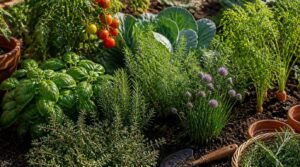
Not all herbs make good neighbors, so pairing them up takes a little know-how. Some love the same sun and soil, while others just need enough elbow room to avoid a turf war. Here’s what to know before you start planting them side by side.
Before you start digging, it helps to check this guide on which herbs grow well together in a kit so sun, water, and soil needs actually line up.
Quick Companion Planting Chart
Four herb pairings can save your garden season before you’ve even planted a seed. Skip the guesswork with this quick garden planning reference:
- Basil + tomatoes = better flavor, fewer pests
- Dill + cucumbers = aphid control
- Chives + carrots = deters carrot fly
- Parsley + peppers = stronger pollinator visits
These botanical pairings work with your garden’s natural rhythms, not against them. Utilizing natural pest control through aromatic herbs can create a more resilient garden environment.
Match Sun and Water Needs
Those pairings work because sun and water needs already match. Basil and tomatoes both crave full sun and steady moisture; dill and cucumbers share the same thirst.
Mismatch these factors and one plant suffers. Check soil moisture 2-3 inches deep before watering, and mulch sun-exposed herbs to slow evaporation. Getting this right sets up every companion pairing that follows.
Group by Growth Habits
Sun and water aren’t the only match to check — shape matters too. Erect herbs like upright oregano can shade shorter neighbors, so pair them with other tall growers.
Spreading types work as living mulch, suppressing weeds, while prostrate herbs hug soil for wind resistance.
Give climbing herbs sturdy support, and keep compact clumps together for easy, uniform care.
Separate Aggressive Spreaders
Not every herb plays nice with neighbors. Mint spreads through underground rhizomes, sometimes 20 inches a year, so it needs buried barriers 12 inches deep or its own pot. Oregano and lemon balm wander too, roots reconnecting into clumps beyond their bounds.
Prune runners regularly, mulch around bases, and give thirsty spreaders their own space to avoid nutrient competition with slower-growing companions.
Mediterranean Herbs for Sunny Gardens
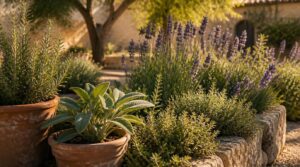
If your garden bakes in sun most of the day, you’ve got the perfect setup for Mediterranean herbs. These plants actually prefer things hot and dry, so pampering them with extra water does more harm than good. Here’s how to group them for the best results.
Rosemary, Thyme, and Sage
Rosemary, thyme, and sage are the backbone of Mediterranean herb gardens, and they’re practically best friends underground. All three crave full sun and sandy, well-draining soil, so plant them together and let the soil dry out between waterings.
Beyond growing habits, they share a flavor bond too — rosemary’s piney bite, thyme’s lemony warmth, and sage’s peppery depth create layered flavor pairings perfect for roasted meats.
Oregano, Marjoram, and Thyme
Team up oregano, marjoram, and thyme, and you’ve got a trio built for the same dry, sunny bed. All three want slightly alkaline soil and minimal watering once established.
Flavor-wise, oregano brings peppery punch, marjoram softens things with sweet floral notes, and thyme adds earthy, lemony depth. Propagate by cuttings for faster, truer plants than starting from seed.
Lavender With Rosemary
Few pairings feel as classic as lavender and rosemary, planted side by side for scent, structure, and shared Mediterranean roots. Both crave full sun and lean, well-drained soil.
Together they anchor borders with contrasting textures, lavender’s soft blooms against rosemary’s woody form, while doubling as a go-to duo for aromatherapy oil blends and roasted-herb cooking alike.
Dry Soil Requirements
Think of Mediterranean herbs as desert dwellers at heart—soggy roots are their biggest enemy. Sandy soil drainage lets water pass fast, mimicking their native hillsides.
Mix in gritty sand or perlite if your soil holds moisture. Skip heavy organic matter; it retains water these herbs don’t want. Aim for well-draining soil that dries fully between waterings, and don’t fuss over soil pH management—these herbs tolerate slightly alkaline conditions just fine.
Full-sun Planting Tips
Six hours of direct sun daily keeps these herbs happiest, so pick your sunniest spot—southern or western exposures work best. Raised beds warm faster and drain better, ideal for rosemary and thyme.
Water deeply but infrequently, letting soil dry between sessions. Add mulch sparingly to moderate temperature swings without trapping moisture. Watch your microclimate too; reflective light-colored mulch keeps roots cooler during peak summer heat.
Moisture-Loving Herb Combinations
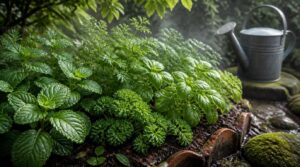
Not every herb wants a dry, sunbaked bed like rosemary or thyme. Some actually thrive when the soil stays a little damp and the sun isn’t blazing all day. Here’s how to pair these thirstier herbs so they all get what they need.
Basil, Parsley, and Chives
Basil, parsley, and chives make a classic herb companion planting trio for any moisture-loving bed.
Basil’s sweet, peppery notes go perfectly with parsley’s bright bite and chives’ oniony punch—perfect for chimichurri or green pesto.
Harvest basil before flowering for best flavor; divide chive clumps every few years.
Rinse, chop, and freeze extras to preserve that fresh-cut taste all season long.
Cilantro With Dill
Where basil brings a peppery punch, cilantro and dill offer something softer. Cilantro’s citrusy brightness meets dill’s grassy sweetness, a flavor profile teamwork that shines in salsas and seafood dishes.
Both need well-drained soil and steady moisture. Harvest often to prevent bolting, especially with cilantro, and snip leaves fresh for the boldest aroma before they fade in the fridge.
Chervil and Burnet
Delicate and often overlooked, chervil and burnet make quiet but reliable garden partners. Both belong to the Apiaceae family, favoring cool, evenly moist soil at a pH near 6.0-7.0.
- Chervil: anise-like, fades with heat
- Burnet: cucumber-like, holds flavor
- Freeze chervil for storage
- Refrigerate burnet up to a week
Their differing sun tolerance still makes them compatible companions in cool-season beds.
Partial Shade Options
Not every garden gets full sun all day, and that’s fine. Cilantro, parsley, chives, and mint all handle dappled light well, using cooler soil to retain moisture longer.
| Herb | Shade Benefit |
|---|---|
| Cilantro | Slows bolting |
| Mint | Reduces leaf scorch |
| Chives | Stays productive |
Keep soil pH near 6.0-7.0 for steady growth.
Consistent Watering Needs
Moisture-loving herbs like these don’t forgive a dry spell, so consistent watering needs matter more than any fancy technique. Check soil moisture by pressing a finger 1-2 inches down; water when it’s dry there. Drip irrigation keeps things steady with less fuss.
- Water early morning to cut evaporation
- Adjust schedules as seasons shift
- Protect seedlings with gentle, frequent moisture
Best Container Herb Pairings
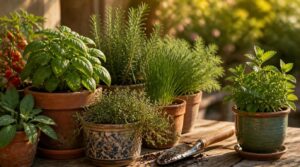
No garden space? No problem, containers let you grow herbs almost anywhere. But not every herb wants the same pot mates, so pairing them right matters more than you’d think. Here’s what actually works together, and what needs its own space.
Basil, Oregano, and Parsley
Pair these three in one big pot and you’ve got Italy’s flavor base right on your patio.
Basil, oregano, and parsley share well-drained soil and full sun, needing 6+ hours of light daily. Use a 6-9 inch container with drainage holes. Pinch basil regularly for bushier leaves, and harvest often—fresh leaves preserve those volatile oils that make each herb worth growing.
Rosemary, Sage, and Lavender
Group rosemary, sage, and lavender in one terracotta pot at least 10-12 inches deep, and they’ll thrive together like old garden friends. All three crave dry soil, full sun, and neutral to slightly alkaline pH.
Their scents actually repel pests, while sage’s thujone-rich oil and lavender’s calming linalool make harvesting a sensory bonus. Snip stems just before flowering for peak aroma.
Mint in Separate Pots
Mint bullies its neighbors, sending runners underground to choke out anything nearby. So give it a solo container instead.
Use walls at least 15 cm above soil, add a root barrier liner inside, and refresh the mix every 12-18 months.
Keep soil consistently moist, prune every 2-3 weeks, and shelter pots below 40°F to prevent frost damage.
Proper Pot Size
Size matters more than you’d think for container herbs. Follow Diameter Scaling Rules: go 1-2 inches bigger than the current pot, never more, or roots sit in soggy soil they can’t use.
Seedlings need a Seedling Upsizing Schedule every 2-4 weeks. Watch for root-bound signs, circling roots, yellowing leaves, and repot before growth stalls. Depth matters too: taprooted herbs want deeper containers for real root expansion.
Drainage and Airflow
Water pools fast in containers, so drainage holes are non-negotiable, along with a light, chunky potting mix.
Add perlite or coarse sand for real soil porosity benefits and better soil aeration. Preventing root rot means checking drainage gaps stay clear and soil never turns to mud, since compaction chokes root oxygen fast, even in small pots.
Herbs That Help Vegetables Thrive
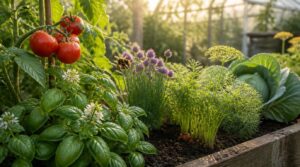
Herbs don’t just get along with each other, they can also boost the vegetables growing nearby. Some pull double duty, keeping pests away while helping fruit and flavor develop better. Here’s where to plant them for the biggest payoff in your veggie beds.
Basil With Tomatoes
Basil and tomatoes are garden royalty for a reason. Plant them 12-18 inches apart, and both thrive: basil’s oils boost flavor, while roots avoid competition.
Try this:
- Genovese basil for classic sweetness
- Cherry tomatoes for balance
- Fresh-torn leaves added last
Stake tomatoes, mulch generously, and water at soil level—dry foliage means healthier plants and richer harvests all season.
Chives With Carrots
Chives and carrots make a quietly reliable pair in the garden, not just on the plate. Their oniony bite deters aphids and grasshoppers, protecting nearby carrot roots as they mature.
Both prefer loose, well-drained soil, so growth habits align nicely. Harvest chives repeatedly for continuous flavor, then snip them fresh over roasted or buttered carrots—their sulfurous aroma amplifies natural carrot sweetness beautifully once heat hits the pan.
Dill Near Brassicas
Broccoli and cabbage get a real bodyguard in dill. Its scent confuses cabbage moths, so fewer eggs land on your brassicas.
- Repels cabbage moths and loopers
- Attracts predatory wasps
- Reduces aphid pressure
- Needs 12-18 inches of spacing
- Thrives in full sun, like brassicas
Space it generously, though, or dill’s tall stems will shade your brassicas as summer progresses.
Thyme Near Strawberries
Strawberries get a low, fragrant bodyguard in thyme. Its weed suppression ground cover shades soil, cutting germination while boosting moisture retention.
| Benefit | Effect |
|---|---|
| Weed control | Shades soil |
| Pest deterrence | Repels aphids, slugs |
| Moisture | Reduces evaporation |
| Microclimate | Cools crown area |
| Erosion | Stabilizes slopes |
Space thyme 8-12 inches from plants for airflow, letting both herbs and fruit thrive together.
Parsley With Peppers
Peppers get more than a garden buddy in parsley—they get a flavor partner, too. This herb won’t just improve plant growth nearby; it brings bright, fresh notes that balance pepper sweetness at harvest time.
Chop it fine over roasted or grilled peppers, or mix it into gremolata for real flavor teamwork. You’re feeding the soil and the dinner table at once.
Herbs That Repel Garden Pests
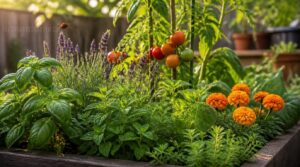
Some herbs do more than season your dinner, they stand guard over the whole garden. Plant the right ones nearby, and pests that would normally chew through your vegetables start looking elsewhere for a meal. Here’s a look at which herbs pull their weight as natural pest fighters.
Basil Deters Aphids
Crush a basil leaf and you’ll smell why aphids steer clear: linalool and eugenol disrupt their feeding cues. This scent barrier protects plants within a foot or two, while also drawing hoverflies and lacewings to hunt remaining pests.
- Interplant near tomatoes
- Harvest often for scent
- Try purple basil varieties
- Combine with mint, oregano
- Use potted basil as shields
Rosemary Repels Beetles
Brush against rosemary and you’ll release its signature weapons: cineole, camphor, and alpha pinene, oils beetles genuinely hate. This scented barrier confuses their sense of smell, so they can’t find nearby herbs to munch on.
Regular pruning boosts fresh growth and oil output, maximizing that protection. Plant rosemary in sunny, breezy spots for the strongest beetle olfactory disruption your garden can offer.
Sage Deters Cabbage Moths
Cabbage moths hate the camphor and cineole in sage leaves, which scramble their sense of smell right when they’re hunting for a place to lay eggs.
Plant sage 18-24 inches from your cabbage bed for brassica moth prevention without crowding. This aromatic scent barrier works as:
- Steady deterrence once established
- Stronger scent from mature foliage
- Effective natural pest control needing minimal upkeep
Chives Discourage Grasshoppers
Grasshoppers hunt by scent, and chives scramble that signal with their sulfur-compound punch. Plant a chive border 2-3 feet from carrots or lettuce; nymphs feed less nearby. Effect’s strongest on young shoots in dry weather, so trim regularly.
| Condition | Scent Potency |
|---|---|
| Young shoots, dry weather | Strongest |
| Mature leaves, after rain | Weakest |
| Post-flowering | Still present |
Dill Attracts Beneficial Insects
Dill isn’t a repellent at all — it’s a recruiter. Those umbrella-shaped blooms serve as a nectar source for ladybugs, hoverflies, and parasitic wasps that hunt aphids and caterpillars.
Let dill flower along garden edges to create predator corridors linking crop beds. Succession sowing keeps blooms coming all season, so lacewing populations stay strong right through harvest, handling pest management without sprays.
Herbs You Should Not Pair
Not every herb makes a good neighbor, and some can actively work against each other in the same bed. A few common pairings look harmless but end up causing stunted growth, stolen space, or way too much spreading. Here’s what to keep apart in your garden.
Fennel With Most Herbs
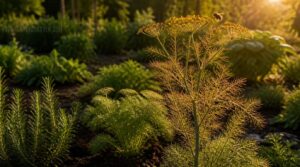
Fennel is the loner of the herb world—it grows fine near others but rarely plays well up close. Its allelopathic effects can stunt basil, cilantro, and parsley. Give it 18–24 inches of spacing from companions, since its tall, spreading habit shades slower growers. It self-seeds readily too, so managing spread matters.
Pair it loosely with rosemary or dill instead, and let pollinators enjoy its blooms from a distance.
Basil and Sage
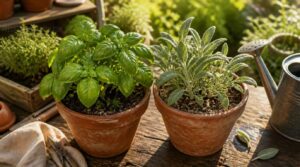
Basil and sage clash mostly over water, not space. Basil wants consistently moist soil, while sage prefers it dry between waterings—plant them together and one always suffers.
- Flavor-wise, basil’s sweet anise notes and sage’s earthy pine don’t need pairing anyway
- Harvest basil young before flowering; sage holds flavor even dried
- Grow in separate containers for best results
Mint With Delicate Herbs
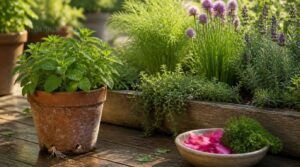
Mint plays well in the kitchen but not in the garden bed. Its aroma blends beautifully with lavender, thyme, and rose petals for infused waters, and it pairs with parsley in tabbouleh-style dishes—but those runner roots spread fast, choking out delicate neighbors like chives and dill before they get established.
Keep mint contained in its own pot, letting compact herbs grow undisturbed nearby.
Lemon Balm Spread Risks
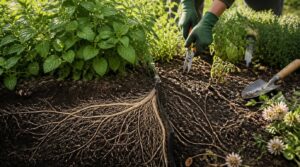
Lemon balm looks harmless until its roots start racing underground, traveling several feet from the parent plant in a single season. Left alone, it crowds out slower herbs and reduces garden biodiversity for pollinators.
Lemon balm’s roots race feet underground in a single season, quietly crowding out slower herbs and pollinators alike
Contain the spread with:
- Buried root barriers
- Regular pruning and division
- Removing flower heads before seeds form
- Deep, solid edging
- Monitored mulch layers
Dill and Cilantro Spacing
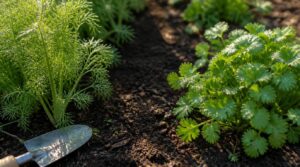
Roots aren’t the only reason to keep these two apart. Dill and cilantro both bolt fast and crowd each other’s airspace, so give them 12 inches minimum—separate pots or rows work best.
This prevents cross-pollination, root competition, and the damp microclimates that invite fungal trouble. Good spacing also keeps vertical airflow open around dill’s tall stalks.
Frequently Asked Questions (FAQs)
What herbs should never be planted together?
Fennel and sage top the "never" list thanks to allelopathic effects that stunt basil, cilantro, and savory.
Add mint’s runners, dill-cilantro cross-pollination risk, and clashing moisture needs between basil and sage—these botanical compatibility issues cause real root competition and stress.
What herbs grow well together chart?
Ever wonder which herbs actually get along?
Best pairing logic groups basil, oregano, and parsley together, while rosemary, thyme, and sage form a sun-loving trio—matching sunlight compatibility, soil texture, and watering needs for thriving companion plants.
What is the 70 30 rule in gardening?
Picture your garden as 70% structural backbone—shrubs, grasses, woody perennials—with 30% seasonal fillers for color. This ratio reduces maintenance while balancing textures, keeping beds visually unified through winter dormancy and into summer’s flush of blooms.
What herbs pair well with each other?
Funny thing: basil and tomatoes end up next to each other in most gardens anyway, and it turns out that’s perfect herb matchmaking. Match sun, water, and harvest cycles—basil with oregano, dill with parsley, rosemary with thyme—for real companion planting success.
Which herbs mix well together?
Good herb matchmaking comes down to shared sunlight requirements and soil texture compatibility. Basil and oregano thrive together, while rosemary, thyme, and sage form a drought-tolerant trio.
These companion planting combos boost flavor and support beneficial insect attraction throughout your garden bed.
What is the best layout for an herb garden?
Sun-lovers up front, thirsty herbs near the door. Try square foot designs, spiral layouts, or vertical walls for tight spaces, and always plant within easy kitchen reach for quick harvests.
What herbs go well in pots together?
Not every herb belongs in the same pot—some make lifelong roommates, others turn hostile fast.
Basil, oregano, and parsley share sun and drainage needs, while rosemary, sage, and lavender pair beautifully too, given matching soil drainage and spacing of 4-6 inches apart.
What herb is best to plant together?
Rosemary, thyme, and sage top the list — they share sun and soil needs, deter cabbage moths and beetles, and boost beneficial insect attraction. This trio thrives in dry, well-drained beds, making them a reliable, low-maintenance herb combination for beginners.
What herbs go well together?
Like puzzle pieces, herbs fit best when their needs align. Basil and oregano share sun and moisture needs, while rosemary, thyme, and sage thrive in dry soil. Dill and cilantro enjoy loose, fertile ground together.
What is the best combination of herbs?
Pairing rosemary, thyme, and sage covers Sunlight Alignment and Soil Drainage perfectly, since all three crave dry, sandy soil.
This trio also matches Growth Habit Compatibility and Water Need Matching, making it a foolproof, low-maintenance combination for sunny gardens.
Conclusion
Smart spacing solves most garden squabbles before they start. Once you group herbs by sun, water, and growth habit, the guesswork disappears.
That’s the real payoff of the best herbs to grow together: a bed where plants protect each other instead of competing. Rosemary shields, basil boosts, dill invites the helpers you need. Skip the mismatched pairs, mint especially, and your garden settles into a rhythm that feels like partnership.
- https://kellogggarden.com/blog/gardening/companion-plants-for-herbs-in-pots
- https://www.gardenia.net/guide/companion-planting-with-herbs
- https://plantura.garden/uk/herbs/growing-herbs/herbs-to-plant-together
- https://www.nourishedandnurturedlife.com/post/herb-gardening-companion-planting-and-the-easiest-herb-to-grow
- https://journeywithjill.net/gardening/2023/05/03/companion-planting-herbs-in-containers