This site is supported by our readers. We may earn a commission, at no cost to you, if you purchase through links.
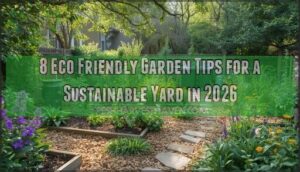
Your garden doesn’t have to choose between beauty and environmental responsibility, and the growing movement toward sustainable landscaping proves that thriving outdoor spaces can actually support local ecosystems rather than drain resources.
Traditional gardening practices, which often rely on chemical fertilizers, excessive irrigation, and high-maintenance exotic plants, work against nature’s rhythms and create unnecessary waste. By adopting eco friendly garden tips that emphasize native species, water conservation, and natural pest management, you’ll reduce your environmental footprint while creating a healthier, more resilient yard that requires less time, money, and effort to maintain.
Table Of Contents
- Key Takeaways
- Choose Native and Resilient Plants
- Build Healthy Organic Soil
- Conserve Water Efficiently
- Practice Natural Pest Control
- Reduce Waste and Reuse Materials
- Support Wildlife and Pollinators
- Use Eco-Friendly Garden Products
- Design for Sustainability and Low Maintenance
- Frequently Asked Questions (FAQs)
- What’s the most eco-friendly way to garden?
- How can I make eco-friendly weed killers at home?
- What are the best biodegradable pots for seedlings?
- How do I naturally improve clay or sandy soil?
- Can I use greywater safely in my garden?
- Whats the most sustainable way to control slugs?
- How do I transition a conventional garden to organic?
- What are eco-friendly ways to control garden weeds?
- Can I garden sustainably in containers or small spaces?
- How do I maintain garden tools without harsh chemicals?
- Conclusion
Key Takeaways
- Sustainable gardening works with natural systems by combining native plants, organic soil building, and water-smart irrigation to create resilient landscapes that require less maintenance while supporting local ecosystems and pollinators.
- Building healthy soil organically through composting, natural amendments, and mulching creates a living foundation that retains moisture, feeds plants naturally, and eliminates the need for synthetic fertilizers or chemicals.
- Water conservation strategies like rain barrels, drip irrigation, and xeriscaping can cut irrigation needs by 30-70% while maintaining thriving gardens that survive dry spells without constant watering.
- Natural pest control through companion planting, beneficial insects, and homemade organic sprays maintains garden health without harsh chemicals that harm pollinators, soil microbes, or the surrounding environment.
Choose Native and Resilient Plants
Starting with the right plants makes all the difference when you’re building a sustainable garden that works with nature instead of against it.
If you’re looking to skip synthetic chemicals entirely, natural pest control methods for vegetable gardens help protect your plants while keeping the ecosystem balanced.
Native and resilient species naturally thrive in your local climate, which means you’ll spend less time watering, fertilizing, and fighting off pests while creating a healthier ecosystem in your own backyard.
Here’s how to choose plants that’ll set your eco-friendly garden up for long-term success.
Benefits of Native Plant Species

Native plant benefits go far beyond looks—these regionally adapted species deliver critical ecosystem services by supporting biodiversity, attracting pollinator plants, and strengthening climate resilience.
You’ll notice improved soil erosion control as their deep root systems stabilize slopes, while local birds and beneficial insects thrive on the food and shelter they provide. It’s a cornerstone of sustainable gardening practices that works with nature, not against it.
By choosing plants that contribute to biodiversity and ecosystem services, gardeners help maintain healthy habitats for wildlife and support long-term conservation.
Selecting Drought-Tolerant Varieties
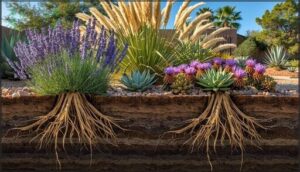
Drought-tolerant varieties are the backbone of water conservation, featuring deep roots, narrow foliage, and natural adaptations that cut irrigation needs by half or more once established.
Look for climate-resilient species suited to your USDA zone—succulents, ornamental grasses, and native plants like lavender or coneflower—that thrive in xeriscaping designs while supporting soil conservation and sustainable gardening goals.
For inspiration, explore a variety of drought-tolerant plant options that are recommended for waterwise landscapes.
Companion Planting for Pest Control
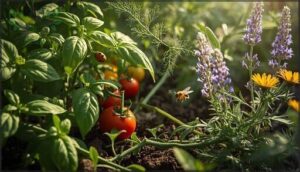
Companion planting for pest control combines visual barriers, pest repellents, and beneficial insects into one spatial design strategy that reduces chemical dependence in organic gardening.
By pairing basil with tomatoes to repel whiteflies or dill near cucumbers to confuse beetles, you create crop synergy that fosters pollinator plants and sustainable gardening goals while building natural pest control into every bed.
Build Healthy Organic Soil
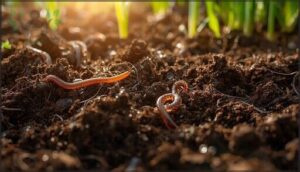
Healthy soil is the foundation of any thriving garden, and building it organically means you’re working with nature instead of fighting against it.
When you focus on enriching your soil naturally, you create a living ecosystem that feeds your plants, retains moisture, and nurtures beneficial organisms without relying on synthetic chemicals.
Natural soil enrichment creates a living ecosystem that feeds plants, retains moisture, and supports beneficial organisms without synthetic chemicals
Here are three essential practices that will help you build nutrient-rich, organic soil that sustains your garden for years to come.
Composting Kitchen and Garden Waste
You can turn your kitchen scraps and yard trimmings into nutrient-rich compost materials that greatly enhance soil enrichment and cut waste reduction.
Balance green items like vegetable peels with brown materials such as dried leaves, aiming for a moisture level like a wrung-out sponge, and turn the pile every one to two weeks to speed decomposition—this eco composting method transforms waste into organic mulch for healthier plants.
Using Natural Soil Amendments
Your soil thrives when you boost its natural fertility with organic compost, mineral supplements, and microbial balance improvers that improve soil aeration and long-term soil health.
For hands-on guidance on building resilient soil ecosystems without synthetic inputs, explore proven lawn care and gardening strategies that prioritize regenerative techniques.
- Mix organic fertilizer like aged manure or worm castings into beds two to four weeks before planting for steady nutrient release.
- Apply ground limestone to adjust pH levels and supply calcium without synthetic chemicals.
- Incorporate greensand or rock phosphate to add potassium and phosphorus for stronger roots.
- Use mycorrhizal fungi to augment nutrient uptake and support natural pest control.
- Water amended soil to activate beneficial microbes and dissolve minerals evenly.
Mulching for Moisture and Fertility
Adding a layer of organic mulch to your garden beds delivers dual benefits by locking in soil moisture and steadily boosting fertility as materials break down. A two to four inch blanket of shredded leaves, straw, or compost reduces evaporation by up to seventy percent while releasing nutrients over time, supporting healthy soil health and minimizing the need for synthetic fertility boosters.
| Mulch Types | Key Benefits |
|---|---|
| Shredded Leaves | Adds organic matter, improves soil conditioning |
| Straw | Excellent moisture retention, minimal weed growth |
| Wood Chips | Long-lasting, slow decomposition enriches soil |
| Compost | Immediate fertility boost, enhances microbial activity |
| Grass Clippings | Rapid nitrogen release, promotes composting cycle |
Conserve Water Efficiently
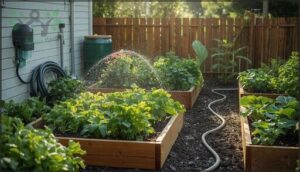
Water is one of your garden’s most precious resources, and using it wisely doesn’t mean sacrificing a lush, healthy landscape.
By implementing a few smart strategies, you can substantially reduce water consumption while keeping your plants thriving through dry spells and seasonal changes. Here are three effective approaches to conserve water efficiently in your sustainable yard.
Installing Rain Barrels
Rainwater harvesting through a properly installed rain barrel offers a simple, cost-effective water conservation method that reduces your reliance on municipal supplies while supporting eco-friendly garden practices.
Position your barrel on a level, sturdy base such as concrete pavers beneath a downspout fitted with a diverter system, ensuring the overflow outlet directs excess water away from your foundation to prevent erosion and maintain efficient barrel maintenance year-round.
Drip Irrigation and Smart Watering
A drip irrigation system delivers water directly to plant roots through low-flow emitters, cutting overall water use by 30 to 50 percent compared to overhead methods and maximizing water efficiency in your sustainable yard.
Pair drip irrigation with smart controllers that adjust irrigation scheduling based on real-time weather data and soil moisture sensors, ensuring you’re providing just the right amount of water without waste while supporting effective water conservation methods.
Xeriscaping and Drought-Tolerant Design
Xeriscaping transforms your landscape into a low-water oasis that thrives on natural rainfall and drought tolerant plantings, cutting irrigation needs by a third or more while embracing sustainable gardening practices.
- Replace lawn areas with native plants and desert landscaping ground covers like creeping thyme
- Group species with similar water needs for efficient drip irrigation
- Add 2–3 inches of coarse mulch for soil stabilization
- Install permeable hardscapes for water conservation methods
- Incorporate shade trees to reduce evaporation in eco friendly designs
Practice Natural Pest Control
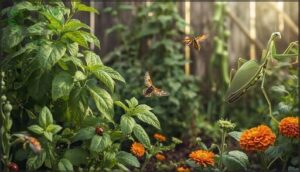
Protecting your garden from pests doesn’t require harsh chemicals that harm beneficial insects, pollinators, and the surrounding ecosystem.
Natural pest control methods work with nature’s own balance, using companion plants, beneficial predators, and organic treatments to keep damaging insects in check while supporting the helpful ones.
Here are three effective strategies to manage pests naturally and maintain a thriving, chemical-free garden.
Attracting Beneficial Insects
You can turn your garden into a haven for beneficial bugs by planting insect friendly plants like yarrow, coneflower, and native milkweed, which attract ladybugs, lacewings, and parasitoid wasps that naturally suppress pest populations.
Creating pollinator gardens with companion planting strategies and beneficial bug habitats—such as leaf litter patches and shallow rock piles—promotes ecosystem balance while supporting pollinator support and conservation through pollinatorFriendly gardening practices.
Organic Pest Management Methods
Beyond inviting beneficial allies, you can strengthen your natural pest control strategy through integrated pest management practices like crop rotation to disrupt life cycles, row covers as natural barriers during vulnerable stages, and regular pest monitoring to catch issues early.
Organic gardening methods—including botanical oils, entomopathogenic nematodes, and biological controls—provide targeted solutions that support pollinator support and conservation while keeping your ecofriendly gardening tips truly sustainable.
Using Homemade Natural Sprays
You can also whip up your own garden spray recipes using simple ingredients like witch hazel, essential oils, or mild dish soap to create organic insecticides and homemade fungicides that target specific problems without harsh chemicals.
A baking soda solution at one teaspoon per liter combats fungal growth, while potassium soap sprays dissolve aphids’ protective coating—natural pest control techniques that keep your ecofriendly garden thriving safely.
Reduce Waste and Reuse Materials
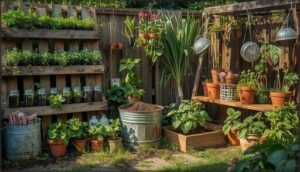
Your garden can be a zero-waste zone if you get creative with what you already have on hand. Instead of tossing materials or buying new supplies, you can repurpose everyday items, save seeds for future seasons, and turn organic waste into rich compost that feeds your soil.
Here are three simple ways to cut down on waste and make the most of your resources.
Repurposing Garden and Household Items
Your garden’s eco-friendly shift doesn’t have to drain your budget—creative reuse turns everyday items into valuable resources. Old tin cans, milk jugs, and even cracked ceramic bowls become upcycled planters when properly prepared with drainage holes.
Consider these household hacks for garden upcycling:
- Pallet wood frames into raised beds measuring 4 by 8 feet
- Wine bottles stacked as vertical herb gardens
- Bicycle wheels mounted as trellises for climbing plants
- Bamboo fishing poles tied as lightweight tomato stakes
Saving and Sharing Seeds
Seed saving stretches your gardening budget while preserving varieties that thrive in your local conditions, creating a living library you can share with neighbors.
Start with open-pollinated beans, tomatoes, and peppers—varieties that reliably breed true when dried completely and stored in airtight containers at 32 to 41 degrees Fahrenheit, maintaining viability for four to six years under proper conditions.
Composting to Minimize Landfill Waste
You can turn food scraps, coffee grounds, and yard waste into nutrient-rich compost that diverts up to 30 percent of your household waste from landfills, where organic materials produce methane as they decompose anaerobically.
Proper compost management balances carbon-rich browns with nitrogen-rich greens, speeding eco cycling while boosting soil enrichment, moisture retention, and carbon sequestration—a cornerstone of zero-waste gardening and sustainable organic gardening techniques.
Support Wildlife and Pollinators
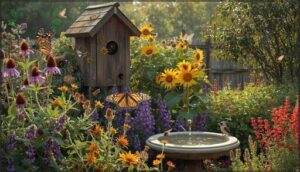
Your garden can become a haven for wildlife and pollinators when you make a few thoughtful changes that support their natural needs.
Birds, bees, butterflies, and beneficial insects all play critical roles in maintaining a healthy ecosystem, and they’ll reward your efforts with natural pest control and improved pollination.
Here are three practical ways you can transform your yard into a thriving habitat that welcomes and sustains these essential creatures.
Planting Nectar-Rich Flowers
You can transform your yard into a thriving pollinator garden by choosing native bloom choices like purple coneflower, bee balm, and black-eyed Susan, which deliver abundant nectar through the growing season. These bee-friendly plants support biodiversity and wildlife preservation while requiring minimal care.
For eco-friendly gardening success, cluster nectar flower types in sunny patches and select flower color schemes that attract diverse pollinators, creating a vibrant, pollinator-friendly landscape.
Creating Habitats for Birds and Insects
Your eco-friendly yard becomes a thriving haven for wildlife conservation when you install nesting boxes with entrance holes sized between 1 to 1.5 inches for cavity nesters, plant dense evergreen hedges for year-round shelter, and maintain stone or log piles that support insect habitats essential for ecosystem balance.
These biodiversity support practices create layered gardening for wildlife spaces with tall trees, mid-level shrubs, and pollinator-friendly ground covers that deliver continuous food sources while advancing biodiversity and wildlife preservation through natural habitat design.
Providing Shelter and Water Sources
You can turn your yard into a genuine wildlife habitat by placing shallow bird baths with stone rims at safe heights, installing 200-litre rain barrels that double as water conservation tools near pollinator plants, and building simple insect hotels with bamboo tubes to create eco-friendly habitats that support native plants.
While establishing garden ponds and water features for bird sanctuaries, these elements work together to create a cohesive environment.
Use Eco-Friendly Garden Products
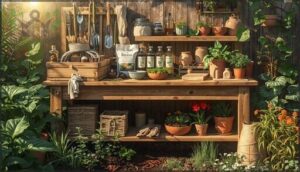
The products you use in your garden matter just as much as the methods you follow, since many conventional options contain synthetic chemicals that can harm soil health, water quality, and beneficial organisms.
Switching to eco-friendly alternatives helps you maintain a thriving garden while reducing your environmental footprint and supporting a healthier ecosystem. Here are three key product categories where sustainable choices make a real difference.
Natural Fertilizers and Soil Boosters
You can nourish your garden soil with compost tea, a liquid that feeds soil microbes and delivers nutrients quickly when you steep finished compost in water for a few days.
Natural amendments like rock phosphate, greensand, and kelp meal supply mineral fertilizers that release slowly over time, while adding organic matter through composting and organic mulch builds soil health and conservation while supporting ecofriendly practices.
Solar-Powered Garden Lights
Solar-powered garden lights bring sustainable illumination to your eco-friendly yard by converting sunlight into stored energy through monocrystalline panels with efficiency ratings of 15 to 22 percent.
While NiMH or lithium-ion batteries offer 2 to 5 years of battery longevity and LED brightness levels between 5 and 40 lumens per fixture provide gentle path lighting with warm tones, and automation features like dusk-to-dawn sensors improve energy use.
Manual and Electric Garden Tools
Switching from gas-powered equipment to manual and electric garden tools cuts emissions while maintaining an eco-friendly yard. Hand trowels and reel mowers generate zero pollution, while cordless electric pruners powered by 20 to 60 volt batteries reduce hand strain during trimming.
Tool maintenance like blade sharpening and proper storage extends longevity, and cushioned grips improve garden ergonomics for comfortable, sustainable work sessions.
Design for Sustainability and Low Maintenance
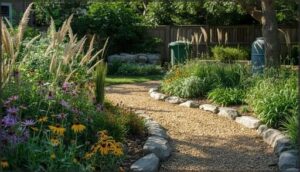
Creating a sustainable garden doesn’t mean you have to spend every weekend weeding, watering, and wrestling with high-maintenance plants that demand constant attention.
Smart design choices can reduce your workload while building a resilient landscape that practically takes care of itself, giving you more time to actually enjoy your outdoor space. Here are three strategic approaches that will help you design a yard that’s both eco-friendly and easy to maintain.
Reducing Lawn Areas
Shrinking your traditional lawn is one of the simplest yard optimization strategies for eco landscaping, as cutting grass coverage by 30 to 50 percent through garden renovation reduces mowing, fertilizer use, and irrigation demands.
Replace turf with native plants, pollinator borders, or drought-tolerant alternatives to support water conservation and sustainable gardening, transforming high-maintenance lawn care into an eco-friendly, low-upkeep landscape.
Permeable Pathways and Ground Covers
After you’ve cut back your lawn, permeable pavers or porous asphalt create walkways that let rainwater soak through to recharge groundwater instead of running off into storm drains.
Ground cover plants like creeping yarrow provide soil stabilization while using eco-friendly materials, and choosing native plants for these areas completes your sustainable garden design without sacrificing beauty or function.
Incorporating Perennials and Low-Maintenance Plants
Beyond walkways, you’ll want perennials and native plants that thrive without constant attention, reducing your maintenance workload while supporting eco-friendly sustainable gardening.
Choose varieties with staggered bloom times for plant diversity and garden resilience, then layer them by height with ground covers at the front.
This eco landscaping approach, paired with mulch for moisture retention, gives you year-round beauty with minimal perennial care required.
Frequently Asked Questions (FAQs)
What’s the most eco-friendly way to garden?
Going green doesn’t mean you’ll have growing pains. The most eco-friendly approach combines native plants, organic soil amendments, water-smart irrigation like drip systems, natural pest control, and composting to minimize waste while supporting local ecosystems.
How can I make eco-friendly weed killers at home?
You can mix one gallon of white vinegar with one cup of salt and a teaspoon of dish soap to create an effective organic weed killer that destroys annual weeds within hours.
What are the best biodegradable pots for seedlings?
Planting seeds in the right container really grows on you—paper containers, coconut coir, and cow pots lead the pack, breaking down in four to twelve weeks while supporting healthy roots and reducing transplant shock naturally.
How do I naturally improve clay or sandy soil?
You can improve clay soil by working 4 to 6 inches of well decomposed compost into the top 6 to 8 inches annually, which increases organic matter, improves soil aeration, and boosts overall soil health naturally.
Can I use greywater safely in my garden?
You can use greywater safely by choosing biodegradable soaps, applying water below the soil surface on established ornamentals, and avoiding edible crops—while checking local regulations and rotating with clean water to prevent salt buildup.
You must also consider the importance of local regulations in this process.
Whats the most sustainable way to control slugs?
Attract natural predators like ground beetles and toads by creating undisturbed habitats, install copper tape barriers around vulnerable plants, and apply diatomaceous earth along pathways to deter slugs without harming beneficial wildlife.
How do I transition a conventional garden to organic?
Shifting feels like turning your yard inside out, but start with a soil test, then layer 3 to 4 inches of compost, switch to natural pest control, and rotate crops to rebuild organic soil health gradually.
What are eco-friendly ways to control garden weeds?
Dense mulch layers of 2 to 4 inches act as a weed barrier, blocking light and slowing germination, while companion planting and soil conditioning through composting strengthen desired plants to outcompete weeds naturally.
Can I garden sustainably in containers or small spaces?
You might think containers can’t support sustainable gardening, but they’re actually ideal for urban farming—native plants thrive in pots, vertical gardens leverage microclimates, and quality container soil paired with compost delivers impressive, eco-friendly yields.
How do I maintain garden tools without harsh chemicals?
Clean your tools with water and a dry cloth after each use, then apply natural lubricants like mineral or camellia oil to prevent rust formation and keep wooden grips from cracking or warping over time.
Conclusion
Your garden is a living bridge between human intention and natural harmony, and implementing these eco friendly garden tips transforms that connection from fragile to flourishing.
By choosing native plants, conserving water, building organic soil, and welcoming wildlife, you’re not just maintaining a yard—you’re participating in a cycle that replenishes rather than depletes.
The sustainable landscape you create today becomes a legacy of resilience, proving that environmental stewardship and beauty grow best when planted together.