
This site is supported by our readers. We may earn a commission, at no cost to you, if you purchase through links.

Most lawns look green on the surface but struggle underneath—compacted soil, unbalanced pH, and shallow roots quietly working against every bag of fertilizer you spread. A thick, resilient yard doesn’t come from guesswork or more product. It comes from understanding what your soil needs and giving it exactly that, season by season.
The tips ahead cover everything from smarter watering schedules and compost topdressing to aeration timing and weed control strategies that actually stick—practical lawn care and gardening habits that build real results from the ground up.
Table Of Contents
- Key Takeaways
- Build Healthy Lawn Soil
- Mow, Edge, and Water Wisely
- Feed Grass and Garden Beds
- Control Weeds, Pests, and Disease
- Plan Seasonal Yard Care
- Frequently Asked Questions (FAQs)
- How much for 2 hours of yard work?
- Is lawn care gardening?
- Who is cheaper, a lawn doctor or TruGreen?
- How much should you be paid an hour for lawn care and landscaping?
- How do I identify my grass type accurately?
- What causes brown patches in my lawn?
- Can I use pesticides around pets safely?
- How do I repair bare spots quickly?
- Whats the best mulch for flower beds?
- How do I control lawn diseases and fungal infections?
- Conclusion
Key Takeaways
- Your soil is the real foundation — test it each season, keep pH between 6.0 and 7.0, and add compost as a topdressing so your grass has what it needs to thrive.
- Deep, infrequent watering beats daily shallow sprinkles every time, because roots chase moisture down, and deep roots make the turf tough enough to handle heat and drought.
- Timing is everything with feeding and weed control — apply pre-emergent herbicides when soil hits 55°F, and match your fertilizer’s NPK ratio to your grass type and the season.
- Smart seasonal habits — spring cleanup, summer mowing height adjustments, fall overseeding, and winter protection — do more for your lawn than any single product ever will.
Build Healthy Lawn Soil

Everything starts underground — your grass is only as good as the soil beneath it. Getting that foundation right doesn’t take a science degree, just a few smart habits done in the right order.
Think of it like growing herbs — nailing the basics of soil prep and drainage is what separates a thriving yard from a frustrating one.
Here’s what to focus on first.
Test Soil Each Season
Think of soil testing as your lawn’s annual check-up — skip it, and you’re just guessing. Test each season to catch nutrient shifts before they become problems. Using a composite sampling method ensures each test reflects the whole area.
- Spring – Test 4–6 weeks before planting for amendment adjustment timing
- Summer – Catch mid-season nutrient depletion
- Fall – Set baseline fertility for winter
- Winter – Track nutrient trend analysis while soil rests
- Year-round – Compare lab report decoding results using consistent sampling depth protocol
Your soil health story unfolds one test at a time.
Balance PH Levels
Once you know what’s in your soil, pH is the next number to watch. For most lawns, the ideal range falls between 6.0 and 7.0. Rising above 7.5 can cause critical nutrients like phosphorus and iron to become unavailable. Lime application effectively raises low pH levels over time, while sulfur amendments help lower alkaline soil conditions.
Irrigation water quality also plays a role: Check irrigation water pH too, as high bicarbonate content can gradually elevate soil pH over time.
Soil pH testing tools—ranging from simple home kits to detailed lab reports—are essential for monitoring levels and preventing issues before they affect grass health.
Add Compost Topdressing
Once you’ve got pH dialed in, compost topdressing is your next move. A thin ¼–½ inch layer each spring boosts soil porosity, fires up microbial activity, and builds drought resilience over time.
- Screens compost to avoid weed seeds
- Promotes thatch reduction naturally
- Delivers slow-release eco-friendly fertilizers
- Pairs perfectly with spring timing for maximum grass health
Improve Drainage Naturally
Compost does wonders for soil health, but poor drainage drowns roots fast.
To address this, consider dry creek beds or vegetated swales to move stormwater away naturally. Incorporate permeable pavers on pathways, install a rain garden near downspouts, and focus on adding soil organic matter—all working together to manage excess water.
Through smart landscape design and stormwater management, even soggy spots become solutions.
Aerate Compacted Areas
When your lawn feels more like concrete than soil, it’s time for core aeration. Hollow tine selection matters — those removable plugs create real channels, unlike spike aerators that just compress things further.
Follow solid guidelines for aeration depth, aiming for 3–4 inches. Moisture timing is key: aerate when soil is damp but not soggy.
Multiple passes at different angles boost results, which sets the stage for fertilization and healthy grass maintenance.
Mow, Edge, and Water Wisely
How you mow and water makes a bigger difference than most people realize. Done right, these habits keep your grass thick, green, and tough enough to crowd out weeds on its own.
Pair those habits with smart seasonal timing—these summer lawn care strategies show exactly when to shift your routine as heat and growth patterns change.
Here’s what to focus on.
Set Proper Mowing Height
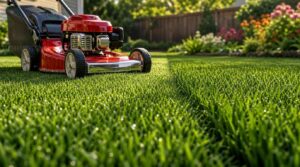
Your mower height is the single biggest lever in your lawn care routine — get it wrong and you’re basically inviting stress, weeds, and brown patches. Grass type heights vary, so dial in accordingly:
- Cool-season grasses (Kentucky bluegrass, tall fescue): 2.5–3.5 inches
- Bermuda grass: 1–2 inches for dense, tight growth
- Zoysia: 1.5–2.5 inches
- St. Augustinegrass: 2–4 inches
Seasonal height adjustments matter, too. Raise your deck by about half an inch during summer heat. These drought height tips and uneven terrain strategies help protect roots and prevent scalping. Use mower calibration tips: set a ruler under your deck on flat ground before every season.
Follow One-Third Rule

Here’s one rule that ties everything together: never cut more than one-third of the blade at once. This blade removal ratio keeps photosynthetic area intact, so your turf bounces back fast.
Smart mowing frequency planning means less equipment wear and reduced stress on your mower.
That stubble mulch benefits your soil moisture calibration naturally — think of it as free lawn care without extra effort.
Keep Blade Edges Sharp

A dull blade doesn’t cut grass—it tears it, leaving ragged edges that invite diseases. Proper maintenance begins with addressing this core issue.
Good edge honing starts with blade angle calibration around 30 degrees, followed by a sharpening grit sequence from medium to fine. Burr elimination comes last, achieved using a ceramic stone.
Wiping blades dry ensures proper blade storage, preserving sharpness. Ultimately, sharp tools make lawn mowing, grass cutting, and all lawn maintenance genuinely easier.
Water Deeply, Less Often
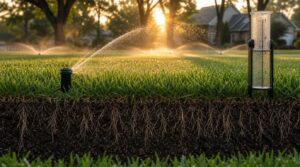
Shallow daily watering trains roots to stay near the surface — that’s a recipe for weak turf. Instead, aim for root zone saturation by soaking soil 6–12 inches deep using slow soaker application over one to two hours.
Shallow watering grows shallow roots — soak deep to build turf that truly lasts
Morning irrigation timing cuts evaporation and fungal risk.
Pair that with soil moisture monitoring every five to seven days, and your grass will truly flourish while delivering real water conservation benefits.
Use Smart Irrigation
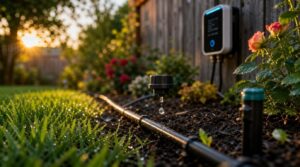
Smart irrigation isn’t just convenient — it’s how you stop guessing and start growing with precision.
- Soil Moisture Sensors measure root-zone water content and trigger watering only when needed
- Weather-Based Controllers sync with forecasts, cutting watering on rainy days automatically
- Rain Freeze Sensors pause irrigation during storms or cold snaps
- Water Use Monitoring catches leaks and flags overwatering fast
Remote Irrigation Control puts scheduling in your pocket — eco-friendly landscaping made genuinely easy.
Feed Grass and Garden Beds

A hungry lawn is a struggling lawn, and the fix starts with what you put in the ground. Feeding your grass and garden beds the right way makes all the difference between patchy and thriving.
Here’s what you need to know to get it right.
Choose Lawn Fertilizer
Match your NPK ratio to your grass type — warm-season grasses like Bermudagrass need nitrogen-heavy blends with 20–38% nitrogen content, while cool-season varieties prefer balanced formulas. Your release mechanism matters too: slow-release synthetic or eco-friendly fertilizers feed steadily without burn risk.
Organic vs synthetic comes down to your goals — soil health or speed — so let grass type matching guide your lawn fertilization and weed control strategy.
Time Seasonal Feeding
Knowing your NPK ratio is just the start — timing is where your lawn fertilization really pays off. Think of your lawn like an athlete: it needs the right fuel at the right moment to flourish all season long.
- Spring Feeding Window — Apply slow-release granular fertilizer as roots actively emerge
- Summer Fertilizer Timing — Feed during cooler morning hours to cut volatilization losses
- Fall Nutrient Boost — Use phosphorus-potassium blends to harden roots before dormancy
- Late Autumn Feed — Support weed control with a final application before the first hard freeze
- Winter Slow-Release — Eco-friendly fertilizers with protected formulas keep soil biology steady through cold months
Pair your seasonal planting calendar with these windows, and you won’t waste a single bag.
Use Organic Amendments
Once you’ve established a consistent feeding schedule, organic amendments elevate your soil from decent to thriving. Techniques like compost topdressing, aged manure applications, and biochar integration work synergistically through living soil methods that synthetic products cannot replicate.
Between growing seasons, consider cover crop integration—such as clover, which naturally fixes nitrogen—to enhance soil health. These practices form the foundation of sustainable soil management.
Organic NPK blends and eco-friendly fertilizers further support eco-friendly landscaping, ensuring your grass flourishes consistently across all stages of seasonal planting and garden maintenance.
Mulch Vegetable Beds
Mulching your vegetable beds is like tucking them in for a good night’s sleep. Lay down a cardboard base layer first — it’s a solid weed suppression strategy that breaks down naturally.
Then add 2–3 inches of straw or wood chips on top. Straw vs. wood chips? Straw decomposes faster, releasing nutrients sooner. Wood chips last longer but slow nutrient release timing slightly.
Grasscycle Lawn Clippings
Skip the bag — grasscycling is one of the smartest eco-friendly mowing habits you can build into your lawn maintenance routine. Clippings break down within one to two weeks, driving nutrient recycling straight back into the root zone. That means fewer eco-friendly fertilizers, a measurable moisture retention boost, and real soil carbon sequestration over time.
Less yard-waste reduction effort, healthier grass cutting results, and a better lawn.
Control Weeds, Pests, and Disease

Weeds, pests, and disease can quietly take over before you notice the damage. Getting ahead of them takes a mix of timing, the right tools, and knowing what to look for.
Here’s what actually works.
Prevent Weeds Early
The best weed management starts before weeds ever show up. Apply preemergent herbicides when soil temperature monitoring confirms ground temperatures hitting 50–55°F — that chemical barrier stops obnoxious weeds cold.
Pair that with ground cover planting to shade bare soil, and do your early weed scouting weekly.
Good preemergent timing and herbicide barrier maintenance make lawn maintenance dramatically easier all season.
Remove Weeds Manually
When preemergent doesn’t catch every obnoxious weed, manual removal becomes your next move. Effective weed management hinges on thoughtful tool selection, strategic timing, and precise technique.
- Pulling Techniques – Grip near the base and pull steadily to lift the taproot cleanly.
- Tool Selection – Use a hori hori knife or dandelion digger for deep-rooted weeds.
- Timing Tips – Work in the early morning after rain, when soil is soft for easier root extraction.
- Safety Gear – Wear gloves and knee pads during yard cleanup sessions to protect yourself.
After removal, address bare spots immediately by applying mulch to prevent regrowth and restore soil health.
Spot Treat Problem Areas
Not every lawn problem needs a whole-yard response. When you spot a weed patch, a quick Weed Patch Spot‑Spray using Selective Herbicide Application keeps healthy grass untouched. Localized Fungicide Treatment controls disease circles before they spread. For grubs or surface pests, Targeted Insecticide Spot applications beat blanket spraying every time.
Pair these with Soil Hotspot Amendments, and your lawn maintenance stays sharp, precise, and eco-friendly.
Encourage Beneficial Insects
Your lawn already has allies — you just need to invite them in.
Plant a Native Flower Mix to attract ladybugs, lacewings, and parasitic wasps that handle pest control naturally. Insect Hotels, leave Bare Soil Patches for ground-nesting bees, and tuck in Mulch Habitat zones for predatory beetles.
Add Shallow Water Sources, and your eco-friendly landscaping does the heavy lifting.
Identify Lawn Diseases
Catching a disease early is half the battle in lawn maintenance.
- Brown Patch Symptoms – Irregular tan patches with a darker outer ring during humid nights
- Dollar Spot Signs – Straw-colored, dollar-sized spots signaling low nitrogen
- Gray Leaf Spot ID – Elongated gray lesions on blades in humid conditions
- Red Thread Detection / Snow Mold Indicators – Pink threads in cool damp weather; matted gray patches after snowmelt
Targeted lawn care services, eco-friendly fertilizers, and smart vegetation management keep these problems from spreading.
Plan Seasonal Yard Care

Your lawn doesn’t need the same thing in March that it needs in October. Each season brings its own demands, and knowing what to do — and when — makes all the difference.
Here’s how to stay ahead of your yard all year long.
Spring Cleanup Tasks
Spring is your lawn’s fresh start — don’t waste it. Begin with debris removal and leaf removal to uncover what winter left behind.
Edge beds and tackle weeding along borders, then address shrub pruning and cleanup before new growth begins.
Reseed bare spots, inspect irrigation lines, and refresh mulch to prepare for the season ahead.
Summer Drought Protection
Summer turns up the heat fast. Here’s how to keep your yard alive without babying it daily:
- Raise mowing height to 3.5–4.5 inches for deep root promotion and cooler soil.
- Install soil moisture sensors across three zones to track what your grass actually needs.
- Switch to drought-tolerant grasses like Bermuda or Zoysia — they’re built for this.
- Use mulching and dry riverbeds to cut evaporation and manage runoff beautifully.
- Set up rainwater harvesting and smart irrigation systems on early-morning schedules.
Pair those with eco-friendly fertilizers and smart irrigation, and your lawn manages summer like a champ.
Fall Overseeding Tips
Fall is your lawn’s second chance — don’t waste it. After summer stress, overseeding rebuilds density fast. Start with lawn aeration to bust compaction, then rake thin spots for solid seed-to-soil contact. Smart Seed Selection matters: match your existing grass species.
Follow these essential steps for successful overseeding:
| Step | Detail | Timing |
|---|---|---|
| Soil Test | Adjust pH to 6.0–7.0 | Early Fall |
| Aeration | Core aerate compacted zones | Before Seeding |
| Seed Rate | 4–8 lbs per 1,000 sq ft | At Seeding |
| Seeding Technique | Cross-pattern spreading | Seeding Day |
| Traffic Management | Keep foot traffic off 6–12 weeks | Post-Seeding |
Post-seeding, apply starter fertilizer immediately and water lightly daily. Honor your Mowing Delay — wait until seedlings are established. Consistent seasonal lawn care and professional lawn care services keep your grass care routine on track all season long.
Winter Lawn Preparation
Winter isn’t your lawn’s enemy — neglect is. Once overseeding wraps up, shift your grass care routine toward protection mode. Here’s what matters most for seasonal yard care:
- Apply frost protection by raising mowing height to 3 inches before the ground freezes.
- Add compost topdressing for root insulation against cold soil.
- Time herbicide timing carefully and aerate compacted spots for snow mold prevention.
Smart snow removal keeps crowns safe all season.
Rotate Garden Crops
Rotating crops is the backbone of smart seasonal yard care. Move each plant family through your beds using a Four-Year Plan, and you’ll break pest cycles naturally. Here’s a simple Bed Mapping guide:
| Crop Family | Role |
|---|---|
| Nitrogen Fixing Legumes | Replenish soil |
| Brassicas | Follow legumes |
| Root crops | Low feeders |
| Cover Crop Integration | Fill gaps |
| Heavy feeders | Close the loop |
Family Sequencing keeps your horticulture game strong without eco-friendly fertilizers doing all the heavy lifting.
Frequently Asked Questions (FAQs)
How much for 2 hours of yard work?
Like hiring a plumber, yard work pricing depends on your region and task.
Expect a fixed two-hour price between $80–$160, with seasonal cost spikes and task-based surcharges affecting your final estimated price.
Is lawn care gardening?
Lawn care and gardening overlap more than you’d think. Both involve soil microbiology, seasonal plant choices, and eco-friendly practices.
Together, they’re really just two sides of the same yard maintenance coin.
Who is cheaper, a lawn doctor or TruGreen?
Generally, Lawn Doctor is cheaper, with annual plans running $300–$900 versus TruGreen’s $450–$2, Per-visit costs and add-on fees vary, so regional price differences affect your total annual expense greatly.
How much should you be paid an hour for lawn care and landscaping?
Your pay depends on your role, region, and credentials. Most workers earn $14–$35 per hour, with crew leader salaries and certification premiums pushing rates higher during seasonal rate spikes.
How do I identify my grass type accurately?
Start with blade morphology — width, tip shape, and texture tell you a lot. Then match growth habit and seed head timing to regional guides for a confident soil climate match.
What causes brown patches in my lawn?
Brown patches usually trace back to heat stress, waterlogging, nutrient lockout, or frost damage.
Poor drainage, soil salinity, and inconsistent watering all play a role too — your lawn is essentially signaling something’s off underground.
Can I use pesticides around pets safely?
Yes, but label compliance is non-negotiable. Remove pets before applying, respect the drying period, and choose pet-friendly products. Keep emergency response info handy — accidents happen fast.
How do I repair bare spots quickly?
Loosen the soil 4–6 inches, match your seed species, apply topdressing with compost, lay protective mulch, and water immediately.
Consistent moisture plus soil loosening equals fast, reliable recovery.
Whats the best mulch for flower beds?
Shredded hardwood and pine bark top the list for colorful flower beds — both retain moisture well and break down into rich soil.
Pine straw works great on slopes, while colored mulch keeps beds looking sharp longer.
How do I control lawn diseases and fungal infections?
Fungal trouble starts underground.
Keep soil pH between 0–0 for a natural microbial boost, rotate your fungicide rotation choices seasonally, pick resistant grass varieties, and stay sharp on leaf litter management and pathogen monitoring year-round.
Conclusion
Funny how the most impressive lawns rarely belong to people who work the hardest on them—they belong to people who work smarter. Once you stop fighting your yard and start listening to it, everything changes.
Consistent lawn care and gardening habits, built season by season, do more than a dozen frantic weekend fixes ever could.
Know your soil, feed it right, and give your grass what it actually needs. The yard takes care of the rest.