
This site is supported by our readers. We may earn a commission, at no cost to you, if you purchase through links.

Most gardeners put their beds to sleep in October and don’t think about them again until March. But some of the most rewarding flowers bloom when everything else has surrendered to frost—snowdrops pushing through a crust of snow, witch hazel scenting cold air, hellebores opening their quiet cups in December.
A flowering plant’s winter garden isn’t a compromise; it’s a different kind of gardening entirely, one that rewards patience and deliberate plant selection. From cold-hardy bulbs suited to Zone 3 to fragrant shrubs thriving in Zone 10, your options are wider than you’d expect.
Table Of Contents
- Key Takeaways
- Best Flowering Plants for Winter Gardens
- Choose Plants for Your Zone
- Design Winter Color and Structure
- Plant Winter Bloomers The Right Way
- Care for Winter Flowers
- Frequently Asked Questions (FAQs)
- What flowering plants do well in the winter?
- What flowers can I plant in October?
- What to plant in flower beds in the winter?
- What are the best winter flowering plants?
- What plants are good for winter garden?
- What flowers can still bloom in the winter?
- What flowers are good for winter gardens?
- What is winter’s favorite flower?
- What flower can survive the coldest temperature?
- Can you plant any flowers in winter?
- Conclusion
Key Takeaways
- Cold-hardy bulbs like snowdrops (Galanthus nivalis) and winter aconite (Eranthis hyemalis) bloom January through March and should be planted 6–8 weeks before first frost in well-drained soil for reliable emergence.
- Your USDA hardiness zone is the starting point for plant selection — zones 3–5 rely on frost-tough bulbs, zones 6–8 unlock hellebores and camellias, and zones 9–10 can grow paperwhites and freesias through mild winters.
- Layering tall shrubs like witch hazel at the back, mid-height perennials in the middle, and low groundcovers at the front creates a structured winter border with continuous bloom from December through March.
- Consistent care — checking soil moisture before watering, mulching 2–3 inches deep, deadheading weekly, and covering vulnerable plants on frost-warning nights — keeps winter bloomers healthy and flowering longer.
Best Flowering Plants for Winter Gardens
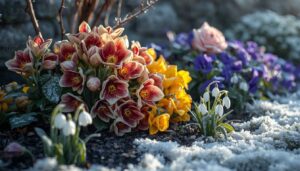
Winter doesn’t have to mean a bare, colorless garden. Plenty of plants bloom reliably in the cold months, from tiny bulbs pushing through frozen ground to shrubs covered in fragrant flowers.
Indoors, the options are just as impressive — check out these winter-blooming flowers that thrive in cold months for ideas that bring color inside when the garden goes quiet.
Here are the best ones worth growing.
Cold-hardy Bulbs That Bloom Through Snow
Some bulbs don’t wait for warmth — they push right through frost and thin snow like they’ve got somewhere to be. These snow-push bulbs bring early frost tolerance and a surprising bulb color palette to bare winter beds:
- Galanthus nivalis blooms January–March, even through snow
- Eranthis hyemalis offers bright yellow cups in February
- *Crocus spp.
*
*
burst open on the first sunny winter day
Plant them in well-drained soil; hardiness zone recommendations for winter flowers generally place these in zones 3–7 for reliable rapid leaf emergence. For best results, plant bulbs 6–8 weeks before frost to guarantee timely emergence.
Winter Shrubs With Long-lasting Flowers
While bulbs come and go quickly, hardy winter shrubs offer something better: extended bloom duration that stretches weeks, even months.
Viburnum x bodnantense flowers for six to eight weeks on bare wood. Camellia japonica (zones 7–10) delivers late-season color with waxy blooms. Mahonia spp. adds shrub structural contrast and fragrant yellow clusters.
These evergreen shrubs make winter feel intentional, not accidental.
Perennials That Open in Midwinter
Shrubs set the stage, but hardy perennials like *Helleborus spp.
- steal midwinter quietly. Flowers open in December and hold for weeks, offering snow‑tolerant foliage and a compact growth habit that fits most borders.
- *Helleborus spp.
- — deer‑resistant perennials with cup-shaped blooms in pink, white, or green
- Primula vulgaris — early pollinator food from February onward
- Erica carnea — bell-shaped color even through light snow
- Cyclamen coum — budding before leaf‑out, naturally self‑seeding
These winterblooming perennials for cold climates quietly earn their spot.
Fragrant Winter Bloomers for Patios and Paths
Fragrant winter flowers do more than pretty up a dormant garden — they stop you in your tracks. Plant Daphne odora or Sarcococca confusa along Scented Path Corridors, where foot traffic releases their perfume on contact.
Container Fragrance Choices near doors, wintersweet delivers warm vanilla‑honey on frosty mornings.
Position plants with Wind-Directed Aroma toward seating, and pair day and Nighttime Scented Plants using smart Aroma Pairing Strategies.
Low-growing Flowers for Borders and Rock Gardens
The front edge of a winter border doesn’t have to stay bare.
Plants like Arctic Fire Red dogwood and paperbark maple bring vibrant winter color and texture to garden borders that would otherwise sit empty until spring.
Mat‑forming Groundcovers like creeping thyme (Thymus serpyllum) and Phlox subulata hold their ground as cold hardy garden plants, offering Compact Bloom Clusters in spring.
Creeping Rock‑garden Plants thrive in Drought‑tolerant Borders with minimal fuss — true low maintenance perennials that deliver reliable Seasonal Color Change even as temperatures drop.
Choose Plants for Your Zone

Not every plant thrives in every winter — your zone is the starting point for getting it right. Knowing where you fall on the USDA hardiness map helps you skip the guesswork and pick plants that’ll actually bloom when the cold hits.
Here’s what what works best, broken down by zone.
Understanding USDA Hardiness Zones for Winter Bloomers
Think of USDA zones as your garden’s honest friend — telling you exactly what winter has in store before you buy a single plant. Zone temperature ranges span from brutal Zone 3 lows near -40°F up to the mild frosts of Zone 10.
Microclimate effects, zone shift trends, and reliable hardiness mapping tools all sharpen your hardiness zone recommendations for winter flowers, making cold tolerance of garden plants far easier to plan around.
Best Choices for Zones 3 to 5
Zones 3 to 5 demand plants that genuinely mean business. Snowdrops, winter aconite, and Galanthus nivalis are your cold tolerant perennials here, pushing blooms through frost without complaint.
Hardiness zone recommendations for winter flowers in these cold‑climate planting situations improve dramatically when you lean into microclimate shelters — a south-facing wall changes everything. Soil acidity management and cold-frame techniques extend your options further.
Best Choices for Zones 6 to 8
If you’re gardening in zones 6 to 8, winter is actually your season to shine. You have a generous palette of winterblooming plants that colder climates simply can’t touch.
- Hellebores are reliable snow-tolerant perennials, blooming December through February in partial shade.
- Camellia japonica anchors borders as a compact evergreen form with cold climate planting flexibility in zone 6.
- Winter heath (Erica carnea) acts as one of the earliest early nectar sources for pollinators.
- Sarcococca thrives as one of the best acid-loving shrubs and partial shade favorites in hardiness zones 6 to 9.
- Winter jasmine tolerates drier soils and climbs beautifully against sheltered walls.
Best Choices for Zones 9 to 10
Mild winters in zones 9 to 10 open the door to some genuinely beautiful options. Camellia japonica and Mahonia spp. thrive here as reliable Acidic Soil Evergreens, blooming December through March.
Heat-tolerant Bulbs like Freesias and Paperwhite Narcissus fill gaps beautifully, while Drought-Resistant Shrubs such as Sarcococca handle dry spells without complaint.
Sun-loving Groundcovers and Late-Season Perennials like Cyclamen coum round out your evergreen shrubs’ winter lineup perfectly.
Matching Bloom Time to Local Winter Weather
Your local weather does more than your hardiness zone ever could. Smart Microclimate Mapping reveals how a south-facing slope might trigger early blooming bulbs, a full week ahead of schedule.
- Use Chill Hour Tracking to time cold tolerant perennials correctly
- Account for Heat Island Influence in urban beds
- Apply Frost Delay Strategies in low-lying frost pockets
- Build your Planting and care schedule for winter bloomers around South Slope Timing
Design Winter Color and Structure

A winter garden doesn’t have to feel like an afterthought between seasons. With the right mix of plants, you can build something that has real structure, color, and even fragrance from December through March.
A winter garden built with the right plants offers genuine structure, color, and fragrance from December through March
Here’s how to put it all together.
Mixing Shrubs, Bulbs, and Perennials
Think of your winter bed as a layered stage. Place taller camellia or witch hazel shrubs at the back, then let snowdrops and winter aconite spill forward — that Height Contrast creates real depth. Group plants by Soil Compatibility and water needs to simplify care.
| Strategy | Plants | Benefit |
|---|---|---|
| Seasonal Color Staggering | Snowdrops, hellebore, primrose | Continuous bloom late winter to spring |
| Texture Pairing | Camellia + Iris reticulata | Bold leaf meets fine form |
| Microclimate Grouping | Winter jasmine, winter heath | Matched sun and drainage needs |
Tuck cold-tolerant flowering plants and bulbs beneath open-branching shrubs so sunlight still reaches them. Bulb and perennial winter bloomers like crocus and cyclamen fill gaps between evergreen shrubs in winter, keeping your garden color honest and alive.
Using Evergreen Foliage for Year-round Contrast
Evergreen shrubs in winter do more than hold the garden together — they give every bloom something to push against. Silvery Foliage Highlights catch low January light, while Variegated Leaf Edge details brighten shaded corners.
Columnar Evergreen Shapes add vertical punctuation between spreading perennials. Waxy Leaf Frost clings to broad surfaces and catches morning sun. Texture Layering Techniques — pairing narrow blades with rounded broadleafs — keep winter garden foliage and leaf color lively without a single flower.
Adding Stem Color and Bark Interest
Once the evergreens set your backdrop, stems carry the color forward. Red twig dogwood and coral bark maple are classic Twig Contrast Pairings — bright against snow, reliable through hard frost.
Bark Texture Layers from River Birch or Ninebark add real Winter garden texture without a single bloom. Keep Stem Color Maintenance simple: prune yearly, mulch the base, water during dry spells.
Creating Focal Points With Fragrant Plants
Fragrance turns a winter garden from pretty to unforgettable. Build a Scented Focal Hub near your seating area using Hamamelis or Daphne odora — both carry scent 6 to 8 feet easily.
From there, design Fragrance Pathway Nodes with Winter Honeysuckle or Camellia along walkways. Aroma Layering, Nighttime Scent Highlights, and Textured Scent Borders finish the picture:
- Anchor with Hamamelis for spicy January fragrance.
- Add Camellia for Evergreen shrubs winter fragrance structure.
- Line paths with Winter Honeysuckle as Fragrance Pathway Nodes.
- Layer Daphne odora for potent Nighttime Scent Highlights.
- Edge borders with winter fragrant flowers for Textured Scent Borders.
Planning Borders, Drifts, and Layered Plantings
A well-planned winter border works in three distinct Layered Height Zones: tall shrubs at the back, mid-height perennials filling the middle, and low winter garden groundcover spilling softly at the front.
Use Irregular Plant Numbers — groups of three, five, or seven — for natural Drift Grouping Ratios.
Pair smooth evergreen shrubs, winter foliage, against fine textures for Texture Contrast Pairings that deliver real winter garden color all season.
Plant Winter Bloomers The Right Way
Getting winter bloomers into the ground correctly makes all the difference between a garden that struggles and one that puts on a real show.
A few key decisions — timing, soil, light, and placement — set the foundation for everything that follows. Here’s what you need to get each one right.
Best Planting Times for Winter-flowering Species
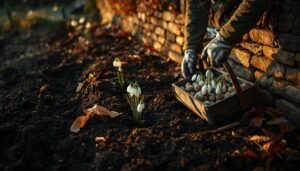
Timing is everything with winter bloomers.
Autumn planting windows are your foundation — most cold‑tolerant flowering plants need 6 to 8 weeks before first frost to anchor roots properly.
Plant bulbs like snowdrops and crocus in late summer to early autumn, following a reliable bulb planting schedule: 5 to 8 cm deep, with microclimate timing guiding placement near sheltered walls for earlier blooms.
Soil Preparation and Drainage Needs

Good drainage is non-negotiable for winter bloomers. Start with loamy soil amendments — compost works well in clay, opening pore spaces so roots breathe through wet months.
Garden soil pH for winter plants between 6.0 and 7.0. Perforated pipe layout beneath beds, paired with gravel drainage beds and a 1–2% slope grading, clears excess water before root rot sets in.
Sun, Shade, and Microclimate Placement

Where you put a plant matters as much as which plant you choose. East-facing beds give shy bloomers like hellebore gentle morning light without afternoon scorch, while reflective walls increase warmth in adjacent beds.
- wall heat retention to extend blooms near south-facing structures
- windbreak placement shields buds from freezing gusts
- Elevated beds drain faster and warm sooner after frost
Spacing and Planting Depth Basics

spacing wrong and even the toughest winter bloomers will sulk.
Bulb Depth Ratios follow a simple rule — plant two to three times the bulb’s height deep, so snowdrops sit at 2 inches and crocuses at 3 inches.
Shrub Spacing Width for witch hazel needs 8 to 12 feet.
Groundcover Mat Formation tightens when Runner Planting Depth stays shallow, around 1 to 2 inches, with Pathway Planting Gaps of 8 to 18 inches keeping borders clean.
Containers, Raised Beds, and Sheltered Spots
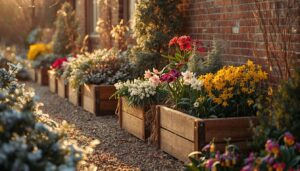
Not every garden has perfect ground conditions — that’s where containers and raised beds earn their keep. Raised beds warm up two to three weeks earlier than open soil, and sheltered spots near south-facing walls can add 5–10°F of warmth. Thoughtful Microclimate Placement makes a real difference.
- Use Drainage Solutions like coarse grit layers to prevent frozen pooling
- Apply Insulation Techniques — wrap pots in burlap or bubble wrap
- Match Material Choices to your climate; resin holds heat better than terracotta
- Practice Vertical Layering by combining evergreen shrubs winter interest with winter flowering perennials
Care for Winter Flowers
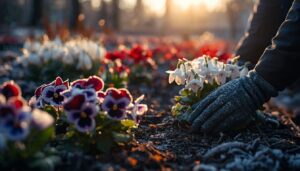
Getting winter flowers to bloom is one thing — keeping them healthy through the cold months is another. A little consistent attention goes a long way, whether you’re dealing with frost, soggy soil, or tired-looking blooms.
Here’s what actually matters: addressing challenges like frost, soggy soil, or tired-looking blooms requires focused care to maintain winter flower health.
Watering Without Causing Root Rot
Winter roots rot quietly — and overwatering is usually the culprit. Use a moisture meter and check before you water, not by the calendar.
Bottom watering helps soil absorb evenly without staying soggy; let pots sit 10–15 minutes, then drain fully. Pot elevation and soil drainage requirements matter too — good air pruning and watering timing keep roots breathing and rot-free all season.
Mulching to Protect Roots and Retain Moisture
Once you’ve got watering dialed in, mulch becomes your next best tool. A 2–3 inch layer of shredded bark or pine needles — solid organic mulch types for cold hardy plants — insulates roots against freeze‑thaw swings and slows evaporation noticeably.
Keep it a few inches from stems, check moisture beneath it weekly, and adjust depth heading into your hardest winter months.
Deadheading Spent Blooms for Tidier Beds
Deadheading fits naturally into your winter garden maintenance strategies.
Grab sharp pruning tools and work through beds on a weekly deadheading schedule — cut just above a node bud, one clean cut per stem.
That small discipline extends bloom period noticeably, keeps hellebore and cyclamen borders tidy, and signals the plant to redirect energy into fresh buds rather than setting seed.
Protecting Flowers From Frost and Heavy Snow
Once beds are tidy, your next job is to keep those blooms alive through hard freezes and heavy snowfall.
- Drape Frost Cloth Covers over vulnerable plants on frost-warning nights, securing edges with stones.
- Use wire hoops for Snow Load Bracing so covers don’t crush foliage.
- Try Burlap Trunk Wrapping on camellias outside their hardiness zone comfort range.
- Position Snow Fence Barriers as windbreaks around frost tolerant perennials.
- Reserve Heat Lamp Use for containerized snow-friendly garden plants during severe dips.
Watching for Pests and Disease in Cold Weather
Even in freezing temperatures, your winter garden isn’t pest-free — it’s just quieter. Use a Winter Pest Diary to log warm spells, since Frost‑Induced Aphids and spider mites spike fast after thaws.
| Threat | What to Look For | When to Check |
|---|---|---|
| Frost‑Induced Aphids | Honeydew, sooty mold | After warm spells |
| Scale Bump Detection | Raised bark bumps | Mild winter days |
| Fungal Spot Surveillance | Brown lesions, yellow halos | Post-rain thaws |
| Slugs/Snails | Slimy trails, chewed edges | Damp mornings |
| Mulch Habitat Inspection | Pest clusters under cover | Weekly walkthroughs |
Frequently Asked Questions (FAQs)
What flowering plants do well in the winter?
Don’t judge a book by its cover — winter gardens reward the curious.
Snowdrops, hellebores, and witch hazel thrive in cold, offering seasonal color palettes, pollinator support, and snowy landscape textures across hardiness zones.
What flowers can I plant in October?
October is prime time for bulb planting in fall — drop in snowdrops, crocus, daffodils, and Iris reticulata now, and you’ll have cold‑tolerant winter and early spring color without lifting a finger, come February.
What to plant in flower beds in the winter?
Snowdrops, hellebores, and winter aconite are your best bets for flower beds. Tuck in cold-tolerant annuals like cyclamen too.
They’ll bloom reliably and even support winter pollinators through the coldest months.
What are the best winter flowering plants?
Your best bets are snowdrops, hellebores, witch hazel, winter jasmine, and camellias — cold-tolerant flowering plants that deliver real color when everything else has gone quiet.
What plants are good for winter garden?
Still waters run deep" — and so does a winter garden. Hellebores, snowdrops, and camellias are your most reliable cold tolerant flowering plants, blooming quietly while everything else sleeps.
What flowers can still bloom in the winter?
Plenty of cold-tolerant flowering plants keep going when temperatures drop. Snowdrops, hellebores, winter aconite, and cyclamen all push through frost with frost-resistant roots built for exactly this.
What flowers are good for winter gardens?
As gardeners say, “There’s no bad weather, only the wrong plants.”
Snowdrops, hellebores, winter jasmine, and cyclamen are cold tolerant flowering plants that keep your garden alive with color all winter long.
What is winter’s favorite flower?
If winter has a favorite flower, most would name the snowdrop — a quiet icon of bloom longevity, cultural winter symbolism, and pure resilience, pushing through frozen ground before anything else dares to try.
What flower can survive the coldest temperature?
Snowdrops hold the crown here.
These cold-tolerant flowering plants survive down to -30°C, making them the coldest surviving species in most hardiness zones — true subzero survival limits that no other bloomer can match.
Can you plant any flowers in winter?
Yes, you can. Cold-tolerant flowering plants like pansies, snowdrops, and winter aconite handle frost well. Microclimate selection matters — a sheltered south-facing spot extends your options considerably across most hardiness zones.
Conclusion
Most gardeners miss half their gardening year entirely—and that’s not a small loss, it’s an entire season of color, fragrance, and life happening without them.
Your flowering plants’ winter garden doesn’t ask for much: the right plant, the right zone, and a little deliberate planning before the cold settles in.
Get those details right, and January stops being a waiting room. It becomes one of the most quietly rewarding months you’ll spend outside.