This site is supported by our readers. We may earn a commission, at no cost to you, if you purchase through links.
Most gardeners pack up when the first frost hits—and that’s exactly where they leave productivity on the table. A well-planned winter garden doesn’t just survive the cold; it produces some of the most flavorful harvests of the year. Carrots pulled after a hard freeze taste noticeably sweeter than their summer counterparts, because dropping temperatures trigger a starch-to-sugar conversion that no greenhouse can replicate.
The cold-season garden rewards gardeners who understand how temperature, soil health, and plant selection work together. USDA hardiness zones, proper mulching depths, and a handful of frost-hardy species can keep you harvesting well past the point most people think possible.
What follows covers the full picture—from choosing cold-tolerant crops to storing your harvest properly and keeping your tools and soil in shape for spring.
Table Of Contents
- Key Takeaways
- Choose Cold-Hardy Winter Plants
- Protect Plants From Frost
- Manage Soil and Water
- Harvest and Store Winter Crops
- Maintain Winter Garden Health
- Frequently Asked Questions (FAQs)
- What is the 70 30 rule in gardening?
- What month do you start a winter garden?
- What should I do to my garden in the winter?
- What should I be doing in my garden in October?
- What to do in a garden in winter?
- What are winter garden tips?
- How can I make the most of winter in the garden?
- What can I do if I don’t have a garden this winter?
- How to maintain a garden in winter?
- How do I choose a Winter Garden?
- Conclusion
Key Takeaways
- Frost actually improves flavor in root vegetables like carrots and parsnips by converting starches to sugars, so waiting 2–6 weeks after the first freeze before harvesting rewards you with noticeably sweeter crops.
- Matching your plant choices to your USDA hardiness zone—including the a/b subzones—is the single most important step in building a productive winter garden that survives your specific climate.
- Layering protection strategies (mulch, cold frames, cloches, and south-facing microclimates) can extend your harvest window by several weeks and keep vulnerable plants alive through hard freezes.
- Winter soil management—adding compost, planting cover crops like winter rye or hairy vetch, and draining irrigation lines before the first frost—directly determines how strong and productive your garden will be come spring.
Choose Cold-Hardy Winter Plants
Not every plant can tough out a cold winter without a little planning on your part. Choosing the right cold-hardy varieties for your specific climate is the foundation of a productive winter garden. Here’s what to keep in mind when building your plant list.
Understanding your hardiness zone is a great starting point, and this beginner’s guide to winter gardening walks you through exactly how to match the right plants to your local climate.
Match Your USDA Zone
Know your USDA hardiness zone before choosing any plant. The 2023 map uses 30-year climate data, and subzones a and b capture meaningful differences in cold tolerance within the same region.
Keep in mind that average coldest temperatures are the primary metric for these classifications.
Three reasons your zone matters:
- It predicts which plants survive your winters
- It reveals climate shift impacts on your selections
- It helps smarter zone boundary strategies
Use the GIS tool to map microclimates across your property.
Best Winter Vegetables
Once you’ve confirmed your zone, the plant list writes itself.
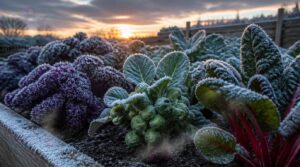
Frost-tolerant greens like spinach, kale, and mustard hold steady through light freezes — kale even sweetens after frost. Root crops such as carrots, parsnips, and beets improve in cold soil.
Winter brassicas like Brussels sprouts and cabbage, plus cold-hardy alliums like leeks and garlic, round out a genuinely nutrient-dense winter harvest.
Protected Winter Herbs
Herbs deserve their own strategy. Chives, thyme, and oregano are genuinely tough — thyme survives down to 5°F and stays evergreen in milder zones. Rosemary needs mulch and wind shelter anywhere colder than zone 7.
Tuck pots against a south-facing wall for passive warmth, or move borderline herbs indoors to a sunny windowsill before temperatures drop below freezing.
Evergreens for Structure
Unlike herbs, evergreens anchor your garden’s botanical structure through every cold month.
- Plant Thuja occidentalis for bold vertical living walls up to 25 feet tall
- Choose columnar yew for columnar cultivar selection in narrow spaces
- Layer hollies as dense evergreen privacy screens
- Mix junipers for contrasting winter foliage textures
- Repeat three to five forms for strong winter garden design rhythm
Winter-Blooming Flowers
Few plants reward winter gardeners quite like cold-hardy bloomers. Witch hazel (Hamamelis) opens fringed yellow or orange petals even at -15°C, while hellebores deliver cup-shaped flowers in white, pink, or green beneath deciduous canopies.
Snowdrops round out this cold-season trio with delicate white blooms — explore the full range of flowers that bloom through winter frost to plan a garden that never truly goes quiet.
Tuck snowdrops and Cyclamen coum along woodland edges for layered ground-level interest. Pansies fill containers with steady color through zones 7–9, bridging every gap.
Protect Plants From Frost
Frost doesn’t have to mean the end of your garden. The right protective layers and enclosures can keep your plants alive and productive through even the harshest cold snaps. Here are the most effective ways to shield your plants before temperatures drop.
Mulch Roots Before Freezes
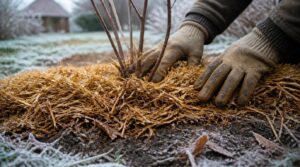
Think of mulch as your soil’s winter coat. A 2–4 inch layer of straw or shredded leaves reduces soil temperature swings by 3–6°F, keeping dormant roots stable.
Five mulching rules:
- Apply after the first hard frost
- Keep mulch 2–3 inches from stems
- Extend coverage beyond the drip line
- Use straw, shredded leaves, or wood chips
- Refresh after every heavy rain
Use Cloches and Covers
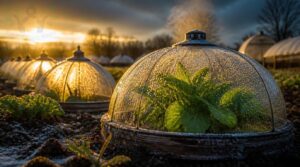
Glass and polycarbonate cloches trap daytime heat, raising soil temperatures by several degrees overnight — enough to shield lettuce, spinach, and young transplants from a killing frost. Vent on mild days to prevent fungal buildup from trapped humidity.
Clear covers can extend your harvest window by 2–6 weeks, buying you precious time before winter shuts the garden down.
Add Cold Frames
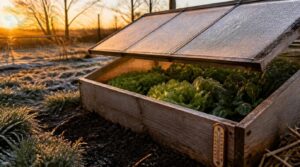
A cold frame is basically a miniature greenhouse flush to the ground, using glass or polycarbonate glazing to trap solar heat around lettuce, spinach, and hardy greens. Face it south, and you’ll capture maximum winter sun.
Install an automatic vent system to prevent overheating on bright days — humidity builds fast inside a sealed frame and invites fungal disease.
Shield Raised Beds
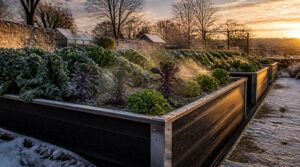
Raised beds with insulated wall panels do more than organize your garden — they actively fight frost. The deeper side walls resist bowing, while dark exterior finishes absorb solar heat and transfer warmth into root zones.
Three features worth prioritizing:
- Built-in drainage channels to prevent waterlogging during freeze-thaw cycles
- Steel corner brackets for structural rigidity under winter loads
- Rot-resistant materials that endure repeated seasonal assembly
Create Warm Microclimates
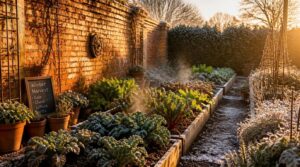
Brick or stone walls work like slow-release heaters, storing daytime solar energy and releasing it overnight — warming adjacent beds by 4–6°F. Position your most vulnerable plants against a south-facing wall for maximum effect.
Dense evergreen windbreaks on exposed edges cut wind speeds by 40–60%, keeping soil noticeably warmer. Even dark mulch quietly raises near-surface temperatures by up to 3°C on sunny days.
Manage Soil and Water
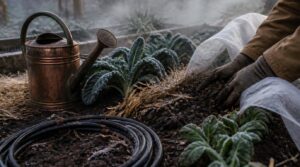
Healthy soil doesn’t take a break in winter—it just needs a little help staying that way. How you manage your beds and irrigation lines now sets the stage for a strong spring start. Here are five soil and water practices worth doing before the cold fully settles in.
Add Compost in Fall
Autumn is the ideal time to work finished compost into your garden beds. As it breaks down over winter, it improves soil aggregation, opens up porosity, and feeds a thriving soil microbial community that drives nutrient cycling come spring.
Apply 2–3 inches across bare beds. Compost also reduces compaction after heavy rains, improving drainage and releasing slow-acting nutrients gradually as temperatures rise.
Mulch Bare Garden Beds
Compost conditions the soil beneath, but bare beds still need a protective layer on top. Spread 2–4 inches of organic mulch — bark chips, straw, or shredded leaves — evenly across the surface.
This suppresses weed germination, slows evaporation, and buffers soil temperature against hard freezes. Keep mulch pulled back from plant stems to prevent rot.
Plant Winter Cover Crops
Mulch protects what’s already there — but cover crops actively rebuild your soil while beds sit empty. Sow winter rye or hairy vetch in early autumn after harvest.
Rye survives down to -20°C, scavenges residual nitrogen, and shields soil from erosion. Legumes like vetch fix atmospheric nitrogen directly. Terminate them 2–6 weeks before spring planting to release nutrients without immobilizing them.
Prevent Soggy Roots
Winter rain can saturate beds just as fast as summer heat dries them out. Soggy roots suffocate quickly — root rot sets in within days of prolonged waterlogging.
Raise beds or mound rows to lift roots above saturated zones. Mix coarse sand or perlite into your soil to improve porosity. For low spots, cut shallow swales to redirect runoff away from root zones entirely.
Drain Irrigation Lines
Frozen pipes are an expensive lesson. Before the first hard frost arrives, turn off the main supply valve and let gravity do the work — open the lowest drain point so water exits naturally.
For drip systems, purge lines from high to low, then seal all ends with caps. Don’t overlook the backflow preventer; trapped moisture there freezes and cracks it fast.
Harvest and Store Winter Crops
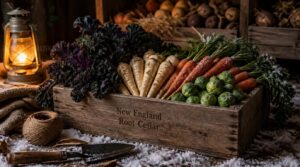
Knowing when and how to bring in your crops makes all the difference between a bountiful winter harvest and a frustrating loss. Each vegetable has its own timing, tolerance, and storage needs — and getting those details right is half the battle. Here’s what you need to know to harvest and store your winter crops successfully.
Pick Before Hard Frost
A hard frost gives tender crops no second chance. Pick tomatoes, peppers, and beans the moment nighttime temperatures threaten 28°F to 32°F.
- Tomatoes: harvest when fully colored but still firm
- Peppers: remove while firm before any night freeze
- Beans: pick immediately — frost destroys texture fast
Stagger your harvests across the last 2–3 days before predicted frost to spread effort and reduce waste.
Leave Hardy Greens Growing
Knowing which greens to leave in the ground separates a confident winter gardener from one who harvests too early. Kale, Swiss chard, and mustard greens tolerate frosts down to -10°C, continuing to produce harvestable leaves through cold snaps.
Pull outer leaves first, leaving the growing crown intact. That small habit alone extends your harvest window by weeks.
Sweeten Roots After Frost
Frost does something wonderful to root vegetables — it triggers a starches-to-sugars conversion that acts as natural antifreeze, protecting plant cells while deepening flavor. Carrots, parsnips, and beets all benefit from waiting 2–6 weeks after the first frost before harvest.
Frost sweetens root vegetables by converting starches to sugars, so wait before you harvest
Roast them simply with olive oil and garlic, and that frost-boosted sweetness caramelizes beautifully, turning humble winter vegetables into something genuinely worth anticipating.
Cure Potatoes Properly
Potatoes don’t go straight from the ground to storage — they need a resting period first. Spread unwashed tubers in a single layer somewhere cool, dark, and well-ventilated. Target 45°F to 60°F with humidity around 85–95% for one to two weeks.
This thickens their skins, seals minor cuts, and dramatically reduces rot. Discard any bruised ones before curing; they’ll only spread problems.
Store Crops Cool
Why does a root cellar outperform a kitchen pantry? Keep stored crops near 32°F with 90–100% humidity, using vented crates for airflow and separate zones to manage ethylene gas between fruits and vegetables.
Cabbage and kale hold 2–3 months; carrots and parsnips stretch to six. Check often, and pull spoiled pieces immediately to curb spreading rot.
Maintain Winter Garden Health
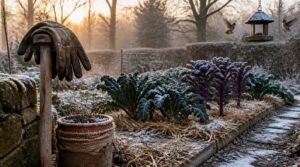
Once your crops are tucked away, what’s next for the rest of your garden? Winter brings its own set of challenges, even when everything looks dormant. Here are the simple habits that keep your garden, tools, and local wildlife in good shape until spring returns.
Delay Major Pruning
Most trees and shrubs are better left unpruned through winter. Cutting now exposes the cambium layer to cold shock, sunscald, and fungal entry — wounds simply can’t callus until temperatures rise.
Wait until late winter or early spring instead. Here’s why timing matters:
- Cuts heal faster as sap flow resumes
- Bud development guides correct placement
- Disease risk drops considerably
- Workload spreads more manageably into spring
Remove Diseased Debris
While holding off on pruning, don’t overlook debris removal. Diseased plant material left in beds harbors pathogens that reinfect new growth. Blighted leaves, cankered branches, and rotten fruit are key disease hotspots.
| Debris Type | Disease Risk | Disposal Method |
|---|---|---|
| Blighted leaves | Fungal spore release | Municipal green waste |
| Cankered branches | Dormant bacterial pathogens | Sealed bag or burn |
| Rotten fruit | Pest-attracting fungi | Double-bagged trash |
| Diseased root crowns | Soilborne pathogen persistence | Double-bag, discard |
Double-bag infected debris and send it to municipal green waste — never your home compost. Disinfect tools with diluted bleach, and work on calm days to limit spore dispersal.
Watch for Winter Pests
Cleared debris exposes another problem lurking underneath — pests. Rodents and voles tunnel into unfrozen soil to feed on bulbs and tubers, while mice leave telltale droppings and gnaw marks near foundations.
Check tree bark for scale insects and borer damage. Cluster flies overwinter in wall voids; inspect any plants before bringing them indoors. Sticky traps in basements help gauge what’s already moved in.
Support Birds and Pollinators
Pest patrol isn’t the only reason to stay active in the winter garden. Birds and pollinators need you too.
Set up suet feeders and berry-rich plants like holly or viburnum to fuel birds through cold snaps. Leave seed heads on native perennials standing — they’re free food. A shallow water dish in a sunny spot, refreshed every few days, draws more visitors than any feeder.
Clean and Store Tools
Winter tools earn their rest too. Clean metal surfaces with a dry brush first, then warm soapy water, rinse, and dry completely before rust gets a foothold.
- Wipe blades dry immediately after washing
- Apply a light oil coating to all metal parts
- Sharpen edges with the correct grit file
- Store long-handled tools with heads up
- Label seasonal bins for quick spring access
Organized storage now means a smoother start next season.
Frequently Asked Questions (FAQs)
What is the 70 30 rule in gardening?
The 70/30 rule balances 70 percent structural, low-maintenance plants — perennials, natives, and evergreens — with 30 percent seasonal fillers. This ratio keeps beds harmonious year-round while allowing fresh color and variety each season.
What month do you start a winter garden?
As the last summer heat fades, start planning 6–8 weeks before your first frost date — often July or August in early-freeze zones. Local extension calendars pinpoint your exact seasonal sowing window.
What should I do to my garden in the winter?
Your garden still has work to do in winter. Focus on protecting roots, harvesting hardy crops, and preparing soil. Small, consistent efforts now mean a stronger, more productive spring garden waiting for you.
What should I be doing in my garden in October?
October doesn’t wait for you to feel ready. Mulch roots, harvest before the first frost hits, drain irrigation lines, and tuck cold-hardy greens into protected beds — your spring self will thank October you.
What to do in a garden in winter?
Winter brings the garden to its quietest point — but not to a standstill. Protect, harvest, and plan to keep your garden productive and healthy through the cold months ahead.
What are winter garden tips?
Cold snaps don’t have to mean a dormant garden. With the right plants, soil prep, and protection strategies, you can grow, protect, and harvest through the coldest months of the year.
How can I make the most of winter in the garden?
What if the quietest season turned out to be your most productive? By choosing cold-hardy crops, protecting roots with mulch, and preparing beds early, you’ll keep harvesting and growing confidently all winter long.
What can I do if I don’t have a garden this winter?
No garden? No problem. Try windowsill microgreens, ready in 7–14 days, or a compact herb garden in your kitchen. Indoor mushroom kits and small hydroponic setups keep you harvesting all winter long.
How to maintain a garden in winter?
Maintaining a thriving garden through winter demands a thousand small decisions. Mulch roots, drain irrigation lines, remove diseased debris, and delay major pruning until spring to keep your plants healthy and ready to flourish.
How do I choose a Winter Garden?
Start by matching your USDA hardiness zone to select plants that survive your winters. Prioritize sunlight exposure, good drainage, and a mix of cold-hardy vegetables, evergreens, and winter bloomers to keep your garden productive and structured.
Conclusion
Winter gardening isn’t about waiting out the cold — it’s about growing through it. The gardeners who thrive don’t surrender their beds to frost; they read their zone, protect their roots, and let the freeze do flavoring work no summer sun can match.
These winter gardening tips aren’t just techniques — they’re a seasonal mindset shift. Plan now, harvest often, and you’ll find that your most rewarding yields arrive wrapped in a layer of ice.
- https://leafrootfruit.substack.com/p/june-2026-planting-guide-garden-update
- https://growingfruit.org/t/2026-garden-plans-critique-advice-welcome/76804
- https://www.sproutboxgarden.com/blogs/news/a-guide-to-winterizing-your-garden
- https://www.gardenary.com/blog/what-to-do-in-the-garden-in-2026-month-by-month-checklist
- https://www.farmersalmanac.com/calendar/gardening