
This site is supported by our readers. We may earn a commission, at no cost to you, if you purchase through links.

Most gardeners think of an empty bed as a blank slate—a sign of good planning, a garden at rest. The soil underneath tells a different story. Left bare through winter or between growing seasons, it compacts, crusts, leaches nutrients, and slowly loses the microbial life that makes plants thrive. One season of neglect can undo years of careful soil building.
Cover crops change that equation entirely. A well-chosen mix planted into a vacant bed builds fertility, smothers weeds, anchors soil against heavy rain, and feeds the microbial communities your vegetables depend on—all without asking much from you. The benefits of cover crops in gardens compound quietly, then show up dramatically in your next harvest.
Table Of Contents
- Key Takeaways
- Benefits of Cover Crops in Gardens
- Weed Suppression and Soil Coverage
- Erosion Control With Living Roots
- Better Water Retention and Infiltration
- Boosting Soil Fertility Naturally
- Improving Soil Structure and Compaction
- Supporting Microbes and Beneficial Insects
- Choosing The Right Cover Crops
- Planting and Terminating Cover Crops
- Top 3 Cover Crop Seeds for Gardens
- Frequently Asked Questions (FAQs)
- Why is it important to plant a cover crop in a garden?
- How long does cover cropping last?
- What are the downsides of cover crops?
- Should you plant a cover crop in your garden?
- How long does it take for a cover crop to decompose?
- Why don’t farmers plant cover crops?
- Can cover crops attract harmful pests to my garden?
- How much do cover crops typically cost annually?
- Are cover crops safe for pets and children?
- Can I harvest and eat my cover crops?
- Conclusion
Key Takeaways
- Cover crops protect bare soil from compaction, nutrient loss, and microbial decline by keeping living roots in the ground between growing seasons.
- Legumes like hairy vetch and crimson clover fix atmospheric nitrogen for free, while grasses like cereal rye suppress weeds and anchor topsoil against rain and wind.
- Deep-rooted brassicas such as daikon radish physically break up compacted subsoil layers, creating drainage channels that persist long after the plant decomposes.
- Timing matters most — terminate your cover crop two to three weeks before your next planting, and you’ll hand off a bed that’s richer, looser, and ready to grow.
Benefits of Cover Crops in Gardens

Cover crops do more for your garden than just fill empty beds between seasons. They work quietly underground and above the soil surface to build healthier growing conditions over time.
One of their biggest behind-the-scenes benefits is preventing soil compaction in vegetable gardens, keeping the ground loose and ready for roots to thrive.
Here’s what they actually deliver for home gardeners — especially those working with small vegetable beds.
Why Cover Crops Matter for Home Gardens
Most home vegetable gardens lose more ground than you’d think between seasons — to weeds, compaction, and bare soil baking under the sun.
Cover crops change that equation. They work as living tools for weed suppression, soil fertility, pest disease management, and even carbon sequestration.
The cost savings alone — less fertilizer, less water, less weeding — make them worth every seed. They also enhance soil structure, boosting water retention and reducing erosion.
How They Support Year-round Soil Health
Cover crops don’t just protect your soil during one season — they support it all year long. Living roots feed soil microbial activity continuously, driving nutrient mineralization timing that aligns with what your next crop actually needs.
Root exudate chemistry stimulates biological soil crusts that stabilize the surface, while residues aid carbon sequestration, regulate seasonal soil temperature, and steadily build soil fertility, moisture retention, and long-term health through crop rotation.
The Biggest Wins for Small Vegetable Beds
Small beds reward cover crops in ways you’ll actually notice — weed suppression using cover crops cuts hand-weeding time substantially, while nitrogen-fixing legumes quietly bank fertility for your next planting.
Smart harvest gap utilization, root zone expansion, and companion plant synergy compound those gains.
Seed rate optimization and microclimate benefits round it out, making cover crops a straightforward investment in lasting soil health and compaction alleviation.
Weed Suppression and Soil Coverage
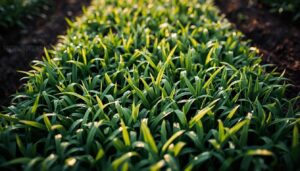
Weeds don’t take days off, but the right cover crop can do the heavy lifting for you. Grass-family crops like oats, rye, and barley grow fast and thick, making life very difficult for weed seeds trying to get started.
Here’s how that weed suppression actually works in your garden beds.
Dense Biomass Blocks Weed Germination
Dense biomass works like a blackout curtain for weed seeds. When cover crops build up a thick layer of residue, light exclusion and temperature buffering combine to shut down germination before it starts. Studies show weed seed germination drops up to 60% under ideal biomass layers.
Here’s what that residue actually does:
- Physical seed barrier — A 2–5 cm mulch layer stops small-seeded weeds from pushing through
- Light exclusion — Blocks sun-loving species that need direct light to sprout
- Moisture retention — Keeps surface humidity inconsistent for drought-adapted weeds
- Allelopathic residue — Decomposing material releases compounds that chemically deter germination
- Cover crop mixtures — Grass-legume blends deliver stronger, longer-lasting weed suppression than single species
Fast-growing Grasses Create Natural Shade
Fast-growing grasses like cereal rye and sorghum-sudangrass don’t just cover ground — they engineer it. Their dense canopy delivers sunlight diffusion, scattering intense rays before they reach weed seeds below.
microclimate cooling effect keeps the cool soil surface stable, handling temperature buffering and heat stress mitigation naturally. The result is living mulch that actively defends your soil health without extra effort.
Living Mulch Reduces Hand-weeding Time
Think of living mulch as your unpaid weeding crew. When mulch density peaks — that 2-to-3-inch canopy of low-growing cover crop species — weed pressure declines noticeably across the season. Better mowing frequency keeps it tidy without tipping into competition.
Here’s where the labor savings really show up:
- Living mulch blocks light before weed seeds can germinate
- Dense ground cover eliminates bare patches where annual weeds thrive
- Consistent soil health means fewer surprise weed flushes mid-season
- Time tracking shows reduced hand-weeding events during peak growing months
- Weed suppression using cover crops carries forward even after mowing
Early Termination Helps Lower Weed Seed Banks
Timing your termination window is everything in matters of seed bank depletion. Cut cover crops 2–3 weeks before your next planting, and you intercept a germination flush before weeds ever set seed.
That’s pre-emptive weed management in action — seed rain reduction through deliberate scheduling.
Over several seasons, this cover crop termination technique can shrink your weed seed bank by up to 80 percent.
Erosion Control With Living Roots

Bare soil doesn’t stand a chance against heavy rain or a strong wind — it moves, and it takes your nutrients with it.
Cover crops fight back by putting living roots to work below the surface and keeping the ground protected above it.
Here’s how that plays out in your garden beds.
Roots Anchor Soil Against Wind and Rain
Every rainstorm is a stress test that your soil either passes or fails. Cover crop roots are what tip the odds in your favor.
Root Network Density — the sheer volume of interlocking fine roots — creates a living anchor that resists both wind shear resistance and rain impact buffering simultaneously.
Here’s what’s actually happening underground:
- Fibrous roots bind soil particles into stable clusters, dramatically reducing soil erosion during heavy downpours.
- Deep taproots connect surface soil to lower layers, fighting soil compaction before it starts.
- Root exudates cement aggregates together, strengthening overall soil structure from within.
- Surface microtopography shields effects, slowing runoff velocity, giving water time to infiltrate rather than strip.
- Increased surface roughness from root mats absorbs raindrop energy before it dislodges your topsoil.
That’s erosion control through living root cover working exactly as nature designed it.
Ground Cover Protects Bare Beds in Winter
Bare beds in winter aren’t just empty — they’re vulnerable. Freeze-thaw cycle buffering is where cover crops earn their keep.
Winter rye and cover crop blends act as living mulch in raised beds, delivering winter soil insulation, cold soil stabilization, and frost heave mitigation all at once. That continuous canopy provides snow cover protection while quietly managing soil erosion control and soil moisture retention beneath the surface.
Residue Forms a Mulch That Slows Runoff
When cover crop residue lies flat across your beds, it’s doing more than you think. That mat of decomposing stems and leaves acts like a sponge-and-speed-bump combo — intercepting raindrops, boosting hydraulic resistance, and protecting soil pores from sealing. Here’s what mulch density actually delivers:
- Surface roughness forces water to slow down and percolate rather than sheet across bare soil.
- Runoff mitigation kicks in once biomass exceeds about 2 tons per acre — a realistic target with cereal rye.
- Sediment capture happens naturally as micro-barriers trap particles before erosion channels can form.
- Soil infiltration improves because residue shields pores from compaction, supporting consistent soil moisture management.
Continuous Cover Preserves Topsoil Nutrients
Slowing runoff is only half the story. soil stays covered, it holds onto the nutrients that bare ground loses to rain and wind.
carbon sequestration at work — organic matter builds up instead of washing away, raising cation exchange capacity (basically, your soil’s ability to grip nutrients) and preventing nutrient leaching.
continuous cover as a year-round savings account for soil fertility.
| Nutrient Benefit | Mechanism | Cover Crop Example |
|---|---|---|
| Topsoil Nutrient Hotspots | Residue concentrates nutrients at the surface | Cereal Rye |
| Soil Temperature Buffer | Ground cover moderates top 5 cm temps by 2–5°C | Crimson Clover |
| Improved Nutrient Cycling | Root exudates feed microbes that mineralize nutrients | Hairy Vetch |
| Higher Soil Organic Matter | Decomposing biomass raises organic matter 4–114% | Rye + Vetch Mix |
Better Water Retention and Infiltration

Water does more than quench your plants — it shapes how your entire soil ecosystem functions. Cover crops quietly work to keep moisture where it belongs, right in your soil and available to roots.
Here’s how they do it.
Cover Crops Reduce Evaporation From Bare Soil
Think of bare soil as a leaky bucket — without cover, it loses moisture fast. A living canopy shade cooling effect drops surface temperatures by up to 40%, driving down evaporation rate suppression considerably. Root water capture redistributes rainfall into upper layers before it disappears, while microclimate humidity boost keeps things stable below the foliage.
- Dense foliage blocks direct sun, lowering soil moisture loss during peak afternoon heat
- Root mats intercept rainfall and redirect it into the soil profile
- Canopy shade reduces radiant heat transfer, keeping the top few centimeters cooler
- Improving soil water retention with cover crops starts with simply keeping soil covered
Mulch-like Residue Helps Conserve Moisture
Once the living canopy drops, what’s left behind keeps working. Cover crop residues — your Residue Layer Density — act like nature’s own mulch blanket. Fine Particle Mulch breaks down into humus, boosting soil water retention noticeably. Mulch Temperature Moderation keeps surface temps steady, slowing evaporation on hot afternoons.
| Residue Type | Moisture Benefit | Seasonal Mulch Refresh |
|---|---|---|
| Grass clippings | High immediate retention | Every 4–6 weeks |
| Cereal rye residue | Moderate, long-lasting | Once per season |
| Legume mulch | Builds organic matter | Mid-season topdress |
Microbial Moisture Retention increases as cover crop residues decompose, improving soil water management from the ground up.
Deep Roots Improve Water Infiltration
Beyond surface residue, root depth is where the real infiltration magic happens. Deep‑taproot species like daikon radish and winter rye punch through compacted subsoil, creating Vertical Channels that guide rainwater straight down.
This Macropore Formation — driven by Root Exudate Porosity — delivers a genuine Hydraulic Conductivity Boost, improving soil water management dramatically. Subsoil Moisture Capture follows naturally, giving your beds better water infiltration season after season.
Healthier Organic Matter Boosts Water-holding Capacity
As cover-crop residues break down, they feed a quiet transformation beneath the surface. Organic matter builds a sponge-like structure — full of micro and macro pores — that dramatically improves soil water retention.
Humic water retention keeps moisture adhered to particles, while aggregate water storage and polysaccharide gel formation lock water in place.
The result? Healthier soil that holds moisture long after rain stops falling.
Boosting Soil Fertility Naturally

Cover crops do more than protect your soil — they actively feed it. The right species can cut your fertilizer bill and set up your next vegetable planting for a strong start.
exactly how that works.
Legumes Fix Nitrogen for Future Crops
Legumes are the secret workhorses of soil health. Through rhizobial symbiosis — where soil bacteria colonize root nodules — nitrogen-fixing legumes like hairy vetch and crimson clover pull nitrogen straight from the air and bank it in the soil.
Nitrogen-fixing legumes like hairy vetch and crimson clover pull free fertility straight from the air and bank it in your soil
Nodule development timing matters: give them a full season, and biological nitrogen fixation can deliver up to 200 kg/ha. That’s free fertility fueling your next crop through fixed nitrogen transfer.
Green Manure Releases Nutrients After Incorporation
Once you chop and incorporate your green manure, the soil gets to work fast. Nutrient cycling kicks in almost immediately — here’s the general release timeline:
- Rapid N Release peaks within 30 days
- Phosphorus Mineralization delivers measurable P in 2–6 weeks
- Potassium Availability surges in the first two weeks
- Micronutrient Liberation begins within 7–14 days
Proper cover crop termination methods determine how quickly this organic matter converts into soil fertility.
Residues Add Phosphorus, Potassium, and Micronutrients
Your green manure does more than feed nitrogen — it’s quietly loading your soil with phosphorus, potassium, and micronutrients too.
| Nutrient | Source | Availability Timeline |
|---|---|---|
| Phosphorus | Plant residues | 40% released within 60 days |
| Potassium | Cereal/soy residues | 5–12% K increase in top 15cm |
| Zinc/Manganese | Decomposing organic matter | 7–30 days via microbial activity |
Residue mineralization timing depends heavily on your C:N Ratio Balance — aim for roughly 25:1 to keep nutrient cycling efficient. Get that right, and Phosphorus Release Dynamics, potassium build-up, and micronutrient enrichment practically run themselves.
Mixed Species Improve Nutrient Cycling
Mixing species is like building a nutrient relay team.
Nitrogen fixing legumes hand off to deep-rooted grasses, while Complementary Root Depths mean every soil layer gets explored.
Litter Chemistry Diversity speeds breakdown, and Microbial Community Enrichment amplifies the whole process.
Redundant Nutrient Pathways keep soil fertility stable through dry spells — Seasonal Nutrient Buffering at its best.
Cover crop mixtures genuinely outperform monocultures for organic matter and nutrient cycling.
Improving Soil Structure and Compaction

Compacted soil is one of the sneakiest problems in a home garden — it slows drainage, suffocates roots, and makes every plant work twice as hard.
Cover crops tackle this from the ground up, literally, by loosening layers that a trowel can’t reach.
Here’s how they reshape your soil structure from the inside out.
Taproots Help Break Compacted Layers
Think of compacted soil as a locked door — daikon radish and tillage radish are your keys.
Their taproots drive down one to two feet, delivering serious hardpan penetration through root‑induced fracturing that breaks dense layers apart.
This mechanical soil loosening creates biopores — vertical channels — that persist long after the plant decomposes, providing biopore persistence, genuine soil aeration boost, and lasting compaction mitigation for healthier soil structure improvement.
Roots Improve Porosity and Drainage
Those biopores daikon leaves behind don’t just sit there — they become part of a living drainage network. Fine root micropores hold water and air between particles, while taproot channeling connects your surface soil to deeper layers.
Root exudate binding encourages microbial aggregation that keeps those channels stable.
Through root turnover matter, soil structure and soil compaction improve steadily, boosting moisture retention and overall soil health across seasons.
Organic Matter Supports Stable Soil Aggregates
Organic matter works like nature’s own cement. Humic substances — the dark, sticky compounds that form as residue breaks down — bind clay and silt particles into stable clumps called aggregates. Microbial polysaccharide glue and fungal hyphae weave through those particles, reinforcing aggregate stability mechanisms from the inside out. Carbon binders from cover crop residues strengthen pore network enhancement, keeping your soil loose, breathable, and resilient.
Here’s what that means practically:
- Soil aggregation improves as decomposing cover crop biomass feeds microbial communities that produce binding agents.
- Organic matter increases pore diversity, giving roots room to grow and water somewhere to move.
- Soil structure stays stable longer because biologically derived binders outlast inorganic ones through wet and dry cycles.
Better Structure Reduces Crusting After Storms
That stable aggregate structure does one more job you’ll notice after every heavy rain — it stops your soil from sealing over. Surface Crust Mitigation happens naturally when root binding effect, mulch cushioning layer, and pore network expansion work together.
Rain impact dampening from residue keeps droplets from shattering aggregates. The result: water moves in, not across.
| Mechanism | How It Works | Garden Benefit |
|---|---|---|
| Root Binding Effect | Fine roots glue surface particles together | Reduces crust formation after storms |
| Mulch Cushioning Layer | Residue absorbs raindrop impact | Protects aggregate structure at surface |
| Pore Network Expansion | Organic matter opens drainage channels | Prevents pooling and hard sealing |
Supporting Microbes and Beneficial Insects

Healthy soil isn’t just dirt — it’s a living system full of microbes, insects, and fungi all working together. Cover crops feed and shelter that system in ways bare soil simply can’t.
Here’s how they support the life below and above ground.
Living Roots Feed Soil Microbes
Every living root is a microbial hotspot — constantly releasing sugars, amino acids, and other compounds through root exudate chemistry that feeds billions of soil microbes daily. This rhizosphere carbon flow is what keeps your soil biology humming between crops.
Cover crops are especially powerful here, driving symbiotic nutrient exchange and delivering a measurable microbial community boost that builds long-term soil health.
Diverse Plantings Increase Garden Biodiversity
When you plant cover crop mixtures instead of a single species, your garden becomes a functioning ecosystem.
Vertical Habitat Layers from tall grasses to low groundcovers support Mixed Root Architecture that enriches your soil microbiome at every depth.
Seasonal Bloom Variety extends Wildlife Food Resources across the calendar, while Pollinator Habitat Diversity and companion planting naturally reduce pest pressure — biodiversity does the heavy lifting for you.
Flowering Cover Crops Attract Pollinators
Buckwheat, phacelia, and clover are nectar-rich varieties that do double duty — they improve soil health while building floral habitat corridors right inside your garden beds. Staggered blooming across species keeps foragers coming back all season.
Phacelia’s dense purple flowers are especially effective, delivering high pollen protein content that helps bee nesting sites and draws in an impressive range of beneficial insects.
Habitat Encourages Predatory Insects and Natural Pest Control
When cover crops double as predator shelters and nectar corridors, your garden basically builds its own pest management team. dense foliage and mulch refuges give lacewings, parasitic wasps, and lady beetles somewhere to hide and breed. log piles tucked at bed edges extend that lacewing habitat into winter.
layered approach to biological pest control means fewer aphids and caterpillars without spraying a thing.
Choosing The Right Cover Crops

Not every cover crop is built for the same job, and picking the wrong one can leave you with more problems than you started with.
The good news is that once you know what your garden actually needs, the choice gets a lot simpler.
Here’s a breakdown of the main categories and what each one does best.
Match Species to Your Garden Goal
Think of selecting cover crop species the way you’d pick a tool — the right one depends on the job. Soil pH matching, root depth selection, and climate compatibility all factor in.
Got compacted beds? Go deep-rooted. Need nitrogen? Plant a fixing legume. Seasonal timing matters too.
Align species to your nutrient demand and garden goals first, then plant accordingly.
Use Legumes for Fertility
Legumes are nature’s free fertilizer program — nitrogen fixing legumes like hairy vetch and crimson clover host rhizobium bacteria that pull nitrogen straight from the air.
That’s real organic nitrogen sources working underground. Used in legume crop rotation, they deliver green manure benefits, root exudate benefits, and legume residue mulch that drives soil fertility management and soil microbial boost season after season.
- Fix atmospheric nitrogen without synthetic inputs
- Release nutrients through decomposing legume residue mulch
- Improve soil microbial boost via root exudate benefits
- Reduce fertilizer costs through smart legume crop rotation
- Strengthen green manure benefits when incorporated before flowering
Use Grasses for Weed Control and Erosion Protection
Grasses are your frontline defense against both weeds and eroding topsoil. Winter rye and cereal rye establish quickly, delivering dense canopy shade that starves weed seeds of light — that’s weed suppression using cover crops, working passively.
Root channel formation improves water infiltration while grass litter insulation moderates soil temperature. Through seasonal biomass turnover and root exudate effects, erosion control through living root cover becomes nearly automatic.
Use Brassicas for Compaction Relief and Biofumigation
Brassicas do double duty where grasses leave off. Radish taproot mechanics fracture hardpan layers up to three feet deep, while bulbous turnip effects loosen compacted topsoil.
Mustard biofumigant properties — released through glucosinolate timing at peak flowering — suppress soilborne pathogens after residue incorporation. For soil compaction alleviation and natural pest control, mustard cover crops deliver measurable soil health improvement that most gardeners overlook.
Pick Winter-hardy or Winter-killing Types as Needed
Beyond brassicas, your final choice comes down to survival strategy. Winter-hardy types — winter rye, hairy vetch, winter peas — stay green through freezing temps, building biomass retention and fixing nitrogen all season. Winter-killing cover crops die back naturally, speeding decomposition speed and freeing beds faster.
Match your pick to your climate zone:
- Cold zones — winter rye for reliable root architecture and ground cover
- Mild winters — hairy vetch for nitrogen and seed longevity
- Moderate climates — winter peas balance fertility and seasonal timing for planting and terminating cover crops
- Warm zones — winter-killing cover crops and their advantages shine here, clearing without effort
Planting and Terminating Cover Crops
Knowing which cover crop to plant is only half the job — timing and execution are what make it actually work.
A few simple steps will take you from bare soil to a thriving cover crop and back again without missing a beat on your vegetable schedule.
Here’s what to focus on at each stage.
Time Planting Around Fall, Spring, or Summer Gaps

Timing is everything with cover crops — and each season offers a distinct window.
For Fall Gap Timing, seed cool-season covers four to six weeks before first frost, using soil temperature triggers around 40–45°F as your cue to stop. Spring Gap Scheduling starts when soils hit 50°F. The Summer Gap Window suits heat-tolerant mixes after 60°F.
Residue Management Timing ties it all together: terminate two to six weeks before your next planting.
Prepare Beds for Good Seed-to-soil Contact

Once your timing is locked in, bed prep makes or breaks germination. Start with Precision Raking Methods — clear debris, break clumps, and level the surface so Seed Depth Calibration stays consistent across the bed.
Pre-irrigate to field capacity for proper Moisture Pre-irrigation, then check that the soil feels like a wrung-out sponge.
Finish with Light Mulch Application to lock in seed-to-soil contact.
Monitor Growth Before Flowering

Once your cover crop is up and growing, watch it closely — this is where timing makes all the difference. Look for a Leaf Color Shift to lighter green, Stem Internode Shortening, and a Petiole Length Increase as flowering approaches.
Height Plateau Detection tells you vertical growth is slowing.
When Bud Scale Appearance signals imminent blooms, you’re entering the ideal termination window for maximum biomass production.
Terminate by Mowing, Crimping, or Incorporation

Once you spot those early buds, it’s time to act. Cover crop termination comes down to three solid methods: mowing, crimping, or incorporation.
Mower type selection matters — flail mowers shred biomass into better residue mulch uniformity than rotary blades.
Crimping timing window peaks at flowering for clean kills without tillage.
For incorporation depth guidelines, match tillage intensity to biomass volume to increase organic matter and soil health indicators.
Leave Enough Time Before The Next Planting
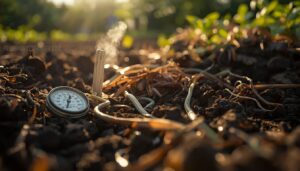
After termination, patience pays off. Rushing the next planting skips the critical Decomposition Period and Moisture Equilibration Phase that your soil needs.
- Decomposition Period: Wait 2–3 weeks post-incorporation for residues to break down
- Soil Temperature Threshold: Confirm 50–65°F before direct seeding
- Residue Mulch Maturation: Allow crimped material 7–14 days to settle
- Pest Escape Window: A brief dry spell stabilizes residues and reduces seedling loss
Top 3 Cover Crop Seeds for Gardens
With so many seeds on the market, it’s easy to get overwhelmed before you even break ground. The handful of reliable options cover most garden goals — whether you’re building fertility, blocking weeds, or loosening compacted soil.
Here are three cover crop seeds worth keeping in your rotation.
1. Outsidepride Crimson Clover Seeds
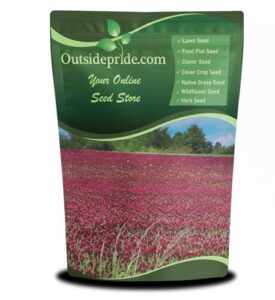
Crimson clover might be the hardest-working seed in a 5-lb bag. Outsidepride’s version comes coated and inoculated — meaning the nitrogen-fixing bacteria are already onboard, ready to get to work once the seed hits moist soil.
It’s non-GMO, open-pollinated, and adaptable to sandy or clay soils, which makes it a reliable choice for most home gardens.
Sow at 0.5–0.75 lb per 1,000 sq ft, and you’ll get dense ground cover that suppresses weeds, protects bare soil, and feeds the next crop.
| Best For | Gardeners, hunters, and farmers who want a fast-growing, low-maintenance cover crop that feeds wildlife, fixes nitrogen, and protects soil — all in one planting. |
|---|---|
| Bag Size | 5 lbs |
| GMO Status | Non-GMO |
| Weed Suppression | Yes |
| Soil Improvement | Nitrogen fixation |
| Origin | USA |
| Price | $24.99 |
| Additional Features |
|
- Already coated and inoculated, so the nitrogen-fixing bacteria are ready to go right out of the bag
- Works in a wide range of soils — sandy, clay, you name it — and doubles as wildlife forage for deer, rabbits, and pollinators
- Pulls triple duty as a cover crop, weed suppressor, and hay source for just $24.99 a bag
- It’s an annual, so you’ll need to re-seed every year — no set-it-and-forget-it here
- Germination slows down in cold climates; you need daytime temps above 60°F to really get things moving
- A few buyers noted mixed hay content and uneven germination, so it may not be the best pick if you need a pure clover stand
2. Non Gmo Winter Rye Cover Crop Seeds
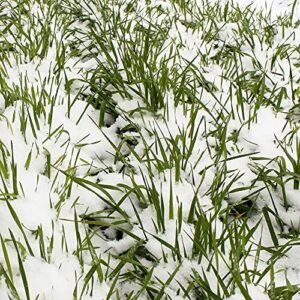
Winter rye is the workhorse of cover crops — unglamorous, but nearly impossible to beat for cold-season soil protection. Mountain Valley Seed Company’s non-GMO heirloom variety germinates in as few as four days, even in near-freezing soil, and can hit four inches of growth within ten days.
Each 5-lb bag covers up to 2,500 sq ft at the recommended rate.
It suppresses weeds through dense canopy shade and allelopathic compounds, scavenges leftover soil nitrogen, and builds organic matter when tilled under as green manure.
| Best For | Gardeners, small-scale farmers, and homesteaders in cold climates who want an affordable, low-maintenance way to protect bare soil over winter. |
|---|---|
| Bag Size | 5 lbs |
| GMO Status | Non-GMO |
| Weed Suppression | Yes |
| Soil Improvement | Organic matter builder |
| Origin | Packed in USA |
| Price | ~$19.00 |
| Additional Features |
|
- Germinates fast — even in near-freezing temps — so you get ground cover quickly without babysitting it.
- Does triple duty: suppresses weeds, scavenges leftover nitrogen, and builds organic matter when tilled under.
- Non-GMO heirloom seed packed in the USA, and at roughly $19 for 5 lbs, it’s genuinely affordable.
- Germination can be hit or miss — some buyers reported noticeably thin emergence, which stings when you’re paying per seed.
- Not a great fit for warmer regions like Florida where winter rye just doesn’t thrive the way it should.
- Grows fast and thick, so if you let it get away from you, it can become a hassle to manage before spring planting.
3. No Till Garden Cover Crop Mix Seeds

If one cover crop is good, nine working together is something else entirely.
The No Till Garden Cover Crop Mix from Mountain Valley Seed Company packs Austrian field pea, hairy vetch, daikon radish, crimson clover, winter wheat, and four more species into a single pre‑inoculated blend.
Broadcast it, rake lightly, water — that’s it.
At $31.41 for 5 lbs, it covers up to 2,500 sq ft and manages fertility, compaction, weed suppression, and erosion simultaneously.
One bag, one season, real results.
| Best For | Home gardeners and small-scale farmers who want an easy, low-effort way to improve soil health, suppress weeds, and boost fertility without chemicals or complicated prep work. |
|---|---|
| Bag Size | 5 lbs |
| GMO Status | Non-GMO |
| Weed Suppression | Yes |
| Soil Improvement | Nitrogen fixation + aeration |
| Origin | Packed in USA |
| Price | $31.41 |
| Additional Features |
|
- Nine species working together means your soil gets nitrogen fixation, deep aeration from the radish, and thick weed suppression all at once
- Dead simple to plant — broadcast, rake, water, done — and you’ll usually see sprouts within a week
- Works across a ton of setups: raised beds, orchards, no-till fields, even as chicken forage
- Some seeds (especially the pea-sized ones) can be hit or miss on germination, so you might get patchy coverage
- Radish and collards can get a little aggressive — expect some extra weeding if you’re not terminating the crop on time
- At $31.41 for 5 lbs, it costs more than basic mixes, and late-season planting can leave you with pretty short growth before winter hits
Frequently Asked Questions (FAQs)
Why is it important to plant a cover crop in a garden?
Your soil doesn’t rest — so why should you let it go bare?
Cover crops protect, feed, and rebuild your garden ground while you’re not growing, setting up every future planting for success.
How long does cover cropping last?
Cover cropping generally lasts 30 to 120 days, depending on your goals and climate. Most home gardeners run a cycle of 60 to 90 days between main crops.
What are the downsides of cover crops?
They’re not perfect. Cover crops can steal moisture in dry springs, host slugs, and complicate planting schedules. Timing termination wrong risks regrowth that competes with your next crop.
Should you plant a cover crop in your garden?
Yes, if you have any bare soil between growing seasons, a cover crop is worth it.
It’s low effort, under an hour to plant, and pays you back in healthier, more productive beds.
How long does it take for a cover crop to decompose?
Roughly 2–6 weeks for tender legumes like peas, and 6–14 weeks for tougher grasses like oats or rye — warm, moist soil above 60°F speeds things up considerably.
Why don’t farmers plant cover crops?
Most farmers skip cover crops because of upfront seed and equipment costs, uncertain short-term returns, and tight planting schedules.
Without consistent subsidies or local support, the investment feels risky before benefits show up.
Can cover crops attract harmful pests to my garden?
Cover crops can attract pests — dense residue shelters aphids, brassicas draw root pests, and some flowering species invite herbivores that migrate into your vegetables once the cover degrades.
How much do cover crops typically cost annually?
Annual seed and seeding costs usually run $15–$78 per acre, with most gardeners landing around $ Simple termination adds little — often under $10 — keeping total expenses manageable.
Are cover crops safe for pets and children?
Most cover crops are safe around kids and pets in small amounts. Skip hairy vetch and lupines in areas they roam, and always mow before seed pods form.
Can I harvest and eat my cover crops?
Yes, some cover crops are edible — young oats, radish leaves, and mustard greens can be harvested before flowering.
Avoid chemically treated crops, wash thoroughly, and harvest within 25–45 days for best flavor.
Conclusion
Think of garden soil as a bank account. Every bare winter you leave it unplanted, you’re making a withdrawal—nutrients leach, structure collapses, microbial deposits drain away.
Cover crops are your recurring deposit. The benefits of cover crops in gardens accumulate quietly beneath the surface, rebuilding what each harvest takes.
By the time you seed your first spring vegetable, the account is already full—and your plants will spend every bit of it.