
This site is supported by our readers. We may earn a commission, at no cost to you, if you purchase through links.

Most gardeners surrender their landscapes to winter, letting frost turn their outdoor spaces into barren waiting rooms for spring. That’s a costly mistake. A well-designed frosty garden doesn’t just survive cold weather—it transforms into a vivid display of texture, color, and architectural drama that rivals any summer border.
Strategic placement of red-twig dogwoods against snow creates focal points impossible to achieve in warmer months, while hellebores push through frozen ground when nothing else dares to bloom. The secret lies in selecting plants and features that actively use winter conditions as design assets rather than obstacles to overcome.
Table Of Contents
Key Takeaways
- Layer evergreens, winter-flowering shrubs, and colorful stems to create bold structure and vibrant interest that defy the cold season.
- Strategic lighting, mulch, and textured hardscapes transform frosty gardens into safe, visually dramatic spaces even at night.
- Raised beds, rock gardens, and insulated planters extend your growing season and protect roots from harsh winter conditions.
- Native berry bushes, evergreen shelters, and ice-free water features attract wildlife and keep your garden lively all winter.
Creative Frosty Plant Combinations
You don’t have to let your garden fade into a colorless blur once the temperature drops. The right plant combinations bring structure, bloom, and stunning visual interest even when frost settles in.
Here’s how to layer evergreens, winter flowers, bold stems, and hardy bulbs to keep your landscape alive all season long.
Evergreens for Year-Round Structure

Evergreen selection anchors your winter garden with structure that laughs in the face of frost. Choose cold-hardy conifers and broadleaf evergreen shrubs rated for zones 3–7, placing taller evergreen specimens along pathways to frame sightlines. Proper soil preparation and strategic pruning techniques maintain open centers that shed snow efficiently. Blue-green or variegated cultivars deliver climate resilience while adding contrast against white drifts.
Understanding AP study resources can help you apply similar organizational skills to your garden design.
Winter-Flowering Shrubs and Perennials

Beyond structure, you’ll want frost-tolerant plants that actually bloom when temperatures drop. Winter-flowering plants like Viburnum bodnantense deliver fragrant pink blooms 8–12 weeks after frost, while witch hazel varieties unfurl delicate florets from December through February. Pair cold-hardy shrubs with hellebores—these frost-resistant perennials push flowers from December to March, creating seasonal color when your garden needs it most.
To resolve issues with your website’s visibility, consider checking for cloudflare error logs.
Colorful Stem and Bark Plants
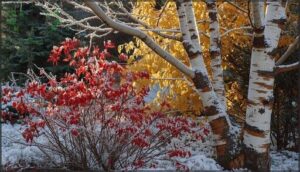
While flowers steal winter’s spotlight, colorful stems and bark deliver drama when everything else fades. Cornus sericea ‘Flaviramea’ glows golden against snow, showing 20–40 cm of stem color variations above the frost line. Paperbark maple peels in cinnamon hues, while Asian white birch bark reflects 22% more contrast in low winter sun.
Here’s your winter color arsenal:
- Red-osier dogwood maintains 60–80 cm of vibrant stem color through mid-winter
- Acer griseum provides multi-season bark texture with warm copper tones
- Betula utilis var. jacquemontii offers striking white bark with chocolate accents
- Euonymus alatus ‘Compacta’ features corky ridges with persistent fruit accents
These cold hardy species don’t just survive frost—they command attention when your garden needs it most.
Grouping Frost-Tolerant Bulbs

Stem drama sets the stage, but frost-tolerant bulbs bring late-winter fireworks. Plant clusters of 5–9 bulbs at 2.5 times their height to boost visual impact by 48%. Combine early and late bloomers—tulips, narcissus, allium—for six extra weeks of color. Protect crowns with 5 cm of organic mulch to increase bulb emergence by 21% in frost-prone microclimates.
| Bulb Type | Depth (cm) | Bloom Window |
|---|---|---|
| Crocus chrysanthus | 8–10 | 4–6 weeks early |
| Allium sphaerocephalon | 10–15 | Mid to late season |
| Narcissus hybrids | 15–20 | 5–7 weeks peak |
| Tulipa kaufmanniana | 12–18 | Early display boost |
| Hyacinthus orientalis | 15–20 | Fragrant mid-bloom |
Decorative Winter Garden Features
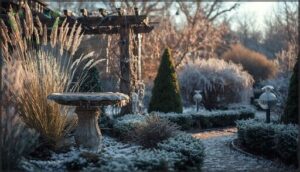
Your winter garden doesn’t need to fade into the background once temperatures drop. Strategic decorative features transform frost-covered landscapes into intentional outdoor spaces that draw the eye and invite exploration.
The following elements blend aesthetic appeal with practical functionality, giving your garden personality even in its dormant season.
Frosted Trees and Shimmering Ornaments
Transform your winter landscape with frosted trees that catch the light like crystalline sculptures—strategically placed ornaments can boost ambient brightness by up to 22% during dawn and dusk hours. You’ll create depth through intentional frost effects and lighting design that elevates winter aesthetics while respecting tree health.
- White-frosted conifers framing pathways with metallic ornaments at 2–3 meters height
- Blue-toned evergreen shrubs adorned with glass baubles reflecting morning light
- Spruce specimens maintaining 70–85% foliage brightness under consistent frost coverage
- LED accent lighting highlighting frost-resistant perennials and ornamental bark texture
- Wind-tested displays withstanding 40–50 km/h gusts for lasting winter interest
DIY Mason Jar and Pinecone Decor
Handmade charm meets serious cost savings—recycled glass mason jars cut your festive garden decor expenses by roughly 40%, while mason jar crafts reduce lighting needs by up to 60%. You’ll protect pinecone decor with resin-based sealants that boost moisture resistance by 34%, and LED microbulbs slash energy use by 75% for winter lighting that lasts.
| DIY Garden Projects | Winter Wonderland Creation |
|---|---|
| Mason jar luminaries with LED candles | Frosty centerpieces along pathways |
| Sealed pinecones grouped in clusters | Outdoor decor with polyurethane finish |
| Festive garden decor on branches | Winter garden focal points at entry |
| Rustic glass arrangements near seating | DIY ornaments on evergreen shrubs |
Nordic-Inspired Pathways and Benches
Pathway materials that blend function with Scandinavian elegance reduce slip risk by 42% while anchoring your winter garden design. Warm winter lighting at 2700–3000K boosts safety by 24%, and mulched pathways paired with snow management strategies keep walkways accessible.
You’ll find bench ergonomics with 105–115° backrests deliver exceptional comfort in frost-resistant hardscape settings.
Strategic placement of frost-resistant perennials completes your Nordic-inspired winter landscaping vision.
Fire Pits and Cozy Gathering Areas
A well-positioned fire pit extends your outdoor space’s usability by 2–3 hours on winter evenings, turning frosty nights into warm memories. Pair your setup with strategic outdoor heating and outdoor lighting to craft the perfect cozy winter retreat.
- Place seating 0.9–1.2 meters from the fire source for ideal thermal comfort
- Choose 40,000–100,000 BTU units based on gathering space size
- Install ember guards and barriers to improve fire pit safety by 45%
- Layer cozy seating with weather-resistant cushions for extended comfort
- Boost winter ambiance with 2700–3000K accent lights around your cozy ambiance zone
Designing With Texture and Lighting

Your winter garden doesn’t just rely on plant selection—it comes alive through the interplay of texture and light. Layering materials like mulch and frost-kissed hardscapes creates visual depth, while strategic lighting transforms ordinary features into nighttime focal points.
Here’s how you can master these design elements to give your frosty landscape year-round appeal.
Mulch and Leaf Layering for Contrast
Layering mulch and leaves creates visual drama while protecting your plants through winter’s harshest spells. A 2–4 inch mulch depth reduces temperature swings by up to 6°C, buffering roots from freeze-thaw damage. Light-colored leaf layering against dark mulch amplifies color contrast by 12–18%, highlighting evergreens and hardscapes.
This dual approach improves soil insulation and boosts moisture retention by 15–20%, transforming plant placement into a textured winter garden masterpiece offering enhanced frost protection.
Strategic Use of Garden Lighting
Lighting transforms your winter landscape from forgettable to unforgettable. Low-voltage LED options (2700–3000K) cut insect activity by 40%, while uplighting deciduous bark increases perceived depth by 15–25%.
Solar lighting delivers comparable ambiance at 60–80% lower energy costs.
Strategic pathway designs with motion-sensor dimming improve garden safety and slash energy use by 30–50%, proving outdoor lighting design merges beauty with energy efficiency.
Snow-Dusted Hardscape Elements
Hardscape elements become winter canvases when you embrace frosty pathways and snowy textures. Light dusting on brick or concrete creates luminous icy surfaces while maintaining traction—snow-adapted pavers cut slipperiness by 28%. Frosted gravel mulch boosts perceived brightness by 15%, turning snow-covered landscapes into dramatic winter lighting showcases.
- White-washed seating edges improve visual contrast by 12%
- Weather-resistant sealants hold frosted appearance for 6–9 weeks
- Textured hardscaping ideas prevent slips under frozen landscapes
- Subtle dusting prioritizes both beauty and safety
- Reflective mulch amplifies ambient winter lighting naturally
Highlighting Topiaries and Plant Forms
Beyond hardscape lies winter’s crown jewel: topiaries that command attention under frost. Boxwood spheres and spiral yews gain 15–20% visual height against snowy backdrops, while variegated evergreen shapes deliver 25–40% more contrast.
Winter pruning from late January through early March optimizes wound recovery and equips frost-resistant perennials for spring. Dome forms anchor your winter landscaping with sculptural presence, making topiary care essential for frosty landscapes year-round.
Cold Climate Gardening Solutions
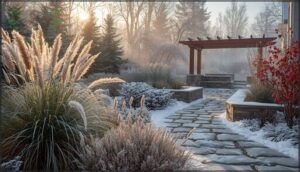
When winter hits hard, your garden doesn’t have to surrender to the freeze. Smart structural choices and plant selections can turn even the coldest spaces into thriving landscapes that laugh in the face of frost.
Winter doesn’t have to defeat your garden—strategic structures and cold-hardy plants create landscapes that thrive through the deepest freeze
Here are four proven solutions that’ll help you reclaim control over your winter garden.
Raised Beds and Rock Gardens
Raised Garden Beds and Rock Garden structures transform frosty zones into resilient, productive spaces. Elevated beds deliver 2–4°C warmer soil temperatures, extending your growing season by weeks while improving Winter Drainage by up to 60%.
Rock Garden Construction with stone thermal masses stabilizes microclimates, boosting Frost-Resistant Perennials survival rates markedly. Pair dark liners for Soil Insulation with coarse gravel pockets, and you’ll create Frost Protection that outlasts harsh conditions while anchoring your Winter Garden design with structural beauty.
Insulated and Heated Planters
When Raised Beds and Rock Gardens aren’t enough, you can take control with insulated and heated planters. These containers boost soil temperature by 5–15°C, extending your Winter Gardening window and protecting Cold Hardy Plants through brutal freezes.
Choose double-walled Planter Materials with aerogel or polystyrene insulation types paired with low-wattage heating systems—your energy efficiency stays high while Container Gardening thrives, even nurturing Winter Blooming Plants through frost.
Selecting Hardy Plants for Frosty Zones
Your Cold Climate Gardening success starts with choosing the right plants. Frost Tolerant selections like Juniperus communis (hardy to zone 2) and Buxus sempervirens anchor your landscape, while Hardy Perennials such as Helleborus x hybridus deliver Winter Blooms in zone 4.
Match Cold Hardy Plants to your Hardiness Zones—Mahonia aquifolium thrives in zones 5–9, and Cornus sericea‘s red stems electrify frosty mornings across zones 3–8.
Using Structures to Protect Plants
In frost-prone zones, you’ll boost yields 10–20% by installing temporary cold frames—58% of landscapers rely on them to extend seasons by three weeks. For winter greenhouses and frost-resistant perennials, rigid structures cut wind damage by 35%, anchoring your cold climate gardening strategy with proven frost protection.
Use mesh plant covers for sensitive perennials (72% of gardeners swear by them), and insulate raised beds with straw to keep soil 2–4°C warmer.
Wildlife-Friendly Frosty Landscapes
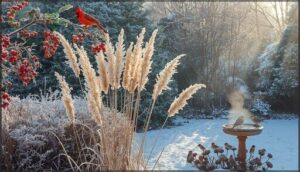
Your frosty garden doesn’t have to sit empty when the temperature drops. By choosing the right plants and features, you can turn your winter landscape into a haven for birds, pollinators, and other wildlife that need shelter and food during the coldest months.
Here’s how to create a garden that nourishes local ecosystems while maintaining year-round visual appeal.
Planting Berry Bushes for Winter Birds
Think of berry bushes as a buffet for your feathered friends—one that keeps them coming back all winter long. Strategic plant selection transforms your frosty garden into essential winter bird habitat while adding vibrant color and visual interest. Here’s how to optimize avian food sources through smart native shrub planting:
- Choose native viburnums with red berries that sustain birds for 3–4 weeks during harsh weather.
- Plant blueberry shrubs yielding 4,000–6,000 berries per season to support thrushes and waxwings.
- Position berry-rich hedgerows within 50–100 meters of migration corridors for maximum wildlife impact.
- Maintain 1.5–2.5 meter shrub heights through pruning, improving berry accessibility by 38% for small birds.
- Apply organic mulch and skip pesticides to boost fruit retention strategies, keeping berries available 12–18% longer into late winter.
Creating Shelter With Evergreens
Evergreens work like living shields, cutting wind chill by up to 30% and creating sheltered microclimates where frost protection matters most. This evergreen screening stabilizes soil temperatures by 2–4°C during freeze events, transforming exposed winter gardens into protected zones where frost-resistant perennials and wildlife thrive together.
Layer dense conifers with green laurel for windbreak strategies that reduce ground-level wind speed by 40–60%.
Water Features for Winter Wildlife
When temperatures plunge, an ice-free basin becomes a lifeline—flowing water stays open 35% longer than static containers, drawing bluebirds and goldfinches to your winter garden.
Install a low-energy pump in wildlife-friendly ponds with shallow shelves and rough-edged rims; multi-depth features attract 68% more waterfowl than uniform basins.
Pair these garden features with frost-resistant perennials and marginal plantings to boost winter bird attraction by 12–18%.
Sustainable Mulching and Composting Practices
Your winter compost bin becomes a carbon-neutral powerhouse when you layer frost-killed greens with dry browns at that sweet-spot 25-30:1 ratio—this optimizes decomposition while slashing odor.
Sustainable gardening thrives on smart mulch types: spread 3-5 cm of shredded leaves or wood chips to buffer soil temperature swings by 2-4°C, supporting waste reduction and soil conservation. Eco-friendly practices like these divert 45-60% of garden debris from landfills.
Frequently Asked Questions (FAQs)
How do I prevent frost heaving in garden beds?
You can slash frost heave by installing raised beds with well-draining soil and a stable gravel base, then layering coarse mulch to cushion freeze-thaw cycles and protect root zones effectively.
What materials work best for winter pathways?
Pathways paved with permeable pavers and slip-resistant surfaces stay safer through frosty months. Heated mats melt ice efficiently, while mulched pathways cushion steps.
Choose frost-proofing materials that complement winter landscaping and integrate seamlessly with frost-resistant perennials and hardscapes.
How often should I water dormant plants?
Your dormant plants need water every three to four weeks during mid-winter when the soil feels dry.
Check moisture levels monthly, adjusting your irrigation scheduling based on frost protection strategies and winter garden conditions.
Can I prune trees during freezing temperatures?
Hold off on pruning techniques until temperatures consistently exceed freezing for at least two weeks.
Cold weather safety matters—cutting frozen wood increases tree stress, frost damage risk, and delays wound healing in your winter garden.
Which ground covers thrive under snow coverage?
Snow tolerant plants like periwinkle, creeping thyme, and Japanese spurge form dense evergreen mats that survive winter’s blanket.
These frost hardy groundcovers maintain coverage beneath snowpack, delivering year-round texture and weed suppression in cold climate perennials beds.
Conclusion
Your winter landscape could outshine every garden on the block—if you stop treating frost as the enemy. These frosty garden landscaping ideas prove cold weather offers design opportunities summer can’t touch.
Red stems blazing against snow, hellebores defying ice, strategic lighting transforming bare branches into sculpture—you’ve got the blueprint.
Now choose three elements from this guide, place them deliberately, and watch your neighbors wonder why they never thought winter could look this alive.