This site is supported by our readers. We may earn a commission, at no cost to you, if you purchase through links.
Most first-time fruit gardeners make the same costly mistake: they plant whatever looks appealing at the nursery without considering their soil composition, sunlight patterns, or regional climate constraints. Three years later, they’re staring at stunted trees that refuse to produce anything beyond a handful of disappointing berries.
The difference between a thriving fruit garden and a frustrating experiment often comes down to thoughtful planning before you ever break ground. Understanding your hardiness zone, testing your soil’s pH levels, and mapping your yard’s microclimates aren’t exciting tasks, but they’re the foundation that determines whether you’ll harvest abundant fruit or watch your investment struggle.
With the right location, compatible varieties, and a realistic maintenance plan, you can design a productive fruit garden that delivers fresh harvests for decades.
Table Of Contents
- Key Takeaways
- Essential Steps for Fruit Garden Planning
- Choosing The Best Location and Soil
- Selecting Fruit Varieties for Success
- Top 5 Fruit Plants for Home Gardens
- Frequently Asked Questions (FAQs)
- How to plan a fruit garden?
- What fruits cannot be planted together?
- What not to plant next to fruit trees?
- What’s the most profitable fruit to grow?
- What fruit trees should be planted together?
- Which is the best method of fruit planting?
- How to organize fruit trees?
- How many fruit trees fit in small backyards?
- When should I start planting fruit trees?
- Whats the best watering schedule for fruit plants?
- Conclusion
Key Takeaways
- You’ll avoid years of frustration by testing your soil’s pH, mapping sunlight patterns for at least 6 hours of direct sun, and understanding your hardiness zone before buying any plants—these foundational steps determine whether your trees thrive or struggle.
- Cross-pollinating varieties like apples and pears need compatible partners within 50-100 feet to produce fruit, while self-pollinating options like peaches and certain strawberries simplify your planning if you’re working with limited space.
- Staggering your fruit varieties by ripening dates—early strawberries in June, mid-season raspberries in July, late apples through October—transforms your garden into a continuous producer rather than a one-time harvest.
- Dwarf fruit trees (8-10 feet) and vertical growing techniques can deliver impressive yields in small spaces, while standard trees reaching 25 feet require careful spacing decisions that account for their mature canopy and root spread.
Essential Steps for Fruit Garden Planning
Before you plant a single seedling, you need a clear roadmap that matches your space, climate, and personal goals. Smart planning now prevents wasted effort and disappointing harvests later.
Let’s walk through the essential steps that’ll set your fruit garden up for years of productive growth.
Defining Your Fruit Garden Goals
What drives your decision to start a home fruit garden? Whether it’s the motivation factors like teaching your kids where food comes from or the health benefits—like a 30% boost in meeting nutrition goals—defining SMART goals sets the foundation.
Are you aiming for fresh produce, social impact through sharing harvests, or measurable project outcomes like pounds harvested? Clarifying your purpose shapes everything from choosing fruit varieties to your fruit garden layout ideas.
To guarantee success, consider creating a detailed garden plan.
Assessing Available Space and Sunlight
Once you’ve clarified your goals, it’s time to map out your space with precision. Most fruit trees need at least 6 hours of direct sunlight daily—morning sun works best for drying leaves and reducing disease. Insufficient light can lead to reduced fruit yield, so proper sun exposure is key.
When choosing the right location, measure carefully: standard apples require 30 feet of spacing, while dwarf varieties thrive in just 10. Vertical gardening and microclimates enable space optimization in tight spots.
Creating a Year-Round Harvest Calendar
Thoughtful crop selection turns your garden into a year-round producer. Planning fruit garden harvests means choosing varieties with staggered ripening dates—early strawberries in June, followed by raspberries in July, then apples through October. Succession planting maximizes space: harvest potatoes in June, then plant late-season squash in the same bed. Regional adaptation matters too:
- Michigan peaks with August apples and blueberries
- California delivers May-to-August strawberries and grapes
- Florida provides citrus from April through July
Monthly distribution planning and garden maintenance practices make certain you’re picking fresh fruit from spring through fall.
Planning for Pollination and Mature Tree Size
Beyond timing your harvests, you need to think about pollination strategies and how big your trees will actually get. Apples, pears, and sweet cherries won’t fruit without cross-pollination from different varieties blooming simultaneously.
Meanwhile, dwarf trees max out at 8 to 10 feet, while standard apples hit 25 feet—proper tree spacing and canopy management directly affect yield optimization and your ability to harvest comfortably.
Choosing The Best Location and Soil
Your fruit garden’s success starts with two fundamental decisions: where you place it and what kind of soil you provide. Getting these basics right from the beginning saves you from years of disappointment and unnecessary troubleshooting.
Let’s look at the key factors you need to evaluate before you plant a single seed or sapling.
Evaluating Sun Exposure and Drainage
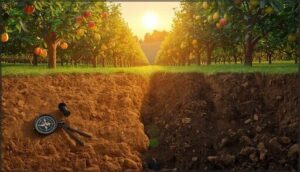
Sunlight mapping helps you identify zones receiving the essential 6–8 hours of direct sun that fruit trees need. South-facing sites capture the most light, while north-facing areas may limit your harvest potential.
Drainage solutions matter just as much—fruit trees in sandy loam with balanced moisture retention can yield 27% more than those planted in heavy clay. Poor soil conditions invite root diseases, so choosing the right location means evaluating both microclimate impact and root health from the start.
Sandy loam with balanced drainage can boost fruit tree yields by 27% compared to heavy clay, which invites root disease
Avoiding Frost Pockets and Low-Lying Areas

Cold air drainage turns low-lying areas into frost pockets, where temperatures can drop 2–4°F below nearby slopes. This microclimate shift threatens your fruit trees, especially during bloom—even 28°F can cost you 10% of buds.
Smart site selection means choosing gentle slopes with good air movement, avoiding depressions where cold air pools, and considering frost-resistant varieties matched to your local climate zone.
Maximizing Small Spaces With Vertical or Raised Beds
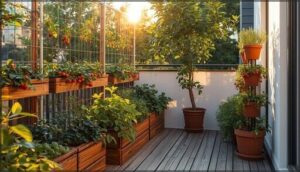
Limited space doesn’t mean limited harvests. Vertical fruit gardening and raised beds deliver impressive yields—some systems produce 50–100 times more per square foot than traditional plots. Better air circulation means stronger disease control, while drip irrigation cuts water use by half.
Container fruit gardening transforms balconies into productive spaces, and urban adoption is climbing 12% yearly as gardeners discover espalier techniques fully utilize every inch.
Selecting Fruit Varieties for Success
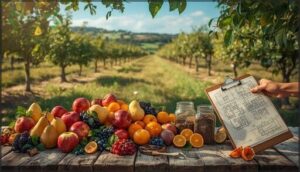
Once you’ve chosen the right spot and prepped your soil, the next big decision is what to actually plant. Not every fruit thrives everywhere, and picking varieties that match your climate, maintenance style, and pollination setup can make or break your harvest.
Let’s walk through the key factors that’ll help you choose fruit plants with confidence.
Researching Local Climate and Hardiness Zones
Understanding local climate zones is your roadmap to fruit garden success. The USDA Hardiness Zone Maps divide regions by average winter lows, helping you choose cold-hardy fruits that’ll thrive. Don’t overlook microclimate considerations—your south-facing slope might be warmer than expected.
Frost date impact and chill hour needs also matter; insufficient winter chilling below 7°C can delay flowering. Climate change effects are shifting these patterns, so check the latest 2023 updates for your area.
Mixing Easy-to-Grow, Heirloom, and Drought-Tolerant Fruits
Balancing your fruit varieties is like building a well-rounded portfolio. Mix easy-to-grow strawberries with nutrient-rich heirloom tomatoes and drought-tolerant jujubes for climate resilience. This approach boosts genetic diversity by up to 35% while hedging your harvest bets:
- Hybrids deliver 30–40% higher yields with enhanced disease resistance
- Heirlooms offer 10–20% more nutrients and complex flavor profiles
- Drought-tolerant varieties maintain production with 50–70% less water
- Combining types ensures consistent harvests across climate zones
Understanding Pollination Needs (Self-Fertile Vs. Cross-Pollinating)
Think of pollination as your garden’s matchmaking system. Self-pollinating fruit trees like peaches and nectarines handle fruit set solo, while cross-pollinating varieties—apples, pears, sweet cherries—need compatible partners within 100 feet.
Here’s the payoff: cross-pollination can boost yields by 30–40%, even in self-fertile types. Plant pollinator attractants nearby to increase bee activity by 25%, ensuring variety compatibility drives your harvest success.
Planning for Disease Resistance and Maintenance
Beyond pollination, disease resistance determines how much time you’ll spend fighting problems versus harvesting fruit. Resistant cultivars like moderately resistant strawberries can slash disease rates from 60% to just 5%, transforming your garden journal from a troubleshooting diary into a harvest log.
Smart planning now means less intervention later:
- Choose disease-resistant fruit varieties to cut fungicide needs by 75%
- Plan pruning practices for February—remove only one-third of new growth annually
- Schedule mulch application twice yearly (February and December) at three inches deep
- Design irrigation needs around deep, infrequent watering that encourages strong roots
Your soil and maintenance strategy work together, protecting your investment season after season.
Top 5 Fruit Plants for Home Gardens
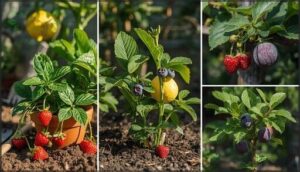
After you’ve nailed down your garden’s location and soil conditions, it’s time to choose plants that’ll actually thrive in your space. The five varieties below have earned their reputation among home gardeners for delivering reliable harvests without demanding expert-level care.
Each brings something different to the table, whether you’re working with a small patio or a sprawling backyard.
1. Fort Laramie Everbearing Strawberry Plants
If you’re just starting out, strawberries make an ideal first fruit—and the Fort Laramie everbearing variety delivers impressive climate hardiness across zones 3 through 7. Self-pollinating and ready to fruit within 60 to 90 days, this cultivar simplifies pollination needs while rewarding consistent care.
You’ll enjoy multiple harvests from late spring through fall, with each plant yielding around 1.5 pounds of honey-sweet berries annually.
Space plants 12 to 15 inches apart in well-draining, slightly acidic soil, and remove runners regularly to channel energy toward fruit production and maintain disease resistance.
Best For: Home gardeners in cold climates (zones 3–7) who want a reliable, self-pollinating strawberry that produces fruit quickly and continues harvesting from late spring through fall.
- Exceptional cold-hardiness makes it one of the few everbearing varieties that thrives in zones 3–7, surviving harsh winters with proper care.
- Fast fruiting timeline of 60–90 days from planting means you’ll enjoy honey-sweet berries in your first season.
- Self-pollinating and produces multiple harvests per year, delivering around 1.5 pounds of fruit per plant without needing companion plants.
- Requires diligent runner removal to maintain fruit size and prevent fungal issues from overcrowding.
- Not resistant to common soil-borne diseases like Verticillium or Fusarium wilt, so you’ll need to focus on preventive care and proper spacing.
- Some customers report inconsistent shipping quality and limited support for resolving plant condition issues upon arrival.
2. Bing Cherry Tree Live Fruit Tree
For a more ambitious project, Bing cherry trees offer impressive yields—50 to 100 pounds annually once mature—but they demand careful planning. You’ll need well-drained loamy soil with a pH between 6 and 7, plus a compatible pollinator like ‘Rainier’ or ‘Stella’ planted within 50 feet, since Bings can’t self-fertilize.
Maintain a watering schedule of 1 inch weekly during the growing season, and watch for bacterial canker through regular monitoring.
Harvest when cherries reach a uniform deep red, keeping stems attached to extend shelf life by 25 percent.
Best For: Patient gardeners with space for multiple trees who want substantial harvests and don’t mind managing pollination requirements and disease monitoring.
- Mature trees produce 50-100 pounds of cherries annually—enough for fresh eating, freezing, and preserving.
- Cold-hardy and adaptable to USDA zones 5-8, making them viable in many climates with proper sun exposure.
- Cherries harvested with stems last up to 14 days in cold storage, giving you flexibility after harvest.
- Requires a compatible pollinator tree within 50 feet, so you’ll need room for at least two trees to get fruit.
- Vulnerable to bacterial canker and needs regular monitoring plus integrated pest management to avoid yield losses.
- Shipping restrictions prevent delivery to AZ, CA, ID, OR, WA, and CO due to federal regulations.
3. Caroline Raspberry Plant Everbearing Red Berries
If you’re looking for outstanding berry flavor profile paired with disease resistance, Caroline raspberries deserve a spot in your garden. These everbearing fruit varieties thrive in USDA zones 4-8, producing two crops annually—light yields in late June, then plentiful harvests from late August through September.
You’ll appreciate the nutritional benefits: each berry contains up to 80 mg of antioxidants per 100 grams. Apply 2 inches of organic mulch around your planting area, maintain consistent soil moisture, and expect 1.5 to 2.5 pounds per plant. Their market value reflects excellent firmness and extended harvest windows.
Best For: Home gardeners in zones 4-8 who want two raspberry harvests per year with minimal disease problems and don’t mind dealing with thorny canes during pruning.
- You get two crops annually—a light summer harvest in June plus a heavy fall crop from late August through September, giving you fresh berries for up to 8 weeks.
- These plants resist root rot and rust better than most varieties, which means less headache and fewer crop losses in humid climates.
- The berries stay firm after picking and pack serious nutrition with 80 mg of antioxidants per 100 grams, plus they’re large at 4-5 grams each.
- The canes are thorny despite some sellers advertising them as thornless, so you’ll need gloves for pruning and harvesting.
- Plants spread aggressively through underground suckers, requiring regular root pruning to keep them contained.
- Some buyers report poor survival rates and slower growth than expected, especially in extreme heat or subpar soil conditions.
4. Katy Apricot Tree Two Years
When you plant a Katy Apricot, you’re investing in early rewards. This self-pollinating variety reaches 8 to 12 feet by its second year and often yields 10 to 20 golden-orange apricots by late May—two weeks ahead of most fruit trees.
Success depends on full sun, well-drained soil preparation, and 300 to 400 chill hours, making it ideal for USDA zones 6 through 9.
Regular planting care—deep watering, spring fertilizer, and late-winter pruning—keeps your tree productive while minimizing pest considerations like bacterial canker.
Best For: Home gardeners in USDA zones 6–9 who want early-harvest fruit without needing multiple trees for pollination.
- Produces fruit by year two, with 10–20 apricots ripening in late May—earlier than most varieties.
- Self-pollinating and low-chill (300–400 hours), making it easier to grow in warmer climates.
- Compact semi-dwarf size (8–12 feet) fits smaller yards while still delivering reliable yields.
- Early blooms are vulnerable to late spring frosts, which can wipe out the season’s fruit.
- Requires consistent watering and well-drained soil to avoid root rot and other moisture issues.
- Susceptible to bacterial canker and brown rot in humid or wet conditions without preventative care.
5. Dwarf Everbearing Black Mulberry Tree Plant
The Dwarf Everbearing Black Mulberry fits where traditional fruit trees won’t. At 2 to 6 feet in containers—or 8 to 15 feet in ground plantings—this self-fertile variety thrives in zones 5 through 11, handling temperatures down to -10°F.
Dwarf Mulberry Care involves loamy, well-drained soil with pH 5.5 to 6.5, plus 6 to 8 hours of sunlight for best Fruit Production Tips.
Expect 15 to 25 pounds of sweet berries annually from May through September. Climate Considerations and natural Pest Resistance make this one of the most forgiving everbearing dwarf fruit trees you’ll grow.
Best For: Gardeners with limited space who want fresh fruit without the hassle of a full-sized tree—whether you’re working with a small yard, patio containers, or even an indoor setup.
- Produces 15 to 25 pounds of sweet mulberries each year from May to September, so you get a long harvest window without needing multiple trees.
- Handles cold down to -10°F and thrives in zones 5-11, plus it’s self-fertile, meaning you don’t need a second plant for pollination.
- Low-maintenance and pest-resistant, with minimal pruning needed to keep it at your preferred height.
- Some buyers receive smaller starter plants than they expected, so initial growth may take patience.
- Needs well-drained soil and consistent watering during the growing season—waterlogged conditions will damage roots.
- Regular pruning is necessary if you want to keep it compact, especially in areas with height restrictions.
Frequently Asked Questions (FAQs)
How to plan a fruit garden?
Success starts with defining garden goals, then evaluating space, sunlight, and soil.
Create a harvest calendar while accounting for pollination needs and mature tree size to guarantee a thriving, productive garden year-round.
What fruits cannot be planted together?
Certain fruit varieties shouldn’t share space due to allelopathic effects, nutrient competition, shared pests, pollination issues, or root dynamics. Black walnuts poison apples, while cherries and tomatoes compete heavily, reducing yields by over 30%.
What not to plant next to fruit trees?
Avoid black walnut trees, which release juglone toxins causing allelopathic effects. Eastern red cedar spreads disease vectors like rust, while dense grass creates resource competition.
These companions invite pests, diseases, and light deprivation around your fruit trees.
What’s the most profitable fruit to grow?
Regarding reaping what you sow, saffron profitability leads at $100,000 per acre. Avocado market demand and strawberry yields also shine, though climate, soil, and harvest timing determine which fruit varieties best increase your returns.
What fruit trees should be planted together?
You’ll want to group fruit trees by cross-pollination needs and bloom times. Plant apples with compatible varieties within 50–100 feet, pair pears together, and add pollinator companion plants like clover to boost yields naturally.
Which is the best method of fruit planting?
Drip irrigation stands out as the most efficient planting method, optimizing water delivery to roots and improving establishment.
For tighter spaces, backyard orchard culture—planting multiple fruit trees together—enhances cross-pollination and extends your harvest window naturally.
How to organize fruit trees?
Organize fruit trees using spacing strategies that account for rootstock selection and mature size.
Plan your garden layout to improve sunlight interception, group cross-pollinating varieties together, and apply proper pruning techniques for best production.
How many fruit trees fit in small backyards?
A typical small backyard (400–600 square feet) accommodates three to six dwarf fruit trees with proper spacing.
Full-sized trees may only fit one or two due to extensive canopy and root spread requirements.
When should I start planting fruit trees?
Strike while dormancy’s still present: plant bare root fruit trees between February and early May in most regions.
This prime season, influenced by your regional climate, maximizes survival rates through proper soil preparation before choosing fruit varieties.
Whats the best watering schedule for fruit plants?
Water deeply every 2 to 3 weeks, targeting root zones with drip irrigation for efficiency. Adjust for seasonal needs, soil type, and critical growth phases like fruit swell.
Monitor soil moisture to improve watering techniques.
Conclusion
You can’t put the cart before the horse when establishing a productive fruit garden. Your fruit garden planning tips start with understanding your unique site conditions—soil drainage, sunlight hours, and hardiness zone—before choosing varieties.
Once you’ve matched plants to place, you’re building a foundation that rewards patience with decades of fresh harvests. Skip the groundwork, and you’ll spend years fighting battles that proper planning would’ve prevented entirely.
- https://yardandgarden.extension.iastate.edu/how-to/pollination-requirements-tree-and-small-fruits
- https://extension.illinois.edu/small-fruits/growing-backyard-fruits
- https://www.underthechokotree.com/fruit/30-growing/380-strategies-for-a-productive-small-fruit-garden
- https://extension.usu.edu/agwastemanagement/files/Utah_Fertilizer_Guide.pdf
- https://extension.psu.edu/beginning-grower-planning-and-planting-an-orchard/