This site is supported by our readers. We may earn a commission, at no cost to you, if you purchase through links.
Most plants can handle heat better than their gardeners can. By the time you notice something’s wrong—whether it’s wilting leaves or a pounding headache—you’re already behind.
Gardening in hot weather isn’t impossible, but it does demand a different approach than your usual spring routine. The soil dries faster, the sun hits harder, and mistakes that were forgiving in April can cost you a whole bed of vegetables by July.
A few smart adjustments to your timing, watering habits, and plant care can keep both you and your garden in good shape all summer.
Table Of Contents
- Key Takeaways
- Essential Safety Tips for Hot Weather Gardening
- Effective Watering Strategies in Extreme Heat
- Protecting Plants From Intense Sun and Heat
- Mulching and Soil Management for Hot Climates
- Choosing and Caring for Heat-Tolerant Plants
- Frequently Asked Questions (FAQs)
- What temperature is too hot for a garden?
- Should I water my garden every day in 100 degree weather?
- How to garden when it’s hot?
- How do different fertilizer types affect heat tolerance?
- Which containers work best in extreme temperatures?
- How does humidity impact hot weather gardening?
- What are signs of heat damage recovery?
- When should you replace heat-stressed plants?
- How do I revive heat-stressed plants?
- Can container gardens survive extreme heat?
- Conclusion
Key Takeaways
- Water deeply and less often — pushing moisture 6 to 12 inches down builds stronger roots and beats daily sprinkles every time.
- Time your garden work before 9 a.m. and skip the 11 a.m. to 2 p.m. window, because that midday heat isn’t just uncomfortable, it’s dangerous for you and your plants.
- A 2 to 4 inch layer of organic mulch is one of the easiest wins you can give your garden — it cools the soil, locks in moisture, and keeps stress low all summer.
- When a heat wave hits, cut fertilizer in half, hold off on heavy pruning, and let heat-tolerant plants like okra, rosemary, and lantana do the heavy lifting.
Essential Safety Tips for Hot Weather Gardening
Hot weather gardening doesn’t have to feel like a battle you’re losing.
A few smart adjustments can keep your plants thriving all season, and these hot summer gardening tips and solutions show you exactly where to start.
A few simple habits can make a real difference in how you feel out there.
Here’s what you need to know before you pick up that trowel.
Hydration and Dehydration Prevention
Dehydration sneaks up on you fast in the summer heat. One minute you’re fine, the next you’re dizzy and dragging. Smart fluid intake is your first line of defense.
Here’s how to stay ahead of heat stress:
- Drink 1 cup of water every 15–20 minutes
- Start hydrating before you head outside
- Watch for dehydration signs: dry mouth, dark urine, sudden fatigue
- Sip electrolyte drinks to maintain electrolyte balance during long sessions
- Skip caffeine and alcohol — they work against you
Heat acclimation takes time, but consistent hydration keeps your body temperature in check and heat exhaustion at bay. For more details, see these sun protection and hydration tips. Dehydration prevention for gardeners starts before you even grab your trowel.
Sun Protection and Heat-Appropriate Clothing
Staying hydrated matters, but what you wear matters just as much. The right gear is your armor against heat stress.
| Clothing Item | Why It Helps |
|---|---|
| UPF Clothing | Blocks up to 98% of UV rays |
| Gardening Hats | Shields face, neck, and ears |
| Breathable Fabrics | Linen wicks sweat faster than cotton |
Apply sunscreen 30 minutes before heading out. Light colors reflect heat. Heat-resistant layers keep you cooler, longer. For detailed information on, make sure your clothing is truly protecting you from harmful UV exposure.
Safe Timing for Outdoor Gardening Tasks
Gear sorted? Good. Now let’s talk timing — because when you garden matters as much as how.
- Step outside before 9 a.m. for Morning Work Schedules; heat climbs fast after that
- Skip the 11 a.m.–2 p.m. window — peak danger for Heat Exhaustion
- Use Weather Forecasting apps for Heat Index Monitoring before you even lace your boots
- Practice Task Prioritization: heavy digging early, light weeding in Evening Gardening Tips hours
- On extreme days, Heat Protection Measures mean postponing all but emergency watering
Effective Watering Strategies in Extreme Heat
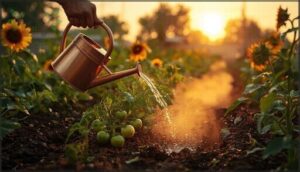
Watering your garden in extreme heat isn’t just about keeping plants alive — it’s about watering smart.
Following a summer vegetable garden watering schedule takes the guesswork out of keeping roots cool and plants thriving when temperatures spike.
Too much at the wrong time can do as much damage as too little.
Here’s what actually works when temperatures spike.
Deep and Infrequent Watering Methods
Think of watering like feeding — a little every day doesn’t cut it. Your plants build real drought tolerance when you water deeply and less often, pushing moisture 6 to 12 inches down.
That kind of water penetration drives root development deep into cooler soil, where it matters most. Smart irrigation scheduling — once or twice a week, thoroughly — beats daily sprinkles for heat stress and water conservation.
Best Times of Day to Water Plants
In the context of gardening in hot weather, timing your watering schedules is half the battle. Morning watering — ideally between 5 and 9 a.m. — is your best weapon for water conservation and drought management. Cooler soil temperature means less evaporation, and your plants soak up moisture before the heat wave hits.
Water before 9 a.m. — cooler soil drinks deeper, and your plants win the day before the heat begins
- Water before 9 a.m. for maximum soil moisture retention
- Evening hydration works if morning’s not possible — aim for early evening
- Avoid midday watering; evaporation spikes and roots stay dry
- Adjust frequency during a heat wave — daily may be necessary
- Direct water to soil, not leaves, to reduce disease risk
Drip Irrigation and Spot Watering Techniques
For real drought management, drip irrigation changes everything. Instead of flooding the surface, you’re delivering water right where roots drink it up — slowly, efficiently, no waste.
| Spot Watering Tools | Best Use |
|---|---|
| Button emitters | Individual plants |
| Inline emitter tubing | Vegetable rows |
| Soaker hose rings | Shrubs and trees |
| Drip stakes | Container plants |
| Terra cotta spikes | Patio pots |
Smart emitter selection and water pressure management — keep it between 10 and 30 psi — guarantee your drip system design delivers consistent soil moisture without blowing fittings.
Pairing proper pressure with smart seasonal garden timing tips helps you avoid common mistakes that stress plants and waste water.
Monitoring and Maintaining Soil Moisture
Knowing when to water matters more than how much. Soil moisture sensors take the guesswork out of hot-weather watering practices — and they’re worth it.
- Check moisture 6–8 inches deep before watering.
- Keep volumetric readings between 20–40% for soil health.
- Log watering dates to sharpen your irrigation scheduling.
Smart water retention methods and moisture level indicators protect soil temperature management and stretch every drop.
Protecting Plants From Intense Sun and Heat
Your plants feel the heat just as much as you do — maybe more. When temperatures climb, a little shade and shelter can mean the difference between a thriving garden and a crispy one.
Here are some practical ways to protect your plants when the sun turns up the pressure.
Using Shade Cloth and Garden Structures
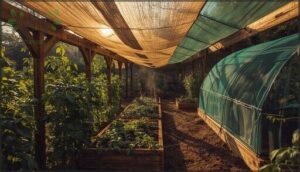
Shade cloth is one of the simplest gardening tips you’ll ever use. A 30–50% shade fabric blocks enough sun to cool soil and leaves without starving plants of light — shade cloth benefits don’t get more practical than that.
Pair it with a pergola or hoop-house garden structure, and you’ve got an outdoor canopy that doubles as a cooling system. Gardening in hot weather just got easier.
Providing Afternoon Shade for Sensitive Plants
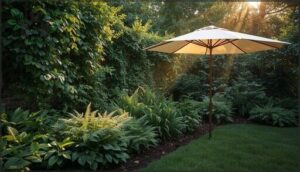
Afternoon sun doesn’t forgive — and your sensitive plants know it. Smart plant placement is your first line of defense. Garden orientation matters more than most gardeners think, so use these shade strategies to protect delicate leaves during peak heat:
- Tuck ferns and hostas along north-facing edges
- Layer taller shrubs for natural canopy creation
- Position shade materials like umbrellas on the west side
That’s summer gardening working smarter.
Managing Container Plants in Hot Weather
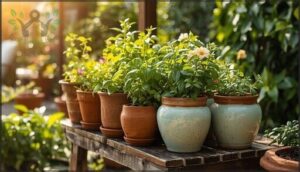
Container placement changes everything for container plants in hot weather. Dark pots sitting on concrete act like skillets — roots inside can hit dangerous temperatures fast.
Switch to glazed ceramic or light-colored containers, set them on risers, and group pots together to slow evaporation. A quality potting mix with compost or coir helps with water conservation and root protection all summer long.
Windbreaks and Microclimate Adjustment
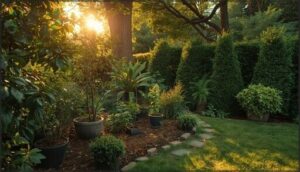
Pots sorted? Good. Now think bigger — your whole garden’s microclimate matters too. A well-placed windbreak cuts wind speed by 30–50%, which means less moisture stripped from your soil and leaves.
For solid windbreak design, try this:
- Plant hedges at a right angle to hot prevailing winds
- Aim for 40–60% porosity for climate moderation without turbulence
- Position tall trees on the west edge for afternoon shade provision
- Use layered heights for maximum heat protection in extreme weather
Mulching and Soil Management for Hot Climates
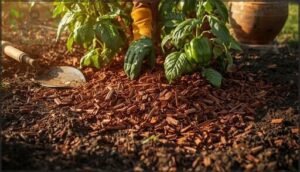
Hot soil is one of the sneakiest ways a summer garden falls apart.
The good news is that what you put on and in your soil can change everything. Here’s what actually works when the heat won’t let up.
Choosing The Right Organic Mulch
Not all mulch is created equal — and in hot weather, your choice matters more than you’d think. The right organic matter shields roots, steadies soil temperature, and keeps your garden working even when the sun is punishing.
Here’s a quick breakdown of organic options worth knowing:
| Mulch Material | Best For | Climate Considerations |
|---|---|---|
| Wood Chips | Trees & shrubs | Hot, dry gardens |
| Straw | Vegetable beds | Humid or dry summers |
| Lucerne | Heavy-feeding crops | High-heat regions |
Smart garden mulching starts with matching material to your soil and conditions.
Mulch Application for Moisture Retention
Once you’ve picked your mulch materials, applying them correctly is what actually controls evaporation. Aim for a 2 to 4 inch depth — thin layers dry out fast, and anything over 4 inches sheds water instead of soaking it in.
For moisture retention and soil temperature control, keep mulch a few inches from plant stems. Good mulch application is your best drought management tool for gardening in hot weather.
Compost and Soil Amendments in Summer
Good mulch sets the stage, but compost really feeds the system underneath. Spread a 1 to 2 inch layer of finished compost across your beds and lightly work it into the top few inches. This fosters soil biology, buffers soil temperature swings, and keeps stressed plants steadier through brutal heat.
- Repeat compost application every 4 to 6 weeks in vegetable beds
- Use finished, stable compost — raw manures can burn roots in summer heat
- Keep compost a few inches from stems to protect soil health near the base
Adjusting Fertilization During Heatwaves
Fertilizer Reduction isn’t optional during a heat wave — it’s survival logic. Cut your usual dose in half, and skip fertilizing anything wilted or scorched.
Heatwave Feeding works best in the early morning, when soil moisture is stable and roots aren’t already stressed. Skip foliar sprays above 85°F. Organic fertilizers like seaweed extract are your safest bet — gentle, effective, and far less likely to burn.
Choosing and Caring for Heat-Tolerant Plants
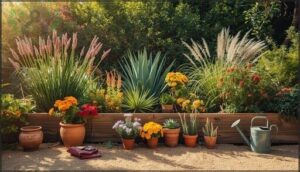
Not every plant is built to tough it out when the heat cranks up, but the right ones can make summer gardening so much easier.
Knowing which plants to grow, how to space and care for them, and what mistakes to dodge will save you a lot of heartbreak. Here’s what you need to know.
Best Heat-Resistant Vegetables, Herbs, and Flowers
Choosing the right plants is half the battle in hot climates. Okra, sweet corn, and eggplant are heat resistant crops that won’t quit on you — okra keeps setting pods past 100°F with decent soil moisture.
For drought tolerant plants, try rosemary, thyme, or oregano. Lantana and portulaca handle flower heat tolerance like champs, blooming all summer without much fuss.
Proper Plant Spacing for Air Circulation
Spacing is one of the simplest heat mitigation tools you’ve got. Tight plant density traps humid air and invites disease — bad news when heat stress is already wearing your garden down.
For summer gardening advice, think breathable row spacing: tomatoes need 18 to 24 inches between plants, peppers around 12 to 18. Good garden layout means air circulation stays strong all season.
Pruning and Maintenance in High Temperatures
Pruning during a heatwave is like surgery on a patient who’s already running a fever — risky timing. Keep summer trimming light: deadhead spent blooms, snip dead branches, skip the heavy reshaping.
Smart heat stress management means scheduling any cuts for early morning. Always practice pruner sanitation with a hydrogen peroxide wipe to protect heat-stressed plants. Less really is more here.
Mistakes to Avoid With Heat-Sensitive Varieties
Heat-sensitive plants don’t forgive easily — one bad call and they’re done. Overwatering risks root rot fast above 85°F, and fertilizer errors burn roots when soil temperature spikes.
Transplant timing matters too: midday moves kill half your seedlings. Plant crowding traps heat and invites disease. During heat wave management, give plants room, hold the fertilizer, and water deep — not often.
Frequently Asked Questions (FAQs)
What temperature is too hot for a garden?
Once temperatures consistently climb above 90°F, both your plants and your body start struggling. That’s the real tipping point for heat stress thresholds — where temperature tolerance drops and gardening in extreme weather becomes genuinely risky.
Should I water my garden every day in 100 degree weather?
Not every garden needs daily water, even at 100 degrees. Check soil moisture an inch or two down first. If it’s still damp, skip it. Your plants will thank you.
How to garden when it’s hot?
Gardening in the heat index takes strategy. Check the heat index before heading out, postpone heavy tasks, and prioritize watering early.
Smart task prioritization and personal cooling habits keep both you and your plants thriving.
How do different fertilizer types affect heat tolerance?
Fertilizing during heat stress isn’t just about feeding — it’s about timing and type.
High nitrogen pushes soft growth that wilts fast.
Potassium benefits stomatal control, boosting drought tolerance when it matters most.
Which containers work best in extreme temperatures?
Not all pots are created equal. For container plants in extreme weather, thick ceramic or double walled insulated pots with reservoir systems regulate heat best, using thermal mass to protect roots from deadly temperature spikes.
How does humidity impact hot weather gardening?
Humidity quietly stacks the deck against you. It pushes the heat index higher, slows your sweat, and keeps soil wet longer — so check moisture before watering, or root rot wins.
What are signs of heat damage recovery?
Watch for new leaf growth at branch tips within one to three weeks.
Leaves perking up by evening, instead of staying limp, is a strong wilting recovery sign your plant survived heat stress.
When should you replace heat-stressed plants?
Replace heat-stressed plants when stems snap dry, leaves are fully brown to newest growth, or no new buds appear after 10–14 days of cooler temps and consistent watering.
Some plants just won’t come back.
How do I revive heat-stressed plants?
Even one brutal afternoon can push a plant to its breaking point.
For heat stress recovery, move it to shade, water deeply at the base, and trim scorched leaves to jumpstart root revival.
Can container gardens survive extreme heat?
Yes, container gardens can survive extreme heat — but they need extra attention.
Soil temperature in pots can spike fast, so smart container design, the right potting mixes, and consistent water conservation habits make all the difference.
Conclusion
Summer heat is a test, not a sentence. Gardening in hot weather just means playing by different rules—ones that actually put you in control.
Water deeply, mulch well, shade what needs shading, and step outside when the sun gives you room to breathe. Small habits stack up fast.
Your garden doesn’t need perfect conditions to thrive. It needs a gardener who knows how to adapt. That’s you now.
- https://www.homesandgardens.com/gardens/watering-plants-in-hot-weather
- https://gardeninminutes.com/blogs/easy-growing/managing-excessive-heat
- https://gardenprofessors.com/university-of-florida-study-mulch-reduces-soil-water-loss-to-evaporation-by-33/
- https://extension.psu.edu/heat-proofing-your-vegetable-garden/
- https://joegardener.com/video/protect-crops-hot-weather/