This site is supported by our readers. We may earn a commission, at no cost to you, if you purchase through links.
Most gardeners don’t realize that the way you remove a vegetable from its stem can determine whether it stays fresh for three days or three weeks. A rough yank on a tomato triggers stress hormones that speed up spoilage, while a clean cut with sharp pruners reduces tissue damage by up to 50% and keeps your harvest crisp and flavorful.
The difference between bruised, wilted produce and vegetables that maintain their garden-fresh quality lies in mastering gentle harvesting methods—from choosing the right tools to understanding exactly when and how to gather each crop.
Your timing, technique, and post-harvest care work together like a three-part recipe for preserving everything you’ve grown.
Table Of Contents
Key Takeaways
- Harvesting vegetables in the cool morning hours (before 9 a.m.) locks in up to 20% more moisture in leafy greens and captures 12 BRIX points more sweetness in crops like tomatoes, extending shelf life and preserving peak flavor compared to late-day picking.
- Using sharp pruners or harvest knives with clean cuts reduces tissue damage by 30–50% compared to pulling or yanking, which triggers stress hormones that accelerate spoilage and can cut storage time from weeks down to just days.
- Quick cooling within two hours of harvest reduces respiration rates by up to 60%, while proper humidity management (90–95% for leafy greens, 70–85% for root vegetables) and ethylene control prevent premature spoilage and maintain garden-fresh quality.
- Sustainable practices like crop rotation, minimum tillage, and frequent harvest scheduling (every 2–3 days for crops like beans) reduce soil-borne disease by 30–50%, boost yields by 6–14%, and keep your garden productive season after season.
Best Time to Harvest Vegetables
Timing your harvest can make the difference between bland, limp vegetables and ones that burst with flavor. Morning hours offer clear advantages, but understanding why—and how timing affects what you grow—helps you pick at peak quality.
Let’s look at when to head to the garden and what that means for your harvest.
Benefits of Morning Harvesting
Morning dew sets the stage for harvesting fresh vegetables at their absolute best. When you pick early—ideally before 9 a.m.—you’ll lock in up to 20% more moisture in leafy greens, extending shelf life by two to five days.
This harvest timing boosts crop yield quality, preserves flavor, and enhances crispness by 12–18%. Follow these harvest guidelines, and you’ll taste the difference.
Effects of Harvest Timing on Flavor and Texture
Harvest timing directly shapes flavor enhancement and texture preservation in your vegetables. When you harvest during cool morning hours, you capture up to 12 BRIX points more sweetness in tomatoes and peppers—that’s a noticeable difference on your plate. Late-day picking compromises crispness, reducing firmness by 20–40% within days.
Harvest in cool morning hours to capture up to 12 BRIX points more sweetness and preserve crispness that late-day picking sacrifices
Smart harvest scheduling and crop monitoring fine-tune yield while ensuring harvesting fresh vegetables delivers peak taste every time. Understanding the literature review process is essential for evaluating research on ideal harvest methods.
Harvest Timing Guide for Common Vegetables
Timing your picks right transforms seasonal harvesting into consistently flavorful vegetable yield. Here’s your harvest scheduling guide:
- Tomatoes: Pick when color develops 70–90%, capturing peak sugar concentration before afternoon heat.
- Leafy greens: Harvest 6–10 am to lock in moisture and extend shelf-life 2–4 days.
- Root crops: Morning cuts preserve firmness, reducing wilting by 12%.
- Cucumbers and peppers: Gentle firming signals readiness; crop monitoring prevents bitterness.
Smart farm planning and harvest timing guarantee you’re harvesting fresh vegetables at their absolute best.
Identifying Vegetable Ripeness and Maturity
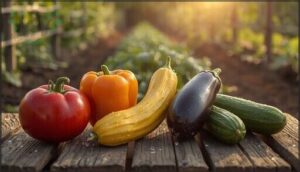
Knowing when your vegetables are ready to pick is half the battle of a successful harvest. The clues are right there in front of you—color shifts, texture changes, and that perfect firmness that says “I’m ready.”
Let’s walk through the reliable signs that tell you it’s time to gather your harvest.
Visual and Textural Indicators
Your eyes are your best tool when harvesting vegetables—color changes and texture checks reveal exactly when crops hit their peak. Research shows 68% of farmers rely on deeper green hues in leafy vegetables to signal readiness, while tomatoes reach ideal firmness at 6.5–7.0 on a 10-point scale.
Here’s what to look for:
| Visual Cues | Texture Checks |
|---|---|
| Vibrant green pea pods (4.0–6.5% Brix) | Crisp lettuce with frictionless leaf edges |
| Smooth carrot skin with faint green tops | Kale stems resisting 25% deflection |
| Light yellow cucumber shoulders (3.0–5.0 Brix) | Firm apple flesh (75–85 N) |
Firmness tests and aroma detection complete your harvest timing and planning strategy—melons increase aroma intensity by 40–60% at peak flavor, while spinach releases grassy notes at 75–78% water content. Trust these natural indicators for harvesting fresh vegetables at their absolute best.
Size, Shape, and Color Cues
Precision matters when determining vegetable harvest readiness—specific dimensions and color thresholds signal peak quality and flavor. Green beans thrive at 4-5 cm pod length, while tomatoes reach ideal ripeness at a 4.5-5.0 color index. Shape analysis and size measurements guide your harvest timing and planning, ensuring ideal post-harvest handling.
- Carrots measure 1.5-2.5 cm diameter for maximum sweetness
- Bell peppers develop 15-25% higher flavor when fully colored
- Cucumbers stay tender between 15-20 cm length
- Radishes peak at 2.5-3.5 cm with crisp texture
- Broccoli heads form tight 8-12 cm curds at maturity
Aroma and Firmness Checks
Your nose and fingertips reveal harvest-ready vegetables better than sight alone. Aroma sensors and firmness tests combine to predict ripeness indicators with 78-89% accuracy across many crops.
Cucumbers peak at 60-90 kPa firmness, while tomatoes show 2-3.5 times higher ester concentrations at peak aroma.
These sensory evaluation techniques define precise harvest windows, improving your vegetable harvesting success and fresh vegetable storage outcomes.
Environmental and Nutritional Factors Affecting Maturity
Your garden’s invisible forces—climate effects and soil quality—shape vegetable maturity as powerfully as sunshine. Temperatures between 18–24°C accelerate ripening by up to 20%, while balanced nutrition planning ensures steady nutrient uptake.
Here’s what drives vegetable harvesting success:
- Photosynthesis rates climb with longer daylight, boosting sweetness
- Water management near field capacity prevents cracking and maintains quality
- Drought stress increases bitterness, affecting postharvest handling and sustainable gardening outcomes
Understanding the text analysis process is essential for identifying key factors in vegetable harvesting.
Gentle Harvesting Techniques and Tools
Once you know your vegetables are ready, the next step is getting them from garden to basket without causing damage. The right techniques and tools make all the difference in preserving quality and extending shelf life.
Here’s how to harvest with care and confidence.
Proper Cutting Methods
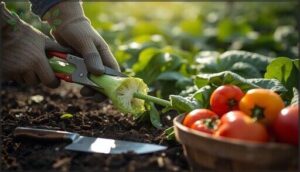
The way you cut your vegetables makes all the difference. Using sharp blades and bypass-action pruners, you’ll reduce tissue damage by 30–50% compared to pulling or breaking stems.
Clean cuts with harvest knives minimize wound areas to about 0.8–1.5 cm, helping plants seal quickly and resist disease. These gentle pruning techniques protect your harvest while keeping vegetables fresh and marketable.
Choosing and Maintaining Harvest Tools

Your harvest tools are worth the investment—ergonomic hand pruners cut operator fatigue by 25%, while stainless steel blades stay sharp for 120–180 field hours. Bypass-style gardening tools preserve tissue integrity far better than anvil types.
Keep blades at 20–25 degrees during sharpening, and sterilize between plants to drop pathogen transfer by 60%. Proper blade maintenance and handle materials extend tool life by 2–3 seasons.
Handling to Prevent Bruising and Damage
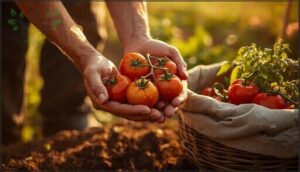
You can slash post-harvest losses by up to 15% through gentle handling right from the field. Use the two-step method—cut, then cradle—to lower drop injuries by 5–9%, and opt for padded containers that reduce bruising by 18–25% in delicate crops.
Keep ambient temperatures below 20°C and field-to-cold-chain time under two hours for best damage control and vegetable care.
Specialized Techniques for Root and Leafy Vegetables

Root crops like carrots and beets call for specialized fork tines that cut soil adhesion by 40–50%, while a 30-degree cutting angle on beet crowns lowers bruising by 12–18%.
For leafy greens, harvest 3–5 cm above soil to extend shelf life by up to 18%.
Pre-harvest irrigation near field capacity slashes root snapping by 22–30%, making soil moisture management a key factor for vegetable damage reduction.
Post-Harvest Handling and Storage Tips
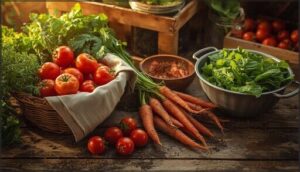
Your harvest doesn’t end when you cut that last tomato or pull those carrots from the ground. What you do in the hours and days after picking makes all the difference between vegetables that stay fresh for weeks and ones that wilt by tomorrow.
Let’s walk through the essential steps that’ll keep your garden bounty at its absolute best.
Cleaning and Preparing Harvested Vegetables
Proper food preservation starts the moment you bring vegetables in from the garden. Clean them gently with cool water, removing dirt without damaging delicate skins. Fresh produce and vegetable handling require attention to detail:
- Use sanitizing solutions only for vegetables you won’t eat immediately, as excess moisture shortens shelf life
- Pat leafy greens dry with clean towels, since drying techniques prevent decay during storage
- Trim damaged areas carefully, keeping cuts minimal to maintain quality
Smart storage preparation protects your harvest.
Cooling and Conditioning Methods
Once you’ve cleaned your vegetables, quick temperature control makes all the difference. Cooling produce within two hours can reduce respiration rates by up to 60%, preserving that garden-fresh flavor.
Humidity management at 90–95% prevents wilting in leafy greens, while ethylene regulation keeps sensitive crops from ripening too fast.
Think of cooling systems as your harvest’s safety net—proper post-harvest handling locks in quality.
Storage Solutions for Different Vegetable Types
Different vegetables thrive in different conditions, so tailoring your storage solutions matters. Leafy greens need cold storage at 0–4°C with high humidity to stay crisp for up to a week.
Root storage works best in dark, humid spots—carrots and beets can last 6–12 weeks.
Keep ethylene-sensitive crops like broccoli separate from fruits to prevent premature spoilage and maintain quality.
Managing Humidity and Ethylene Exposure
By balancing humidity control and ethylene management, you’ll extend shelf life and preserve quality. Store leafy greens at 90–95% relative humidity to keep them crisp, while root vegetables do fine around 70–85%.
Use ethylene-absorbing packaging solutions to slow ripening, and maintain cold temperatures with proper airflow to prevent condensation. These storage optimization strategies reduce spoilage and protect your harvest’s flavor and nutrition.
Sustainable and Efficient Harvesting Practices
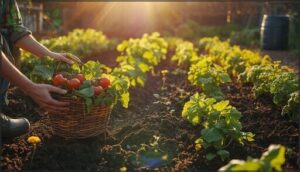
Harvesting your vegetables gently is just the beginning—keeping your garden productive year after year requires thinking beyond today’s basket. The way you manage your soil, plan your plantings, and schedule your harvests directly impacts both your yields and the long-term health of your garden.
Let’s look at four sustainable practices that’ll help you harvest efficiently while nurturing the ground that feeds you.
Crop Rotation and Soil Health
Rotating your crops isn’t just a nice-to-have—it’s the backbone of sustainable farming and healthy soil. When you alternate what you plant each season, you boost soil microbes, improve nutrient cycling, and enhance erosion control by up to 60% on slopes.
Crop diversity disrupts pests and diseases, reducing soil-borne problems by 30–50% while maintaining soil health for your next vegetable harvesting and storage cycle.
Minimum Tillage and Cover Cropping
You can protect your harvest before it even begins by embracing minimum tillage methods and cover cropping. Strip-tillage with rye cover crops cuts soil erosion by 40–60%, while year-long cover cropping boosts organic carbon by up to 28%.
These sustainable farming techniques improve soil health, recharge moisture, and increase marketable yields by 6–14%—proving that gentler gardening techniques build lasting crop rotation benefits and sustainable living success.
Harvest Frequency and Yield Optimization
You’ll boost yields by staying one step ahead of your crops. Harvest scheduling aligned with growth models keeps annual variability within ±10%, while frequent picking—every 2–3 days for beans and squash—prevents overmaturity and stimulates new production.
Real-time crop monitoring through soil sensors cuts irrigation waste by 20–40%, sharpening your yield prediction and seasonal planning for harvest optimization success.
Monitoring and Planning for Ongoing Harvests
Think of your harvest schedule as a living roadmap—daily logging and crop monitoring reduce waste by up to 25%, while staggered planting stabilizes yields by 12–18%. Smart planning drives harvest optimization:
- Track growth weekly to catch ripeness before overmaturity strikes
- Use 10-day weather forecasting for precision harvest scheduling and yield prediction
- Monitor soil sensors to adjust postharvest handling and storage timing
Systematic vegetable harvesting techniques plus crop rotation insights sharpen your soil management game season after season.
Frequently Asked Questions (FAQs)
How do weather conditions affect harvesting decisions?
Like sailors who watch the sky before setting sail, you’ll need to monitor weather patterns closely.
Morning harvest scheduling works best when temperatures drop and soil moisture is high, preserving flavor through careful temperature control.
Can you harvest vegetables during light rain?
You can harvest vegetables during light rain if you handle them carefully and dry them quickly afterward. Cool temperatures during drizzle actually help maintain freshness, but watch for excess moisture on leafy crops.
What are signs of overripe vegetables?
Overripe signs include soft, yielding flesh, dull or brown spots, yellowing skin, and wrinkled texture. You’ll notice moisture loss in leafy greens, while tomatoes develop a mealy feel—clear freshness tests for your vegetable garden.
How to harvest vegetables without damaging roots?
Harvesting root vegetables is like freeing buried treasure—you need the right touch. Use a garden fork to loosen soil around roots first, then lift gently to prevent breakage and preserve quality through careful manual harvesting techniques.
Should you wash vegetables immediately after harvesting?
You don’t need to wash vegetables right away. Gently brush off loose soil and dirt, then store them unwashed—moisture from immediate washing can actually speed up spoilage and reduce shelf life.
Conclusion
Think of your harvest as a bridge between garden and table—one that gentle harvesting methods help you cross without losing what you’ve worked so hard to grow.
The right timing, careful technique, and thoughtful post-harvest care aren’t just details; they’re your insurance policy against waste and disappointment.
Master these practices, and you’ll enjoy vegetables that taste like they were picked minutes ago, even days later.
- https://www.bladeforums.com/threads/pruning-shears-vs-knife-for-smallish-vegetatuion.1335653/
- https://www.eatingwell.com/article/7951742/how-to-tell-if-eggplant-is-bad/
- https://extension.umn.edu/planting-and-growing-guides/harvesting-and-storing-home-garden-vegetables
- https://www.ncbi.nlm.nih.gov/books/NBK481583/
- https://files.eric.ed.gov/fulltext/ED536788.pdf