This site is supported by our readers. We may earn a commission, at no cost to you, if you purchase through links.
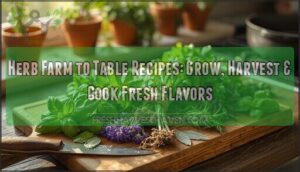
You clip a handful of basil from your garden, and within minutes, that same herb is perfuming your kitchen, releasing oils so fresh they haven’t had time to fade. This is the essence of herb farm-to-table recipes—cooking with herbs at their absolute peak, when their flavor and nutrition are most potent.
Store-bought dried herbs can’t compete with the aromatic punch of just-picked cilantro, the bright bite of garden mint, or the peppery kick of freshly snipped chives.
Growing your own culinary herbs transforms everyday meals into something special, and it’s easier than you think. With a few well-chosen plants, simple harvesting techniques, and creative recipes that let herbs shine, you’ll discover how a windowsill garden or backyard plot can become your most-used ingredient source.
Table Of Contents
Key Takeaways
- Growing your own culinary herbs transforms everyday cooking by delivering peak flavor and nutrition that store-bought dried herbs can’t match, requiring only beginner-friendly plants like basil, mint, and thyme along with proper morning harvesting before heat dissipates essential oils.
- Fresh herbs serve as a powerful sodium-reduction tool that can cut daily intake by nearly 1,000 mg while maintaining delicious flavor, with studies showing herb-rich seasonings restore perceived saltiness in low-sodium dishes without compromise.
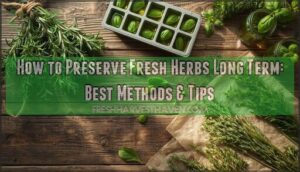
- Freezing freshly harvested herbs in oil using ice cube trays preserves garden-fresh flavor for months while preventing botulism risks, creating convenient drop-in seasonings that deliver instant farm-to-table taste to any dish.
- Beyond savory applications, fresh herbs elevate beverages and desserts into memorable experiences, from herb-infused waters and botanical cocktails to unexpected sweet creations like basil ice cream and rosemary shortbread that align with growing consumer demand for healthier botanical flavors.
Growing and Harvesting Herbs for Recipes
Growing your own culinary herbs doesn’t require a green thumb, just a little know-how and the right approach. When you harvest at the perfect moment and store herbs properly, you’ll capture flavors that make store-bought options pale in comparison.
Let’s walk through the essentials of selecting, harvesting, and preserving herbs so you can enjoy farm-fresh flavor in every meal.
Choosing Easy-to-Grow Culinary Herbs
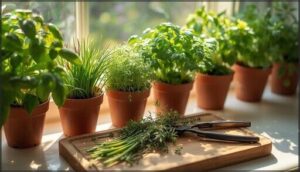
Start your herb garden with beginner-friendly herbs like basil, mint, chives, parsley, and thyme—proven winners for new growers. Consider space considerations and climate suitability when choosing herbs for your garden, as basil thrives in zones 10-11 with full sun, while mint is suited to partial shade across zones 3-8.
Container gardening works beautifully for space-challenged kitchens, letting you cultivate fresh herbs with diverse flavor profiles year-round. Growing your own herbs can also provide instant flavor boost to your dishes.
Tips for Harvesting at Peak Flavor
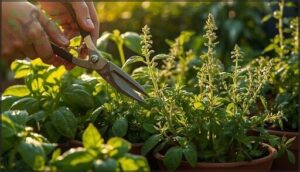
Once you’ve chosen the right culinary herbs, timing your harvest makes all the difference. Morning timing captures peak essential oils—aim for mid-morning after the dew dries but before afternoon heat dissipates those precious aromatic compounds.
For maximum flavor preservation in your fresh herbs, follow these harvesting techniques:
- Harvest before pre-flowering harvest to maintain tender leaves and oil content
- Cut at the flower bud stage when oils concentrate most intensely
- Use sharp tools for clean, angled cutting techniques that preserve 90% of essential oils
- Never take more than one-third of the plant at once to encourage regrowth
- Stop harvesting perennials 30 days before frost, but continue annuals until first freeze
These growing and harvesting herbs practices help your culinary herbs deliver restaurant-quality flavor straight from your garden. To heighten flavor and aroma, consider that optimal harvest timing is essential.
Storing and Preserving Fresh Herbs
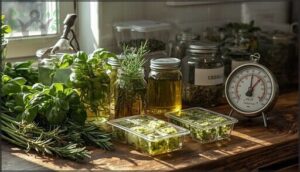
After you’ve mastered harvesting for maximum flavor, proper storage keeps your culinary herbs vibrant. Refrigeration methods work best for most fresh herbs—store them at 32°F for up to three weeks.
Freezing fresh herbs in oil locks in flavor preservation for months. Drying techniques and MAP packaging offer alternatives, though freezing options retain more nutrients.
Remember, storage impact is significant: temperatures above 75°F double degradation rates.
Essential Tools and Techniques for Herb Gardening
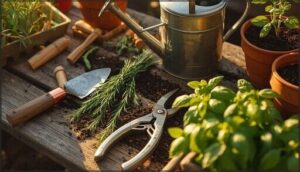
You don’t need a shed full of equipment to grow thriving herbs at home, but a few essential tools will make your gardening easier and more successful. Understanding the basics of soil quality, drainage, and seasonal care helps you avoid common mistakes that can stunt growth or kill plants altogether.
Whether you’re growing outdoors or bringing your herbs inside for winter, these techniques set you up for a steady supply of fresh flavors year-round.
Must-Have Tools for Home Herb Gardens
You won’t get far without pruning shears—bypass models make clean cuts on stems without bruising your harvest. A hand trowel helps you plant in tight spaces, while breathable gloves protect your hands and reduce blisters by 70%.
Don’t forget a watering can with an angled wand for reaching hanging baskets, and keep those tools sharp through regular maintenance.
Soil, Potting, and Drainage Best Practices
Healthy roots depend on soil testers confirming pH levels between 6.0 and 7.0, which release nutrients your herb garden needs. You’ll want at least 5% organic matter in your potting soil and drainage solutions that prevent waterlogging—terracotta pots work beautifully.
Try these potting ratios for success:
- 2 parts potting soil to 1 part peat-free compost and 1 part vermiculite
- 1:3 perlite-to-soil ratio for improved drainage
- 15% perlite addition creates essential air pockets
- 4:1 soil-to-compost mix for basil in humid climates
- Bio-organic soil amendments boost protein content by 60%
Pair these principles with efficient watering systems to keep your herbs thriving.
Seasonal Care and Indoor Herb Growing
As daylight fades in autumn, your indoor herb garden depends on supplemental lighting running 14-16 hours daily, while temperature control maintains the 60-75°F ideal range your fresh herbs crave. Pruning herbs by removing only one-third at harvest encourages steady regrowth, and winter protection starts with mulching perennials like sage before the first freeze arrives.
Start seed starting indoors in January using proper potting soil and drainage to prep your herb garden for spring planting.
| Care Element | Indoor Growing | Seasonal Transitions |
|---|---|---|
| Lighting Needs | 14-16 hours fluorescent daily | Plant cold-tolerant herbs under cover |
| Temperature Range | 60-75°F ideal; basil needs 50°F+ | Transplant annuals when soil hits 60-70°F |
| Pruning Schedule | Harvest max 1/3 weekly year-round | Prune basil, oregano before first freeze |
| Winter Strategy | Supplement southern windows 4-6 hours | Mulch rosemary and sage for protection |
Fresh Herb Farm-to-Table Recipes
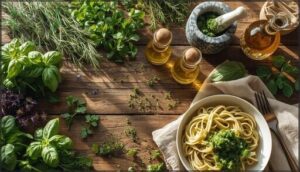
Now that you’ve learned how to grow and harvest your herbs, it’s time to put them to work in the kitchen.
Fresh herbs can transform simple ingredients into memorable meals, whether you’re blending a vibrant pesto, tossing together a summer salad, or creating quick sauces that bring bold flavor to any dish.
The recipes ahead will help you make the most of your harvest, from vegetarian plates to protein-centered dinners.
Classic and Creative Pesto Variations
Traditional basil pesto showcases your herb garden’s star: fresh basil leaves blended with pine nuts, garlic, Parmesan, and olive oil. Nutritional profiles vary widely—classic versions deliver around 396 kilocalories and 41 grams of fat per 100 grams, while kale pesto offers lighter alternatives at roughly 179 kilocalories.
Vegan alternatives swap cheese for nutritional yeast, and regional twists incorporate walnuts or sun-dried tomatoes.
Proper storage methods and thoughtful pesto pairings get the most out of every harvest.
Summer Salads and Sides Featuring Herbs
Summer salads transform your herb garden into vibrant, nutrient-dense sides that deliver health without compromise. A 100-gram serving of mixed greens with basil and parsley provides only 14–20 kilocalories and nearly 2 grams of fiber, while Mediterranean herbs offer benefits such as anti-inflammatory compounds that support heart health.
Focus on food safety concerns by washing herbs thoroughly, and leverage herb usage patterns to cut sodium—fresh herb vinaigrettes keep fat around 8 grams per serving, proving farm-to-table recipes boost flavor and herb salad nutrition simultaneously.
Quick Sauces, Dips, and Dressings
Your herb garden delivers unbeatable flavor shortcuts when you whip up quick herb sauces, dips, and dressings. Fresh vs. dried matters—fresh basil keeps bright oils alive—while homemade sauces and dips slash sodium by 25–50%, a win for sodium reduction.
Try these easy wins:
- Herb yogurt dips (45 calories per serving, impressive food safety with refrigeration)
- Pesto variations from your herb storage stash
- Vinegar-herb dressings for instant fresh herb recipes
Herb-Centric Vegetarian and Vegan Dishes
You can cut sodium by up to 51% in vegetarian dishes when you season with fresh herbs instead of salt, a strategy that keeps every bite flavorful.
Herb-based nutrition shines in vegan meal planning—think stuffed portobellos with oregano pesto or tabbouleh loaded with parsley.
These farm-to-table recipes prove plant protein sources taste delightful when you master flavor enhancement techniques from your herb garden.
Flavorful Meat, Poultry, and Seafood Recipes
Shift your herb focus to animal proteins with smart herb marinades that boost flavor and safety control. A turmeric-lemongrass blend can lift beef acceptability scores by a full point, while thyme-orange treatments cut Salmonella on poultry. Try herb-roasted chicken, lemon herb chicken, or apple and kale stuffed pork chops for non-vegetarian recipes that pair cooking methods with bold flavor pairings—all supporting sodium reduction naturally.
- Marinate beef with turmeric and lemongrass for enhanced tenderness
- Use thyme-orange blends on poultry for pathogen control
- Pair rosemary with high-heat roasting for umami depth
- Replace half your salt with herb-heavy rubs
- Grill seafood with lemon-herb systems for light profiles
Herb-Infused Beverages and Desserts
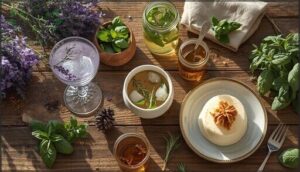
Fresh herbs don’t just belong in savory dishes—they can transform your drinks and desserts into something memorable.
Whether you’re mixing up a cocktail, steeping a pot of tea, or adding a surprising twist to something sweet, herbs bring layers of flavor you won’t find anywhere else.
Here’s how to turn your garden’s bounty into beverages and desserts that feel vibrant, seasonal, and completely homemade.
Refreshing Herbal Cocktails and Infused Waters
You can transform your harvest into elevated botanical mixology by muddling fresh mint, basil, or lavender into sparkling waters or low-sugar cocktails. These herb-infused beverages deliver hydration benefits while slashing calories—swapping one sugary drink daily for infused water may cut obesity rates by up to 2 percentage points.
The global market for these flavorful flavor pairings is projected to nearly double by 2034, reflecting surging demand for functional, garden-to-glass herbal cocktails.
Garden-Inspired Tea Blends
Beyond invigorating waters and cocktails, your herb garden offers year-round tea blends that rival any store-bought option. Lemon balm, rich in polyphenol compounds and citral, pairs beautifully with mint for a naturally caffeine-free infusion.
Brewing techniques matter: steeping fresh herbs for five to seven minutes unlocks antioxidant capacities exceeding traditional teas. Flavor, color, and aroma drive sensory profiles that keep you reaching for another cup.
Sweet and Savory Herb Desserts
Your herb garden transforms into a dessert pantry when you reach for basil ice cream, rosemary shortbread, or lavender panna cotta. More than half of global consumers now see botanical flavors as healthier options, making herb-infused desserts both delicious and smart.
Try these sweet and tangy desserts featuring fresh herbs:
- Mint chocolate tart with fresh garden mint
- Thyme cake paired with lemon zest
- Basil-strawberry sorbet for summer evenings
- Chamomile cheesecake with honey drizzle
- Rosemary brown-butter cookies for cozy afternoons
Maximizing Flavor and Nutrition With Fresh Herbs
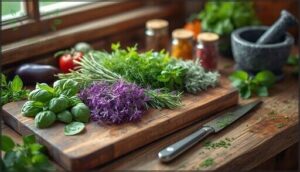
Fresh herbs don’t just make your meals taste better—they pack a nutritional punch and can transform the way you cook. You’ll find that herbs offer a simple path to reducing sodium without sacrificing flavor, while delivering vitamins and antioxidants your body craves.
Learning to preserve herbs properly means you can enjoy that garden-fresh taste even in the middle of winter.
Reducing Sodium Using Fresh Herbs
When you flavor your meals with aromatic herbs instead of salt, you can slash daily sodium intake by nearly 1,000 mg while keeping dishes delicious. Studies show that basil, oregano, and garlic blends restore the perceived saltiness of low-sodium soups, proving that culinary education and behavioral strategies work.
Swapping salt for aromatic herbs can cut your daily sodium by nearly 1,000 mg while keeping meals delicious
Here’s how different herbs replace high-sodium staples:
| Herb/Spice | Replaces | Sodium Saved |
|---|---|---|
| Garlic & onion | Bouillon cubes | ~800 mg/serving |
| Basil & oregano | Salt-heavy sauces | ~600 mg/meal |
| Rosemary & thyme | Seasoning salts | ~500 mg/dish |
| Chili & pepper blends | Table salt | ~400 mg/serving |
Educational interventions that teach herb substitution patterns help you maintain sodium near the recommended 1,500 mg daily target. Repeated exposure to herb-rich, low-salt recipes increases your enjoyment over just five days, making the adjustment feel natural. Plus, garlic offers cardiovascular benefits beyond sodium reduction, supporting healthier blood pressure when you grow and cook with fresh herbs from your garden.
Health Benefits of Herb-Rich Meals
Polyphenols in your kitchen garden do more than brighten plates—they deliver measurable metabolic support. Oregano and rosemary rank among the highest in antioxidant properties, with oregano offering 138 mmol per 100 grams.
Regular consumption of basil, garlic, and fenugreek aids glycemic control, improves lipid profiles, and reduces inflammation markers like CRP and TNF-α. These health benefits of fresh herbs protect cardiovascular health while transforming everyday meals into nutrient-dense, low-sodium experiences.
Tips for Freezing Herbs in Oil for Later Use
When you pack freshly harvested herbs into ice trays and cover them with oil, you’re doing more than preserving flavor—you’re sidestepping botulism risks that arise when herbs sit in oil at room temperature. Freeze within four days, then enjoy for months:
- Wash, dry, and chop basil, parsley, or cilantro thoroughly.
- Fill ice cube compartments two-thirds full, pressing out air pockets.
- Cover completely with extra-virgin olive oil or neutral oil.
- Label bags with harvest dates and use cubes within three to four months for peak aroma.
Drop a cube straight into your hot pan for instant garden-to-table seasoning.
Frequently Asked Questions (FAQs)
How do you start an herb farm business?
Starting a successful herb garden business begins with market research to identify demand, followed by business planning, smart crop selection, and calculating infrastructure costs.
You’ll need diverse marketing channels—from farmers’ markets to restaurants—to turn backyard gardening into profitable farm-to-table recipes using fresh herbs straight from garden to table.
What are the best herbs for companion planting?
Companion planting pairs aromatic herbs like basil and marigolds with vegetables to deter pests, attract pollinators, and improve yields by approximately one-third.
This approach creates healthier gardens while reducing the need for chemical interventions.
Can you grow herbs hydroponically at home?
Think of hydroponics as bringing the farm indoors—you can grow basil, mint, and other fresh herbs year-round in compact systems that use 70–90% less water than soil-based gardening.
How do restaurants source fresh local herbs?
Restaurants source fresh local herbs through direct partnerships with nearby farms, seasonal planning with growers, farmers markets, and rooftop production.
These farm-to-table strategies guarantee garden-fresh recipes while supporting market growth and delivering fresh farm-to-table meals.
Whats the environmental impact of herb farming?
Herb farming’s footprint varies widely. Greenhouse heating, fertilizer emissions, and herbicide runoff drive most impact, while monoculture effects deplete soil health.
Transport, water usage, and peat-free compost choices shape sustainability. Local, seasonal care lowers overall environmental costs.
Conclusion
Like the French concept of terroir—where place shapes flavor—your garden becomes the defining character in every dish you create. Once you experience the difference between dried supermarket herbs and the ones you’ve nurtured yourself, there’s no turning back.
Herb farm-to-table recipes aren’t just about cooking; they’re about connecting with what you eat, savoring the seasonality, and discovering how a few leaves can transform the ordinary into something worth remembering.
- https://www.grandviewresearch.com/industry-analysis/fresh-herbs-market-report
- https://www.mordorintelligence.com/industry-reports/fresh-herbs-market
- https://www.usc.edu.au/about/unisc-news/news-archive/2025/january/from-garlic-to-parsley-new-research-reveals-the-herbs-and-spices-australians-love-most
- https://www.industryresearch.biz/market-reports/fresh-herbs-market-113489
- https://www.reanin.com/reports/fresh-herbs-market