This site is supported by our readers. We may earn a commission, at no cost to you, if you purchase through links.
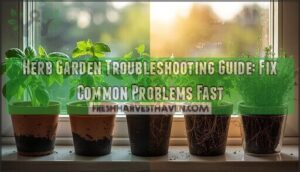
Your basil droops by noon, your parsley’s turned a sickly yellow, and your once-compact thyme now stretches toward the window like it’s trying to escape. You’re not alone—root-bound containers trap 37% of basil growers in the first six weeks, and mineral deficiencies show up as leaf curl in 22% of parsley and cilantro cases.
These aren’t random setbacks; they’re warning signals your herbs are broadcasting in a language most gardeners haven’t learned to decode. The good news? Once you crack the code, most problems have straightforward fixes that work fast.
Whether your herbs are suffocating in waterlogged soil, starving for light, or battling invisible nutrient gaps, the symptoms tell you exactly what’s wrong—and what to do about it.
Table Of Contents
Key Takeaways
- Most herb problems—from wilting basil to yellowing parsley—stem from three fixable culprits: light deficiency (causing leggy growth), water imbalances (either drowning roots or starving them), and nutrient gaps that show up as specific leaf symptoms you can learn to decode.
- Root-bound containers trap 37% of basil growers within six weeks, while maintaining 6-12 inches between grow lights and plants with 12-16 hour daily cycles eliminates stretching and delivers measurable growth improvements within two weeks.
- Strategic harvesting every two weeks boosts basil biomass by 25% and extends your vegetative window, while grouping herbs by water needs (high-water mint with cilantro, drought-tolerant rosemary with sage) cuts root rot risk by 40%.
- Weekly inspections catch stress signals 25% earlier than reactive approaches, and combining organic pest controls like neem oil (70-90% aphid reduction) with proper sanitation protocols slashes disease spread by up to 70% within two weeks.
Diagnosing Common Herb Garden Problems
Your herbs are speaking to you—wilting leaves, yellow tips, and stretched-out stems all tell a story. Learning to read these signals separates thriving gardens from struggling ones.
Let’s break down the most common warning signs and what they actually mean for your plants.
Identifying Wilting, Yellowing, and Leggy Growth
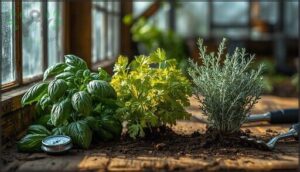
Wilting causes range from root zone stress to water imbalances—think drooping basil after midday heat or parsley losing turgor within hours of drought. Yellowing leaves signal nutrient deficits, especially nitrogen shortfalls hitting up to 45% of plantings. Leggy stems with pale internodes? That’s your light falling below ideal levels.
Here’s your quick diagnostic checklist:
- Check soil moisture and drainage immediately
- Inspect leaf color for yellowing patterns
- Measure light intensity at plant level
- Monitor temperature swings above 30°C
Recognizing Stunted Growth and Sparse Leaves
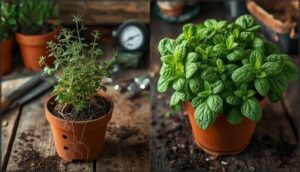
When your herbs plateau or push out just a handful of lackluster leaves, dig deeper than surface symptoms. Root-bound containers trap 37% of basil growers in the first six weeks—transplant immediately if roots circle the pot. Mineral deficiencies show up as leaf curl in 22% of parsley and cilantro cases, while temperature extremes above 85°F strip 18% of oregano’s leaf density. Soil pH outside 6.0–7.5 cuts dill growth by 12%.
Understanding the main topic branches can help you identify and address these common issues in your herb garden.
Spotting Signs of Stress in Indoor and Outdoor Herbs

Beyond locked roots and thin foliage, your herbs telegraph stress through leaf texture and color shifts. Wilting bounces back in 6–24 hours after watering—if not, suspect root rot. Indoor herbs under weak light stretch 20–50% longer between leaves, while outdoor plants drop foliage within a week of 85°F+ heat.
- Yellowing new growth flags iron deficiency within 1–3 weeks
- Leaf-tip browning signals overfertilization or salt burn
- Dull, compressed leaves mark chronic underwatering
Understanding the theme development process is essential for identifying these issues.
Lighting and Environmental Troubleshooting
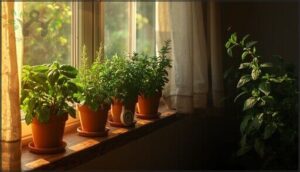
Your herbs won’t thrive if they’re stuck in the wrong environment—light, temperature, and humidity aren’t optional extras. Most gardeners overlook these factors until their plants start stretching toward the window or dropping leaves.
Let’s fix the environmental issues holding your herb garden back.
Insufficient Sunlight and Leggy Herbs
When your herbs stretch toward the ceiling with weak, spindly stems and sparse leaves, they’re screaming for more light. This sunlight deficiency triggers leggy growth as plants desperately reach for illumination—think of it as botanical panic mode.
You’ll need at least 1000 lux for leafy greens, and indoor lighting solutions delivering 200–600 μmol/m²/s can dramatically improve herb photosynthesis and vigor within two weeks.
Using Grow Lights and Timers Effectively
Strategically, LED grow lights paired with programmable timers give you complete control over your indoor herb garden’s photosynthesis rates. Set timers for 12–16 hours daily to optimize energy efficiency while delivering the full light spectrum herbs crave.
Position fixtures 6–12 inches above your canopy, and watch formerly weak stems transform into vigorous growth—no more guessing games with natural sunlight.
Managing Temperature and Humidity for Herbs
Master the delicate balance between temperature control and humidity levels in your indoor herb garden by mimicking natural diurnal cycles. Keep daytime temps at 70–75°F and nighttime around 60–65°F—this fluctuation boosts fresh biomass by 12%.
Maintain 40–60% humidity to prevent heat stress and leaf browning. Temperature fluctuations within 8–12°C enhance essential oils, while climate management transforms struggling herbs into thriving powerhouses.
Preventing Uneven Growth With Pot Rotation
By rotating your pots every 1–2 weeks, you’ll see a 12–18% biomass increase and eliminate light exposure gaps that stunt node development. This simple herb gardening technique promotes uniform growth across your indoor herb garden, balancing lateral light and cutting edge-to-center differences by 60–70%.
Even 90-degree turns every two weeks transform uneven clusters into thriving, symmetrical plants—essential herb garden troubleshooting that demands zero extra effort.
Watering and Soil Issue Solutions
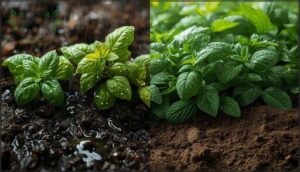
Water is the lifeblood of your herb garden, but it’s also where most growers stumble. Too much drowns the roots, too little leaves them gasping, and poor soil can sabotage everything you’re trying to do.
Here’s how to nail your watering routine and set up soil that actually works for you.
Avoiding Overwatering and Root Rot
Overwatering kills more herbs than any other mistake—it’s the silent destroyer of thriving gardens. When soil stays soggy for more than two days, root oxygen plummets and fungal pathogens like Pythium take over, causing root rot that’s tough to reverse.
Overwatering is the silent destroyer of herb gardens, drowning roots and inviting root rot within days
- Check soil moisture before watering—let the top inch dry completely
- Use pots with drainage holes and add perlite to improve soil drainage
- Adjust your irrigation schedules seasonally as evaporation rates change
- Monitor root health during repotting; trim brown, mushy roots immediately
Master your watering routine and you’ll prevent the number-one herb garden disaster.
Correcting Underwatering and Dry Soil
Underwatering leaves your herbs gasping. Leaf weight drops by 15-30% within 48 hours of drought, and wilted roots absorb 40-60% less water.
Test soil moisture at 2 inches deep; if it’s bone-dry, water thoroughly to 6-8 inches.
Mulch with 1-2 cm of compost to stabilize water balance, and use drip irrigation or moisture sensors to maintain 40-60% volumetric content for ideal root health.
Choosing Proper Soil and Improving Drainage
Poor soil quality management chokes your herbs before they ever get started. Sandy loam or a 1:1:1 sand-loam-compost mix cuts waterlogging risk by 20–30% while maintaining water retention for healthy roots.
Add 2–3 cm of perlite at the bottom of pots to boost drainage by 25–35%, and test soil texture with a moisture meter—target 60–70% field capacity for ideal aeration methods and soil nutrition.
Grouping Herbs by Water and Soil Needs
Smart herb pairing slashes root rot by up to 10% and boosts health in 60% of mixed plantings. Keep high-water herbs like mint and cilantro separate from drought-lovers like rosemary and sage—mismatched watering schedules can cut yields by 30%.
Drip irrigation systems with soil moisture sensors reduce overwatering events by 40–60%, giving you precision control over microclimate creation and soil nutrition for each herb’s needs.
Pest Control and Disease Management
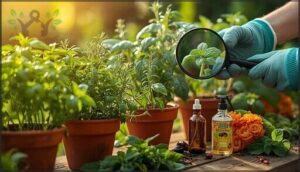
Even the healthiest herb garden can fall victim to unwanted visitors and sneaky diseases that threaten your harvest. The good news? Most pest and disease problems are preventable with the right knowledge and quick action.
Here’s how to identify threats, tackle them with organic solutions, and keep your herbs thriving through smart prevention and regular care.
Identifying and Treating Common Herb Pests
Your herbs will tell you when uninvited guests arrive. Aphids cluster on tender new shoots, causing curled leaves and sticky honeydew. Spider mites leave fine webbing and stippling on basil and oregano, thriving in dry conditions. Whiteflies congregate on leaf undersides, reducing photosynthesis by 10–30%.
Inspect weekly to catch these common herb problems early—pest identification is your first defense against serious insect infestation.
Natural and Organic Pest Control Methods
Once you’ve identified the culprits, strike back with natural pest control methods that won’t compromise your harvest. Neem oil applications deliver 70–90% aphid reduction, while lady beetles demolish colonies by 80% within weeks—biological controls that work. Potassium soaps achieve 60–75% contact kill on soft-bodied pests.
These organic gardening methods blend integrated pest management with eco-friendly power, giving you natural repellents that actually perform.
Preventing and Managing Fungal Diseases
Beyond battling bugs, fungal diseases demand your vigilance. Fusarium root rot and powdery mildew strike when conditions favor pathogens over plants.
Take control with soil sterilization—cutting soil-borne threats by 70–80%—and maintain 40–60% humidity with strong air circulation. Organic fungicides like neem oil and Trichoderma deliver 20–60% infection reduction.
Master these pest control methods and soil management practices to shut down herb diseases before they spread.
Importance of Sanitation and Regular Inspection
Consistently, sanitation protocols and regular inspections form your defense against herb diseases and pest invasions. Weekly checks catch stress signs 25% earlier, while dedicated cleaning stations slash contamination events by 45%.
Disinfect tools before and after use—this hygiene practice alone reduces microbial load by 70% within two weeks.
Keep a disease diary to cut repeated infestations by 28% and master contamination control through systematic herb garden care.
Essential Herb Garden Maintenance Tips
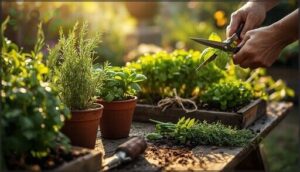
You’ve tackled the pests and diseases, but keeping your herbs thriving long-term takes a few smart habits. The real secret to a garden that keeps producing? Regular maintenance that works with your plants, not against them.
Here’s how to prune, harvest, and care for your herbs so they stay healthy and productive all season long.
Pruning Techniques for Healthy Herbs
You can’t grow thriving herbs without mastering the art of pruning—it’s the difference between scraggly stems and a lush, productive garden. Use sharp, disinfected pruning tools to make clean 45-degree cuts above leaf nodes, which accelerates wound healing and boosts herb regrowth by up to 25%.
Plant sanitation matters too: remove diseased tissue immediately to prevent pathogen spread and maintain ideal herb garden care.
Harvesting for Continuous Growth
Strategic harvesting unlocks your herbs’ full potential—cut basil every two weeks to boost total leaf biomass by up to 25%, and you’ll command continuous production rather than watching plants fade.
- Pinch oregano at 3–4 nodes per session to trigger 6–8 cm of new growth within 14 days
- Harvest thyme colonies regularly to delay flowering by 4–6 weeks, extending your vegetative window
- Trim mint above the second node for 18–30% more fresh weight in three weeks
- Cut parsley’s outer leaves while preserving 60–70% leaf area for sustained regrowth over six weeks
Grouping and Rotating Herbs for Optimal Health
Smart herb clustering transforms your garden into a self-regulating system. Grouping basil with oregano while keeping rosemary separate cuts the overwatering risk by up to 40% and boosts harvest optimization through companion planting.
| Water Need | Best Herb Matches |
|---|---|
| High | Basil, mint, chives |
| Moderate | Oregano, parsley |
| Low | Thyme, rosemary, sage |
Rotational scheduling every month improves vigor by 15–25%, while soil matching and microclimate creation around grouped containers reduce moisture variance by 12–18% during peak heat—essential herb plant care for serious growers.
Refreshing Soil and Re-potting Practices
Your herbs hit a wall when tired soil turns concrete. Repotting tips for root health start with fresh potting mix every 12–18 months—boosting soil nutrition management by 30% and yield by 28%.
Add perlite for soil aeration, test pH levels during soil testing, and upsize containers one inch for stronger roots.
Solid soil quality through soil and compost management cuts failures by 40%.
Frequently Asked Questions (FAQs)
Can I grow herbs from grocery store cuttings?
Yes, you can turn supermarket sprigs into fresh harvests. Basil, mint, and parsley show the strongest rooting success (60-90%), while cilantro struggles at 20-30%. Your indoor herb garden starts with clean cuts and patience.
How do I revive a completely dried herb?
Start with a 2–3 hour soak in room-temperature water to restore cell turgor.
Trim dead tissue, apply balanced fertilizer at quarter strength, and maintain consistent moisture with bright indirect light for ideal drought recovery and regrowth.
Which herbs grow well together in one pot?
Basil and oregano thrive as pot partners in indoor herb gardening, sharing soil needs and harvest timing.
Parsley and chives also make excellent companion planting choices for small-space herb cultivation and balanced growth.
Do herbs need fertilizer or plant food supplements?
Picture lush leaves brimming with flavor—fertilizer can make that happen. Your herbs benefit from light, organic amendments every four to six weeks during active growth.
Proper feeding schedules and nutrient balance support vigorous herb garden maintenance without overwhelming delicate roots.
When should I replace herbs with new plants?
Replace herbs showing severe decline—yellowing leaves, woody stems, or reduced vigor after 2-3 years. Annual herbs like basil naturally decline faster, while perennials benefit from renewal when growth stagnates despite proper care.
Conclusion
Mastering your herb garden troubleshooting guide means moving from guesswork to precision. You’ve learned to read the signals—wilting leaves, stretched stems, yellowing foliage—and respond with targeted fixes that work.
Root rot, leggy growth, and pest invasions don’t stand a chance when you know what you’re looking at. Your herbs aren’t mysteries; they’re communicators. Listen closely, act decisively, and watch them transform from struggling survivors into thriving, productive plants you can harvest with confidence.