This site is supported by our readers. We may earn a commission, at no cost to you, if you purchase through links.
Most gardeners wrestle with store-bought herbs that wilt within days, yet a handful of fresh basil planted in spring can pump out leaves until frost—and that same plant will teach you more about timing and technique than any cookbook ever could. The difference between limp, flavorless herbs and the kind that make your kitchen smell like a Mediterranean hillside comes down to understanding two connected skills: when to put plants in the ground and when to cut them back.
Master herb planting and harvesting, and you’ll never overpay for those sad plastic clamshells again. The process breaks into seven manageable steps, from choosing varieties that match your climate to preserving your bounty so nothing goes to waste. Each decision you make—whether it’s spacing seedlings or snipping stems—directly impacts flavor, yield, and how long your plants keep producing.
Table Of Contents
- Key Takeaways
- Choosing The Best Herbs to Grow
- Planning Your Herb Garden Layout
- Starting Herbs: Seeds, Starts, or Cuttings
- Essential Herb Planting Steps
- Caring for Healthy Herb Plants
- Preventing and Solving Common Herb Problems
- Harvesting and Preserving Herbs
- Frequently Asked Questions (FAQs)
- Can herbs cross-pollinate and affect flavor quality?
- What companion plants work best with herbs?
- How do weather changes impact herb growth?
- Which herbs attract beneficial insects to gardens?
- Do herbs need winter protection in cold climates?
- How do you overwinter perennial herbs outdoors?
- Can herbs regrow after heavy harvesting?
- What herbs repel common garden pests naturally?
- How can I propagate herbs from cuttings?
- Are there signs of overwatering herbs to watch for?
- Conclusion
Key Takeaways
- Master when to plant and when to harvest—timing drives flavor intensity, yield, and how long your herbs keep producing throughout the season.
- Match herbs to your space by understanding life cycles (annuals like basil finish in one season, perennials like rosemary return year after year) and light requirements (most culinary herbs need 6-8 hours of direct sun daily).
- Regular pruning triggers explosive growth—pinch shoot tips every 2-4 weeks to force lateral branching, and never harvest more than one-third of the plant at a time.
- Harvest in mid-summer mornings after dew dries but before heat diminishes essential oils, then preserve through air-drying, freezing in ice cube trays, or low-temperature dehydration to lock in potency for months.
Choosing The Best Herbs to Grow
Your herb garden starts with a smart game plan, not just grabbing whatever looks pretty at the nursery. You need to match plants to your climate, your kitchen habits, and whether you’re working with a backyard or a windowsill.
Once you’ve got your herbs thriving, try these herb garden to table recipes that actually use what you’re growing instead of letting it wilt in the fridge.
Let’s break down the three major categories that’ll help you build a lineup that actually thrives.
For a deeper dive into choosing the right varieties for your climate, check out these expert blueberry bush care tips and variety guides.
Popular Annual, Biennial, and Perennial Herbs
Your herb planting journey starts with understanding the life cycles that shape growing herbs. Annual herbs like basil and cilantro complete their show in one season, delivering punchy flavor before they bow out. Biennial herbs such as parsley and caraway need two years to finish their cycle. Perennial herbs—rosemary, thyme, oregano—return season after season, anchoring your garden with evergreen fragrance profiles and steady harvests.
Planning your layout around these cycles ensures steady yields year-round, and you’ll find more strategic tips for a successful herb garden that align with your space and climate.
- Annuals thrive fast: Basil peaks just before flowering, while dill’s feathery leaf structures demand regular pruning to extend production.
- Biennials play the long game: Caraway and fennel flower in year two, rewarding patient growers with seeds and vigorous foliage.
- Perennials deliver reliability: Sage, mint, and thyme adapt to varied soil preferences and growing conditions, tolerating drought while producing year-round in mild zones.
Culinary and Medicinal Herb Varieties
Once you’ve mapped out life cycles, herb classification by function gives you command over your harvest.
Culinary herbs—basil’s bright punch, oregano’s Mediterranean backbone, dill’s anise whisper—power your cooking while medicinal herbs like chamomile, echinacea, and aloe vera deliver anti-inflammatory and antimicrobial payoffs.
Growing herbs for both culinary applications and medicinal uses means you control flavor and wellness from soil to table.
Selecting Herbs for Indoor or Outdoor Gardens
Light drives your herb selection more than any other factor, so match plants to your brightest or shadiest spots before anything else. Sun-loving basil, oregano, and thyme claim outdoor beds with six-plus hours of direct rays, while chives, mint, and parsley tolerate indoor dimness—though LED or fluorescent lighting sharpens their flavor.
Space-saving herb garden planning demands compact or dwarf varieties for containers, and grouping herbs by water needs prevents rookie overwatering mistakes.
Planning Your Herb Garden Layout
You don’t need a sprawling backyard to grow herbs that’ll transform your cooking and give you real independence in the kitchen.
Smart layout choices let you pack amazing flavor into tight quarters, whether you’re working with a sunny windowsill or a small patio.
Here’s how to design an herb garden that works with your space, not against it.
Companion Planting and Herb Combinations
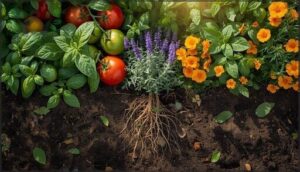
Pairing the right herbs transforms your garden into a living defense system while boosting flavor in every harvest. Basil and tomato increase sweetness, while oregano and thyme share sun and soil needs for efficient bed planning.
Nasturtiums deter aphids when planted near your herb garden, and marigolds reduce nematodes in the soil. Space plants to guarantee airflow, rotate herb families yearly, and mix leaf shapes for visual appeal and garden diversity.
Small Space and Container Gardening Ideas
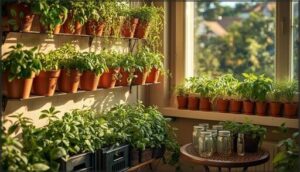
When square footage runs thin, you reclaim control with smart container selection and vertical gardening. Stack wall-mounted planters or hanging baskets to multiply your growing zone, grouping herbs by water needs for foolproof care.
Delicate leaves like basil demand a gentle touch—learn the proper techniques for harvesting tender herbs to keep plants productive all season long.
Compact varieties like Genovese basil thrive in pots under 12 inches, while south-facing windowsills create microclimates perfect for indoor and outdoor herb gardening that defies spatial limits.
Herb Garden Design for Beginners
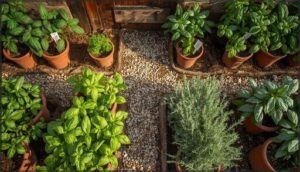
A beginner-friendly herb garden design starts with ruthless space planning—place high-use herbs like basil and thyme 12–18 inches from your kitchen door, then group plants by light and water needs to simplify care.
- Label every variety clearly to track performance and improve your herb selection over time
- Allocate sunniest south-facing spots to flavor-intensive culinary herbs requiring 6–8 hours of direct light
- Define pathways or edges to separate planting zones and prevent accidental trampling during harvest
- Start small with container herb gardening using four to six proven varieties, building confidence before expanding your layout
These design principles transform trial-and-error into systematic mastery.
Starting Herbs: Seeds, Starts, or Cuttings
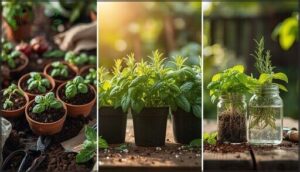
You’ve got three solid ways to kick off your herb garden, and each one comes with its own timeline and payoff. Seeds give you control from day one, nursery starts let you skip the wait, and cuttings turn you into a propagation wizard with almost no cost.
Let’s break down what each method demands from you and when it makes the most sense to use it.
Seed Starting Tips and Timelines
Start your herb seed starting indoors 6 to 8 weeks before your last spring frost—that’s when you take control of germination rates and transplant timing.
Most seeds germinate within 5 to 14 days if soil temperature stays between 65 and 75°F.
Light requirements matter too: barely cover seeds or leave them exposed, since many herbs need light to sprout and thrive during indoor sowing.
Using Nursery Starts and Transplants
Skip the fuss of herb seeds—nursery starts hand you an established root system and a head start that slashes weeks off your timeline. Acclimate them outdoors gradually over 7 to 14 days to sidestep transplant shock, and choose vigorous, pest-free plants with solid root development.
Proper soil acclimation and starter care during herb planting set you up for faster herb harvesting down the line.
Propagating Herbs From Cuttings
Want an endless supply of basil, mint, or rosemary without breaking the bank? Snip a 4–6 inch stem with 2–4 nodes, strip the lower leaves, and plunge it into water or moist soil—basil roots in just 5–10 days.
Root hormones accelerate woody herbs like thyme, while proper node removal and bright indirect light ensure success for your herb planting efforts.
Essential Herb Planting Steps

You’ve got your herbs ready to plant, but throwing them in the ground without a plan is a recipe for disappointment. The difference between thriving plants and struggling seedlings comes down to three critical factors you need to nail from day one.
Here’s what you can’t afford to skip if you want your herb garden to actually produce.
Soil Preparation and Amendments
Most herbs won’t forgive you for skipping the soil preparation stage, so take control from the ground up. Before herb planting begins, you need to test and amend your bed for ideal plant care:
- Soil testing reveals pH levels and nutrient gaps, guiding your garden planning decisions.
- Compost addition of 2–4 inches improves drainage systems and texture.
- pH balancing with lime or sulfur adjusts levels between 6.0 and 7.0.
- Organic matter like well-rotted compost buffers soil and boosts micronutrient availability.
- Drainage systems in clay soils require added perlite or coarse sand to prevent waterlogging.
Meeting these soil requirements sets you up for thriving, flavorful harvests.
Planting Depth and Spacing Guidelines
Once your soil preparation is complete, plant placement becomes your next power move. Seed spacing of 0.25 to 0.5 inches controls germination, while transplants need 1 to 2 inches of soil depth for root development.
Space herbs 6–12 inches apart in your garden layout, depending on mature size. Proper soil depth prevents crown rot and bolsters companion planting strategies that optimize your herb garden design and planning.
Light and Water Requirements for Herbs
After placement comes the real make-or-break: light and water. Most culinary herbs demand 6 to 8 hours of direct sun exposure daily to build strong flavor, though afternoon shade helps in scorching climates.
Water when the top inch dries—basil prefers steady soil moisture, while rosemary thrives with drainage systems that prevent waterlogging. Light intensity and water quality directly shape your herb planting and maintenance success.
Caring for Healthy Herb Plants
You’ve planted your herbs, and now it’s time to keep them thriving without overcomplicating the process. The key is understanding that herbs don’t need constant fussing—they need the right balance of nutrients, strategic pruning, and a little protection from weeds.
Here’s how to give your plants exactly what they need to grow strong and productive all season long.
Fertilizing and Organic Growing Practices
Most gardeners overlook the quiet revolution happening beneath their herbs—microbial balance drives flavor intensity you can taste. Organic fertilizers and soil amendments shift you from dependency to mastery:
- Compost tea feeds beneficial microbes, unlocking nutrients synthetic blends can’t touch
- Well-rotted compost raises organic matter 1–3 percentage points per season, building resilient soil
- Liquid seaweed or fish emulsion delivers micronutrients for sustainable herb gardening without chemicals
Growing herbs organically means natural pest control starts in the soil, where herb garden maintenance becomes straightforward.
Pruning and Pinching for Vigorous Growth
Once your soil biology powers flavor, strategic cuts multiply your harvest. Pinching shoot tips at 6–8 inches triggers lateral branching—your plants bush out instead of stretch up. Remove no more than one-third at a time every 2–4 weeks during peak season.
Clean, sharp scissors prevent disease spread between plants.
| Herb | Pinching Method | Result |
|---|---|---|
| Basil | Above leaf pairs | Dense, compact canopy |
| Mint | Frequent light cuts | Multiple vigorous shoots |
| Thyme | Light shaping | Low, spreading habit |
| Cilantro | Regular tip removal | Delays bolting, more leaves |
Mulching and Weed Suppression Techniques
After transplanting, lock in moisture and slash weed emergence by sixty to seventy percent with a two-to-three-inch layer of straw mulch—your best organic mulching defense for weed prevention in any herb garden.
Wood chips cut evaporation by twenty to forty percent during dry spells, stabilizing soil temperature while you focus on planting and harvesting instead of constant weeding.
Preventing and Solving Common Herb Problems
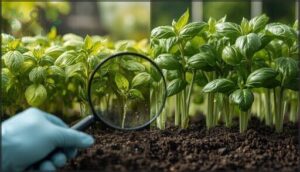
Even healthy herb gardens hit rough patches—pests sneak in, leaves turn yellow, or growth stalls out for no clear reason. Most of these issues trace back to a handful of fixable causes, from unwanted bugs to soil that’s too wet or too poor.
Here’s how to diagnose what’s wrong and get your herbs back on track.
Managing Pests and Diseases Naturally
You don’t need chemicals to defend your herbs from pests and diseases. Natural pest control starts with beneficial insects—lady beetles and parasitic wasps devour aphids and caterpillars in small gardens.
Try botanical organic fungicides like neem when needed, rotate herb families annually to break disease cycles, and water at soil level to prevent fungal spread.
These biological controls keep your organic herb gardening thriving naturally.
Addressing Yellow Leaves and Slow Growth
Yellowing foliage signals nutrient deficiency or soil pH balance problems—test your soil first, then amend with compost or chelated iron.
Slow growth screams light requirements aren’t met; most herbs demand 6–8 hours of direct sun daily.
Overwatering effects include root suffocation and stunted expansion, so let the top inch dry between waterings.
Master these herb gardening tips and your growing herbs will thrive, ready for harvesting herbs at peak potency.
Avoiding Overwatering and Root Rot
Root rot destroys more herbs than any other garden mistake—waterlogged soil suffocates roots and invites fungal collapse fast.
Root rot kills more herbs than anything else—waterlogged soil suffocates roots and triggers fast fungal collapse
To prevent this, follow these essential steps:
- Check soil moisture by testing the top 1–2 inches before watering; wet means wait.
- Use well-draining potting mixes with 30–50% perlite for optimal root health.
- Choose containers with drainage holes to prevent standing water.
- Water deeply but infrequently to build strong roots and reduce water frequency.
- Maintain 6–8 hours of bright light daily to support transpiration and proper herb care.
Master drainage systems now, and you’ll be harvesting herbs with confidence—not nursing casualties.
Harvesting and Preserving Herbs
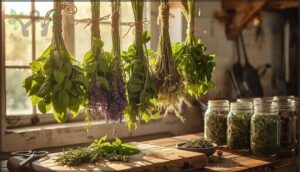
You’ve nurtured your herbs from seed to thriving plants, and now comes the payoff: harvesting at peak flavor and preserving that garden-fresh taste for months to come.
The difference between bland, dusty herbs and vibrant, aromatic ones often comes down to timing and technique.
Here’s how to harvest like a pro and lock in maximum flavor, whether you’re snipping fresh sprigs for tonight’s dinner or stocking your pantry for winter.
When and How to Harvest for Best Flavor
Harvest timing can make or break your herb’s flavor intensity. You’ll want to snip leaves in mid-summer mornings, right after the dew dries but before heat diminishes essential oils.
For peak aromatic optimization, harvest just before flowering when oil preservation is highest.
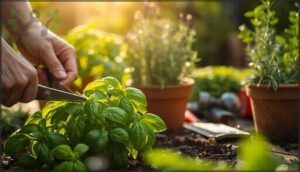
Use sharp herb scissors to cut the top third of leafy herbs like basil, selecting bright, fragrant stems for maximum flavor impact.
Drying, Freezing, and Storing Herbs
Once you’ve mastered harvesting, locking in that flavor becomes your next rebellion against bland kitchens. Air-dry sturdy herbs like rosemary by hanging bundles for 1–2 weeks, or speed things up with herb dehydration at 95–115°F for 2–4 hours.
For basil and mint, try freezing herbs in frozen herb cubes with water—perfect portions ready when you need them. Store dried batches in airtight containers away from light, and you’ll command potency for months.
Tools and Methods for Safe Harvesting
Sharp, clean pruners are your first line of defense in safe harvesting techniques—sanitize blades with 70% alcohol between plants to master contaminant prevention.
Wear disposable gloves as part of solid sanitation practices, and collect only pest-free stems using dedicated herb scissors or harvest tools.
Store your haul in breathable containers, label batches with dates, and you’ll control quality from garden to kitchen like a pro.
Frequently Asked Questions (FAQs)
Can herbs cross-pollinate and affect flavor quality?
Yes, closely related herbs like thyme and oregano can cross-pollinate when flowering overlaps, potentially shifting flavor profiles in their seeds—so keep varieties separated if you’re saving seed for future harvests.
What companion plants work best with herbs?
Basil thrives beside tomatoes, deterring aphids, while sage protects carrots from flies. Parsley attracts pollinators for lettuce and chives, while thyme’s low growth shelters peppers—strategic herb pairings strengthen your garden layout naturally.
How do weather changes impact herb growth?
Temperature swings throw your herbs off balance—growth stalls below 40°F or above 75°F, humidity breeds fungal trouble, and heat stress scorches leaves faster than you can water, especially in containers.
Which herbs attract beneficial insects to gardens?
Right when you let your culinary herbs bloom, beneficial insects show up like clockwork—dill and cilantro flowers lure hoverflies that devour aphids, while basil attracts parasitoid wasps for natural pest control.
Do herbs need winter protection in cold climates?
In cold climates, hardy herbs like thyme survive winter with 2–4 inches of mulch for herb insulation, while tender varieties need frost protection through row covers or relocation indoors for season extension.
How do you overwinter perennial herbs outdoors?
You’ll want to layer 2–4 inches of organic mulch around your perennial herbs’ roots, use breathable row covers during freezes, and position plants near south-facing walls where reflected heat boosts winter survival.
Can herbs regrow after heavy harvesting?
You can practically raid your herb patch without worry—most perennials like rosemary and thyme bounce back within 2–4 weeks after heavy harvest, especially when you focus your pruning techniques on leafy stems rather than flowering tops.
What herbs repel common garden pests naturally?
Basil, mint, rosemary, lavender, and thyme are powerful pest repellent herbs that naturally deter mosquitoes, aphids, and cabbage moths.
Plant these aromatic herbs as organic pest control—your living garden pest deterrents work while you harvest.
How can I propagate herbs from cuttings?
Think of each cutting as a blueprint waiting to reveal itself. Choose healthy stems with visible nodes, strip lower leaves, dip in rooting hormone, then nestle into moist perlite under high humidity until roots emerge.
Are there signs of overwatering herbs to watch for?
Watch for yellowing leaves, mushy brown roots with foul odor, fungus gnats, mold on waterlogged soil, or leaf edema with water-soaked blisters—all root rot signs demanding immediate overwatering prevention and better fungus control.
Conclusion
A single basil plant can crank out more leaves than you’ll use all summer—if you know when to cut. That’s the truth behind herb planting and harvesting: your scissors matter as much as your seeds.
Follow the seven steps, pinch back your plants every week, and you’ll build a kitchen garden that laughs at grocery store prices. Every snip triggers new growth, every harvest extends the season, and you’re the one holding the shears.
- https://extension.wvu.edu/lawn-gardening-pests/gardening/gardening-101/herb-gardening-for-beginners
- https://cmg.extension.colostate.edu/Gardennotes/731.pdf
- https://x.com/godofprompt/status/1990526288063324577
- https://www.sciencedirect.com/science/article/pii/S0749208123000268
- https://blog.wordvice.com/formatting-research-paper-headings-and-subheadings/