This site is supported by our readers. We may earn a commission, at no cost to you, if you purchase through links.
That basket of tomatoes from your garden looks beautiful right now—but by tomorrow morning, half of them may be soft, splitting, or spotting with mold. Fresh-picked produce doesn’t stop working just because you’ve harvested it. Every fruit and vegetable keeps breathing after it leaves the plant, burning through its own sugars and releasing gases that quietly push it toward rot.
Knowing how to store fresh picked produce in baskets changes that timeline. The right airflow, temperature, and a few simple separation rules can stretch days into weeks without a single preservative.
Table Of Contents
- Key Takeaways
- Why Proper Basket Storage Keeps Produce Fresh Longer
- Set The Right Temperature and Humidity Conditions
- To Wash or Not to Wash Before Basket Storage
- Control Ethylene to Prevent Premature Ripening
- Store Each Type of Produce The Right Way
- Frequently Asked Questions (FAQs)
- Why should you store fresh produce correctly?
- How do you store fresh produce if it ripens?
- How do you keep fresh produce fresh?
- How do you extend the shelf life of fruits and vegetables?
- Which basket materials are best for produce storage?
- How do pests affect basket-stored produce at home?
- Can you store produce baskets safely in garages?
- How does altitude affect fresh produce storage conditions?
- Conclusion
Key Takeaways
- Keep ethylene-producing fruits like apples, bananas, and tomatoes at least 12 inches away from sensitive produce like berries, cucumbers, and leafy greens, or everything ripens too fast.
- Temperature is your biggest lever—every 10°F rise above 32°F cuts shelf life by roughly 25%, so keep baskets away from warm appliances, direct sun, and countertop heat.
- Don’t wash produce before storing it, because surface moisture invites mold fast and strips away the natural protective coating that keeps fresh-picked items firm.
- Open-weave baskets outperform sealed containers every time, since airflow disperses ethylene gas, prevents condensation, and keeps surfaces dry enough to slow spoilage.
Why Proper Basket Storage Keeps Produce Fresh Longer
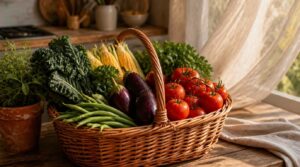
Fresh produce doesn’t stay fresh by accident — the way you store it makes all the difference. A basket might look simple, but the right setup slows down spoilage in ways a sealed bag or airtight container simply can’t match. Here’s what’s actually happening behind the scenes and why it matters.
Understanding the science behind airflow and humidity control can help you make smarter choices, as covered in these fall garden harvest storage techniques.
The right basket setup slows spoilage in ways no sealed container can match
How Respiration Affects Shelf Life
Every piece of produce you harvest is still alive — and that matters more than most people realize. After picking, fruits and vegetables keep breathing through a process called vegetable respiration, consuming their own sugars and releasing CO₂. Here’s what that means for your baskets:
- Sugar depletion dulls sweetness and tartness over time.
- Moisture loss through respiration softens tissues and causes wilting.
- Oxygen balance inside the basket controls how fast breakdown happens.
- Climacteric ripening triggers a sudden burst of respiration in fruits like peaches, speeding up softening.
- Flavor fading follows quickly as aroma compounds break down under high respiration.
Good air circulation and steady ventilation for produce slow this process down, helping your harvest stay crisp and flavorful longer. Keeping your baskets in a cooler area promotes lower temperature storage, further slowing respiration.
Shelf Life Drops With Rising Temperature
Temperature is one of the biggest factors working against your fresh produce. For every 10°F rise above 32°F, shelf life drops roughly 25% — and that adds up fast on a warm countertop.
| Temperature | Approximate Shelf Life Impact |
|---|---|
| 32°F–40°F | Full shelf life retained |
| 42°F–50°F | Up to 25% reduction |
| 52°F–60°F | Up to 50% reduction |
| 60°F+ | Up to 75% reduction |
Microbial growth rates climb sharply as temperatures rise, turning a healthy basket into a spoilage problem within days. Enzyme activity surges in warm conditions too, triggering browning and tissue breakdown in berries and stone fruits within one to three days.
Rapid moisture loss is another warm zone risk. Leafy greens wilt fast without cool temperatures and proper air circulation. A heat spike during handling — even briefly — can shave days off your harvest’s usable life.
Temperature control isn’t complicated. Keep baskets away from appliances, direct sun, and warm corners. A shaded shelf or cool room does most of the work for you.
Benefits of Basket Airflow Over Sealed Containers
A sealed container traps everything — moisture, ethylene gas, and heat. Baskets work the opposite way.
Open-weave airflow keeps surfaces dry, disperses ethylene before it builds up, and reduces the condensation that turns a healthy strawberry soft overnight.
Less trapped moisture means lower mold risk, and gentle air pressure around each piece protects delicate skin from bruising.
Set The Right Temperature and Humidity Conditions
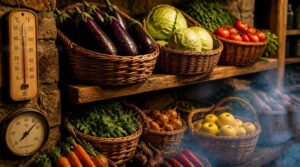
Temperature and humidity are the two levers that control how long your basket produce stays fresh. Get them wrong and even a great harvest turns fast. Here’s what to dial in for each type of produce you’re storing.
Each crop has its own sweet spot, and harvesting techniques that preserve produce quality actually start the clock on how well your storage conditions can do their job.
Cool Storage Range for Leafy Greens
Leafy greens are delicate — they start losing moisture and crispness the moment they leave the ground. That’s why cool temperatures between 32 °F and 36 °F are your best defense. Here’s what proper chilling actually does for your greens:
- Slows respiration so leaves stay firm and nutrient-rich longer
- Reduces moisture loss that causes wilting within hours
- Extends shelf life to a reliable 7–10 days with steady conditions
- Prevents premature decay by keeping microbial activity low
Refrigerator placement matters more than most people realize. Keep baskets away from door seals, where temperature swings happen every time you grab something. A back shelf or dedicated crisper zone holds stable cooling cycles consistently.
Watch for chilling injury prevention, too — don’t let temps drop below 28 °F or cell walls break down and leaves turn mushy. Temperature monitoring with a simple fridge thermometer keeps you in control. For pre-cooling methods, set baskets in the fridge unwashed and dry before storing. High humidity around 90–95% works hand-in-hand with cool temperatures, making preserving leafy greens genuinely straightforward.
Unrefrigerated Zones for Ethylene-sensitive Produce
Not everything belongs in the fridge. Some produce actually does better in a cool dark place — specifically ethylene-sensitive items like onions, potatoes, and citrus, which store best at 50 °F–60 °F.
A two zone layout helps here: one area for ethylene producers, another for sensitive items, with clear basket zone labeling so nothing gets mixed up accidentally.
Humidity Levels to Prevent Wilting and Mold
Humidity is the quiet force behind how long your produce actually lasts.
Leafy greens need 85–95% relative humidity to stay crisp, while berries do best around 90% — push past 95% for too long and mold takes hold fast.
Use a hygrometer to monitor levels closely.
Without airflow, high humidity turns into condensation, so never seal baskets tightly.
Shaded Spots for Ripening Tropical Fruits
Tropical fruits like mangoes, bananas, and papayas don’t need a fridge — they need the right shade. Keep them in a spot where sunlight hits at only 20–40% intensity, which holds surface temperatures steady between 25–30°C and promotes dappled light ripening without stress.
- Canopy shade benefits include reduced surface heat and more uniform color development
- Afternoon sun avoidance (1–4 PM) prevents accelerated over-ripening
- Courtyard breeze placement removes ethylene buildup and dries surface moisture
- Shade cloth choices of 30–50% reduction maintain stable microclimates
- Ambient humidity around 70–85% slows moisture loss during the ripening process
To Wash or Not to Wash Before Basket Storage
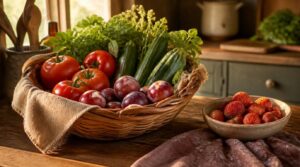
One of the easiest mistakes to make is rinsing your produce right after picking it. That extra moisture is the fastest way to invite mold into your basket. Here’s what you actually need to know before anything goes into storage.
Why Unwashed Produce Lasts Longer
Most people assume a quick rinse before storing is the right move — it’s not. Unwashed produce lasts longer because water on the surface invites microbial growth and speeds up decay.
Your fresh-picked items carry a natural protective bloom, a thin coating that shields them naturally. Skip the sink and instead shake, rub, or brush off garden dirt before placing anything in your basket.
How to Dry Produce Before Storing
Sometimes washing is unavoidable — and that’s fine. Your pre-drying prep matters most here.
Pat each item dry using a clean paper towel, or spin leafy greens in a salad spinner. Remove all excess moisture before anything touches the basket. Produce that isn’t thoroughly dry will trap dampness and invite mold fast.
Lining Baskets to Manage Stray Moisture
A good liner controls moisture before it ever touches your produce. Choose breathable liner materials like coir or jute, and add a drainage layer design that channels water downward.
Perforated liner benefits include better air circulation and ventilated storage overall. Layer in dry paper towels for extra moisture control, then practice reusable liner hygiene with seasonal liner selection in mind.
Separating Wet and Dry Produce Items
Once your liners are set, the next step is keeping wet and dry produce in their own zones. Moisture zone placement matters because wet items like berries drip onto dry roots, triggering mold fast. Use basket section labels to mark wet versus dry areas clearly. A simple drip barrier liner between sections stops transfer before it starts.
Rack elevation inserts lift wet produce so air moves freely underneath. Run daily moisture hotspot checks to catch condensation early and swap out soggy liners before spoilage spreads.
Control Ethylene to Prevent Premature Ripening
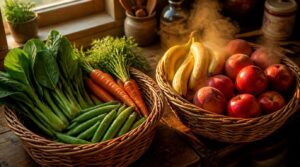
Ethylene is an invisible gas that makes your produce ripen faster than you’d like. Some fruits pump it out constantly, and if the wrong neighbors are nearby, everything goes soft too soon. Here’s what you need to know to keep things separate and under control.
Common Ethylene-producing Fruits to Isolate
Some fruits act like tiny gas factories.
Apples and pears steadily release ethylene gas while ripening. Bananas really ramp up production fast once they hit their peak ripening stage. Mangoes pump out gas at the end of ripening. Tomatoes emit noticeable gas as they soften.
Keep these ethylene-producing items grouped together, away from sensitive produce, to dodge mixed fruit risks.
Ethylene-sensitive Produce to Keep Separate
Not all produce processes ethylene gas the same way. Ethylene-sensitive produce like kiwifruit, strawberries, broccoli, cucumbers, and leafy greens — lettuce and spinach especially — can yellow, soften, or mold faster when placed near ethylene-superproducers.
Dedicated storage zones help with ripening control. Keep sensitive items at least 12 inches from any ethylene source, and label those zones clearly.
Using Perforated Bags Inside Baskets
Once you’ve kept sensitive items well away from ethylene sources, perforated plastic bags inside your baskets give you a second layer of protection. They let air move steadily around fresh produce while keeping humidity stable — around 90 to 95 percent for leafy greens — without trapping moisture that causes rot.
Perforation hole size matters more than you’d think. Holes between 2 and 7 millimeters strike the right balance: enough bag ventilation to release ethylene gas, but small enough to hold lighter items like berries and herbs in place.
Here’s how to use them well:
- Match bag fit sizing to your basket — standard 12-by-16-inch bags with a 6-inch depth nest cleanly without blocking grips.
- Use mixed basket separation by placing different produce groups in their own labeled bags within the same basket.
- Check visual inspection ease — clear bags let you spot soft spots or mold without unpacking anything.
- Align vent holes with basket slats to support air circulation from underneath.
- Follow reusable liner care by washing, inspecting for blocked perforations, and air-drying fully before reuse.
Freshness retention improves noticeably when bags are clean, correctly sized, and free of tears.
Ethylene-absorbing Packets for Basket Storage
When perforated bags aren’t quite enough, ethylene absorbers boost your ethylene management. Place sachets near airflow points — ideal placement zones for absorbing ethylene gas fast.
Food-safe materials keep handling safe; dose by volume, about one packet per 1–2 cubic feet. Replace sachets every 4–12 weeks, and if one ruptures, remove contents immediately for lasting freshness retention and shelf life extension.
Store Each Type of Produce The Right Way
Not every fruit or veggie wants the same treatment in your basket setup. Some like it cold, some like it dry, and some just need a little room to breathe. Here’s how to give each type exactly what it needs.
Berries and Grapes in Cold Basket Zones
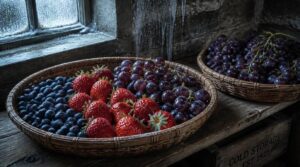
Berries and grapes deserve the coldest spot for cold storage, with temperature and humidity near 0 to 4°C and 90 to 95 percent moisture, keeping them plump.
Never wash berries before storing; surface moisture invites mold growth.
Keep grape clusters loose with space between bunches.
Store everything in a single layer, then check daily for firm berries and green stems.
Root Vegetables With Tops Removed
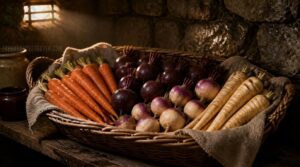
Root vegetables are a bit more forgiving than berries, but they still need the right conditions. Trim the heads off carrots, beets, turnips, and parsnips before storing — those leafy tops pull moisture away from the root itself.
Cold and moist is the goal: aim for 32–40°F with high humidity. Line your basket with a damp cloth for carrots, but keep beet surfaces dry to prevent mold. Store in a dark cool environment with good ventilation, and arrange everything in a single layer to avoid bruising.
Leafy Greens Layered With Paper Towels
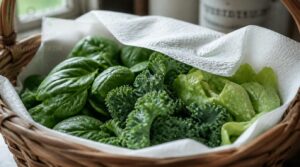
Leafy greens are delicate — they start wilting the moment moisture gets out of balance. A simple paper towel layering system puts you back in control.
- Bottom Towel Layer — place a dry paper towel flat in your shallow container before adding greens
- Top Towel Cover — lay a second dry sheet loosely over the greens to stabilize humidity
- Towel Change Timing — swap damp towels every two to three days to prevent mold
Don’t compact the leaves. Keep air gaps between them so excess moisture can escape freely. Store your leafy greens between 1–4°C, away from cold air jets.
Check regularly for wilting. If leaves soften, separate them, replace towels immediately, and that crispness recovery can happen within hours.
Soft Fruits Ripened at Room Temperature
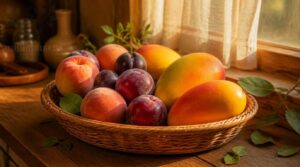
Soft fruits like peaches, plums, and mangoes ripen beautifully at room temperature on a shaded counter. Arrange them in a single-layer arrangement to prevent bruising and allow airflow.
Watch for ripeness signs — a slight give, sweet scent, or color shift. Once ripe, move them to a cooler spot to slow further softening.
Always sort by ripeness level to avoid cross-ripening.
Daily Inspection and First-in, First-out Rotation
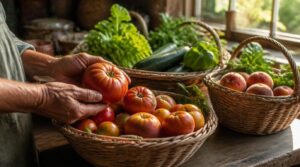
Think of your basket storage as a living system — it only stays healthy if you keep eyes on it every day. Daily inspection catches soft spots, mold, or slime early before one bad piece ruins its neighbors. Pull spoiled items immediately and note what you found.
Use a Rotation Log Board to track receiving dates and rotate your items first-in, first-out:
- Label every basket with a clear date labeling system
- Position oldest stock at the front stock positioning spot
- Update shift handoff logs at every staff changeover
- Follow spoilage removal protocols the moment anything looks off
- Monitor your produce inventory daily to catch issues early
Produce shelf life depends on consistent rotation and honest eyes.
Frequently Asked Questions (FAQs)
Why should you store fresh produce correctly?
Storing fresh produce correctly protects nutrient retention and flavor preservation, cuts food waste, and saves money. Poor storage speeds spoilage and raises food safety risks — costing you more at the grocery store.
How do you store fresh produce if it ripens?
Once ripe, move fruit to the fridge to slow further ripening. Keep unripe items at room temperature in a single layer, and remove anything overripe immediately.
How do you keep fresh produce fresh?
Keeping fresh produce fresh comes down to temperature, airflow, and gentle handling. Cool conditions slow respiration, clean storage prevents mold, and keeping items bruise-free stops early spoilage before it spreads.
How do you extend the shelf life of fruits and vegetables?
A stitch in time saves nine." Start with small batch picking, sort by ripeness, and store at the right temperature and humidity. This alone cuts spoilage and extends shelf life fast.
Which basket materials are best for produce storage?
Woven rattan and bamboo are top picks — both breathe well and resist moisture buildup. For easy cleaning, food-grade plastic works great. Add a moisture-wicking liner to any basket for extra freshness.
How do pests affect basket-stored produce at home?
Pests quietly sabotage your stored produce. Fruit fly infestations, beetle damage, and rodent contamination risks turn fresh harvests rotten fast — often before you notice anything wrong.
Can you store produce baskets safely in garages?
Yes, but only with care. Garage temperature swings, fume exposure, and dampness make it risky. Use a dedicated, ventilated corner, raise baskets off concrete, and keep the area cool, dry, and pest-free.
How does altitude affect fresh produce storage conditions?
Altitude lowers ambient temperatures, slows ripening, and dries the air faster. At elevation, dry air impact means produce loses moisture quickly, so maintaining 85–95% relative humidity matters even more than at sea level.
Conclusion
Most people treat a harvest basket like a quiet waiting room—produce just sits there patiently until it’s your turn to go bad. But now you know how to store fresh picked produce in baskets the right way.
Temperature, airflow, ethylene control, and a simple daily check are your real tools.
Your garden worked hard to grow that food. A little basket wisdom keeps every bite working for you at the table, not the trash.
- https://www.reddit.com/r/ZeroWaste/comments/kxbn7x/how_do_i_prolong_the_shelf_life_of_my_fruits_and/
- https://onethird.io/one-third-blogs/9-methods-to-extend-the-shelf-life-of-fresh-produce
- https://www.gardeningknowhow.com/edible/fruits/fegen/ethylene-gas-information.htm
- https://www.thespruceeats.com/how-to-store-vegetables-4687049
- https://equalexchange.coop/