This site is supported by our readers. We may earn a commission, at no cost to you, if you purchase through links.
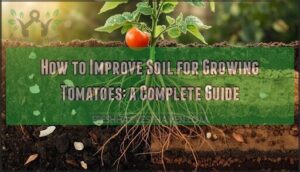
Your tomato plants will only be as healthy as the ground beneath them. Most gardeners blame pests or weather when their tomatoes underperform, but the real culprit often lies six inches below the surface.
Tomato roots need specific conditions to absorb nutrients efficiently—a pH range between 6.0 and 6.8, adequate drainage, and a steady supply of organic matter. Without these elements in place, even the best varieties struggle to produce.
The good news is that you don’t need expensive products or complicated techniques to improve soil for growing tomatoes. A soil test, some well-chosen amendments, and proper preparation create the foundation your plants need to thrive from the first transplant through harvest.
Table Of Contents
- Key Takeaways
- Test Your Soil Before Planting Tomatoes
- Add Organic Matter to Enrich Soil
- Adjust Soil PH for Tomato Plants
- Improve Drainage and Soil Texture
- Top 5 Soil Products for Tomatoes
- Prepare and Maintain Tomato Soil Properly
- Frequently Asked Questions (FAQs)
- How often should I test my soil?
- Can coffee grounds improve tomato soil quality?
- Whats the best soil depth for tomatoes?
- Should I sterilize reused container soil first?
- How do I fix compacted garden soil?
- What natural fertilizers work best for tomatoes?
- How often should tomato soil be watered?
- What companion plants benefit tomato soil health?
- Should tomato soil be replaced every season?
- Conclusion
Key Takeaways
- Test your soil before planting to confirm the pH falls between 6.0 and 6.8, which prevents nutrient lockout and keeps essential minerals available to tomato roots throughout the growing season.
- Build nutrient-rich soil by mixing compost, worm castings, and well-aged manure into your beds, creating the loose structure and sustained fertility tomatoes need for strong root development.
- Fix drainage problems in heavy clay by working in coarse sand and perlite, preventing waterlogging that leads to root rot and disease in tomato plants.
- Maintain soil quality year-round through crop rotation, annual testing, and consistent mulching to retain moisture while breaking pest and disease cycles that reduce yields.
Test Your Soil Before Planting Tomatoes
You can’t guess your way to great tomatoes. Testing your soil before you plant gives you the facts you need about pH and nutrients.
A local soil test kit or guide to growing fruit trees at home can help you interpret results and adjust conditions for healthier plants.
Here’s what to check before those seedlings go in the ground.
Check PH Levels for Optimal Growth
Before you dig your first hole, run a soil test to check pH levels. Tomatoes thrive in slightly acidic to neutral soil—aim for a pH between 6.0 and 6.8.
This ideal range ensures proper nutrient uptake by keeping essential minerals available to your plants. When pH drifts too low, aluminum and manganese can become toxic to roots. If it climbs above 7.0, iron and phosphorus lock up, leading to yellowing leaves and weak growth.
The right pH keeps nutrients flowing to tomato roots, but extremes cause toxicity or lockout that starves your plants
Simple home test kits give quick readings to guide your soil preparation for tomatoes. For guidance on interpreting test results, consult this helpful Soil pH colour chart.
Identify Nutrient Deficiencies in Soil
Beyond soil pH, you’ll want to check nutrient levels through thorough soil testing. A soil test reveals nitrogen, phosphorus, and potassium content—the building blocks of soil fertility.
Watch for deficiency signs as your plants grow. Nitrogen-starved tomatoes show pale yellow older leaves and stunted growth. Phosphorus deficiency creates dark, purplish foliage. Potassium shortage produces scorched leaf margins.
Understanding your soil analysis helps you select the right fertilizer types and soil amendment strategy for nutrient-rich soil. For further insights, regular soil care can benefit from the soil testing process overview.
Add Organic Matter to Enrich Soil
Organic matter is the foundation of healthy tomato soil. It improves structure, adds essential nutrients, and helps your plants develop strong root systems.
Here are three proven amendments you can work into your garden beds before planting.
Mix Compost for Better Soil Structure
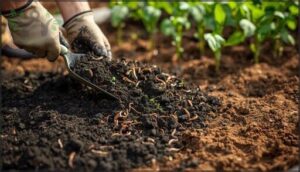
Compost transforms your soil by creating a nutrient-rich foundation with better aeration and drainage. When you mix finished compost into the planting area, organic matter loosens compacted earth while boosting fertility and microbe balance.
This soil amendment aids carbon sequestration and helps form the crumbly structure tomatoes love. Work compost deeply into beds before planting to create ideal soil for strong root development.
Use Worm Castings for Trace Minerals
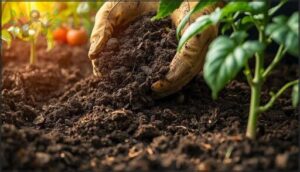
While compost sets the foundation, worm castings deliver a powerful microbial balance and trace mineral supply that optimizes nutrient uptake in tomatoes. Apply one to two cups per plant, working them into the top six to eight inches of soil before transplanting.
This nutrient-rich soil amendment provides iron, calcium, magnesium, and zinc in forms your plants absorb easily, supporting steady growth throughout the season.
Work in Well-Aged Manure for Fertility
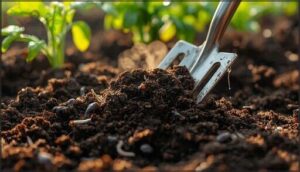
For long-term Soil fertility, you’ll want composted manure worked in before growing tomatoes. This Organic Boost delivers Manure Nutrients like nitrogen, phosphorus, and potassium on a slow-release schedule that feeds plants for months.
Aged organic amendments also strengthen Soil Biology by feeding beneficial microbes that suppress disease and improve nutrient cycling. Application Timing matters—incorporate manure in fall or early spring for best Soil enrichment results.
Adjust Soil PH for Tomato Plants
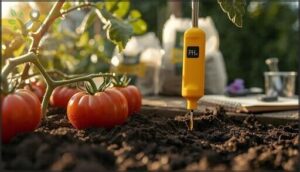
Getting the pH right isn’t something you can skip if you want your tomatoes to actually thrive.
Most gardeners aim for a range between 6.0 and 6.8, and you can find practical strategies for protecting your soil quality through winter to maintain that balance year-round.
When your soil falls outside that sweet spot between 6.0 and 6.8, your plants struggle to absorb nutrients even when they’re present.
Here’s how to correct pH problems and keep your tomato soil in the ideal range.
Lower PH in Alkaline Soil
If your soil pH test reveals alkaline conditions above 6.8, you’ll need acidic amendments to bring it into the ideal range for tomatoes. Elemental sulfur works gradually over several months, making it perfect for pre-season soil preparation. For faster results, aluminum sulfate shifts pH within weeks but requires careful application to avoid root stress.
- Apply elemental sulfur at least three months before planting to allow proper soil reaction
- Use aluminum sulfate sparingly as excessive aluminum can limit healthy root development
- Retest soil pH four to twelve weeks after amendment to confirm you’ve hit your target
Raise PH in Overly Acidic Soil
When soil pH dips below 6.0, you’ll need lime to correct the acidity and make calcium available to your tomato roots.
Agricultural lime delivers calcium carbonate gradually, making it your safest bet for pH balancing. Apply it evenly and water thoroughly to help the treatment reach deeper layers.
Sandy soils respond faster than clay, so adjust your timeline accordingly.
Maintain The Ideal 6.0-6.8 Range
You can’t just fix soil pH once and forget about it—tomatoes demand steady monitoring throughout the growing season to keep nutrient uptake where it needs to be.
Test your soil at least twice per season to catch pH drift before it limits microbial activity or fertility management. Within the 6.0–6.8 range, your nutrient-rich soil delivers iron, calcium, and magnesium exactly when your plants need them most.
- Recheck pH four to six weeks after applying amendments
- Monitor sandy soils more frequently than clay types
- Use consistent moisture to stabilize root-zone conditions
Improve Drainage and Soil Texture
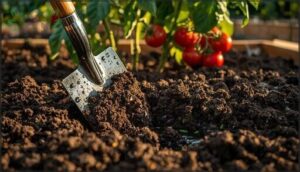
Good drainage separates thriving tomato plants from struggling ones. When water can’t move through soil properly, roots suffocate and disease takes hold.
Here’s how to fix poor drainage and build the ideal texture your tomatoes need.
Add Perlite to Prevent Waterlogging
When your tomato roots sit in soggy ground, root rot quickly follows.
Perlite benefits your garden by creating tiny air pockets that boost soil aeration and prevent waterlogging. Mix 1 part perlite to 3 or 4 parts soil to build well-draining soil structure that promotes root health. This simple soil preparation step keeps drainage systems working and moisture balanced throughout the growing season.
Mix Sand Into Heavy Clay Soil
Heavy clay traps water and chokes your tomato roots. Mix coarse sand with compost to boost soil aeration and create well-draining soil structure that facilitates root penetration.
Add at least a 2-inch layer of sand and work it deep into the clay alongside organic matter—this soil amendment transforms dense ground into workable texture. Testing drainage after each application helps you track texture improvement and adjust clay modification as needed.
Create Loose, Loamy Soil Structure
Your goal is loose soil that crumbles easily, signaling proper loam formation with balanced sand, silt, and clay.
Blend organic matter into your root zone to boost soil porosity and support soil aeration—this soil amendment creates well-draining soil while maintaining nutrient-rich soil quality.
Check texture by squeezing a handful; it should hold shape briefly, then break apart, confirming ideal soil structure for healthy tomato growth.
Top 5 Soil Products for Tomatoes
Finding the right soil product can save you hours of mixing and testing amendments on your own.
Pre-made potting mixes designed for tomatoes already contain the balanced nutrients and drainage your plants need to thrive. Here are five proven soil products that consistently deliver strong, healthy tomato harvests.
1. FoxFarm Ocean Forest Potting Soil
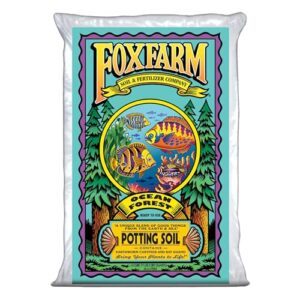
FoxFarm Ocean Forest delivers a ready-to-use blend that takes the guesswork out of container tomato growing. This mix combines aged forest products, earthworm castings, bat guano, and ocean-based amendments in a single bag.
The pH sits between 6.3 and 6.8, right where your tomato plants absorb nutrients most efficiently. You won’t need to add anything at planting time.
The perlite and sandy loam create excellent drainage while the organic ingredients feed your plants through early growth stages.
| Best For | Container gardeners and indoor growers looking for a nutrient-rich, pH-balanced soil that works right out of the bag without mixing in extra amendments. |
|---|---|
| Primary Base Material | Aged forest products blend |
| Drainage Amendment | Perlite and sandy loam |
| Nutrient Source | Earthworm castings and bat guano |
| pH Range | 6.3-6.8 |
| Container Suitability | Yes |
| Organic Ingredients | Yes |
| Additional Features |
|
- Ready to use immediately with no prep work—just open and plant
- Loaded with organic nutrients like earthworm castings and bat guano that feed plants through early growth
- Perfect pH range (6.3-6.8) means your tomatoes can actually absorb the nutrients available
- Higher price point than basic potting mixes at $33.99 for 1.5 cubic feet
- May attract fungus gnats that require treatment with traps or diatomaceous earth
- You’ll need to add fertilizer once plants move past the seedling stage
2. Miracle-Gro Organic Container Mix 2-Pack
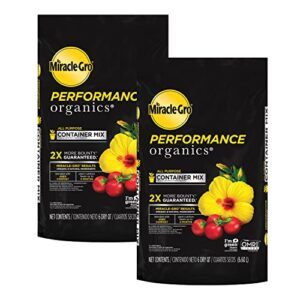
If you’re looking for an affordable option that still performs well, Miracle-Gro’s Organic Container Mix offers solid value in a convenient two-pack. Each six-quart bag contains aged compost blended with fertilizer that feeds your tomato plants for up to three months.
The organic ingredients support moisture retention while providing drainage suitable for container growing. You’ll get steady nutrient availability without frequent refeeding, though you may want to supplement with additional amendments for tailored results.
| Best For | Gardeners who want an organic, budget-friendly potting mix that feeds container plants for three months without constant fertilizing. |
|---|---|
| Primary Base Material | Aged compost |
| Drainage Amendment | Organic blend |
| Nutrient Source | Aged compost with fertilizer |
| pH Range | Not specified |
| Container Suitability | Yes |
| Organic Ingredients | Yes |
| Additional Features |
|
- Includes slow-release fertilizer that feeds plants for up to three months
- Convenient two-pack format offers good value for the price
- Blended with aged compost for better moisture retention and drainage
- Six-quart bags are smaller than some users expect
- May need additional amendments for specific plant types like succulents
- Some customers feel it’s overpriced compared to alternatives
3. Sun Gro Black Gold Potting Soil
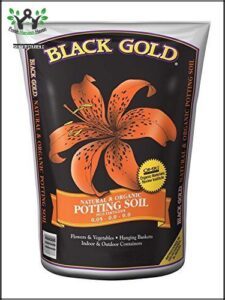
Sun Gro Black Gold Potting Soil stands out for its earthworm castings and Canadian sphagnum peat moss base, which work together to feed your tomatoes while holding moisture effectively. The mix includes perlite for improved drainage and RESILIENCE, a silicon additive that helps plants resist wilting during heat stress.
At $11.68 for an eight-quart bag, it’s formulated specifically for containers and raised beds. The controlled-release fertilizer feeds plants for several months, reducing your workload while supporting strong root development.
| Best For | Gardeners growing tomatoes in containers or raised beds who want an organic soil mix that holds moisture well and includes slow-release nutrients. |
|---|---|
| Primary Base Material | Canadian sphagnum peat moss |
| Drainage Amendment | Perlite |
| Nutrient Source | Earthworm castings and controlled-release fertilizer |
| pH Range | Not specified |
| Container Suitability | Yes |
| Organic Ingredients | Yes |
| Additional Features |
|
- Contains earthworm castings and organic fertilizer that feed plants for months without constant reapplication
- Includes RESILIENCE additive to help tomatoes resist wilting during hot weather
- Pre-mixed with perlite and peat moss for good drainage and moisture retention in containers
- Eight-quart bag is small for larger planting projects and may require buying multiple bags
- Some users reported issues with mold or bugs appearing in the soil
- Higher price point compared to standard potting mixes at $11.68 per bag
4. Espoma Organic Potting Soil Mix
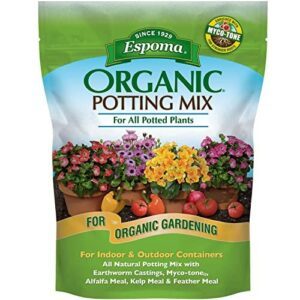
Espoma Organic Potting Soil Mix delivers Myco-tone mycorrhizae, a proprietary blend that extends your tomato roots deeper into the pot for better water and nutrient uptake. The mix combines sphagnum peat moss with earthworm castings, alfalfa meal, kelp meal, and feather meal to provide slow-release organic nutrition without synthetic fertilizers.
You’ll find perlite mixed in for drainage while the humus content maintains moisture balance. This all-purpose blend works well in containers and fosters organic gardening practices, though some gardeners report occasional fungus gnats in fresh bags.
| Best For | Organic gardeners who want to boost root development in tomatoes and other container plants with a nutrient-rich mix that supports beneficial soil organisms. |
|---|---|
| Primary Base Material | Sphagnum peat moss |
| Drainage Amendment | Perlite |
| Nutrient Source | Earthworm castings and alfalfa meal |
| pH Range | Not specified |
| Container Suitability | Yes |
| Organic Ingredients | Yes |
| Additional Features |
|
- Myco-tone mycorrhizae blend helps tomato roots access more water and nutrients throughout the growing season
- Slow-release organic ingredients like earthworm castings and kelp meal feed plants naturally without synthetic chemicals
- Perlite and humus balance drainage and moisture retention for healthy container growth
- Fresh bags sometimes contain fungus gnats or other live organisms that can become pests
- Quality varies depending on how long the soil has been sitting in storage
- Not ideal for seedlings that need completely sterile starting conditions
5. FLORAL Potting Soil for Vegetables Herbs
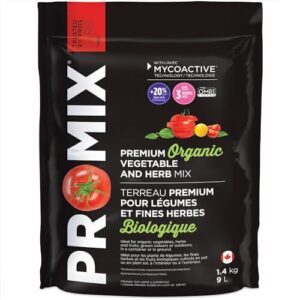
PRO-MIX FLORAL Potting Soil for Vegetables Herbs brings MYCOACTIVE technology to your tomato containers, pairing Canadian sphagnum peat moss with perlite and coir for balanced drainage and moisture retention.
The 9L bag includes controlled-release plant food that feeds your tomatoes for up to three months, though you’ll pay a premium compared to buying at garden centers.
This lightweight blend fosters vigorous root development and helps your plants resist common pests and diseases in container environments.
| Best For | Container gardeners growing tomatoes, peppers, or herbs who want premium soil with built-in nutrients and don’t mind paying extra for convenience. |
|---|---|
| Primary Base Material | Canadian sphagnum peat moss |
| Drainage Amendment | Perlite and coir |
| Nutrient Source | Controlled release plant food |
| pH Range | Not specified |
| Container Suitability | Yes |
| Organic Ingredients | Yes |
| Additional Features |
|
- MYCOACTIVE technology strengthens roots and helps plants fight off pests and diseases naturally
- Feeds your vegetables for three months straight without extra fertilizer trips
- Lightweight peat-perlite-coir blend drains well but holds enough moisture between waterings
- Costs more than picking up potting mix at your local garden center
- The 9L bag runs out fast if you’re filling multiple large containers
- Not ideal for ground planting or non-container gardening setups
Prepare and Maintain Tomato Soil Properly
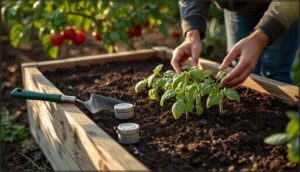
You’ve got your soil tested, amended, and balanced—now it’s time to put that knowledge into action.
Proper preparation and ongoing maintenance will set your tomato plants up for a productive growing season.
Here are three essential practices that make the difference between average yields and truly thriving tomato plants.
Dig Deep Holes for Soil Amendments
When you prepare planting holes for tomatoes, you’re setting up your plants for stronger root development and better yields. Proper hole size, spacing, and layering amendments create the nutrient-rich soil and well-draining soil your tomatoes need.
Here’s how to dig and fill holes correctly:
- Dig holes 10 to 15 cm deeper than the root ball to accommodate loose soil and amendments, spacing holes 18 to 24 inches apart.
- Layer a 2 to 4 inch base of coarse organic matter at the bottom for drainage, then add compost mixed with bone meal.
- Incorporate mycorrhizal products into the root zone to boost nutrient uptake and support soil fertility management.
Apply Mulch to Retain Moisture
Mulch acts like a protective blanket over your tomato beds, locking in moisture and keeping roots cool when temperatures spike. Apply a 2 to 4 inch layer of organic matter such as shredded bark or straw around your plants, keeping it a few inches from stems.
This simple step delivers multiple mulch benefits: moisture retention, soil cooling, weed suppression, and improved compost breakdown for better tomato plant care.
Practice Crop Rotation After Harvest
Crop rotation breaks the cycle of soil depletion and pest buildup that plagues tomato growers. After harvest, shift your tomatoes to a different bed and plant legumes or cereals in the old spot to restore nitrogen and balance nutrients.
Plan a four-year cycle that alternates plant families, includes cover crops like clover, and moves heavy feeders away from last season’s location for stronger soil health and better crop yield.
Frequently Asked Questions (FAQs)
How often should I test my soil?
Like clockwork, you should run a soil test once per year in early spring. This annual checkup tracks pH monitoring and nutrient analysis, helping you fine-tune fertilizer plans and maintain ideal soil health before planting.
Can coffee grounds improve tomato soil quality?
Yes, coffee grounds can enrich tomato soil health by adding nitrogen and organic matter that improve structure and support beneficial soil microbes. Mix them with compost blends for best results.
Whats the best soil depth for tomatoes?
Tomato root systems spread like underground highways, so you need at least 12 inches of container depth or 15 to 18 inches in raised beds to support vigorous root growth and healthy, deep-rooted plants.
Should I sterilize reused container soil first?
Sterilization depends on your container’s previous history. If previous plants showed disease or pest problems, heat the soil to 180-200°F for 30 minutes.
Otherwise, refresh healthy soil with fresh compost and amendments instead.
How do I fix compacted garden soil?
Dense beds feel like concrete underfoot, while friable soil crumbles easily in your palm.
Break up compacted garden soil using a broadfork for deep aeration, then mix in two inches of compost to restore drainage and root zone health.
What natural fertilizers work best for tomatoes?
You can’t go wrong with compost, worm castings, or fish emulsion for a nutrient-rich soil boost.
Banana peels supply potassium, bone meal adds phosphorus, and Epsom salt delivers magnesium—all excellent organic gardening methods.
How often should tomato soil be watered?
Keep the ground consistently damp—not drenched—by watering about 1 to 2 inches weekly. In containers, check soil moisture daily and adjust irrigation based on drainage, heat, and moisture retention needs.
What companion plants benefit tomato soil health?
Basil and marigolds offer pest suppression while beans provide nitrogen fixation for plant nutrition.
Deep-rooting companions improve soil aeration and microbial activity. These partners improve soil health and texture, supporting healthy root development without synthetic amendments.
Should tomato soil be replaced every season?
You don’t need full replacement if you practice crop rotation and replenish organic matter annually.
Container soil faces faster nutrient depletion than garden beds, so refresh potting mix or boost soil health with amendments against soilborne diseases.
Conclusion
Half the battle for prize-worthy tomatoes happens before you ever plant a seedling.
Once you improve soil for growing tomatoes through testing, amendments, and proper preparation, you’re giving your plants an advantage most gardeners overlook.
The roots will spread deeper, nutrients will flow freely, and your harvest will reflect the work you put in below ground. Start with the foundation, and everything else falls into place.
- https://agritech.fnb.tech/tomato-growth-optimization-essential-strategies/
- https://thescientificgardener.com/soil-conditions-growing-tomato-plants
- https://gardening.cals.cornell.edu/garden-guidance/foodgarden/vegetable-growing-guides/tomato-growing-guide/
- https://www.rhs.org.uk/vegetables/tomatoes/grow-your-own
- https://www.mdpi.com/2073-4395/14/5/966