This site is supported by our readers. We may earn a commission, at no cost to you, if you purchase through links.
Most spring gardens peak for two glorious weeks, then fade into a sea of green foliage by mid-May. That short-lived burst of color doesn’t have to be your reality.
Long lasting spring flowers—from stalwart daffodils to reblooming perennials—can stretch your garden’s show from March through June with strategic planning and the right plant choices. The secret lies in understanding what makes certain blooms persist while others wilt, then layering early, mid, and late performers to create waves of color.
Once you know which cultivars naturally resist wilting and how to care for them properly, you’ll build a garden that delivers months of beauty instead of fleeting weeks.
Table Of Contents
- Key Takeaways
- What Makes Spring Flowers Long Lasting?
- Top Long Lasting Spring Bulbs
- Best Long Blooming Spring Perennials
- Planting and Care Tips for Extended Blooms
- Designing Gardens for Long Lasting Spring Color
- Frequently Asked Questions (FAQs)
- Can long lasting spring flowers grow in containers?
- How do I protect bulbs from pests?
- Which spring flowers tolerate shade best?
- When should I fertilize spring flowering bulbs?
- Do deer resistant spring flowers bloom long?
- Can spring flowers survive late frost or snow?
- Which spring flowers work best in containers?
- How do I prevent deer from eating blooms?
- What spring flowers tolerate shade or partial sun?
- When should I divide overcrowded spring bulbs?
- Conclusion
Key Takeaways
- Long-lasting spring flowers like daffodils, alliums, and catmint can extend your garden’s color from March through June when you layer early, mid, and late bloomers instead of relying on single-flush varieties that fade in two weeks.
- The best performers share botanical advantages including sturdy stems, waxy petal coatings, and multiple bloom flushes, while environmental factors like temperature swings, nitrogen levels, and afternoon shade directly control how long flowers persist.
- Strategic planting techniques, combined with weekly deadheading and division every 3-5 years, pushes plants to produce fresh flowers instead of setting seed and extends color by two to six weeks, when planting at proper depths (2-3 times bulb height for bulbs, 6-8 inches for tulips).
- Combining spring bulbs with reblooming perennials in staggered groups creates continuous bloom sequences that require minimal maintenance while delivering 6-12 weeks of color and supporting pollinators through critical foraging windows.
What Makes Spring Flowers Long Lasting?
Not all spring flowers stick around long enough to enjoy. Some plants naturally bloom for weeks instead of days, while others fade quickly no matter what you do.
If you want blooms that last all season instead of just a quick show, check out these long-lasting summer flower varieties that keep your garden colorful for months.
Understanding what separates long-lasting bloomers from fleeting ones helps you choose plants that give you more color for your effort.
Key Traits of Long-Blooming Flowers
Long-blooming flowers consistently share several botanical advantages you’ll notice in your garden. Sturdy flower stalks resist breaking, while dense petal layers slow moisture loss and maintain color retention even under bright sun.
These long-lasting flowers often feature waxy petal coatings that delay wilting, and their bloom patterns include multiple flushes of fresh blossoms across weeks, extending your spring display far beyond single-flush varieties.
Factors Affecting Bloom Duration
Even long-blooming perennials and long-lasting flowers face environmental factors that control how long blooms persist. Water stress and nutrient availability directly impact petal turgor, while soil temperature and light exposure determine metabolic rates in your long flowering selections.
Consider these bloom-duration drivers:
- Temperature swings accelerate aging
- Excess nitrogen shortens flower life
- Drought conditions trigger early dormancy
- Afternoon shade extends color weeks longer
Managing these variables keeps your perennial flowers performing their best.
Benefits of Extended Spring Color
When you invest in long blooming perennials and spring flowering bulbs, you’re building a garden that delivers measurable returns. Extended seasonal interest raises curb appeal for 6 to 12 weeks, while continuous color psychology lifts mood and draws pollinators during critical foraging windows. Long blooming flowers also reduce replanting labor, turning visual appeal and garden therapy into low-maintenance wins.
Long-blooming perennials deliver 6 to 12 weeks of color while reducing replanting work and boosting both curb appeal and pollinator health
| Garden Impact | Benefit | Result |
|---|---|---|
| Extended color | 6–12 week displays | Higher curb appeal |
| Pollinator health | Steady nectar supply | Stronger colonies |
| Visual appeal | Layered blooms | Year-round focal points |
| Garden therapy | Outdoor time | Reduced stress |
| Low maintenance | Perennial flowers | Fewer replants |
Top Long Lasting Spring Bulbs
Spring bulbs bring the first wave of color after winter, and the best varieties hold their blooms far longer than you’d expect.
If you’re just starting out, check out this spring flower bulb planting guide to learn which beginner-friendly varieties come back reliably each season.
With proper care, these hardy performers can brighten your garden for weeks instead of just days.
Here are the top long-lasting spring bulbs that deliver extended color and reliable performance year after year.
Daffodils (e.g., ‘Tete-a-Tete’)
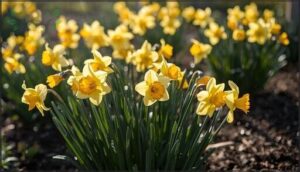
Daffodil ‘Tete-a-Tete’ stands out among spring-flowering bulbs for its reliable performance and compact charm. This early-season favorite produces buttery yellow blooms that last 1 to 2 weeks in cool spring weather.
Here’s what makes it valuable for spring gardening:
- Clusters of 5 to 8 flowers per short stem create impact in garden design
- Multiplies slowly over 3 to 5 years with proper bulb planting and storage
- Resists deer and rodent damage better than most flowering bulbs
Your daffodil care should include well-drained soil and consistent watering during growth. These spring blooms naturalize beautifully and work well in flower arrangements.
Tulips (e.g., ‘China Town’)
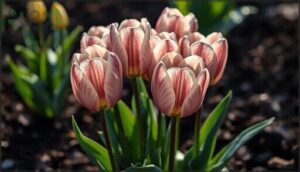
Tulip ‘China Town’ delivers pale pink and moss green petals with a rich feathered streak that lasts 1 to 2 weeks in full sun.
Early blooming tulip varieties like this one need planting depth of 6 to 8 inches to protect bulbs from frost.
Darwin and parrot tulips naturalize with proper flower care, while spring-flowering bulbs benefit from mulching after bulb planting for steady garden design impact.
Hyacinths (e.g., ‘Carnegie’)
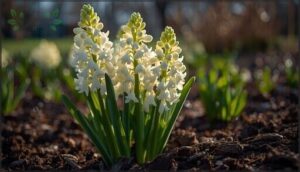
Hyacinth ‘Carnegie’ produces snowy white florets in dense spikes that hold intensely sweet scented blooms for 1 to 2 weeks with proper hyacinth care. These spring-flowering bulbs need good drainage and cool bulb storage to enhance long-lasting flowers across multiple seasons.
To extend bloom in your garden design:
- Plant in well-drained soil with 6+ hours of sun
- Water deeply once weekly during active growth
- Deadhead spent flowering bulbs to preserve bulb energy for flower arrangements
Alliums (e.g., ‘Globemaster’)
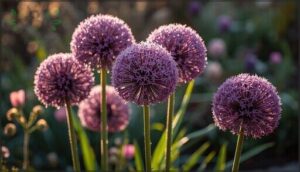
Allium ‘Globemaster’ towers above spring beds with dramatic 10-inch purple spheres that bloom for 2 to 3 weeks in well-drained soil. These ornamental bulbs naturalize slowly in fertile garden design and resist flopping when grouped together.
You’ll find long-blooming perennials like Globemaster varieties perfect for flower arrangements, since their upright stems hold color longer than most spring-flowering bulbs with proper allium care.
Crocus, Glory of The Snow, and More
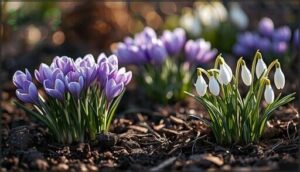
Early bloomers like Crocus ‘Flower Record’ and Glory of the Snow kick off spring gardening with vivid color lasting 1 to 2 weeks in cool soil. These spring-flowering bulbs need fall planting at shallow depths with low-nitrogen fertilizer to prevent leggy growth.
You can combine snow drops with long-blooming perennials in garden designs, and their compact size works beautifully in flower arrangements alongside later perennial flowers.
Best Long Blooming Spring Perennials
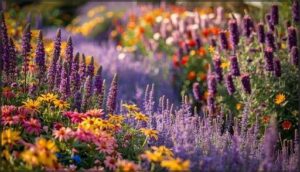
While bulbs give you that early spring color burst, perennials are the workhorses that keep your garden blooming from late spring through fall.
These plants come back year after year, and the best varieties flower for months instead of just a few weeks. Here are the top long-blooming perennials that deliver continuous color with minimal effort.
Garden Phlox and Black-eyed Susan
Garden Phlox thrives with 6 to 8 weeks of midsummer color, making it one of the most dependable long-blooming perennials for summer blooms. You’ll find phlox varieties like Sweet Caroline flourish even in partial shade, drawing butterflies to upright stems reaching 2 to 4 feet.
Pair it with Black-eyed Susan for continuous perennial landscaping impact—these long-lasting flowers create striking flower combinations that extend well into fall with minimal Susan care.
Catmint, Salvia, and Speedwell
Salvia, Catmint, and Spiked Speedwell bring 4 to 8 weeks of dependable color to your perennial garden when you know their strengths.
- Salvia hybrids bloom late spring through early summer with heat tolerance that outpaces many perennials.
- Catmint offers lavender-blue flowers for 6 to 8 weeks, staying decorative even after blooming.
- Speedwell varieties produce summer spikes of blue flowers with minimal flower care tips.
- Light pruning encourages second bloom cycles, extending these long-blooming perennials through late summer—perfect for catmint propagation and division every few years.
Coreopsis, Daylilies, and Yarrow
Coreopsis Moonbeam, Daylily Stella D’oro, and Yarrow deliver 4 to 6 weeks of continuous spring-to-summer blooms with minimal effort. Threadleaf Coreopsis forms airy clumps that keep color flowing, while daylily varieties rebloom in compact spaces.
Yarrow’s flat-topped clusters last 3 to 5 weeks, reblooming when deadheaded. These perennial combinations thrive in full sun with drought tolerance, making flower longevity easy in low-water designs.
Divide every few years for vigorous perennial flowers.
Echinacea and Autumn Joy Stonecrop
Echinacea purpurea brings 6 to 8 weeks of mid-to-late summer color on sturdy 2- to 4-foot stems, while Autumn Joy Stonecrop extends the show into fall with long-lasting blooms.
Both tolerate drought once established and attract pollinators throughout their bloom cycles. Divide Echinacea every 3 to 4 years to maintain vigor, and pair these perennial combinations for continuous flower longevity from summer through autumn.
Planting and Care Tips for Extended Blooms
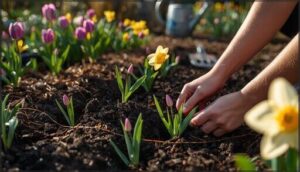
Getting the most from your spring bulbs and perennials starts with the right planting techniques and ongoing care.
You’ll extend bloom times substantially when you understand what these plants need at each stage of growth.
Here’s what you need to know about placement, soil preparation, watering schedules, and maintenance practices that keep flowers performing at their best.
Best Practices for Bulb and Perennial Planting
For resilient long-blooming perennials and spring-flowering bulbs, proper soil preparation makes all the difference. Plant bulbs at 2 to 3 times their height, spacing them adequately to prevent nutrient competition.
Mulching techniques help conserve moisture during perennial flower care, while balanced fertilizer timing at planting and early spring sustains vigorous blooms. Water deeply once weekly, using drip irrigation to minimize disease risk and promote flower bulb planting success.
Layering Early, Mid, and Late Bloomers
Once you’ve planted bulbs and perennials properly, layering technique creates a continuous bloom sequence. Position crocus and daffodils at the front for February color, tulips behind for March peaks, then add long-blooming perennials like catmint and coreopsis at the back.
This layering technique delivers smooth seasonal progression, garden texture, and color harmony from spring-flowering bulbs through summer perennial flowers.
Soil, Water, and Fertilizer Needs
Beyond planting depth, soil pH management and water retention strategies determine whether your perennials and bulbs hit their full bloom potential. You’ll increase flower longevity by matching fertilizer application to each plant’s nutrient demand and irrigation scheduling to seasonal moisture levels.
- Test soil annually to adjust lime or sulfur for ideal pH
- Apply mulch benefits like temperature stability and reduced evaporation
- Water deeply once weekly during bloom, targeting root zones in morning hours
- Use slow-release balanced fertilizer at planting for steady nutrient supply
- Incorporate organic matter to boost water holding capacity and microbial activity
Deadheading, Dividing, and Maintenance
Regular pruning techniques and flower care keep your spring garden thriving for weeks beyond its natural cycle. When you clip spent blooms just above the next leaf set, you push plants to produce fresh flowers instead of setting seed—extending color by two to six weeks depending on the species.
| Maintenance Task | Timing and Frequency |
|---|---|
| Deadheading spent flowers | Weekly during peak bloom for fast growers |
| Dividing overcrowded clumps | Every 3 to 5 years in early spring or fall |
| Water management checks | Deep watering once weekly at root zones |
| Fertilizer application boosts | Light feeding after first flush of blooms |
| Pest control and disease scouting | Regular inspection during all garden maintenance |
You’ll get best results from propagation and dividing perennial plants when roots are moist but not actively flowering. Lift clumps with a clean spade, separate into sections with three to five healthy shoots, then replant at the same depth and water deeply. This soil conditioning and plant care routine maintains vigor, prevents thinning blossoms, and establishes new roots within one to two weeks—essential gardening tips for continuous spring color.
Designing Gardens for Long Lasting Spring Color
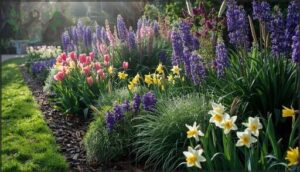
You’ve planted the right bulbs and perennials, but arranging them strategically makes the difference between a garden that sparkles for a few weeks and one that delivers color from early spring through fall.
The key is layering bloom times, pairing complementary heights and textures, and placing plants where they’ll thrive with minimal fuss. Here’s how to design beds and borders that keep your garden vibrant season after season.
Combining Bulbs and Perennials
When you merge spring-flowering bulbs with long-blooming perennials in a thoughtful bulb perennial mix, you create a landscape gardening with perennials masterpiece that shifts seamlessly through seasons.
Plant bulbs 2 to 3 weeks before perennials to avoid disturbing roots, and position them in front of taller companions so foliage won’t shade early blooms.
This plant pairing strategy, combined with proper soil preparation and garden layering, ensures your perennial flower gardening efforts deliver color from early spring through summer with minimal garden maintenance and upkeep.
Creating Continuous Bloom in Borders and Beds
To achieve continuous bloom in borders and beds, you’ll need strategic garden planning with bloom timing and plant layering at the core.
Space your spring-flowering bulbs alongside long-blooming perennials in staggered groups of early, mid, and late performers, and prepare garden layout zones with proper soil preparation to support overlapping color schemes.
This landscape gardening approach delivers perennial gardening success through careful arrangement and timing.
Low Maintenance Strategies for Lasting Color
Smart planting with long-blooming perennials and spring-flowering bulbs reduces your workload while maximizing color. Choose resistant varieties to support pest prevention, then apply 2 to 3 inches of mulch for water conservation and soil enrichment.
Space plants properly to improve airflow and prevent disease. Deadhead spent blooms weekly and divide crowded clumps every 3 to 4 years to maintain long-lasting flowers with minimal garden maintenance effort.
Attracting Pollinators With Long Bloomers
Long-blooming perennials like garden phlox, black-eyed susan, and salvia create pollinator-friendly gardens with steady nectar sources from March through May. Arrange your plants by bloom timing—early, mid, and late—to support pollinator diversity.
Place tall varieties behind shorter types, group them in sunny spots, and include shallow water dishes with pebbles. Strategic garden layout maximizes visitation while long-blooming flowers sustain bees and butterflies for weeks.
Frequently Asked Questions (FAQs)
Can long lasting spring flowers grow in containers?
Yes, think of containers as pocket gardens—spring bulbs and perennials thrive with proper depth, soil quality, water management, and fertilizer needs.
Pot size matters; spring-flowering bulbs need eight to twelve inches for roots.
How do I protect bulbs from pests?
Install hardware cloth cages with 1/2 inch mesh around bulbs to block voles and squirrels.
Apply castor oil repellents after rain, and use wire barriers under planting holes to deter burrowing rodents effectively.
Which spring flowers tolerate shade best?
You’d think spring’s brightest bulbs demand full sun, but daffodils, bluebells, and Glory of the Snow actually thrive under deciduous trees.
Crocuses and alliums also tolerate partial shade surprisingly well in woodland garden settings.
When should I fertilize spring flowering bulbs?
Apply fertilizer application twice yearly: fall fertilization at planting time using 10-10-10 bulb food timing, then a spring bloom boost when shoots emerge.
Post bloom care includes high-phosphorus fertilizer for spring-flowering bulbs energy storage.
Do deer resistant spring flowers bloom long?
Most deer resistant spring bloomers don’t stick around forever—they usually flower for two to six weeks depending on variety and weather, though cool temperatures and good soil extend their show nicely.
Can spring flowers survive late frost or snow?
Many spring-flowering bulbs like daffodils and crocus tolerate light frost damage better than tender tulips.
Snow protection acts as insulation, but severe freeze events can reduce bloom duration and affect cold hardiness in vulnerable varieties.
Which spring flowers work best in containers?
In the case of putting all your eggs in one basket, compact bulbs like Tete-a-Tete daffodils and China Town tulips shine in containers, needing less root depth and delivering reliable spring bloomers color.
How do I prevent deer from eating blooms?
Protect your blooms with an 8-foot fence or mesh netting around individual plants.
Choose deer resistant plants like daffodils, use scented deterrents near buds, and reapply repellents every two to four weeks during peak activity.
For more strategies, consider exploring effective deer deterrent options.
What spring flowers tolerate shade or partial sun?
Shade tolerant blooms like hellebores and bleeding heart, and lungwort brighten low light perennials beds.
While partial sun flowers such as lily of the valley and Glory of the Snow thrive under dappled canopies.
When should I divide overcrowded spring bulbs?
Divide spring-flowering bulbs every three to five years after foliage yellows completely. Overcrowding signs include diminished blooming and dense clumps.
Proper division timing and replanting strategies in well-drained soil provide healthy bulb care and vigorous garden design. Gardeners can benefit from a schedule of to refine their bulb care strategies.
Conclusion
Think of your garden as a cassette tape: you don’t want all the best songs crammed into the first five minutes. By layering long lasting spring flowers—early daffodils, mid-season alliums, late-blooming catmint—you’ll orchestrate color from March through June.
Pair bulbs with reblooming perennials, deadhead spent blooms, and give plants the soil and spacing they need. Your reward? A garden that keeps delivering long after your neighbor’s tulips have called it quits.