This site is supported by our readers. We may earn a commission, at no cost to you, if you purchase through links.
Walk through any garden in mid-October, and you’ll notice something plant tags never quite capture: the way a single Sugar Maple can shift from green to amber to scarlet within a week, like a slow fire catching. That transformation isn’t accidental. It’s the result of chlorophyll breaking down as days shorten, unmasking pigments that were there all along waiting.
Most gardeners chase this effect in autumn, but the best ones engineer it across every season, stacking bloom times, foliage shifts, and bark textures into something that never goes quiet.
Choosing the right plants for seasonal color change means reading your site conditions honestly—your hardiness zone, soil pH, sun exposure—then selecting species that perform reliably within those parameters. What follows is a practical guide to the trees, shrubs, vines, and perennials that earn their place in a year-round display.
Table Of Contents
- Key Takeaways
- Best Trees for Seasonal Color
- Sugar Maple ‘Fall Fiesta’ for Vivid Yellow, Orange, and Red Fall Foliage
- Ginkgo Biloba ‘Goldspire’ for Compact Golden Autumn Color
- Black Tupelo ‘Red Rage’ for Scarlet, Crimson, and Orange Leaves
- Sourwood for Deep Crimson Foliage and Shade Tolerance
- Purple Copper Beech for Copper-toned Autumn Drama
- Serviceberry for Fall Foliage, Berries, and Wildlife Value
- Color-Changing Shrubs and Vines
- Oakleaf Hydrangea ‘Gatsby Moon’ for Burgundy Fall Leaves
- Virginia Sweetspire ‘Henry’s Garnet’ for Burgundy-red Autumn Color
- Black Chokeberry ‘Autumn Magic’ for Red, Orange, and Gold Foliage
- Viburnum ‘Autumn Jazz’ for Multicolor Fall Displays
- Witch Hazel ‘Golden Eclipse’ for Foliage and Late-season Blooms
- Virginia Creeper for Bold Red Vine Color in Fall
- Perennials With Seasonal Interest
- Coral Bells for Colorful Foliage Across Seasons
- Sedum ‘Autumn Joy’ for Late-season Flowers and Drought Tolerance
- Ornamental Grasses for Autumn Texture and Winter Movement
- Violas for Cool-season Color Shifts in Spring and Fall
- Bleeding Heart for Spring Foliage and Shade-garden Interest
- Flowering Bulbs for Early-season Color Transitions
- Choosing Plants by Growing Conditions
- Designing Year-Round Color Displays
- Frequently Asked Questions (FAQs)
- What plants go through seasonal changes?
- What to plant in fall for color?
- What plants have color all year round?
- What to plant for autumn and winter colour?
- Which animals are attracted to color-changing plants?
- Do color-changing plants improve air quality?
- Are any color-changing plants toxic to pets?
- How quickly do foliage colors appear and fade?
- Can color-changing plants be grown indoors?
- Do all maple varieties change color equally?
- Conclusion
Key Takeaways
- Autumn leaf color isn’t luck—it’s chemistry: as days shorten, chlorophyll breaks down and reveals pigments like anthocyanins and carotenoids that were always hiding underneath.
- Your site conditions—hardiness zone, soil pH, sun exposure, and drainage—should drive every plant selection, since the wrong match dulls color and shortens plant life.
- Stacking trees, shrubs, vines, and perennials in deliberate layers keeps your garden visually alive across every season, not just the six weeks of peak fall color.
- Native plants like serviceberry and viburnum do double duty, delivering reliable seasonal color while feeding birds, bees, and butterflies well into winter.
Best Trees for Seasonal Color
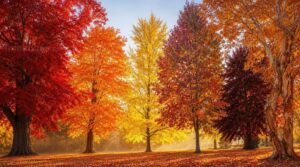
Trees do the heavy lifting in autumn color, and a few standout cultivars deliver that transformation better than most.
For pairing those vivid autumn canopies with a productive garden, fall harvest practices that work with the season can help you get the most from both the scenery and the soil.
Whether you’re working with a sprawling backyard or a tighter space, there’s a tree on this list that fits your conditions and your vision.
Here are six worth knowing.
Sugar Maple ‘Fall Fiesta’ for Vivid Yellow, Orange, and Red Fall Foliage
If you want a reliable showstopper in your autumn garden, Sugar Maple ‘Fall Fiesta’ delivers. This Acer saccharum cultivar grows 40–60 feet tall with a broad canopy architecture that catches light beautifully. Its leaf color chemistry produces vivid fall foliage spanning golden yellow, warm orange, and scarlet red.
Hardy in zones 3–8, it suits most urban planting conditions with full sun and well-drained soil.
Professional planting is offered through the Green Glove Planting Service.
Ginkgo Biloba ‘Goldspire’ for Compact Golden Autumn Color
Where Sugar Maple paints broad canvases, Ginkgo biloba ‘Goldspire’ thrives in tighter quarters. This compact cultivar offers a clean columnar silhouette—just 4–6 feet wide—with golden leaf texture that genuinely glows come October. Its urban heat tolerance and non-fruiting, low-maintenance nature make it ideal for courtyards and streetscapes.
- Reaches 15–20 ft with slow growth of 1–2 ft annually
- Delivers vibrant fall color in zones 4–9
- Ideal landscape use of compact cultivars for limited spaces
- Seasonal color shifts remain consistent across varied soil types
Black Tupelo ‘Red Rage’ for Scarlet, Crimson, and Orange Leaves
If you’re ready to go bold, Black Tupelo ‘Red Rage’ delivers one of the most dramatic autumn leaf colors of any deciduous tree. Fall foliage shift from scarlet to crimson and fiery orange by mid-October, especially against evergreen backdrops.
Its bark texture adds year-round structure, and urban soil tolerance makes it genuinely practical. Place it with windbreak benefits in mind, and it rewards you every season.
Sourwood for Deep Crimson Foliage and Shade Tolerance
Sourwood (Oxydendrum arboreum) brings a different energy than ‘Red Rage’ — quieter, more refined, but no less striking.
Its fall foliage moves through shades of crimson and copper via pigment chemistry driven by sugar accumulation in cooling nights. Understory placement suits it well, as shade tolerance is genuine.
Plant it in acidic soil along that sunlight gradient where dappled light shifts through taller canopies.
Purple Copper Beech for Copper-toned Autumn Drama
Few trees command a garden quite like Purple Copper Beech ‘Purpurea’ — its seasonal foliage transformation from deep copper-purple to warm burnt orange is genuinely dramatic. For garden design with vibrant autumn color palettes, consider these key points:
- Canopy light play rewards full sun placement
- Soil moisture management favors deep, well-drained sites
- Winter trunk interest persists through smooth gray bark
- Planting spacing guidelines suggest 30–40 ft clearance
Hardy in zones 4–7.
Serviceberry for Fall Foliage, Berries, and Wildlife Value
Serviceberry (Amelanchier spp.) earns its place in any garden seeking fall color with real ecological purpose. Its multi‑stem habit showcases yellow-to-orange fall foliage from every angle, while bird‑friendly berries feed migrants through summer’s end. Spring white blossoms open before the leaves, offering early-season beauty.
This adaptable species thrives across diverse conditions, with soil‑type versatility accommodating loam to sandy soils in zones 4–9. Low‑maintenance pruning ensures a tidy form, whether grown as a shrub or small tree, making it a practical choice for structured or naturalistic landscapes.
| Feature | Detail | Garden Benefit |
|---|---|---|
| Fall foliage | Yellow, orange, red | Rich fall color change |
| Spring white blossoms | Early white flowers | First-season focal point |
| Bird‑friendly berries | Blue-black, edible | Nourishes wildlife year-round |
| Multi‑stem habit | Compact, layered form | Adaptable native species |
| Soil‑type versatility | Loam to sandy soils | Easy siting, zones 4–9 |
Color-Changing Shrubs and Vines
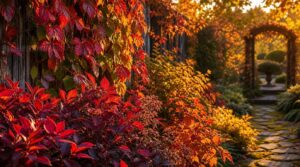
Shrubs and vines bring fall color down to eye level, where you can actually appreciate every shift in hue up close. Unlike trees, they’re easier to tuck into tight spaces, layer along fences, or use to frame a garden bed.
Before you plant, check which shrubs and vines thrive in your area using this herb and seasonal garden planting guide by hardiness zone — the right pick for your zone means richer color every fall.
Here are six standout varieties worth adding to your seasonal lineup.
Oakleaf Hydrangea ‘Gatsby Moon’ for Burgundy Fall Leaves
If you want fall color that earns its place year-round, Oakleaf Hydrangea ‘Gatsby Moon’ delivers. This perennial shrub reaches 4–6 feet, offering a seasonal foliage shift from summer white blooms to deep burgundy fall foliage.
Burgundy longevity is real here—leaves hold their wine-red tones well into autumn. Its stem architecture, deer resistance, and seasonal contrast make garden pairings with ornamental grasses easy.
Virginia Sweetspire ‘Henry’s Garnet’ for Burgundy-red Autumn Color
Virginia Sweetspire ‘Henry’s Garnet’ earns its keep through every season, but autumn is where it truly shines. Hardy across USDA hardiness zones 5–9, this versatile shrub thrives in diverse climates.
Growing 3–5 ft tall, it boasts rich burgundy-red foliage that persists well into late fall, delivering exceptional seasonal longevity. Its suckering growth habit naturally fills borders, creating dense, attractive coverage.
The plant’s pollinator value peaks during spring bloom, when it attracts beneficial insects. For landscaping, foundation placement works beautifully when paired with post-flowering pruning to maintain shape and vigor.
Black Chokeberry ‘Autumn Magic’ for Red, Orange, and Gold Foliage
Black Chokeberry ‘Autumn Magic’ (Aronia melanocarpa) delivers one of autumn’s most reliable seasonal foliage transitions, shifting from glossy deep green to fiery red, orange, and gold between September and November.
Hardy in zones 4–9, it thrives in full sun with good pest resistance and requires minimal care.
The culinary berries persist through winter, supporting wildlife, while its native habitat roots make propagation methods straightforward.
Viburnum ‘Autumn Jazz’ for Multicolor Fall Displays
Viburnum ‘Autumn Jazz’ (V. dentatum ‘Ralph Senior’) is a standout among ornamental shrubs for fall color, with leaf color progression moving from deep green through yellow, orange, red, and garnet. Hardy in zones 3–8, it thrives across diverse climates.
This cultivar offers genuine multiseason interest, particularly in garden landscaping. Its post-bloom pruning schedule maintains a tidy 8–10 ft form, ensuring structural appeal beyond autumn.
In winter, the shrub retains berry appeal, attracting birds long after its peak color fades, thus extending its ecological and visual value.
Witch Hazel ‘Golden Eclipse’ for Foliage and Late-season Blooms
Witch Hazel ‘Golden Eclipse’ offers something genuinely rare: Late Winter Blooms on bare branches when almost nothing else stirs.
Hardy in zones 5–8 and reaching 8–12 ft, its foliage progression moves through golden spring tones into autumn hues of orange, red, and purple.
Prune right after flowering, and it rewards you with Pollinator Attraction through late-season nectar.
Virginia Creeper for Bold Red Vine Color in Fall
Where Witch Hazel hands over late-season interest, Virginia Creeper picks up with something boldly structural. This vigorous native vine delivers some of the most intense autumn color change you’ll find anywhere in the landscape.
- Sun exposure effects drive scarlet anthocyanin production — sunnier sites turn the deepest red.
- Soil moisture balance matters; avoid waterlogged roots for vivid leaf pigment changes.
- Urban wall uses work beautifully — adhesive rootlets grip fences, arbors, and masonry.
- Pruning timing after fruiting controls spread without sacrificing seasonal color change.
Perennials With Seasonal Interest
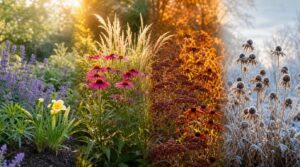
Perennials are the workhorses of a seasonal garden, quietly earning their place through foliage, texture, and bloom across multiple periods of the year. Unlike trees and shrubs, they offer flexibility in smaller spaces while still delivering reliable color from early spring through winter’s edge.
These plants provide year-round visual interest, making them essential for dynamic, low-maintenance landscapes.
Coral Bells for Colorful Foliage Across Seasons
Few perennials deliver multiseason interest quite like Coral Bells (Heuchera), whose leaf texture ranges from smooth to deeply quilted, while leaf color shifts with each season.
Microclimate effects significantly influence their appearance—afternoon shade intensifies burgundy and copper tones. Pair them in shade with dark evergreens or hostas for striking contrast.
Their compact habit makes them ideal for container borders. Seasonal division every few years ensures low-maintenance gardens remain vibrant year-round.
Sedum ‘Autumn Joy’ for Late-season Flowers and Drought Tolerance
If Coral Bells offer foliage drama, Sedum ‘Autumn Joy’ delivers late-season flowers when most perennials fade. Its blooms open soft pink in August, deepening to coppery-red by October, making it ideal for year-round garden color planning and rock garden integration.
With succulent water storage, this drought-tolerant perennial thrives in dry gardens, offering unmatched reliability. It excels in low-maintenance gardens across USDA zones 3–9, requiring minimal watering once established.
- Attracts late-season pollinators like bees and butterflies well into fall
- Seed head winter interest persists long after first frost
- Minimal pruning strategy required — you can skip deadheading entirely
- Thrives in low-maintenance gardens in USDA zones 3–9 with minimal watering
Ornamental Grasses for Autumn Texture and Winter Movement
Few plant groups earn their keep across more seasons than ornamental grasses. From summer’s green blades through autumn’s plume color shift — bronze, gold, champagne — into winter garden interest and color, they carry real weight in year-round garden color planning.
| Cultivar | Feature |
|---|---|
| Karl Foerster | Culm stiffness; wind-driven silhouettes |
| Gracillimus | Silver-pink plumes; gentle winter sway |
| Shenandoah | Coppery fall foliage; bold autumn palettes |
| Blonde Ambition | Gold seed heads; front-border scale |
| Fountain Grass | Champagne plumes; mixed border texture |
Time clump division for early spring, and don’t skip late-season pruning — cut to 4–6 inches before new growth emerges for a clean reset in your garden design with vibrant autumn color palettes.
Violas for Cool-season Color Shifts in Spring and Fall
When temperatures dip into the 50s °F, Viola spp quietly steal the show. Their multi-stage bloom color progression—soft purples, yellows, and deep blues—makes them indispensable for seasonal color change in garden flowers during early spring and fall garden planting.
- Morning Sun Preference – Position in east-facing beds for microclimate positioning that extends bloom life
- Deadheading Technique – Pinch spent flowers weekly to sustain continuous color
- Mulch Insulation – Apply 2-inch layers to protect crowns during light freezes
- Pollinator Attraction – Small blooms draw early-season bees reliably
Bleeding Heart for Spring Foliage and Shade-garden Interest
Few shade-tolerant flowers match Bleeding Heart’s quiet elegance in early spring. Dicentra spectabilis delivers striking foliage texture — lacy, blue-green, pinnate leaves that stay soft and airy beneath taller companions.
It’s a low-maintenance garden plant that pairs beautifully with hostas and ferns.
Keep the soil consistently moist and rich in organic matter, and you’ll enjoy seasonal color change from late March through May.
Flowering Bulbs for Early-season Color Transitions
Nothing announces winter’s end quite like the first colorful bulbs pushing through cold soil. Plant snowdrops, Iris reticulata, and early daffodil cultivars to create a vibrant early-season display.
Combine low-growing crocuses with mid-height narcissus for natural height layering, ensuring a staggered blooming schedule. This approach maximizes visual interest as flowers emerge sequentially.
Wait until soil temperature drops below 60°F before planting, then apply bulb mulching to protect emerging growth. Proper timing and insulation are critical for healthy root development.
This multistage bloom progression delivers lively, multicolored early-season color from late winter through spring, transforming dormant gardens into dynamic landscapes.
Choosing Plants by Growing Conditions
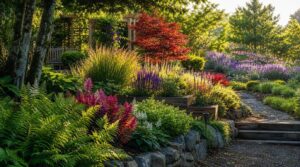
Getting the most out of seasonal color really comes down to matching the right plant to the right spot. Your garden’s hardiness zone, light levels, soil pH, and drainage all influence which plants will actually thrive — and how vivid their color payoff will be.
Here’s what to keep in mind before you choose: hardiness zone, light levels, soil pH, and drainage. These factors determine not only survival but also the intensity of seasonal hues.
Matching Plants to USDA Hardiness Zones
Getting your zone right is the foundation of a reliable seasonal display. USDA hardiness zones run from 1 to 13, defined by average annual minimum temperatures in 10°F increments — and knowing yours shapes every planting decision.
- Zone-plus-one strategy: Choose plants rated one zone colder than yours for edge-of-zone selections that survive tough winters
- Microclimate considerations: Walls, slopes, and sheltered corners can shift your effective zone by a full step
- Zone boundary shifts: Updated zone maps reflect regional climate trends, so recheck your zone periodically
- Hardiness zone suitability: Sugar Maple thrives in zones 3–8; Black Tupelo suits zones 4–9 — matching these ranges ensures dependable autumn color
Selecting Full-sun Plants for Brighter Fall Color
Full sun is where fall color really comes alive. Sunlight’s pigment boost is real — sugar maples, black tupelo, and ginkgo all hit their scarlet, orange, and gold peak with consistent sun exposure requirements of six or more hours daily.
A heat-resilient canopy benefits from sun-warmed soil and smart micro-sun positioning, like south-facing slopes, to intensify deciduous trees’ foliage color changes in autumn.
Choosing Shade-tolerant Trees and Shrubs
Not every garden gets six hours of sun, and that’s perfectly fine. Sourwood and Purple Copper Beech handle full sun to full shade with grace, offering flexibility for diverse landscapes.
Black Tupelo ‘Red Rage’ and Oakleaf Hydrangea ‘Gatsby Moon’ thrive in partial shade, adapting their root systems to variable soil moisture. These ornamental shrubs and deciduous trees deliver vibrant seasonal foliage without demanding a sun-drenched spot, proving beauty flourishes even in less luminous conditions.
Soil PH Effects on Hydrangea Flower Color
Soil pH is the real puppeteer behind your Hydrangea macrophylla’s bloom color. Acidic soils produce blue flowers by unlocking aluminum availability to roots, while alkaline soils yield pink by restricting it. Regular pH testing keeps you in control.
- pH around 5.5: vivid blue blooms
- pH near 6.5: soft purple or mixed hues
- pH 7.0 and above: clear pink tones
Use acidifying amendments like aluminum sulfate for blue blooms, or limestone adjustments to encourage pink hues.
Moisture and Drainage Needs for Seasonal Foliage Plants
Just as pH shapes hydrangea blooms, moisture and drainage determine whether your seasonal color-changing garden plants thrive or struggle.
Deep soakings every 7–14 days encourage roots to grow downward rather than shallowly. Pair that with mulch management—a 2–3 inch layer steadies moisture beautifully.
Soil aeration and raised drainage prevent root rot, while consistent moisture monitoring helps you manage soil drainage and moisture preferences across all seasons.
Compact Cultivars for Small Gardens and Containers
Even compact spaces can carry serious seasonal impact. Dwarf fruit trees in large pots, miniature ornamental grasses that sway to 18–24 inches, and compact flowering shrubs like dwarf hydrangeas keep year-round garden color planning manageable.
Container groundcovers, such as creeping thyme, fill gaps without crowding.
Small evergreen hedges anchor the design, making low-maintenance seasonal landscaping genuinely achievable in balconies or tight beds.
Designing Year-Round Color Displays
A garden that holds your attention in January is just as rewarding as one that dazzles in October.
Getting there means thinking beyond a single season and making deliberate choices about structure, palette, and plant combinations.
Here’s how to put it all together.
Layering Trees, Shrubs, Vines, and Perennials
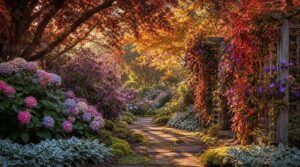
Think of your garden as a living stage with four distinct tiers. Canopy spacing sets the framework, allowing dappled light to reach understory density below.
From there, vine training on trellises adds vertical drama, while groundcover texture anchors it all.
This layered approach creates seasonal shifting zones where multi-season foliage display unfolds naturally, making year-round garden color planning almost simple.
Combining Deciduous Plants With Evergreens
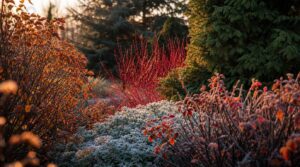
Pairing evergreen structural plants with deciduous understory layers is where year-round garden color planning really comes together. Evergreen contrast holds the composition steady, while deciduous shrubs with winter bark interest — like Red-Twig Dogwood — add seasonal drama.
Texture pairing of fine needles against broad leaves, combined with smart pruning balance, creates seasonal microclimates that protect spring bloomers and keeps your seasonal color-changing garden plants looking intentional all year.
Creating Autumn Color Focal Points
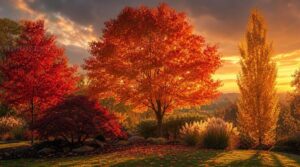
Strategic placement of a single Sugar Maple ‘Fall Fiesta’ in an open lawn instantly establishes visual hierarchy, drawing the eye from late September through November. Seasonal lighting at dusk amplifies its beautifully timed yellow-to-red color transitions.
Build around it using:
- Texture contrast with fine ornamental grasses nearby
- Black Tupelo ‘Red Rage’ for scarlet deciduous tree foliage color changes in autumn
- Sourwood underneath for deep crimson shade layers
- Ginkgo ‘Goldspire’ as a compact golden anchor
- Seasonal color shift patterns balanced across species for weeks of continuous impact
Using Bark, Stems, Berries, and Seed Heads
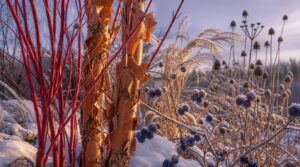
Your garden doesn’t go quiet in winter — bark texture contrast, architectural seed heads, and persistent berry displays keep it speaking all season long.
| Element | Seasonal Contribution |
|---|---|
| Stem color accents | Red-twig Dogwood brightens snowy scenes |
| Bark texture contrast | Peeling underbark catches low winter light |
| Persistent berry displays | Serviceberry fruits attract birds into winter |
| Architectural seed heads | Ornamental grass plumes hold frost beautifully |
| Winter structural interest | Seed pod development adds form after leaf drop |
Planning Red, Gold, Orange, and Burgundy Palettes
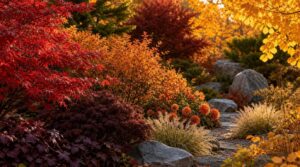
Red anchors everything — let it claim roughly 60 percent of your palette. Follow the proportion guidelines by weaving gold as Metallic Highlight Integration at around 10 percent, using Ginkgo’s pure yellow as your reference tone.
Apply blending zone strategies with orange at 15–20 percent, then deepen the Shadow Color Balance through burgundy accents.
Neutral Backdrop Use — creams or warm grays — prevents visual fatigue in your multi-season foliage display.
Supporting Birds and Pollinators With Native Plants
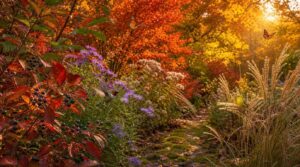
Your fall palette does double duty when you choose native plants that double as pollinator host species and wildlife corridors. Native trees like serviceberry and viburnum supply berries and cavity-nesting shrubs that birds return to season after season.
Native plants like serviceberry and viburnum pull double duty, painting your fall palette while feeding birds season after season
Weave in seed-producing grasses and layered habitat zones, and your wildlife-friendly color-changing shrubs become native nectar corridors sustaining both pollinators and migrating birds through winter.
Frequently Asked Questions (FAQs)
What plants go through seasonal changes?
Everything in your garden is quietly putting on a show. Trees, shrubs, perennials, and vines all shift through stunning seasonal foliage color.
These transformations occur through changes in leaf physiology and pigment chemistry.
What to plant in fall for color?
Plant Sugar Maple ‘Fall Fiesta‘ or Black Tupelo ‘Red Rage‘ for multicolored leaves from late September through November.
Both reward smart color layering and hardiness zone considerations with scarlet, orange, and gold.
What plants have color all year round?
Year-round color comes from layering variegated foliage, evergreen berries, winter bloomers, and colorful groundcovers.
Coral Bells, ornamental grasses, and low-water hue plants like Sedum keep your garden alive with multi-season interest continuously.
What to plant for autumn and winter colour?
Timing is everything when planning for autumn color change and winter garden structure.
For reliable, season-spanning impact, rely on Black Tupelo ‘Red Rage’, Witch Hazel, Structural Grasses, and Cold-Hardy Vines, such as Virginia Creeper.
Which animals are attracted to color-changing plants?
Birds, bees, and butterflies are all drawn to color-changing plants. Shifting hues signal ripe fruit and fresh nectar, making your garden a reliable stop for pollinators and wildlife throughout the season.
Do color-changing plants improve air quality?
Color-changing plants do support pollutant uptake through stomatal conductance, but the color shifts themselves don’t boost air-cleaning power.
Healthy soil microbial synergy and adequate light intensity matter far more than leaf pigmentation.
Are any color-changing plants toxic to pets?
Some plants can indeed be toxic to pets. Hydrangeas contain cyanogenic glycosides, whereas calcium oxalate crystals in anthuriums cause symptoms of toxicity, such as vomiting.
For pet-safe alternatives, consider wildlife-friendly, color-changing shrubs like serviceberry in your seasonal garden design.
How quickly do foliage colors appear and fade?
Leaves don’t turn on a dime — onset timing varies by species, with most showing leaf color change within one to three weeks.
This shift occurs once cooler night temperatures and shorter photoperiods’ effects on color kick in.
Can color-changing plants be grown indoors?
Absolutely — many color-changing plants thrive indoors when you dial in the right LED spectrum, maintain a moderate temperature range, and manage humidity levels consistently to support vivid seasonal color transformation.
Do all maple varieties change color equally?
Not all maples turn color equally — cultivar color diversity runs deep. Japanese Maple and Sugar Maple follow different genetic pigment pathways, shaping their unique displays.
Cool nights’ effect, moisture stress, and a late anthocyanin surge further influence each tree’s coloration, ensuring no two displays are alike.
Conclusion
The garden never truly sleeps—it simply changes the conversation. Choosing the right plants for seasonal color change means you’re not just planting for one fleeting moment; you’re composing something that speaks in April’s pale bulb light, August’s textured grass plumes, and October’s quiet fire.
Stack your layers thoughtfully, match your site honestly, and the landscape rewards you with a display that shifts before you fully notice it has.
- https://grandfather.com/science-behind-fall/
- https://www.scientificamerican.com/article/bring-science-home-leaf-colors/
- https://amsterdamgardencentre.ca/blogs/news/10-shrubs-perennials-for-all-summer-long-colour?srsltid=AfmBOorVNRcllwWASkULJf3Nrz25uFfC7HmCSjHUhvuLKH5ZibP_T9CO
- https://www.esf.edu/eis/eis-leaves-color-change.php
- https://hort.extension.wisc.edu/articles/leaf-color-change-autumn/